Featured
Featured

This year is the first time we are observing International Day of Persons with Disabilities (IDPD), but Experian has been working to support those who identify as part of this community long before now. I share the story of my colleague, software engineer Andy Willard. While Andy has been with Experian for 25 years, he didn’t share his deteriorating eyesight condition with managers at first. “Truthfully, I didn’t ask for a lot. I had the position and I don’t want to rock the boat or put a spotlight on myself. But in 2000, I stopped driving and rode the bus to work a lot. That would take an hour and a half each way. I finally went to my manger and requested telecommuting days, and at the time no one was getting those,” Andy said. His managers immediately agreed and he works 100 percent remotely, long before the pandemic. Experian provided tools like larger monitors and accessibility software to assist with on-screen reading. He appreciates the technology and the time the company allows him for classes to learn about new ways to adjust to working with his visual impairment. But, there can still be some challenges, like when a company-wide software update doesn’t automatically reconnect his system with the screen reader or screen magnifying tools. We know we still have work to do. Being named a Best Place to Work for Disability Inclusion earlier this year let us know we’re on the right track; and we’re excited to continue developing our partnerships with Disability:IN and the National Disability Institute, for which our Chief Diversity, Equity and Inclusion Officer Wil Lewis is a board member of both. As the co-executive sponsor of the ASPIRE employee resource group, which focuses on mental health, caregiving and disabilities, we want our coworkers to know they are supported and we will do all we can to ensure they continue to grow and develop their careers, as Andy did. His first job at Experian was as an analyst, then moved on to software development and then into a software engineering role. I’m proud of the work we are doing at Experian. We’ve made great strides forward to support an inclusive work environment for everyone, and there’s more to be done. I encourage my coworkers to share their stories as Andy did so we know where we should focus our efforts and support our colleagues in making Experian an employer of choice for people who live with disabilities.

It’s hard to believe that Christmas is just around the corner. Many of us will be starting to think about (or if you’re very organised, have already finished) their Christmas shopping. Black Friday sales will kick-off this week’s online bonanza, as bargain hunters pursue the best deals online. However, while we are all busy getting into the spirit of things, it has never been more vital that we do what we can to protect ourselves from identity fraud. As the popularity of the Black Friday sales season has grown, we’ve also seen a marked increase in the volume of fraudulent activity, as criminals use stolen or illegally obtained personal details to apply for credit in someone else’s name. According to our latest analysis of National Hunter Fraud Prevention Service data, the fraud rate for credit card applications has increased by 43% in the last three months to 69 confirmed fraudulent applications per 10,000 applications. It’s expected the rate will rise even more in December, as criminals look to take advantage. It’s naturally worrying if you are a victim of ID fraud. The fraudster will likely have tried to obtain credit in your name – perhaps on multiple occasions – and you’ll be concerned about how and from where they got hold of your information in the first place. Fortunately, there’s a host of things you can do to protect yourself. Checking your credit report on a regular basis is one of the best ways to spot if fraudsters have used your personal information to attempt to access credit, and our dedicated teams can help guide you through the steps if the worst happens and your identity has been stolen. New services and solutions are also helping companies identify and prevent more fraud. In part, the rise in rates can be attributed to better detection, helping fraud teams focus their energy on fraudulent applications, rather than genuine ones. So, while you’re browsing for gifts this festive season, make sure you are mindful of those looking to spoil your Christmas spirit. Help is available and you can read more on how to guard yourself against identity fraud on our website.

Growing up, my family rarely talked about money. So, in college, when I had the opportunity to get my first credit card, I also found myself in a little trouble when the first bill came. Most of us simply don’t learn about money matters until we find ourselves in these difficult situations. That’s one of the reasons why we’re excited to launch a creative and new program to teach young adults about the basics to building a financial legacy. “Protect The Bag” debuts today. It’s a six-part web series produced in partnership with Grammy-award winning artist, entrepreneur, author and community advocate, Lecrae. We first met Lecrae when he supported a United for Financial Health initiative in his hometown last year. “Protect The Bag” is a hip master class with finance and credit basics presented in an authentic way. Lecrae describes it as “edutainment” that includes scripted skits and interviews with everyday people. His friends Tyler Lockett, Coco Jones and WHATUPRG, among others, join him and share their financial health journeys as part of the shows as well. “Protect The Bag” is not just about credit. It’s about all aspects of personal finance. We’re proud of this innovative way to help consumers understand topics like saving, investing, budgeting and identity protection through someone they admire and trust. We hope you tune in every Tuesday, starting today, for the next six weeks. Episodes will appear on Lecrae’s YouTube channel starting at 7:00 p.m.EST/4 p.m.PST.

Every day at Experian, we are investing in new technologies, talented employees and innovation to help all of our clients maximize every opportunity we have to offer. We are honored the work performed under Eric Haller in our DataLabs received the San Diego Top Tech Awards of 2021. The awards honor technology executives who truly stand out by innovating. In 2010, Experian DataLabs was established to develop and drive creation of innovative products generated from breakthrough experimentation leveraging artificial intelligence, machine learning, advanced analytics and data assets from a variety of sources across Experian’s businesses in 37 countries. Eric originally pitched the idea of DataLabs and received funding for 8 people to begin the first lab in San Diego. Since then, Experian DataLabs has expanded its labs to London, Sao Paulo and Singapore. New products developed in the labs cover mobile, payments, consumer & commercial credit, fraud, targeted marketing & healthcare. During the last year and a half, Eric and his team continue to develop offerings and create new technologies to support the community. In May 2020, in conjunction with the company’s healthcare business, Experian DataLabs developed a free interactive heat map of geographic populations at-risk of being most susceptible to developing severe cases of COVID-19. The Experian COVID-19 Outlook and Response Evaluator (CORE) tool is guiding healthcare organizations and government agencies with planning for the “new normal” and COVID-19 recovery. In addition, Experian DataLabs develop other important initiatives such as the Covid Radar in Brazil to help people, small businesses and governments. Produced in collaboration with 50 organizations, including the United Nations, Amazon, SAP and the University of Sao Paulo, COVID Radar helps the coalition track where supplies are needed most. The coalition delivered tools, equipment, PPE and other supplies to Brazil’s most vulnerable zones. The second part of the initiative focused on aggregating and analyzing the data to create forecasting models that allowed researchers to track various key indicators that has helped dictate what officials should do with lockdowns and provide data around ICU beds and assess what the demand is. As part of Experian’s culture of innovation, Eric inspires his team to innovate due to his inclusive nature, openness, and willingness to listen to new ideas. The AI and revolutionary technology that Experian DataLabs is utilizing is enabling the company to continuously fuel new projects in its pipeline and turn ideas like the COVID Radar and the CORE heat map into a reality faster than ever before.

We believe every individual deserves the opportunity to reach their fullest financial potential through fair and affordable access to credit. While leveraging data, analytics and technology are key components of this, we must also ensure consumers understand how credit works and the ways it can be used as a financial tool throughout their lifetimes. This notion is the impetus behind our annual State of Credit report. Now in its twelfth year, this report takes a close look at how consumers are managing their credit histories to educate them about the factors influencing their financial health. This year’s report shows the average credit score has climbed to 695 – the highest point in more than 13 years. Many consumers were managing credit well before the pandemic’s arrival and the accommodations afforded by the Coronavirus Aid, Relief and Economic Security (CARES) Act may have helped consumers protect their financial health. At the same time, stay-at-home orders and record savings levels may have contributed to fewer missed payments, lower credit utilization rates and lower debt. While these findings are positive, we recognize they do not tell the full story. There are tens of millions of consumers who lack fair access to credit because of a limited credit history. Low-income consumers and communities of color are disproportionately credit invisible, preventing them from obtaining low-cost, traditional financial services. There is significantly more work to do to ensure all consumers have fair access to credit. We are committed to working with lenders, regulators, businesses, consumers and partners to eliminate credit invisibility and improve financial equity and access. Our meaningful partnership with Operation HOPE, the largest financial literacy nonprofit in the U.S., is one example of this commitment brought to life. Operation HOPE has goals that align with ours: to uplift disenfranchised youth and adults from poverty to thriving in a credit ecosystem. Together with Operation Hope, we are making a tangible difference in financial inclusion by helping consumers raise their credit scores through financial coaching, education and tools like Experian Boost. As part of this year’s State of Credit report, we also helped introduce Operation HOPE’s new HOPE Financial Wellness Index. This new tool will be a valuable resource for the Hope Research Institute who plans to leverage it to identify the communities most in need of financial literacy programs. “While consumers on average are managing their credit histories well, we know there are many communities in critical need of more financial education and resources,” said John Hope Bryant, Operation HOPE founder and CEO. “By helping people raise their credit scores, we are empowering them to take advantage of one of our nation’s most democratic tools. From housing and employment to healthcare and education, credit worthiness can be leveraged to improve our overall quality of life. We’re committed to using the HOPE Financial Wellness Index as a force for good in the communities we serve.” Through our investments in expanded data, technology, advanced analytics and new innovations, we will continue to help lenders identify consumers who are excluded from the credit ecosystem, but who can fulfill their financial obligations and pay responsibly. At the same time, we will continue to take strides that empower consumers to take control of their financial lives. For additional free educational resources and more information about this year’s State of Credit report, I encourage you to visit the links below. State of Credit report findings: https://www.experian.com/blogs/insights/2021/09/state-of-credit-2021 Join Experian’s weekly #CreditChat hosted by @Experian on Twitter with financial experts every Wednesday. Bilingual and Spanish speakers are also invited to join Experian’s monthly #ChatDeCrédito hosted on Twitter at 3 p.m. Eastern time beginning September 16. The Ask Experian blog includes answers to common questions, advice and education about credit Positive telecom, utility and streaming service payments can be added to your Experian credit report by visiting experian.com/boost Additional resources available at https://www.experian.com/consumereducation
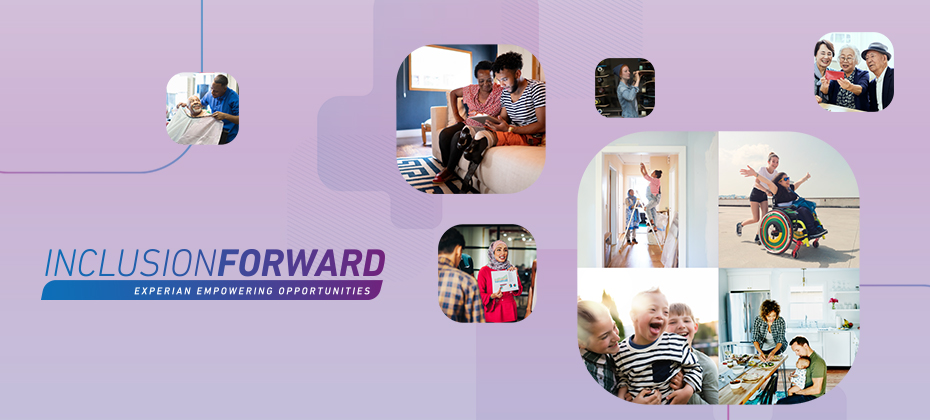
When it comes to access to credit, we know that it’s not equal. There are barriers some consumers face, and that negatively affects how they can spend, save and borrow money. We have a responsibility to find and facilitate solutions. Financial inclusion is a core commitment for us. That’s why we are excited to launch a first-of-its-kind program called Inclusion Forward – Experian Empowering Opportunities™. This initiative harnesses Experian’s data, analytics and technology that can help clients create and provide more affordable credit access. Additionally, Inclusion Forward™ will provide ongoing resources to help consumers better understand their credit health, particularly in diverse communities. Inclusion Forward™ will focus on three key areas: homeownership, small business entrepreneurship and financial education. It can help companies achieve their diversity, equity and inclusion goals, but most importantly, it will help consumers achieve their life goals. Closing the wealth gap is key in racial equity efforts. By unlocking the power of Experian data, clients can better understand the financial challenges consumers from diverse backgrounds may face. This can lead to creating solutions and education for all consumers. We look forward to sharing more about Inclusion Forward™ and how this program is making a difference in underserved communities. To learn more about Experian’s commitment to diversity and inclusion, click here.

Last week, I had the chance to take part in a few really important conversations and further exemplify our leadership and commitment to driving financial inclusion. On July 13, I had a frank dialogue with Derrick Johnson, President of the NAACP, during their 112th NAACP Virtual Annual Convention. Our conversation centered around economic inclusion, the wealth gap and the ways companies, like ours, can help provide education and access to financial services. During my conversation with Derrick, he referred to credit as a currency. I think that’s absolutely the right way to talk about it. Credit gives people access to financial services. It can divide people or bring them together to achieve their goals. We recognize there are millions of consumers who lack access to credit today. That’s why we continue to innovate through tools like Experian Boost, our free tool that enables consumers to contribute positive payment data to their Experian credit report. Especially in underserved communities, consumers may not get credit for paying their utility bills, cell phone bills, or even their streaming services, and they should. This provides a more accurate picture of their financial situation. I also participated in a virtual press conference with the U.S. Office of the Comptroller of the Currency and leaders from PNC, HomeFree-USA and Fifth Third Bank to discuss our participation in Project REACh, which stands for Roundtable for Economic Access and Change. It brings together leaders from the banking industry, national civil rights organizations, business and technology to reduce barriers that prevent full, equal and fair participation in the nation’s economy. We were approached to participate because of our deep understanding of credit risk and our ability to help financial institutions make informed credit decisions through data and advanced analytics. Our role is to help develop programs with the Alternative Credit Scoring Utility Team and Small Business Opportunity Team that drive financial inclusion. Our participation in Project REACh is the latest example in a string of efforts to address this important issue, including Experian Boost and our flagship lender score Experian Lift, which leverages all Experian assets to improve consumer’s access to credit. We believe that every individual deserves the opportunity to reach their fullest financial potential through fair and affordable access to credit. By sharing information around tools like Experian Boost, expanding credit education through partnerships like the NAACP, and working with leaders in the industry through Project REACh, we can help increase financial access and empower consumers to enter into the credit ecosystem – some for the first time. We’re committed to working side-by-side with regulators, businesses and consumers to eliminate credit invisibility and improve financial equity and access.

At some point in all of our lives, we will know, or perhaps be ourselves, a person with a disability. It’s a natural part of the human experience, and it crosses lines of age, ethnicity, gender, gender identity, race, sexual orientation, socioeconomic status and religion. Globally, more than a billion people are part of this community. As society recognizes this commonality, it’s critical that companies do too. Experian does, and I’m happy to share that we have been named to the 2021 Disability Equality Index (DEI) as a Top Scorer. This honor from Disability:IN and the American Association of People with Disabilities (AAPD) is considered the most robust disability inclusion assessment tool in business. At the most important level – for our people – it means we’re creating an environment where employees of varying abilities know there is place for them at Experian. To know they feel supported, and that we’re going to do all we can to ensure they continue to grow and develop their careers is the most meaningful part of this award. Part of our ongoing commitment includes having an individual who focuses on ensuring our systems, facilities and processes evolve and ultimately exceed regulatory requirements. Only a handful of companies across the nation has a role focused on disability inclusion; it’s exciting to be one of the trailblazers of this work. Being named a 2021 “Best Place to Work for Disability Inclusion” acknowledges this point in our journey and we will continue the work in all the countries in which we do business. This work matters.

The financial services industry is poised to take advantage of the unprecedented availability of accurate, comprehensive, and timely data. Through increased lender adoption, the growing array of insightful data can create meaningful change and provide access to credit for more consumers and businesses than ever before. At Experian, we feel we have a responsibility to consumers seeking credit. Ensuring lenders can obtain the insights needed for responsible lending is key to supporting this. By leveraging the most accurate traditional credit data as well as expanded data sources that improve how risk can be assessed for thin-file or no-file consumers, lenders can form a precise picture of an individual’s financial situation and improve financial access for millions of Americans who have been unfairly excluded from the credit ecosystem. Extend credit responsibly. Some of the most predictive information available today is employment data, including how long a consumer has been at a job and how much they earn. Layering verified income and employment information with credit data can improve financial outcomes for consumers and help lenders say ‘yes’ when they otherwise couldn’t or wouldn’t. To help, Experian has released Experian Verify™ - a suite of solutions that provide lenders with real-time access to verified information about a consumer’s income and employment status. Through Experian Verify, credit card, personal loan, auto and mortgage lenders have near-instant access to millions of active employer records to verify an applicant’s income and employment status for use across the lifecycle, including pre-qualification, originations and account review. The products are powered by Experian’s growing network of exclusive employer records and payroll partner data, which includes data from recent acquisitions of Corporate Cost Control (CCC), Tax Credit Co. (TCC) and EmpTech. We are answering the industry’s call for change in income and employment verification while providing lender’s with deeper insights to increase financial access. Putting consumers in control. This is the latest example of many that illustrate our commitment to improve financial access for consumers. The new products complement Experian Boost – a free tool that empowers consumers to contribute their on-time telecom, utility, streaming services and mobile phone payments directly to their Experian credit report. Incorporating this information has been proven to increase the predictiveness of a consumer’s credit reputation and can complement the data derived from their lending history. Experian Boost provides consumers with the ability to immediately impact their credit scores, while providing lenders with deeper insight into a consumer’s financial situation. With Experian Boost, nearly 70 percent see an uplift in their credit score. Since the product was released in 2019, more than 7 million consumers have connected to Experian Boost with over 50 million cumulative points added to FICO Scores. The financial impact to the industry is significant, with Experian Boost users gaining access to more than $1.7 billion in credit as a result of improved credit scores. Serving credit invisibles. Our commitment to consumers does not end there. Through our investments in expanded data sources and advanced analytics, we are helping lenders identify consumers who are excluded from the traditional credit ecosystem, but who can fulfill their financial obligations and pay responsibly. Experian Lift, our suite of lender credit scores, has the potential to help more than 40 million credit invisible consumers gain access to credit while providing first and second chances to millions more. Experian Lift uses proprietary technology, advanced analytics, and machine learning models to combine exclusive credit data attributes, trended data and expanded Fair Credit Reporting Act (FCRA) regulated data sets. This combination of data and technology is creating new opportunities for consumers who are often overlooked. Looking ahead. Data has the power to unlock financial opportunities for millions of consumers. Collaboration between Experian, lenders and consumers that is informed by data is key to keeping the economy flowing and improving livelihoods of Americans. As we look to the road ahead, we are committed to working side-by-side with lenders, credit scoring companies and consumers to eliminate credit invisibility and improve financial equity and access.