Loading...

Swipe right on the perfect data and identity partner

Published: February 19, 2025 by Scott Kozub, VP, Product Management

Here's your guide to finding the perfect match

Originally appeared in AdExchanger

Navigating the world of data and identity partners feels like scrolling through a dating app: a sea of options, but only a select few worth swiping right. To find your perfect match, look for a partner who ticks all the right boxes. Here’s your guide to finding your perfect match.

1. Identity resolution: It all starts with a strong foundation

An image that represents a person's offline data - their name, address, and email

Great identity resolution depends on a rock-solid foundation. The best partners rely on offline data—like names, addresses, and emails—that rarely change, ensuring a consistent view of households, individuals, and their devices over time. You want someone who gives you the same understanding of your audience across every stage of a campaign.

2. In search of: A well-rounded, reliable identity partner

When evaluating identity graphs, it’s essential to distinguish between digital-only graphs, offline graphs, and those rare gems who combine both. Digital graphs rely on digital identifiers, while offline graphs are grounded in persistent identifiers like name, address, and phone number. A partner who offers both creates a more complete and reliable view of consumers across channels, resulting in more effective targeting and measurement.
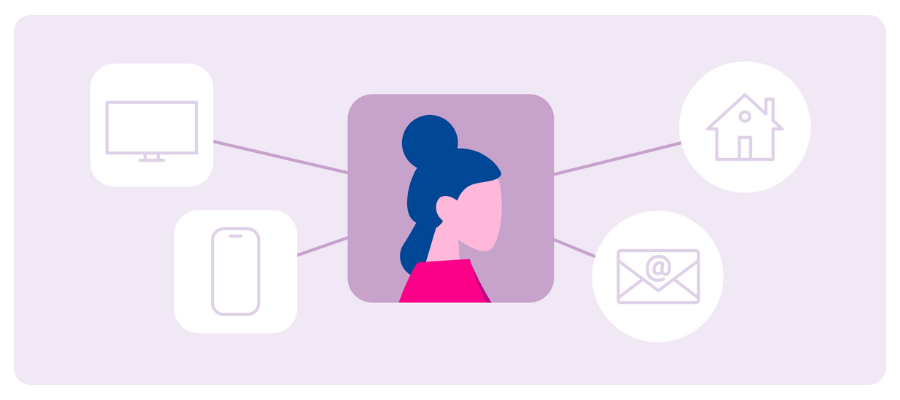
A picture of a woman with four icons surrounding her that represent a TV, cell phone, house, and email

3. Match rates are like dating profiles—don’t be fooled by the numbers

The number 60% appears in a circle, but a magnifying glass hovers over it showing that the real number is 16%

Match rates can look impressive, but they’re often misleading. They can also vary widely depending on the methodology and the IDs being tested. Some providers inflate match rates by limiting the scope of comparison or tweaking their standards. The real indicators of quality are the depth of the data, the quality of matches, and how often the graph is refreshed. Ideally, your partner updates their graph weekly or monthly. The inclusion of inactive IDs may inflate the perceived scale without reflecting the true addressable audience. It’s like having a profile photo from ten years ago–a major no-no.

4. Authentic origins: Is their data genuine or just a catfish?

Look into your partner’s data sources and place a premium on those with public records or direct to consumer relationships. Ask if they have the experience and expertise when it comes to all aspects of data processing from accuracy to privacy and security. Look for some clear third-party indicators for accuracy, like ratings from Truthset, but there is also a basic reality: either your partner is focused on privacy and accuracy, or they are just playing the scale game. Swipe left on those playing games.

An "x" icon represents inauthentic data and a checkmark icon represents authentic, reliable, data verified by third-party sources, like Truthset

5. The breadth to impress

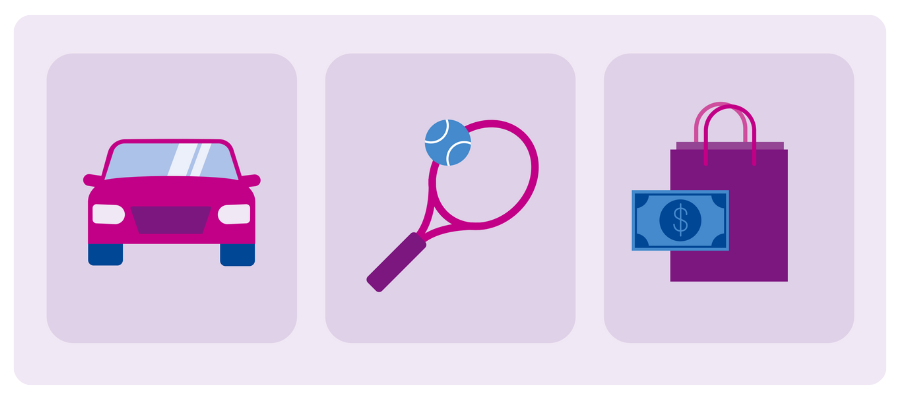
A car icon, tennis icon, and shopping bag icon

Depth matters as much as quality. Seek a partner with wide-ranging attributes that span key audience categories like demographics, interests, and purchase behavior. They should offer the flexibility to deliver both granular data scores and broad audience segments, empowering you to reach the right consumers across channels effectively.

6. The total package: Does your partner really have it all?

A true, lifelong partner connects the dots seamlessly, offering a blend of data and identity that link households to devices while layering in rich marketing insights. This approach helps advertisers better understand their customers, reach the right audiences across channels, and measure the impact of their campaigns. The right partner is well-connected and ensures that all the pieces—identity, data, and activation—work in harmony.
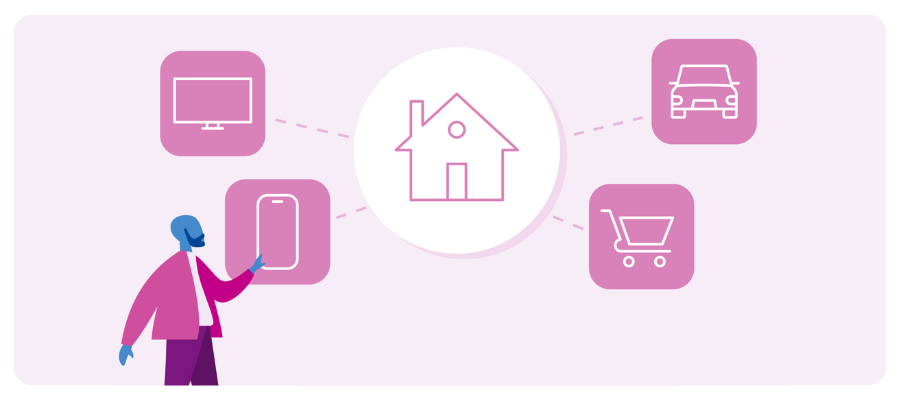
A man stands by an icon of a house surrounded by four icons that represent a TV, cell phone, car, and shopping cart

7. Future-proof charm: Will they ghost you when cookies crumble?

A cookie icon with a bite taken out of it

With the Identifier for Advertisers (IDFAs) gone, cookies on the wane, and IP addresses under scrutiny, a partner’s ability to adapt is critical. The most future-proofed solutions are based on offline identifiers like names and addresses, which are user provided and consented data points–making them more resistant to privacy changes. Additionally, look for partners who have made the necessary investments and are prepared to support the new wave of addressable IDs emerging as alternatives to traditional signals.

8. Privacy savvy: Do they respect boundaries?

As privacy laws evolve, you need a partner with a strong history in privacy compliance and proactive leadership in navigating new regulations. Strong and transparent privacy policies and participation in privacy organizations are a good indicator of trustworthiness, especially as new rules emerge across different states. Look for a partner who takes data privacy as seriously as you do and gives you peace of mind when handling sensitive information.

An icon with a lock on it representing data privacy and security

9. Seamless connectivity: Do they play well with others?

An icon of a man on the left and a megaphone icon on the right with 3 icons in between them that represent a TV, cell phone, and laptop

Data is only as useful as it is actionable. Connectivity across platforms is essential, so choose a partner with seamless integrations into the major platforms you rely on for advertising. This ensures your data quality and identity resolution remain intact throughout your campaigns, avoiding loss from multiple handoffs.

10. Killer customer service: Are they in it for the long haul?

A great partner collaborates to solve challenges, not just to sell or upsell. Long-standing partnerships and testimonials about strong customer service are key indicators of reliability. Choose a partner who educates and guides you through technical and strategic challenges, fostering an environment where problem-solving and innovation thrive.

Two people shaking hands

Keep your standards high

Only a handful of companies can meet these rigorous criteria, and you should refuse to settle for a partner that lacks any of these key dimensions. Successfully navigating signal loss, privacy compliance, and seamless omnichannel integration requires extensive resources, robust infrastructure, and years of expertise.

So, swipe right on a partner who can handle the complexities of modern marketing and deliver consistent, scalable successful marketing outcomes. Could we be your perfect match?


Find out if it’s a match today

This site is protected by reCAPTCHA and the Google Privacy Policy and Terms of Service apply.


Latest posts

Loading…
ExchangeWire: 2018 IAB UK & PwC digital adspend study: The Market Grows

The UK digital advertising market is worth £13.44bn, an increase year-on-year of 15%, reveals the 2018 IAB UK & PwC Digital Adspend Study. Report highlights The majority of all growth is coming from smartphone advertising, which has increased by £1.65bn (35%) from 2017. Smartphone advertising now represents 51% of all UK digital ad spend, up from 45% in 2017. Video is now the largest display format (£2307m), overtaking standard display banners (£1486m). Outstream/social in-feed has increased its majority in total video spend, now occupying a share of 57%, up from 52% in 2017. Social revenue now represents 23% of all digital ad spend. Growth is predicted to slow during 2019, with 5% estimated growth (+9% digital, +11% display, +9% search) compared to 15% in 2018. 2018 marks the tipping point towards a mobile-first ecosystem “For the past few years, industry commentators have been hailing the year of mobile. Each January the predictions come and the waiting commences for evidence to mark a tipping point, a shift to a mobile-first digital ad ecosystem. Well, drumroll… it was 2018! The latest Adspend report from IAB UK and PwC reveals that spend on smartphones outstripped spend on desktop for the first time last year. Brands spent 51% of total spend (which stands at £13.44 billion) on smartphones in 2018, up from 45% in 2017 – a significant milestone in the evolution of digital advertising. “This evidence shows that advertisers are increasingly thinking mobile-first. Growth in investment has historically lagged behind the amount of time spent on the device and we expect to see growth continue at a rapid pace to keep up with audience behaviour – two thirds of time spent online is now on mobile, according to UKOM. Other areas of growth highlighted by the report include video, which accounts for 44% of the total display market, while mobile video now makes up 51% of smartphone display. This is no doubt down to bigger mobile screens, better 4G and more readily available WiFi making video ads an increasingly attractive option. “Across the board, advertisers are investing in digital for longer-term brand building as well as short-term activation, with the direct-to-consumer market helping to drive this trend. What’s more, digital continues to be an accessible and popular route to market for businesses of all sizes, from leading advertisers to SMEs.” Tim Elkington, Chief Digital Officer, IAB UK Content & context crucial for attracting audiences “As people spend more and more of their time on mobile, it’s comes as no surprise that advertisers will follow where audiences are with their marketing spend. “Video has been the driving force in this growth, indicating that engaging visual content is still key in helping brands to achieve great results and to capture consumer attention in a vast sea of digital noise. “Video still has a way to go if it is to reach the level of effectiveness of traditional formats like cinema, but it will be interesting to see how the format develops over the next year or so. Ultimately, brilliant content and properly considered context are crucial for advertisers hoping to attract relevant audiences and build strong brands long term.” Kathryn Jacob OBE, CEO, Pearl & Dean Mobile-first approach driving investment in user experience “As a mobile-first approach has become the norm for many businesses, we’ve seen significant innovation and investment in the user experience that has fuelled the rise in mobile commerce. “Yet, for some years, limitations in the technology and formats available have meant that mobile advertising couldn’t always keep pace with changing consumer behaviours – delivering weaker performance when compared to desktop. “Fortunately, mobile has made huge strides in recent years. Mobile advertising affords great targeting opportunities for brands and a more interactive and immersive experience for consumers. “There is no reason to doubt this trend will continue as advertisers design their media, creative, and targeting strategy with mobile at the heart – optimising performance, enhancing the customer experience, and delivering the best results.” James Cragg, UK Managing Director, Tug New technologies to improve investment efficiency “The UK digital ad market has continued to grow despite the various challenges that the market has faced, including the current socioeconomic climate and general changes in the industry. As spend increases, it’s important to look at how media buying can be made as efficient as possible, minimising waste and maximising the return on investment. “Marketers will start to look to new technologies, like AI, to offer an impartial and more efficient approach to media buying, allowing marketers to measure effectiveness of campaigns and allocate spend accordingly.” Carl Erik Kjaersgaard, Chief Executive, Blackwood Seven Industry going from strength to strength “This significant growth in ad spend is great to see and shows that our industry is going from strength to strength. It’s especially good to see that as advertisers invest more and more in digital advertising, they’re becoming more considered in where they’re spending their money – with a large portion of the growth coming from companies that are part of IAB’s Gold Standard. “At The Trade Desk, we’ve long been ambassadors for the importance of transparency. These findings show that it isn’t just the right thing to do, but makes good business sense as advertisers increasingly choose partners who are demonstrating a commitment to best practice.” Anna Forbes, UK General Manager, The Trade Desk Advertisers embracing mobile “As consumers spend more of their time online, it’s no surprise that digital ad spend has continued its rise, up 15% to £13.4bn. With digital, in every sense, becoming further embedded in our daily lives, it is inevitable that this number is set to rise further next year. “Given the vast majority of people using their smartphone as their primary digital device, evident from site traffic stats we see across the board, the IAB report shows that advertisers have started to fully embrace this shift by following with ad spend. Over the last few years, a combination of faster wireless connectivity along with more capable devices has made it the go-to device for consumers to get online. This is set to continue over the next few years with 5G and even faster, more capable smartphones arriving (i.e. foldables) that will further cement ‘mobile’ as the main digital device to reach consumers.” Wajid Ali, Head of Paid Search, ForwardPMX Budgets must go to professionally produced content “In the IAB’s latest ‘Digital Adspend Study’ it is positive to see that outstream continues to dominate video spend, showing close to a 10% year-on-year increase. “Unsurprisingly, the study highlights that mobile is the most important distribution device (76% of all video spend is on the smartphone), and it’s great to see the format we invented dominating that space. “However, it’s now more pertinent than ever that clients and agencies invest their outstream budgets into professionally produced content and not social infeeds. Budgets must go where content is being produced, rather than aggregators and distributors, where the content is read rather than where a click happened. “We must remember how important local, national, and vertical press are to the global digital ecosystem. By unifying the best publishers at scale, delivering mobile-optimised creativity and outcome-orientated distribution, we are fighting to ensure publishers are getting their fair share of revenue in comparison to the social platforms.” Justin Taylor, UK MD, Teads UK market in robust health “The latest IAB digital ad spend report shows encouraging signs that the UK digital advertising market is in robust health, with mobile advertising continuing its upward trend. “The rise of up-and-coming ad formats like Shopping Ads, Google’s Responsive Search Ads, and Facebook Messenger Ads show that advertisers are looking for ways to capture consumer attention in the evolving digital landscape. As a result, the lines across search, social, and e-commerce are more blurred than ever with the introduction of features like Checkout for Instagram and Shopping ads on Google Images. Furthermore, with the rapid growth of Amazon’s ads business, e-commerce has quickly emerged as a third pillar of digital advertising, making it vital for marketers to have a complete view of the customer journey across channels and devices, if they hope to more accurately understand campaign performance and attribution.” Wesley MacLaggan, SVP of Marketing, Marin Software Digital identity resolution essential in understanding customer journey “Last year’s figures show that UK ad spend is starting to mirror the behaviour of consumers who, according to UKOM data, spend two-thirds of their time online on a smartphone. The fact that mobile ad spend now surpasses that of ad spend on desktop highlights marketers’ understanding that digital identity resolution is essential, not a nice-to-have. “Appreciating the cross-device behaviours of consumers allows brands to gain a better understanding of the customer journey and build stronger relationships with their audiences long term.” Tom Rolph, VP EMEA, Tapad, a part of Experian. Contact us today

May 06,2019 by Experian Marketing Services

AdWeek: OpenX debuts people-based marketing tool for the open web

OpenAudience promises the targeting capabilities of a walled garden but without the restrictionsOpenX has lifted the lid on a targeting solution it claims will offer people-based advertising opportunities outside of the industry’s walled gardens such as Facebook and Google. Dubbed OpenAudience, the supply-side programmatic player claims the new offering is powered by proprietary data assets and is supplemented by data partnerships with partners such as LiveRamp and Tapad, a part of Experian. Initially available in the U.S., OpenAudience has a user graph of 240 million monthly users and is currently being tested with multiple marketers with a general rollout planned for the third quarter of 2019. Speaking with Adweek, OpenX CEO Tim Cadogan said the rollout would help differentiate it among its peers as for the most part ad exchanges have marketed themselves based on their impression count, not necessarily addressable audiences. Compare this with Google and Facebook, both of whom account for almost 60% of U.S. ad spend, although this is disproportionate to the amount of time spent with their properties, according to Cadogan. “The thing that has given Facebook and Google so much power is that they have people-based systems [for ad targeting] that are simple to use and operate with a massive scale that are effective, and programmatic hasn’t kept pace with that,” he said. Cadogan cited the findings of a further study by eMarketer, which indicated that marketers are increasingly reliant on such walled garden players for their online inventory supply with the latest launch geared towards capitalizing on that. The latest launch is the culmination of the California-based company’s recent strategic overhaul, namely its attempts to get to grips with an identity-based solution that provides options outside of the walled gardens. Also speaking with Adweek was Todd Parsons, OpenX’s chief product officer, who offered further insight into how OpenAudience operates including how it uses its recently sealed relationship with Google Cloud Platform and machine learning to ape the efficacy of walled garden advertising solutions. “We had to build a matching technology, which made it possible for us to talk about monthly active users instead of talking about cookies or devices,” he explained. “And it took several quarters of staffing up with the right people from the consumer data and identity space.” OpenAudience’s matching technology works by using the identity and cookie matching capabilities of cross-device specialist Tapad and data onboarder LiveRamp to formulate a persistent, deterministic ID which can then be used to match advertisers with audiences on its ad exchange. “So, the idea isn’t for us as a company to put our future into one provider,” added Parsons. “It is to provide a matching technology that uses the best of several.” OpenAudience will also include involve additional tie-ups to offering further demographic information on the 240 million monthly U.S. users such as location, etc., which is currently in testing. “We felt like we needed to be very different about enabling marketers and publishers to activate against that data,” added Parsons. He further added that OpenX wants to rival Facebook’s levels of service when it comes to helping publishers monetize audiences on the social network, except this time on the open web. “No one has actually pushed identity and consumer data into the hands of publishers in a way that you might unify the view of audiences across many websites.” OpenX’s Cadogan summed up the OpenAudience offering and how it may look to advertisers when he said, “Imagine the open web is one publisher, and this lets buyers look at it as a single entity and market to them accordingly.” Contact us today

May 06,2019 by Experian Marketing Services

Forbes: Building your personal brand? Try these 12 expert-recommended strategies

Everyone knows that it’s important for businesses to have a clearly defined brand. In the modern world, the personal brand has become just as important, and many professionals are trying to build up their public reputation, expertise and industry authority. In the digital age, there are many different methods and channels you can use to build your personal brand, but some are more efficient than others. According to Forbes Agency Council, here are some of the most effective ways to develop an authentic personal brand.1. Give More Than You Receive Whatever you do, always aim at giving more than you receive. When you build your network, try to bring value to each new person that you meet. When you get featured in some media, see what you can do for them in return. This is the best strategy because actions speak louder than words. People will remember you for what you are, not what your website is. - Solomon Thimothy, OneIMS 2. Define What You Stand For, Then Align Your Actions Define your mission. What is your purpose? What do you want to accomplish, and what is your key message? Once you have answers to those questions, use that mission as a guiding North Star to consistently reinforce your personal brand every day. This will come across in how you lead, how you interact with employees and peers, how you communicate, and how you give back to the community. - Preethy Vaidyanathan, Tapad 3. Develop A Creative Positioning Statement It’s all about positioning your company. You need to have creative positioning statements about who you are and what your company is doing to benefit its clients. Clients want resolutions to their problems, and that’s where you come to the rescue. It’s either sold or ignored. - Cagan Sean Yuksel, GRAFX CO. 4. Speak At An Event Becoming a keynote speaker gives you access to the things you need to elevate your brand: influencer status, large audiences and media profile. But access doesn’t equal attention. While speaking gives you the platform, you need to have something compelling to say. You’ll need a differentiated message, unique presentation style and a great agent to make this strategy successful. - Andrew Au, Intercept Group 5. Focus On A Specific Audience The most effective way to build your personal brand is to create content specifically for a very specific group of people. Create relevant content that details solutions to the unique needs of this audience so that it spreads quickly due to its hyper-relevance. This creates authority and credibility for your personal brand and helps you stand out as being the most relevant expert in your field. - Adam Guild, Placepull 6. Be Ruthlessly Consistent Developing a personal brand requires ruthless consistency in your subject matter and how you present yourself to the world. I go back to the early days of marketing blogs. In those days, some bloggers were all over the map with content. The ones who were consistent with their audience and their goals are the ones who had staying power. They became the authors, speakers and consultants. - Scott Baradell, Idea Grove 7. Follow Through Just like a traditional brand, the quality of your offering helps to build your brand. If you are clear on what you can and cannot deliver and always follow through on your word, your personal brand reputation will precede you and will be lifted by the recommendations of others. - Kieley Taylor, GroupM 8. Build A Solid Reputation “Personal brand” is just a new-age name for reputation. Doing your job exceptionally well, going above and beyond, treating people with respect and kindness, having a point of view—essentially any action that builds a solid professional reputation does the very same for your personal brand. - Jess Cook, TMV Group 9. Define Your Voice Establish your unique voice and personal point of view and stick to it in all you do and all you say. Personal brands must be consistent and have consistency in messaging, attitude and behavior. Express your personal brand through comments on articles, at significant events and important platforms where it can best showcase and support your personal point of view and brand persona. - Pat Fiore, FIORE 10. Create And Share Video Content Video is hard for many people. That’s why it can be your competitive advantage if you do it. Video allows you to be seen, heard and felt emotionally in a way that no other medium can. You may say, “That’s not for me” and that’s fine, but good luck competing with those who embrace it. Barriers to video are so low that building a personal brand without it seems as if you are hiding something. - A. Lee Judge, Content Monsta 11. Share Your Point of View In Everything You Do There are a finite number of topics that make for interesting discussion in our industry, so having a point of view and sharing it through crafted content is vital for building your personal brand. You don’t have to be controversial, necessarily, but considering themes and topics and providing honest commentary that demonstrates experience is the quickest way to build your reputation. - David Harrison, EVINS 12. Stay True To You The most effective way to build your personal brand is to be true to who you are. If you are wildly creative and outgoing, show that in your branding! Don’t hold back in your content; post that crazy Instagram picture that shows the world how you think. If you are conservative, then own that. This passion for who you really are—and what your company really is—authentically shines through. - Katy Boos, Remix Marketing Inc. Contact us today

May 06,2019 by Experian Marketing Services

Subscribe to our newsletter

Enter your name and email for the latest updates

This site is protected by reCAPTCHA and the Google Privacy Policy and Terms of Service apply.

About Experian Marketing Services

At Experian Marketing Services, we use data and insights to help brands have more meaningful interactions with people. As leaders in the evolution of the advertising landscape, Experian Marketing Services can help you identify your customers and the right potential customers, uncover the most appropriate communication channels, develop messages that resonate, and measure the effectiveness of marketing activities and campaigns.

Visit our website

Subscribe to our newsletter

Stay up to date on the latest industry news and receive expert tips from our marketing experts.
Subscribe now!