At A Glance
Identity resolution unifies fragmented IDs into complete customer profiles, helping companies understand their audiences and deliver personalized, privacy-compliant experiences in a cookie-light world. With Experian’s AI-powered identity resolution solution, marketers gain the scale, accuracy, and compliance to compete while making marketing more human.In this article…
Every marketer has seen it: a customer browses reviews on a laptop, adds items to a cart on mobile, then “disappears.” In reality, they just likely switched devices or logged in with a different email. Identity resolution connects these scattered signals into a single profile so you never lose sight of the customer journey.
Identity resolution is what helps you keep track of customers who bounce around.
Connecting scattered signals into a single customer profile can help you deliver seamless experiences, meet strengthening privacy standards, turn first-party data into measurable results, and fuel better customer analytics.
See our identity resolution solution in action
What is identity resolution?
Identity resolution is the process of pulling together the different identifiers a customer uses and connecting them to a single profile. Without it, you’re left with an incomplete picture of the customer — like a cart tied to one email, an app login tied to another device, or a loyalty swipe that never links back to the same person.
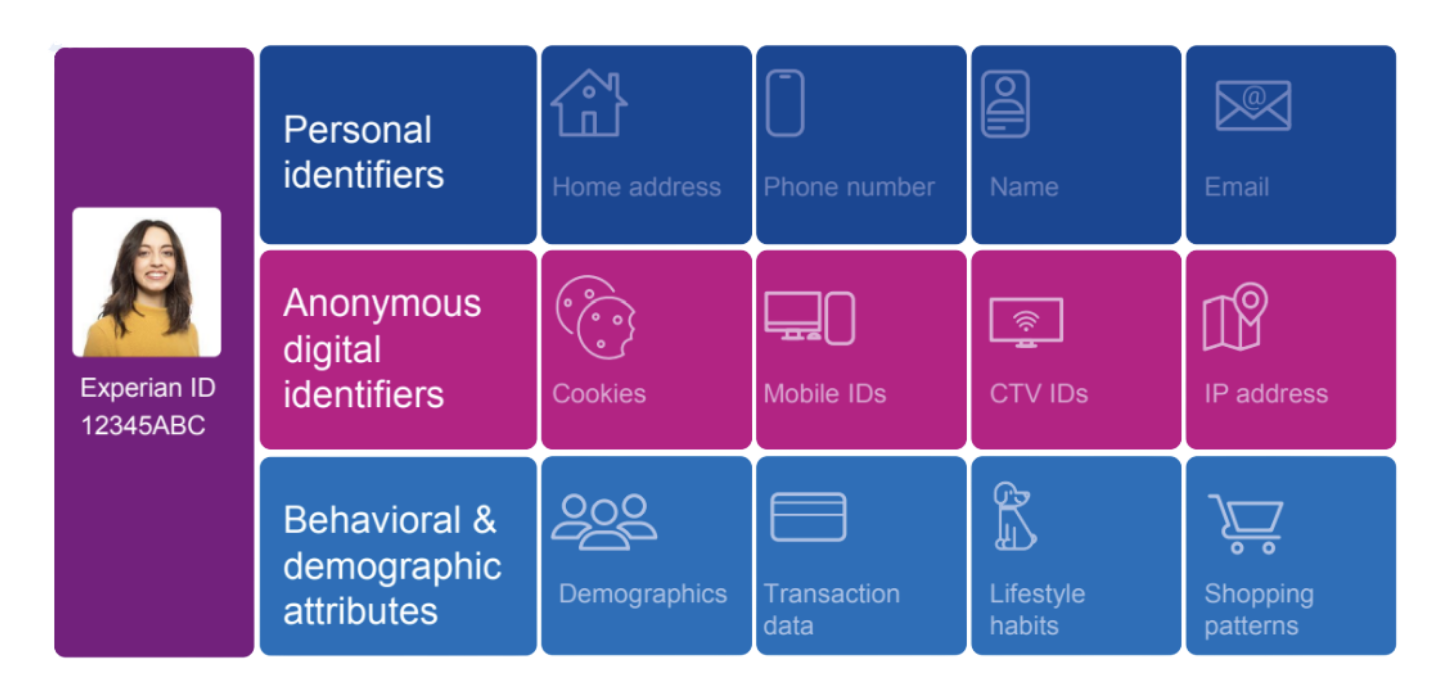
Common identifiers include:
- Cookies: Short-lived browser data
- Emails: Plain-text and hashed
- Device IDs: Mobile advertising IDs (MAIDs) or app-based identifiers
- Loyalty IDs: Program numbers that tie online and offline activity
- Hashed PII: Personally identifiable information (PII) encrypted for privacy
Ultimately, identity resolution can help you recognize the same customer wherever they engage.
Why does identity resolution matter now?
Marketers face incomplete views, data silos, privacy regulations, and shrinking visibility:
- Rising consumer expectations: People want seamless, personalized journeys across touchpoints.
- Privacy-first environment: Consumer privacy legislation (like the GDPR, CCPA, GLBA, FCRA, and new state laws) makes compliance non-negotiable.
- Signal loss: The decline of cookies, MAIDs, and walled gardens are pushing brands toward first-party data.
Experian utilizes AI and machine learning to fill these gaps, predict behaviors, and connect signals across devices — providing marketers with a clear, privacy-safe view of their customers, even when traditional identifiers are missing.
In this environment, identity resolution matters because it gives marketers a way to deliver seamless, personalized customer experiences and engage audiences effectively while respecting their privacy. It’s the basis for turning consented first-party data into measurable marketing outcomes without sacrificing trust.
Why is identity resolution critical in a privacy-first world?
Even as cookies linger, marketers have already shifted their strategies to rely on first-party data, where choice and transparency are the baseline expectation. At Experian, our long history as a regulated data steward makes us a uniquely capable and trusted partner for managing modern compliance expectations. Our identity resolution solutions maximize the value of permission-based data while meeting consumer demand for privacy, personalization, and control.
Struggling with scattered customer data? Experian makes identity resolution seamless
How does identity resolution help brands?
Identity resolution turns fragmented signals into unified profiles that drive personalization, efficiency, and compliance. Here’s how it creates measurable business impact.
Creates a unified customer view
One of the biggest advantages of identity resolution is the ability to integrate data from loyalty programs, point-of-sale (POS) systems, customer relationship management (CRM) platforms, web analytics, and offline sources into a single, comprehensive profile. Experian strengthens identity resolution with AI-driven clustering models that resolve household and individual identities across billions of signals with greater accuracy.

With a clearer picture of each customer, brands see higher match rates and larger addressable audiences, which translates to more substantial reach and better return on ad spend (ROAS).
Enables better personalization
Customers constantly switch devices, update their information, and change preferences. Experian makes it easier to keep pace with these changes through frequent data enrichment and near-real-time identity resolution via Activity Feed.
Combined with our long-standing use of AI and machine learning, this approach ensures shifting behaviors are captured quickly, enabling timely personalization, and more responsive engagement.

With less delay from data to action, the result is faster response times and higher conversion rates.
Improves the customer experience
Customers notice when brands deliver relevant ads and contextual content across every channel. Consistency matters! But consistency doesn’t just happen on its own; it comes from identity resolution, which keeps the customer journey connected.
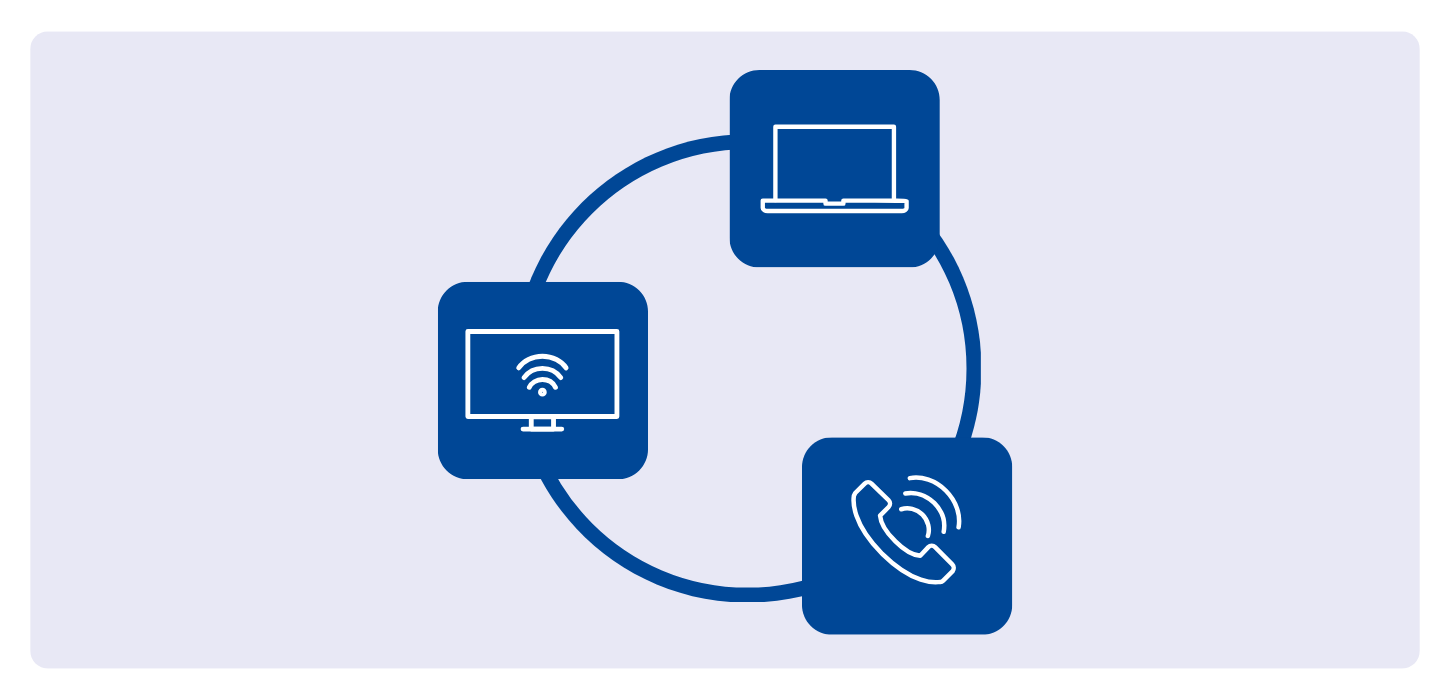
As brands maintain continuity, they build trust, strengthen engagement, and increase customer lifetime value.
Drives better marketing ROI
Not every profile is valuable. Identity resolution helps marketers identify the highest-value audiences and reduce wasted spend.

That efficiency leads to lower CPA and a higher overall ROI across campaigns.
The power of modeling from a stronger foundation
When you have a unified customer view, your models are built on better data. That means you can find more people who look like your best customers, build more responsive audience segments, and target with greater accuracy. This foundation can lead to better spending, more relevant campaigns, and a higher ROI.
Maintains privacy compliance
With GLBA/FCRA-grade standards and consumer choice mechanisms like opt-outs and data correction, you can protect your brand while maintaining personalization — without compromising legal or ethical safeguards.

What are some identity resolution use cases and examples?
Every industry faces its own unique identity challenges, but identity resolution is the common thread that turns scattered data into connected experiences. Let’s break down how companies in different verticals are putting it to work (and the kinds of results they’re seeing).
Retail and e-commerce
Shoppers bounce between websites, carts, and checkout lines, leaving behind scattered signals in the process. In retail, identity resolution bridges the gap between online and in-store experiences by matching online carts with loyalty swipes or connecting connected TV (CTV) exposure to in-store sales. This means fewer silos, better targeting, and more personalized offers wherever people shop.

Our 2025 Digital trends and predictions report calls out that omnichannel experiences aren’t optional anymore. With CTV and social dominating spend, brands need identity resolution to cut through silos and build a complete view of customer behavior.
Financial services
In financial services, identity resolution makes it possible to deliver personalized, compliant offers like refinancing options for likely mortgage switchers or the right rewards card for frequent spenders.
Our partnership with FMCG Direct to create Consumer Financial Insights® and Financial Personalities® segments helps banks, insurers, and lenders understand behaviors — such as credit card use, deposit balances, and investment habits — without exposing sensitive details.
Read more below about how our financial audiences enable privacy-safe personalization.
Travel and hospitality
Travel decisions aren’t always planned out in advance. Many bookings happen spur-of-the-moment, which is why real-time identity resolution is so powerful; it keeps the journey seamless when travelers jump from phone to laptop to tablet and presents relevant offers right as decisions are being made.
Windstar Cruises put this information into action with Experian’s identity graph to connect digital interactions with actual bookings, which drove 6,500+ reservations and $20 million in revenue.
Media and TV
Viewers tend to hop around between linear TV, streaming apps, and social feeds. And without identity resolution, every screen looks like a different person. Marketers can accurately plan, activate, and measure campaigns by unifying viewing behaviors into one ID with Experian’s AI-powered identity graph.

Optimum Media tackled its multiscreen challenge by partnering with Experian for identity solutions. Layering our audience insights and our AI-driven Digital Graph onto their subscriber data, they were able to connect the dots across channels, reach the right households, and measure results instead of just impressions. In the end, they finally got a clear view of what works across every screen.
Curious how identity resolution can power your customer analytics? We can walk you through it.
Healthcare and pharma
Healthcare marketers can’t afford slip-ups with HIPAA regulations. Identity resolution makes it possible to engage the right patients and providers with de-identified audiences rather than third-party cookies.
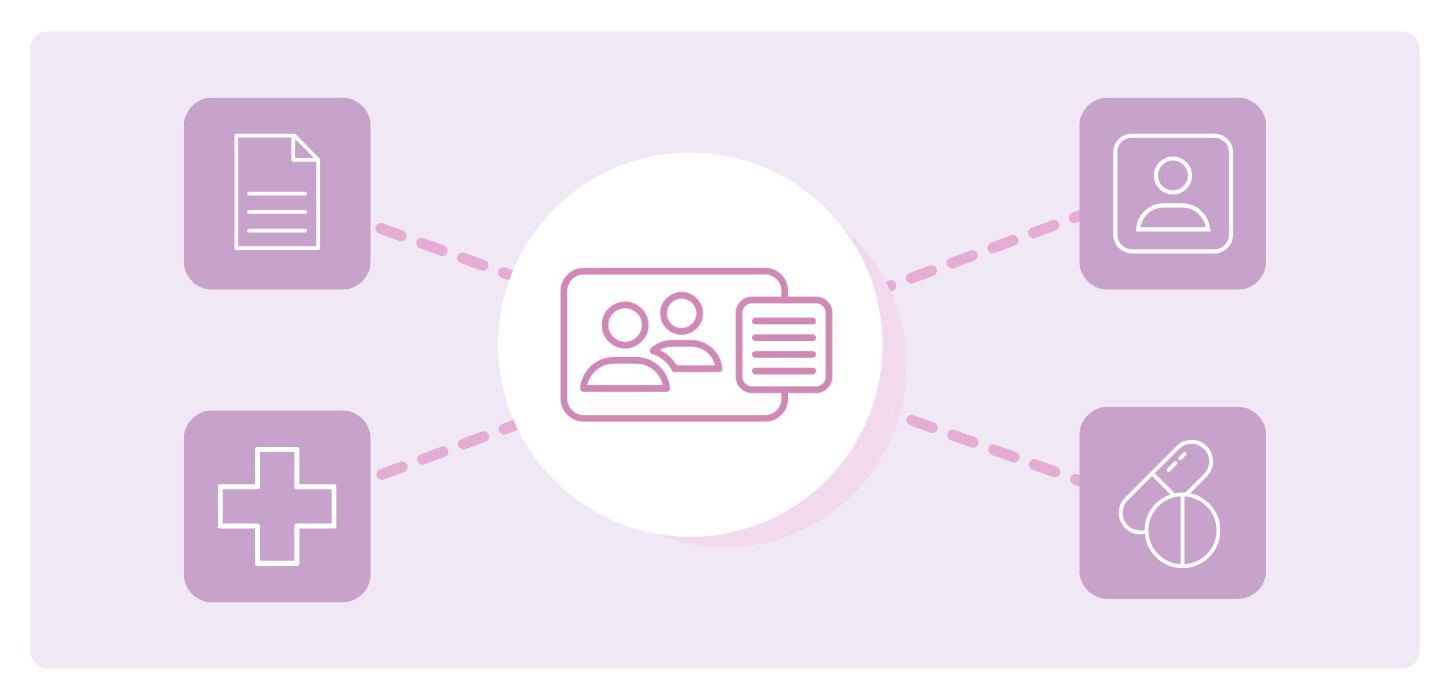
At Experian, AI and machine learning have always been part of how we power identity resolution. In healthcare, that means using AI-enhanced modeling to connect de-identified clinical and claims data with lifestyle insights. The result is a more comprehensive picture of the patient journey that helps close care gaps, reduce wasted spending, and improve outcomes.
By working with partners like Komodo, PurpleLab, and Health Union, we make it possible to activate campaigns at scale that boost engagement and adherence while keeping patient privacy front and center:
- Komodo Health enriches our identity graph with insights from millions of de-identified patient journeys plus lifestyle data, giving brands a fuller view of where care gaps exist and how to close them.
- PurpleLab connects real-world clinical and claims data to Experian’s platform, letting advertisers activate HIPAA-compliant audiences across CTV, mobile, and social with the ability to measure real outcomes like prescription lift and provider engagement.
- Health Union contributes a data set built from 50 million+ patient IDs and 44 billion+ patient-reported data points. Combined with our identity and modeling capabilities, this expands match rates and unlocks up to 76% net-new reach, so campaigns reach patients and caregivers in critical health moments.
As a result, healthcare brands can launch campaigns that are privacy-first, highly targeted, and proven to drive meaningful impact.
Audio
People use audio while commuting, working out, and even folding laundry. It can be one of the hardest channels to track because of how frequently listeners switch between apps, stations, and devices.

Experian’s identity resolution partnerships with Audacy and DAX change the game:
- Audacy helps tie scattered listening into a single view, so advertisers can follow audiences across devices and keep ads relevant in the moment.
- DAX pairs Experian’s 2,400+ syndicated audiences with its audio network, enabling brands to target precisely and launch impactful campaigns at scale.
These partnerships turn audio into an accurate channel where ads feel personal, privacy-safe, and measurable.
Gaming
Gamers don’t stick to one platform. Player data gets scattered across mobile, console, and PC, so it’s tough to keep track of individuals. Experian helps stitch those signals together so publishers can finally see the whole picture, personalize gameplay, and keep players coming back.
With enriched profiles, publishers can deliver offers that resonate and unlock fresh revenue by packaging high-value gaming audiences for advertisers outside the industry.
Unity, a leading gaming platform, is tapping into Experian’s syndicated audiences to gain player insights and help advertisers reach gamers across mobile, web, and CTV. For global publishers, unifying player data with Experian has driven higher engagement and stronger ad ROI.
How should I evaluate identity resolution providers?
When choosing an identity resolution partner, look for:
- Data scale and quality: The value of identity resolution depends on how complete and accurate the underlying data is. The right provider should bring together a wide range of identifiers from online and offline sources, maintaining high accuracy so your customer profiles are broad and reliable.
- Match accuracy and recency: The best partners also refresh their data regularly and can blend deterministic (exact, one-to-one matches) with probabilistic (pattern-based matches) methods. That way, you get the accuracy of “this email is definitely that customer” with the reach of “this device likely belongs to the same person.”
- Privacy and compliance readiness: Compliance can’t be an afterthought. Your identity partner should be ready for GLBA, FCRA, GDPR, CCPA, and the latest state-level rules with built-in tools for opt-outs, corrections, and deletions.
- Integration flexibility: A good provider fits into your world, not the other way around. Look for pre-built integrations with your customer data platform (CDP), demand-side platform (DSP), or marketing tech (MarTech) stack so you can get up and running without the heavy IT lift.
- Data analytics capabilities: You need proof that identity resolution drives ROI. Look for closed-loop measurement that ties unified IDs directly to campaign performance, so you can see what’s working and optimize with confidence.
How Experian enables enterprise-grade identity resolution
Experian delivers identity resolution at the scale, accuracy, and compliance required by the world’s largest enterprises. Our solutions are:
- Built on trust: Backed by 40+ years as a regulated data steward and rated #1 in data accuracy by Truthset, so you can act with confidence.
- Powered by our proprietary AI-enhanced identity graph: Combining breadth, accuracy, and recency across four billion identifiers, continuously refined by machine learning for maximum accuracy.
- Seamlessly connected: Pre-built data integration with leading CDPs, DSPs, and MarTech platforms for faster time to value.
- Always up to date: Frequent enrichment and near-real-time identity resolution through Activity Feed for timely personalization and more responsive customer engagement.
- Privacy-first by design: Compliance with GLBA, FCRA, and emerging state regulations baked in at every step, supported by rigorous partner vetting.
The bottom line
Identity resolution turns fragmented signals into connected, measurable, and compliant experiences. From retail to gaming, brands using it see stronger personalization, engagement, and ROI.
With Experian, you get the data, trust, and responsible AI innovation to make identity resolution work across every channel. Our approach uses AI to connect identities, predict behaviors, and deliver personalization that balances privacy with performance. If you’re ready to turn fragmented data into growth, now’s the time to start.
The world’s leading brands trust us to power identity resolution at scale. See how we can do the same for you.
Identity resolution FAQs
Deterministic uses exact identifiers (like an email) for accuracy, while probabilistic uses signals and algorithms to expand reach. Best-in-class providers usually combine both.
Identity resolution helps with personalization by unifying scattered signals into one profile. It reduces wasted spend and increases match rates, which means bigger addressable audiences and higher ROAS.
Yes. With first-party data and hashed PII, brands can still maintain addressability and personalization.
Retail, finance, travel, media, gaming, and audio all use identity resolution to personalize, attribute sales, and improve efficiency.
A customer data platform unifies the data you already own. Meanwhile, we add depth, scale, and higher match rates by layering in our identity graph and data enrichment.
Yes. Experian is GLBA/FCRA compliant, GDPR/CCPA ready, and supports consumer opt-outs and corrections to ensure responsible personalization.
Latest posts

Learn how retail marketers use Experian Audiences to reach consumers based on shopping patterns, purchase behavior, engagement preferences, and discretionary spend signals.

Commerce media networks have had a strong start. Growth has been fast, demand has been strong, and brands have made it clear they want closer access to commerce-driven audiences. But as more networks mature and enter the space, many are starting to feel the same pressure point: scale. Most commerce media networks were built as managed service businesses. That model works well early on. High-touch, white-glove partnerships make sense when you’re working with a handful of strategic brands. But there’s a ceiling. There are only so many teams, only so much inventory, and only so many advertisers that model can realistically support. It’s one thing for a large retailer to build custom programs for a P&G. It’s another to do that at scale for hundreds or thousands of brands. At some point, growth slows, not because demand disappears, but because the model can’t stretch any further. The scale problem no one likes to talk about That’s where many commerce media leaders find themselves today. Pausing to assess what comes next. For a long time, growth has been measured almost entirely through media dollars. That mindset is understandable. Media is familiar, it’s easy to quantify. It shows up clearly in negotiations and revenue reports. But viewing commerce media networks purely as media sales engines creates long-term risk. It can strain brand relationships, limit innovation, and distract from what commerce media networks actually do better than almost anyone else: understand consumers deeply. Signals are the real asset Commerce platforms sit close to decision-making. They see what people search for, what they consider, what they buy, and when those behaviors change. Those signals are incredibly powerful. And yet, most networks only activate them inside their own walled environments. That’s a missed opportunity. Curation represents the next area of growth for commerce media networks, and it doesn’t require replacing or diminishing existing media revenue. In fact, it complements it. No single commerce media network has all the data needed to give advertisers the scale and reach they’re looking for. And no advertiser wants to recreate the same audience in dozens of disconnected platforms. That friction creates inefficiency and slows decision-making. Why collaboration supports sustainable growth The opportunity is to look beyond first-party data alone and start thinking about collaboration. Second-party data. Data partnerships. Signal sharing done responsibly and transparently. Imagine an advertiser defining an audience once and being able to understand and reach that audience across multiple commerce environments. Not through a series of disconnected buys, but through a more consistent approach built on shared understanding leading to increased reach and more impactful campaigns. That’s easier for advertisers to manage, and it creates an additional revenue stream for commerce media networks that complements media sales rather than competing with them. Curation strengthens media, it doesn’t replace it Media will always play an important role. There is clear value in custom experiences tied directly to a commerce environment. Think buyouts, sponsored experiences, custom creative integrations. Those are situations where brands want to work closely with the network itself. But the signals commerce media networks hold don’t need to be limited to those moments. Those signals can be monetized independently through data products, co-ops, and partnerships that extend their value into other channels. That’s how curation adds value without undercutting existing revenue. A practical path forward for commerce media leaders For commerce media leaders thinking about their next phase of growth, the focus should be on sustainability. Building a massive media operation takes time and investment. Data-driven revenue streams can be introduced more quickly, require fewer internal resources, and provide steadier margins. It’s a practical approach. Use signal-based revenue to fund growth. Let that revenue support investment in tooling, talent, and media innovation over time. Bootstrapping, in the truest sense. Why transparency matters early There’s also a broader responsibility here. In many advertising channels, transparency followed growth, often after pressure from the market. Commerce media networks have an opportunity to do this differently. To lead with transparency from the start. To be clear with brands and consumers about how data is used, how signals are created, and how value flows through the ecosystem. Because the reality is this: commerce media networks are holding some of the most valuable intent signals in the market today. But those signals don’t retain their value in isolation. If they aren’t enhanced, combined, and made accessible in the right ways, someone else will step in to do it. And when that happens, control shifts away from the source. The bottom line The next chapter of commerce media isn’t just about selling more media alone. It’s about recognizing the value of the signals already in hand, working together to make them more useful, and building additional revenue streams that support long-term growth. That’s how commerce media networks grow without eating their own lunch. About the author Kevin Dunn Chief Revenue Officer, Experian Kevin Dunn joins Experian Marketing Services with more than 20 years of leadership experience across marketing and advertising technology, most recently serving as Senior Vice President of Brands and Agencies at LiveRamp. In that role, he led growth across retail, CPG, travel, hospitality, financial services, and healthcare, overseeing new business, account expansion, and channel partnerships. Kevin is known for building cohesive, accountable teams and leading with optimism, clarity, and a strong sense of shared purpose. His leadership philosophy centers on empowering people, driving positive outcomes for clients and fostering a culture where teams can grow, take smart risks, and succeed together. Latest posts

Learn why programmatic curation is becoming the standard for privacy-first, performance-driven media buying in 2026.