At A Glance
Experian Audiences are now available in the Adobe Advertising DSP, giving advertisers and agencies a faster way to move from audience strategy to activation. This integration brings more than 3,500 Experian Audiences into the Adobe Advertising DSP, pairing reliable data, identity and media-buying tools to support relevance, reach, and campaign performance.For marketers, the goal is simple: dependable data, connected tools, and a more direct path from audience strategy to measurable advertising outcomes.
For many advertisers and agencies, audience strategies frequently stall between planning and activation. Teams may identify whom to reach, but require reliable data, scalable identities, and a direct path to media-buying platforms. Experian Audiences are now available in the Adobe Advertising DSP, giving marketers access to more than 3,500 audiences built with reliable data to support faster activation, broader reach, stronger relevance, and better campaign performance.
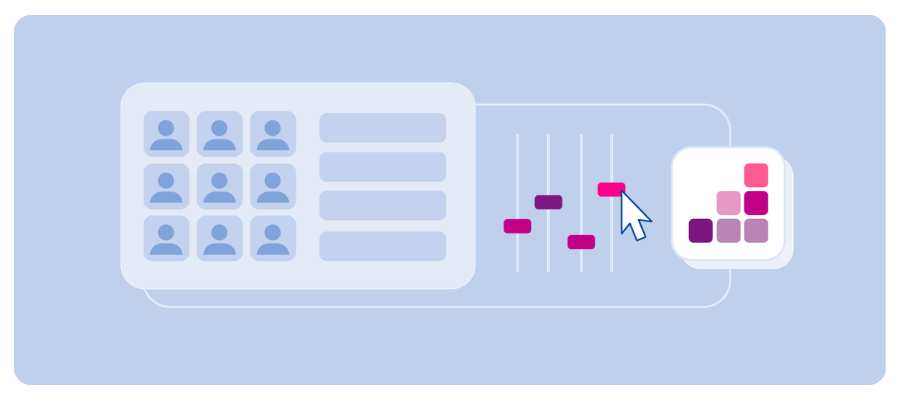
This brings together Experian’s data, audiences, identity, and partner ecosystem with Adobe Advertising’s AI-powered ad-buying capabilities within Adobe Experience Cloud. Adobe Advertising helps brands centralize planning, optimize media, and improve performance through purpose-built AI and integrated tools across Adobe Analytics, Adobe Customer Journey Analytics, and Adobe Real-Time CDP.

“Advertisers need audience solutions that are accurate, addressable, and easy to activate. Bringing Experian Audiences into the Adobe Advertising DSP gives marketers a faster path from reliable data to action. Together, Experian and Adobe Advertising help brands reach the right audiences, improve efficiency, and strengthen campaign performance.”
ExperianAli Mack, VP AdTech
How Experian Audiences support activation in the Adobe Advertising DSP
Marketers want to better understand their customers, engage them across channels, and accurately measure campaign impact. That is where Experian and Adobe Advertising can help.
Experian’s Digital Graph connects digital identifiers to households and individuals, helping advertisers extend audience reach across channels. For the Adobe Advertising DSP, this supports more addressable activation from first-party and third-party audience sources and gives marketers a stronger path to reach their intended audiences at scale.
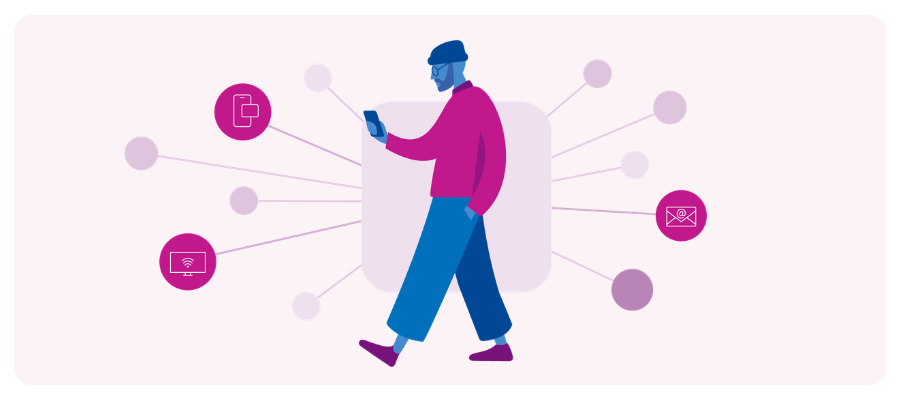
Adobe Advertising advances this approach by unifying advertising and marketing technology. Their platform manages planning, buying, measurement, and optimization across connected TV (CTV), search, social, display, audio, and commerce channels.
Together, Experian and Adobe Advertising make it easier for advertisers to activate high-quality audiences where media decisions happen.
With Experian Audiences now available in the Adobe Advertising DSP, advertisers can:

“Our collaboration with Experian brings premium, identity-based audiences directly into Adobe Advertising, giving advertisers everything they need to perform. Together we’re putting powerful, identity-based audiences alongside advertisers’ own data to power custom algorithms that actually move the needle.”
Adobe AdvertisingPhil Cowlishaw, Managing Director
Audience strategies advertisers can activate in the Adobe Advertising DSP
Advertisers and agencies need a faster, more flexible way to move from campaign brief to audience activation. Whether you want toreach in-market shoppers, build a tailored audience, or connect messaging to consumer behavior,Experian Audiences gives advertisers and agencies a flexible way to progress from campaign brief to audience activation in the Adobe Advertising DSP.
Why connected audience activation matters for advertisers and agencies
Advertising has moved toward connected solutions that bring data, identity, media execution, and measurement together to drive stronger results.
For agencies and marketers, this unified approach simplifies audience planning and helps turn strategy into scalable media plans.
Together, Experian and Adobe Advertising give teams access to trusted audiences, AI-powered tools, and connected workflows that improve performance across the media lifecycle.
Connect with us to learn more
FAQs
Experian Audiences are now available directly in the Adobe Advertising DSP, giving advertisers access to more than 3,500 audiences for campaign activation. Marketers can move from audience planning to media execution with fewer handoffs between strategy, data selection ,and buying workflows.
Experian’s data, audiences, and identity foundation help marketers connect audience strategy to activation in the Adobe Advertising DSP. Experian’s Digital Graph connects digital identifiers to households and individuals, supporting addressable reach across first-party and third-party audience sources.
Advertisers can use Experian Audiences to support financial services, retail, CPG, auto, healthcare, pharma, TV and lifestyle campaigns. These audiences help marketers align campaign goals with consumer behaviors, purchase signals, channel preferences, and vertical-specific audience needs.
The Experian and Adobe integration helps agencies turn client audience strategies into scalable media plans inside the Adobe Advertising DSP. Agencies can use Experian Audiences to support planning, activation and optimization across channels such as CTV, display, audio, and commerce.
Latest posts

Brands can leverage non-clinical factors, like the social determinants of health, to gain a holistic view of their patients and increase access to care.
Next up in our Ask the Expert series, we hear from Sarah Ilie and Lauren Portell. Sarah and Lauren talk about the internet’s value exchange – what we gain and lose when it’s so easy to share our information. Is convenience hurting or helping us? The age of connectivity Today, it’s almost unimaginable to think about how your day-to-day life would look without the convenience of the internet, smartphones, apps, and fitness trackers; the list goes on and on. We live in the age of connectivity. We have the convenience to buy products delivered to our homes on the same day. We can consume content across thousands of platforms. We also have watches or apps that track our health with more granularity than ever before. The internet’s value exchange In exchange for this convenience and information, we must share various kinds of data for these transactions and activities to take place. Websites and apps give you the option to “opt in” and share your data. They also often let you know that they are collecting your data. This can feel like an uncomfortable proposition and an invasion of privacy to many people. What does it mean to opt-in to a website or app’s tracking cookies? What value do we exchange? What opting in means for you Opting in to cookies means that you are allowing the app or website to track your online activity and collect anonymous data that is aggregated for marketing analytics. The data provides valuable information to understand users better to create better online experiences or offer more useful products and content. Granting access to “tracking” offers several benefits to users such as a customized, more personal user experience or advertising that is more likely to be relevant. For example, let’s imagine you have recently been using an app or website to plan a camping trip. By sharing your data, the website or app has visibility into what is interesting or useful to you which can lead to related content suggestions (best campsites) or relevant advertising and product recommendations (tents and camping equipment). It’s important to know that the marketing data collected when you opt in is extremely valuable. The revenue that advertising generates is often very important to websites and apps because this is how they make money to continue providing content and services to consumers. Data privacy practices Privacy concerns regarding how companies and developers use tracking information have risen over the last couple of years and have resulted in additional protection for consumers’ privacy while still allowing companies to improve their products and advertising. One big step in this direction has been simply making people aware that their data is being collected, why it’s being collected, and providing users with the option to share this data for marketing analytics through opting-in or not. Other important steps to maintain online privacy include formal legal legislation and self-regulation. The right to privacy is protected by more than 600 laws between individual states and federal legislation and the U.S. House Committee on Energy and Commerce recently voted to pass the American Data Privacy and Protection Act. Additionally, marketing organizations such as the Interactive Advertising Bureau and Association of National Advertisers regulate themselves with codes of conduct and standards given there is so much attention on privacy issues. Is the internet’s value exchange worth it? The data that we choose to share by opting in has a lot of benefits for us as consumers. There are laws in place to protect our data and privacy. Of course, it’s important to be aware that data is collected and used for marketing purposes, but it’s also reasonable to share a certain amount of data that translates into benefits for you as well. The best data unlocks the best marketing. Contact us to tap into the power of the world’s largest consumer database. Learn how you can use Experian Marketing Services’ powerful consumer data to learn more about your customers, drive new business, and deliver intelligent interactions across all channels. Meet the Experts: Lauren Portell, Account Executive, Advanced TV, Experian Marketing Services Sarah Ilie, Strategic Partner Manager, Experian Marketing Services Get in touch

While the weather outside is frightfully hot this summer, it’s never too soon to start thinking about the holidays – and consumers are more likely to start their holiday shopping early this year. To get you ready for the 2022 holiday shopping season, we looked back at consumer shopping trends from 2019-2021. What did we learn and what trends do we expect to see this year? Let’s look back. A look back Over the last three years, average consumer spending has increased. Record 2021 holiday sales came amidst a wave of COVID-19 cases, rising inflation, labor shortages, and supply chain problems. Despite these challenges, consumers continued to let it snow when it came to spending during the holiday season. 2022 has been a year with its own economic roadblocks – the war in Ukraine, rising gas prices, and recession concerns. Yet 2021 was a banner year for holiday sales despite its obstacles, and we predict similar trends in the 2022 holiday shopping season. What trends do we expect to see for the most wonderful time of the year? 2022 predictions While consumer spending remains strong, changing economic conditions continue to shape shopper behavior. To develop our predictions for 2022 holiday shopper behavior, we focused on four key areas: When consumers shop Where consumers shop What consumers purchase Consumer media preferences Now, let’s make our holiday campaign planning checklist and check it twice. When consumers shop Chestnuts roasting on an open fire. Jack Frost nipping at your nose. Those aren’t the only ways to know when the holiday season has begun. Shoppers tend to spread out their holiday purchases across multiple months and were more likely to start shopping earlier. To understand holiday retail sales trends from 2019-2021, we identified four shopper segments: Early Shoppers Traditional Shoppers Late Shoppers Random Shoppers What differences did we see between our four shopper segments? Early shoppers made almost half of their holiday purchases in October Random shoppers spread out their holiday purchases evenly across multiple months Late shoppers made almost half of their holiday purchases in December Traditional shoppers made almost half of their holiday purchases in November While December continues to dominate holiday sales, October has started to gain traction over the last three years, and November remains a core shopping month. Everybody knows a turkey and a mistletoe help to make the season bright but knowing when your consumers are most likely to shop will help deck your campaign planning halls. Jingle bell rock your way to holiday sales that shine bright with our tips to prepare for earlier shoppers: Offer targeted promotions earlier in the shopping season Target your ads based on the shopping habits of your customers throughout the season Where consumers shop There’s no place like home for the holidays but most consumers aren’t shopping from home. Despite the rise in online shopping, brick and mortar locations continue to dominate holiday sales. October is the most popular month to take a one-horse open sleigh to a store, and consumers gather around the fire to online shop in November and December. With most shoppers preferring to shop in-store, and e-commerce popularity growing, it’s critical to think about bridging the gap between your online and offline presence for the consumer. Are you offering multiple paths to purchase with solutions such as BOPIS (Buy Online, Pickup In-Store)? Go down in history like Rudolph with our tips to prepare for more in-store shopping: Focus on in-store shopping experience technology (self-checkout, VR, QR codes, scan to pay, etc.) Offer multiple paths to purchase to connect your online and physical presence through methods such as BOPIS (Buy Online, Pickup In-Store), BORIS (Buy Online, Return In-Store), and ROPO (Research Online, Purchase Offline), etc. What consumers purchase When it comes to holiday gifts, for some, only a hippopotamus will do. Compared to pre-pandemic, shoppers are spending more at apparel stores and mass retailers. Spending at specialty retailers, warehouse clubs, and on office, electronic, and games is almost the same across holiday and non-holiday shopping months. Time for toys and time for cheer may be year-round, but are there any correlations between where consumers shop (online vs. in-store) and what they purchase? Our data found that shoppers who bought from mass retailers were more likely to shop online, while shopping for apparel and warehouse clubs was done at a physical store location. Put this insight to the test by thinking through how you can target your consumer based on where they shop in-store and online. You just might find that hippopotamus at a brick and mortar mass retailer location! Consumer media preferences Do you see what I see? While we are seeing a shift to digital media channel preference, consumers still engage with traditional media channels like direct mail and the traditional newspaper. Successfully connecting with your customers involves capturing their attention through the right channel. We found that our four shopping groups prefer a mix of traditional and digital media channels. What does your media channel mix look like? Hark! The herald angels sing of ways to adapt to the change in holiday spend and media preferences: Align your activation efforts to digital, but don’t forget about traditional channels Expand your targeting and activation focus beyond in-store vs. online Download our new 2025 report For a deeper dive into our predictions and actionable insights you can use to take your holiday campaign planning home for the holidays, download our new 2025 report, in collaboration with GroundTruth. Experian data can help you refine your content and creative strategy to achieve maximum ROI for each campaign across all your channels. Download now Get in touch