At A Glance
Addressable advertising helps you reach addressable audiences with relevant messages across digital, TV, and streaming. As signals fragment across browsers, apps, and platforms, AI customer segmentation and privacy-first identity separate guesswork from accuracy. Experian brings trusted data, identity resolution, and activation partnerships together so you can connect with people in ways that feel relevant, respectful, and measurable.In this article…
A decade ago, you could buy media by broad categories and call it a day. But today, your audience lives in a curated world. They watch what they want, skip what they don’t, and expect what they see to match their interests. Research shows that when ads are tailored to households, people pay more attention, stay engaged longer, and are more likely to remember your ads.
That shift in expectations is why addressable advertising continues to grow. It’s a practical response to how media works today, with audiences moving fluidly across platforms, streaming spread across services, and measurement spanning screens and environments. Under these conditions, reaching the right people depends on clarity, not approximation.
Artificial intelligence (AI) strengthens that clarity. When applied responsibly, AI helps connect signals, deepen audience understanding, and deliver relevant messages while protecting consumer data. The result is advertising that feels more human, not less.
What is addressable advertising?
Addressable advertising is the ability to deliver personalized ads to specific individuals or households and measure results using privacy-safe data and identity. It works across digital, connected TV (CTV), linear TV, and over-the-top (OTT) streaming and relies on strong identity resolution and accurate data inputs to ensure your audience definitions remain consistent across channels and over time.
Benefits of addressable advertising
Addressable advertising changes how advertising performs by delivering messages to defined audiences, reducing wasted impressions, and making results simpler to measure.
| Benefit | What it means for you |
| Clarity | Reach the right audience with the personalized messages they want, instead of hoping the right people are watching |
| Efficiency | Avoid wasted impressions by focusing spend where interest already exists |
| Higher ROI | Improve conversion by delivering messages that feel relevant |
| Omnichannel consistency | Carry the same message across digital and TV without starting over |
| Measurable impact | Connect exposure to actions so performance is clear |
| Privacy and compliance | Activate audiences responsibly using privacy-safe data, clear governance, and compliant practices |
These are some of the reasons that addressable advertising has moved from a niche tactic to a core strategy. When audiences are clear, identity is connected, and measurement is built in, advertising becomes relevant, accountable, and easy to improve over time.
Addressable advertising vs. traditional advertising
Unlike traditional advertising, addressable advertising doesn’t depend on broad exposure or assumptions. It’s personalized by design and measurable by default, making it possible to connect ad exposure to outcomes. Another distinction is in how addressable delivers advertising to audiences and how performance is measured.
| Traditional media buys | Addressable advertising buys |
| You pay for broad reach | You pay for relevant reach to defined audiences |
| Ads run by placement or program | Ads are delivered to known households or individuals |
| Personalization is limited | Personalization is built into delivery |
| Measurement indicates trends, not who actually acted | Measurement connects exposure to actions by linking ads to defined audiences across channels |
But before you can activate addressable advertising, you need to understand who you’re actually trying to reach.
What is an addressable audience?
An addressable audience is a group of people you can identify and reach using data-based targeting. In other words, they’re not anonymous “maybe” viewers. They’re a defined audience you can activate across channels.
Here’s what typically builds addressable audiences:
| Factor | What it is | Why it matters |
| First-party data | Data from your own relationships (site activity, app activity, CRM, emails, purchases) | It’s your most direct view of existing customers and prospects |
| Third-party household and individual data | Demographic, behavioral, lifestyle, interest, and intent attributes from trusted providers | It fills gaps so your audience definitions don’t collapse when your own data is limited |
| Identity resolution | A privacy-first way to match people across devices, households, and channels | It improves accuracy so you don’t over-message the same people or miss them entirely |
| Contextual signals | Page-level, content, or viewing context where ads appear | It reinforces relevance in the moment and complements addressable targeting when identity signals are limited |
How Experian helps with addressable audiences
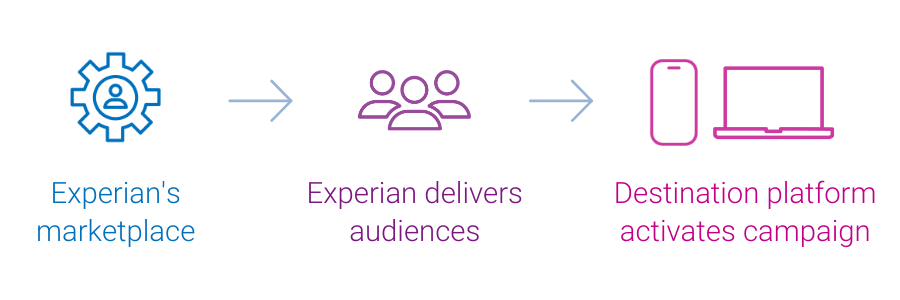
Experian helps you build and activate addressable audiences at scale without losing accuracy or trust. With more than 3,500 syndicated audiences available, you can activate consistently across 200+ destinations — including social platforms like Meta and Pinterest, TV and programmatic environments, and private marketplaces (PMPs) through Audigent.
That means reaching people based on who they are, where they live, and their household makeup, using data governed with care. Our approach is built on accuracy first, which is why Experian data is ranked #1 in accuracy by Truthset for key demographic attributes.
And when standard customer segments aren’t enough, Experian Partner Audiences expand what’s possible. These unique audiences are available through Experian’s data marketplace, within Audigent for PMP activation, and directly on platforms like DIRECTV, Dish, Magnite, OpenAP, and The Trade Desk.
The evolution of addressability and why it matters more than ever
As the media ecosystem shifts, reaching people across browsers, apps, CTV, and streaming platforms has become more complex. Signals are fragmenting everywhere as expectations for relevant, personalized experiences continue to rise, while reliable identifiers become increasingly challenging to access.

In response, addressability is shifting from a channel-specific tactic to an identity-driven approach to reach and measure defined audiences across screens.
That evolution puts new pressure on performance. Marketing budgets require accuracy and accountability, which means targeting must deliver measurable reach and outcomes you can trust.
At the same time, the growth of CTV and streaming is expanding addressable TV opportunities. As CTV inventory grows, so does the need for cross-channel, identity-based activation that works consistently and supports reach, frequency, and measurement in one connected view. That’s why identity has become the foundation for making addressable advertising work today.
When to apply addressable advertising
You don’t need addressable for everything, but it shines when you need your spend to go farther with accurate targeting and resonant messaging.
| Scenario | Why addressable helps |
| Product launches and seasonal pushes | Reach people who are more likely to care without flooding everyone else |
| High-consideration purchases (auto, travel, financial services) | Focus on likely intent and suppress audiences that don’t fit |
| Cross-channel campaigns (digital, TV, mobile) | Keep messaging consistent across screens |
| When using first-party data with AI | Use AI customer segmentation to scale responsibly and improve performance without sacrificing accuracy |
| Regulated categories | Rely on compliant data practices and clearer controls for regulated industries |
Addressable advertising is one way to put relevance and respect into practice — but it shouldn’t be the only time these principles apply. Marketers are expected to be thoughtful about who they reach, how often they show up, and how data is used across every channel. Addressable simply makes it easier to live up to that standard when accuracy, accountability, and scale matter most.
Addressable advertising and third-party data
There’s a common misconception that third-party data is no longer useful, but what’s really changed is the environment around it.
In the early days of digital advertising, third-party data often felt like the Wild West. Today, modern third-party data is more transparent, better governed, and held to far higher standards with:
- Clear data sourcing
- Documented consent practices
- Regular quality audits
- Strict limits on how data can be used
Used responsibly, third-party data plays a critical role in addressable advertising by complementing your first-party data and keeping audience strategies flexible as signals change.
Benefits of third-party data
When paired with identity resolution, high-quality third-party data helps you:
- Fill first-party gaps: Add demographic, behavioral, and interest-based insight when your own data is limited.
- Expand prospecting: Reach new audiences through modeling and lookalike expansion.
- Enrich segmentation: Combine household, behavioral, and interest signals to tailor creative, offers, and messaging to interests for more accurate and personalized activation.
- Support cross-channel addressability: Maintain consistent audience reach across devices and channels even as individual signals change.
Why work with Experian for your data needs?
At Experian, we approach third-party data with the belief that trust comes first. Our data is privacy-compliant, ethically sourced, and governed by strict standards so you can use it confidently.
Accuracy matters just as much. Our identity and data-quality framework verifies that the data behind your audiences holds up in the real world — a key reason Experian is ranked #1 by Truthset for key demographic attributes.
And because addressable advertising only delivers value when audiences move seamlessly from planning to activation, our audiences are interoperable by design. You can activate them across digital, social, and CTV platforms without rebuilding or reformatting your strategy for each channel.
How AI is redefining customer segmentation
Addressable advertising depends on audiences that stay accurate as people move across devices, platforms, and moments. Traditional segmentation built on static rules and snapshots in time can’t keep up with that reality.
AI customer segmentation analyzes massive sets of household and individual data (such as intent, household demographics, purchase behavior, and content consumption) to identify patterns, predict intent, and group people into addressable audiences.
As the AI advertising ecosystem continues to mature, reflected in industry frameworks like the LUMA AI Lumascape, segmentation and identity have become foundational layers rather than standalone tools. Those audiences update as conditions change, so they stay relevant instead of aging out.
Here’s how AI-driven segmentation supports addressable advertising.
| What AI enables | Why it matters |
| Predictive, intent-based audiences | Analyze behavioral and transactional data to group people based on likely next actions |
| Broader audience availability | As more data signals are incorporated responsibly, AI makes it possible to support a wider range of addressable audience options without sacrificing accuracy |
| Deeper insights from data | Discover what people care about, how intent is forming, and which signals are most important with larger, more diverse data sets |
| Real-time audience updates | Keep segments aligned as behaviors change, not weeks later |
| Higher accuracy, less guesswork | Rely on data-driven patterns for decision-making instead of assumptions |
| Ongoing optimization | Refine audiences throughout the campaign lifecycle as performance signals come in |
We’ve used machine learning and analytics for decades to support responsible segmentation — balancing performance with privacy and transparency.
That foundation now supports addressable advertising that adapts in real time while staying grounded in trust.
Addressable TV: Targeting in the streaming era
TV has become an addressable channel powered by data and identity resolution. CTV and OTT streaming are booming, while linear TV continues to decline, reshaping how people watch and how advertising works alongside it. For the first time, CTV spending is expected to outpace traditional TV ad spending in 2028, reaching $46.89 billion and signaling that addressable TV is now central to the media mix.
With CTV and OTT platforms, advertising can now be delivered at the household level. That means two homes watching the same show can see different ads based on who lives there and what they like. This is what makes addressable TV possible.
Benefits of addressable TV
As streaming inventory continues to grow, addressable TV creates new ways to bring relevance and accountability to a channel once defined by broad exposure. Experian links identity data across streaming, linear, and digital platforms to help you manage frequency, attribution, and household-level insights in one connected view.

Addressable TV also raises the bar. To manage reach, frequency, and measurement across streaming and linear environments, addressable TV depends on identity resolution that connects households across screens.
Here’s how addressable TV helps you when identity is in place.
| What addressable TV enables | Why it matters |
| Household-level targeting | Deliver messages that reflect who’s watching, not just what’s on |
| Frequency control across screens | Reduce overexposure and improve viewer experience |
| Cross-channel measurement and attribution | Connect TV exposure to digital actions, site visits, and conversions |
| More efficient use of TV spend | Bring accuracy, accountability, and outcome-based insight to premium inventory and improve reach of streaming-first, harder-to-reach viewer segments |
Ultimately, addressable TV isn’t a replacement for linear TV, but it is an evolution. As streaming becomes the default viewing experience, the ability to engage TV audiences with the same care and clarity as digital is essential.
Use cases for addressable advertising
Addressable advertising works across industries because it adapts to how people make decisions. The examples below are illustrative scenarios that show how addressable audiences, identity resolution, and AI-driven segmentation can come together in practice using Experian solutions.
Retail: Seasonal promotions
A home décor retailer could use identity resolution and AI-driven segmentation to build addressable audiences, such as holiday decorators and recent movers, who are more likely to engage during peak seasonal periods.
Campaigns could then be activated across CTV, display, and social, helping the retailer stay visible across screens while tailoring creative to seasonal intent.
Automotive: In-market car buyers
An auto brand might identify consumers nearing lease expiration using automotive-specific data tied to household and individual attributes.
By suppressing current owners, the brand could avoid wasted impressions and activate addressable audiences across OTT and mobile to reach likely buyers during active consideration.
Financial services: Credit card launch
For a new credit card launch, a national bank could use modeled financial segments to reach credit-qualified prospects.
Addressable digital advertising campaigns could apply frequency controls and personalized messaging, balancing reach with relevance while seamlessly measuring response.
Streaming media: New subscriber growth
A streaming platform looking to grow subscriptions could use an identity graph to exclude current subscribers.
Likely viewers could then be targeted across CTV based on content preferences and viewing behavior, keeping spend focused on net-new growth.
Media and entertainment: Audience expansion for a new release
Ahead of a new release, a film studio could use behavioral and lifestyle data to identify likely moviegoers and fans of similar franchises.
Addressable campaigns across CTV and digital video could help drive awareness and opening weekend attendance.
Travel: High-value traveler acquisition
A travel brand could use travel propensity data and household-level demographics to identify frequent flyers and family vacation planners.
Personalized offers could then be activated across display, social, and programmatic channels to increase bookings while keeping spend focused on higher-value travelers.
How Experian enables more effective addressable campaigns
Addressable advertising is most effective when identity, data, and activation are connected from the start.
Experian brings trusted household and individual data, privacy-first identity resolution, and broad activation partnerships together so you can move from audience insights to activation with minimal friction. Here’s how that comes to life across our core offerings.
Identity resolution with Consumer Sync
Consumer Sync connects devices, emails, digital identifiers, and offline data into a single, privacy-safe identity foundation. This connection helps your audiences stay consistent across streaming, linear TV, mobile, and digital despite changing signals.
Audience insight and segmentation with Consumer View
Consumer View supports clear segmentation, prospecting, and enrichment across industries. It combines demographic, behavioral, and interest-based data to help you build accurate, intent-driven audiences that reflect real people, not assumptions. Data is continuously updated and governed for accuracy.
Omnichannel activation with Audience Engine
Audience Engine enables direct activation of Experian audiences across CTV, digital, social, and programmatic platforms. It supports suppression, frequency management, and cross-channel consistency to keep messaging aligned and exposure controlled.
More efficient media through curation and Curated Deals
Curation combines data, identity, and inventory through Experian Curated Deals. These deal IDs, available off-the-shelf or privately, make it easier to activate high-quality audiences and premium inventory in the platforms you already use without custom setup.
AI-enhanced segmentation and optimization
Our AI-enhanced models analyze large data sets to create and refresh addressable audiences in real time, supporting intent-based targeting and ongoing optimization throughout the campaign lifecycle. These models work seamlessly with demand-side platforms (DSPs), ad platforms, and data clean rooms, so audience insights flow directly into activation and measurement without added complexity.
Seamless integration with your ecosystem
As an advertiser, you want addressable advertising to fit naturally into how you already plan and buy media. That’s why integration matters as much as insight.
Experian integrates with leading DSPs, ad platforms, and data clean rooms, so you can activate addressable audiences in the environments you already use without reworking your strategy or adding complexity. This approach helps you:
- Build and activate addressable audiences: Reach the people you want with accuracy and respect.
- Activate across channels: Keep messaging consistent across digital, TV, and streaming.
- Optimize with data ranked #1 in accuracy by Truthset: Improve performance using the industry’s most reliable data.
When identity, data, AI, and activation come together, addressable advertising does what it’s supposed to do: deliver relevance naturally, measure impact clearly, and give you confidence in every decision along the way.
That’s the foundation for campaigns people want to engage with.
Start creating campaigns audiences want to see
Experian can help you apply addressable advertising in ways that respect consumers, perform across channels, and stand up to real-world measurement.
Connect with our experts today to explore how addressable audiences, AI-driven segmentation, and identity-powered activation can work together in support of your goals.
FAQs about addressable advertising
Addressable data-driven advertising involves delivering personalized ads to specific individuals or households using privacy-safe data and identity.
An addressable audience is a defined group of consumers you can identify and reach based on known household or individual attributes.
Advertising becomes addressable when it’s possible to identify the audience by linking devices and households to people through identity graphs. This allows you to measure ad performance at the audience level and provide more personalized advertising.
Addressable advertising isn’t just for TV; it also works across digital, mobile, streaming, and social channels.
AI improves addressable advertising by analyzing large data sets to predict intent, build more accurate audiences, boost performance over time, and improve your ability to find and build your audiences.
Yes — identity resolution and first-party data are key to cookieless addressability.
Experian supports addressable advertising by providing trusted consumer data, privacy-centric identity resolution, and curated audience segments that activate across CTV, digital, mobile, and streaming platforms.
Latest posts
This summer’s games in Paris represent an extraordinary opportunity to connect with sports audiences on a global scale. As we anticipate this momentous event that happens once every four years, it’s clear that the passion and excitement surrounding sports are more vibrant than ever. With one billion viewers expected to tune in, now is the time to take advantage of the fervor of sports fans and tailor your strategies to resonate with this audience. In this blog post, we’ll explore audience segments that can maximize the impact of sports and influencer marketing campaigns, drawing inspiration from the anticipation of this summer’s games. What separates Experian's syndicated audiences Experian’s 2,400+ syndicated audiences are available directly on over 30 leading television, social, programmatic advertising platforms, and directly within Audigent for activation within private marketplaces (PMPs). Reach consumers based on who they are, where they live, and their household makeup. Experian ranked #1 in accuracy by Truthset for key demographic attributes. Access to unique audiences through Experian’s Partner Audiences available on Experian’s data marketplace, within Audigent for activation in PMPs and directly on platforms like DirectTV, Dish, Magnite, OpenAP, and The Trade Desk. What are the benefits of advertising in sports? Before we explore these audience segments, first let’s review three benefits of advertising in sports. Increase product awareness Sports viewers are less likely to skip commercials, so you can increase product awareness by reaching more engaged consumers. Reach current customers during sports games to remind them of your products and inspire more purchases. Build a strong connection with dedicated fans Fans exhibit unwavering loyalty to their teams, staying dedicated whether their team wins or loses. This loyalty is highly beneficial for brands, as loyal fans are not only enthusiastic spenders but also form lasting, meaningful connections with the brand. Improve audience targeting Live sports are now available to watch on many streaming services like Peacock and Amazon, allowing marketers to better choose and target audience segments across connected TV (CTV) to deploy more personalized ads – something that is limited with traditional TV sports broadcasting. When you work with Experian, you work with the #1 ranked data provider that gives you access to demographic and behavioral targeting that allows you to reach consumers based on who they are, where they live, and what they do. To fully take advantage of the benefits of sports advertising, here are the audience segments we recommend targeting to drive engagement and conversion. Sports fans Harnessing the enthusiasm of sports fans can drive powerful engagement and brand loyalty. Align your campaigns with major sporting events, teams, or athletes to tap into the emotional connection fans have with their favorite sports or countries. Here are 10 audience segments that you can activate to target sports fans: Likely to be a sports enthusiast: Lifestyle and Interests (Affinity) > Activities and Entertainment >MLB EnthusiastsNASCAR EnthusiastNBA EnthusiastsNFL EnthusiastsNHL Enthusiasts PGA Tour Enthusiasts Travels to see professional sports: Travel Intent > Activities > Professional Sports Event NEW! Pickleball enthusiast: Retail Shoppers: Purchase Based > Sporting Goods, Apparel > Pickleball Enthusiast NEW! Wilderness sports and camping enthusiasts: Retail Shoppers: Purchase Based > Outdoor Activities > Wilderness Sports and Camping Enthusiasts Worldview WorldView offers immediate access to essential demographic and consumer data using advanced satellite technology and machine learning. Marketers planning campaigns ahead of this summer’s games can use WorldView to understand their audience, optimize distribution, and identify untapped market areas across 90 countries. With WorldView, you can benchmark performance, visualize customer data, and create a consistent global audience strategy for digital activation. This comprehensive solution provides valuable insights for location planning, data enrichment, and targeted digital advertising, without relying on personal information, making it ideal for geo-targeted marketing approaches. Sporting events and travel beyond this summer’s games While this summer’s games are a major draw, there are still many sports fans who may prefer events that aren’t connected to the summer games during this time. You can pair our Travel Intent > Activities > Professional Sports Event audience with our Lifestyle and Interests (Affinity) > Sports and Recreation > Sports Enthusiast audience to target individuals who have expressed interest in attending sporting events or traveling for sports-related activities. We can deliver our syndicated audience segments to 30+ activation platforms, which means we have a solution however you want to consume and use our data. Sports spectators Enhancing the experience of sports spectators can create memorable moments and lasting impressions. Target individuals interested in attending sporting events, promote ticket sales, VIP experiences, and exclusive merchandise to elevate their game-day experience and foster a sense of belonging within the sports community. Here are 7 audience segments that you can activate to target sports spectators: Interested in sports: Lifestyle and Interests (Affinity) > Sports (FLA / Fair Lending Friendly)*Baseball (FLA / Fair Lending Friendly) Football (FLA / Fair Lending Friendly) Visits sports venues: Mobile Location Models > Visits >College Sport VenuesNFL Stadium VisitorsUniversity Stadium College Football Visitor MLB Stadium Visitors You can also develop targeted advertising campaigns promoting travel packages or hotel deals around Paris. Highlight proximity to this summer’s games, special experiences, or exclusive offers for travelers during this summer’s games season. By targeting specific travel preferences and behaviors, you can capture the attention of individuals planning trips around this summer’s games. When you work with Experian, you work with a single data provider that gives you access to audiences across multiple verticals and categories like travel and retail. Sporting goods shoppers You can use Experian audiences to reach consumers interested in sports and fitness ahead of the summer games. Targeting individuals in the market for sports equipment and apparel can help you reach those actively seeking sporting goods. By focusing on this segment, you can increase conversion rates and optimize ad spend by reaching an audience already inclined toward sports and fitness shopping. Here are 6 audience segments that you can activate to target consumers who are spending on sports apparel: NEW! Wears athleisure: Retail Shoppers: Purchase Based > Sporting Goods, Apparel > Athleisure Sportswear Apparel Women's activewear high spenders: Retail Shoppers: Purchase Based > Apparel > Women's Activewear / Yoga: Online High Spenders Men's activewear high spenders: Retail Shoppers: Purchase Based > Apparel > Men's Apparel (Clothing): Men's Activewear: High Spenders Athletic footwear high spenders: Retail Shoppers: Purchase Based > Apparel > Footwear (Shoes): Athletic Footwear: High Spenders Golf equipment frequent spenders: Retail Shoppers: Purchase Based > Sporting Goods, Apparel > Golf Equipment, Apparel, Entertainment Frequent Spenders Sporting goods shoppers: Mobile Location Models > Visits > Sporting Goods Shoppers Athletes For brands catering to athletes and sports enthusiasts, targeting active players is crucial. Offer products, training tips, and motivational content that inspire and empower them to excel in their chosen sports. Here are 5 audience segments that you can activate to target athletes: Likely to play sports: Lifestyle and Interests (Affinity) > Sports and RecreationPlays HockeyPlays Soccer Plays Tennis Likely to play golf: Lifestyle and Interests (Affinity) > Activities and Entertainment > Play Golf NEW! E-motion riders: Retail Shoppers: Purchase Based > Outdoor Activities > EMotion Riders E-Scooters E-Bikes E-Skateboards Influencer marketing campaigns Collaborate with influential athletes or sports personalities to create sponsored content that resonates with sports fans. You can pair our Social media heavy user audience with our Likely to be a sports enthusiast and TrueTouch conversion channel audiences to reach those who are likely to be influenced by endorsements from celebrities or athletes. Targeted advertising in sports with Experian audiences By using Experian's syndicated audiences in sports advertising, you can reach sporting goods shoppers, passionate sports fans, active players, and enthusiastic spectators. Our deep understanding of people in the offline and digital worlds provides you with a persistent linkage of personally identifiable information (PII) data and digital identifiers, ensuring you rich insights, accurate targeting across devices, improved addressability, and measurable advertising. Just as athletes strive for excellence, with the right approach, your advertising in sports initiatives will stand out as champions in the arena of consumer engagement. Can’t find the audience you’re looking for or need a custom audience? Connect with our audience team for more information. Additionally, work with Experian’s network of data providers to build audiences and send to an Audigent PMP for activation. Connect with our audience team You can activate our syndicated audiences on-the-shelf of most major platforms. For a full list of Experian's syndicated audiences and activation destinations, download our syndicated audiences guide. Check out other seasonal audiences you can activate today. View now Contact us Footnote * “Fair Lending Friendly” indicates data fields that Experian has made available without use of certain demographic attributes that may increase the likelihood of discriminatory practices prohibited by the Fair Housing Act (“FHA”) and Equal Credit Opportunity Act (“ECOA”). These excluded attributes include, but may not be limited to, race, color, religion, national origin, sex, marital status, age, disability, handicap, family status, ancestry, sexual orientation, unfavorable military discharge, and gender. Experian’s provision of Fair Lending Friendly indicators does not constitute legal advice or otherwise assures your compliance with the FHA, ECOA, or any other applicable laws. Clients should seek legal advice with respect to your use of data in connection with lending decisions or application and compliance with applicable laws. Latest posts

In this article…The growth of CTV in political advertisingBenefits of CTV over traditional TV advertising for political campaignsChallenges and considerations for advertisersLooking ahead: CTV in the 2024 elections Political advertising has advanced significantly in recent decades. Historically, campaigns had limited options for where they could advertise, and those channels had limited inventory. Political campaigns primarily relied on radio, print, and linear TV to reach voters, using mass marketing strategies to appeal broadly to unspecified audiences. These mediums had limited targeting capabilities and provided few data insights. However, this has all changed thanks to the rise of technology and changing media consumption habits. With the advent of the internet and the emergence of various digital channels, political campaigns now have more inventory and options for getting their message out there, including connected TV (CTV) — a subset of advanced TV that has become a predominant channel for digital ad spend. CTV is the fastest-growing medium for political ads, with the upcoming 2024 election expected to see $1.5 billion in CTV marketing ad spend (nearly half of all political digital advertising dollars!). CTV’s share of political ad spending is set to jump from 2.7% in 2020 to 12.8% this year. The Harris campaign is leading the charge, allocating $200 million for digital ads, much of which will go to streaming platforms. CTV advertising promises to be an effective method for political campaigns trying to reach voters with personalized content in 2024. Let’s look at CTV political ads a little closer and overview the implications for your political campaign. The growth of CTV in political advertising CTV has become central to political ad strategies in helping campaigns gain exposure through targeted, personalized ad experiences to specific audience segments based on demographics, behaviors, and interests. With CTV advertising, political campaigns have become more adaptable to changing viewer preferences and can ensure their messages resonate with diverse audiences across digital platforms. This strategy represents a critical opportunity for political campaigns to tap into the growing viewership of streaming and adjust their marketing plans to meet voters where they spend their time. Although traditional broadcast TV remains at the forefront of political advertising, recent increases in CTV political ad spending in 2024 reflect shifting media consumption preferences toward streaming services. Today, the average American adult spends almost 2 hours per day on CTV devices. It’s worth noting that CTV has the most significant audience share with Millennials, which makes CTV an especially worthy investment for targeting the younger generations whose voting habits aren’t as established yet. 2024 political ad spending Compared to the previous U.S. presidential election year in 2020, campaigns and interest groups are expected to increase their political ad spending promoting causes and candidates by almost a third in 2024, totaling approximately $12.32 billion, according to Reuters. This is said to encompass all advertising for federal, state, and local politics, including lobbying and election activities. While traditional media still dominates political ad spending, digital platforms are growing, with 45% of digital ad spending projected to be allocated to CTV for its refined targeting capabilities and increased inventory in this election cycle. For reference, only 19% of digital political ad spend went to CTV in 2020. While the presidential election tends to garner the most attention among voters, it's essential to note that political ad spending goes well beyond the big race; over 500 seats are up for election in 2024. Down-ballot races and issues in state and local elections will significantly impact where ad dollars are allocated. Experian’s relevant ballot initiative audiences If you’re looking to reach voters based on their attitudes and behaviors around crucial ballot measures, Experian offers over 240 politically relevant audiences that can help. Our consumer behavior and interest audiences can fine-tune your targeting for local and national ballot initiatives if, for example, you were targeting military families who favor initiatives supporting veterans or households with children interested in supporting school funding. This precise targeting ensures your political ads reach the most receptive audiences and maximizes the impact of your ad spend. Third-party cookie deprecation and CTV The phase-out of third-party cookies has created a challenge for political campaigns relying on digital advertising strategies. In the past, political advertisers have used cookies to track a user’s web activity to understand their browsing behaviors across sites and create detailed profiles for targeting purposes. However, due to recent changes in online privacy regulations, third-party cookies are going away. Political advertisers have recognized the need for innovation and are exploring new avenues for effectively reaching target audiences without third-party cookies. CTV has arisen as a promising solution, as it doesn’t rely on these cookies to paint a picture of audiences and offers an alternative for precise, privacy-compliant targeting and ad spend optimization. CTV publishers tend to know quite a bit about audiences, including their viewing habits, location, preferred CTV devices, and more — and utilizing this information can give your campaign deeper, more accurate data without invading user privacy. Benefits of CTV over traditional TV advertising for political campaigns CTV political ads are a great way to familiarize a candidate’s core audiences with their message and engage them with the campaign. Here are some specific ways a political campaign can benefit from CTV in its advertising strategies. Broadened access to data Traditional broadcast and cable TV are a means of one-way communication. This means viewers consume broadcasted content without direct interaction or a feedback loop for tracking engagement and behavior data. CTV solves the limitations of traditional TV by offering access to more data than linear TV using technology and internet connectivity to gather real-time insights. CTV data on audience interactions, preferences, demographics, behaviors, location, income, and more enable precise targeting and tailored messaging for more impactful campaigns. Furthermore, digital infrastructure enables CTV devices to track clicks, ad impressions, and conversions, which marketers can use to understand interests, viewing habits, and audience demographics more effectively. To sum it up, CTV broadens the scope of data available for political campaigns to refine their targeting. Targeted, personalized ad experiences With traditional TV advertising, marketers have historically had to rely on mass marketing strategies, broadcasting ads to a general audience and hoping to reach the right demographic segments. This imprecise approach limits a marketer’s control over who sees their ads and wastes time and money. In contrast, CTV platforms can collect abundant data on viewer behavior, preferences, and demographics, helping advertisers precisely target audiences and reach groups most likely to benefit from the ads. With CTV, advertisers can segment audiences based on gender, age, interests, location, and past viewing behavior. This level of granularity enables them to customize their messages to resonate with specific people and increase the relevance and effectiveness of their political ad campaigns. By delivering ads to the right groups of people at the right time, CTV helps advertisers maximize campaign impact and drive better results. It’s worth noting that streaming viewership is beginning to change. Although younger generations have engaged the most with CTV, there is research to show that older generations are starting to help fuel its continued growth. Gen X and Baby Boomers have begun to embrace streaming and seek out ad-supported services to ad-free alternatives. These gradual shifts in behavior highlight the importance of understanding streaming generations to reach target audiences effectively. Real-time ad campaign optimization While traditional TV relies on fixed ad placements, CTV offers programmatic buying, which refers to buying and selling ad placements on CTV through automated technology. Programmatic CTV advertising is highly data-driven, which gives advertisers flexibility in their messaging strategies, helps them refine their targeting, and deliver relevant ads to the right people at the right time. With real-time analytics, campaigns can monitor ad performance, adapt to changing circumstances, and make data-driven decisions to maximize advertising impact and budget efficiency leading up to the election. Challenges and considerations for advertisers Despite how widely beneficial CTV advertising can be for political campaigns, marketers also need to be aware of its limitations. Navigating ad fraud Ad fraud is a major problem for unsuspecting advertisers. CTV ad fraud involves fake CTV devices or bots mimicking viewership and cheating marketers into paying for unviewed or non-existent ad placements. According to DoubleVerify’s Global Insights, CTV bot fraud increased nearly 70% in 2022 compared to the previous year, with CTV fraud instances tripling since 2020. In 2023, digital ad fraud cost the marketing industry $84 billion. These ad fraud schemes are rising due to the high CPM of CTV ads, leading to a bigger payout for fraudsters who steal ad dollars. One of the primary challenges is the need for better technological safeguards to detect and mitigate illegitimate traffic, such as bot activity. Political advertisers often rely on third-party ad fraud and verification technologies to avoid falling victim, but these solutions cannot guarantee complete protection. This usually leaves advertisers unaware of fraudulent activities until they’ve already incurred financial losses. As political campaigns increasingly embrace CTV political ads, they become bigger targets for fraud and must make protection and measurement central to validating their campaign efficacy in conjunction with robust fraud detection measures. These efforts can help protect the integrity of political ad campaigns, mitigate fraud, and ensure messaging reaches genuine voters. Ensuring ad effectiveness Measurement and attribution of CTV political ads can be challenging. CTV offers better insights into audience preferences and behavior than linear TV, but despite the existing measurement tools, CTV is fragmented, involves many platforms, and lacks standardized metrics and attribution models tailored to political campaign goals. These problems make it hard to compare campaign performance, track CTV users across their viewing experience, and ensure ads appear in the right environments. To fully understand your ad effectiveness, you should ensure accurate tracking mechanisms of audience behaviors with individual ads to assess the impact of CTV campaigns on voter engagement and turnout. This will help you better understand how to achieve campaign objectives, where to focus your efforts, and how to appeal to viewers in future campaigns. It may also be helpful to understand some of the metrics advertisers currently employ for CTV measurement, including completion rate and return on ad spend (ROAS). Because CTV ads often can’t be skipped, this advertising strategy has a high completion rate, sometimes nearing 90%. ROAS is more focused on what you get in return for your ads, allowing you to track profits per dollar spent on ads. Political marketers can also use metrics like campaign impressions, total reach, view-through rate, and cost per completed view to understand how their ads are performing. Ethical considerations related to transparency and misinformation Political advertisers are responsible for upholding transparency and accuracy in their messaging to build trust with voters. Given how polarized the current political climate is, misinformation could make or break a political campaign. Whether intentional or unintentional, spreading misinformation through CTV can undermine the democratic process and erode public confidence in political institutions. Political marketers must do their best to prioritize ethical conduct, adhere to regulatory guidelines, and ensure their ads convey truthful information to voters. Looking ahead: CTV in the 2024 elections The current election cycle promises record-breaking political ad spending in 2024 and will underscore CTV's role in shaping the future of political communication and engagement. With shifting viewer preferences and the ongoing evolution of digital media consumption habits, political campaigns need to look at CTV as a critical platform for voter engagement so they can allocate resources and shift their strategy to harness its full potential. Using the targeted capabilities and expansive reach CTV advertising offers, political entities can optimize ad creative for the streaming environment, implement data-driven targeting strategies, and effectively connect with voters across diverse demographics and geographic regions. Reach your ideal voters with Experian’s political audiences Effective audience targeting is essential for political campaigns wanting to sway voters and shape public opinion in the next election. Don't miss the opportunity to reach your ideal voters and make a lasting impact in the 2024 elections! With Experian’s political audiences, you can target voters based on their political affiliations, personas, and attitudes toward relevant ballot initiatives in your advanced TV advertising. Experian offers a comprehensive range of political and geo-indexed audiences designed to help political campaigns and organizations connect with desired segments in a meaningful and impactful way. Our geo-indexed audiences can help you discover, segment, and craft messaging without the use of sensitive personal information, so you can confidently reach your target audience without sacrificing data privacy. Our syndicated audiences also span multiple verticals and categories. With over 240 politically relevant audience segments available for activation, you can confidently execute your political campaign marketing strategy with precision and impact. When you connect with our audience team, we can also help you build and activate an Experian audience on the platform of your choice. Partner with us to reach your ideal voters and make a lasting impact in the 2024 elections. Get started Latest posts

In this blog post…What is political campaign marketing?Benefits of digital marketing in political campaignsExperian's political personasHow to combine our political personas with other audiences In the American political landscape, understanding the intricacies of voters' attitudes and behaviors has never been more crucial. With the 2024 election season on the horizon, the challenge lies in moving beyond broad categorizations like "Democrat," "Republican," or "Independent." Voters seek candidates who resonate with their beliefs and values. To meet this challenge, Experian has created political personas that offer a nuanced understanding of American voters. In this blog post, we’ll explore how these Experian audiences can help you tailor your engagement strategies for the upcoming election cycle. Before we dive into our political personas, let's break down what political campaign marketing is and six benefits of using digital marketing in political campaigns. What is political campaign marketing? Political campaign marketing is the strategic engine that drives candidates toward electoral success. It involves crafting and sending out tailored messages to effectively reach constituents to inform them about candidates’ stances on key issues. Think of it as the art of narrative construction, using various communication channels—from traditional media to digital platforms—to engage and mobilize supporters. In an era marked by information saturation, effective campaign marketing serves to cut through the noise to deliver compelling messages that inform, inspire, and spur action. Benefits of digital marketing in political campaigns As the 2024 election approaches, using digital marketing in political campaigns becomes paramount to effectively reach and influence voters where they spend a significant portion of their time—online. Kamala Harris's entry into the race has shifted spending priorities, particularly in critical states such as Ohio, where the Senate race has already attracted $300 million in ad spending. Political ad spend on connected TV (CTV) is expected to rise significantly, from 2.7% in 2020 to 12.8% this year. The Harris campaign is spearheading this trend, dedicating $200 million to digital ads, with a substantial portion directed toward streaming platforms. Embracing digital marketing can help campaigns effectively shape opinions and mobilize support. Here are five key benefits of integrating digital marketing strategies into political campaigns: Unparalleled reach with targeted advertising: A well-connected digital platform partner can help you reach your target audiences across the ecosystem – from social to the open web. Optimization flexibility: Digital marketing allows for quick adjustments in response to real-time data and evolving circumstances. Interactive engagement: The interactive nature of digital channels creates meaningful engagement and dialogue between candidates and voters, building connections and community. Insights: Robust analytics provide valuable insights into audience behavior and preferences, facilitating continuous optimization and refinement of outreach efforts. Amplified messaging: Through digital marketing, political campaigns can amplify their message, mobilize support, and forge deeper connections with voters. Data serves as the foundation for these benefits. Interactivity hinges on data to deliver the right message and creative for engagement. Insights are gained through pre-campaign research, analyzing audience attributes to grasp their interests and behaviors. Flexibility relies on real-time campaign data, a unique advantage in digital marketing. In an era where audiences are available readily on most major activation platforms, advertisers need to understand how audiences are built to be privacy conscious and consistent in a cookieless environment. Experian’s political personas Digital marketing in political campaigns is crucial to reach and influence voters online. Integrating Experian's political personas into your political campaign strategy can help you grasp the complexities of today's American voter landscape and craft tailored engagement strategies. These personas offer invaluable insights into voter viewpoints on key political issues, enriching digital marketing efforts and empowering campaigns to connect with constituents more effectively. Experian has created 10 political personas to help you better understand today’s American voter so you can reach consumers based on their viewpoints into key political issues. Our political personas group voters along the political spectrum from most “committed” on the ends of the spectrum. Let’s walk through how we define each persona starting from the most “committed” personas on the ends of the spectrum. Committed Democrats This audience contains consumers who are likely to have a "very liberal” outlook on political issues. They have strong liberal opinions on various topics including key issues and the economy and are very involved in their communities. Committed Republicans This audience contains consumers who are likely to have a "very conservative” outlook on political issues. They are well-informed, community-minded individuals with strong opinions that reflect their conservatism. They have very conservative attitudes regarding key social issues. Moderate Democrats This audience contains consumers who are likely to have a “somewhat liberal” outlook on political issues. Moderate Republicans This audience contains consumers who are likely to have a “somewhat conservative” outlook on political issues. Political Leaning Liberals This audience contains consumers who are likely to have strong opinions on key issues that may not align with the traditional Democrat point of view. Political Leaning Conservatives This audience contains consumers who are likely on-the-fence on traditional Republican points of view on key issues. Liberal Leaning Independents This audience contains consumers who are registered independents and who are likely to have a “middle of the road” outlook on political issues while tending to lean more liberal. Conservative Leaning Independents This audience contains consumers who are likely registered independents and likely have a "middle-of-the-road” outlook on political issues while tending to lean more conservative. Political Unregistered Liberal Leaning This audience contains consumers who are not likely to have aligned with a specific party, but have a more liberal attitude. They are well-informed and are aware of important political issues. They frequently align with but are not necessarily completely aligned with liberal points of view. Political Unregistered Conservative Leaning This audience contains consumers who are not likely to have aligned with a specific party, but have a more conservative attitude. They are well-informed and are aware of important political issues. They frequently align with but are not necessarily completely aligned with conservative points of view. These 10 personas can help you better understand who the American voter is, but when combined with our 200 politically relevant audiences, such as watches political TV, donations to charitable causes, engagement channel preferences, hobbies, and more, the ability to study and improve engagement for each persona is considerably magnified. How to combine our political personas with other audiences If you're a political candidate looking to reach an important population, Experian audiences are available on-the-shelf of major platforms. For example, if you want to reach unregistered voters and independent voters to influence green initiatives within your community, you can focus on unregistered and moderate personas in the area and combine that with audiences interested in green initiatives, like our GreenAware segments – which predict a consumer’s attitude and point of view on environmental issues. You can use our "Political Unregistered Liberal Leaning", "Liberal Leaning Independents," and GreenAware “Think Greens” audience segments to reach constituents who are likely to be most interested in your message. To reach voters based on their regional voting patterns, you can use our new battleground counties and district audiences: Affiliation Switcher Counties Battleground Counties House Battleground Districts Democrat Counties Republican Counties Independent Counties Add Experian’s audiences to your 2024 election strategy Political advertising spend is projected to surpass $12 billlion in the 2024 election cycle, generating the largest amount of voter outreach in the history of American elections. Experian’s audiences are available on major activation platforms allowing you to strategically reach constituents who would be most impacted and interested in your initiatives. As we approach a cookieless future, Experian’s political personas are cookie resilient. Our data is rooted in both offline and online data that doesn’t rely on third-party cookies. The personas do not rely on an individual’s browsing behavior. Experian can help our partners understand and engage with these political audiences. Over 200 politically relevant Experian audiences are available for activation on-the-shelf of the leading TV, demand, and supply platforms. Here are the platforms where you can find our political audiences: ArcSpan Audigent Cadent Eyeota Magnite Microsoft Nexxen Pandora Permutive Samsung Ads The Trade Desk Verizon Media Viant Videoamp Yieldmo Can’t find the audience you’re looking for or need a custom audience? Connect with our audience team for more information. Connect with our audience team Contact us Latest posts