At A Glance
Addressable advertising helps you reach addressable audiences with relevant messages across digital, TV, and streaming. As signals fragment across browsers, apps, and platforms, AI customer segmentation and privacy-first identity separate guesswork from accuracy. Experian brings trusted data, identity resolution, and activation partnerships together so you can connect with people in ways that feel relevant, respectful, and measurable.In this article…
A decade ago, you could buy media by broad categories and call it a day. But today, your audience lives in a curated world. They watch what they want, skip what they don’t, and expect what they see to match their interests. Research shows that when ads are tailored to households, people pay more attention, stay engaged longer, and are more likely to remember your ads.
That shift in expectations is why addressable advertising continues to grow. It’s a practical response to how media works today, with audiences moving fluidly across platforms, streaming spread across services, and measurement spanning screens and environments. Under these conditions, reaching the right people depends on clarity, not approximation.
Artificial intelligence (AI) strengthens that clarity. When applied responsibly, AI helps connect signals, deepen audience understanding, and deliver relevant messages while protecting consumer data. The result is advertising that feels more human, not less.
What is addressable advertising?
Addressable advertising is the ability to deliver personalized ads to specific individuals or households and measure results using privacy-safe data and identity. It works across digital, connected TV (CTV), linear TV, and over-the-top (OTT) streaming and relies on strong identity resolution and accurate data inputs to ensure your audience definitions remain consistent across channels and over time.
Benefits of addressable advertising
Addressable advertising changes how advertising performs by delivering messages to defined audiences, reducing wasted impressions, and making results simpler to measure.
| Benefit | What it means for you |
| Clarity | Reach the right audience with the personalized messages they want, instead of hoping the right people are watching |
| Efficiency | Avoid wasted impressions by focusing spend where interest already exists |
| Higher ROI | Improve conversion by delivering messages that feel relevant |
| Omnichannel consistency | Carry the same message across digital and TV without starting over |
| Measurable impact | Connect exposure to actions so performance is clear |
| Privacy and compliance | Activate audiences responsibly using privacy-safe data, clear governance, and compliant practices |
These are some of the reasons that addressable advertising has moved from a niche tactic to a core strategy. When audiences are clear, identity is connected, and measurement is built in, advertising becomes relevant, accountable, and easy to improve over time.
Addressable advertising vs. traditional advertising
Unlike traditional advertising, addressable advertising doesn’t depend on broad exposure or assumptions. It’s personalized by design and measurable by default, making it possible to connect ad exposure to outcomes. Another distinction is in how addressable delivers advertising to audiences and how performance is measured.
| Traditional media buys | Addressable advertising buys |
| You pay for broad reach | You pay for relevant reach to defined audiences |
| Ads run by placement or program | Ads are delivered to known households or individuals |
| Personalization is limited | Personalization is built into delivery |
| Measurement indicates trends, not who actually acted | Measurement connects exposure to actions by linking ads to defined audiences across channels |
But before you can activate addressable advertising, you need to understand who you’re actually trying to reach.
What is an addressable audience?
An addressable audience is a group of people you can identify and reach using data-based targeting. In other words, they’re not anonymous “maybe” viewers. They’re a defined audience you can activate across channels.
Here’s what typically builds addressable audiences:
| Factor | What it is | Why it matters |
| First-party data | Data from your own relationships (site activity, app activity, CRM, emails, purchases) | It’s your most direct view of existing customers and prospects |
| Third-party household and individual data | Demographic, behavioral, lifestyle, interest, and intent attributes from trusted providers | It fills gaps so your audience definitions don’t collapse when your own data is limited |
| Identity resolution | A privacy-first way to match people across devices, households, and channels | It improves accuracy so you don’t over-message the same people or miss them entirely |
| Contextual signals | Page-level, content, or viewing context where ads appear | It reinforces relevance in the moment and complements addressable targeting when identity signals are limited |
How Experian helps with addressable audiences
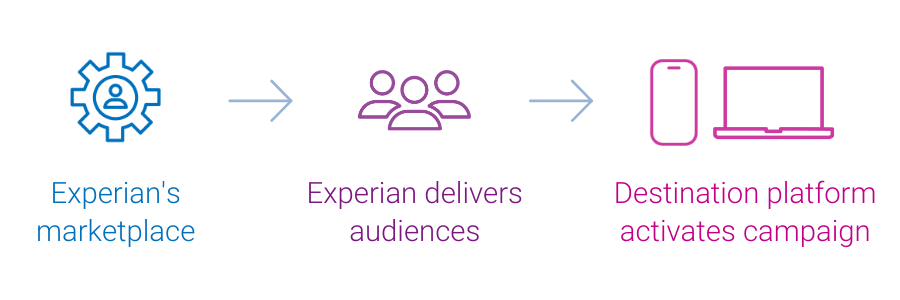
Experian helps you build and activate addressable audiences at scale without losing accuracy or trust. With more than 3,500 syndicated audiences available, you can activate consistently across 200+ destinations — including social platforms like Meta and Pinterest, TV and programmatic environments, and private marketplaces (PMPs) through Audigent.
That means reaching people based on who they are, where they live, and their household makeup, using data governed with care. Our approach is built on accuracy first, which is why Experian data is ranked #1 in accuracy by Truthset for key demographic attributes.
And when standard customer segments aren’t enough, Experian Partner Audiences expand what’s possible. These unique audiences are available through Experian’s data marketplace, within Audigent for PMP activation, and directly on platforms like DIRECTV, Dish, Magnite, OpenAP, and The Trade Desk.
The evolution of addressability and why it matters more than ever
As the media ecosystem shifts, reaching people across browsers, apps, CTV, and streaming platforms has become more complex. Signals are fragmenting everywhere as expectations for relevant, personalized experiences continue to rise, while reliable identifiers become increasingly challenging to access.
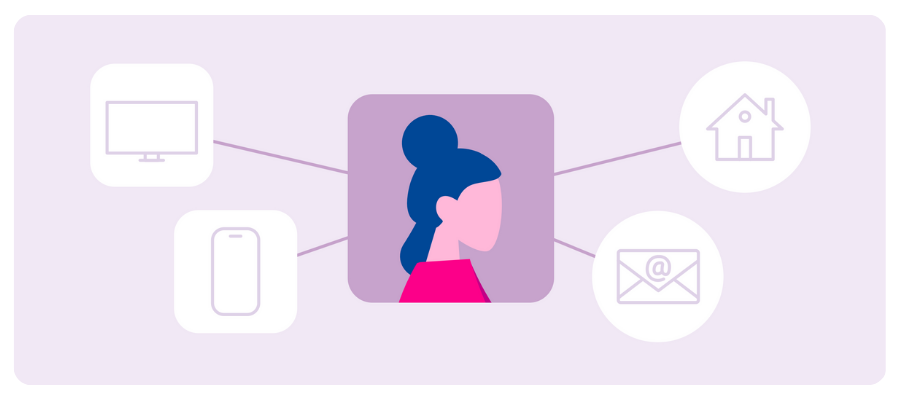
In response, addressability is shifting from a channel-specific tactic to an identity-driven approach to reach and measure defined audiences across screens.
That evolution puts new pressure on performance. Marketing budgets require accuracy and accountability, which means targeting must deliver measurable reach and outcomes you can trust.
At the same time, the growth of CTV and streaming is expanding addressable TV opportunities. As CTV inventory grows, so does the need for cross-channel, identity-based activation that works consistently and supports reach, frequency, and measurement in one connected view. That’s why identity has become the foundation for making addressable advertising work today.
When to apply addressable advertising
You don’t need addressable for everything, but it shines when you need your spend to go farther with accurate targeting and resonant messaging.
| Scenario | Why addressable helps |
| Product launches and seasonal pushes | Reach people who are more likely to care without flooding everyone else |
| High-consideration purchases (auto, travel, financial services) | Focus on likely intent and suppress audiences that don’t fit |
| Cross-channel campaigns (digital, TV, mobile) | Keep messaging consistent across screens |
| When using first-party data with AI | Use AI customer segmentation to scale responsibly and improve performance without sacrificing accuracy |
| Regulated categories | Rely on compliant data practices and clearer controls for regulated industries |
Addressable advertising is one way to put relevance and respect into practice — but it shouldn’t be the only time these principles apply. Marketers are expected to be thoughtful about who they reach, how often they show up, and how data is used across every channel. Addressable simply makes it easier to live up to that standard when accuracy, accountability, and scale matter most.
Addressable advertising and third-party data
There’s a common misconception that third-party data is no longer useful, but what’s really changed is the environment around it.
In the early days of digital advertising, third-party data often felt like the Wild West. Today, modern third-party data is more transparent, better governed, and held to far higher standards with:
- Clear data sourcing
- Documented consent practices
- Regular quality audits
- Strict limits on how data can be used
Used responsibly, third-party data plays a critical role in addressable advertising by complementing your first-party data and keeping audience strategies flexible as signals change.
Benefits of third-party data
When paired with identity resolution, high-quality third-party data helps you:
- Fill first-party gaps: Add demographic, behavioral, and interest-based insight when your own data is limited.
- Expand prospecting: Reach new audiences through modeling and lookalike expansion.
- Enrich segmentation: Combine household, behavioral, and interest signals to tailor creative, offers, and messaging to interests for more accurate and personalized activation.
- Support cross-channel addressability: Maintain consistent audience reach across devices and channels even as individual signals change.
Why work with Experian for your data needs?
At Experian, we approach third-party data with the belief that trust comes first. Our data is privacy-compliant, ethically sourced, and governed by strict standards so you can use it confidently.
Accuracy matters just as much. Our identity and data-quality framework verifies that the data behind your audiences holds up in the real world — a key reason Experian is ranked #1 by Truthset for key demographic attributes.
And because addressable advertising only delivers value when audiences move seamlessly from planning to activation, our audiences are interoperable by design. You can activate them across digital, social, and CTV platforms without rebuilding or reformatting your strategy for each channel.
How AI is redefining customer segmentation
Addressable advertising depends on audiences that stay accurate as people move across devices, platforms, and moments. Traditional segmentation built on static rules and snapshots in time can’t keep up with that reality.
AI customer segmentation analyzes massive sets of household and individual data (such as intent, household demographics, purchase behavior, and content consumption) to identify patterns, predict intent, and group people into addressable audiences.
As the AI advertising ecosystem continues to mature, reflected in industry frameworks like the LUMA AI Lumascape, segmentation and identity have become foundational layers rather than standalone tools. Those audiences update as conditions change, so they stay relevant instead of aging out.
Here’s how AI-driven segmentation supports addressable advertising.
| What AI enables | Why it matters |
| Predictive, intent-based audiences | Analyze behavioral and transactional data to group people based on likely next actions |
| Broader audience availability | As more data signals are incorporated responsibly, AI makes it possible to support a wider range of addressable audience options without sacrificing accuracy |
| Deeper insights from data | Discover what people care about, how intent is forming, and which signals are most important with larger, more diverse data sets |
| Real-time audience updates | Keep segments aligned as behaviors change, not weeks later |
| Higher accuracy, less guesswork | Rely on data-driven patterns for decision-making instead of assumptions |
| Ongoing optimization | Refine audiences throughout the campaign lifecycle as performance signals come in |
We’ve used machine learning and analytics for decades to support responsible segmentation — balancing performance with privacy and transparency.
That foundation now supports addressable advertising that adapts in real time while staying grounded in trust.
Addressable TV: Targeting in the streaming era
TV has become an addressable channel powered by data and identity resolution. CTV and OTT streaming are booming, while linear TV continues to decline, reshaping how people watch and how advertising works alongside it. For the first time, CTV spending is expected to outpace traditional TV ad spending in 2028, reaching $46.89 billion and signaling that addressable TV is now central to the media mix.
With CTV and OTT platforms, advertising can now be delivered at the household level. That means two homes watching the same show can see different ads based on who lives there and what they like. This is what makes addressable TV possible.
Benefits of addressable TV
As streaming inventory continues to grow, addressable TV creates new ways to bring relevance and accountability to a channel once defined by broad exposure. Experian links identity data across streaming, linear, and digital platforms to help you manage frequency, attribution, and household-level insights in one connected view.

Addressable TV also raises the bar. To manage reach, frequency, and measurement across streaming and linear environments, addressable TV depends on identity resolution that connects households across screens.
Here’s how addressable TV helps you when identity is in place.
| What addressable TV enables | Why it matters |
| Household-level targeting | Deliver messages that reflect who’s watching, not just what’s on |
| Frequency control across screens | Reduce overexposure and improve viewer experience |
| Cross-channel measurement and attribution | Connect TV exposure to digital actions, site visits, and conversions |
| More efficient use of TV spend | Bring accuracy, accountability, and outcome-based insight to premium inventory and improve reach of streaming-first, harder-to-reach viewer segments |
Ultimately, addressable TV isn’t a replacement for linear TV, but it is an evolution. As streaming becomes the default viewing experience, the ability to engage TV audiences with the same care and clarity as digital is essential.
Use cases for addressable advertising
Addressable advertising works across industries because it adapts to how people make decisions. The examples below are illustrative scenarios that show how addressable audiences, identity resolution, and AI-driven segmentation can come together in practice using Experian solutions.
Retail: Seasonal promotions
A home décor retailer could use identity resolution and AI-driven segmentation to build addressable audiences, such as holiday decorators and recent movers, who are more likely to engage during peak seasonal periods.
Campaigns could then be activated across CTV, display, and social, helping the retailer stay visible across screens while tailoring creative to seasonal intent.
Automotive: In-market car buyers
An auto brand might identify consumers nearing lease expiration using automotive-specific data tied to household and individual attributes.
By suppressing current owners, the brand could avoid wasted impressions and activate addressable audiences across OTT and mobile to reach likely buyers during active consideration.
Financial services: Credit card launch
For a new credit card launch, a national bank could use modeled financial segments to reach credit-qualified prospects.
Addressable digital advertising campaigns could apply frequency controls and personalized messaging, balancing reach with relevance while seamlessly measuring response.
Streaming media: New subscriber growth
A streaming platform looking to grow subscriptions could use an identity graph to exclude current subscribers.
Likely viewers could then be targeted across CTV based on content preferences and viewing behavior, keeping spend focused on net-new growth.
Media and entertainment: Audience expansion for a new release
Ahead of a new release, a film studio could use behavioral and lifestyle data to identify likely moviegoers and fans of similar franchises.
Addressable campaigns across CTV and digital video could help drive awareness and opening weekend attendance.
Travel: High-value traveler acquisition
A travel brand could use travel propensity data and household-level demographics to identify frequent flyers and family vacation planners.
Personalized offers could then be activated across display, social, and programmatic channels to increase bookings while keeping spend focused on higher-value travelers.
How Experian enables more effective addressable campaigns
Addressable advertising is most effective when identity, data, and activation are connected from the start.
Experian brings trusted household and individual data, privacy-first identity resolution, and broad activation partnerships together so you can move from audience insights to activation with minimal friction. Here’s how that comes to life across our core offerings.
Identity resolution with Consumer Sync
Consumer Sync connects devices, emails, digital identifiers, and offline data into a single, privacy-safe identity foundation. This connection helps your audiences stay consistent across streaming, linear TV, mobile, and digital despite changing signals.
Audience insight and segmentation with Consumer View
Consumer View supports clear segmentation, prospecting, and enrichment across industries. It combines demographic, behavioral, and interest-based data to help you build accurate, intent-driven audiences that reflect real people, not assumptions. Data is continuously updated and governed for accuracy.
Omnichannel activation with Audience Engine
Audience Engine enables direct activation of Experian audiences across CTV, digital, social, and programmatic platforms. It supports suppression, frequency management, and cross-channel consistency to keep messaging aligned and exposure controlled.
More efficient media through curation and Curated Deals
Curation combines data, identity, and inventory through Experian Curated Deals. These deal IDs, available off-the-shelf or privately, make it easier to activate high-quality audiences and premium inventory in the platforms you already use without custom setup.
AI-enhanced segmentation and optimization
Our AI-enhanced models analyze large data sets to create and refresh addressable audiences in real time, supporting intent-based targeting and ongoing optimization throughout the campaign lifecycle. These models work seamlessly with demand-side platforms (DSPs), ad platforms, and data clean rooms, so audience insights flow directly into activation and measurement without added complexity.
Seamless integration with your ecosystem
As an advertiser, you want addressable advertising to fit naturally into how you already plan and buy media. That’s why integration matters as much as insight.
Experian integrates with leading DSPs, ad platforms, and data clean rooms, so you can activate addressable audiences in the environments you already use without reworking your strategy or adding complexity. This approach helps you:
- Build and activate addressable audiences: Reach the people you want with accuracy and respect.
- Activate across channels: Keep messaging consistent across digital, TV, and streaming.
- Optimize with data ranked #1 in accuracy by Truthset: Improve performance using the industry’s most reliable data.
When identity, data, AI, and activation come together, addressable advertising does what it’s supposed to do: deliver relevance naturally, measure impact clearly, and give you confidence in every decision along the way.
That’s the foundation for campaigns people want to engage with.
Start creating campaigns audiences want to see
Experian can help you apply addressable advertising in ways that respect consumers, perform across channels, and stand up to real-world measurement.
Connect with our experts today to explore how addressable audiences, AI-driven segmentation, and identity-powered activation can work together in support of your goals.
FAQs about addressable advertising
Addressable data-driven advertising involves delivering personalized ads to specific individuals or households using privacy-safe data and identity.
An addressable audience is a defined group of consumers you can identify and reach based on known household or individual attributes.
Advertising becomes addressable when it’s possible to identify the audience by linking devices and households to people through identity graphs. This allows you to measure ad performance at the audience level and provide more personalized advertising.
Addressable advertising isn’t just for TV; it also works across digital, mobile, streaming, and social channels.
AI improves addressable advertising by analyzing large data sets to predict intent, build more accurate audiences, boost performance over time, and improve your ability to find and build your audiences.
Yes — identity resolution and first-party data are key to cookieless addressability.
Experian supports addressable advertising by providing trusted consumer data, privacy-centric identity resolution, and curated audience segments that activate across CTV, digital, mobile, and streaming platforms.
Latest posts

For decades, television advertisers have faced a trade-off: Traditional linear TV: Delivers broad reach, utilizing the power of sight, sound, and motion on the big screen to capture more focused attention and foster immersive brand-building. However, it lacks the precise targeting modern marketers crave. Digital and addressable channels: Offer highly precise targeting and robust measurement capabilities but struggle to replicate linear TV’s unique combination of visual impact and viewer engagement on the big screen. Connected TV (CTV) bridges this gap by preserving television’s immersive, large-screen experience—where audiences are more attentive to the content—while offering the precise targeting capabilities long associated with digital and addressable channels. Yet, as the industry evolves, there’s a growing realization that lower-funnel performance marketing—which emphasizes quick wins from in-market shoppers—doesn’t fully support long-term brand growth. Leading brands have increasingly noted that relying solely on performance tactics can limit sustained demand and brand equity. Within CTV lies a powerful subset: Free ad-supported streaming TV (FAST). As consumers gravitate toward free streaming options, FAST has emerged as a key focal point for reaching immediate and future buyers. In this article, we’ll explore why focusing only on in-market shoppers risks missing the larger pool of “future-ready buyers” and how FAST platforms enable brands to engage them effectively. The challenge: Over-fixation on "in-market" shoppers One common marketing hurdle is "lower-funnel myopia"—focusing almost exclusively on in-market shoppers who are ready to buy immediately. While this can yield quick wins, it also means brands miss opportunities to improve in three critical areas: Competition and costs: By chasing the same immediate buyers, brands drive up media costs, especially as programmatic ad spending continues to climb each year. Missing out on future buyers: Most consumers aren’t looking to buy right now. In fact, only 5% of potential consumers are active ‘in-market,’ meaning the other 95% represent future-ready buyers open to purchasing soon. Over-focusing on in-market audiences overlooks people who could be primed to purchase soon. Inefficient spend on “sure bets”: Over-targeting likely buyers inflates costs for conversions you'd capture naturally. Shifting budget toward brand priming boosts incremental ROI. Expanding the funnel isn't just smart – it's necessary While many advertisers have prioritized short-term conversions, the data shows a growing imbalance—and a potential risk to long-term brand health. According to The CMO Survey (eMarketer, Nov 2024), CMOs allocated nearly 69% of their 2024 budgets to short-term brand performance, leaving just 31% for long-term brand building. If you’re only engaging consumers when they’re already in-market, you’re effectively joining the race at the final lap—and often paying a premium to do so. So where does that leave the vast majority who aren’t buying right now? That’s where future-ready buyers come in. The solution: "future-ready buyers" So, how can you broaden your reach without resorting to a “spray-and-pray” strategy? Enter category future-ready buyers—consumers who aren’t actively shopping right now but remain open to your product category. They’re not firmly opposed or “locked out” of it. For example, existing electric vehicle (EV) owners may not be in-market this very moment, but they could be ready to purchase another EV when their lease ends or a new model debuts, making them ideal future-ready buyers. Why they matter: Cultivate future demand. Engage buyers early to stay top-of-mind when they’re ready. Build a sustainable brand pipeline. Develop ongoing interest instead of repeatedly chasing immediate leads. Expand your reach. Broaden targeting beyond active shoppers for long-term growth. Use marketing data to avoid overspending on future buyers Identifying future-ready buyers is powerful—but how do you avoid wasting spend on unlikely buyers? Marketing data helps refine your targeting with real consumer insights, maximizing ROI and campaign efficiency. Precisely define your segments: Use lifestyle, demographic, and psychographic data to target consumers who are open to your product, avoiding wasted impressions on uninterested audiences. Prioritize privacy and compliance: Choose partners who prioritize data security and adhere to regulations, ensuring your campaigns stay both trustworthy and effective. FAST: The strategic channel for reaching future ready buyers FAST services, like Samsung TV Plus, have evolved into a crucial medium for advertisers eager to strike a balance between scale and precision. Here’s why: Engaged audience: Viewers access free, premium content in exchange for ads, making them receptive and attentive. Advanced targeting: FAST offers precise segmentation beyond traditional TV, helping you reach Samsung consumers both in-market and future buyers effectively on the biggest screen in the household. Positive viewer experience: Free content creates a relaxed viewing environment, increasing ad attention and recall. Samsung TV Plus and Experian Marketing Services: Scale meets precision Samsung TV Plus offers expansive reach and contextual targeting aligned to viewer interests. Experian Marketing Services complements this by identifying consumers most likely to buy, leveraging demographic, lifestyle, and intent data—helping you effectively engage future-ready buyers. Putting it into practice: A use case Scenario An electric vehicle (EV) brand, EVolution Auto, wants to reach eco-conscious consumers who aren’t shopping for a car right now but might consider one soon. They also want to track how ads influence brand consideration and sales over time. Approach Identify future-ready segmentsUsing Experian data, EVolution Auto focuses on “eco-conscious drivers”—people interested in sustainability who are likely to be open to an EV in the near future. Activate on Samsung TV PlusThe brand places targeted ads on channels with environmental or tech content. With millions of monthly users and a relaxed viewing experience, EVolution Auto’s spots get more visibility, boosting ad recall. Outcome By pairing Samsung TV Plus’s broad reach with Experian’s precise audience data, EVolution Auto achieves measurable lifts in brand consideration, website traffic, and dealership visits—effectively priming future EV buyers and driving long-term sales momentum. Building a future-proof strategy Exclusively targeting in-market consumers can limit your brand’s long-term potential. By focusing on those not currently shopping—but still open to your category—you widen your future buyer pool and keep your brand top of mind. FAST services like Samsung TV Plus, paired with Experian’s marketing data, offer a powerful way to balance scale with precision–delivering strong engagement today while priming your brand for long-term growth. By shifting your focus toward tomorrow’s buyers today, your brand doesn’t just stay relevant—it sets the stage for sustained market leadership and growth. Contact us Latest posts

As the days get longer and the weather warms up, spring’s revitalizing energy naturally leads to realignment. For marketers, it’s the perfect moment to reevaluate strategy, especially as consumer behavior changes ahead of summer and brings a renewed interest in travel, outdoor activities, and social events. Making seasonal adjustments to your marketing strategy helps you adapt to these shifting behaviors, capitalize on 2025 marketing trends, and keep your brand relevant year-round. When it comes to your marketing strategy, spring cleaning means clearing out outdated tactics, optimizing what works, and making room for smarter, more connected solutions. Take the time to ask yourself questions like: Are our audiences still relevant? Are we activating our data across the right channels? Are we collaborating with the right partners and using the right data clean room providers? If there’s room for improvement, now is the best time to audit, refine, and refresh your marketing strategy before the high-stakes summer and winter seasons. With identity resolution, data enrichment, data clean room collaboration, and omnichannel activation through Experian, you can clean up what’s outdated and prep your strategy for summer success! Rethink your data and identity resolution strategy Your data is foundational to your strategy and is a great place to start your marketing strategy spring cleanup. If your customer information is outdated, incomplete, or fragmented across systems, every campaign built on top of it risks underperforming. Before jumping into segmentation, activation, or partnerships, assess the health of your data and identity infrastructure. This is your deep clean and an essential first step in ensuring everything else works better. With signals disappearing, buying channels proliferating, and customer journeys getting more complex, the key to maintaining addressability is investing in persistent identity, complete consumer data, and collaborative measurement strategies that can weather these changes. Here are some ways to rethink your marketing data management and identity strategies for the current environment. Set the data foundation A solid identity resolution strategy starts with high-quality, unified data. Consider a comprehensive refresh of your customer records by auditing and enhancing what you have for accuracy and depth. As you’re thinking through spring marketing ideas, it’s an ideal time to enrich your first-party data by appending missing details, removing outdated records, and ensuring you enter summer with reliable, up-to-date profiles. Data enrichment Customer data naturally degrades, and eventually, you’ll need to dust it off by supplementing consumer records with current, high-quality insights and attributes. Experian data enrichment can help you seamlessly refresh records with updated demographic and behavioral data, giving detailed insights for precise targeting and relevant campaigns. With over 5,000 attributes available, covering everything from age and income to shopping habits and media preferences, you can maintain the deepest, most up-to-date view of your consumers through every season. Offline identity resolution and append Offline identifiers — like names, physical addresses, and phone numbers — are the most persistent identity markers as they rarely change compared to digital cookies and device IDs. They’re essential for a stable identity foundation, and you can use them to develop a consistent, unified view of each household and individual. Use this season to audit and tidy up your offline records. Are key identifiers missing? Are you relying on outdated addresses or duplicate names? Experian’s Offline Graph serves as the foundation to help unify those fragmented pieces, resolving identities across households and individuals to create a clean, consistent view of every customer. Think of this step as scrubbing baseboards or cleaning behind the fridge. It’s often overlooked but a prerequisite to a thorough spring refresh. You can also use Offline Identity Append to append missing identifiers to improve match rates, boost data accuracy, and ensure addressability so that when summer campaigns launch, you’re ready to confidently meet your audience where they are. Digital resolution via Digital Graph This next step is like replacing your air filter each spring. You won’t see it, but you’ll definitely feel the difference in performance. Digital resolution ensures persistent, accurate targeting across devices and channels in a fragmented omnichannel environment. Experian’s Digital Graph facilitates easy consumer identification and connection across the digital ecosystem. Our graph links digital identifiers like mobile ad IDs (MAIDs), connected TV IDs, and hashed emails to consumer profiles. So, when a customer interacts on a smartphone, a smart TV, and a laptop browser, those actions can all be tied back to the same individual or household in your database. Collaborate securely in data clean rooms to close gaps Matching partner data within your own secure space, a trusted third-party clean room, or Experian’s privacy-safe environment is an essential next step in your marketing spring cleaning strategy. But what is a data clean room? A data clean room is a privacy-first way to enhance marketing data in a secure environment that allows brands and partners to match and analyze data without exposing personally identifiable information. It’s almost like organizing a shared closet. You both bring what you have, sort it safely, and leave with something more valuable without mixing up or exposing what’s personal. Secure collaboration enriches your understanding of consumers, boosts match rates, and ensures the highest data security standards. Here are key data challenges you can tackle through data collaboration—whether in a clean room or across your broader data strategy. Lack of insights or usable data Without third-party cookies, marketers run the risk of losing valuable consumer insights. Collaborating with key partners lets brands enrich their first-party data and obtain a more comprehensive view of customer behaviors for informed decision-making. Let’s say, for example, that an advertiser with sales data but no exposure data struggles to attribute sales to specific campaigns. By collaborating securely with a measurement partner who provides exposure data, the advertiser can confidently link sales to ad exposure and optimize future campaigns with an understanding of who saw their ad and made a purchase. We anticipate that data collaboration will be a key marketing trend in 2025 alongside signal loss. Low or no match rates When businesses handle matching internally, discrepancies like name variations (e.g., John Doe vs. Jonathan Doe) or mismatched identifiers (hashed emails vs. MAIDs) often result in poor match rates. Experian’s identity resolution capabilities, meticulous hygiene processes, resolution logic, and comprehensive identity graphs significantly enhance these match rates. For example, if a data provider had physical addresses and a demand-side platform (DSP) had email addresses, they couldn’t collaborate with different identifiers. Using Experian Collaboration, however, their data could be resolved with offline identity data from our graph, enabling them to share their collaboration data and improve their marketing efforts. Data security When it comes to data collaboration, protecting your proprietary and customer information is non-negotiable. That’s why Experian operates with some of the industry's strictest data security, privacy, and compliance protocols. We support identity resolution and data collaboration within the most secure environments available — data clean rooms built to prevent sensitive customer data from ever being exposed. Instead of moving or sharing your raw data, we ensure all records are anonymized before any analysis occurs. Additionally, Experian’s clean room integrations with trusted partners give clients flexibility without compromising compliance. All solutions are designed to meet GDPR, CCPA, and industry-specific data governance standards, with full audit trails and customizable access controls. Connect and activate Once your data is clean, enriched, and resolved, the next step is to activate it efficiently across the channels where your audiences spend time. This step is like putting everything back in place after a deep clean so everything is functional, easy to access, and ready to deliver results. As you get ready to put your spring marketing ideas into motion, it’s time to streamline your activation approach and make sure your customer data is working hard for you. First-Party Onboarding With Experian First-Party Onboarding, you can ship data where needed using flexible data solutions for your activation strategy. This step is like labeling and organizing your freshly cleaned marketing closet, so each audience segment is ready to deploy wherever you need it. We make it easy to: Understand your customers on a deeper level Seamlessly onboard your customer data for use across programmatic, social, and advanced TV platforms Combine your first-party data with Experian syndicated audiences for enriched targeting Deliver those audiences to any destination that accepts Experian Audiences — whether a DSP, social platform, or publisher Increase match rates, extend reach, and lower activation costs Transact in the ecosystem with the Experian ID To aid in the activation process, Experian ID is a unified identifier that acts as a privacy-safe bridge between fragmented emails, device IDs, and addresses, helping you activate audiences across all media channels. Experian ID keeps your data protected and connected whether you send it to DSPs, social platforms, or data clean rooms. This allows for secure activation and performance tracking across the ecosystem without exposing personally identifiable information (PII). Like sealing and storing your seasonal belongings in airtight containers, Experian ID keeps your data clean, safe, and always ready for use. Use fresh audience insights to inform segmentation After deep-cleaning your data, enriching profiles, and resolving identities, you’ll want to ensure your segmentation reflects that renewed foundation. Just like clearing expired ingredients from your pantry, spring is an ideal time to toss outdated audience definitions and replace them with insights that are fresh, relevant, and ready to perform. With Experian’s modern audience tools, you can create smarter segments, power omnichannel strategies, and continue reaching high-value consumers even in cookieless environments. Our marketing data management tools make it easy to: Build detailed, personalized profiles using over 5,000+ behavioral and lifestyle marketing attributes that go far beyond basic demographics. Choose from 2,400+ pre-built syndicated segments or collaborate with Experian to create custom audiences tailored to your KPIs and campaign goals. Append fresh attributes to your CRM to keep profiles accurate, performance-ready, and reflective of current consumer behaviors and life stages. Together, these tools help sharpen your segmentation strategy and ensure up-to-date audience insights power every campaign. Let’s break down how smart combinations and contextual precision can further elevate your segmentation. Combine our identity graphs and Marketing Attributes for sharper targeting Combining Experian’s identity graphs with Marketing Attributes gives you both the who and the why behind your audience and helps you act on that insight with precision. It’s like giving your closet a total spring refresh — not just purging what doesn’t fit but also organizing what’s left into ready-to-wear outfits. Digital Graph + Marketing Attributes: Link real-time digital behavior (like CTV, mobile, or web activity) with rich consumer insights to create segments that perform across channels, from mobile to CTV to social. Offline Graph + Marketing Attributes: Tie persistent offline identifiers like name and address to behavioral and lifestyle data, making it easier to plan full-funnel strategies from direct mail to digital display. This approach gives you the clarity and flexibility to build richer personas, reach more qualified audiences, and target with confidence across any environment. Activate smarter with Contextually-Indexed Audiences Spring cleaning your strategy also means letting go of legacy tools, especially those relying on cookies or outdated tracking methods. With Experian’s Contextually-Indexed Audiences, you can reach consumers based on the content they’re engaging with, not their identifiers. We map millions of websites to real audience segments so you can target high-intent consumers in a privacy-safe, way. For example, an automotive brand looking to reach high-intent luxury EV shoppers can activate Experian’s “in-market for a luxury electric car” segment. With contextually-indexed targeting, that brand’s ads will appear on websites that over-index for visitors in that audience — such as premium car review sites or sustainability-focused blogs — without relying on user identifiers. This allows the brand to scale performance safely and efficiently in cookieless environments while achieving strong engagement metrics. Activate across channels with confidence After refreshing your data, segmentation, and partner strategies, the final step in your spring cleaning is putting all that prep work into action — efficiently and at scale. Think of this as your final sweep: optimizing where and how you activate your audience to ensure every touchpoint is aligned, accurate, and impactful. With your updated segments and sharpened identity framework in place, you can reach consumers across display, mobile, connected TV (CTV), and emerging digital channels. Experian provides the tools to activate seamlessly — backed by privacy-safe, high-quality data and flexible integration options. Third-Party Onboarding: Expand reach with external data sets Experian’s Third-Party Onboarding capabilities make it easy for brands to augment their first-party data strategies on their preferred activation platforms with easy access to high-quality, activation-ready third-party audiences. For you, this means you no longer have to manage the onboarding process yourself or worry about compatibility. Instead, you can: Enhance your first-party targeting with third-party data that’s already privacy-safe and activation-ready. Reach more qualified consumers by layering in external behavioral, lifestyle, or intent signals. Maximize scale across your preferred platforms using Experian’s established integrations and ecosystem support. With Experian as your trusted partner, your audience strategy becomes more flexible, more scalable, and more effective, giving you the power to engage the right consumers beyond your own CRM. Start preparing now for summer campaigns You’ve cleared out the clutter, restocked your toolkit, and optimized your data strategy, and now, you’re ready to get ahead of the summer rush. While summer is go-time for high-impact marketing campaigns, now is the time to clean, organize, and prepare. Another reason to start now? Tariffs, inflationary pressures, and changing consumer confidence are already impacting product demand, budget planning, and go-to-market strategies for the rest of the year. Brands need to be ready and agile in the face of economic turbulence. So, think of this as your final recap checklist before the season (and the economy) changes: a set of intentional steps that ensure all your prep work translates into real performance when it counts. Start now to: Cleanse and enrich your data: Make sure outdated records don’t weigh down your summer outreach. Refresh profiles with Experian’s latest attributes to stay aligned with consumer behavior. Solidify your identity resolution strategy: Transition to persistent, privacy-safe identifiers like Experian’s unified ID to maintain addressability across devices and channels. Collaborate with key partners: Run pilot campaigns with trusted collaborators to augment your data and maximize scale ahead of peak season. Refresh audience segments: Update personas and segments based on the latest data insights. Trial omnichannel strategies: Use spring to test messaging across display, CTV, social, and mobile so your summer creative hits with precision. Confirm measurement readiness: Double-check attribution and analytics tools so you can optimize in real time and prove ROI. Tailor creative to the season: From backyard barbecues to road trips, ensure your messaging taps into the themes and activities consumers care about most this summer. Spring is the warm-up. Summer is the performance. Start today to improve your marketing data management and overall strategy, and you’ll be ready to hit the ground running. Let’s plan your seasonal strategy together Whether you’re looking for more spring marketing ideas or want to launch a high-impact summer campaign, Experian is ready to help. From strategy to segmentation and data clean rooms to real-time activation, we partner with you to build a marketing engine that performs now and keeps growing through the seasons. Connect with us today, and let’s turn your seasonal refresh into long-term momentum Latest posts

Retail media networks (RMNs) are on the brink of a major shift. While they are poised to capture over 20% of ad spend in 2025, on-site monetization won't be the growth driver it once was. With advertisers consolidating spend among just six or seven RMNs on average, including giants like Amazon and Walmart, it’s hard for smaller RMNs to compete. Off-site retail media ad spend is projected to grow 42.1% in 2025 – nearly three times the rate of on-site growth (15.1%), according to eMarketer's November 2024 forecast. This dramatic shift underscores that while on-site placements are maturing, off-site is where the momentum (and money) is heading. To remain competitive, RMNs must move beyond traditional, on-site placements and embrace a broader, more integrated approach to media activation. The future of retail media is about utilizing enriched first-party data to drive performance across the open web, connected TV (CTV), and other digital channels. Break free from your owned and operated properties Historically, RMNs have limited ad placements to their own digital properties. While this approach has delivered high-margin returns – on-site ad margins can reach 70-90%, compared to 20-40% for off-site – it’s also inherently limiting. Retailers only have so much owned inventory to sell, and advertisers demand greater scale and flexibility. As brands push for more reach, RMNs must extend their impact beyond owned-and-operated (O&O) properties. Omnichannel retail media ad spending is forecast to hit $61.2 billion in 2025. Brands are looking beyond retail sites to build integrated, multi-channel strategies that drive results across the funnel.eMarketer Off-site doesn’t just mean digital. Walmart’s recent expansion of its Fuel and Convenience stations – planning to open or remodel 45 in 2025, bringing the total to 450 – shows how physical spaces are also becoming extensions of a retailer’s media network. These locations create new touchpoints where advertisers can engage shoppers with timely, context-aware messaging while they fuel up or grab a snack. These quick-stop environments are ideal for limited-time offers or impulse-triggering messages – especially since 68% of U.S. adults say discounts contribute to their latest in-store impulse purchase. Maximize the value of first-party data One of retail media’s biggest promises is the power of first-party data for precision targeting. While on-site ads are inherently lower-funnel, off-site activation allows advertisers to move up the funnel and apply retailer customer data holistically across the open web. For example, DoorDash and Macy’s now offer self-service audience data to advertisers via The Trade Desk, allowing brands to target consumers programmatically. Meanwhile, Walmart is taking a different approach – cloning The Trade Desk’s technology to maintain its walled garden. These moves demonstrate how retailers are rethinking data monetization strategies to scale beyond O&O limitations. Drive new revenue streams with off-site activation Off-site activation enables RMNs to drive incremental reach on channels where audiences are actively engaging, including CTV, programmatic display, and social media. This expansion allows brands to connect with consumers beyond retail websites. Retailers are also utilizing non-endemic advertising opportunities in environments like gas stations and kiosks. Unlike traditional grocery or apparel aisles, these spaces are brand-neutral, allowing advertisers who don’t sell products in-store to still activate campaigns using retailer data. In fact, 53% of brands have already partnered with a retailer that doesn’t carry their product, and that number is expected to grow as advertisers seek new ways to tap into retail media’s rich targeting capabilities. Retailers looking to extend the value of their data beyond O&O inventory have two primary off-site opportunities: First, they can use an identity graph to resolve customer identifiers into addressable IDs that can be enriched with additional attributes and activated across channels like the open web and CTV. This allows retailers to find and reach known customers with relevant messaging outside of their owned platforms. For example, a grocery RMN can identify lapsed snack buyers and deliver streaming TV ads that reengage them on CTV platforms. CTV retail media ad spending alone is expected to grow 43.1% this year, reaching $4.86 billion, highlighting the appetite for video-based upper-funnel strategies. Second, RMNs can broaden reach by activating first-party audiences, syndicated segments, or custom-built audiences through onboarding capabilities. These audiences can be sent to a variety of programmatic and CTV destinations, enabling advertisers to engage shoppers in high-impact environments. For example, a home improvement retailer can send its audience segments to programmatic ad exchanges, ensuring DIY shoppers see relevant offers even while browsing unrelated sites. Together, these approaches allow retailers to monetize their data more effectively while giving brands the ability to reach consumers in moments that matter beyond just retail websites and apps. Scale and measure success with data partnerships For smaller RMNs to compete with larger players, they need more than just inventory – they need the ability to scale campaigns and prove performance. Data partnerships play a critical role in both expansion and measurement. Measurement remains one of the biggest challenges for RMNs moving off-site. On-site retail media offers closed-loop attribution, but off-site activations introduce complexity. Retailers can work with an identity resolution partner like Experian to connect ad exposures to actual retail outcomes, such as store visits or purchases, across digital and physical environments. Whether it's through pixels placed on campaign ads or TV impression logs, these connections help RMNs demonstrate real impact. This approach helps unify disparate data – such as a CTV ad exposure and a subsequent online or in-store purchase – into a clear, measurable outcome. These insights not only show what’s working, but help RMNs optimize future campaigns and provide advertisers with transparent, third-party-validated reporting. As retailers like Walmart integrate loyalty programs like Walmart+ into their physical extensions, they gain valuable behavioral insights into how customers shop across formats – from fueling up to filling carts. These data signals help refine identity graphs and improve measurement across increasingly hybrid consumer journeys. Beyond ads: The data monetization opportunity Smaller RMNs may struggle to scale ad-supported revenue, but there’s another path forward: Data-as-a-Service (DaaS). Providing anonymized, privacy-compliant audience insights to brands offers a high-margin, scalable revenue stream. In fact, some retailers are already embracing this model by licensing their data to programmatic platforms. A playbook for smaller RMNs to win off-site The future of retail media belongs to those who harness data to influence consumer behavior across all digital marketing channels. To succeed, RMNs should focus on: Moving beyond owned inventory: Activate first-party data across CTV, social, and programmatic channels to meet advertisers where their audiences are. Expanding reach through partnerships: Collaborate with identity resolution providers to maximize match rates and campaign effectiveness. Building a full-funnel offering: Position off-site retail media as a brand-building play, tapping into ad budgets that traditionally fund upper-funnel campaigns. Monetizing data, not just ads: Explore DaaS models to generate passive revenue. The time to move off-site is now Retailers that wait too long to embrace off-site activation risk falling behind. Those that expand beyond their owned inventory, invest in off-site data strategies, and build strategic partnerships will be the ones that shape the future of retail media. Experian isn’t just part of the RMN conversation. We’re driving it. Let’s talk. Connect with our team Latest posts