Tag: fraud

We all know that first party fraud is a problem, but learning how to manage through first party fraud is key to overcoming it

I recently read a study about the profile of an online Fraudster. One may jump to conclusions about what is a good indicator for catching cybercriminals.
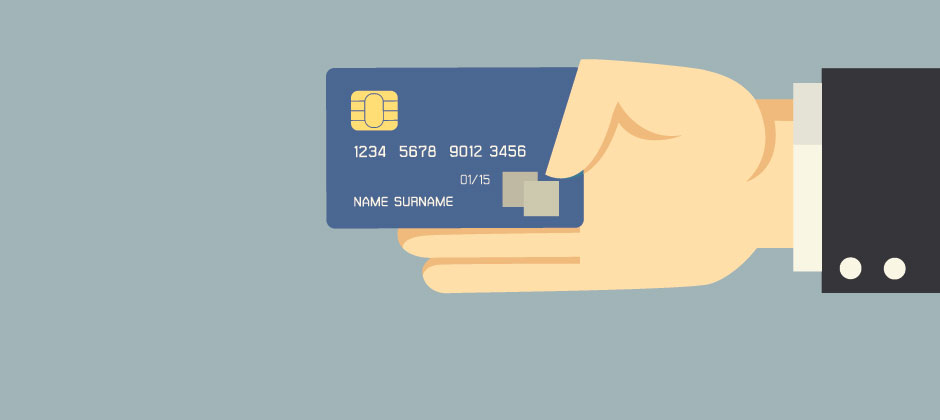
I recently facilitated a Webinar looking at myths and truths in the market regarding the EMV shift and what it means for both merchants and issuers.

What will the EMV shift really mean for consumers and businesses here in the U.S.? Businesses and consumers across the U.S. are still adjusting to their new EMV credit cards. The new credit cards are outfitted with computer chips in addition to the magnetic strips to help prevent point-of-sale (POS) fraud. The new system, called EMV (which stands for Europay, MasterCard and Visa), requires signatures for all transactions. EMV is a global standard for credit cards. In the wake of the rising flood of large-scale data breaches at major retailers – and higher rates of counterfeit credit card fraud – chip-and-signature, as it is also called, is designed to better authenticate credit card transactions. Chip-and-signature itself is not new. It has been protecting consumers and businesses in Europe for several years and now the U.S. is finally catching up. But what will the EMV system really mean for consumers and businesses here in the U.S.? There is the potential for businesses that sell both offline and online, to see an increase in fraud that takes place online called Card Not Present (CNP) fraud. Will credit card fraud ever really be wiped out? Can we all stop worrying that large-scale point-of-sale breaches will happen again? Will the EMV shift affect holiday shopping and should retailers be concerned? Join us as we explore these questions and more on an upcoming Webinar, Chipping Away at EMV Myths. Our panel of experts includes: David Britton, Vice President, Industry Solutions, Experian Julie Conroy, Research Director, Aite Group Mike Klumpp, Director of Fraud Prevention, Citibank Moderated by: Keir Breitenfeld, Vice President, Product Management, Experian
Fraud management is an ongoing issue for businesses, especially when it comes to identifying likely fraudulent customers and delivering excellent customer service

Increased volume of fraud attempts during back to school shopping season. Is your fraud strategy prepared to handle the increased volume?

Protect consumers on summer vacation fraud. Evidence shows fraudster activity increases during the summer and identity theft becomes easier.

Understanding shelf companies and shell companies In our world of business challenges with revenues level or trending down and business loans tougher than ever to get, “shelf” and “shell” companies continue to be an easy option for business opportunities. Shelf companies are defined as corporations formed in a low-tax, low-regulation state in order to be sold off for its excellent credit rating. Click on the internet and you will see a plethora of vendors selling companies in a turn-key business packages. Historically off-the-shelf structures were used to streamline a start-up, where an entrepreneur instantly owns a company that has been in business for several years without debt or liability. However, selling them as a way to get around credit guidelines is new, making them unethical and possibly illegal. Creating companies that impersonate a stable, well established companies in order to deceive creditors or suppliers in another way that criminals are using shelf companies for fraudulent use. Shell companies are characterized as fictitious entities created for the sole purpose of committing fraud. They often provide a convenient method for money laundering because they are easy and inexpensive to form and operate. These companies typically do not have a physical presence, although some may set up a storefront. According to the U.S. Department of the Treasury’s Financial Crimes Enforcement Network, shell companies may even purchase corporate office “service packages” or “executive meeting suites” in order to appear to have established a more significant local presence. These packages often include a state business license, a local street address, an office that is staffed during business hours, a conference room for initial meetings, a local telephone listing with a receptionist and 24-hour personalized voice mail. In one recent bust out fraud scenario, a shell company operated out of an office building and signed up for service with a voice over Internet protocol (VoIP) provider. While the VoIP provider typically conducts on-site visits to all new accounts, this step was skipped because the account was acquired through a channel partner. During months one and two, the account maintained normal usage patterns and invoices were paid promptly. In month three, the account’s international toll activity spiked, causing the provider to question the unusual account activity. The customer responded with a seemingly legitimate business explanation of activity and offered additional documentation. However, the following month the account contact and business disappeared, leaving the VoIP provider with a substantial five figure loss. A follow-up visit to the business showed a vacant office suite. While it’s unrealistic to think all shelf and shell companies can be identified, there are some tools that can help you verify businesses, identify repeat offenders, and minimize fraud losses. In the example mention above, post-loss account review through Experian’s BizID identified an obvious address discrepancy – 12 businesses all listed at the same address, suggesting that the perpetrator set up numerous businesses and victimized multiple organizations. It is possible to avoid being the next victim and refine and revisit your fraud best practices today. Learn more about Experian BizID and how to protect your business.

A recent Experian survey found that while consumers are getting better about protecting their information on a regular basis, many do not take the same precautions when traveling. According to the survey, 1 in 5 consumers has had an item with sensitive information lost or stolen while traveling, and 39% have experienced identity theft while traveling or know someone who has. Organizations can protect themselves and customers by using innovative fraud-detection tools designed to reduce potential losses while preserving the customer experience. >> Video: The reputational impact of fraud and identity theft
With more than one-third of customers interacting with a single business in five or more channels and more than 85 percent of consumers using online or mobile to conduct business, omnichannel fraud prevention has become a necessity. Implementing a layered approach to authentication and integrating device intelligence into the process to associate a consumer with a known device are critical components of a fraud mitigation strategy. In addition to providing another layer of validation, verifying a customer through his or her device makes it easier for the customer to interact with the business and is a huge benefit to the overall customer experience. Perspective paper: Protecting the customer experience - The impact of fraud on the customer relationship
Gift cards are the most requested gift item and have been for the last eight years. Merchants love gift cards because they take up very little space and the recipient often ends up spending more than the value of the gift card.
Cont. Understanding Gift Card Fraud By: Angie Montoya In part one, we spoke about what an amazing deal gift cards (GCs) are, and why they are incredibly popular among consumers. Today we are going to dive deeper and see why fraudsters love gift cards and how they are taking advantage of them. We previously mentioned that it’s unlikely a fraudster is the actual person that redeems a gift card for merchandise. Although it is true that some fraudsters may occasionally enjoy a latte or new pair of shoes on us, it is much more lucrative for them to turn these forms of currency into cold hard cash. Doing this also shifts the risk onto an unsuspecting victim and off of the fraudster. For the record, it’s also incredibly easy to do. All of the innovation that was used to help streamline the customer experience has also helped to streamline the fraudster experience. The websites that are used to trade unredeemed cards for other cards or cash are the same websites used by fraudsters. Although there are some protections for the customer on the trading sites, the website host is usually left holding the bag when they have paid out for a GC that has been revoked because it was purchased with stolen credit card information. Others sites, like Craigslist and social media yard sale groups, do not offer any sort of consumer protection, so there is no recourse for the purchaser. What seems like a great deal— buying a GC at a discounted rate— could turn out to be a devalued Gift card with no balance, because the merchant caught on to the original scheme. There are ten states in the US that have passed laws surrounding the cashing out of gift cards. * These laws enable consumers to go to a physical store location and receive, in cash, the remaining balance of a gift card. Most states impose a limit of $5, but California has decided to be a little more generous and extend that limit to $10. As a consumer, it’s a great benefit to be able to receive the small remaining balance in cash, a balance that you will likely forget about and might never use, and the laws were passed with this in mind. Unfortunately, fraudsters have zeroed in on this benefit and are fully taking advantage of it. We have seen a host of merchants experiencing a problem with fraudulently obtained GCs being cashed out in California locations, specifically because they have a higher threshold. While five dollars here and ten dollars there does not seem like it is very much, it adds up when you realize that this could be someone’s full time job. Cashing out three ten dollar cards would take on average 15 minutes. Over the course of a 40-hour workweek it can turn into a six-figure salary. At this point, you might be asking yourself how fraudsters obtain these GCs in the first place. That part is also fairly easy. User credentials and account information is widely available for purchase in underground forums, due in part to the recent increase in large-scale data breaches. Once these credentials have been obtained, they can do one of several things: Put card data onto a dummy card and use it in a physical store Use credit card data to purchase on any website Use existing credentials to log in to a site and purchase with stored payment information Use existing credentials to log in to an app and trigger auto-reloading of accounts, then transfer to a GC With all of these daunting threats, what can a merchant do to protect their business? First, you want to make sure your online business is screening for both the purchase and redemption of gift cards, both electronic and physical. When you screen for the purchase of GCs, you want to look for things like the quantity of cards purchased, the velocity of orders going to a specific shipping address or email, and velocity of devices being used to place multiple orders. You also want to monitor the redemption of loyalty rewards, and any traffic that goes into these accounts. Loyalty fraud is a newer type of fraud that has exploded because these channels are not normally monitored for fraud— there is no actual financial loss, so priority has been placed elsewhere in the business. However, loyalty points can be redeemed for gift cards, or sold on the black market, and the downstream affect is that it can inconvenience your customer and harm your brand’s image. Additionally, if you offer physical GCs, you want to have a scratch off PIN on the back of the card. If a GC is offered with no PIN, fraudsters can walk into a store, take a picture of the different card numbers, and then redeem online once the cards have been activated. Fraudsters will also tumble card numbers once they have figured out the numerical sequence of the cards. Using a PIN prevents both of these problems. The use of GCs is going to continue to increase in the coming years— this is no surprise. Mobile will continue to be incorporated with these offerings, and answering security challenges will be paramount to their success. Although we are in the age of the data breach, there is no reason that the experience of purchasing or redeeming a gift card should be hampered by overly cautious fraud checks. It’s possible to strike the right balance— grow your business securely by implementing a fraud solution that is fraud minded AND customer centric. *The use of GC/eGC is used interchangeably
Apple Pay fraud solution Apple Pay is here and so are increased fraud exposures, confirmed losses, and customer experience challenges among card issuers. The exposure associated with the provisioning of credit and debit cards to the Apple Pay application was in time expected as fraudsters are the first group to find weaknesses. Evidence from issuers and analyst reports points to fraud as the result of established credit/debit cards compromised through data breaches or other means that are being enrolled into Apple Pay accounts – and being used to make large value purchases at large merchants. Keir Breitenfeld, our vice president of Fraud and Identity solutions said as much in a recent PYMNTS.com story where he was quoted about whether the Apple Watch will help grown Apple Pay. The challenge is that card issuers have no real controls over the provisioning or enrollment process so they currently only have an opportunity to authenticate their cardholder, but not the provisioning device. Fraud exposure can lie within call centers and online existing customer treatment channels due to: Identity theft and account takeover based on breach activity. Use of counterfeit or breached card data. Call center authentication process inadequacies. Capacity and customer experience pressures driving human error or subjectively lax due diligence. Existing customer/account authentication practices not tuned to this emerging scheme and level of risk. The good news is that positive improvements have been proven with bolstering risk-based authentication at the card provisioning process points by comparing the inbound provisioning device to the device that is on file for the cardholder account. This, in combination with traditional identity risk analytics, verifications, knowledge-based authentication, and holistic decisioning policies vastly improve the view afforded to card issuers for layered process point decisioning. Learn more on why emerging channels, like mobile payments, call for advanced fraud identification techniques.
Gift cards have risen in popularity over the last few years both for consumers and for fraudsters, causing a huge increase in gift card fraud
Listen to what Matt Lane, says about the reputational impact of fraud theft on an organization