How Identity Protection for Your Employees Can Reduce Your Data Breach Risk

by Stefani Wendel 5 min read January 28, 2025

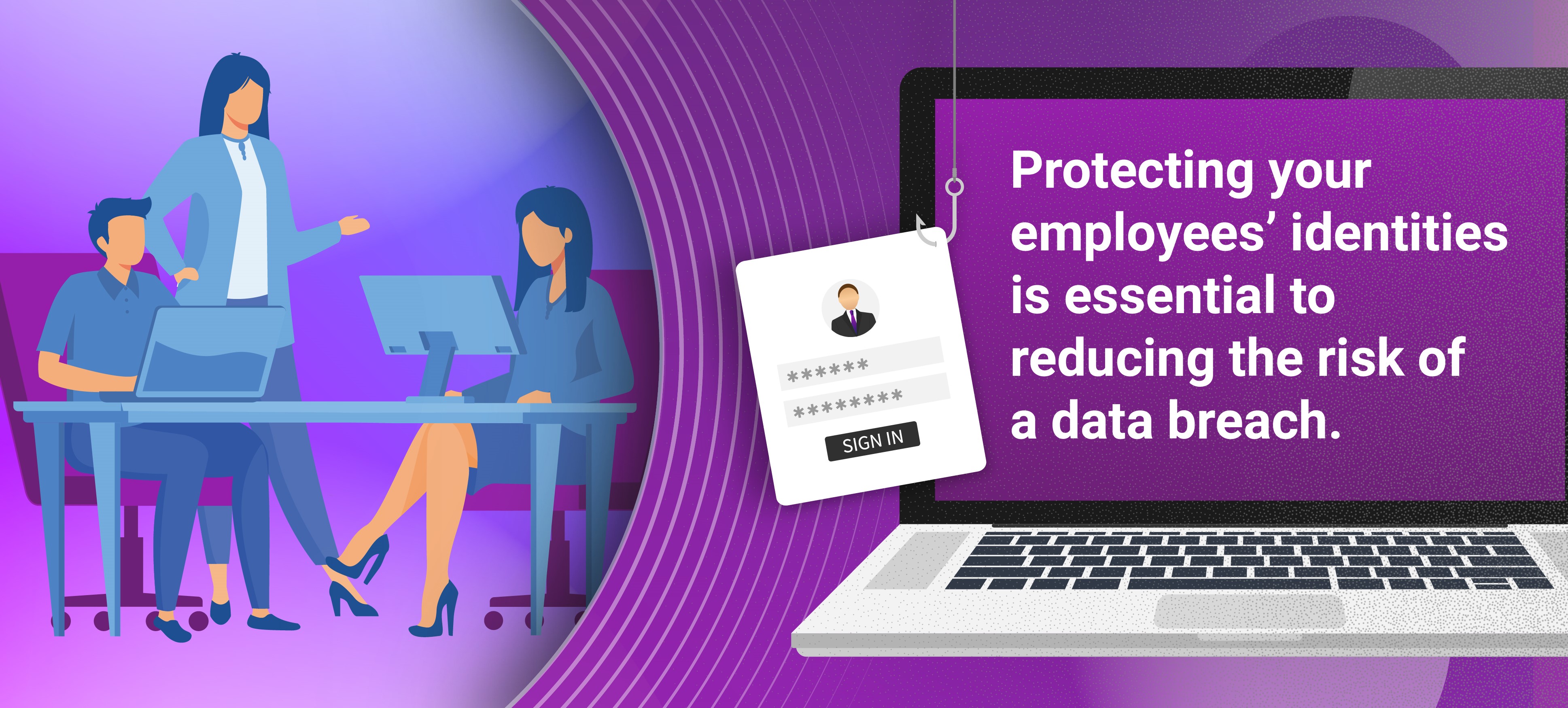
As data breaches become an ever-growing threat to businesses, the role of employees in maintaining cybersecurity has never been more critical. Did you know that 82% of data breaches involve the human element1 , such as phishing, stolen credentials, or social engineering tactics? These statistics reveal a direct connection between employee identity theft and business vulnerabilities.

In this blog, we’ll explore why protecting your employees’ identities is essential to reducing data breach risk, how employee-focused identity protection programs, and specifically employee identity protection, improve both cybersecurity and employee engagement, and how businesses can implement comprehensive solutions to safeguard sensitive data and enhance overall workforce well-being.

The Rising Challenge: Data Breaches and Employee Identity Theft

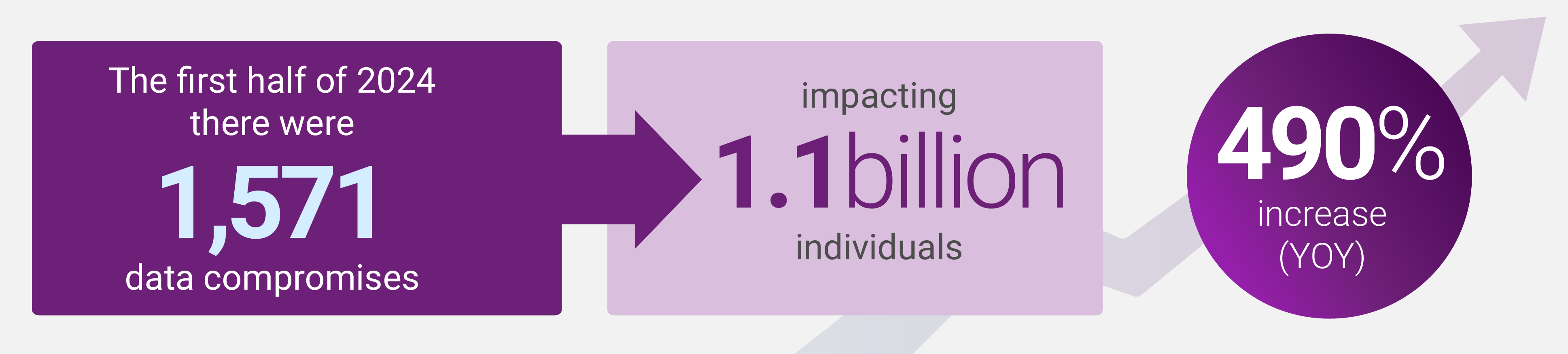
The past few years have seen an exponential rise in data breaches. According to the Identity Theft Resource Center, there were 1,571 data compromises in the first half of 2024, impacting more than 1.1 billion individuals – a 490% increase year over year2. A staggering proportion of these breaches originated from compromised employee credentials or phishing attacks.
The Link Between Employee Identity Theft and Cybersecurity Risks

  1. Phishing and Social Engineering
    Phishing attacks remain one of the top strategies used by cybercriminals. These attacks often target employees by exploiting personal information stolen through identity theft. For example, a cybercriminal who gains access to an employee’s compromised email or social accounts can use this information to craft realistic phishing messages, tricking them into divulging sensitive company credentials.
  2. Compromised Credentials as Entry Points
    Compromised employee credentials were responsible for 16% of breaches and were the costliest attack vector, averaging $4.5 million per breach3. When an employee’s identity is stolen, it can give hackers a direct line to your company’s network, jeopardizing sensitive data and infrastructure.
  3. The Cost of Downtime
    Beyond the financial impact, data breaches disrupt operations, erode customer trust, and harm your brand. For businesses, the average downtime from a breach can last several weeks – time that could otherwise be spent growing revenue and serving clients.

Why Businesses Need to Prioritize Employee Identity Protection

Protecting employee identities isn’t just a personal benefit – it’s a strategic business decision. Here are three reasons why identity protection for employees is essential to your cybersecurity strategy:

1. Mitigate Human Risk in Cybersecurity

Employee mistakes, often resulting from phishing scams or misuse of credentials, are a leading cause of breaches. By equipping employees with identity protection services, businesses can significantly reduce the likelihood of stolen information being exploited by fraudsters and cybercriminals.

2. Boost Employee Engagement and Financial Wellness

Providing identity protection as part of an employee benefits package signals that you value your workforce’s security and well-being. Beyond cybersecurity, offering such protections can enhance employee loyalty, reduce stress, and improve productivity. Employers who pair identity protection with financial wellness tools can empower employees to monitor their credit, secure their finances, and protect against fraud, all of which contribute to a more engaged workforce.

3. Enhance Your Brand Reputation

A company’s cybersecurity practices are increasingly scrutinized by customers, stakeholders, and regulators. When you demonstrate that you prioritize not just protecting your business, but also safeguarding your employees’ identities, you position your brand as a leader in security and trustworthiness.

Practical Strategies to Protect Employee Identities and Reduce Data Breach Risk

How can businesses take actionable steps to mitigate risks and protect their employees? Here are some best practices:

Offer Comprehensive Identity Protection Solutions

A robust identity protection program should include:

  • Real-time monitoring for identity theft
  • Alerts for suspicious activity on personal accounts
  • Data and device protection to protect personal information and devices from identity theft, hacking and other online threats
  • Fraud resolution services for affected employees
  • Credit monitoring and financial wellness tools

Leading providers like Experian offer customizable employee benefits packages that provide proactive identity protection, empowering employees to detect and resolve potential risks before they escalate.

Invest in Employee Education and Training

Cybersecurity is only as strong as your least-informed employee. Provide regular training sessions and provide resources to help employees recognize phishing scams, understand the importance of password hygiene, and learn how to avoid oversharing personal data online.

Implement Multi-Factor Authentication (MFA)

MFA adds an extra layer of security, requiring employees to verify their identity using multiple credentials before accessing sensitive systems. This can drastically reduce the risk of compromised credentials being misused.

Partner with a Trusted Identity Protection Provider

Experian’s suite of employee benefits solutions combines identity protection with financial wellness tools, helping your employees stay secure while also boosting their financial confidence. Only Experian can offer these integrated solutions with unparalleled expertise in both identity protection and credit monitoring.

Conclusion: Identity Protection is the Cornerstone of Cybersecurity

The rising tide of data breaches means that businesses can no longer afford to overlook the role of employee identity in cybersecurity. By prioritizing identity protection for employees, organizations can reduce the risk of costly breaches and also create a safer, more engaged, and financially secure workforce.

Ready to protect your employees and your business?

Take the next step toward safeguarding your company’s future. Learn more about Experian’s employee benefits solutions to see how identity protection and financial wellness tools can transform your workplace security and employee engagement.


1 2024 Experian Data Breach Response Guide

2 Identity Theft Resource Center. H1 2024 Data Breach Analysis

3 2023 IBM Cost of a Data Breach Report


Related Posts

Why Innovation Matters for Members First Credit Union

Learn how Members First Credit Union uses innovation and data-driven insights to better serve members and expand financial opportunity.

July 24, 2026 by Scarlet Nickel
Ask the Expert: Unlocking the ROI of alternative data with Natasha Madan and Julius Heim

A visibility gap lenders can't afford to ignore Alternative data is often associated with thin-file or credit invisible consumers. But its value extends far beyond those segments. Experian's Clarity Services database includes approximately one in five credit-active consumers, including one in four consumers with prime-and-above credit profiles. That means lenders may be missing important signals, not only for emerging borrowers, but also for applicants who appear well qualified using traditional bureau data alone. Consider two consumers with the same credit score. Based on traditional credit data, they may appear equally creditworthy. But when Clarity data is added, one consumer may demonstrate stable repayment behavior while another shows recent defaults on alternative finance products. The credit score hasn't changed, but the decisioning context has. That's where alternative data creates value: helping lenders distinguish between consumers who look similar on paper but represent very different levels of risk and opportunity. In this Ask the Expert session, Experian’s Julius Heim, Vice President of Analytics Product Build, Innovation and Scores, and Natasha Madan, Senior Director, Analytics Consulting, explain how different alternative data assets solve different business challenges and why the greatest return comes from using them together throughout the credit lifecycle. What that visibility gap is really costing lenders Better visibility matters because every lending decision carries consequences. Without alternative data, lenders may approve applicants whose repayment behavior suggests elevated risk but isn't reflected in a traditional credit file. Without cash flow insights, they may decline consumers who appear thin file on bureau data despite demonstrating strong income and responsible financial management. The result is a two-sided cost: avoidable bad debt on one side and missed growth opportunities on the other. But ROI extends beyond approvals alone. It also appears through stronger marketing strategies, improved conversion, reduced friction and more precise risk segmentation throughout the lending lifecycle. "ROI can mean many things ... marketing to the right people, achieving better approval rates, reducing risk, getting less friction and overall profitability."Julius Heim, Vice President of Analytics Product Build, Innovation and Scores Where alternative data creates ROI Improve approval strategies Use additional consumer signals to recover creditworthy applicants while avoiding unnecessary declines. Reduce portfolio risk Identify elevated repayment risk earlier through enhanced visibility beyond traditional bureau data. Improve portfolio performance Increase conversion, reduce friction and strengthen profitability across the credit lifecycle. Different data. Different jobs. Not all alternative data solves the same problem. Clarity Services can help lenders strengthen decisions early in the customer journey. It provides additional visibility during prospecting and acquisition, helping identify potential risk before an application moves through the underwriting process. Cash flow insights can provide value in a different way. When traditional credit information offers part of the picture, consumer-permissioned cash flow data can provide greater insight into income, spending patterns and financial capacity. That makes it especially valuable as a second look during underwriting. Together, these complementary data assets help lenders improve decisioning throughout the credit lifecycle. They can support acquisition, underwriting, account management and collections while building on the trusted foundation of traditional bureau data. Research also continues to demonstrate measurable lift when cash flow insights are combined with traditional credit information. "I recently did a study with a client where we actually saw a 20% lift in KS [Kolmogorov-Smirnov] above and beyond credit bureau data. Again, the bureau data itself was very predictive. But even from the cash flow data, we still got a 20% lift, which is an amazing stat." Julius Heim, Vice President of Analytics Product Build, Innovation and Scores The greatest value comes from using these data sources together for a more holistic consumer view. Start with proof, then build Adopting alternative data doesn't have to begin with a large transformation. A practical first step is a data study. By comparing current decision strategies with enhanced data, lenders can identify where additional visibility creates measurable lift within their own portfolios. This approach allows institutions to validate results before making broader operational changes. Every lender has different workflows, technology environments and business priorities. A flexible implementation strategy helps organizations incorporate new data in ways that support existing processes rather than disrupting them. Three ways to get started Run a data study Benchmark current decision strategies and quantify potential lift. Start simple Begin with targeted data attributes or proven scores before expanding to more advanced use cases. Build with confidence Scale implementation based on measured business outcomes and organizational priorities. This approach allows lenders to validate results, build confidence and expand their strategy over time. Explore alternative data with a trusted partner Every lending decision benefits from better consumer insight. Experian helps lenders combine trusted credit data with alternative data, cash flow insights and advanced analytics to strengthen decisioning, improve portfolio performance and uncover new opportunities for growth. Whether you're evaluating alternative data for the first time or expanding an existing strategy, Experian can help you identify where additional consumer insight can create measurable business value. Learn more Contact us About our experts Julius Heim Vice President of Analytics Product Build, Innovation and Scores, Experian Julius Heim works at the intersection of financial services, analytics and innovation. He focuses on leveraging data to drive smarter decision-making and support more inclusive financial ecosystems. Julius brings a practical perspective on how organizations can translate insights into real-world impact, with particular interest in emerging trends across fintech, credit, and the use of alternative data, such as cash-flow data, across the credit lifecycle. Previously, he served as Head of Analytics on the lender side and held roles in insurance analytics earlier in his career. Natasha Madan Senior Director, Analytics Consulting, Experian Natasha Madan partners with lenders to drive smarter, data-driven credit and risk decisions. She specializes in leveraging alternative data and advanced analytics to help organizations improve portfolio performance, optimize customer acquisition, and expand responsible access to credit. During her 15 years at Experian, Natasha has held leadership roles spanning data analytics, product analytics and consulting, giving her a broad perspective of how data can be leverage to solve complex business challenges. She has worked with a diverse range of lenders – including banks, credit unions, fintechs and specialty finance companies to develop analytics strategies that optimize customer acquisition, underwriting and portfolio management. Natasha is passionate about helping organizations unlock the full potential of data to improve both business outcomes and consumer financial inclusion.

July 24, 2026 by Julie.JLee@experian.com
Advancing Homeownership Through Partnership 

Learn how HomeFree-USA and Experian partner to expand financial education, strengthen communities and help consumers achieve homeownership.

July 22, 2026 by Scarlet Nickel

Subscribe to our Newsletter

Enter your name and email for the latest updates.

This site is protected by reCAPTCHA and the Google Privacy Policy and Terms of Service apply.

Subscribe to our Newsletter

Don't miss out on the latest industry trends and insights!
Subscribe