
It is an incredibly frustrating email to receive, but it happens more often than you think. You log into your HR portal to process a new hire’s employment eligibility, only to find your access completely blocked.
Behind the scenes, U.S. Citizenship and Immigration Services (USCIS) has terminated your E-Verify account.
The culprit isn’t a massive data breach or a deliberate violation of federal law. Instead, it is a classic administrative breakdown: an unanswered email and an outdated Point of Contact (POC).
Here is a look at why E-Verify has been cracking down on unresponsive accounts, why working through a vendor doesn’t shield you from liability, and the exact steps you need to take to keep your compliance intact.
The Silent Spiral of Account Termination
USCIS Account Compliance actively monitors E-Verify activity to flag potential system misuse, technical errors, or procedural non-compliance. When they spot an anomaly, their first step isn’t to hit the panic button, it’s to reach out.
E-Verify compliance officers will attempt to call or email the designated Program Administrator or POC listed on the account to offer guidance and resolve the discrepancy.
However, the modern workforce is highly dynamic. HR professionals change jobs, teams restructure, and corporate email addresses are deactivated. If those internal updates aren’t mirrored in your E-Verify profile, a dangerous sequence unfolds:
- E-Verify flags a potential compliance anomaly
- Compliance Officers call/email the listed POC
- Inbound communications go unanswered or bounce
- USCIS terminates the account for program non-compliance
Once the agency’s communications go completely unanswered and ignored, E-Verify terminates the client account to protect the integrity of the system.

The Clean-Up Process
When an account is terminated due to radio silence, you can’t just click an “undo” button. To fix it, you are forced to go through a compounding bureaucratic cycle:
- You must formally respond to and resolve the initial compliance warning that went ignored in the first place.
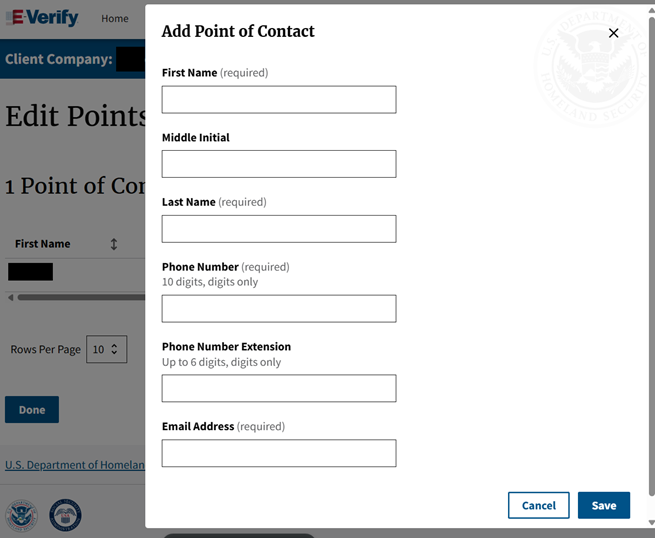
- You have to update the company profile with accurate, real-time POC data.
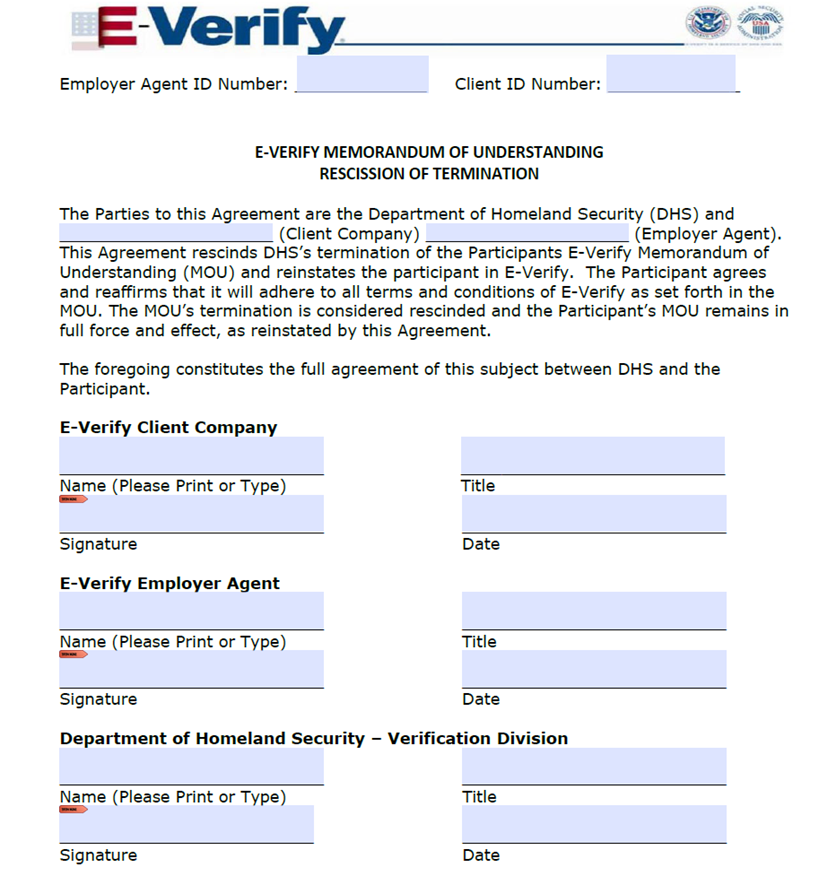
- You must go through the entire process of reinstating your Memorandum of Understanding (MOU) to regain system access. If working with vendor, the MOU Reinstatement Agreement must be signed by the employer, vendor and agent from DHS – Verification Division.
The Vendor Trap: Ultimate Responsibility Stays with You
Many employers utilize a third-party workforce management platform or an E-Verify Employer Agent to handle their verification workflows. This setup leads to a dangerous misconception: “Our vendor handles E-Verify, so their compliance is our compliance.”
This is a critical misunderstanding. Even if you partner with a third-party vendor, the employer bears ultimate legal and administrative responsibility for employment eligibility verification.
If USCIS compliance teams try to reach your specific company regarding a data mismatch or an audit flag, and your primary internal POC is unreachable, the vendor cannot simply waive a magic wand to stop the termination. If you use an employer agent, you must explicitly instruct them to push updates through their master agent account to keep your specific client profile accurate.
How to Protect Your Organization
Reinstating a terminated MOU is a relatively straightforward process. E-Verify agents are generally highly cooperative, understand that operational shifts happen, and will support you through the steps to build a compliant foundation.
However, frequent account terminations look terrible from a corporate compliance standpoint. They signal weak internal controls and can elevate your risk profile for future audits by Immigration and Customs Enforcement (ICE) or the Department of Justice (DOJ).
To prevent this operational headache, build these administrative habits into your regular HR lifecycle:
- Audit your active account users – Quarterly Check
Log into E-Verify, navigate to Company Account > Company Profile, and review your designated Program Administrators and POCs. Remove individuals who have left the company or transitioned to different departments. - Coordinate with your third-party agent
If you utilize an E-Verify Employer Agent, don’t assume they know your internal roster. Explicitly provide them with updated contact information whenever your HR leadership changes so they can update the client card in their portal. - Whitelist official government domains
Ensure your corporate email filters do not accidentally send official communications from @uscis.dhs.gov or @dhs.gov straight to the spam or junk folders. - Establish an HR transition protocol
Add “E-Verify Update” to your internal HR offboarding checklist. Before a Program Administrator surrenders their credentials, ensure a successor is designated and fully trained in the platform.
An active E-Verify account requires active maintenance. Treat your Point of Contact information not as a static field filled out during initial enrollment, but as a critical piece of live regulatory infrastructure.