
A massive structural shift just hit the United States immigration landscape. For nearly half a century, international students and exchange visitors traveled to the U.S. under a relatively flexible system known as Duration of Status (D/S). Under that old framework, as long as you remained enrolled full-time and followed the rules, your visa remained valid until you finished your program, whether that took three years or seven.
The Department of Homeland Security (DHS) officially finalized a new regulation that eliminates D/S for F (student), J (exchange visitor), and I (foreign media) visa holders. Moving forward, the open-ended timeline is being replaced by rigid, fixed periods of admission.
The rule is set to take effect 60 days after its publication in the Federal Register, marking one of the most significant changes to international student policy in decades.
The new policy shifts the administrative burden directly onto the visa holders. Instead of automated extensions handled internally by universities via updated Form I-20s, nonimmigrants will now have to formally petition the federal government to stay in the country.
| Visa Category | Old Policy (D/S) | New Policy (Fixed Term) |
| F-1 (Students) & J-1 (Exchange Visitors) | Valid for the entire length of the academic or exchange program. | Capped at the program length, up to a maximum of 4 years at a time. |
| I Visa (Foreign Journalists & Media) | Valid for the duration of the media assignment in the U.S. | Capped at 240 days per admission period (90 days for Chinese nationals). |
| Post-Program Grace Period (F-1) | Allowed 60 days to depart, transfer, or change visa status. | Reduced to 30 days. |
Extensions and academic restrictions
If a student’s degree program naturally takes longer than four years, such as a PhD track, medical training, or certain dual-degree undergraduate programs, they will no longer automatically transition. They must file a formal Extension of Stay (EOS) application directly with U.S. Citizenship and Immigration Services (USCIS). The application process will trigger fresh background checks, biometrics collection, and deeper compliance vetting. Failing to secure an approved extension before the clock runs out means the individual will instantly begin accruing “unlawful presence,” which carries severe long-term re-entry penalties.
The finalized rule also introduces tight boundaries around academic flexibility:
- Students who finish a degree can generally only move upward academically (e.g., Bachelor’s to Master’s to PhD). Moving laterally to a second degree at the same level, or taking a lower-level course, is heavily restricted while staying in F-1 status.
- Undergraduate students will face restrictions on changing their major or program during their first year. For graduate students, the rules around changing fields of study are even more severe.
- Students coming to the U.S. solely for English language training are now restricted to a hard cumulative cap of 24 months.
Why the sudden shift?
Government officials frame the policy as a crucial move to protect national security, reduce immigration fraud, and cut down on visa overstays. By requiring visa holders to check back in with immigration authorities every few years, the government aims to eliminate the “forever student” loophole where individuals repeatedly enroll in casual courses just to remain in the country indefinitely.
What happens to current students?
If you are already in the U.S. under the old “Duration of Status” framework, you won’t be forced out overnight. The DHS has outlined a transitional window: current nonimmigrants will automatically switch over to the new system, with their authorized stays capped at a maximum of four years from the date the new rule officially goes into effect.
The new fixed-term visa caps shift the compliance burden onto employers in three major areas:
- H-1B “Cap-Gap”
- Historically, if an employer sponsored an F-1 student for an H-1B visa, the student was protected by a “Cap-Gap” extension. This allowed them to legally stay and work in the U.S. from the time their OPT expired until their new H-1B status kicked in on October 1st.Because F-1 status is no longer open-ended under D/S,
- employers must be incredibly precise with dates. If an employee’s fixed I-94 date expires before the H-1B petition is filed or while it’s pending, the employer may have to file a formal Extension of Stay (EOS) alongside the H-1B application just to prevent the employee from accruing unlawful presence.
- A halved onboarding window for new graduates
The post-graduation grace period has been cut in half from 60 days to 30 days.- The Old Way: Employers had a comfortable 2-month window to finalize hiring paperwork, background checks, and onboard an international graduate before they had to officially start their OPT employment.
- The New Way: HR teams now have a tight 30 days. Any bureaucratic delay on the employer’s end could force the candidate to leave the country or fall out of status before employment officially begins.
- Deeper vetting for foreign media and journalists
- For media companies, newsrooms, and broadcasting networks employing foreign correspondents on I visas, the landscape is entirely rewritten. Long-term U.S. assignments are now capped at a rigid 240 days (and just 90 days for Chinese nationals). Media employers will face massive administrative churn, needing to file extensions roughly every 8 months for their foreign bureaus just to keep their newsrooms staffed.
Next steps for employers
- The finalized rule does not directly alter or eliminate the core rules of OPT, STEM OPT, or Curricular Practical Training (CPT). The programs still exist, but their execution now requires much stricter tracking.
- Review the Form I-94 records of all current employees on F-1, J-1, or I visas to identify who will need an Extension of Stay (EOS) and when.
- While certain employment authorizations can be automatically extended for up to 240 days while an EOS application is pending, the initial application must be perfectly timed to avoid gaps in work authorization.
- If you plan to hire spring graduates, start the interview and offer process earlier to accommodate the compressed 30-day post-graduation transition window.
This blog is provided for informational purposes only and does not constitute legal advice. Readers should seek legal counsel regarding their specific situation before taking any action based on the information discussed above. Stakeholders should also monitor official updates from USCIS, DHS, and other relevant government agencies through their authorized channels, as implementation guidance, procedures, and compliance requirements may continue to evolve.
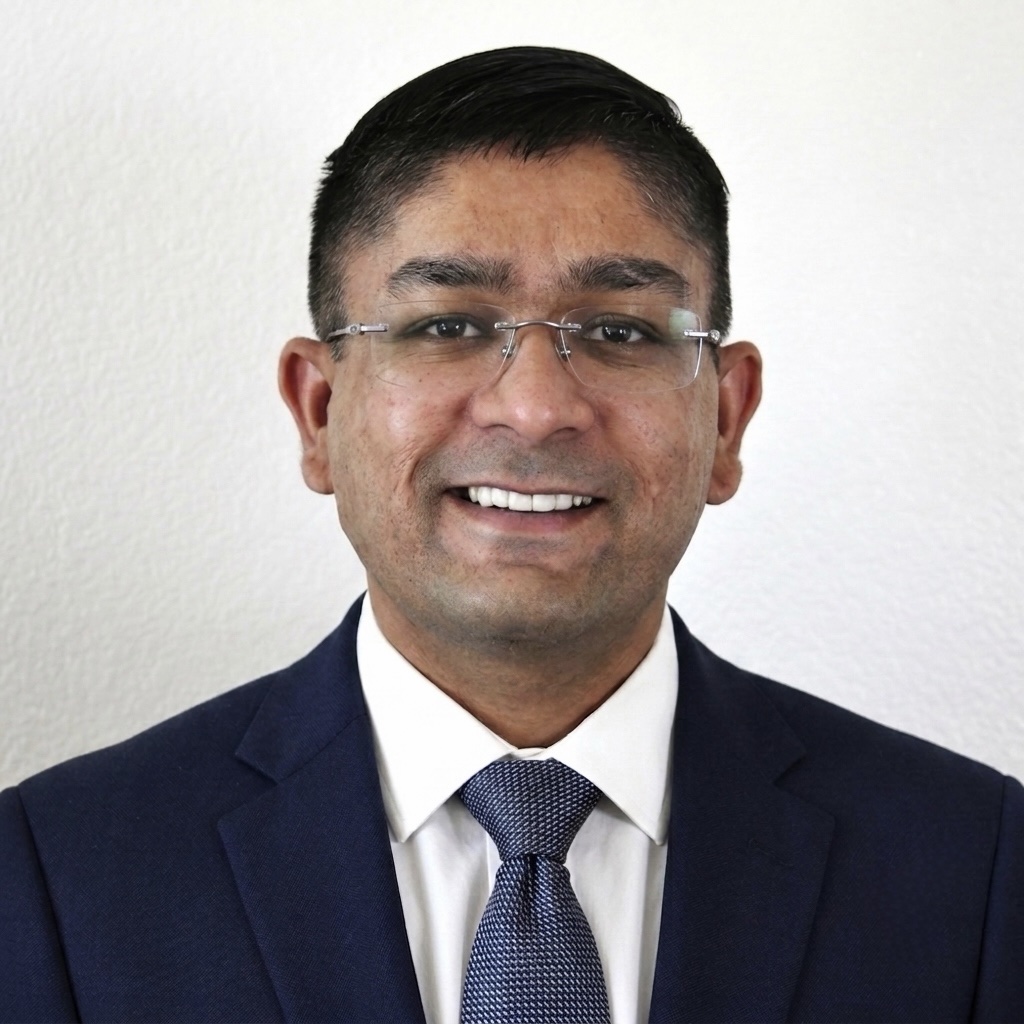
Vijay Thakkar has more than 12 years of HR Operations experience, including 8 years helping employers improve their Form I-9 management and E-Verify compliance, especially for mergers & acquisitions, internal and external I-9 audits, training and development, migration to the electronic system, I-9 escalations, quality checks, strategic planning, and building standard operating procedures with a keen interest in US immigration and global mobility.
Prior to joining Experian, Thakkar has served as Levi Strauss & Co’s I-9 subject matter expert, an investigator to the behavioral health unit at the US Army, and Sustainability Analyst at his alma mater the University of Texas at Arlington from where he earned his Master’s in Human Resource Management and MBA.