At A Glance
2026 marketing trends reveal that people will spend more intentionally, prioritize value and simplicity, and expect personalization that’s transparent and privacy-first. Omnichannel journeys and micro-moments will shape how they shop, with generational differences influencing trust and digital expectations. Experian helps marketers respond with privacy-first identity, high-quality audience intelligence, and omnichannel activation that drive relevant and measurable performance.In this article…
The 2026 consumer is reconsidering how they want to engage with businesses. Research from Nielsen anticipates that in 2026, people will spend more intentionally, think more critically, and expect more from the brands they invite into their lives. They want clear value, marketing experiences that make decisions easier, and personalization that respects their privacy and improves the moment they’re in.
This change has big implications for marketers. Winning in 2026 will require understanding the motivations, concerns, and trust drivers behind consumer behavior. This means embracing a privacy-first identity foundation, deep audience intelligence, high-quality and ethically sourced data, omnichannel activation, and measurement that closes the loop across channels.
Below, we break down consumer shifts shaping 2026 and how you can translate them into practical strategies for 2026.
How will consumer behavior change in 2026, and how should marketers respond?
Consumers are going into 2026 feeling deeply cautious. According to 2026 consumer outlook data, 32.8% of global shoppers say they’re financially worse off than last year, and 73% of those consumers cite rising cost-of-living pressures as the reason.
Ultimately, people are spending, but they’re directing most of their dollars toward core categories like food, health, and household care. That mix of caution and restraint is shaping what they want from brands: clear value, relevant personalization, and simple, low-effort experiences that make choices feel easier and worthwhile.
Want more details on how consumer caution shaped the peak buying season in 2025? Explore our 2025 Holiday spending trends and insights report for insights that can set the foundation for your 2026 strategy.
Here are the consumer trends we expect to shape decision-making most in 2026 and how Experian can help you adapt.
Economic stability will outweigh values
Consumers are prioritizing the realities of their household budgets going into 2026. Global consumer research shows that environmental concerns fell from the #4 global worry to #9 in 2025, while financial pressures and geopolitical issues moved to the top of the list.
People still care about brand values, but economic stability is becoming a stronger driver behind how they decide what to buy, where to shop, and which brands they trust. Consumers want brands to be responsible, fair, and transparent, but they also expect brand values to align with their financial reality.
| Insight | Data point |
| Consumers who feel financially worse off than last year | 32.8% |
| Of those, consumers citing cost-of-living pressures | 73% |
| Environmental concerns falling in priority (2024 to 2025) | #4 to #9 in top global worries |
Source: Consumer Outlook: Guide to 2026
For your marketing, this means shifting from broad value messaging to audience-specific offers tailored to each group’s financial situation, understanding:
- Who feels financially stretched
- Who still has spending flexibility
- Who is shifting habits subtly (frequency, basket size, channel choice)
How marketers should respond to this trend
Experian helps brands read financial signals with accuracy. Using generational segments, income bands, lifestyle indicators, and geo-indexed audiences, you can distinguish between:
- Value-seeking shoppers who prioritize stretch, savings, and reliability
- Higher-income households motivated by sustainability, wellness, or premium experiences
- Multigenerational families with diverse influencers and decision drivers
- Urban vs. suburban households with different price sensitivities and convenience factors
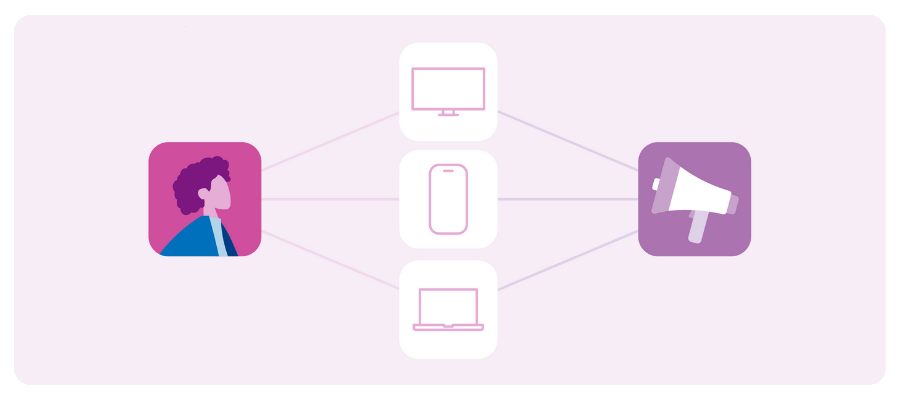
Paired with Experian’s privacy-first identity graph, your brand can activate audiences aligned with consumer insights across commerce media networks (CMNs), connected TV (CTV), social platforms, and programmatic channels using curated private marketplaces (PMPs). This ensures your messaging reflects the financial realities of consumers in 2026. Experian’s predictive insight capabilities also help forecast shifts in financial mindset, enabling you to anticipate change instead of reacting to it.
As financial caution shapes everyday choices, the next question becomes how to remove friction and deliver value in ways that feel simple, relevant, and worth the spend.
Consumers will prioritize value, simplicity, and relevance
With everyday expenses still weighing on households, people will likely simplify their shopping habits in 2026. They want brands to make decisions easier, save them time, and offer clear value without extra effort.
Instead of wading through endless choices or chasing promotions, shoppers are responding to experiences that feel straightforward and trustworthy, with:
- Transparent pricing
- Clear benefits
- Recommendations aligned to budget and needs
- Frictionless decision paths
For your brand, it’ll be essential to deliver carefully crafted and targeted messages at the right moment, rather than overwhelming consumers with excessive messaging. Experian helps you pinpoint what value looks like for different audiences and tailor relevant experiences.
How marketers should respond to this trend
To meet consumers’ demand for value and simplicity, you’ll need to understand what “easy” and “worth it” mean to each audience before you activate a campaign. Experian enables this by identifying the moments, motivations, and household realities that shape how people simplify decisions.
Using Experian’s lifestyle indicators, category affinities, geo-indexed spend patterns, and financial mindset segments, you can quickly pinpoint:
- Which audiences want streamlined choices (e.g., fewer SKUs, clearer value cues)
- Which shoppers expect premium quality without complexity
- Which households prioritize speed and convenience over price
- Which consumers prefer digital-first journeys vs. in-store simplicity
Then, through Experian’s privacy-first identity graph, you can reliably reach these audiences across CMNs, CTV, social, and digital environments with:
- Product recommendations that reduce decision fatigue
- Promotions tuned to value drivers
- Creative that matches each audience’s expectations for ease
- Consistent messaging that aligns across all channels
Experian’s AI-powered simplicity helps reduce manual effort in this process, enabling your team to uncover opportunities, streamline workflows, and focus more time on strategy and outcomes. And as Experian continues to explore agentic workflows, you’ll be able to move from manual audience setup to intelligent audience discovery — enabling strategies you may not have considered before.
Once you’ve simplified the experience, consumers will expect the next layer of relevance: helpful, respectful personalization grounded in the data they choose to share.
People want personalization on their terms
According to Qualtrics’ 2026 Consumer Experience Trends Report, consumers still want personalization going into 2026, but they expect it to happen on their terms:
| Insight | Data point |
| Prefer personalized experiences | 64% |
| Say benefits outweigh privacy trade-offs | 39% |
| Feel uncomfortable with many data-driven personalization tactics | 32% |
Source: 2026 Consumer Experience Trends Report
First-party data is now the foundation of meaningful, privacy-first engagement. Consumers are far more willing to share information when the value exchange is obvious and when they feel in control of how that data is used. They expect brands to:
- Use only necessary data
- Explain how personalization improves the experience
- Offer easy preference controls
- Demonstrate transparent, privacy-first data practices
As your brand lives up to these expectations, trust grows, and consumers become more willing to share the first-party data you need for impactful, privacy-centric personalization in 2026.
Experian helps you meet these needs with Audience Engine, a self-service activation tool that enables you to quickly and accurately view and activate your first-party data and partner segments across 200+ platforms without high operational overhead. And when you need deeper insight, it also connects 3,500+ syndicated audiences and 20+ trusted third-party providers, so you can enrich your first-party data with privacy-safe insights.
This includes Experian’s most recent 2025 Syndicated Audiences release, which adds 400+ updated segments — including 62 Auto Loyalists — giving you a more granular, privacy-safe view of shifting values, lifestyle preferences, and intent signals for 2026. These segments break out characteristics by generation, income, gender, and urbanicity, so your brand can analyze where demand is rising and how behaviors differ across audience groups.
For example:
- An automaker can target Auto Loyalists: Acura with model-specific offers
- A luxury brand can activate Auto Loyalists: Alfa Romeo and adjust messaging by income band, age, urbanicity, or lifestyle
Used together, first-party data and enriched syndicated audiences allow you to personalize responsibly, target more effectively, and respond to 2026 consumer expectations while respecting their privacy wishes.
How marketers should respond to this trend
The future of personalization in 2026 is first-party and zero-party data, supported by a trustworthy identity framework.
Experian enables this through:
- Identity resolution connected to 95% of U.S. households
- Privacy-first activation across digital, CTV, and CMNs
- Data modernization that maintains accuracy and compliance
- Responsible automation that delivers high-performance, human-centered personalization consumers want in 2026
- Mosaic® USA, our household-level consumer classification system that provides a privacy-safe view of lifestyles and preferences so you can apply personalization intelligently across channels
- Audience Engine, which lets you activate and enrich your first-party data for richer, permission-based insights
- Marketing Attributes, which gives you access to thousands of demographic, behavioral, lifestyle, financial, and interest characteristics
As soon as your brand earns permission to personalize, the next expectation is to apply that personalization across channels.
Omnichannel behavior and real-time micro-moments will define how people shop
Consumers don’t differentiate between channels anymore. They want a seamless, cohesive shopping journey. Consumer buying trends indicate that people are shopping more frequently but purchasing fewer items per trip. This suggests more small, mission-driven decisions, often triggered by digital or mobile discovery.
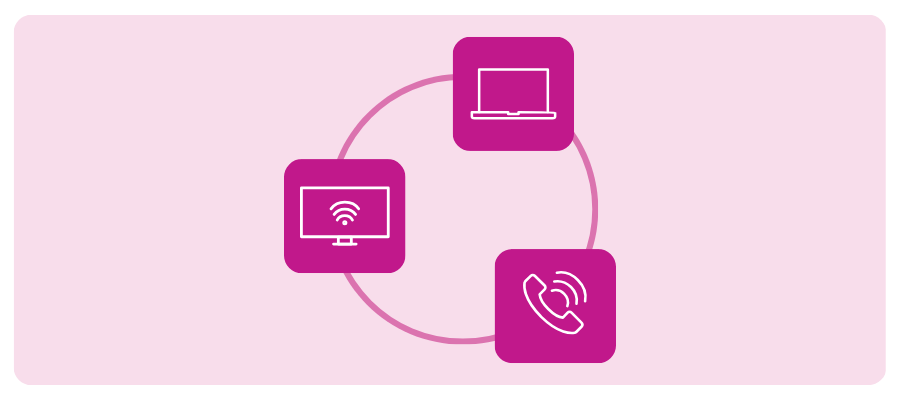
As shoppers move fluidly between mobile, in-store, CTV, and social platforms, they rely on time-saving cues, simple comparisons, and contextual recommendations instead of complex decision-making processes. CMNs now influence choices across the digital shelf, in-store screens, and publisher networks, blurring the lines between media and commerce. Speed also matters; anything longer than next-day delivery reduces the likelihood of a purchase.
These behaviors create more micro-moments: quick, intent-driven decisions shaped by life stage, financial mindset, household composition, real-time signals, and micro-behaviors like quick trips, small-basket missions, and mobile search checks. Meeting consumers in these moments requires contextual relevance, not broad targeting.
How marketers should respond to this trend
Experian helps you act on omnichannel and micro-moment behavior by unifying identity and audiences across:
- CMNs
- CTV
- Social platforms
- Programmatic partners
- Retail media publishers
- In-store digital environments
Meanwhile, our audience assets give you the contextual accuracy these moments demand with:
- Geo-indexed spenders to understand financial posture and neighborhood patterns
- Generational household segments to reflect digital comfort and shopping rhythms
- Lifestyle and interest indicators aligned to real-life needs
- In-market and behavioral signals to reach consumers at the moment intent appears
With privacy-first identity resolution anchoring it all, your brand can deliver consistent sequencing, informed personalization, and accurate measurement across channels. This is essential when omnichannel is the expectation and micro-moments decide who wins the sale.
As these real-time behaviors shift, generational differences will further shape how consumers navigate channels, interpret value, and decide which brands earn their loyalty.
What’s new with Experian Marketing Data?
Explore hundreds of new and updated segments now available — auto, income, lifestyle, spend, TV, and more.
How are generational shifts shaping 2026 consumer behavior?
Generational dynamics are also likely to play a significant role in how people discover, evaluate, and buy in 2026. While every age group is prioritizing value, simplicity, and trust, they express these priorities differently.
Experian’s Syndicated Audiences updated for November 2025 include 61 new demographic segments — broken out by generation, income band, gender, and urbanicity — to help you reach each group with accuracy. These segments are informed by decades of responsible automation and predictive modeling, giving you a clearer view of how each group behaves, even as signals shift.
For example, a retail brand can use the Gen X Dual-Income Households segment to reach value-driven, digitally engaged shoppers, while another brand might activate Millennial Urban Professionals to tailor offers based on lifestyle, income, or urbanicity.
Here’s how key generations will shape buying and the Experian segments that can help you act on these customer insights.
Gen Z expects transparency, authenticity, and digital ease
- Values: Transparency, authenticity, responsible data use
- Digital behavior: Always-on, mobile-first, social and creator-influenced
- Decision drivers: Trust, clarity, seamless digital experiences
- Relevant Experian segments: Gen Z Urban Households, Gen Z Renters
Millennials seek value alignment, financial flexibility, and reliability
- Values: Fair pricing, quality, reliability
- Digital behavior: Efficiency-focused omnichannel shoppers
- Decision drivers: Time savings, cost relief, trust
- Relevant Experian segments: Millennial Urban Professionals, Millennial Parents
Gen X is increasingly digital, highly value-conscious, and loyal
- Values: Reliability, clarity, long-term value
- Digital behavior: Digitally engaged but friction-averse
- Decision drivers: Practicality, stability, predictable service
- Relevant Experian segments: Gen X Dual-Income Households
As these generational differences shape how people discover, evaluate, and buy, one theme unites every age group: trust now determines whether a brand earns attention, data, and loyalty. With today’s consumers scrutinizing how their information is used, that trust might just be what helps you succeed in 2026.
Why is trust the new currency in data-driven marketing?
In 2026, trust will differentiate the brands that flourish. Consumers want:
- Clear data practices
- Transparent value exchanges
- Confidence that brands are honoring their preferences
And as signals decline, first-party data strategies supported by privacy-first identity resolution and responsible automation have become the reliable, transparent foundation for trust-driven marketing.
Experian’s long-standing focus on data accuracy, modernization, and compliance — from quarterly releases and updates to our twice-yearly attribute retirement process — ensures you activate with the most current, ethical, and regulation-aligned data available. These practices strengthen consumer trust and drive more accurate targeting, better match rates, and measurable performance across channels.
This focus on accuracy, governance, and transparency also underpins Experian’s approach to ethical AI, ensuring innovations serve people first while giving you confidence in every decision.
How can marketers apply 2026 consumer insights today?
As trust becomes the deciding factor in whether consumers engage, share data, or stay loyal, marketers need clear ways to operationalize that trust. Fortunately, the insights shaping 2026 translate directly into practical actions your team can take right now.
Here’s where you can start:
- Audit your first-party data strategy and CRM hygiene
- Invest in scalable, privacy-first identity resolution
- Tailor messaging to financial attitudes, not just demographics
- Use Experian’s audience segments to match consumer values, generational traits, and urbanicity
- Build journey-based activation across mobile, CTV, social, and CMNs
- Implement measurement and closed-loop analytics so every activation feeds intelligence back into planning
- Evaluate where predictive insight and responsible automation can reduce manual work and improve outcomes
With Experian, you can reach the right people with the right message at the right moment with accuracy they can trust. Teams gain the predictive insight and responsible automation needed to act on these shifts at scale.
Looking for more insights into the year ahead?
If you’re planning for 2026, consumer behavior is just the starting point. Experian’s 2026 Digital trends and predictions report takes you deeper into the forces reshaping marketing —from AI moving from hype to implementation and the evolution of commerce media beyond retail.
What role does Experian play in helping brands activate data-driven marketing?
As you put these 2026 consumer insights into practice, the challenge becomes turning strategy into scaled, privacy-safe execution. Experian’s data, identity, and activation infrastructure can make the difference:
- Identity as the foundation: Connect first-party data to 95% of U.S. households for a unified, privacy-first view.
- Privacy-first activation: Engage audiences safely across every channel with compliant targeting.
- Actionable data depth: Combine demographic, behavioral, contextual, and household-level attributes to enrich insights.
- Omnichannel reach: Activate at scale across CTV, CMNs, social, programmatic, and in-store environments.
- Closed-loop measurement: Tie exposure to outcomes across channels, enabling more effective optimization and continuous improvement.
These capabilities provide your brand with the clarity, confidence, and control necessary for future success — powered by Experian’s human-centered approach to AI, which combines privacy-first clarity, predictive insight, AI-powered simplicity, real-time intelligence, and transparent innovation to deliver trust, accuracy, and measurable performance in 2026.
Build your 2026 strategy with data you can trust
Those who win in 2026 will be the ones who turn shifting consumer behavior into actionable intelligence rooted in trusted identity, accurate data, and measurement that proves what works. With economic caution shaping decisions, rising privacy expectations, and omnichannel journeys becoming the norm, brands that invest now in a strong data and identity foundation will be the ones that stay visible, relevant, and resilient.
Experian gives you that foundation by unifying identity, high-quality data, activation, and closed-loop measurement through a human-centered approach to AI. With privacy-first clarity, predictive insight, AI-powered simplicity, real-time intelligence, and transparent innovation, Experian helps you understand your audiences deeply, reach them responsibly, and adapt in real time as the market evolves.
2026 is coming fast. Now’s the moment to build a high-performance strategy.
Connect with us
FAQs
The biggest consumer trends for 2026 revolve around intentional spending, value-conscious choices, low-effort experiences, and personalization that feels transparent and trustworthy. Consumers are cautiously optimistic but still managing tight budgets, prioritizing essentials, and gravitating toward brands that simplify decisions with clear value and relevant experiences that meet them across channels. Personalization remains a differentiator when it’s rooted in responsible data use and clear benefits.
You can use 2026 consumer insights to identify your highest-opportunity audiences, match your messaging and offers to their financial reality and values, and build journey-based activation across channels instead of working in silos. Experian’s identity graph and audiences help you connect online and offline behavior into a single, actionable view.
Experian’s identity graph helps marketers in 2026 by providing a privacy-first, unified view of consumers across channels, connecting first-party data to 95% of U.S. households. This allows you to recognize individuals and households accurately, enrich their data with reliable attributes, and activate personalized experiences across digital, CTV, and CMNs with confidence.
The result is better targeting, higher match rates, and more consistent, relevant engagement at every touchpoint. All of this is further strengthened by Experian’s human-centered approach to AI, which enhances clarity, accuracy, and real-time relevance.
Privacy-first marketing uses consumer data responsibly and transparently to improve the customer experience. In 2026, consumers still want personalization but are more selective about how their data is used.
With privacy-first marketing, you build trust by explaining why data is collected, giving people control, and personalizing only with consented, high-quality data. Experian supports this through our Responsible Data Practices, which prioritize fairness, accuracy, transparency, security, and inclusion.
Latest posts

Curation can no longer be considered a trend. Here’s why curation is now a critical component of digital advertising strategies.

Discover how Fusion92 utilizes Experian’s data to improve targeting, activate campaigns across channels, and drive measurable success.
Learn how leading digital audio advertising platforms are solving identity challenges to increase personalization, reach, and ROAS.