At A Glance
Pharma marketers need privacy-first identity workflows that keep DTC and HCP paths separate while connecting activation and measurement. Experian’s pharma marketing playbook shows how brands can prepare audiences, coordinate approved destinations, and build measurement into the workflow so teams can connect media exposure to trusted outcomes.Pharma marketers need to build more meaningful relationships with patients (DTC), caregivers, and healthcare professionals (HCP) across a health journey that spans many channels, partners, and decision moments.
That creates an operational challenge. Data, activation, and measurement often sit with different vendors, each with its own rules, IDs, and handoffs. DTC and HCP campaigns need separate identity paths, but both still need to support the same brand objective. Pharma marketing teams need a clearer way to connect audience strategy, media exposure, and outcomes without adding risk or confusion. That starts with identity, not as a single system for every audience, but as a governed workflow that keeps DTC and HCP paths separate and coordinated.
In our pharma marketing playbook, “From onboarding to outcomes: The privacy-first independent identity workflow for pharma marketing,” we show pharma brands how to build privacy-first workflows that connect identity, activation, and measurement across the healthcare ecosystem.
From onboarding to outcomes
Pharma marketing teams need identity workflows that can support accurate audience creation, governed activation, and partner-enabled measurement without combining DTC and HCP identity paths.
Download our pharma marketing playbook to help your team:
- Plan DTC and HCP identity strategies with clearer separation
- Prepare audiences for activation across approved channels and partners
- Evaluate audience quality, usable reach, and governance
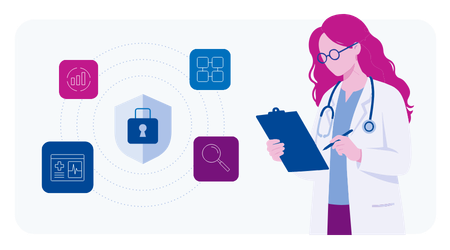
Here are three priorities pharma marketing teams can use to build more governed, measurable engagement.
1. Why should pharma marketers keep DTC and HCP identity workflows separate?
Pharma marketers should keep DTC and HCP identity workflows separate because each audience requires different data signals, activation paths, and measurement methods. Separate workflows give teams clearer governance controls while helping DTC and HCP campaigns support the same brand objective.

DTC and HCP campaigns often support the same brand objective, but they need separate ways to manage data, reach audiences, and measure results. That’s where identity plays a central role. It gives pharma teams a governed way to keep DTC and HCP data, activation, and measurement separate while coordinating both toward the same goal, like driving drug awareness and impacting prescribing behavior.
The missing layer in pharma marketing. Watch our Q&A
DTC activation depends on privacy-safe identity, which can include tokenization, aggregated audience logic, and non-clinical consumer context. This helps brands better understand patients and caregivers as people, not only as condition-defined audiences.
HCP activation depends on a different foundation. It may use signals such as National Provider Identifier (NPI), specialty, practice location, partner identifiers, and other verified attributes. When DTC and HCP workflows are treated as one system, you can create governance risk, weaken audience logic, and make measurement harder to defend. Keeping them separate gives teams clearer controls, audience planning, and a stronger way to show how both efforts support the same brand goal.
2. How can pharma marketing teams make audiences activation-ready with privacy-safe identity?
Pharma teams can make audiences activation-ready by translating fragmented inputs into governed audience workflows that can be matched, activated, separated, and measured. Privacy-safe identity helps prepare DTC and HCP audiences for approved channels and partners while maintaining the separation each workflow requires.
Privacy-safe identity helps prepare DTC and HCP audiences for approved channels and partners while maintaining the separation each workflow requires.
After separating DTC and HCP data, activation, and measurement, the next step is making each audience ready to use across approved channels and partners. Pharma audiences rarely start in a format that is ready for activation across platforms, publishers, and partners. Inputs may come from partner audiences, platform identifiers, CRM systems, privacy-safe consumer signals, HCP attributes, or partner-provided data.
Those inputs need to be translated into usable audiences through governed identity workflows. For DTC campaigns, activation readiness may include cohort construction, non-clinical enrichment, caregiver logic, tokenized matching, and exclusion rules. For HCP campaigns, it may include verified identity inputs such as NPI, specialty, practice location, and professional address.
A strong workflow answers four questions:
- Can the audience be matched accurately?
- Can it be activated across approved destinations?
- Can DTC and HCP separation be maintained?
- Can the audience connect back to verification and measurement?
When the answer is yes, pharma brands have a stronger foundation for audience quality, usable reach, and cross-channel activation.
3. Why should pharma marketers build measurement into the workflow from the start?
Pharma marketers should build measurement into the workflow from the start because campaign exposure needs to connect back to permitted identity frameworks and partner-held outcomes. Planning measurement before activation gives teams a clearer, more explainable way to evaluate how audience strategy, media exposure, and outcomes work together.
Making audiences ready for activation is only one part of the job. Pharma teams also need a clear way to connect media exposure to outcomes, and that measurement plan needs to be in place before a campaign goes live.
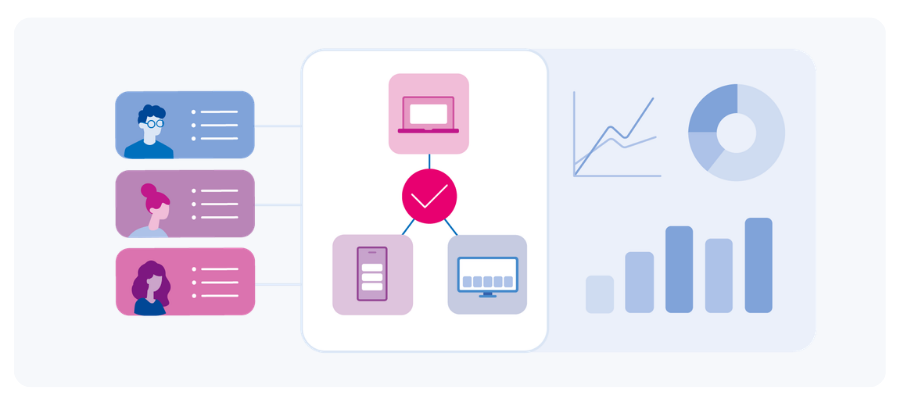
Pharma measurement requires more than knowing whether media ran. Brands need to connect exposure signals to permitted identity frameworks and partner-held outcomes in a way that is accurate, governed, and explainable. Those outcomes may include script lift, qualified HCP engagement, audience quality, and exposure-based HCP reporting where appropriate.
Clean rooms and partner-enabled workflows can help connect exposure, identity, and outcomes in a governed way. For DTC campaigns, this may involve linking tokenized audience or exposure data to a measurement partner environment. For HCP campaigns, this may involve resolving exposure back to HCP identity using NPI, professional address, specialty, practice location, partner identifiers, or measurement partner IDs.
When measurement is planned before activation begins, teams gain a clearer view of how audience strategy, media exposure, identity, and outcomes connect.
How does Experian help pharma marketing teams connect identity, activation, and measurement?
Experian helps pharma marketing teams connect identity, activation, and measurement by serving as a neutral, interoperable workflow layer across data, onboarding, approved destinations, and measurement partners. Experian helps teams keep DTC and HCP identity paths separate while preserving the connection between activation and outcomes. Our role centers on three practical needs. We help teams:
As a neutral, interoperable identity, data, and workflow layer, we help brands translate fragmented inputs into activation-ready audiences, connect those audiences to approved destinations, and preserve the structure needed to evaluate performance.
Download Experian’s pharma marketing playbook
These three priorities give pharma teams a place to start. Our full pharma marketing playbook goes deeper into how pharma brands can build privacy-first workflows across onboarding, activation, sequencing, and partner-enabled measurement. Inside the playbook, you’ll find a more detailed look at how to:
- Keep DTC and HCP identity strategies separate
- Prepare audiences for activation across channels
- Evaluate audience quality and governance
- Connect exposure to trusted outcomes through partner-enabled measurement
For pharma marketers working across fragmented data, platforms, and partner ecosystems, our playbook offers a framework for moving from fragmented inputs to more governed activation and stronger measurement readiness. Download our full playbook to learn how privacy-first identity workflows can help pharma brands connect onboarding, activation, and outcomes.
FAQs
Pharma marketers need separate DTC and HCP identity workflows because patients, caregivers, and healthcare professionals require different data signals, activation paths, and measurement methods. Keeping those paths separate helps teams maintain governance while coordinating both efforts toward the same brand objective.
Privacy-safe identity helps pharma marketers translate audience inputs into activation-ready audiences without treating DTC and HCP workflows as one system. It can support tokenized matching, cohort construction, verified HCP identity inputs, and the separation needed to connect activation with trusted outcomes.
Experian helps pharma brands connect data, identity, onboarding, activation, and measurement across a fragmented partner ecosystem. Experian’s identity foundation and workflow connectivity help teams prepare audiences for approved destinations while preserving the structure needed to evaluate trusted outcomes.
Measurement planning should happen before activation begins. When pharma teams define measurement early, they can connect audience strategy, media exposure, identity, and partner-held outcomes in a more accurate, governed, and explainable way.
Pharma marketers should look for audiences that can be matched accurately, activated across approved destinations, kept separate across DTC and HCP workflows, and connected back to verification and measurement. This gives teams a stronger foundation for audience quality, usable reach, and cross-channel activation.
Latest posts

Advertisers continue to increase their spending across addressable TV, connected TV (CTV), and digital. According to IAB’s “2021 Video Ad Spend and 2022 Outlook” report, digital video ad spending is expected to increase by 26% to $49.2 billion in 2022. Understanding who consumers are and how to best reach them in their preferred channel is becoming more complex. Damian Amitin and Colleen Dawe discuss how a seamless identity strategy can address the complexity of the emerging TV space. The evolution of identity resolution Around ten years ago, the idea of digital “identity resolution” or “Device Graphs” was born. This idea connected cookies and MAIDs to understand when many IDs were the same person or household. In more recent years, our industry began to connect that initial understanding to the CTV ecosystem. But, a large part of the TV ecosystem existed in silos, like first and third-party audience data, and the growing advanced TV market. The goal of identity resolution has always been to understand the consumer better. To achieve more accurate targeting and measurement in the CTV ecosystem, we must incorporate the following: What we know about the household and consumer from an ID perspective Who the consumer is as it relates to audience data, as well as the wealth of first-party data in the advanced TV space We know the cookie is a flawed way to collect data. While Google delayed the deprecation of third-party cookies, there are other challenges that we face right now. Such as the glaring gap in Safari traffic and the Identifier for Advertisers (IDFA) turning to “opt-in.” Understanding consumer behavior across devices and platforms continues to challenge marketers and publishers. These challenges are creating the need to find more stable identifiers. Though the cookie remains valuable, it has an uncertain future. This has led advertisers to place bigger bets on the combination of addressable and CTV. The overlap in addressable and CTV data leads to fragmentation Personally identifiable information (PII) makes up the majority of addressable TV households’ data. Part of the attraction to CTV is that their IDs remain universal, persistent, and stable. Analysts project that CTV ad spending will hit $23B in 2023. Consumers now have an average of 4.7 streaming subscriptions per household. It’s no surprise then, that Disney+, HBO, and Netflix released or announced ad-supported tiers. Addressable TV and CTV are often thought of as distinct markets across the industry. But, in the context of identity, we should look at them through the same lens. Millions of households still consume TV and video content via a set-top box or through apps on CTVs. This is in addition to what they consume on their laptops, tablets, and phones. Of the top 11 cable and satellite providers, 65 million U.S. households still have a box in their homes. On the other hand, approximately 96 million U.S. households have at least one or more Smart TVs and streaming services. With about 126 million total U.S. TV households, that’s a lot of overlap. There are still significant numbers of both addressable and CTV homes. How can we address fragmented TV consumption? Through a holistic and comprehensive approach to identity. An approach that captures addressable TV, CTV, and digital identifiers. An approach that captures all audience attributes inside of a single identity graph. This is the ideal approach for publishers, AdTech vendors, and brands. Discover how to unlock holistic identity How can we achieve a holistic identity? Through a three-pillared approach: First-party data onboarding Digital identifiers Consumer data First-party data onboarding Bringing offline data from a brand’s consumers is very valuable due to the quality of the data. Because the data is being collected right from the source, you know it’s accurate. It provides the foundation you can build your identity strategy from. Digital identifiers Once you create a foundation with first-party data, you need to connect it. Either with an internal or licensed digital ID graph. Then you can understand the connections between all devices within the household. Consumer data After you know which devices tie to a single consumer, you’ll want to act on that knowledge. The next step is to partner with a data provider that can help you understand your consumers. Establishing this partnership will help improve targeting, measurement, and the customer experience. To achieve a well-rounded customer view tomorrow, we need to start today The three-pillared approach bridges the gap between the offline and online worlds. This provides a well-rounded view of customers and audiences. However, the ability to tie these aspects of identity together still presents several challenges. To achieve the three-pillared approach today, you need to use many vendors and fragmented data sources. Often with conflicting data. As we look forward, the tools to do this are becoming more advanced and unified. The players in our ecosystem should adopt a seamless identity strategy. One that provides a privacy-safe yet full-picture solution. That means capturing and unifying all devices within a household. While also understanding the consumer behaviors and profiles behind those devices. Keep up with your customers and their data Once we create an informed identity strategy, we can begin to understand the makeup of each household and the individuals within. In this new world, personalizing the experience for an audience is key. Where do they prefer to spend their time? What type of content are they most engaged in? Only then can we as an industry provide an optimal experience for each consumer. All while driving greater ROI for advertisers and publishers. Are you ready to know more about your customers than ever before? Let’s get to work together to achieve your marketing goals. Contact us to learn how we can connect the complex dots of identity resolution. About our experts Damian Amitin, VP of Enterprise Partnerships, Experian Marketing Services Damian Amitin is the VP of Enterprise Partnerships and joined Experian during the Tapad acquisition in November 2020. Damian is a senior sales and partnerships executive, specializing in the identity resolution and marketing data ecosystem. Damian helps brands, publishers, and technology vendors enable enhanced ID resolution through The Experian/Tapad platform to attain a 360 view of the customer across targeting analytics, attribution, and personalization. Colleen Dawe, Senior Account Executive, Experian Marketing Services Colleen Dawe is a Senior Account Executive on the Advanced TV Team within Experian Marketing Services. With 15 years of experience working within the television ecosystem, Colleen works with clients to bring the value and expertise of Experian to support their objectives in the areas of data, identity, activation, and measurement. Get in touch
Brands can leverage non-clinical factors, like the social determinants of health, to gain a holistic view of their patients and increase access to care.
Next up in our Ask the Expert series, we hear from Sarah Ilie and Lauren Portell. Sarah and Lauren talk about the internet’s value exchange – what we gain and lose when it’s so easy to share our information. Is convenience hurting or helping us? The age of connectivity Today, it’s almost unimaginable to think about how your day-to-day life would look without the convenience of the internet, smartphones, apps, and fitness trackers; the list goes on and on. We live in the age of connectivity. We have the convenience to buy products delivered to our homes on the same day. We can consume content across thousands of platforms. We also have watches or apps that track our health with more granularity than ever before. The internet’s value exchange In exchange for this convenience and information, we must share various kinds of data for these transactions and activities to take place. Websites and apps give you the option to “opt in” and share your data. They also often let you know that they are collecting your data. This can feel like an uncomfortable proposition and an invasion of privacy to many people. What does it mean to opt-in to a website or app’s tracking cookies? What value do we exchange? What opting in means for you Opting in to cookies means that you are allowing the app or website to track your online activity and collect anonymous data that is aggregated for marketing analytics. The data provides valuable information to understand users better to create better online experiences or offer more useful products and content. Granting access to “tracking” offers several benefits to users such as a customized, more personal user experience or advertising that is more likely to be relevant. For example, let’s imagine you have recently been using an app or website to plan a camping trip. By sharing your data, the website or app has visibility into what is interesting or useful to you which can lead to related content suggestions (best campsites) or relevant advertising and product recommendations (tents and camping equipment). It’s important to know that the marketing data collected when you opt in is extremely valuable. The revenue that advertising generates is often very important to websites and apps because this is how they make money to continue providing content and services to consumers. Data privacy practices Privacy concerns regarding how companies and developers use tracking information have risen over the last couple of years and have resulted in additional protection for consumers’ privacy while still allowing companies to improve their products and advertising. One big step in this direction has been simply making people aware that their data is being collected, why it’s being collected, and providing users with the option to share this data for marketing analytics through opting-in or not. Other important steps to maintain online privacy include formal legal legislation and self-regulation. The right to privacy is protected by more than 600 laws between individual states and federal legislation and the U.S. House Committee on Energy and Commerce recently voted to pass the American Data Privacy and Protection Act. Additionally, marketing organizations such as the Interactive Advertising Bureau and Association of National Advertisers regulate themselves with codes of conduct and standards given there is so much attention on privacy issues. Is the internet’s value exchange worth it? The data that we choose to share by opting in has a lot of benefits for us as consumers. There are laws in place to protect our data and privacy. Of course, it’s important to be aware that data is collected and used for marketing purposes, but it’s also reasonable to share a certain amount of data that translates into benefits for you as well. The best data unlocks the best marketing. Contact us to tap into the power of the world’s largest consumer database. Learn how you can use Experian Marketing Services’ powerful consumer data to learn more about your customers, drive new business, and deliver intelligent interactions across all channels. Meet the Experts: Lauren Portell, Account Executive, Advanced TV, Experian Marketing Services Sarah Ilie, Strategic Partner Manager, Experian Marketing Services Get in touch