
Brands have spent years strengthening identity. That was the right move. A stronger identity foundation gives marketers a better chance to understand people, shape audiences, and connect media to outcomes.
Yet I see many teams hit the same wall after that work is done. Performance breaks at activation.
I think of it as the activation gap. It’s the distance between knowing who you want to reach and being able to act on that intelligence across channels in a privacy-safe, measurable way. For many brands, identity is stronger than it was a few years ago. The challenge now is carrying that signal cleanly from data into execution, and from execution into outcomes.
Identity was the first step
For a long stretch, the industry was focused on rebuilding identity. That made sense. Marketers needed a more durable foundation for audience strategy, activation, and measurement.
Now the market is in a different phase. First-party data can’t stop at organization in a CRM, it has to be usable in market as an addressable audience that can move across digital, TV, social, and commerce environments.
That shift sounds straightforward. In practice, this is where the process starts to break down.
A pharma brand may already have patient or consumer records, onboarding capability, and audience segmentation. It may be able to launch awareness messaging in a few channels. The harder part is turning that foundation into a connected strategy it can carry into market from start to finish.

That has direct implications for growth. When signal degrades between planning and execution, media becomes less efficient, optimization slows down, and it gets harder to connect audience decisions to business results.
The gap is operational
Closing the gap starts with making identity usable in market, not just accurate on paper.
A pharma marketing team may know which audiences it needs to reach, have a view of likely demand, and know which channels are in play. None of that creates value if the path from audience creation to activation is disconnected.
Modern marketing should be judged by connected execution. Data has to move cleanly into activation. Activation has to stay close enough to measurement so teams can unify cross-channel exposure, build a clearer view of consumer behavior, and connect campaign exposure back to outcomes with more accuracy in near real-time.
That’s the part many organizations are still working through. They’ve invested in the foundation. The system above it still feels too fragmented to carry signal from start to finish.
The missing layer in pharma marketing. Watch our Q&A
Complex markets raise the stakes
This pressure is even more visible in regulated categories.
In health and finance, brands need more than audience access. They need privacy-safe activation, strong governance, and outcome visibility that can stand up to scrutiny. They need a way to carry audience intelligence across environments without losing control of how that signal is used.
In these categories, weak connections between identity, activation, and outcomes create hesitation, and hesitation is expensive.
What closing the gap looks like
Closing the gap starts with a fuller view of the consumer across channels.
Most brands already have valuable first-party data. The challenge is whether they have enough insight to make it activation-ready.
When identity, activation, and measurement work more closely together, brands can understand not just who the consumer is, but how that person tends to engage and convert across channels. A consumer may be more likely to engage through streaming TV or digital video, then convert later online or in person. Those insights help brands build a more tailored outreach strategy by device and channel, shaping where they show up, how they sequence messages, and where they place the strongest conversion opportunity.
From onboarding to outcomes
Pharma marketing teams need identity workflows that can support accurate audience creation, governed activation, and partner-enabled measurement without combining DTC and HCP identity paths.
Download our pharma marketing playbook to help your team:
- Evaluate audience quality, usable reach, and governance
- Plan DTC and HCP identity strategies with clearer separation
- Prepare audiences for activation across approved channels and partners

Remove duplication across channels and ecosystems
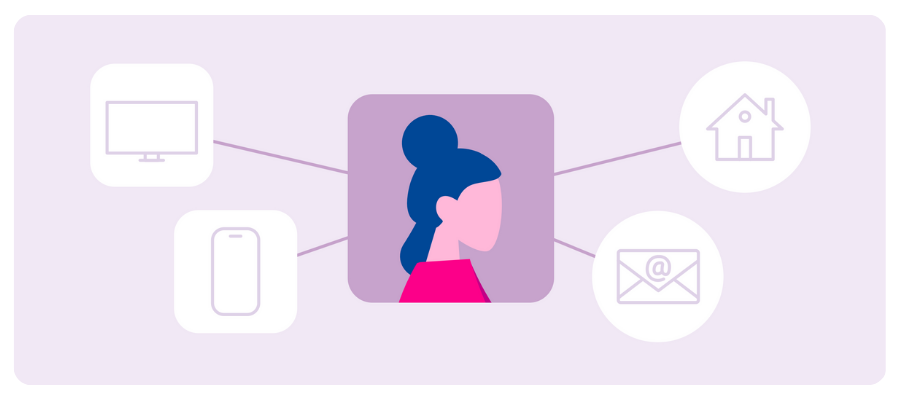
Look for an identity provider that supports accurate and scalable onboarding and resolution across environments, and that shows how identity graph distribution aligns to industry standards at the household and person level. In a multi-device world, that foundation also needs to support high-confidence deduplication to the person and household, especially in connected TV (CTV) and TV environments where devices are often shared and both activation and measurement depend on understanding those relationships.
Find the best path to your audience
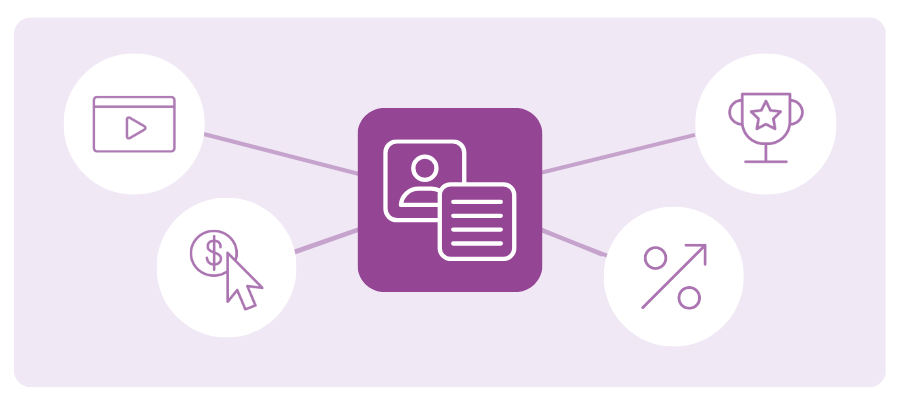
Then make sure those insights can move into activation, supported by curation that helps brands find a more efficient path to reach those audiences, and connected measurement that can tie exposure back to outcomes.
My view
I’ve spent enough time around growth teams to know that the market rarely rewards brands for having the best data story in a conference room. It rewards the brands that can turn audience intelligence into action in market and see clearly what that action produced.
That’s why I think the next separation point is activation. The teams that stand out will be the ones that can take signal from strategy into execution without losing fidelity, then connect that execution back to outcomes quickly enough to make better decisions while it still matters.
That changes how I would evaluate a marketing operation. I would look less at how much data a brand has collected and more at whether that data can travel.
Identity still matters. The difference now is that identity alone will not create growth. Growth comes from carrying signal all the way through activation and into outcomes, with enough clarity to know what’s working and enough confidence to act on it.
About the author

Kevin Dunn
Chief Revenue Officer, Experian
Kevin Dunn joins Experian Marketing Services with more than 20 years of leadership experience across marketing and advertising technology, most recently serving as Senior Vice President of Brands and Agencies at LiveRamp. In that role, he led growth across retail, CPG, travel, hospitality, financial services, and healthcare, overseeing new business, account expansion, and channel partnerships.
Kevin is known for building cohesive, accountable teams and leading with optimism, clarity, and a strong sense of shared purpose. His leadership philosophy centers on empowering people, driving positive outcomes for clients and fostering a culture where teams can grow, take smart risks, and succeed together.
Latest posts

See how AdRoll and Experian combine audience data, identity, and CTV measurement to help marketers reach, prove, and grow their funnel.

Buyers can now put Experian’s audience and contextual intelligence to work in Google Ad Manager Curation in two ways: through off-the-shelf solutions available directly in Google Ad Manager, or through Custom Curation packages that Experian builds using Google Ad Manager’s inventory supply. Together, these options bring Experian’s consumer data foundation closer to the Google supply agencies already buy, with the flexibility to choose between a ready-to-use solution and an Experian package tailored to specific campaign goals. Why targeting at the source matters Many audience strategies still apply targeting on the buy side, which means signals pass through multiple systems before an impression is evaluated. Each step can shrink the pool of requests where the audience is still recognizable, so a carefully built strategy can reach the auction at a fraction of the scale it started with. Google Ad Manager Curation moves segment evaluation closer to the ad request. When a request matches the selected Experian segment, Ad Manager sends the bid request with the associated Deal ID to the buyer’s DSP. This more direct path can support stronger match and deal-transaction rates, more accurate forecasting, and better access to the audience defined in the strategy. As AI shapes more media decisions, the quality and provenance of the data feeding those systems matter more. Evaluating audience or contextual criteria closer to the source helps preserve the connection between the strategy and the impression being considered. Two ways to get started The right entry point depends on how much customization the campaign requires. Buyers can access Experian solutions off-the-shelf directly in Google Ad Manager or work with Experian to build a Custom Curation package using Google Ad Manager inventory supply. Start off-the-shelf For buyers who want direct, self-service access to Experian audience and contextual solutions. Experian solutions are available off-the-shelf in Google Ad Manager, giving buyers a straightforward way to select the data or contextual strategy that fits their campaign and create packages through Google Ad Manager’s Curation capabilities. Experian Audiences Experian Audiences draw on a deterministic offline identity foundation that represents more than 250 million U.S. consumers and 126 million U.S. households. Buyers can choose from Experian’s Audiences spanning demographics, lifestyle, financial signals, media habits, and household characteristics. That depth adds real-world consumer context beyond digital behavior alone. Contextual Experian contextual solutions give buyers a way to reach relevant environments without relying on identity. Buyers can select contextual audiences aligned to specific interests, categories, and content to inform where media appears. Experian also offers Predictive Indexed, which uses Experian audiences to predict the contextual categories and pages to target based on the likelihood that consumers visiting those environments fall within the selected audience. This gives buyers an audience-informed way to approach contextual activation without requiring identity at the point of activation. Build a Custom Curation package For buyers who need a strategy tailored to specific audience, contextual, and inventory requirements. Experian can build Custom Curation packages using Google Ad Manager’s inventory supply based on the targeting criteria that matter for a campaign. Where off-the-shelf solutions draw on Experian data, custom packages can also incorporate partner audiences and a brand’s own first-party audiences. Packages can combine Experian audiences, partner audiences, a brand’s own first-party audiences, contextual signals, and inventory or site criteria. Experian applies those criteria against Google Ad Manager inventory supply and brings the data, targeting, and inventory together into a single curated deal. This gives buyers a way to combine audience and supply decisions rather than managing each component separately. The approach can be tailored to the campaign. A buyer might start with a defined audience and add contextual or inventory criteria, bring a brand’s established first-party audience into the strategy, or build around specific supply and audience-quality requirements. Choose the path that fits the campaign Both paths do the same underlying thing: they move the audience or contextual decision closer to the ad request, before signal loss builds across the path. Whether a campaign calls for something ready to use or a package built to spec, the result is a more direct line from strategy to impression. Ready to get started? Explore Experian solutions available off-the-shelf in Google Ad Manager or contact your Experian representative to request a Custom Curation package. Latest posts

See how Experian helped FanThreeSixty clean, match, and enrich 7.6 million fan records through data enrichment and identity resolution.