Loading...

The activation gap: Why good identity still falls short in market

by Kevin Dunn, Chief Revenue Officer 6 min read May 12, 2026

Closing the activation gap in privacy-first marketing

Brands have spent years strengthening identity. That was the right move. A stronger identity foundation gives marketers a better chance to understand people, shape audiences, and connect media to outcomes.
 
Yet I see many teams hit the same wall after that work is done. Performance breaks at activation.

I think of it as the activation gap. It’s the distance between knowing who you want to reach and being able to act on that intelligence across channels in a privacy-safe, measurable way. For many brands, identity is stronger than it was a few years ago. The challenge now is carrying that signal cleanly from data into execution, and from execution into outcomes.

Identity was the first step

For a long stretch, the industry was focused on rebuilding identity. That made sense. Marketers needed a more durable foundation for audience strategy, activation, and measurement.
 
Now the market is in a different phase. First-party data can’t stop at organization in a CRM, it has to be usable in market as an addressable audience that can move across digital, TV, social, and commerce environments.
 
That shift sounds straightforward. In practice, this is where the process starts to break down.

A pharma brand may already have patient or consumer records, onboarding capability, and audience segmentation. It may be able to launch awareness messaging in a few channels. The harder part is turning that foundation into a connected strategy it can carry into market from start to finish.

Illustration of a doctor with connected icons representing communication, health services, patient profiles, and medication

That has direct implications for growth. When signal degrades between planning and execution, media becomes less efficient, optimization slows down, and it gets harder to connect audience decisions to business results.

The gap is operational

Closing the gap starts with making identity usable in market, not just accurate on paper.
 
A pharma marketing team may know which audiences it needs to reach, have a view of likely demand, and know which channels are in play. None of that creates value if the path from audience creation to activation is disconnected.
 
Modern marketing should be judged by connected execution. Data has to move cleanly into activation. Activation has to stay close enough to measurement so teams can unify cross-channel exposure, build a clearer view of consumer behavior, and connect campaign exposure back to outcomes with more accuracy in near real-time.
 
That’s the part many organizations are still working through. They’ve invested in the foundation. The system above it still feels too fragmented to carry signal from start to finish.

Complex markets raise the stakes

This pressure is even more visible in regulated categories.
 
In health and finance, brands need more than audience access. They need privacy-safe activation, strong governance, and outcome visibility that can stand up to scrutiny. They need a way to carry audience intelligence across environments without losing control of how that signal is used.

An icon of a person on the left and an icon of a megaphone on the right both looking into the middle with 3 vertical icons that represent a TV, mobile phone, and laptop

In these categories, weak connections between identity, activation, and outcomes create hesitation, and hesitation is expensive.

What closing the gap looks like

Closing the gap starts with a fuller view of the consumer across channels.
 
Most brands already have valuable first-party data. The challenge is whether they have enough insight to make it activation-ready.
 
When identity, activation, and measurement work more closely together, brands can understand not just who the consumer is, but how that person tends to engage and convert across channels. A consumer may be more likely to engage through streaming TV or digital video, then convert later online or in person. Those insights help brands build a more tailored outreach strategy by device and channel, shaping where they show up, how they sequence messages, and where they place the strongest conversion opportunity.

Remove duplication across channels and ecosystems

Look for an identity provider that supports accurate and scalable onboarding and resolution across environments, and that shows how identity graph distribution aligns to industry standards at the household and person level. In a multi-device world, that foundation also needs to support high-confidence deduplication to the person and household, especially in connected TV (CTV) and TV environments where devices are often shared and both activation and measurement depend on understanding those relationships.
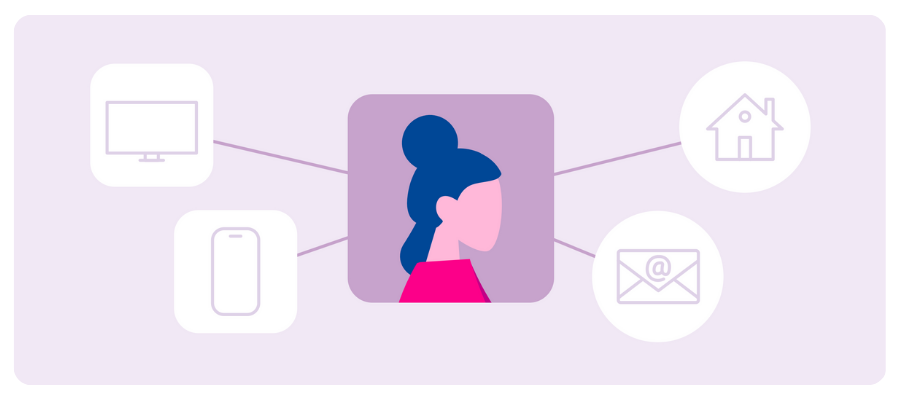
An icon of a woman in the middle surrounded by icons for a TV, mobile phone, email, and house

Find the best path to your audience

Then make sure those insights can move into activation, supported by curation that helps brands find a more efficient path to reach those audiences, and connected measurement that can tie exposure back to outcomes.
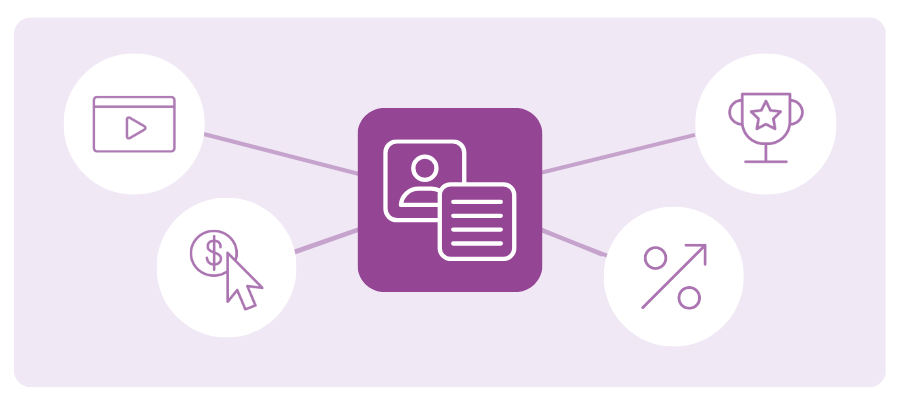
Curation delivers access and measurable performance 

My view

I’ve spent enough time around growth teams to know that the market rarely rewards brands for having the best data story in a conference room. It rewards the brands that can turn audience intelligence into action in market and see clearly what that action produced.

That’s why I think the next separation point is activation. The teams that stand out will be the ones that can take signal from strategy into execution without losing fidelity, then connect that execution back to outcomes quickly enough to make better decisions while it still matters.

That changes how I would evaluate a marketing operation. I would look less at how much data a brand has collected and more at whether that data can travel.

Identity still matters. The difference now is that identity alone will not create growth. Growth comes from carrying signal all the way through activation and into outcomes, with enough clarity to know what’s working and enough confidence to act on it.


About the author

Kevin Dunn, Chief Revenue Officer, Experian

Kevin Dunn

Chief Revenue Officer, Experian

Kevin Dunn joins Experian Marketing Services with more than 20 years of leadership experience across marketing and advertising technology, most recently serving as Senior Vice President of Brands and Agencies at LiveRamp. In that role, he led growth across retail, CPG, travel, hospitality, financial services, and healthcare, overseeing new business, account expansion, and channel partnerships.

Kevin is known for building cohesive, accountable teams and leading with optimism, clarity, and a strong sense of shared purpose. His leadership philosophy centers on empowering people, driving positive outcomes for clients and fostering a culture where teams can grow, take smart risks, and succeed together.


Latest posts

Loading…
Get ready to connect your offline data, again

As today’s digital landscape gets more and more complicated there are more ways for brands to connect with users and drive purchases and more ways for ad tech to target and measure those touch points. As in-person shopping picks up steam due to the re-normalization of society post-COVID 19; the connection between digital ads and in-person purchases needs to be made once again. With the rise of Connected TV throughout the pandemic there are even more digital opportunities to target a user. But how do you make sure that those brand engagements are captured and correctly attributed to offline purchases and conversions? The answer lies in a holistic identity resolution strategy. Cross-device identity resolution with The Tapad Graph connects the identifiers and devices of individuals within a household to each other; enabling targeting, frequency capping, extension, segmentation and measurement or attribution between devices; including Connected TV and hashed (privacy-protected) email addresses along with Cookies, Mobile Ad Ids and IP Address. Brands can join their first-party data to The Tapad Graph to execute strategies that connect online and offline data for pre, mid and post-campaign efficiencies. Let’s imagine a scenario in which an outdoor retail brand is targeting users watching specific content on a Connected TV device. Powered by identity resolution, they start with a general ad on CTV and continue targeting down individual paths with each user. When one of them converts in store and makes a purchase; the outdoor retailer can connect that action through location and in-store traffic data with the cross-device identity resolution used to execute the digital campaign. Now the actions of the user online and offline are resolved for more accurate measurement and attribution after the campaign ends. But it doesn’t stop there– the brand’s CRM data can be reactivated for the next digital campaign and leveraged to capitalize on the most effective media mix for the user who made the purchase previously. These combined insights can be invaluable in shaping up future campaign strategies with geo-contextual ads, recommended additional products and personalization to help drive more conversions and purchases in-store or online. As in-person shopping picks back up and marketers are tasked once again with balancing online and in-store KPIs, the right identity resolution strategy can unlock necessary efficiencies for retailers, ad tech vendors and agencies tasked with supporting these initiatives. Get in touch  

Published: May 19, 2021 by Experian Marketing Services
Experian talks the future of identity with AdExchanger

Experian Marketing Services and Data Quality President Genevieve Juillard recently sat down with Zach Rodgers, host of the AdExchanger Talks podcast to discuss the future of identity, the importance of data transparency and privacy, and our recent acquisition of Tapad. Genevieve focused on the opportunity for our industry to reimagine an advertising ecosystem that is resilient and adaptable; one that takes advantage of emerging data and prioritizes data transparency and consumer privacy. She also discussed the importance of advertising strategies that put consumers at the heart of every decision and give them more control over their data. Genevieve shared with AdExchanger that Experian’s acquisition of Tapad, a global leader in digital identity resolution, was a natural fit for our company. Tapad’s approach and role in the ecosystem is very much aligned with Experian’s, which is to develop solutions that are resilient to industry and consumer changes. The combination of our capabilities supports interoperability across all types of identifiers, both online and offline, and will position us to help our clients navigate the post-third-party cookie world. To learn more about Experian’s plans to support an effective advertising ecosystem that will evolve with our dynamic industry, listen to the full podcast Embracing ‘Healthy Fragmentation’ In Ad Tech, With Genevieve Juillard. Get in touch

Published: March 11, 2021 by Experian Marketing Services
To authenticate or not to authenticate?

It’s been over a year since Google announced they’d be deprecating the third-party cookie and in that time there’s been a major focus on two types of cookieless identity solutions. Identity vendors and marketers are strategizing which of these two future solutions best fits their needs so they can achieve privacy-safe scale once third-party cookies are no longer available for use on Chrome. Let’s break down these solutions and the considerations marketers need to take into account when deciding what partners to move forward with in the future of identity resolution. Authenticated Traffic Solutions  Authenticated traffic solutions (ATS) are a type of digital identification that asks the end-user to identify themselves via personal information, most commonly email address. Often, you’ll see self-authentication at the point of entry to a website that asks you to create an account or login immediately to access the content you are seeking. E-commerce sites use authentication to keep track of consumer purchases and inform advertising decisions for that customer; and publishers use it to tailor featured content, or, more importantly for this discussion, leverage it within the ad ecosystem for targeting. While authentication can provide very valuable user data for audience segmenting and targeting, it can be limited in scale for a single publisher to leverage and monetize on their own. That’s why some identity vendors have worked to integrate themselves within as many publisher authentication modules as possible, so that they can create an aggregate of scale for the ad ecosystem to tap into. But, even this isn’t going to deliver the reach marketers truly thirst for. Alternatively, Facebook has the scale for authenticated traffic, but they keep their data inside a walled garden, so the utility of those authenticated users is only valuable within the Facebook ecosystem. So how can authenticated traffic solutions increase scale to broaden the scope of identifiers they can collect and leverage? Hint: a few of the biggest players have already figured it out. It’s the single sign-on. Google is probably the largest purveyor of a single-sign on solution that can directly impact advertising capabilities. Can you think of a site you visit that doesn’t offer a sign-in with your existing Google account? It’s a short list. Google has integrated themselves into so many applications and publishers that “Login with Gmail” is just second nature (you pictured the Gmail logo when you read that, didn’t you?). Now, if you’re about to purchase something you found off an Instagram ad, or perhaps a retailer you buy from regularly, you’ve probably noticed options to proceed with your checkout via “Amazon pay” or “Apple pay”. These are also single-sign ons. You’re authenticating yourself through Amazon or Apple to that retailer in exchange for A- the safety and security that Amazon or Apple provide for your financial information and B- skipping the annoying process of manually entering personal information over and over again at point of sale. It’s starting to sound like there’s a lot of authenticated data out there isn’t it? Well, that’s true, but again, Amazon and Apple are walled gardens. Amazon is working diligently to build out their own ecosystem to leverage their content and retail channel data for a holistic offering. And Apple keeps user data very close to the chest, constantly limiting its utility for themselves and advertisers. So what is identity resolution doing about it? The Trade Desk announced their solution; Unified ID 2.0, which promises to leverage email authenticated identity for a truly scaled solution for publishers via Javascript through Prebid. By handing over UID2.0 to an independent unbiased organization like Prebid, The Trade Desk is creating instant scale and trust in their solution. Unauthenticated Traffic Solutions Unlike ATS, unauthenticated traffic solutions do not rely on a log-in to identify a user, but they also don’t rely on third-party cookies. Instead, unauthenticated solutions (UATS) leverage their existing streams of real-time data through Javascript on publisher sites or an SDK (software development kit used by apps). The type of information UATS solutions can collect via Javascript or SDK vary, but it can include IP address, user agent and device level info. But being able to read this information at the point of entry to a website does not make a quality identifier. The best unauthenticated solutions will have the ability to set or ingest this information into a unique ID through an infrastructure with incredibly fast speed that can process trillions of anonymous data signals across multiple channels and devices. And even more so, be able to interpret those signals into a profile using machine learning– all at the moment a user enters a domain. It sounds complicated because it is, but it also has a lot of potential. The identity space cannot rest solely on authenticated traffic solutions, because, as you can see, it could limit ownership and operability to just a few power players/walled gardens. This doesn’t help the larger ecosystem monetize and personalize ad inventory. The right unauthenticated solution, however, can unify cross-device individuals and households at scale, because they’re integrated on the broadest number of publishers/SDKs across platforms, have the best algorithms to build confident connections between identifiers, and are universally transactable across the most common sell and demand side platforms. Think of it as the perfect partner- speaking a common language that everyone in the ecosystem understands and acts on. Today more than twenty cookieless identifiers are available in market for the ad ecosystem, and Google hasn’t even announced a date of deprecation. It’s important to be on the lookout for differentiators like scale and precision. Most importantly, choosing a truly cross-device partner will be key, especially as more digital devices and IDs grow in adoption, like CTV has this past year. Taking advantage of both What we will come to find, once the third-party cookie is obsolete, is that choosing just one of these solution types, or partners, will be a disadvantage. The more the industry comes together to collaborate on solutions, the more apparent it is that both of them have value, and thus employing both solutions will give marketers the best opportunities. Tapad, now part of Experian, recently announced the launch of Switchboard; a module within our identity solution; The Tapad Graph, to create this agnostic interoperability for identifiers of all types, and choice and control for the ad tech vendors and marketers who want them. By instantly creating the ability to partner with multiple solutions, Tapad + Experian is ensuring that all use cases for the third-party cookie live on in our cookieless future. Get in touch

Published: February 24, 2021 by Experian Marketing Services

Subscribe to our newsletter

Enter your name and email for the latest updates

This site is protected by reCAPTCHA and the Google Privacy Policy and Terms of Service apply.

About Experian Marketing Services

At Experian Marketing Services, we use data and insights to help brands have more meaningful interactions with people. As leaders in the evolution of the advertising landscape, Experian Marketing Services can help you identify your customers and the right potential customers, uncover the most appropriate communication channels, develop messages that resonate, and measure the effectiveness of marketing activities and campaigns.

Visit our website

Subscribe to our newsletter

Stay up to date on the latest industry news and receive expert tips from our marketing experts.
Subscribe now!