At A Glance
Identity resolution unifies fragmented IDs into complete customer profiles, helping companies understand their audiences and deliver personalized, privacy-compliant experiences in a cookie-light world. With Experian’s AI-powered identity resolution solution, marketers gain the scale, accuracy, and compliance to compete while making marketing more human.In this article…
Every marketer has seen it: a customer browses reviews on a laptop, adds items to a cart on mobile, then “disappears.” In reality, they just likely switched devices or logged in with a different email. Identity resolution connects these scattered signals into a single profile so you never lose sight of the customer journey.
Identity resolution is what helps you keep track of customers who bounce around.
Connecting scattered signals into a single customer profile can help you deliver seamless experiences, meet strengthening privacy standards, turn first-party data into measurable results, and fuel better customer analytics.
See our identity resolution solution in action
What is identity resolution?
Identity resolution is the process of pulling together the different identifiers a customer uses and connecting them to a single profile. Without it, you’re left with an incomplete picture of the customer — like a cart tied to one email, an app login tied to another device, or a loyalty swipe that never links back to the same person.
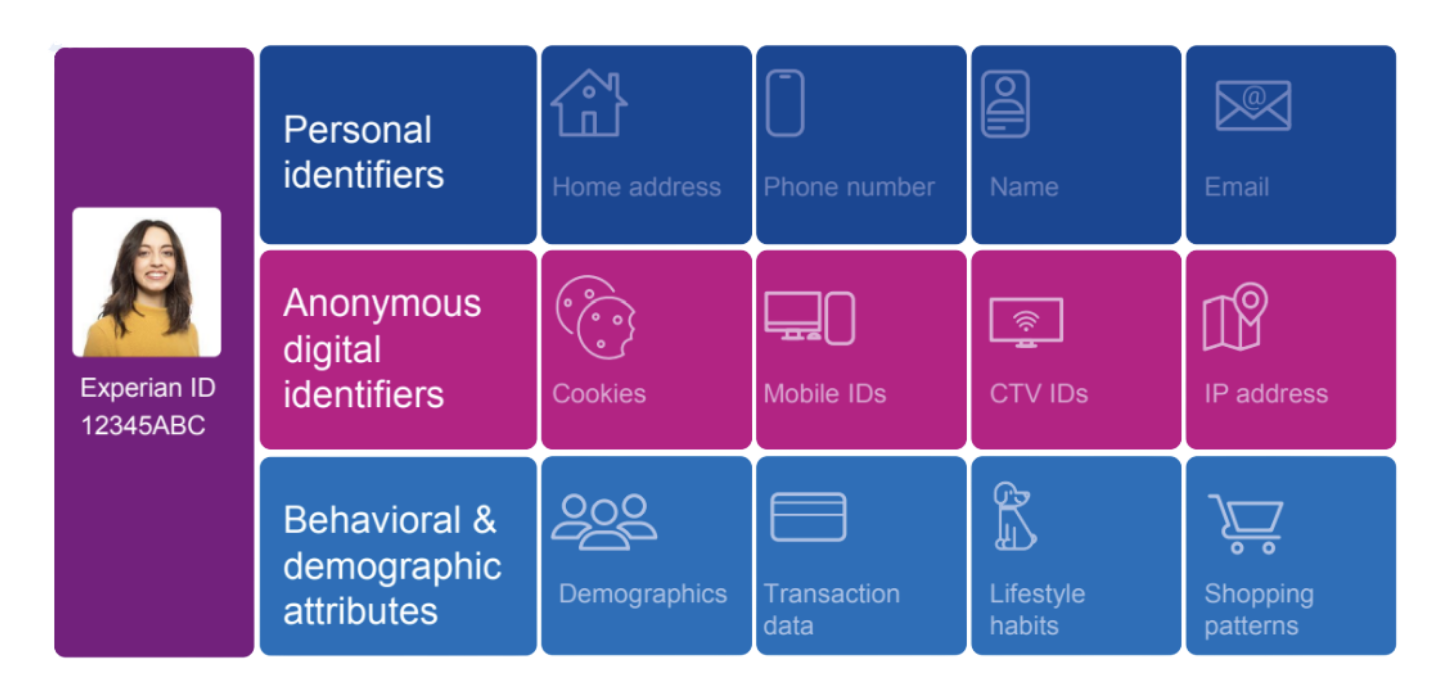
Common identifiers include:
- Cookies: Short-lived browser data
- Emails: Plain-text and hashed
- Device IDs: Mobile advertising IDs (MAIDs) or app-based identifiers
- Loyalty IDs: Program numbers that tie online and offline activity
- Hashed PII: Personally identifiable information (PII) encrypted for privacy
Ultimately, identity resolution can help you recognize the same customer wherever they engage.
Why does identity resolution matter now?
Marketers face incomplete views, data silos, privacy regulations, and shrinking visibility:
- Rising consumer expectations: People want seamless, personalized journeys across touchpoints.
- Privacy-first environment: Consumer privacy legislation (like the GDPR, CCPA, GLBA, FCRA, and new state laws) makes compliance non-negotiable.
- Signal loss: The decline of cookies, MAIDs, and walled gardens are pushing brands toward first-party data.
Experian utilizes AI and machine learning to fill these gaps, predict behaviors, and connect signals across devices — providing marketers with a clear, privacy-safe view of their customers, even when traditional identifiers are missing.
In this environment, identity resolution matters because it gives marketers a way to deliver seamless, personalized customer experiences and engage audiences effectively while respecting their privacy. It’s the basis for turning consented first-party data into measurable marketing outcomes without sacrificing trust.
Why is identity resolution critical in a privacy-first world?
Even as cookies linger, marketers have already shifted their strategies to rely on first-party data, where choice and transparency are the baseline expectation. At Experian, our long history as a regulated data steward makes us a uniquely capable and trusted partner for managing modern compliance expectations. Our identity resolution solutions maximize the value of permission-based data while meeting consumer demand for privacy, personalization, and control.
Struggling with scattered customer data? Experian makes identity resolution seamless
How does identity resolution help brands?
Identity resolution turns fragmented signals into unified profiles that drive personalization, efficiency, and compliance. Here’s how it creates measurable business impact.
Creates a unified customer view
One of the biggest advantages of identity resolution is the ability to integrate data from loyalty programs, point-of-sale (POS) systems, customer relationship management (CRM) platforms, web analytics, and offline sources into a single, comprehensive profile. Experian strengthens identity resolution with AI-driven clustering models that resolve household and individual identities across billions of signals with greater accuracy.
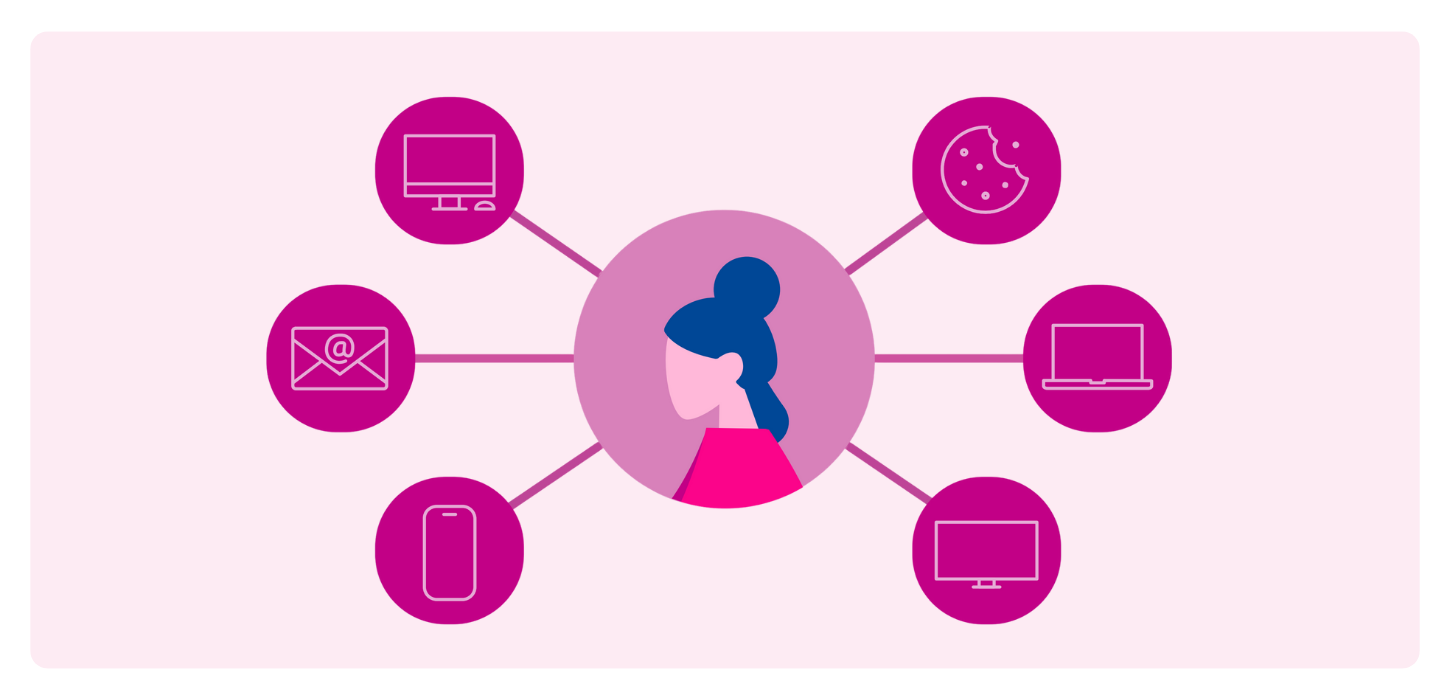
With a clearer picture of each customer, brands see higher match rates and larger addressable audiences, which translates to more substantial reach and better return on ad spend (ROAS).
Enables better personalization
Customers constantly switch devices, update their information, and change preferences. Experian makes it easier to keep pace with these changes through frequent data enrichment and near-real-time identity resolution via Activity Feed.
Combined with our long-standing use of AI and machine learning, this approach ensures shifting behaviors are captured quickly, enabling timely personalization, and more responsive engagement.

With less delay from data to action, the result is faster response times and higher conversion rates.
Improves the customer experience
Customers notice when brands deliver relevant ads and contextual content across every channel. Consistency matters! But consistency doesn’t just happen on its own; it comes from identity resolution, which keeps the customer journey connected.
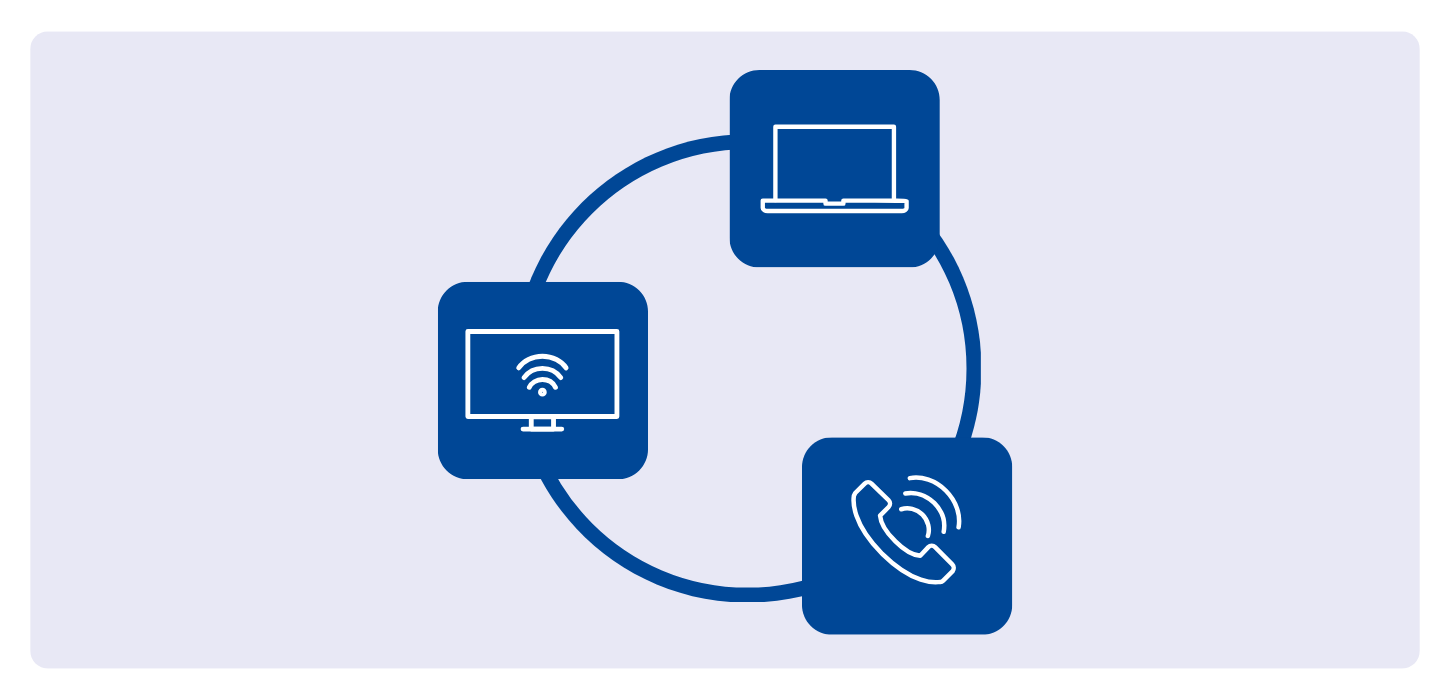
As brands maintain continuity, they build trust, strengthen engagement, and increase customer lifetime value.
Drives better marketing ROI
Not every profile is valuable. Identity resolution helps marketers identify the highest-value audiences and reduce wasted spend.

That efficiency leads to lower CPA and a higher overall ROI across campaigns.
The power of modeling from a stronger foundation
When you have a unified customer view, your models are built on better data. That means you can find more people who look like your best customers, build more responsive audience segments, and target with greater accuracy. This foundation can lead to better spending, more relevant campaigns, and a higher ROI.
Maintains privacy compliance
With GLBA/FCRA-grade standards and consumer choice mechanisms like opt-outs and data correction, you can protect your brand while maintaining personalization — without compromising legal or ethical safeguards.

What are some identity resolution use cases and examples?
Every industry faces its own unique identity challenges, but identity resolution is the common thread that turns scattered data into connected experiences. Let’s break down how companies in different verticals are putting it to work (and the kinds of results they’re seeing).
Retail and e-commerce
Shoppers bounce between websites, carts, and checkout lines, leaving behind scattered signals in the process. In retail, identity resolution bridges the gap between online and in-store experiences by matching online carts with loyalty swipes or connecting connected TV (CTV) exposure to in-store sales. This means fewer silos, better targeting, and more personalized offers wherever people shop.

Our 2025 Digital trends and predictions report calls out that omnichannel experiences aren’t optional anymore. With CTV and social dominating spend, brands need identity resolution to cut through silos and build a complete view of customer behavior.
Financial services
In financial services, identity resolution makes it possible to deliver personalized, compliant offers like refinancing options for likely mortgage switchers or the right rewards card for frequent spenders.
Our partnership with FMCG Direct to create Consumer Financial Insights® and Financial Personalities® segments helps banks, insurers, and lenders understand behaviors — such as credit card use, deposit balances, and investment habits — without exposing sensitive details.
Read more below about how our financial audiences enable privacy-safe personalization.
Travel and hospitality
Travel decisions aren’t always planned out in advance. Many bookings happen spur-of-the-moment, which is why real-time identity resolution is so powerful; it keeps the journey seamless when travelers jump from phone to laptop to tablet and presents relevant offers right as decisions are being made.
Windstar Cruises put this information into action with Experian’s identity graph to connect digital interactions with actual bookings, which drove 6,500+ reservations and $20 million in revenue.
Media and TV
Viewers tend to hop around between linear TV, streaming apps, and social feeds. And without identity resolution, every screen looks like a different person. Marketers can accurately plan, activate, and measure campaigns by unifying viewing behaviors into one ID with Experian’s AI-powered identity graph.

Optimum Media tackled its multiscreen challenge by partnering with Experian for identity solutions. Layering our audience insights and our AI-driven Digital Graph onto their subscriber data, they were able to connect the dots across channels, reach the right households, and measure results instead of just impressions. In the end, they finally got a clear view of what works across every screen.
Curious how identity resolution can power your customer analytics? We can walk you through it.
Healthcare and pharma
Healthcare marketers can’t afford slip-ups with HIPAA regulations. Identity resolution makes it possible to engage the right patients and providers with de-identified audiences rather than third-party cookies.
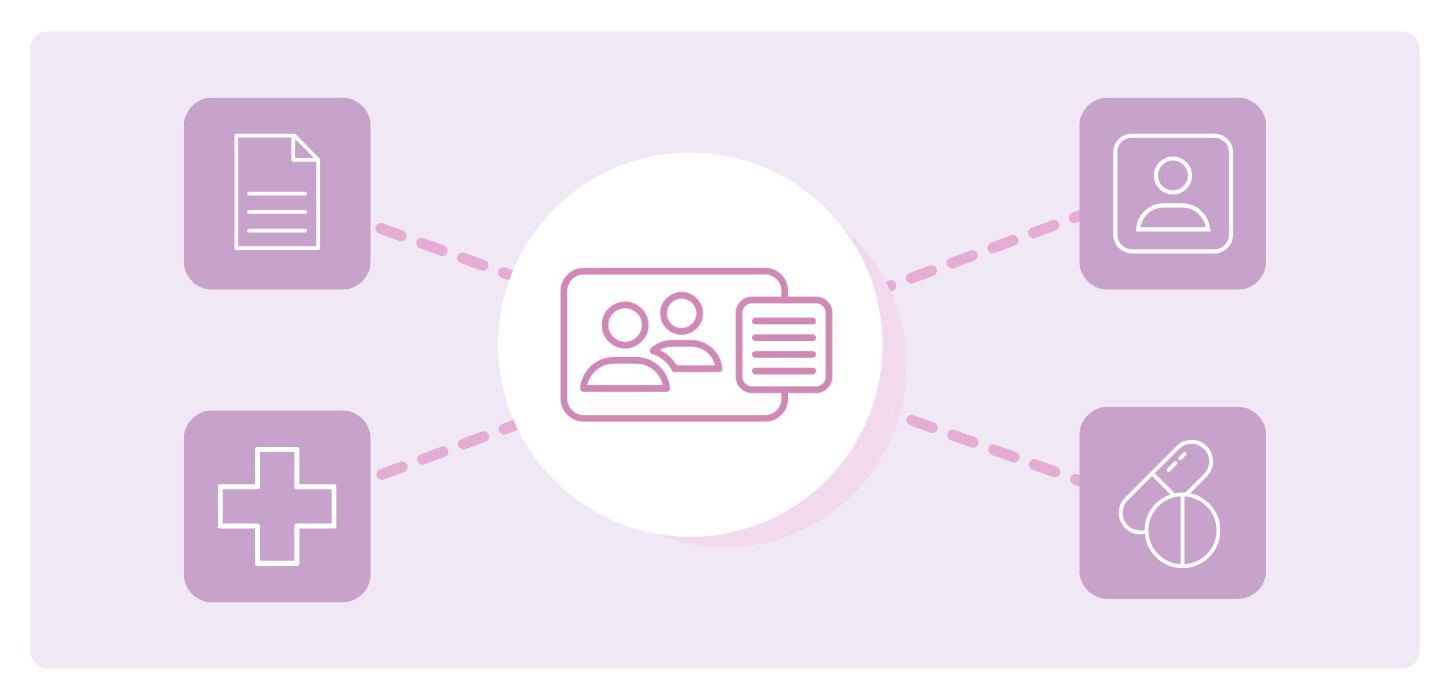
At Experian, AI and machine learning have always been part of how we power identity resolution. In healthcare, that means using AI-enhanced modeling to connect de-identified clinical and claims data with lifestyle insights. The result is a more comprehensive picture of the patient journey that helps close care gaps, reduce wasted spending, and improve outcomes.
By working with partners like Komodo, PurpleLab, and Health Union, we make it possible to activate campaigns at scale that boost engagement and adherence while keeping patient privacy front and center:
- Komodo Health enriches our identity graph with insights from millions of de-identified patient journeys plus lifestyle data, giving brands a fuller view of where care gaps exist and how to close them.
- PurpleLab connects real-world clinical and claims data to Experian’s platform, letting advertisers activate HIPAA-compliant audiences across CTV, mobile, and social with the ability to measure real outcomes like prescription lift and provider engagement.
- Health Union contributes a data set built from 50 million+ patient IDs and 44 billion+ patient-reported data points. Combined with our identity and modeling capabilities, this expands match rates and unlocks up to 76% net-new reach, so campaigns reach patients and caregivers in critical health moments.
As a result, healthcare brands can launch campaigns that are privacy-first, highly targeted, and proven to drive meaningful impact.
Audio
People use audio while commuting, working out, and even folding laundry. It can be one of the hardest channels to track because of how frequently listeners switch between apps, stations, and devices.
Experian’s identity resolution partnerships with Audacy and DAX change the game:
- Audacy helps tie scattered listening into a single view, so advertisers can follow audiences across devices and keep ads relevant in the moment.
- DAX pairs Experian’s 2,400+ syndicated audiences with its audio network, enabling brands to target precisely and launch impactful campaigns at scale.
These partnerships turn audio into an accurate channel where ads feel personal, privacy-safe, and measurable.
Gaming
Gamers don’t stick to one platform. Player data gets scattered across mobile, console, and PC, so it’s tough to keep track of individuals. Experian helps stitch those signals together so publishers can finally see the whole picture, personalize gameplay, and keep players coming back.
With enriched profiles, publishers can deliver offers that resonate and unlock fresh revenue by packaging high-value gaming audiences for advertisers outside the industry.
Unity, a leading gaming platform, is tapping into Experian’s syndicated audiences to gain player insights and help advertisers reach gamers across mobile, web, and CTV. For global publishers, unifying player data with Experian has driven higher engagement and stronger ad ROI.
How should I evaluate identity resolution providers?
When choosing an identity resolution partner, look for:
- Data scale and quality: The value of identity resolution depends on how complete and accurate the underlying data is. The right provider should bring together a wide range of identifiers from online and offline sources, maintaining high accuracy so your customer profiles are broad and reliable.
- Match accuracy and recency: The best partners also refresh their data regularly and can blend deterministic (exact, one-to-one matches) with probabilistic (pattern-based matches) methods. That way, you get the accuracy of “this email is definitely that customer” with the reach of “this device likely belongs to the same person.”
- Privacy and compliance readiness: Compliance can’t be an afterthought. Your identity partner should be ready for GLBA, FCRA, GDPR, CCPA, and the latest state-level rules with built-in tools for opt-outs, corrections, and deletions.
- Integration flexibility: A good provider fits into your world, not the other way around. Look for pre-built integrations with your customer data platform (CDP), demand-side platform (DSP), or marketing tech (MarTech) stack so you can get up and running without the heavy IT lift.
- Data analytics capabilities: You need proof that identity resolution drives ROI. Look for closed-loop measurement that ties unified IDs directly to campaign performance, so you can see what’s working and optimize with confidence.
How Experian enables enterprise-grade identity resolution
Experian delivers identity resolution at the scale, accuracy, and compliance required by the world’s largest enterprises. Our solutions are:
- Built on trust: Backed by 40+ years as a regulated data steward and rated #1 in data accuracy by Truthset, so you can act with confidence.
- Powered by our proprietary AI-enhanced identity graph: Combining breadth, accuracy, and recency across four billion identifiers, continuously refined by machine learning for maximum accuracy.
- Seamlessly connected: Pre-built data integration with leading CDPs, DSPs, and MarTech platforms for faster time to value.
- Always up to date: Frequent enrichment and near-real-time identity resolution through Activity Feed for timely personalization and more responsive customer engagement.
- Privacy-first by design: Compliance with GLBA, FCRA, and emerging state regulations baked in at every step, supported by rigorous partner vetting.
The bottom line
Identity resolution turns fragmented signals into connected, measurable, and compliant experiences. From retail to gaming, brands using it see stronger personalization, engagement, and ROI.
With Experian, you get the data, trust, and responsible AI innovation to make identity resolution work across every channel. Our approach uses AI to connect identities, predict behaviors, and deliver personalization that balances privacy with performance. If you’re ready to turn fragmented data into growth, now’s the time to start.
The world’s leading brands trust us to power identity resolution at scale. See how we can do the same for you.
Identity resolution FAQs
Deterministic uses exact identifiers (like an email) for accuracy, while probabilistic uses signals and algorithms to expand reach. Best-in-class providers usually combine both.
Identity resolution helps with personalization by unifying scattered signals into one profile. It reduces wasted spend and increases match rates, which means bigger addressable audiences and higher ROAS.
Yes. With first-party data and hashed PII, brands can still maintain addressability and personalization.
Retail, finance, travel, media, gaming, and audio all use identity resolution to personalize, attribute sales, and improve efficiency.
A customer data platform unifies the data you already own. Meanwhile, we add depth, scale, and higher match rates by layering in our identity graph and data enrichment.
Yes. Experian is GLBA/FCRA compliant, GDPR/CCPA ready, and supports consumer opt-outs and corrections to ensure responsible personalization.
Latest posts

Holiday shopping in 2025 feels a lot like a complicated relationship. Shoppers want deals, but they also want trust. They start shopping early, but they’re still browsing well into December. They love the convenience of online shopping, but they still show up in-store before making the final call. Our 2025 Holiday spending trends and insights report, created this year in collaboration with GroundTruth, explores these contradictions. Our findings show that this year’s holiday season isn’t about one big shift; it’s about managing the push and pull between what consumers say, what they do, and how marketers respond. Here are three complicated truths you need to know. Experian's 2025 Holiday spending trends and insights report Optimize your 2025 holiday shopping campaigns with our latest report with GroundTruth. Download now 1. The new rules of holiday timing Almost half (45%) of consumers plan to start shopping before November, but 62% admit they’ll still be buying in December. And post-holiday shopping (think gift card redemptions and deal-hunting) remains a real factor. Why it’s complicated The holiday calendar isn’t what it used to be. There’s no single “big moment” anymore. Instead, shoppers are spreading purchases across months, peaking around the “Turkey 12” (the 12 days surrounding Thanksgiving) and again in the final December rush. What to do about it Stretch your campaigns across the full season, not just Cyber Week. Refresh offers to stay relevant as shopper motivations change from deal-seeking to last-minute urgency. Watch for post-holiday momentum and extend your promotions into January. How belVita nailed the timingIn celebration of National Coffee Day, belVita partnered with GroundTruth on a one-month campaign to boost product awareness and drive foot traffic to Target stores. By utilizing digital out-of-home (DOOH) and mobile ads powered by location, behavioral, and purchase-based targeting, the campaign achieved a 3.44% visitation rate, nearly $476k in products added to carts, and a low cost-per-visit of just $0.22. 2. Online leads, but in-store still seals the deal Nearly 40% of shoppers say they’ll split their purchases between online and in-store and 80% of consumers still prefer the in-store experience. Only a small fraction plan to shop exclusively in one channel. That means while digital often starts the journey, the final decision often happens in a physical store. Why it’s complicated Shoppers love the convenience of browsing online, but they still want the reassurance of seeing, touching, or testing products before buying. In-store isn’t just about the transaction, it’s the validation step. What to do about it Build omnichannel strategies that connect digital discovery with in-store follow-through. Use location and identity data to tie digital impressions to real-world actions, like foot traffic and purchases. Focus on consistency: shoppers expect the same value, tone, and trust whether they’re on a website, in an app, or standing in a store aisle. How Duke Cannon used on-premise targeting to drive sales liftDuke Cannon, a premium men's grooming brand, partnered with GroundTruth to launch a successful multichannel campaign utilizing location-based and behavioral audience targeting across CTV and mobile screens to drive in-store visits and sales. By targeting consumers with mobile ads while they were physically in-store, the company capitalized on high purchase intent, aiding in the 12% sales lift. This strategic approach resulted in over 43.9k provable in-store visits and a significant increase in sales. 3. Marketers double down, consumers hold back This holiday season, expectations are split. 66% of marketers expect holiday spend to rise, but only 22% of consumers agree. While brands are leaning into bigger investments across CTV, retail media, and social, shoppers are staying cautious, weighing value and waiting for the right deal. Why it’s complicated That disconnect introduces risk. If marketers don’t align spend with real consumer behavior, budgets can get wasted in the rush to cover every channel. Shoppers haven’t stopped spending, but they're spending differently. They’re trading down to discount and big-box retailers while cutting back in discretionary categories like apparel and restaurants. What to do about it Prioritize efficiency by focusing on the right audiences, not just more impressions. Make consistency your advantage: reach people once and connect across platforms instead of chasing fragmented signals. Balance aggressive media investment with messaging that acknowledges consumer caution — shoppers want value and trust, not hype. Measuring TV and streaming impact with iSpotiSpot’s Audience Builder, powered by Experian’s Marketing Attributes, helps brands reach high-value audiences. During the holiday season, a luxury retailer could target $100K+ households with affluent lifestyle interests. With iSpot’s Unified Measurement platform, they can track performance across linear TV and streaming and shift spend in real time to maximize results. The bottom line on 2025 holiday shopping trends This year’s holiday shopping season is, well…complicated. Shoppers are cautious but still engaged. They’re early planners and last-minute browsers. They want the ease of digital, but the confidence of in-person. For marketers, the opportunity lies in embracing that complexity, not trying to simplify it away. The brands that balance relevance, trust, and convenience across the full season and across every channel will be the ones that win. Download our full 2025 Holiday spending trends and insights report to explore all five shifts shaping this season and see how you can turn complexity into opportunity. Download About the author Fred Cheung Director, Partnership Sales, Audigent, a part of Experian Fred Cheung has spent over a decade in the programmatic advertising space, with roles at Mindshare, Jounce Media, Twitter, and The Trade Desk. His deep experience in trading and product management helps in his current function on the Experian Marketing Services’ Sales team where he focuses on data growth and adoption across the industries’ leading buy-side platforms. 2025 holiday shopping trends FAQs Why is holiday shopping in 2025 described as “complicated”? Because consumer behavior is full of contradictions. People will shop earlier but also later, browse online but purchase in-store, and want deals while demanding trust. Marketers need to navigate these push-and-pull dynamics. When do most shoppers plan to start their holiday shopping? Nearly half (45%) say they’ll start before November, but 62% admit they’ll still be buying in December, with momentum even continuing into January through gift card redemptions and deal-hunting. What role do physical stores still play in holiday shopping? Although many consumers begin online, the majority still make their final decisions in-store. In-person shopping acts as a validation step where customers can see, touch, or try products before buying. How should marketers adapt their strategies to shifting holiday timing? Instead of focusing only on Black Friday or Cyber Week, marketers should stretch campaigns across the full season, refresh offers frequently, and continue promotions into January. Are marketers and consumers aligned on holiday spending expectations? Not entirely. 66% of marketers expect spending to rise, but only 22% of consumers agree. Shoppers are cautious, prioritizing value and often trading down to discount or big-box retailers. What’s the best way to connect online discovery with in-store sales? An omnichannel approach using identity and location data can bridge digital impressions with real-world actions like store visits and purchases, ensuring consistency across touchpoints. What can brands learn from the case studies in the report? Brands like belVita and Duke Cannon successfully tied digital campaigns to in-store results by utilizing precise audience targeting, location data, and well-timed promotions. Where can I get the full insights report? You can download Experian’s 2025 Holiday spending trends and insights report to explore all five shifts shaping this season. Latest posts

We spend our days surrounded by screens: at work, at home, and everywhere in between. But audio is the one channel that moves with us, from morning routines to evening commutes, from workouts to household chores. More than two-thirds of U.S. consumers will listen to digital audio every month this year, making it one of the fastest-growing ways to connect with audiences. Experian and Audacy are working together to solve the challenges of fragmented listening, cross-platform targeting, and campaign measurement, helping brands reach people in the moments other channels can’t. Why audio sticks with us Audio fits into life’s in-between moments, from the commute to the workout to the chores, when other media can’t. Unlike video, it doesn’t demand full attention; it joins the flow of daily routines. This makes audio uniquely personal, creating connections that other formats can’t replicate. Audacy’s expertise in understanding listener behavior ensures that audio campaigns feel like a natural part of daily life. Experian's data helps advertisers identify the right audiences, while Audacy ensures the message is delivered at the right time. Together, we help brands create campaigns that resonate deeply with listeners. By meeting audiences in their moments of focus, audio becomes a powerful tool for building meaningful and lasting connections. "Audio is a companion in people’s daily rituals. Whether it’s doing dishes, folding laundry, or going for a run, you have audio going in your ears, and you’re really engaged with it. From an advertising perspective, that’s incredibly powerful because listeners are paying attention to the content.”Kevin Greenwald, SVP of Advertising and Audience Products Making sense of scattered listening habits Today’s listeners consume audio across a variety of devices and platforms. Devices like smart speakers and smart home hubs now account for over 27% of digital audio time spent daily among U.S. adults, highlighting the growing role of connected devices in audio consumption. When listeners bounce between apps, stations, and devices, it’s easy for advertisers to lose track of them. Audacy’s advanced platform capabilities, combined with Experian’s identity solutions, simplify this process by providing a unified view of audience behavior, ensuring campaigns remain cohesive. Audio is highly adaptable, letting advertisers tweak a message on the fly by shifting tone, length, or format to stay relevant in the moment. This flexibility ensures that campaigns remain cohesive and impactful, no matter where or how listeners engage. “Audio has a degree of flexibility that other channels don’t. You’re not tied to a programming clock, and ad lengths can vary. It’s also easy to create a great audio ad quickly, which makes it a channel ripe for experimentation and innovation.”Kevin Greenwald, SVP of Advertising and Audience Products Following listeners wherever they go Today’s listeners don’t stay in one place: they bounce from live radio in the morning to streaming music during the day, then wind down with a favorite podcast at night. For advertisers, that creates a challenge: how do you keep up with an audience that’s always moving? Without a unified view of the listener journey, campaigns can lose impact. With the right insights, though, every handoff becomes an opportunity to stay relevant and connected. Audacy’s platform, combined with Experian’s identity solutions, bridges these gaps. Together, we help you follow your audience wherever they go, creating consistent experiences that drive results. This approach improves targeting and ensures that messages remain impactful. "I hope that there’s a day coming where we can understand ad exposure in the car as well as more cars are connected and things like that. That would be really powerful."Kevin Greenwald, SVP of Advertising and Audience Products Your audience is listening, let's make sure they hear you Audio helps you connect with your audience in moments other channels miss. With Experian’s marketing data and Audacy’s expertise, you can simplify cross-platform targeting, improve campaign measurement, and create messages that truly resonate. Let’s work together to make your message heard. Let's talk audio strategy. Contact us today About our experts Kevin Greenwald SVP of Advertising and Audience Products, Audacy Kevin Greenwald is the SVP of Advertising & Audience Products, where he partners closely with Audacy's sales team to deliver leading ad product and measurement capabilities for their clients. Crystal Jacques VP of Enterprise Partnerships, Experian Crystal Jacques is the VP of Enterprise Partnerships, leading Experian's go-to-market team across all verticals. With over ten years of experience in the Identity space, Crystal brings a wealth of expertise to her role. She joined Experian in 2020 through the Tapad acquisition, following her successful stint as the head of Global Channel Partnerships for Adbrain, which The Trade Desk later acquired. Latest posts

Reach de-identified patient and provider segments at scale across every channel. Pharmaceutical brands and media platforms, including connected TV (CTV), can activate HIPAA-compliant audiences built on real-world clinical and claims data through a new collaboration between PurpleLab and Experian. Targeting de-identified audiences is essential for engaging the right patients at pivotal moments in their health journey, maximizing ROI while safeguarding privacy and improving outcomes. Overall, prescription drugmakers spent $2.97 billion on national TV advertising in the first half of 2025, a 12.2% year-over-year increase, underscoring the growing demand for scalable, privacy-compliant healthcare advertising in premium media environments. Now, whether you're a pharma advertiser launching a new therapy or a platform curating health-focused inventory, PurpleLab’s integration refreshes the media planning ecosystem, offering marketers easier access to the audiences needed to drive impact. Activate with accuracy and scale PurpleLab’s de-identified healthcare segments, categorized by condition, treatment, specialty, and prescription behavior, are now accessible through Experian's data marketplace, streamlining media planning. This integration enables PurpleLab’s privacy-safe audiences to travel from discovery to omnichannel delivery. Experian then handles onboarding, activation, and audience expansion, in accordance with HIPAA and with industry standards. Utilizing Experian’s identity graph, spanning household and individual-level insights, as well as marketing attributes, these healthcare audiences can be: Onboarded securely, matching hashed emails or tokens to digital identifiers Activated across major channels, including CTV, mobile, display, and social Expanded with confidence, reaching more of the target population, patients, or healthcare professionals, without relying on third-party cookies This infrastructure unlocks greater scale and completeness for niche pharma audiences that have historically been hard to reach in digital and streaming environments. For brands navigating fragmented media and tightening privacy regulations, this collaboration provides the clarity and consistency they’ve been seeking. “We know healthcare marketers are under pressure to get it right: to respect privacy, be accurate, and scale. That’s why we’re excited to bring PurpleLab audiences into the Experian data marketplace and make them available through Audigent’s curated deals. It gives pharmaceutical brands and platforms a clear way to plan and measure campaigns, with the assurance that they’re reaching patients and providers when it matters in the right way.”Kim Gilberti, General Manager Curation through Audigent: Premium supply meets premium data For advertisers seeking turnkey media solutions, PurpleLab audiences are now also available through Audigent’s curated deals. Audigent’s curated deals simplify media buying by packaging PurpleLab’s clinically grounded audiences with premium, brand-safe inventory, thus creating a unified package. Instead of stitching together data and supply separately, media buyers can now access pre-built or custom-curated media deals where PurpleLab audiences are already integrated, ideal for health and wellness programming, premium CTV, or contextual content aligned to therapeutic areas. This approach gives marketers both efficiency and accuracy, streamlining execution while maintaining compliance and relevance. “Bringing together PurpleLab’s clinically precise audiences with Experian’s powerful identity and activation capabilities, and pairing it with Audigent’s premium inventory, gives advertisers more than a turnkey solution. It’s the power to launch campaigns that truly resonate, with data and media working in harmony from day one to deliver both efficiency and impact."Scott Ronay, VP, Advertising Sales Real-world use cases: Accuracy with purpose CTV awareness for cardiovascular therapies A cardiovascular brand is launching a CTV campaign to reach healthcare providers involved in treatment decisions. Using PurpleLab’s provider-level segments from the Experian data marketplace, a brand can activate audiences across brand-safe, streaming environments. This strategy enables meaningful engagement with prescribers while maintaining scale and compliance across CTV and complementary digital channels. Cross-device activation for high-impact health campaigns A biotech firm promoting a new therapy needs to reach patients who are likely to have a relevant condition, based on modeled audience segments. Using PurpleLab’s real-world patient segments, the advertiser activates across mobile, display, and CTV, with Experian’s identity graph ensuring household-level consistency across devices. Privacy and scale are preserved, while the brand ensures it’s not wasting impressions on ineligible or misaligned audiences. Closed-loop measurement, built for healthcare Beyond targeting, the PurpleLab–Experian integration empowers advertisers to measure real-world outcomes, not just digital proxies. By utilizing tokenization, Experian enables ad exposure data to be securely matched back to de-identified health events within PurpleLab’s platform. This means marketers can assess outcomes such as: Prescription lift among exposed vs. unexposed audiences Healthcare professional engagement and treatment initiation Patient adherence or follow-through behavior This type of closed-loop reporting is critical in pharma, where traditional metrics like clicks or impressions do not reflect business impact. Now, with token-based match-back, brands can see whether their campaigns are driving real results, securely and compliantly. Ready to reach the right patients and providers securely and at scale? Explore PurpleLab audiences in the Experian data marketplace and Audigent curated deals to activate clinically grounded, privacy-compliant segments across CTV, display, mobile, and more. Contact us Latest posts