As the vibrant colors of spring emerge, so do opportunities for marketers to engage with their audience in fresh and meaningful ways. Crafting effective spring advertising campaigns requires a deep understanding of your target audience. In this blog post, we’ll explore five key audience categories, each presenting unique opportunities for impactful spring advertising campaigns.
What separates Experian’s syndicated audiences
- Experian’s 2,400+ syndicated audiences are available directly on over 30 leading television, social, programmatic advertising platforms, and directly within Audigent for activation within private marketplaces (PMPs).
- Reach consumers based on who they are, where they live, and their household makeup. Experian ranked #1 in accuracy by Truthset for key demographic attributes.
- Access to unique audiences through Experian’s Partner Audiences available on Experian’s data marketplace, within Audigent for activation in PMPs and directly on platforms like DirectTV, Dish, Magnite, OpenAP, and The Trade Desk.

Spring cleaning and home improvement
Embrace the energy of renewal associated with spring cleaning. Target audiences interested in home improvement and organization with Experian syndicated audiences like “Gardening Mothers” or “Home Improvement & DIY Frequent Spenders.” Share tips, hacks, and products that align with the desire for a fresh start, turning mundane chores into exciting opportunities for your brand to shine.
Here are 6 audience segments that you can activate to target consumers focused on spring cleaning and home improvements:
- Purchase Transactions > Household Goods > Frequent Spenders
- Purchase Predictors > Shoppers All Channels > Home Maintenance and Improvement
- Purchase Transactions > DIY and Advice Seekers > High Spenders
- Purchase Transactions > Home Improvement/DIY > High Spenders
- Retail Shoppers: Purchase Based > Home Improvement & DIY > Hardware & Home Improvement
- Retail Shoppers: Purchase Based > Shopping Behavior > Big Box and Club Stores: Walmart Frequent Spenders
Gardening
Spring is the time when consumers are investing in gardening equipment for lawn care. Here are a few audience segments you can activate to target consumers focused on gardening:
- Retail Shoppers: Purchase Based > Home Improvement & DIY > Garden & Landscaping Stores: Frequent Spenders
- Lifestyle and Interests (Affinity) > Hobbies > Gardening
- Lifestyle and Interests (Affinity) > Moms, Parents, Families > Gardening Mothers
- Purchase Predictors > Shoppers All Channels > Lawn and Garden
Movers and new homeowners
Did you know?
44% of new homeowners are between the ages of 25-39*.
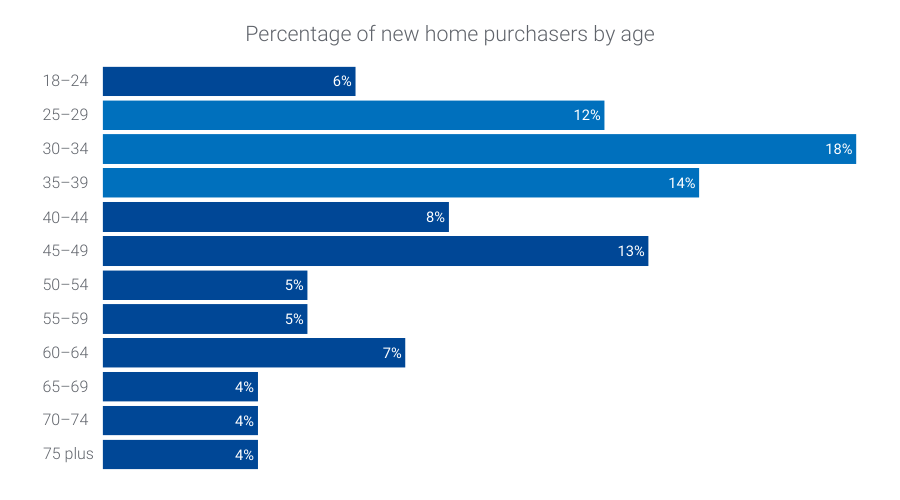
Improve engagement for your spring targeting by pairing our new homeowner audiences with our Demographics > Ages > 25-29, 30-34, and 35-39 syndicated audiences. Here are a few you can activate now:
- Life Events > New Homeowners > Last 6 Months
- Life Events > New Movers > Last 12 Months

Mother’s Day: Unveil the perfect gift
Appealing to the emotion of gratitude and love, Mother’s Day is a significant occasion for marketers. Activate Experian syndicated audiences such as “Mother’s Day Shoppers” and “Florists & Flower Gifts High Spenders” to tailor your spring advertising campaign toward those likely to purchase heartfelt gifts. Share ideas and promotions that resonate with the nurturing and caring spirit of this celebration.
Here are 6 audience segments that you can activate to target consumers getting ready to celebrate Mother’s Day:
- Retail Shoppers: Purchase Based > Seasonal > Mothers Day Shoppers Spenders
- Lifestyle and Interests (Affinity) > Moms, Parents, Families > Mothers with 2+ children
- Mobile Location Models > Visits > Mothers Day Shoppers
- Lifestyle and Interests (Affinity) > Moms, Parents, Families > Moms Age 25-54
- Mobile Location Models > Visits > Jewelry Retail Stores
- Retail Shoppers: Purchase Based > Shopping Behavior > Florists & Flower Gifts: High Spenders

Father’s Day: Celebrate Dads in style
Highlighting the significance of paternal bonds, Father’s Day is an excellent opportunity to showcase thoughtful gifts and experiences. Engage the “Father’s Day Shoppers” or “Growing and Expanding families” with content and products aligned with their interests. Craft a campaign that acknowledges the varied roles fathers play and the unique gifts they would appreciate.
Here are 6 audience segments that you can activate to target consumers getting ready to celebrate Father’s Day:
- Retail Shoppers: Purchase Based > Seasonal > Fathers Day Shoppers Spenders
- Mobile Location Models > Visits > Fathers Day Shoppers
- Mosaic – Personas – Lifestyle and Interests > Group M: Families in Motion > M45 – Growing and Expanding (Young, working-class families and single parent households that live in small city residences)
- Geo-Indexed > Demographics > Presence of Children: Ages: 7-9
- Lifestyle and Interests (Affinity) > Activities and Entertainment > Home Improvement Spenders
- Life Events > New Parents > Child Age 0-36 Months

Plan for the 2024 TV Upfronts
When gearing up for the 2024 upfronts, you can expand your TV planning by incorporating diverse audience categories into your spring advertising campaigns. It’s not just about targeting a demographic; it’s about captivating your unique audience. Whether it’s cord cutters, ad avoiders, avid streamers, or households that watch TV together, understanding and engaging with these distinct segments is paramount. To maximize impact, use comprehensive TV data that goes beyond broad demographics.
Here are 6 audience segments that you can activate as part of your TV planning strategy:
- Retail Shoppers: Purchase Based > Entertainment > Streaming/Video/Audio/CTV/Cable TV: Cable/Broadcast TV: Cord Cutters: Recent
- Retail Shoppers: Purchase Based > Entertainment > Streaming/Video/Audio/CTV/Cable TV: Streaming Video: High Spenders
- Television (TV) > Ad Avoiders/Ad Acceptors > Ad Avoiders
- Television (TV) > TV Enthusiasts > Paid TV High Spenders
- Television (TV) > Ad Avoiders/Ad Acceptors > Ad Acceptors
- Television (TV) > Household/Family Viewing > Pay TV/vMVPD Subscribers Households
To find consumers who are most likely to engage with your TV ads, you can layer in our TrueTouchTM engagement channel audiences:
- TrueTouch: Communication Preferences > Engagement Channel Preference > Digital Video
- TrueTouch: Communication Preferences > Engagement Channel Preference > Streaming TV

Summer preparation: Anticipate the fun ahead
As spring transitions to summer, help your audience gear up for the upcoming season. Target “Summer break travelers” or “Memorial Day Shoppers” with offerings that align with their summer plans. Whether it’s fashion, travel essentials, or outdoor gear, position your brand as an essential companion for their summer adventures.
Here are 6 audience segments that you can activate to target consumers getting ready for summer:
- Mobile Location Models > Visits > Summer Break Travelers
- Retail Shoppers: Purchase Based > Seasonal > Summer Sales Event Shoppers: Independence Day Shoppers
- Retail Shoppers: Purchase Based > Travel > Vacation/Leisure Travelers: Summer Trips
- Mosaic – Personas – Lifestyle and Interests > Group B: Flourishing Families > B09 – Family Fun-tastic (Upscale, middle-aged families with older children that live in suburban areas and lead busy lives focused on their children)
- Mobile Location Models > Visits > Memorial Day Shoppers
- Retail Shoppers: Purchase Based > Seasonal > Summer Sales Event Shoppers: High Spenders: Memorial Day Shoppers
Did you know?
Consumers between the age of 45-49 make up the largest percentage of top apparel shoppers*.
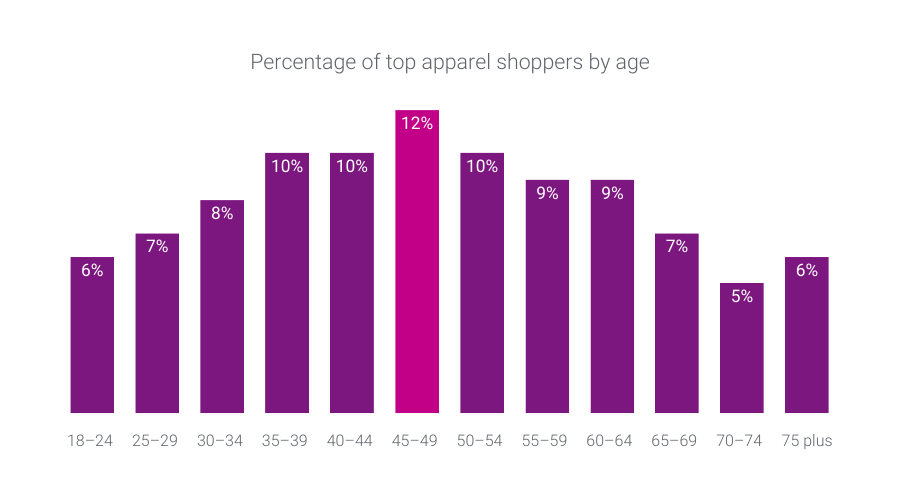
Improve engagement for summer apparel shopping targeting by refining your audience with our Demographics > Ages > 45-49 syndicated audience.
Spring into effective advertising with Experian’s syndicated audiences
For spring advertising campaigns, understanding your audience is the key to success. By activating Experian’s syndicated audiences, you can refine your approach and resonate by activating specific segments. Embrace our syndicated audiences so you deliver campaigns that not only capture attention but also build lasting connections with your audience. As you embark on this spring marketing journey, remember – the possibilities are as endless as the blossoming flowers.
Need a custom audience? Reach out to our audience team and we can help you build and activate an Experian audience on the platform of your choice. Additionally, work with Experian’s network of data providers to build audiences and send to an Audigent PMP for activation.
You can activate our syndicated audiences on-the-shelf of most major platforms. For a full list of Experian’s syndicated audiences and activation destinations, download our syndicated audiences guide below.
Check out other seasonal audiences you can activate today.
Footnote
*Experian looked at our demographic and purchase-based data to understand retail trends over the past year. Our demographic and purchase-based data covers credit and debit card usage across 500 top merchants.
Latest posts

Originally appeared in Adweek This holiday advertising season, identity is the real differentiator Marketers are betting big on AI to run their holiday advertising, using it to build predictive audiences, generate creative at scale, and optimize media buys in real time. The draw is clear: greater efficiency, delivered at scale. But here’s the problem: without a solid identity foundation, AI is just guessing. And in a year when consumers are cautious and competition is fierce, guesses won’t deliver the outcomes you need. Experian’s 2025 Holiday spending trends and insights report shows that success this season will depend on connecting the right data to the right audiences in real time. Download the report now Are shoppers really using AI to make holiday purchases? Not yet. Only 12% of consumers plan to use AI tools to shop this season, mostly for finding discounts. Instead, trusted influences (like retailer websites, product reviews, and recommendations) still guide buying decisions. For marketers, that’s a signal to focus on credibility and connection. AI can support your holiday advertising strategy, but trust still wins the sale. Consumer sentiment heading into the holidays is low, but that could mislead marketers Here's why How marketers are really using AI in holiday advertising Behind the scenes, AI is working overtime. Teams use it to segment audiences, test creative, and optimize media in real time. These capabilities are powerful, but only if they’re grounded in accurate, persistent data. Think about the typical holiday shopper. They may browse a product online, validate it in store, and finally purchase days later from a different device than they used while browsing. If AI isn’t anchored in identity, it struggles to connect those touchpoints. Instead of amplifying relevance, it amplifies noise. See our predictions for Black Friday 2025 Why identity is the GPS for AI-driven holiday advertising Identity is what turns AI from a blunt instrument into an accurate tool. By unifying fragmented signals across channels and devices, identity provides the consistent consumer view that AI needs to be effective. With that foundation, AI can do more than churn out models. Instead, it can: Identify the right audiences and filter out waste Personalize with context, not just scale Measure real outcomes, linking exposures to visits and purchases Identity doesn’t just improve efficiency; it creates accountability. And in a season where every holiday advertising campaign dollar is scrutinized, accountability is the difference between investment and waste. Why connected data will make or break Cyber Week How to turn complexity into clarity this holiday season This year's holiday advertising season is complicated. Marketers are confident, consumers are cautious, and AI is somewhere in the middle. The challenge isn’t just speed or volume, it’s accuracy. By pairing AI with identity, you can adapt to real behavior instead of assumptions. You can build campaigns that are consistent across connected TV, retail media, and social platforms. And you can prove results when it matters most. AI isn’t a holiday miracle. But when it’s powered by identity, it can give you clarity in a noisy season and proof of performance when budgets are under scrutiny. Explore Experian's holiday audiences to activate this season What’s the real takeaway for marketers this season? Don’t assume AI alone will save your holiday advertising strategy. It won’t. Consumers still trust human voices more than machines, and your AI models are only as strong as the data beneath them. Identity is the difference between guesswork and accuracy, between activity and impact. This holiday season, the winners won’t be the brands that simply spend more or automate faster. They’ll be the ones that put identity at the core of their AI strategy and meet consumers where they really are. Download Experian’s 2025 Holiday spending trends and insights report to see where consumers are spending and how identity can help your holiday advertising campaigns more effective. Download now About the author Colleen Dawe VP, Advertiser Partnerships, Experian Colleen Dawe is VP, Advertiser Partnerships at Experian Marketing Services, where she oversees revenue growth and client success, helping advertisers harness data and identity to fuel marketing strategies. With over 15 years of experience spanning TV and digital media, she brings deep expertise in data, identity, activation, and measurement to help her clients connect innovation with business outcomes. Holiday advertising FAQs Why isn’t AI enough on its own for holiday advertising? AI works best when it’s grounded in accurate data. Without identity, it can’t connect actions across devices or channels, which limits its effectiveness. How does identity improve AI-driven campaigns? Identity creates a single, persistent view of your audience. That means AI can personalize content, measure conversions, and cut waste with far greater accuracy. What does “identity” mean in marketing terms? It’s the data layer that connects people across their devices, browsers, and behaviors—so your campaigns reach real individuals. How can marketers prove ROI in holiday advertising? By tying exposure to verified outcomes—like store visits or purchases—using identity-linked data. That’s how Experian helps brands move from impressions to impact. Latest posts

What challenge did the pet brand face? A national e-commerce pet supplier wanted to expand into audio advertising to diversify beyond display campaigns. But with only one team member available to test this new channel, they faced three hurdles: Prove performance in a new channel Run lean with limited bandwidth Show purchase intent, engaged site visits, and completion rates fast They needed a partner to handle execution and supply optimization so their lean team could focus on strategy and selling audio internally. Hear how we're working with Audacy to help our clients connect beyond the screen Tune in here The solution: How did Experian Curated Deals help? Audigent, a part of Experian, ran point on setup, optimization, and real-time reporting. The brand turned to Experian Curated Deals. Together we: Streamlined access to curated inventory, cutting intermediaries and boosting efficiency Handled campaign setup and supply-side optimization Delivered real-time demand-side platform (DSP) reporting for agile targeting refinements Provided an extension of their in-house team, giving them bandwidth to focus on pitching audio internally “What stood out about Experian was their real-time control and the depth of their trading team. I knew I could hand them a campaign, and they’d run with it.”Programmatic Media Lead, National e-commerce pet supplier Want to see the full case study? Download it here What results did the campaign deliver? In just a few months, audio transformed from a small test into a top-performing channel: Exceeded KPIs by 63% Increased purchase intent and engagement vs. competing platforms Matched display performance without creative refreshes or incentive overlays Earned budget increases, positioning audio as a long-term investment Reduced internal setup time, freeing the team for strategic projects “Experian became more than just a media partner: they filled critical gaps that would typically require outsized investment in internal resourcing.”CMO, National e-commerce pet supplier Explore more examples of how brands are driving performance with Experian Windstar Cruises Leading athletic retailer Swiss Sense Why does this matter for marketers? For marketers, audio isn’t experimental anymore. It’s a proven channel that can drive both engagement and conversions. This case study shows how brands can: Use Experian Curated Deals to validate new channels with minimal risk. Lean on Experian to handle execution, freeing teams to focus on growth. Drive meaningful engagement and purchase intent, not just impressions. For marketers navigating limited resources and pressure to prove ROI fast, Experian Curated Deals provides both performance and confidence. Want to beat your campaign goals by double digits? Contact us today Curated Deals FAQs What is Experian Curated Deals? Experian Curated Deals streamline access to premium media inventory by eliminating unnecessary intermediaries, optimizing efficiency, and ensuring campaigns perform against KPIs. Why use curated deals for audio advertising? Curated deals help brands test and validate audio quickly, without the heavy lift of manual setup and supply path management. Can audio really drive conversions? Yes. In this case, audio campaigns not only exceeded awareness and engagement goals but also matched the conversion performance traditionally associated with display. How does Experian support lean teams? By managing setup, supply optimization, and reporting, Experian acts as an extension of your team, reducing internal workload while driving performance. Latest posts

In our Ask the Expert Series, we interview leaders from our partner organizations who are helping lead their brands to new heights in AdTech. Today’s interview is with Paul Zovighian, VP of Marketplaces at Index Exchange. Sell-side activation vs. buy-side packaging What’s fundamentally changed with sell-side decisioning, and how does it now diverge from traditional buy-side packaging? Sell-side decisioning is programmatic’s next major evolution – one that redefines how intelligence enters the transaction. Advances in infrastructure and computing power now allow supply-side platforms(SSPs) to act in the crucial pre-bid moment, enriching impressions with context, quality, and data before they reach the buy side. This isn’t just about efficiency; it’s about unlocking new value. Smarter requests mean buyers see only the most relevant opportunities, while publishers gain recognition for the true worth of their audiences and environments. We’re still at the beginning of this shift. Many players still package inventory without engaging in real pre-bid intelligence. As the market matures, the companies that evolve toward sell-side decisioning will be the ones to set the pace for programmatic’s future. Economic shifts with scaled curation As curation scales, what economic levers shift for both publishers and buyers, and how do those shifts influence deal structure and media planning? As curation scales, one of the most powerful levers is data. It’s the industry’s most valuable asset, and on Index it keeps its full worth. We don’t take a platform cut or add hidden fees, so data partners benefit from the clearest, most efficient economics in the market. Data vendors gain confidence that their economics aren’t eroded by a platform tax. For publishers, this means stronger yield and more ad spend flowing directly into working media. When data retains its full value, it enhances how impressions are packaged, priced, and differentiated—driving more competition for quality inventory and more opportunities for revenue. For buyers, it means compressed supply paths and total transparency – they know exactly what they’re paying for. With no intermediaries and full transparency into economics, buyers gain a clearer view of where their budgets go and the confidence that their investments reach real audiences in trusted environments. They benefit from cleaner supply chains, better performance, and more meaningful alignment between spend and outcome. The result is a healthier marketplace where both sides benefit from efficiency, fairness, and scale. Moving decisions upstream for value What decisions historically made in DSPs should now move upstream to publishers or SSPs to unlock more value, and which should remain buy-side? Decisioning is no longer confined to demand-side platforms(DSPs). We can enrich impressions by applying intelligence — via data, algorithms, creative technology, and more, before they even reach the buy side — adding context, filtering out low-quality supply, and expanding audience discovery. This isn’t about shifting roles; DSPs remain critical for campaign strategy, optimization, and budget allocation. The sell side simply ensures every bid request is smarter from the start, creating more value for all parties. In doing so, we also alleviate pressure on DSPs — enabling more comprehensive data discovery by searching for signals at the top of the funnel, prior to optimization. That means DSPs can focus on what they do best, supported by a cleaner, more transparent supply path. Index Marketplaces use cases explained Index Marketplaces is designed to enable the strength of our partners, and Experian brings one of the broadest sets of demographic and audience insights in the industry. That scale enables a wide variety of applications, from more precise audience activation to deeper measurement and analytics. What’s different on the sell side is how those insights are applied. By activating Experian’s syndicated audiences directly at the point of decision, their value is realized in real time and across the full scale of the open internet. Buyers gain a clearer path to relevant audiences, and publishers benefit from stronger alignment between data and media. It’s an approach that ensures partners like Experian can maximize the impact of their assets while helping the market move toward more intelligent, performance-driven activation. Identity signals with stronger privacy For identity partners like Experian, what’s the right way to bring audience, context, and propensity signals into sell-side activation? The beauty of sell-side decisioning is that it reduces the hops in how identity signals are applied. Without it, IDs have to travel through multiple platforms, creating extra handoffs and additional risks of data loss or leakage. With sell-side decisioning, those signals are obfuscated under a deal ID and applied directly at the point of decision. That means audience, context, and propensity data are activated securely, without ever leaving the sell-side environment. For partners like Experian, it’s the cleanest path to value: fewer hops, stronger privacy protection, and clearer economics for everyone in the chain. Contact us About our expert Paul Zovighian VP of Marketplaces, Index Exchange Paul Zovighian carries over a decade of industry expertise, stemming from his analytics and optimization roots to his current post as VP, Marketplaces, where he is focused on the commercial activation of Index’s newest product, Index Marketplaces. Previously, in his role as VP of corporate development, Paul led Index’s first-ever business acquisition. In his spare time, he enjoys long walks on the beach and befriending cats in NYC’s thriving bodega community. About Index Exchange Index Exchange is a global advertising supply-side platform enabling media owners to maximize the value of their content on any screen. They’re a proud industry pioneer with over 20 years of experience connecting leading experience makers with the world’s largest brands to ensure a quality experience for consumers. FAQs What is sell-side decisioning, and why is it important? Sell-side decisioning allows publishers to add intelligence, like audience data and context, before ad impressions are sent to buyers. This makes the process more efficient and ensures advertisers see only the most relevant opportunities. How does sell-side decisioning differ from traditional buy-side packaging? Traditional buy-side packaging happens after impressions are sent to demand-side platforms (DSPs). Sell-side decisioning moves some of that intelligence upstream, enriching impressions earlier and reducing inefficiencies. What does "curation" mean in this context, and how does it benefit publishers and advertisers? Curation refers to the process of organizing and enriching ad inventory with data and context. For publishers, it leads to better yield and more ad spend going directly to their media. For advertisers, it means clearer, more transparent supply paths. How does sell-side decisioning improve privacy? By applying audience and identity signals directly on the sell side, data stays within a secure environment. This reduces the number of platforms handling sensitive information, lowering the risk of data loss or leakage. What role does Experian play in sell-side decisioning? Experian provides demographic and audience insights that are activated directly at the point of decision. This helps advertisers reach the right audiences more effectively while ensuring publishers can maximize the value of their inventory. Why is moving decisioning upstream beneficial for DSPs? When publishers and SSPs handle some decisioning earlier, DSPs can focus on campaign strategy and optimization. This creates a cleaner, more efficient process for everyone involved. What is a deal ID, and how does it enhance privacy? A deal ID is a unique identifier used in programmatic advertising to bundle audience and context signals securely. It ensures data is applied without being exposed or shared across multiple platforms. Latest posts