At A Glance
Agentic AI is changing programmatic advertising from something you tweak after the fact into something that learns and improves while campaigns are running. Instead of guessing what might work, marketers can use data, identity, and context to reach the right people in the right places and adjust in real time. Experian connects everything behind the scenes, from data and audiences to activation and measurement, so campaigns feel more coordinated, relevant, and easy to manage while staying compliant and grounded in strong data practices.In this article…
Programmatic advertising has become much more sophisticated over the years. As capabilities have expanded, so has complexity. Marketers are now working across more platforms, with more signals and opportunities to optimize. Despite performance improvements, it can take time to fully understand what’s driving results and how to scale them.
Agentic artificial intelligence (AI) is closing that gap. Instead of just automating tasks, it introduces systems that can interpret signals, suggest next steps, and enable action within defined parameters — helping live campaigns adapt, and your marketing feel more human-centered.
In this article, we’ll break down what agentic AI looks like in programmatic advertising, how it’s changing campaign planning and activation, and where it’s delivering the most impact.
What is programmatic advertising in the agentic AI era?
Programmatic advertising is the automated, cross-channel buying and selling of digital media across channels like display, video, and connected TV (CTV). In the age of agentic AI, marketers can identify and act on opportunities while campaigns are live, as agentic AI functions less as a passive tool and more like a dynamic teammate.
With AI-powered programmatic marketing, your team can now proactively anticipate what’s likely to work next, simplify fragmented channels into a more unified strategy, and focus campaigns on outcomes that move your business forward with support from predictive insight and real-time intelligence.
Machine learning now processes and analyzes massive volumes of data in milliseconds, allowing systems to decide which impression to buy, what it’s worth, and where it’ll deliver the most impact in real time.
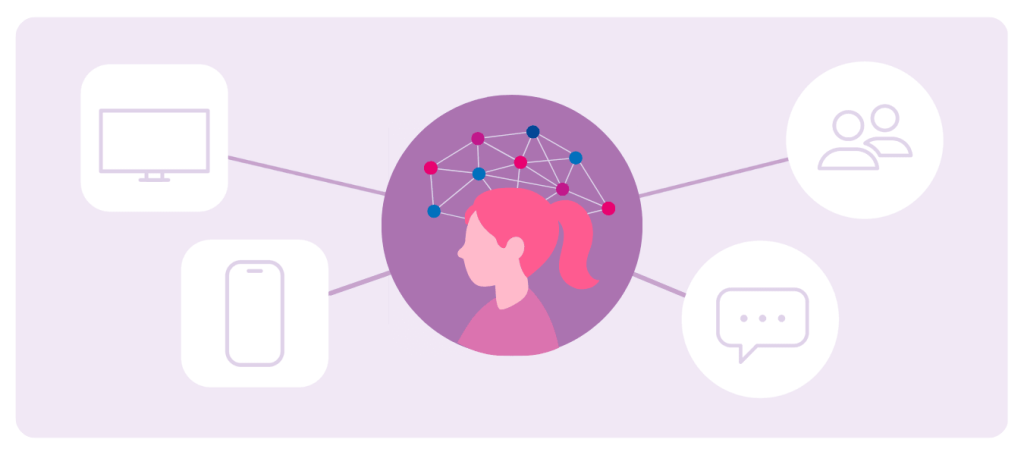
How is agentic AI reshaping programmatic marketing?
Programmatic advertising has always been about automation, but agentic AI is pushing it into something more adaptive. AI-driven processes now analyze the marketplace and enable autonomous media activation with human oversight, grounded in responsible automation.
As you integrate agentic AI into your advertising, it helps automate time-intensive, day-to-day tasks so your team can focus more on strategy, planning, and performance. Marketers still define the goals, set the guardrails, and oversee how AI is applied, which keeps decisions aligned with business objectives, compliance requirements, and overall campaign strategy.

Here’s how marketers can benefit from agentic AI:
- AI accelerates and improves how fragmented signals across identity, behavior, and context are connected into a usable customer view.
- Optimization happens continuously, not in reporting cycles, as bids, audiences, and spend adjust in real time.
- Decisioning moves beyond static rules toward adaptive, data-driven prioritization.
- Predictive models help reduce waste by identifying low-value impressions before allocating spend.
- Personalization becomes more accurate while still grounded in privacy-safe, identity-first data.
How is AI transforming media curation and supply optimization?
Programmatic advertising has traditionally relied on open exchange buying, optimizing across large volumes of inventory. As AI becomes more embedded in programmatic marketing, the focus is shifting toward more intentional activation, prioritizing environments that are more likely to perform from the start.
Dynamic curation and supply optimization
With dynamic curation, AI aligns predictive audiences with contexts where engagement is strongest, using real-time signals to determine who to reach and where they’re most likely to engage. Campaigns are guided toward higher-probability environments upfront, rather than relying on post-impression optimization.
This moves programmatic marketing away from broad open exchange buying and toward more curated, intentional activation, with continuous adjustments as signals evolve.
Emerging agentic workflows
Emerging agentic workflows introduce systems that analyze performance, recommend changes, and activate them within defined guardrails. Instead of waiting for reporting cycles, campaigns continuously evaluate signals and adjust in real time.
AI handles day-to-day decisions like shifting spend or refining audiences, while marketers retain strategic control and accountability.
Generative and analytical AI applications
Not all AI in programmatic advertising is about activation. Many gains are happening behind the scenes, especially in analytics.
Generative and analytical AI support tasks like attribute development, description creation, and insight acceleration. This reduces time spent on reporting and helps teams focus on understanding performance, surfacing patterns, and identifying what to scale.
Experian’s curation capabilities
At Experian, we combine identity-based predictive data with contextual AI models to better align audiences with available supply. With Audigent now part of Experian, audiences are indexed to the live bidstream and contextual signals, helping campaigns activate in environments where they’re more likely to perform.
Experian Curated Deals package high-quality inventory, such as streaming and premium lifestyle content, with predictive audience data. When layered with our #1-ranked data accuracy by Truthset, these deals become predictive and help you activate greater confidence in campaign placement and performance.
Practical use cases of AI in complex and regulated markets
The value of AI in programmatic advertising becomes clearer in environments where complexity is highest, such as industries with strict regulations, fragmented data, and significant financial stakes tied to every impression. Financial services, healthcare, and retail all require approaches that balance accuracy, compliance, and measurable outcomes, built on privacy-first data and human-centered activation.

The following shows how programmatic advertising can come to life in practice.
Financial services
In financial services, performance only matters when it’s compliant. AI helps marketers reach qualified consumers without crossing regulatory lines.
Your team can:
- Activate identity-based audiences for lending, credit, and financial products within defined compliance guardrails.
- Use predictive financial attributes (where permitted) to prioritize prequalified and high-intent consumers.
- Support responsible offer prioritization and budget allocation based on eligibility and likelihood to respond.
- Operate within transparent, auditable environments designed for regulated activation.
Healthcare
Healthcare marketing requires accuracy without ever exposing sensitive data. AI enables more relevant engagement while maintaining strict privacy standards.
With AI-powered programmatic marketing, you can:
- Activate privacy-safe, compliant health-interest segments without relying on protected personal data.
- Deliver campaigns without exposing sensitive identifiers or violating regulatory requirements.
- Optimize delivery based on region, timing, and contextual alignment with patient research behavior.
- Maintain controlled, privacy-forward environments that prioritize trust and compliance.
Commerce media
In commerce media, programmatic performance is measured by its impact on transactions and revenue. AI helps unify signals into a more connected, outcome-driven strategy.
It empowers marketers to:
- Connect household-level insights to activation across CTV, display, and commerce media networks.
- Use AI-powered identity resolution to maintain continuity as consumers move across devices, channels, and purchase journeys.
- Enable dynamic curation by aligning predictive audiences with more effective inventory in real time.
- Adjust spend toward environments and segments that actively drive purchase behavior.
As these use cases expand across industries, so does the need to ensure AI is applied responsibly.
Trust, transparency, and ethical challenges in AI-powered AdTech
As AI takes on a larger role in programmatic advertising, the focus is shifting from what it can do to how it does it. Marketers need to validate results and the data behind them to ensure every decision stands up to regulatory and consumer scrutiny.
AI systems now influence audience selection, media investment, and measurement at scale. But those decisions are only as reliable as the data behind them. Without clear governance, it becomes difficult to answer basic but critical questions, such as, “What data informed this decision? Was it compliant?” Or, “Could bias be influencing the outcome?”
This is why trust in AI starts with the data rather than the model.
AI governance and data stewardship
Rather than governing our clients’ AI systems, Experian helps govern the data those systems depend on. Our guiding principle is simple: responsible automation begins with governed data. We ground our AI approach in strict data governance frameworks, ensuring the data entering any model is compliant, consented to, and accurate before it’s used.
We treat AI and machine learning as advanced modeling technologies operating within contractual and privacy-first guidelines, with controls for data quality, consent validation, and compliance applied upfront. In the end, you’ll have confidence that your AI outputs are not only performant but also explainable, auditable, and aligned with regulatory expectations from the beginning.
Clear usage restrictions
Strong governance only works when it’s paired with clear boundaries. To protect data integrity, privacy, and compliance, Experian enforces strict controls on how data is used across AI and programmatic workflows.
- Data is used only within defined contractual, legal, and regulatory guidelines.
- Sensitive information is protected and restricted from use in unauthorized environments.
- Data access is limited to approved, compliant systems and workflows.
- Data is not shared, exposed, or repurposed beyond its intended use.
- AI processing occurs within controlled environments that meet privacy and security standards.
- AI use cases are subject to appropriate review, governance, and oversight.
These guardrails give you the assurance that innovation moves forward without compromising trust.
Bias mitigation and responsible modeling
As AI plays a larger role in audience creation and activation, models must be continuously monitored for fairness. At Experian, models are continuously reviewed and refined to reduce bias and ensure outputs align with responsible marketing practices and changing regulations.
Consent and consumer control
Consumer consent and control are central to responsible AI usage in programmatic advertising. Data must be sourced through compliant, transparent mechanisms, with controls that allow consumers to access, manage, and opt out of how their data is used.
This aligns with regulatory frameworks such as the California Consumer Privacy Act (CCPA), the General Data Protection Regulation (GDPR), and the Health Insurance Portability and Accountability Act (HIPAA) (where applicable).
How Experian enhances every stage of the agentic AI programmatic workflow
AI in programmatic advertising only works if the system behind it is connected. When data, activation, and measurement are fragmented, optimization lags.
Experian brings those pieces together. By connecting identity, data, activation, and measurement into one workflow, AI can continuously turn first-party data into predictive audiences, help you activate them across channels, and measure outcomes in a single, connected system.
AI-ready data foundation
Everything in AI programmatic advertising starts with the data. Experian transforms first-party data into a predictive asset by onboarding and enriching it with Experian Marketing Data, ranked #1 in accuracy by Truthset, and unifying it through our Digital and Offline Graph.
This creates a high-integrity data layer that improves audience quality, extends reach, and supports activation across channels while maintaining privacy-forward standards.
Predictive intelligence
Predictive intelligence helps you understand what’s likely to work before activation begins. Experian applies behavioral modeling and signal analysis to identify high-potential audiences and generate identity-based lookalikes based on shared characteristics and patterns.
As campaigns run, AI surfaces next-best opportunities so teams can adjust activation strategy in real time.
Audience discovery and creation
Experian simplifies audience creation by bringing everything into one place. First-party data is combined with Experian Audiences and expanded through access to Partner Audiences in our data marketplace. Instead of stitching together multiple inputs, you’re working from a more complete, connected view upfront.
Our platforms and audience teams then help identify, build, and refine segments based on relevant attributes, reducing manual setup, accelerating activation, and enabling scalable, persona-based audience creation.
Identity-rooted activation
After you’ve defined your audiences, identity becomes critical in consistently reaching them across channels.
Partner with Experian for agentic AI-driven programmatic campaigns
Experian helps you turn first-party data into marketing that feels more connected, relevant, and accountable, bringing together identity, AI, and privacy-first data to support better decisions from planning to outcomes. Speak to an Experian expert about enabling agentic AI in your programmatic advertising strategy today.
FAQs
AI in programmatic advertising uses machine learning to improve how media is bought, targeted, and optimized. It enhances audience discovery, activation, and measurement by analyzing large volumes of data in real time, allowing campaigns to adapt continuously instead of relying on static rules.
Experian supports programmatic advertising across the full workflow, from identity resolution and audience development to contextual indexing and outcome-based measurement. Through a combination of Experian’s platforms, data, and audience teams, marketers can turn fragmented signals into more connected, performance-driven campaigns.
Agentic AI in advertising refers to systems that can analyze performance, recommend changes, and activate optimizations within defined guardrails. Unlike traditional automation, these systems adapt in real time while marketers maintain strategic oversight and control.
Experian supports privacy-first AI through strict data governance frameworks, compliant data sourcing, and transparent modeling practices. Identity resolution and activation are designed to meet regulatory requirements while maintaining consumer trust and control.
AI improves audience discovery through predictive modeling, inferred attributes, and lookalike techniques to identify high-potential audiences. It also surfaces next-best segments, reducing manual effort and accelerating time to activation.
AI supports media curation by aligning predictive audiences with high-performing environments in real time. Through dynamic curation and Experian Curated Deals, campaigns activate in more relevant contexts rather than relying on broad open exchange buying.
Latest posts

Overview Chartable leverages The Tapad Graph to improve cross-device attribution rates and remove non-addressable IPs for clients. Challenge Chartable needs to differentiate between consumer and potential business IP addresses to provide accurate household modeling and reduce excess data for their customers. Podcasting generally only has access to IP addresses as a form of digital ID which limits its ability to connect activity to individuals and extend it across all devices. The Tapad + Experian solution Using Tapad, now a part of Experian, Chartable is able to cut through the noise of IP data and discard any addresses deemed a shared IP or business. Then, Tapad + Experian connects individual users to their other digital IDs and users in their household; creating a richer attribution model for Chartable customers. Increase in podcast attribution rates Contact us today

With the growth of digital marketing and the targeting capabilities associated with online outreach, many predicted that this would mark the end of direct mail advertising. But if Millennials have anything to say about it, that’s not going to happen anytime soon. Yes, believe it or not, Millennials are driving the resurgence of direct mail advertising, and many leading brands are now pivoting their omnichannel marketing plans to include direct mail. And with the USPS reporting more than 75.7 billion in marketing mail volume in 2019, this trend shows no sign of slowing down. Including direct mail in your plans may give your brand a better chance of reaching your audience. Why? 1. Millennials actually like getting mail.While most of us have decried “junk mail” as being environmentally unfriendly or just a pain to deal with, Millennials actually enjoy physical mail. Valassis recently cited research from USPS Customer & Market Insights stating that Millennials spend the most time sorting mail (about six minutes compared to the average, which is four minutes), plus they’re opening mail and reading it (at eight minutes versus the average of seven minutes). Valassis also conducted a study that showed that 68% of Millennials read print ads or inserts from retailers, and 64% prefer getting them through the mail. So, while digital outreach may be convenient, it hasn’t completely decimated the desire for that old-school, hands-on experience of opening and reading something that’s addressed to you. 2. Millennials respond to a multi-channel approach.Oftentimes, marketers think of omnichannel as being a combination of digital and TV, but when you add print into the mix, it can make an even bigger impact on Millennial audiences. Valassis found that 60% of consumers are more likely to make a purchase after seeing an ad when it’s presented across both offline and online channels, while 72% of Millennial parents say print ads encourage them to go online and make a purchase from that retailer. 3. Millennials think physical mail makes for a more personal approach.You’d think that e-mail would feel more personal, but with the influx of spam most people get, that’s just not the case. In fact, 67% of people see physical mail as being more personal than an e-mail, with seven out of 10 saying they prefer receiving actual mail over digital mail. And for marketers looking to make a one-to-one connection, this is music to their ears. With changing marketing plans, the mailbox has less competition than the inbox. Getting a catalog at their door with the perfect offer at the perfect time helps the marketer make the direct connection. 4. Direct mail lasts longer than digital mail.That may seem like an obvious statement, but there’s more to it than you think. When an e-mail arrives in someone’s inbox, it’s easy to ignore it, read the subject line and forget about it, or even just randomly delete it, if spam filters don’t take care of that on their own. But the average lifespan of a piece of direct mail is 17 days, which may account for how direct mail generates purchases five times larger than e-mail campaigns. It’s harder to ignore when it’s in your house and you have to physically handle it as opposed to just clicking a mouse to get rid of it. 5. Millennials trust direct mail.It’s true—research shows that 90% of Millennials think direct mail advertising is reliable. Plus, Millennials are 24% more likely to show mail to others, compared to 19% of non-Millennials… which means if they find a deal they like in the mail, they’re probably going to spread the word. Contact us today
Marketers are always looking for creative ways to get the most out of their digital marketing investments. While there may be different paths to optimization, reducing media spend and cutting costs without sacrificing ROI is ideal. We empower marketers to take back control of their budgets and reinvent their media strategies by leveraging the right data at the right time. And, given today’s challenging climate, there’s no better time. Every Business Has Different Deeds Whether you’re a direct-to-consumer brand building a loyal customer base or a financial service simply letting customers know you’re here for them during a challenging time– identity resolution is essential to connecting with your audience without breaking the bank. That’s why we have built solutions that provide flexibility and control when you need it most. Putting Data Into Action Experian’s “Tapad Graph” is a global, privacy-safe cross device graph is one powerful file. Updated weekly, and containing customized device IDs and digital attributes, The Tapad Graph enables smarter targeting strategies and a reduction of wasted impressions. What that means is more marketing efficiency and a stronger ROI for your business. Saving resources and money sound good to you? This guide breaks down four ways you can implement cost savings measures without sacrificing performance or prohibiting KPIs. Frequency Capping and Suppression Clustering device IDs by the individual and household means you have access to more ways to reach consumers, but it doesn’t always mean you should be using all of them across every campaign. Hone in on the channels and devices where consumers make most of their lower funnel decisions and purchases – and cap brand-awareness level placements or aspirational media that requires more exposure to generate engagement. This doesn’t mean limiting the devices you target, but being more aware of how often you’re targeting the same person across those devices. If you’ve successfully begun, or heck, even completed the consumer journey with an individual, congratulations. Now, you may want to consider what to do with the rest of the digital devices and users in that same household. Sure, there’s a time for conquesting an entire home of purchasers, but that’s not always the most effective way to maximize your media. That’s why The Tapad Graph is built to be flexible, providing a holistic view of all individuals and their associated devices and digital IDs – so you can suppress them once you’ve conquested the household decision maker or achieved the desired lower funnel activity. Save those impressions for someone else and save money for yourself. The great thing is whether you’re uploading this data into a DMP or a DSP, you can segment your target audience with a frequency cap threshold or suppress them entirely. Not only can you apply these tactics across traditional digital media, but we can include Connected TVs for OTT targeting as well, making your media strategy as holistic as your identity resolution tactics. Cross-Device Targeting and Attribution Consumer behavior and device trends are changing these days, so shouldn’t your digital marketing change too? Desktop usage is now up as much as 22%* as more people are working and learning from home. And remember that old iPad? With more people at home, we’re dusting off more devices and tablet activity is increasing more than 30%*. Sure, people are still constantly on mobile– but it might be time to consider implementing cross-device targeting and optimization for those dayparts when their focus is elsewhere. Identity resolution should be a key element of customer journey mapping and attribution in order to truly give credit to the right channels and build a baseline for the right cost-per modelling. Coupling The Tapad Graph with raw events data can granularly attribute engagement, actions and conversions at the digital ID, device, and even user-level – thereby teaching you more about your customer’s preferences. Leverage these insights to create more tailored messaging and promotions on your owned and operated channels, to funnel impressions to specific screens and platforms, and to target users based on where they are in the purchase funnel. Data That Gives You Control If you’re already implementing cross-device, have you started suppressing the devices where engagement with your brand isn’t happening? That’s right, you can use The Tapad Graph after-the-fact as well. Weekly graph updates with 60-day look-backs enable weekly campaign optimizations. That gives you the flexibility and control to avoid devices and platforms where users aren’t as active. You can only make decisions based on the data you have in front of you, so make sure you’re partnering with the right solutions for your business. Does identity resolution sound like something you need? Contact us and we can help you get started with all that The Tapad Graph has to offer. Contact us today