Loading...

The value of addressable advertising in the era of AI and privacy-safe identity

Published: January 13, 2026 by Experian Marketing Services

At A Glance

Addressable advertising helps you reach addressable audiences with relevant messages across digital, TV, and streaming. As signals fragment across browsers, apps, and platforms, AI customer segmentation and privacy-first identity separate guesswork from accuracy. Experian brings trusted data, identity resolution, and activation partnerships together so you can connect with people in ways that feel relevant, respectful, and measurable.

A decade ago, you could buy media by broad categories and call it a day. But today, your audience lives in a curated world. They watch what they want, skip what they don’t, and expect what they see to match their interests. Research shows that when ads are tailored to households, people pay more attention, stay engaged longer, and are more likely to remember your ads.

That shift in expectations is why addressable advertising continues to grow. It’s a practical response to how media works today, with audiences moving fluidly across platforms, streaming spread across services, and measurement spanning screens and environments. Under these conditions, reaching the right people depends on clarity, not approximation.

Artificial intelligence (AI) strengthens that clarity. When applied responsibly, AI helps connect signals, deepen audience understanding, and deliver relevant messages while protecting consumer data. The result is advertising that feels more human, not less.

What is addressable advertising?

Addressable advertising is the ability to deliver personalized ads to specific individuals or households and measure results using privacy-safe data and identity. It works across digital, connected TV (CTV), linear TV, and over-the-top (OTT) streaming and relies on strong identity resolution and accurate data inputs to ensure your audience definitions remain consistent across channels and over time.

Benefits of addressable advertising

Addressable advertising changes how advertising performs by delivering messages to defined audiences, reducing wasted impressions, and making results simpler to measure.

BenefitWhat it means for you
ClarityReach the right audience with the personalized messages they want, instead of hoping the right people are watching
EfficiencyAvoid wasted impressions by focusing spend where interest already exists
Higher ROIImprove conversion by delivering messages that feel relevant
Omnichannel consistencyCarry the same message across digital and TV without starting over
Measurable impactConnect exposure to actions so performance is clear
Privacy and complianceActivate audiences responsibly using privacy-safe data, clear governance, and compliant practices

These are some of the reasons that addressable advertising has moved from a niche tactic to a core strategy. When audiences are clear, identity is connected, and measurement is built in, advertising becomes relevant, accountable, and easy to improve over time.

Addressable advertising vs. traditional advertising

Unlike traditional advertising, addressable advertising doesn’t depend on broad exposure or assumptions. It’s personalized by design and measurable by default, making it possible to connect ad exposure to outcomes. Another distinction is in how addressable delivers advertising to audiences and how performance is measured.

Traditional media buysAddressable advertising buys
You pay for broad reachYou pay for relevant reach to defined audiences
Ads run by placement or programAds are delivered to known households or individuals
Personalization is limitedPersonalization is built into delivery
Measurement indicates trends, not who actually actedMeasurement connects exposure to actions by linking ads to defined audiences across channels

But before you can activate addressable advertising, you need to understand who you’re actually trying to reach.

What is an addressable audience?

An addressable audience is a group of people you can identify and reach using data-based targeting. In other words, they’re not anonymous “maybe” viewers. They’re a defined audience you can activate across channels.

Here’s what typically builds addressable audiences:

FactorWhat it isWhy it matters
First-party dataData from your own relationships (site activity, app activity, CRM, emails, purchases)It’s your most direct view of existing customers and prospects
Third-party household and individual dataDemographic, behavioral, lifestyle, interest, and intent attributes from trusted providersIt fills gaps so your audience definitions don’t collapse when your own data is limited
Identity resolutionA privacy-first way to match people across devices, households, and channelsIt improves accuracy so you don’t over-message the same people or miss them entirely
Contextual signalsPage-level, content, or viewing context where ads appearIt reinforces relevance in the moment and complements addressable targeting when identity signals are limited

How Experian helps with addressable audiences

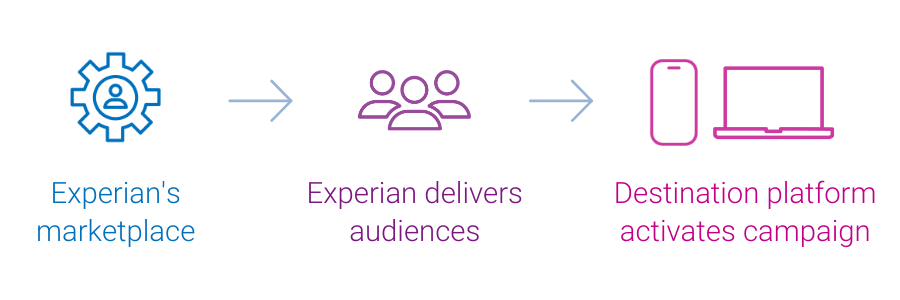
Experian helps you build and activate addressable audiences at scale without losing accuracy or trust. With more than 3,500 syndicated audiences available, you can activate consistently across 200+ destinations — including social platforms like Meta and Pinterest, TV and programmatic environments, and private marketplaces (PMPs) through Audigent.

That means reaching people based on who they are, where they live, and their household makeup, using data governed with care. Our approach is built on accuracy first, which is why Experian data is ranked #1 in accuracy by Truthset for key demographic attributes.

And when standard customer segments aren’t enough, Experian Partner Audiences expand what’s possible. These unique audiences are available through Experian’s data marketplace, within Audigent for PMP activation, and directly on platforms like DIRECTV, Dish, Magnite, OpenAP, and The Trade Desk.
Addressable Advertising

The evolution of addressability and why it matters more than ever

As the media ecosystem shifts, reaching people across browsers, apps, CTV, and streaming platforms has become more complex. Signals are fragmenting everywhere as expectations for relevant, personalized experiences continue to rise, while reliable identifiers become increasingly challenging to access.
Addressable Advertising

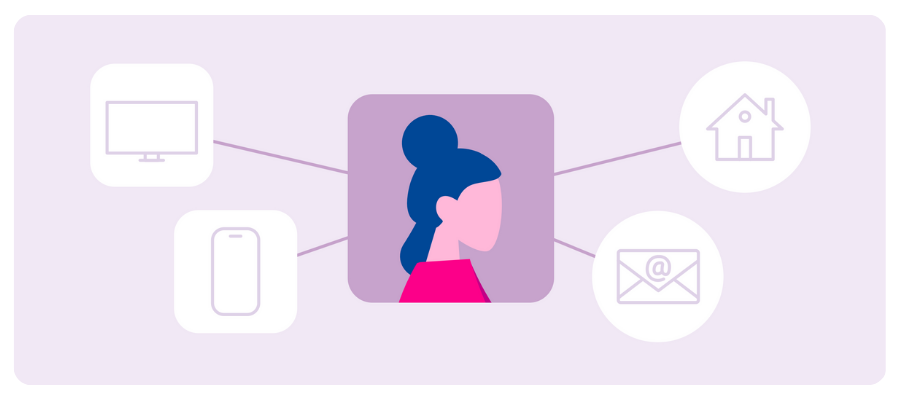
In response, addressability is shifting from a channel-specific tactic to an identity-driven approach to reach and measure defined audiences across screens.

That evolution puts new pressure on performance. Marketing budgets require accuracy and accountability, which means targeting must deliver measurable reach and outcomes you can trust.

At the same time, the growth of CTV and streaming is expanding addressable TV opportunities. As CTV inventory grows, so does the need for cross-channel, identity-based activation that works consistently and supports reach, frequency, and measurement in one connected view. That’s why identity has become the foundation for making addressable advertising work today.

When to apply addressable advertising

You don’t need addressable for everything, but it shines when you need your spend to go farther with accurate targeting and resonant messaging.

ScenarioWhy addressable helps
Product launches and seasonal pushesReach people who are more likely to care without flooding everyone else
High-consideration purchases (auto, travel, financial services)Focus on likely intent and suppress audiences that don’t fit
Cross-channel campaigns (digital, TV, mobile)Keep messaging consistent across screens
When using first-party data with AIUse AI customer segmentation to scale responsibly and improve performance without sacrificing accuracy
Regulated categoriesRely on compliant data practices and clearer controls for regulated industries

Addressable advertising is one way to put relevance and respect into practice — but it shouldn’t be the only time these principles apply. Marketers are expected to be thoughtful about who they reach, how often they show up, and how data is used across every channel. Addressable simply makes it easier to live up to that standard when accuracy, accountability, and scale matter most.

Addressable advertising and third-party data

There’s a common misconception that third-party data is no longer useful, but what’s really changed is the environment around it.

In the early days of digital advertising, third-party data often felt like the Wild West. Today, modern third-party data is more transparent, better governed, and held to far higher standards with:

  • Clear data sourcing
  • Documented consent practices
  • Regular quality audits
  • Strict limits on how data can be used

Used responsibly, third-party data plays a critical role in addressable advertising by complementing your first-party data and keeping audience strategies flexible as signals change.

Benefits of third-party data

When paired with identity resolution, high-quality third-party data helps you:

  • Fill first-party gaps: Add demographic, behavioral, and interest-based insight when your own data is limited.
  • Expand prospecting: Reach new audiences through modeling and lookalike expansion.
  • Enrich segmentation: Combine household, behavioral, and interest signals to tailor creative, offers, and messaging to interests for more accurate and personalized activation.
  • Support cross-channel addressability: Maintain consistent audience reach across devices and channels even as individual signals change.

Why work with Experian for your data needs?

At Experian, we approach third-party data with the belief that trust comes first. Our data is privacy-compliant, ethically sourced, and governed by strict standards so you can use it confidently.

Accuracy matters just as much. Our identity and data-quality framework verifies that the data behind your audiences holds up in the real world — a key reason Experian is ranked #1 by Truthset for key demographic attributes.

And because addressable advertising only delivers value when audiences move seamlessly from planning to activation, our audiences are interoperable by design. You can activate them across digital, social, and CTV platforms without rebuilding or reformatting your strategy for each channel.

How AI is redefining customer segmentation

Addressable advertising depends on audiences that stay accurate as people move across devices, platforms, and moments. Traditional segmentation built on static rules and snapshots in time can’t keep up with that reality.

AI customer segmentation analyzes massive sets of household and individual data (such as intent, household demographics, purchase behavior, and content consumption) to identify patterns, predict intent, and group people into addressable audiences.

As the AI advertising ecosystem continues to mature, reflected in industry frameworks like the LUMA AI Lumascape, segmentation and identity have become foundational layers rather than standalone tools. Those audiences update as conditions change, so they stay relevant instead of aging out.

Here’s how AI-driven segmentation supports addressable advertising.

What AI enablesWhy it matters
Predictive, intent-based audiencesAnalyze behavioral and transactional data to group people based on likely next actions
Broader audience availabilityAs more data signals are incorporated responsibly, AI makes it possible to support a wider range of addressable audience options without sacrificing accuracy
Deeper insights from dataDiscover what people care about, how intent is forming, and which signals are most important with larger, more diverse data sets
Real-time audience updatesKeep segments aligned as behaviors change, not weeks later
Higher accuracy, less guessworkRely on data-driven patterns for decision-making instead of assumptions
Ongoing optimizationRefine audiences throughout the campaign lifecycle as performance signals come in

We’ve used machine learning and analytics for decades to support responsible segmentation — balancing performance with privacy and transparency.

That foundation now supports addressable advertising that adapts in real time while staying grounded in trust.

Addressable TV: Targeting in the streaming era

TV has become an addressable channel powered by data and identity resolution. CTV and OTT streaming are booming, while linear TV continues to decline, reshaping how people watch and how advertising works alongside it. For the first time, CTV spending is expected to outpace traditional TV ad spending in 2028, reaching $46.89 billion and signaling that addressable TV is now central to the media mix.

With CTV and OTT platforms, advertising can now be delivered at the household level. That means two homes watching the same show can see different ads based on who lives there and what they like. This is what makes addressable TV possible.

Benefits of addressable TV

As streaming inventory continues to grow, addressable TV creates new ways to bring relevance and accountability to a channel once defined by broad exposure. Experian links identity data across streaming, linear, and digital platforms to help you manage frequency, attribution, and household-level insights in one connected view.

Addressable Advertising

Addressable TV also raises the bar. To manage reach, frequency, and measurement across streaming and linear environments, addressable TV depends on identity resolution that connects households across screens.

Here’s how addressable TV helps you when identity is in place.

What addressable TV enablesWhy it matters
Household-level targetingDeliver messages that reflect who’s watching, not just what’s on
Frequency control across screensReduce overexposure and improve viewer experience
Cross-channel measurement and attributionConnect TV exposure to digital actions, site visits, and conversions
More efficient use of TV spendBring accuracy, accountability, and outcome-based insight to premium inventory and improve reach of streaming-first, harder-to-reach viewer segments

Ultimately, addressable TV isn’t a replacement for linear TV, but it is an evolution. As streaming becomes the default viewing experience, the ability to engage TV audiences with the same care and clarity as digital is essential.

Use cases for addressable advertising

Addressable advertising works across industries because it adapts to how people make decisions. The examples below are illustrative scenarios that show how addressable audiences, identity resolution, and AI-driven segmentation can come together in practice using Experian solutions.

Retail: Seasonal promotions

A home décor retailer could use identity resolution and AI-driven segmentation to build addressable audiences, such as holiday decorators and recent movers, who are more likely to engage during peak seasonal periods.

Campaigns could then be activated across CTV, display, and social, helping the retailer stay visible across screens while tailoring creative to seasonal intent.

Automotive: In-market car buyers

An auto brand might identify consumers nearing lease expiration using automotive-specific data tied to household and individual attributes.

By suppressing current owners, the brand could avoid wasted impressions and activate addressable audiences across OTT and mobile to reach likely buyers during active consideration.

Financial services: Credit card launch

For a new credit card launch, a national bank could use modeled financial segments to reach credit-qualified prospects.

Addressable digital advertising campaigns could apply frequency controls and personalized messaging, balancing reach with relevance while seamlessly measuring response.

Streaming media: New subscriber growth

A streaming platform looking to grow subscriptions could use an identity graph to exclude current subscribers.

Likely viewers could then be targeted across CTV based on content preferences and viewing behavior, keeping spend focused on net-new growth.

Media and entertainment: Audience expansion for a new release

Ahead of a new release, a film studio could use behavioral and lifestyle data to identify likely moviegoers and fans of similar franchises.

Addressable campaigns across CTV and digital video could help drive awareness and opening weekend attendance.

Travel: High-value traveler acquisition

A travel brand could use travel propensity data and household-level demographics to identify frequent flyers and family vacation planners.

Personalized offers could then be activated across display, social, and programmatic channels to increase bookings while keeping spend focused on higher-value travelers.

How Experian enables more effective addressable campaigns

Addressable advertising is most effective when identity, data, and activation are connected from the start.

Experian brings trusted household and individual data, privacy-first identity resolution, and broad activation partnerships together so you can move from audience insights to activation with minimal friction. Here’s how that comes to life across our core offerings.

Identity resolution with Consumer Sync

Consumer Sync connects devices, emails, digital identifiers, and offline data into a single, privacy-safe identity foundation. This connection helps your audiences stay consistent across streaming, linear TV, mobile, and digital despite changing signals.

Audience insight and segmentation with Consumer View

Consumer View supports clear segmentation, prospecting, and enrichment across industries. It combines demographic, behavioral, and interest-based data to help you build accurate, intent-driven audiences that reflect real people, not assumptions. Data is continuously updated and governed for accuracy.

Omnichannel activation with Audience Engine

Audience Engine enables direct activation of Experian audiences across CTV, digital, social, and programmatic platforms. It supports suppression, frequency management, and cross-channel consistency to keep messaging aligned and exposure controlled.

More efficient media through curation and Curated Deals

Curation combines data, identity, and inventory through Experian Curated Deals. These deal IDs, available off-the-shelf or privately, make it easier to activate high-quality audiences and premium inventory in the platforms you already use without custom setup.

AI-enhanced segmentation and optimization

Our AI-enhanced models analyze large data sets to create and refresh addressable audiences in real time, supporting intent-based targeting and ongoing optimization throughout the campaign lifecycle. These models work seamlessly with demand-side platforms (DSPs), ad platforms, and data clean rooms, so audience insights flow directly into activation and measurement without added complexity.

Seamless integration with your ecosystem

As an advertiser, you want addressable advertising to fit naturally into how you already plan and buy media. That’s why integration matters as much as insight.

Experian integrates with leading DSPs, ad platforms, and data clean rooms, so you can activate addressable audiences in the environments you already use without reworking your strategy or adding complexity. This approach helps you:

  • Build and activate addressable audiences: Reach the people you want with accuracy and respect.
  • Activate across channels: Keep messaging consistent across digital, TV, and streaming.
  • Optimize with data ranked #1 in accuracy by Truthset: Improve performance using the industry’s most reliable data.

When identity, data, AI, and activation come together, addressable advertising does what it’s supposed to do: deliver relevance naturally, measure impact clearly, and give you confidence in every decision along the way.

That’s the foundation for campaigns people want to engage with.

Start creating campaigns audiences want to see

Experian can help you apply addressable advertising in ways that respect consumers, perform across channels, and stand up to real-world measurement.

Connect with our experts today to explore how addressable audiences, AI-driven segmentation, and identity-powered activation can work together in support of your goals.

This site is protected by reCAPTCHA and the Google Privacy Policy and Terms of Service apply.


FAQs about addressable advertising

What is addressable advertising?

Addressable data-driven advertising involves delivering personalized ads to specific individuals or households using privacy-safe data and identity.

What is an addressable audience?

An addressable audience is a defined group of consumers you can identify and reach based on known household or individual attributes.

What makes advertising addressable?

Advertising becomes addressable when it’s possible to identify the audience by linking devices and households to people through identity graphs. This allows you to measure ad performance at the audience level and provide more personalized advertising.

Is addressable advertising just for TV?

Addressable advertising isn’t just for TV; it also works across digital, mobile, streaming, and social channels.

How does AI help addressable advertising?

AI improves addressable advertising by analyzing large data sets to predict intent, build more accurate audiences, boost performance over time, and improve your ability to find and build your audiences.

Can addressable advertising work without cookies?

Yes — identity resolution and first-party data are key to cookieless addressability.

How does Experian support addressable advertising?

Experian supports addressable advertising by providing trusted consumer data, privacy-centric identity resolution, and curated audience segments that activate across CTV, digital, mobile, and streaming platforms.


Latest posts

Loading…
Unlock omnichannel advertising performance through Experian’s 2,400+ syndicated audiences within the Flashtalking platform

In the ever-evolving and soon-to-be cookieless advertising world, brands and agencies need help finding and maintaining access to accurate and comprehensive marketing data that enables them to reach the audience segments that matter most. Flashtalking by Mediaocean and Experian have a collaboration in place to do just that. Through this partnership, Experian’s more than 2,400 syndicated audiences are available for activation within the Flashtalking platform and its Social Ads Manager. “There are a lot of audience segments and data disappearing within the advertising industry right now because of the deprecation of third-party cookies, but Experian’s syndicated audiences are built for this new privacy-first world. Through this partnership, Flashtalking's clients gain access to some of the industry's most actionable on-the-shelf and custom audience capabilities for activation and targeting across the publishers and social platforms that matter most. It’s as easy as identifying the segments that matter to your brand and activating them everywhere they exist with a few simple clicks.” – Ben Kartzman, COO, Flashtalking by Mediaocean This partnership unites the power of Flashtalking's best-in-class independent omnichannel advertising platform with Experian’s comprehensive audience intelligence, which spans 126 million households and 250 million consumers. “For the same reason that brands are investing more deeply in first-party data in the wake of third-party cookie deprecation, having access to the right audience segments has never been more important. Mediaocean offers access to the only independent ad server that’s powering truly omnichannel, personalized experiences, and we’re thrilled to be amplifying their ability to do that through Experian’s expansive audience segments.” – Colleen Dawe, Director, Sell-Side Sales, Experian The Flashtalking Social Ads Manager has long-standing relationships and technical integrations with all major platforms, including Facebook, Google Demand Gen, Instagram, LinkedIn, Pinterest, Snap, TikTok, and a forthcoming integration with Reddit. Experian data can be deployed through custom and syndicated segments within these platforms, providing clients with both reach and precision. The power of the Experian – Flashtalking collaboration Benefits to marketing organizations that tap Experian data and audience segments via the Flashtalking platform include the following: A unified customer view: Marketers can use Experian's comprehensive data within Flashtalking to create a unified view of the customer across multiple channels. This helps craft cohesive marketing strategies that deliver consistent messages, enhancing customer experiences and brand perception. Enhanced targeting and personalization: Marketers can access Experian's detailed audience segmentation and insights within Flashtalking to target campaigns effectively. They can personalize messages at scale based on demographic, psychographic, and behavioral data to increase engagement and conversion rates across all channels. Optimized cross-channel strategies: With Flashtalking's cross-channel capabilities, marketers can integrate Experian's insights to understand how different segments interact with various channels. This enables the design of optimized cross-channel strategies that cater to the preferences and behaviors of different audiences. Data-driven decision-making: This partnership combines Experian's in-depth consumer insights with Flashtalking's analytics and reporting tools to help marketers make informed decisions. This data-driven approach can improve campaign performance, optimize media spend, and reveal untapped market opportunities. Local market activation: Marketers can also use Experian's geographic and location-based data within Flashtalking to tailor campaigns to local markets. This localized approach can enhance relevance and response rates, providing a competitive edge in regional marketing efforts. Improved media efficiency: This collaboration also enables organizations to harness the power of Experian's data within Flashtalking to improve media planning and buying. They can identify the most effective channels and timeframes for reaching specific audiences, leading to more efficient and cost-effective media investments. Why choose Experian in Flashtalking For over 50 years, we have been a trusted single-source provider of data management solutions. Our expertise in offline and digital identity has enabled us to curate data from over 200 direct and active sources, offering a comprehensive view of consumers with granularity, accuracy and scale. Using this data, we can craft our syndicated audiences to cover many verticals and specialty categories. For example, a Flashtalking client in the automotive industry can supercharge its campaign efforts. Experian has found that automotive advertisers build segmentation using four major data categories: Automotive Demographics Lifestyles and Interests Retail Shoppers: Purchase-Based Directly within the Flashtalking platform, multiple syndicated audiences from Experian in each major data category specific to automotive are available that brands and agencies can activate on-the-shelf to reach consumers with targeted messaging and retargeting. Experian and Flashtalking are future-proofing advertising Together, Flashtalking and Experian will ensure advertisers can continue to deliver personalized, relevant, and impactful messages and experiences to consumers despite ongoing shifts within the data-driven marketing landscape, including the deprecation of third-party cookies in Chrome. This partnership offers greater access to audience segments built on privacy-safe insights with expansive reach, scale, and flexibility. Connect with us to learn more about how you can access Experian’s syndicated audiences through Flashtalking by Mediaocean. Contact us today About Flashtalking by Mediaocean Flashtalking unleashes the power of creative to make media work better. As the leading independent platform for personalization and intelligence across all marketing channels, our Creative Ad Tech bridges the gap between creative and media. We provide AI and automation to connect the silos between teams and deliver more efficient production, versioning, and distribution of creative. Our solutions operate at scale across CTV, Video, Display, Social, Native, Audio, DOOH, and Retail Media channels. As part of Mediaocean, Flashtalking is tied into the industry’s core ad infrastructure for omnichannel planning, buying, and billing. Visit flashtalking.com to learn more. Latest posts

Mar 28,2024 by Experian Marketing Services

Four takeaways from Shoptalk 2024

Shoptalk 2024, the premier event for retail and e-commerce professionals, brought together industry leaders to discuss the latest trends and innovations shaping the future of retail. As the retail landscape continues to evolve, here are four key takeaways from Shoptalk 2024: 1. The continuing rise of retail media networks The evolution of retail media is propelling us into a new era of advertising and first-party data monetization. Retailers are using their valuable first-party data to offer targeted advertising opportunities on both their owned and operated channels — from sponsored content to personalized ads — and through offsite programmatic ads. However, the full potential of retail media networks (RMNs) is hindered by challenges in understanding and targeting shoppers beyond retail data, reaching customers across channels and validating measurement. To unlock the true value of RMNs, and turn these challenges into opportunities, companies should focus on four areas: Gain insights: Learn more about your customers and the customers your marketing partners care about. Create audiences: Use enriched data to build addressable audience segments for advertisers to target. Maximize reach: Expand your addressability and monetize your data on and off platform. Demonstrate success: Validate marketing impact by connecting ad exposures to outcomes. “It was evident at Shoptalk 2024 that the rise of retail media is unstoppable. The conversations, collaborations, and insights shared at the event cemented the position of retail media networks as the driving force behind the future of commerce.”Alison Hofelich, Sr. Account Executive, Big Box Retail & Grocery 2. Content-led commerce Content is becoming increasingly pivotal in driving commerce, with retailers investing in shoppable video to stimulate conversations and foster customer engagement. While video may not always lead to immediate transactions, it can start dialogues, offering retailers a platform to enhance customer loyalty and influence future sales. Retailers talked about their focus on connecting with Gen Z on a deeper level. PacSun highlighted initiatives like the launch of a gender-fluid line and continuous engagement with young consumers via social media for feedback. Additionally, PacSun talked about embracing "conscious capitalism" by co-creating with influencers and customers, recognizing the growing consumer preference for brands that make a positive impact. By collaborating with influencers and using user-generated content, retailers can create authentic experiences that resonate with their customers. 3. Data privacy and trust With data playing a central role in retail strategies, ensuring data privacy, and building trust with consumers are imperative. Retailers must prioritize transparency and security to safeguard customer information and nurture long-term relationships. While the focus may currently be on capturing Gen Z market share, businesses need to anticipate shifts in consumer demographics and adapt their strategies accordingly. Using customer data in a privacy-compliant way enables retailers to implement effective personalization strategies that drive long-term engagement and loyalty. “Retail media networks were at the center of Shoptalk 2024. In addition to retail media networks, the seamless integration of data to enhance customer personalization and the rising importance of targeting Gen Z were recurring themes."Kai Rood, Account Executive, Retail Apparel 4. The time to embrace AI is now Technology continues to drive innovation in retail, with advancements in AI reshaping the shopping experience. From virtual try-ons to personalized product recommendations, retailers are using AI to engage consumers and enhance product discovery. Testing and learning are essential for AI implementation, as companies navigate the risks and rewards of technological innovation. Navigate the future of retail with Experian Shoptalk 2024 provided invaluable insights into the future of retail, highlighting the importance of retail media networks, content-led commerce, data privacy, and tech innovation. By embracing these trends and innovations, retailers can position themselves for success in an ever-evolving marketplace. At Experian, our solutions are tailored to empower businesses in navigating this dynamic landscape. Through our Consumer Sync solutions, we bridge the gap between online and in-store touchpoints, ensuring a unified strategy for reaching audiences across channels and evaluating campaign performance. Our Consumer View solutions enable you to tap into 5,000 demographic and behavioral attributes to fill in any gaps on your customer. Go beyond category buyers by combining your first-party data and Experian's top ranked data to build custom audiences that lead to higher ROI for your advertisers. Connect with a member of our team today to get started. Latest posts

Mar 28,2024 by Hayley Schneider, Sr. Manager, Content Marketing

Cookie deprecation: What marketers need to know to stay connected in a cookieless world

The marketing world has been preparing for years for the end of third-party cookies, and the news has shifted again. In 2025, Google paused its plan to phase out third-party cookies in Chrome, opting instead to introduce new privacy controls that let users manage how their data is shared. Even with this change, one truth remains: privacy-first; identity-driven marketing is no longer optional. For marketers, it’s about moving beyond reliance on cookies toward durable strategies built on trust, consent, and connected data. What is cookie deprecation? Cookie deprecation refers to browsers ending support for third-party cookies, which have long allowed advertisers to track user activity across multiple websites. These cookies were the foundation of behavioral targeting and attribution. By contrast, first-party cookies, created by a brand’s own website, will continue to function. They store essential information like logins or preferences and are central to modern data collection strategies. The change aims to improve privacy and transparency, giving users more control over their information. For marketers, it represents a shift from broad tracking to consented, identity-based engagement. Experian’s view: While third-party cookies may linger longer than expected, identity should remain the cornerstone of every marketing strategy. Why is cookie deprecation reshaping the industry? The shift toward privacy-first marketing didn’t begin with Google, but Chrome’s decision to limit third-party cookies has amplified the impact. Safari and Firefox removed third-party tracking years ago, but Chrome’s dominance, with roughly 65 percent of the global browser market, makes its shift a defining moment for advertisers. Apple App Tracking Transparency (ATT): Requires user permission before app tracking. Global Privacy Control (GPC): Lets users signal how their data can be shared. General Data Protection Regulation (GDPR) and California Consumer Privacy Act (CCPA): Enforce consent and transparency in data use. Google Tracking Protection: Now limits cross-site tracking for 1 percent of Chrome users, about 30 million people, before a full rollout. The platform response Google’s Privacy Sandbox initiative and new user privacy control interface aim to balance personalization with user protection. These updates mark a shift toward data transparency rather than full deprecation. Experian supports this evolution by helping marketers adapt through privacy-led identity, data collaboration, and measurement solutions that meet compliance standards while maintaining addressability and performance across channels. How will cookie deprecation affect marketers? Marketers will notice several shifts: Less cross-site visibility: Without third-party cookies, connecting behavior across websites becomes difficult, making it harder to attribute conversions. Greater dependence on first-party data: Data collected directly from consumers (emails, preferences, purchase history) will be crucial for targeting and measurement. Increased adoption of alternative IDs: Solutions like Experian’s alternative IDs help maintain addressability and measurement in a cookieless world. Renewed focus on contextual advertising: Relevance now depends on where an ad appears rather than who sees it. New compliance expectations: Marketers must prove transparency and respect for consent under tightening global privacy laws. What challenges should marketers expect with cookie deprecation? Marketers face both operational and strategic hurdles as third-party cookies lose value. Addressability and targeting gaps Without universal identifiers, reaching audiences across channels becomes fragmented. Advertisers must unify data from CRM systems, mobile apps, and offline touchpoints to maintain reach. Measurement and attribution complexity As cookies disappear, so do last-click and view-through models. Solutions must rely on first-party data and probabilistic modeling to evaluate performance. Privacy and consent management Data collection now requires clear opt-ins, user control interfaces, and secure consent management systems that align with IAB standards. Resource and skill constraints Testing new identity and data solutions can be costly. Smaller teams may struggle to integrate clean rooms, universal IDs, or new reporting APIs. Experian’s role: Experian supports marketers through this transition with privacy-compliant data infrastructure, identity graphs, and measurement tools that work across every major platform. How can marketers adapt to a cookieless future? Cookies may still exist, but durable identity strategies are the future of digital marketing. Here’s how to prepare: Use first-party data: Collect information directly from your customers through loyalty programs, preference centers, and interactive content. Invest in analytics that translate this data into insight. Establish a trusted identity foundation: Experian’s Digital Graph connects more than 4.2 billion digital identifiers, linking households and devices in privacy-compliant ways. That means marketers can expand their addressable reach and understand audiences without relying on cookies. Experian’s data-collaboration solutions let you combine your first-party data with partner insights securely, unlocking deeper audience understanding. Explore alternative targeting technologies: Contextual methods powered by Experian’s data accuracy ranked #1 by Truthset, help you maintain personalization while respecting privacy. See how Experian’s identity resolution and data collaboration solutions can help you adapt in a cookieless world. What are the best practices for post-cookie marketing? Be transparent: Make consent simple and clear, and show how data adds value. Experian helps brands maintain transparency through privacy-first data solutions built on consented consumer information. Prioritize data quality: High-quality, verified data builds confidence and improves ROI. Experian’s accurate and validated data assets ensure marketers reach real people with relevant messages. Choose the right partners: Work with technology providers like Experian that support privacy regulations and enable interoperability across platforms. Keep the customer experience central: Relevance and respect earn long-term loyalty,  values embedded in Experian’s approach to responsible marketing. What does the future look like for advertising without cookies? The end of cookies isn’t the end of personalization. It’s a chance to design advertising that earns consumer trust. Marketers who connect data responsibly and measure real outcomes will outperform those chasing outdated identifiers. Experian already helps global brands build this future through: Consumer Sync identity solution: Enables consistent, privacy-safe engagement across channels. Consumer View data solution: Delivers compliant, data-driven insights to inform data-driven marketing decisions. Digital and Offline Identity Graph: Provides scalable connectivity across digital and offline environments for a unified customer view. Learn how Experian can help you thrive after cookie deprecation Cookie deprecation changes how digital marketing works, but it doesn’t erase the value of data. With Experian’s identity, connectivity, and trust-based solutions, you can continue reaching audiences effectively and measure what matters. Explore how Experian can help you connect confidently in a cookieless world FAQs What is cookie deprecation? Cookie deprecation refers to browsers ending support for third-party cookies, which track users across sites. This shift promotes greater privacy and transparency while encouraging marketers to use first-party and identity-based data for targeting and measurement. Why is Google Chrome phasing out third-party cookies, and what’s changed recently? As of September 2025, Google paused its plan to fully deprecate third-party cookies in Chrome. The company will introduce new user privacy controls that allow individuals to choose how their data is shared, while continuing to test privacy-preserving APIs through its Privacy Sandbox. Which browsers are affected by third-party cookie deprecation? Safari and Firefox already block third-party cookies, and other browsers have adopted similar restrictions. While Chrome’s deprecation is paused, its large user base, more than 60 percent of global traffic, means its future policies will continue to influence how marketers plan and measure campaigns.  How should marketers adapt to third-party cookie deprecation?  Even with Google’s pause, marketers should keep building privacy-first strategies. Focus on:- Strengthening first-party data through loyalty programs and preference centers.- Using Experian’s Digital Graph to connect audiences across devices and environments.- Activating with Consumer Sync® for consistent, privacy-safe engagement.- Collaborating securely through Experian’s data collaboration solutions, which allow brands to share insights responsibly. Latest posts

Mar 26,2024 by Experian Marketing Services

Subscribe to our newsletter

Enter your name and email for the latest updates

This site is protected by reCAPTCHA and the Google Privacy Policy and Terms of Service apply.

About Experian Marketing Services

At Experian Marketing Services, we use data and insights to help brands have more meaningful interactions with people. As leaders in the evolution of the advertising landscape, Experian Marketing Services can help you identify your customers and the right potential customers, uncover the most appropriate communication channels, develop messages that resonate, and measure the effectiveness of marketing activities and campaigns.

Visit our website

Subscribe to our newsletter

Stay up to date on the latest industry news and receive expert tips from our marketing experts.
Subscribe now!