Loading...

The value of addressable advertising in the era of AI and privacy-safe identity

Published: January 13, 2026 by Experian Marketing Services

At A Glance

Addressable advertising helps you reach addressable audiences with relevant messages across digital, TV, and streaming. As signals fragment across browsers, apps, and platforms, AI customer segmentation and privacy-first identity separate guesswork from accuracy. Experian brings trusted data, identity resolution, and activation partnerships together so you can connect with people in ways that feel relevant, respectful, and measurable.

A decade ago, you could buy media by broad categories and call it a day. But today, your audience lives in a curated world. They watch what they want, skip what they don’t, and expect what they see to match their interests. Research shows that when ads are tailored to households, people pay more attention, stay engaged longer, and are more likely to remember your ads.

That shift in expectations is why addressable advertising continues to grow. It’s a practical response to how media works today, with audiences moving fluidly across platforms, streaming spread across services, and measurement spanning screens and environments. Under these conditions, reaching the right people depends on clarity, not approximation.

Artificial intelligence (AI) strengthens that clarity. When applied responsibly, AI helps connect signals, deepen audience understanding, and deliver relevant messages while protecting consumer data. The result is advertising that feels more human, not less.

What is addressable advertising?

Addressable advertising is the ability to deliver personalized ads to specific individuals or households and measure results using privacy-safe data and identity. It works across digital, connected TV (CTV), linear TV, and over-the-top (OTT) streaming and relies on strong identity resolution and accurate data inputs to ensure your audience definitions remain consistent across channels and over time.

Benefits of addressable advertising

Addressable advertising changes how advertising performs by delivering messages to defined audiences, reducing wasted impressions, and making results simpler to measure.

BenefitWhat it means for you
ClarityReach the right audience with the personalized messages they want, instead of hoping the right people are watching
EfficiencyAvoid wasted impressions by focusing spend where interest already exists
Higher ROIImprove conversion by delivering messages that feel relevant
Omnichannel consistencyCarry the same message across digital and TV without starting over
Measurable impactConnect exposure to actions so performance is clear
Privacy and complianceActivate audiences responsibly using privacy-safe data, clear governance, and compliant practices

These are some of the reasons that addressable advertising has moved from a niche tactic to a core strategy. When audiences are clear, identity is connected, and measurement is built in, advertising becomes relevant, accountable, and easy to improve over time.

Addressable advertising vs. traditional advertising

Unlike traditional advertising, addressable advertising doesn’t depend on broad exposure or assumptions. It’s personalized by design and measurable by default, making it possible to connect ad exposure to outcomes. Another distinction is in how addressable delivers advertising to audiences and how performance is measured.

Traditional media buysAddressable advertising buys
You pay for broad reachYou pay for relevant reach to defined audiences
Ads run by placement or programAds are delivered to known households or individuals
Personalization is limitedPersonalization is built into delivery
Measurement indicates trends, not who actually actedMeasurement connects exposure to actions by linking ads to defined audiences across channels

But before you can activate addressable advertising, you need to understand who you’re actually trying to reach.

What is an addressable audience?

An addressable audience is a group of people you can identify and reach using data-based targeting. In other words, they’re not anonymous “maybe” viewers. They’re a defined audience you can activate across channels.

Here’s what typically builds addressable audiences:

FactorWhat it isWhy it matters
First-party dataData from your own relationships (site activity, app activity, CRM, emails, purchases)It’s your most direct view of existing customers and prospects
Third-party household and individual dataDemographic, behavioral, lifestyle, interest, and intent attributes from trusted providersIt fills gaps so your audience definitions don’t collapse when your own data is limited
Identity resolutionA privacy-first way to match people across devices, households, and channelsIt improves accuracy so you don’t over-message the same people or miss them entirely
Contextual signalsPage-level, content, or viewing context where ads appearIt reinforces relevance in the moment and complements addressable targeting when identity signals are limited

How Experian helps with addressable audiences

Experian helps you build and activate addressable audiences at scale without losing accuracy or trust. With more than 3,500 syndicated audiences available, you can activate consistently across 200+ destinations — including social platforms like Meta and Pinterest, TV and programmatic environments, and private marketplaces (PMPs) through Audigent.

That means reaching people based on who they are, where they live, and their household makeup, using data governed with care. Our approach is built on accuracy first, which is why Experian data is ranked #1 in accuracy by Truthset for key demographic attributes.

And when standard customer segments aren’t enough, Experian Partner Audiences expand what’s possible. These unique audiences are available through Experian’s data marketplace, within Audigent for PMP activation, and directly on platforms like DIRECTV, Dish, Magnite, OpenAP, and The Trade Desk.
Addressable Advertising

The evolution of addressability and why it matters more than ever

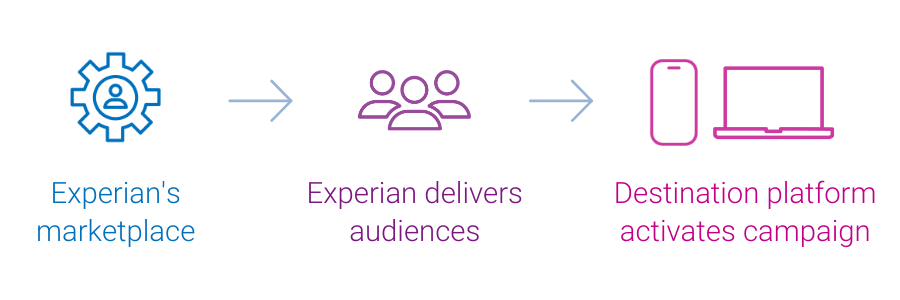
As the media ecosystem shifts, reaching people across browsers, apps, CTV, and streaming platforms has become more complex. Signals are fragmenting everywhere as expectations for relevant, personalized experiences continue to rise, while reliable identifiers become increasingly challenging to access.
Addressable Advertising

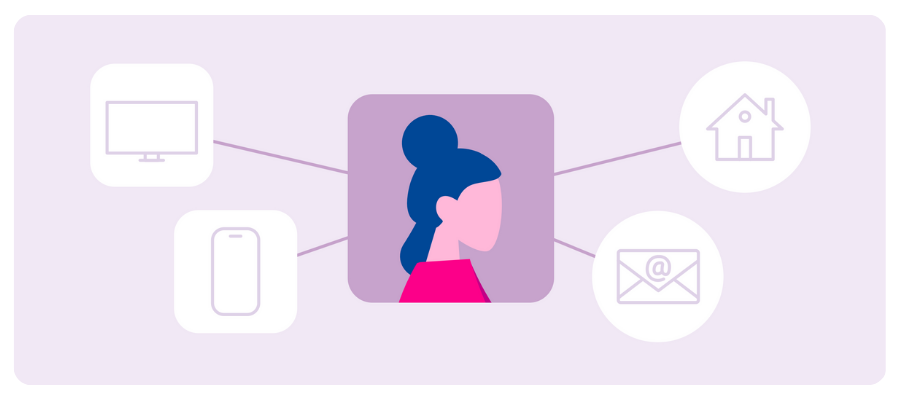
In response, addressability is shifting from a channel-specific tactic to an identity-driven approach to reach and measure defined audiences across screens.

That evolution puts new pressure on performance. Marketing budgets require accuracy and accountability, which means targeting must deliver measurable reach and outcomes you can trust.

At the same time, the growth of CTV and streaming is expanding addressable TV opportunities. As CTV inventory grows, so does the need for cross-channel, identity-based activation that works consistently and supports reach, frequency, and measurement in one connected view. That’s why identity has become the foundation for making addressable advertising work today.

When to apply addressable advertising

You don’t need addressable for everything, but it shines when you need your spend to go farther with accurate targeting and resonant messaging.

ScenarioWhy addressable helps
Product launches and seasonal pushesReach people who are more likely to care without flooding everyone else
High-consideration purchases (auto, travel, financial services)Focus on likely intent and suppress audiences that don’t fit
Cross-channel campaigns (digital, TV, mobile)Keep messaging consistent across screens
When using first-party data with AIUse AI customer segmentation to scale responsibly and improve performance without sacrificing accuracy
Regulated categoriesRely on compliant data practices and clearer controls for regulated industries

Addressable advertising is one way to put relevance and respect into practice — but it shouldn’t be the only time these principles apply. Marketers are expected to be thoughtful about who they reach, how often they show up, and how data is used across every channel. Addressable simply makes it easier to live up to that standard when accuracy, accountability, and scale matter most.

Addressable advertising and third-party data

There’s a common misconception that third-party data is no longer useful, but what’s really changed is the environment around it.

In the early days of digital advertising, third-party data often felt like the Wild West. Today, modern third-party data is more transparent, better governed, and held to far higher standards with:

  • Clear data sourcing
  • Documented consent practices
  • Regular quality audits
  • Strict limits on how data can be used

Used responsibly, third-party data plays a critical role in addressable advertising by complementing your first-party data and keeping audience strategies flexible as signals change.

Benefits of third-party data

When paired with identity resolution, high-quality third-party data helps you:

  • Fill first-party gaps: Add demographic, behavioral, and interest-based insight when your own data is limited.
  • Expand prospecting: Reach new audiences through modeling and lookalike expansion.
  • Enrich segmentation: Combine household, behavioral, and interest signals to tailor creative, offers, and messaging to interests for more accurate and personalized activation.
  • Support cross-channel addressability: Maintain consistent audience reach across devices and channels even as individual signals change.

Why work with Experian for your data needs?

At Experian, we approach third-party data with the belief that trust comes first. Our data is privacy-compliant, ethically sourced, and governed by strict standards so you can use it confidently.

Accuracy matters just as much. Our identity and data-quality framework verifies that the data behind your audiences holds up in the real world — a key reason Experian is ranked #1 by Truthset for key demographic attributes.

And because addressable advertising only delivers value when audiences move seamlessly from planning to activation, our audiences are interoperable by design. You can activate them across digital, social, and CTV platforms without rebuilding or reformatting your strategy for each channel.

How AI is redefining customer segmentation

Addressable advertising depends on audiences that stay accurate as people move across devices, platforms, and moments. Traditional segmentation built on static rules and snapshots in time can’t keep up with that reality.

AI customer segmentation analyzes massive sets of household and individual data (such as intent, household demographics, purchase behavior, and content consumption) to identify patterns, predict intent, and group people into addressable audiences.

As the AI advertising ecosystem continues to mature, reflected in industry frameworks like the LUMA AI Lumascape, segmentation and identity have become foundational layers rather than standalone tools. Those audiences update as conditions change, so they stay relevant instead of aging out.

Here’s how AI-driven segmentation supports addressable advertising.

What AI enablesWhy it matters
Predictive, intent-based audiencesAnalyze behavioral and transactional data to group people based on likely next actions
Broader audience availabilityAs more data signals are incorporated responsibly, AI makes it possible to support a wider range of addressable audience options without sacrificing accuracy
Deeper insights from dataDiscover what people care about, how intent is forming, and which signals are most important with larger, more diverse data sets
Real-time audience updatesKeep segments aligned as behaviors change, not weeks later
Higher accuracy, less guessworkRely on data-driven patterns for decision-making instead of assumptions
Ongoing optimizationRefine audiences throughout the campaign lifecycle as performance signals come in

We’ve used machine learning and analytics for decades to support responsible segmentation — balancing performance with privacy and transparency.

That foundation now supports addressable advertising that adapts in real time while staying grounded in trust.

Addressable TV: Targeting in the streaming era

TV has become an addressable channel powered by data and identity resolution. CTV and OTT streaming are booming, while linear TV continues to decline, reshaping how people watch and how advertising works alongside it. For the first time, CTV spending is expected to outpace traditional TV ad spending in 2028, reaching $46.89 billion and signaling that addressable TV is now central to the media mix.

With CTV and OTT platforms, advertising can now be delivered at the household level. That means two homes watching the same show can see different ads based on who lives there and what they like. This is what makes addressable TV possible.

Benefits of addressable TV

As streaming inventory continues to grow, addressable TV creates new ways to bring relevance and accountability to a channel once defined by broad exposure. Experian links identity data across streaming, linear, and digital platforms to help you manage frequency, attribution, and household-level insights in one connected view.

Addressable Advertising

Addressable TV also raises the bar. To manage reach, frequency, and measurement across streaming and linear environments, addressable TV depends on identity resolution that connects households across screens.

Here’s how addressable TV helps you when identity is in place.

What addressable TV enablesWhy it matters
Household-level targetingDeliver messages that reflect who’s watching, not just what’s on
Frequency control across screensReduce overexposure and improve viewer experience
Cross-channel measurement and attributionConnect TV exposure to digital actions, site visits, and conversions
More efficient use of TV spendBring accuracy, accountability, and outcome-based insight to premium inventory and improve reach of streaming-first, harder-to-reach viewer segments

Ultimately, addressable TV isn’t a replacement for linear TV, but it is an evolution. As streaming becomes the default viewing experience, the ability to engage TV audiences with the same care and clarity as digital is essential.

Use cases for addressable advertising

Addressable advertising works across industries because it adapts to how people make decisions. The examples below are illustrative scenarios that show how addressable audiences, identity resolution, and AI-driven segmentation can come together in practice using Experian solutions.

Retail: Seasonal promotions

A home décor retailer could use identity resolution and AI-driven segmentation to build addressable audiences, such as holiday decorators and recent movers, who are more likely to engage during peak seasonal periods.

Campaigns could then be activated across CTV, display, and social, helping the retailer stay visible across screens while tailoring creative to seasonal intent.

Automotive: In-market car buyers

An auto brand might identify consumers nearing lease expiration using automotive-specific data tied to household and individual attributes.

By suppressing current owners, the brand could avoid wasted impressions and activate addressable audiences across OTT and mobile to reach likely buyers during active consideration.

Financial services: Credit card launch

For a new credit card launch, a national bank could use modeled financial segments to reach credit-qualified prospects.

Addressable digital advertising campaigns could apply frequency controls and personalized messaging, balancing reach with relevance while seamlessly measuring response.

Streaming media: New subscriber growth

A streaming platform looking to grow subscriptions could use an identity graph to exclude current subscribers.

Likely viewers could then be targeted across CTV based on content preferences and viewing behavior, keeping spend focused on net-new growth.

Media and entertainment: Audience expansion for a new release

Ahead of a new release, a film studio could use behavioral and lifestyle data to identify likely moviegoers and fans of similar franchises.

Addressable campaigns across CTV and digital video could help drive awareness and opening weekend attendance.

Travel: High-value traveler acquisition

A travel brand could use travel propensity data and household-level demographics to identify frequent flyers and family vacation planners.

Personalized offers could then be activated across display, social, and programmatic channels to increase bookings while keeping spend focused on higher-value travelers.

How Experian enables more effective addressable campaigns

Addressable advertising is most effective when identity, data, and activation are connected from the start.

Experian brings trusted household and individual data, privacy-first identity resolution, and broad activation partnerships together so you can move from audience insights to activation with minimal friction. Here’s how that comes to life across our core offerings.

Identity resolution with Consumer Sync

Consumer Sync connects devices, emails, digital identifiers, and offline data into a single, privacy-safe identity foundation. This connection helps your audiences stay consistent across streaming, linear TV, mobile, and digital despite changing signals.

Audience insight and segmentation with Consumer View

Consumer View supports clear segmentation, prospecting, and enrichment across industries. It combines demographic, behavioral, and interest-based data to help you build accurate, intent-driven audiences that reflect real people, not assumptions. Data is continuously updated and governed for accuracy.

Omnichannel activation with Audience Engine

Audience Engine enables direct activation of Experian audiences across CTV, digital, social, and programmatic platforms. It supports suppression, frequency management, and cross-channel consistency to keep messaging aligned and exposure controlled.

More efficient media through curation and Curated Deals

Curation combines data, identity, and inventory through Experian Curated Deals. These deal IDs, available off-the-shelf or privately, make it easier to activate high-quality audiences and premium inventory in the platforms you already use without custom setup.

AI-enhanced segmentation and optimization

Our AI-enhanced models analyze large data sets to create and refresh addressable audiences in real time, supporting intent-based targeting and ongoing optimization throughout the campaign lifecycle. These models work seamlessly with demand-side platforms (DSPs), ad platforms, and data clean rooms, so audience insights flow directly into activation and measurement without added complexity.

Seamless integration with your ecosystem

As an advertiser, you want addressable advertising to fit naturally into how you already plan and buy media. That’s why integration matters as much as insight.

Experian integrates with leading DSPs, ad platforms, and data clean rooms, so you can activate addressable audiences in the environments you already use without reworking your strategy or adding complexity. This approach helps you:

  • Build and activate addressable audiences: Reach the people you want with accuracy and respect.
  • Activate across channels: Keep messaging consistent across digital, TV, and streaming.
  • Optimize with data ranked #1 in accuracy by Truthset: Improve performance using the industry’s most reliable data.

When identity, data, AI, and activation come together, addressable advertising does what it’s supposed to do: deliver relevance naturally, measure impact clearly, and give you confidence in every decision along the way.

That’s the foundation for campaigns people want to engage with.

Start creating campaigns audiences want to see

Experian can help you apply addressable advertising in ways that respect consumers, perform across channels, and stand up to real-world measurement.

Connect with our experts today to explore how addressable audiences, AI-driven segmentation, and identity-powered activation can work together in support of your goals.

This site is protected by reCAPTCHA and the Google Privacy Policy and Terms of Service apply.


FAQs about addressable advertising

What is addressable advertising?

Addressable data-driven advertising involves delivering personalized ads to specific individuals or households using privacy-safe data and identity.

What is an addressable audience?

An addressable audience is a defined group of consumers you can identify and reach based on known household or individual attributes.

What makes advertising addressable?

Advertising becomes addressable when it’s possible to identify the audience by linking devices and households to people through identity graphs. This allows you to measure ad performance at the audience level and provide more personalized advertising.

Is addressable advertising just for TV?

Addressable advertising isn’t just for TV; it also works across digital, mobile, streaming, and social channels.

How does AI help addressable advertising?

AI improves addressable advertising by analyzing large data sets to predict intent, build more accurate audiences, boost performance over time, and improve your ability to find and build your audiences.

Can addressable advertising work without cookies?

Yes — identity resolution and first-party data are key to cookieless addressability.

How does Experian support addressable advertising?

Experian supports addressable advertising by providing trusted consumer data, privacy-centric identity resolution, and curated audience segments that activate across CTV, digital, mobile, and streaming platforms.


Latest posts
Loading…
An interview with Ampersand’s Rachel Herbstman and Anastasia Dukes-Asuen

In our Ask the Expert Series, we interview leaders from our partner organizations who are helping lead their brands to new heights in AdTech. Today’s interview is with Rachel Herbstman, VP of Data Innovation, and Anastasia Dukes-Asuen, Senior Director of Advanced TV Data & Insights at Ampersand. Could you introduce us to Ampersand and discuss your approach to TV advertising? Ampersand, a joint venture between Comcast, Charter, and Cox, is a media sales organization that offers a unified footprint, unlocking unparalleled scale and unique data/insights for local and national advertisers. Ampersand gives advertisers true audience first planning, scale in execution, and advanced measurement of their TV investments, representing 117 million multiscreen households and over 75% of addressable households in the U.S. (64 million households). We help clients reach their unique target audience and deliver their stories – anytime, anywhere, and on whatever device. How does adding streaming to a linear campaign, or vice versa, enhance overall campaign performance for marketers?  Herbstman: Marketers have recognized that multiscreen media strategies are the strongest as viewership continues to fragment. Unique audiences exist in traditional TV and streaming, and failure to include either media channel will reduce the total reach opportunity. These channels have proven to validate unduplicated audiences. In our local business, adding streaming to a historically traditional linear-only media strategy increased campaign reach by 33%. Conversely, adding linear TV to a historically streaming-only media strategy increased reach by 209%. These metrics are validated by matching media exposures to an authenticated households subscriber ID and represent mass opportunities to reach new audiences with a multiscreen media strategy. When considering reallocating media investments, how does Ampersand help clients determine the most effective channels for specific campaigns?  Herbstman: For a brand that historically invested in traditional TV, either national or local broadcast, we can provide insights to analyze the performance of any media campaign. The insights can include high-level metrics like reach and frequency and more granular metrics like unique reach per network. By seeing both the high-level results and more detailed granularity, we can provide optimization recommendations for funding other activation opportunities. Our database of past campaigns consistently demonstrates that gaining new eyeballs with a national TV campaign usually plateaus after a few weeks. In other words, if most of your intended audience is reached after about three or four weeks of national television, reaching any new viewers can be exponentially more expensive. We’ve built an Addressable Simulator tool for national advertisers that shows the potential impact of shifting a portion of the national media weight, specifically from the latter part of a flight, into addressable TV. Using our licensed Experian data set, we can measure any standard age/gender target or any advanced target to understand the complementary impact that addressable audience has on national media. This tool has dynamic inputs of CPMs and incidence rates, flight lengths, and budgets to simulate different scenarios and give marketers some intelligence on what holistic reach against that Experian segment they could expect with one given budget using brand-safe, traditional, and streaming inventory with an addressable activation. Additionally, we've developed an interactive eCPM calculator that helps national advertisers assess the cost efficiency of adding addressable TV to their traditional campaigns. By dynamically inputting CPMs, marketers can evaluate tradeoffs between media types for upcoming campaigns. Are there audience demographics that benefit from these combined media strategies, and what indicators or data points guide your recommendations to add cable to a local broadcast campaign versus other reallocations? Herbstman: By including cable or streaming in a local effort, a client can use a data-driven approach to find more intended viewers in other premium content. Utilizing the vast library of Experian audience segments paired with our robust sample of 64 million data-enabled homes enables Ampersand to provide insights into the most valuable networks and dayparts that the intended viewer will likely watch on either platform.  With identity and viewing insights at scale, we can understand how consumers watch TV, even for inventory we have yet to sell. Our goal is to help marketers understand what’s happening as a result of their investments at a holistic level. We can analyze a campaign running across hundreds of designated market areas to quickly and simply understand the holistic delivery of their broadcast and cable weight by pulling back set-top-box exposures on broadcast and Ampersand-purchased cable on our measurable footprint. Then, we can determine the share of measurable reach that each portion’s media weight contributes to. We recommend optimizing towards a more balanced approach, where the reach levels for broadcast and cable mirror each other, creating a more effective market media mix. Once we confirm cable's potential in a market, we analyze network and daypart metrics to adjust key areas to optimize the campaign. We invite marketers to use these insights to measure their local or national TV campaign performance and garner unique perspectives to re-balance investments to drive reach and optimal frequencies. Are there common missteps to avoid? Dukes-Asuen: Ampersand's decades of experience with media and data insights have allowed us to create an extensive database complete with targeting and measurement benchmarks. We use this database to curate best practices for brands and help set them up for success, keeping their goals and objectives for reach and frequency in mind.  Some clients spread their investment levels too thin, whether through short flight windows, low weekly frequencies, or targeting overly niche audiences that don't fully support KPI goals. One way to avoid these missteps is to set up a test-and-learn plan to validate a hypothesis and refine media strategies, ensuring campaigns are structured to garner meaningful insights. Ampersand can help ensure the test itself is constructed and supported to yield statistically relevant results, and the learnings can then be applied to the next campaign. How does Experian’s data enhance your campaigns at Ampersand?  Dukes-Asuen: Within our Experian license, we can map the Experian Consumer View databases against our multichannel video programming distributors subscriber base in a privacy-compliant way to plan and activate them seamlessly. Experian has a rich set of audience targets and segmentation that we utilize to identify households that can be used for audience-based media execution with Ampersand. By defining the right audience—whether consumers are likely to purchase a product, exhibit certain behaviors, or demonstrate specific values—we enhance campaign performance and improve media spending efficiency for our advertisers. Additionally, how do you believe AI and other new technologies will impact your media buying approaches in the future, and how might these innovations improve campaign effectiveness and provide value to your clients? Herbstman: We have a strong use case on the measurement and analytics end. Using AI, we can aggregate a massive amount of historical data—viewership and exposure data. AI helps us understand overarching market trends and media performance to analyze campaign results and inform future campaign optimizations. The value of AI is in its role as an additional technology layer, enriching our insights portfolio and providing faster intelligence that enhances campaign effectiveness and delivers greater value to our clients. Can you share an example of how precise audience targeting and segmentation, powered by Experian, have led to significantly better media spend reallocations and campaign performance for marketers? One great example is how a national cruise brand dramatically improved its media spend and campaign performance by utilizing precise audience targeting and segmentation through Experian. By combining Ampersand’s addressable TV with Experian’s data-driven insights, they achieved a 14% incremental reach, a 3.1x higher frequency, and a 24% lower effective CPM. This strategic approach allowed them to reallocate their media spending more effectively, ensuring every impression reached their custom target audience. Thanks for the interview. For those interested in learning more about Ampersand, reach out for a personalized consultation. Contact us Latest posts

Sep 05,2024 by Experian Marketing Services

The future of retail advertising: Embracing retail media standardization

In this article…How much standardization currently exists?Why is standardization important?Who is promoting standardization?The benefits of industry standardizationStrategies for implementing retail media standardizationFuture retail media standardization trendsJoin forces with a strategic RMN partner Retail media is quickly outpacing other areas of digital advertising and is projected to grow 29% by 2025. Despite this trajectory, retail media is still relatively new compared to traditional digital media and operates like a startup in terms of tech capabilities. Sustained growth will require retail media standardization — creating consistent ways to measure and compare ad performance across retail media networks (RMNs). This standardization will be key for RMNs wanting to understand what’s driving the most value and sales for their business. In an Interactive Advertising Bureau (IAB) study, 62% of ad buyers pointed to standardization as a top growth challenge. The current ecosystem’s inconsistent standards have prevented effective investment in measurement and limited ad buyer participation. Standardization will be necessary moving forward for effective adoption and trust in these new channels. This article explores the challenges marketers face without retail media standardization and the collaborative efforts needed to establish consistent measurement standards across the industry. How much standardization currently exists? Retail media standardization is limited industry-wide, with each RMN using its own metrics and definitions; what one network calls a "conversion" might be defined differently by another. Some retail companies also sell ad space within siloed, walled-garden shopping environments, which makes it difficult for advertisers to compare performance across platforms. As a result, the current landscape lends itself to inconsistency, campaign measurement complications, and an unclear view of return on investment (ROI) across RMNs. This fragmentation stems from how retailers have historically developed and managed customer data platforms and e-commerce websites independently, causing disparities in the types and quality of customer data available and the technologies used to manage it. Each retailer uses a unique technology stack and customer experience strategies, which means data is collected, utilized, and integrated into advertising platforms differently. Why is standardization important? A 2023 State of Retail Media Survey highlighted the industry's lack of standardization as a significant obstacle to growth. The Association of National Advertisers also found that advertisers can't fully take advantage of their retail media investments because of inconsistent measurement practices. Standardized retail media measurement practices are critical for growth. By setting consistent measurement standards across different platforms, it becomes easier for various players to: Assess how ads are performing See which strategies work across RMNs Optimize ad spending Make informed decisions Extract more value from advertising budgets Ultimately, standardized metrics are a must for improving transparency, strategic effectiveness, and ROI. Who is promoting standardization? We’re seeing a collective push for retail media standardization by several industry stakeholders wanting a more cohesive and effective advertising ecosystem. One of the most recent efforts came from the IAB and the Media Rating Council (MRC). These organizations collaborated with brands, agencies, and RMNs to develop new guidelines for standardized measurement practices and have given the ecosystem a proposed common language for retail media measurement. These guidelines were released in January 2024 to provide a consistent framework for the following across retail media platforms: Audience measurement Reporting Incrementality Transparency Viewability Ad delivery In-store advertising Microsoft Retail Media, an early adopter of the framework, has experienced greater data transparency, accuracy, privacy, and security, which has benefited advertisers and retailers and advanced Microsoft’s position as a retail media industry leader. Widespread adoption of these guidelines has the potential to drive innovation, attract more advertisers, strengthen collaboration, grow the industry, and improve the consumer experience. The benefits of industry standardization A standardized retail media framework for performance measurement can benefit advertisers, retailers, media agencies, and other stakeholders in the ecosystem. Here are some ways each entity stands to benefit. Benefits for retailers Standardization makes it easier for retailers to demonstrate their credibility and the value of their retail media program. With uniform measurement across channels and campaigns, they can provide clear, comparable data that reflects their impact, builds trust, and encourages advertiser investment. Better campaign management efficiency also reduces the operational burden, so retailers can focus on improving customer experiences and driving sales. Experian’s Activity Feed helps you measure performance — and understand how ads impact shopping behavior — by providing you with ad exposures in one environment (web or connected TV) that you can connect to an action in another (in-store purchase). Learn more about Activity Feed and see it in action here. Benefits for media agencies and marketers With standardized metrics, advertisers and media agencies have an easy, reliable way to compare metrics and assess the effectiveness of various campaigns across RMNs. This “apples to apples” comparison helps them determine which channels are truly driving better ROI so they can effectively optimize spending. Standardization also improves collaboration with retailers and leads to more effective campaigns. Consistent guidelines can help teams create, carry out, and optimize retail media strategies and easily compare platform effectiveness. Benefits for industry stakeholders Industry stakeholders like technology providers and regulatory bodies can greatly benefit from standardized retail media measurement practices. Consistent measurement provides a common framework that improves transparency and trust among parties. With reliable and comparable metrics, standardization helps everyone speak the same language when it comes to performance evaluation and decision-making. This uniformity facilitates smoother interactions and partnerships between the buy and sell sides, so it’s easier to negotiate and collaborate. Strategies for implementing retail media standardization Standardizing measurement will require industry-wide coordination around several strategies, as outlined in best practices frameworks from standardization proponents like IAB/MRC and the Albertson's Media Collective. Unify reporting and performance measurement To address the lack of standardization in performance metrics, RMNs must adopt uniform definitions and calculation methodologies for key metrics. Unified reporting in retail media requires successful stakeholder collaboration to: Agree on critical KPIs and reporting metrics like impressions and conversion rates Adopt standardized data formats and reporting tools Educate stakeholders Ensure data quality and compliance Continuously improve based on industry feedback The IAB/MRC framework provides a basis for standardizing metrics for media delivery and engagement, as well as sales and conversions. This consistency helps advertisers compare performance across platforms effectively, enhancing transparency and decision-making. Standardize product specifications It's important for advertisers to have consistent product specifications, as it makes it easier to create and deploy ads across multiple RMNs. To achieve this, RMNs should align ad formats, file sizes, animations, and video specifications with IAB guidelines. Following these standards will help RMNs eliminate compatibility issues, simplify adoption, and save time and resources. It's also vital for RMNs to maintain flexibility for unique ad formats in order to encourage innovation while still benefiting from standardized specifications. Introduce third-party verification and disclose capabilities Introducing third-party verification for ad placement, fraud detection, brand safety, and competitive separation can improve an RMN’s credibility and transparency. By disclosing the third-party providers used and the types of verification offered, RMNs build trust with advertisers and give them the confidence they need to invest. Additionally, RMNs should disclose their staffing, processes, technology, inventory management, targeting, creative management, and self-service offerings. Transparency in these areas helps advertisers make informed decisions, optimize ad buys, and increase efficiency. Using existing IAB verification and capability disclosure guidelines ensures reliability and a more trustworthy, efficient advertising environment. Future retail media standardization trends The future of retail media is poised for significant growth, especially as standardization guidelines are widely adopted and implemented. Here are some trends we expect to see as retail media ad spending grows. Widespread RMN adoption and spending Standardization could spur greater RMN spending and drive broad adoption by advertisers who hesitated before due to concerns about metrics and performance comparability. New partnerships and collaborations Standardization may lead to new partnerships that weren't possible before: Brands and retailers might team up to blend advertising and sales data for better-targeted campaigns. AdTech companies could also partner with multiple retailers to offer unified advertising solutions. Retail media networks and analytics firms could collaborate to provide deep insights into consumer behavior and campaign performance. Partnerships among retailers, including smaller ones seeking retail media measurement uniformity, may drive further standardization and create new advertising opportunities across product categories with audience overlap. Ad format innovation Agreeing on common standards simplifies how ads are measured and understood. Standardization may drive down costs and free up space for more imaginative, engaging ads in the future. For instance, the IAB/MRC’s common language is helping to promote consistency and clarity and fuel innovation across the board. Incrementality focus As standardization becomes more widespread, there may be a growing trend toward incrementality measurement, which measures the additional impact of advertising campaigns compared to what would have happened without them. Standardized metrics can help advertisers accurately gauge and optimize campaign effectiveness and maximize their marketing investments. Growth of cross-platform ad targeting Standardization may drive the growth of cross-platform ad targeting. With consistent metrics and measurement standards, advertisers will be able to track and compare their ad performance across platforms more accurately. This unified approach will improve ad targeting precision and ensure a consistent impact across RMNs. Commerce media Commerce media is changing retail advertising with its focus on verified data and real-time transaction insights, making campaigns more efficient. This shift could push for more uniform measurement standards across platforms and level the playing field. As commerce media gains traction, its emphasis on targeted advertising and ROI measurement might pave the way for universal metrics and clearer guidelines across retail networks. Where does this leave modern advertisers? Retail media is still at a crossroads. If standardization doesn’t occur soon, its growth may slow. For now, advertisers are resorting to custom strategies or relying on whichever network they feel is most effective for their products. They are likely to continue investing significantly in retail media, maintaining or increasing spending in the next year. Although RMNs continue to be challenging without formally recognized standardization guidelines, the proposed IAB/MRC guidelines provide an effective starting point. Join forces with a strategic RMN partner RMN success requires overcoming complicated technical hurdles that may exceed non-media business capacities. Managing data complexities, resolving identities, utilizing audience insights, and ensuring precise measurement requires specialized expertise and technologies. We recently announced a solution tailored for RMNs. This offering enhances RMNs’ strength in first-party shopper data by using Experian’s #1 ranked identity and audience services. Our solution helps RMNs unlock expanded customer insights, enriched audiences for activation, identity resolution for cross-channel audience targeting, and real-time measurement and attribution. This comprehensive solution is designed to help RMNs capture more advertising revenue. Read the full announcement If your organization could benefit from a partner with the requisite technological tools and insights into the retail media landscape, contact us to discover how we can help you achieve RMN success. Contact us Latest posts

Aug 20,2024 by Experian Marketing Services

Light up your holiday advertising campaigns with Experian’s 19 new audiences

With over one billion shoppers eagerly preparing to shop for gifts, decorations, and seasonal essentials, now is the perfect time to refine your marketing tactics and connect with these shoppers. With holiday retail sales set to reach $1.37 trillion, it’s time to unwrap holiday spending insights to ensure that your holiday advertising campaigns light up the festive season. The holiday shopping frenzy offers marketers and retailers a chance to capture attention, drive sales, and build lasting customer relationships. In this blog post, we’ll reveal holiday shopping audiences, including 19 new audiences, designed for you to reach the most relevant shoppers for your campaigns. These audiences are available for activation on-the-shelf of most major ad platforms, including TV and programmatic. You can find the complete audience segment name in the appendix. 2025 Holiday spending trends and insights report Download our latest report for data-driven insights you can use to refine your messaging and reach the right audience in their preferred channels this holiday season. Download now What separates Experian's syndicated audiences Experian’s 2,400+ syndicated audiences are available directly on over 30 leading television, social, programmatic advertising platforms, and directly within Audigent for activation within private marketplaces (PMPs).   Reach consumers based on who they are, where they live, and their household makeup. Experian ranked #1 in accuracy by Truthset for key demographic attributes. Access to unique audiences through Experian’s Partner Audiences available on Experian’s data marketplace, within Audigent for activation in PMPs and directly on platforms like DirectTV, Dish, Magnite, OpenAP, and The Trade Desk. Download our 2024 holiday shopping report Holiday shopping styles It's important to understand how your holiday shopper “shops,” with individual shopping styles varying from a last-minute dash to the store to the one-stop shopper. One in three consumers anticipate beginning their holiday shopping before October this year, with Millennials and Gen Xers being the most proactive, due to concerns about items running out of stock. In contrast, 42% of Boomers are generally less inclined to shop early, wanting to start their holiday shopping in November or December. All generations are motivated to shop early by discounts.1 By choosing and activating the right audience segments, you can deliver messages that resonate with the consumer's preferred shopping style, ensuring your holiday campaign will align with their shopping preferences and behaviors. Here are five audiences that you can activate based on shopping style: Last-Minute Holiday Shoppers One Stop Holiday Shoppers/Power Shoppers: In-Store or Online Impulse Buyers eCommerce Diehards Brick & Mortar Diehards Discount-seeking shoppers The holiday season is a time of giving, but also saving! Consumers are driven to shop early by discounts and early sales — 52% of consumers said discounts are their biggest motivator to shop early. Price is another crucial factor — 47% of consumers said price is the most important factor when deciding where to shop during the holiday season. Major holiday shopping events, such as Thanksgiving Day, Black Friday, and Cyber Monday, are expected to attract a significant portion of consumers this upcoming year.2 Here are eight audiences you can activate to reach discount-seeking shoppers: NEW! Discount Holiday Shoppers NEW! Cyber Monday Holiday Shoppers NEW! Black Friday Holiday Shoppers NEW! Big Box/Club Stores Holiday Shoppers NEW! Online Coupon Users TrueTouch: Online Coupon Site Department Store Deal Shoppers: In-Store or Online Post Holiday Shoppers Gift givers Holiday shoppers are torn between saving and splurging. Nearly a third of consumers anticipate spending more on holiday shopping this year, while the same number of consumers say they’ll be spending less. Boomers anticipate spending the most on gift cards, Gen Z on clothing, and Millennials on toys, electronics, and experiences.3 Given holiday shoppers' varied spending habits, it's important to target the right audience segments to maximize your impact. Targeting specific audience segments allows advertisers to better reach those most interested in their products. Here are six audiences you can activate to target gift givers: NEW! Luxury Gift Shoppers NEW! Holiday Shopping High Spenders NEW! Holiday Shopping Moderate Spenders NEW! Holiday Charitable Donations High Spend Gift Shoppers Heavy Buyer/Spenders Holiday Shoppers: In-Store or Online Holiday travelers In 2023, nearly three million travelers passed through airports on the Sunday after Thanksgiving alone. Take advantage of the busy travel season with our audience segments. By targeting specific travel preferences and behaviors, you can capture the attention of individuals planning trips this holiday season. Here are seven audiences to tailor your campaign according to travel preferences: NEW! Holiday International Travelers NEW! Holiday Travel-Train NEW! Holiday Budget Savvy Airline Travelers Vacation/Leisure Travelers: Domestic Trips Air Travel (FLA/Fair Lending Friendly)4 Vacation/Leisure Travelers: Frequent Spenders Hotels: Frequent Spend When you work with Experian, you work with a single data provider that gives you access to audiences across multiple verticals and categories, such as travel and retail. Targeted advertising this holiday season with Experian audiences The holiday season is the busiest time of the year for advertisers. Experian's data, ranked #1 in accuracy by Truthset, allows advertisers to reach people based on demographic, geographic, and behavioral attributes (e.g. websites visited and purchase history). By using Experian’s audiences in your holiday advertising campaigns, you can reach last-minute shoppers, discount-seeking shoppers, gift-givers, and holiday travelers. Just as shoppers seek the perfect gifts, with the right strategy, your holiday advertising campaigns can capture the right shoppers this holiday season. Need a custom audience? Reach out to our audience team and we can help you build and activate an Experian audience on the platform of your choice. Additionally, work with Experian’s network of data providers to build audiences and send to an Audigent PMP for activation.  Connect with our audience team You can activate our syndicated audiences on-the-shelf of most major platforms. For a full list of Experian’s syndicated audiences and activation destinations, download our syndicated audiences guide. Explore our other seasonal audiences that you can activate today. View now Download our 2025 Holiday spending trends and insights report This holiday season is about more than just transactions – it’s about cultivating meaningful connections with your audience. Download our 2025 Holiday spending trends and insights report, in collaboration with GroundTruth, to access all of our predictions for this year’s holiday season. Download now Contact us Footnotes Online survey conducted in June, 2024 among n=1,000 U.S. adults 18+. Sample balanced to look like the general population on key demographics (age, gender, household income, ethnicity, and region). n = 204 Gen Z, n = 234 Millennials, n = 270 Gen X, n = 272 Baby Boomers. Online survey. Online survey. “Fair Lending Friendly” indicates data fields that Experian has made available without use of certain demographic attributes that may increase the likelihood of discriminatory practices prohibited by the Fair Housing Act (“FHA”) and Equal Credit Opportunity Act (“ECOA”). These excluded attributes include, but may not be limited to, race, color, religion, national origin, sex, marital status, age, disability, handicap, family status, ancestry, sexual orientation, unfavorable military discharge, and gender. Experian’s provision of Fair Lending Friendly indicators does not constitute legal advice or otherwise assures your compliance with the FHA, ECOA, or any other applicable laws. Clients should seek legal advice with respect to your use of data in connection with lending decisions or application and compliance with applicable laws. Appendix Here are the complete audience segment names (taxonomy paths) for all audience segments discussed in this blog post. Holiday shopping styles Retail Shoppers: Purchase Based > Seasonal > Holiday Shoppers: Last-Minute Holiday Shoppers Retail Shoppers: Purchased Based > Seasonal > Holiday Shoppers: One Stop Holiday Shoppers/Power Shoppers: In-Store Retail Shoppers: Purchased Based > Seasonal > Holiday Shoppers: One Stop Holiday Shoppers/Power Shoppers: Online TrueTouch: Communication Preferences > Purchase Behavior > Impulse buyers Retail Shoppers: Purchase behavior > Shopping Behavior > In-Store vs. Online: eCommerce Diehards Retail Shoppers: Purchase behavior > Shopping Behavior > In-Store vs. Online: Brick & Mortar Diehards Discount-seeking shoppers NEW! Retail Shoppers: Purchase Based > Seasonal > Holiday Shoppers: Cyber Monday NEW! Retail Shoppers: Purchase Based > Seasonal > Holiday Shoppers: Black Friday NEW! Retail Shopper: Purchase Based > Seasonal > Holiday Shoppers: Big Box/Club Stores Shoppers NEW! Retail Shoppers: Purchase Based >> Discount Holiday Shoppers NEW! Retail Shoppers: Purchased Based > Shopping Behavior > Online Coupon Users TrueTouch: Communication Preferences> Purchase Behavior > Online Coupon Site Retail Shoppers: Purchased Based > Shopping Behavior > Department Store Deal Shoppers Online Spenders Retail Shoppers: Purchased Based > Shopping Behavior > Department Store Deal Shoppers In-Store Spenders Retail Shoppers: Purchased Based > Seasonal > Holiday Shoppers: Post holiday Gift givers NEW! Retail Shoppers: Purchase Based > Seasonal > Holiday Shoppers: Luxury Gift Shoppers NEW! Retail Shoppers: Purchase Based > Seasonal > Holiday Shoppers: High Spenders NEW! Retail Shoppers: Purchase Based > Seasonal > Holiday Shoppers: Moderate Spenders NEW! Retail Shoppers: Purchase Based > Seasonal > Holiday Charitable Donations Retail Shoppers: Purchase Based > Shopping Behavior > Gift Shoppers High Spend Spenders Retail Shoppers: Purchase Based > Seasonal > Holiday Shoppers: Heavy Buyer/Spenders: Online Retail Shoppers: Purchase Based > Seasonal > Holiday Shoppers: Heavy Buyer/Spenders: In Store Holiday travelers NEW! Retail Shoppers: Purchase Based > Seasonal > Holiday International Travelers NEW! Retail Shoppers: Purchase Based > Seasonal> Holiday Travel-Train NEW! Retail Shoppers: Purchase Based > Seasonal > Holiday Budget Savvy Airline Travelers Retail Shoppers: Purchase Based > Travel > Vacation/Leisure Travelers: Domestic Trips Lifestyle and Interests (Affinity) > Travelers > Air Travel (FLA/Fair Lending Friendly) Retail Shoppers: Purchase Based > Travel > Vacation/Leisure Travelers: Frequent Spenders Retail Shoppers: Purchase Based > Travel > Hotels: Frequent Spend Latest posts

Aug 15,2024 by Lucy Simmonds, Content Marketing Specialist

Subscribe to our newsletter

Enter your name and email for the latest updates

This site is protected by reCAPTCHA and the Google Privacy Policy and Terms of Service apply.

About Experian Marketing Services

At Experian Marketing Services, we use data and insights to help brands have more meaningful interactions with people. As leaders in the evolution of the advertising landscape, Experian Marketing Services can help you identify your customers and the right potential customers, uncover the most appropriate communication channels, develop messages that resonate, and measure the effectiveness of marketing activities and campaigns.

Visit our website

Subscribe to our newsletter

Stay up to date on the latest industry news and receive expert tips from our marketing experts.
Subscribe now!