Loading...

The value of addressable advertising in the era of AI and privacy-safe identity

Published: January 13, 2026 by Experian Marketing Services

At A Glance

Addressable advertising helps you reach addressable audiences with relevant messages across digital, TV, and streaming. As signals fragment across browsers, apps, and platforms, AI customer segmentation and privacy-first identity separate guesswork from accuracy. Experian brings trusted data, identity resolution, and activation partnerships together so you can connect with people in ways that feel relevant, respectful, and measurable.

A decade ago, you could buy media by broad categories and call it a day. But today, your audience lives in a curated world. They watch what they want, skip what they don’t, and expect what they see to match their interests. Research shows that when ads are tailored to households, people pay more attention, stay engaged longer, and are more likely to remember your ads.

That shift in expectations is why addressable advertising continues to grow. It’s a practical response to how media works today, with audiences moving fluidly across platforms, streaming spread across services, and measurement spanning screens and environments. Under these conditions, reaching the right people depends on clarity, not approximation.

Artificial intelligence (AI) strengthens that clarity. When applied responsibly, AI helps connect signals, deepen audience understanding, and deliver relevant messages while protecting consumer data. The result is advertising that feels more human, not less.

What is addressable advertising?

Addressable advertising is the ability to deliver personalized ads to specific individuals or households and measure results using privacy-safe data and identity. It works across digital, connected TV (CTV), linear TV, and over-the-top (OTT) streaming and relies on strong identity resolution and accurate data inputs to ensure your audience definitions remain consistent across channels and over time.

Benefits of addressable advertising

Addressable advertising changes how advertising performs by delivering messages to defined audiences, reducing wasted impressions, and making results simpler to measure.

BenefitWhat it means for you
ClarityReach the right audience with the personalized messages they want, instead of hoping the right people are watching
EfficiencyAvoid wasted impressions by focusing spend where interest already exists
Higher ROIImprove conversion by delivering messages that feel relevant
Omnichannel consistencyCarry the same message across digital and TV without starting over
Measurable impactConnect exposure to actions so performance is clear
Privacy and complianceActivate audiences responsibly using privacy-safe data, clear governance, and compliant practices

These are some of the reasons that addressable advertising has moved from a niche tactic to a core strategy. When audiences are clear, identity is connected, and measurement is built in, advertising becomes relevant, accountable, and easy to improve over time.

Addressable advertising vs. traditional advertising

Unlike traditional advertising, addressable advertising doesn’t depend on broad exposure or assumptions. It’s personalized by design and measurable by default, making it possible to connect ad exposure to outcomes. Another distinction is in how addressable delivers advertising to audiences and how performance is measured.

Traditional media buysAddressable advertising buys
You pay for broad reachYou pay for relevant reach to defined audiences
Ads run by placement or programAds are delivered to known households or individuals
Personalization is limitedPersonalization is built into delivery
Measurement indicates trends, not who actually actedMeasurement connects exposure to actions by linking ads to defined audiences across channels

But before you can activate addressable advertising, you need to understand who you’re actually trying to reach.

What is an addressable audience?

An addressable audience is a group of people you can identify and reach using data-based targeting. In other words, they’re not anonymous “maybe” viewers. They’re a defined audience you can activate across channels.

Here’s what typically builds addressable audiences:

FactorWhat it isWhy it matters
First-party dataData from your own relationships (site activity, app activity, CRM, emails, purchases)It’s your most direct view of existing customers and prospects
Third-party household and individual dataDemographic, behavioral, lifestyle, interest, and intent attributes from trusted providersIt fills gaps so your audience definitions don’t collapse when your own data is limited
Identity resolutionA privacy-first way to match people across devices, households, and channelsIt improves accuracy so you don’t over-message the same people or miss them entirely
Contextual signalsPage-level, content, or viewing context where ads appearIt reinforces relevance in the moment and complements addressable targeting when identity signals are limited

How Experian helps with addressable audiences

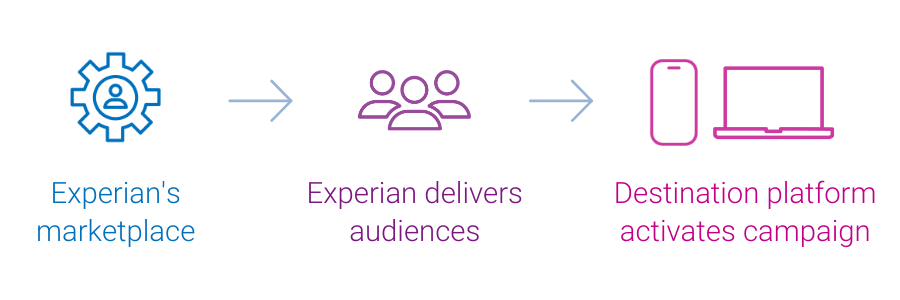
Experian helps you build and activate addressable audiences at scale without losing accuracy or trust. With more than 3,500 syndicated audiences available, you can activate consistently across 200+ destinations — including social platforms like Meta and Pinterest, TV and programmatic environments, and private marketplaces (PMPs) through Audigent.

That means reaching people based on who they are, where they live, and their household makeup, using data governed with care. Our approach is built on accuracy first, which is why Experian data is ranked #1 in accuracy by Truthset for key demographic attributes.

And when standard customer segments aren’t enough, Experian Partner Audiences expand what’s possible. These unique audiences are available through Experian’s data marketplace, within Audigent for PMP activation, and directly on platforms like DIRECTV, Dish, Magnite, OpenAP, and The Trade Desk.
Addressable Advertising

The evolution of addressability and why it matters more than ever

As the media ecosystem shifts, reaching people across browsers, apps, CTV, and streaming platforms has become more complex. Signals are fragmenting everywhere as expectations for relevant, personalized experiences continue to rise, while reliable identifiers become increasingly challenging to access.
Addressable Advertising

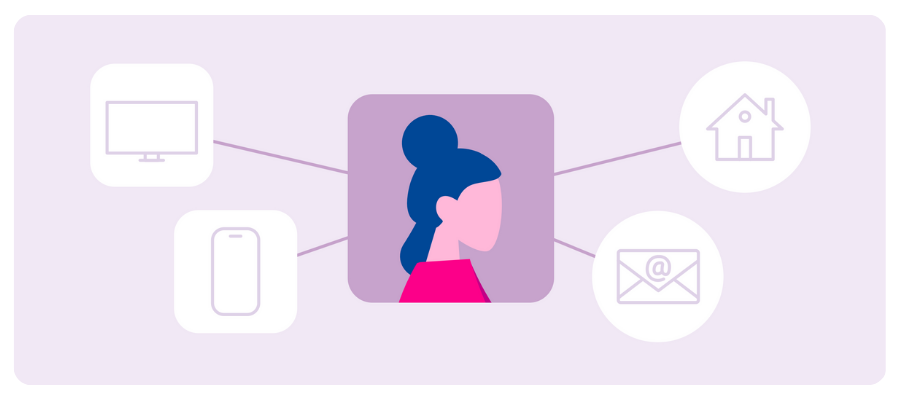
In response, addressability is shifting from a channel-specific tactic to an identity-driven approach to reach and measure defined audiences across screens.

That evolution puts new pressure on performance. Marketing budgets require accuracy and accountability, which means targeting must deliver measurable reach and outcomes you can trust.

At the same time, the growth of CTV and streaming is expanding addressable TV opportunities. As CTV inventory grows, so does the need for cross-channel, identity-based activation that works consistently and supports reach, frequency, and measurement in one connected view. That’s why identity has become the foundation for making addressable advertising work today.

When to apply addressable advertising

You don’t need addressable for everything, but it shines when you need your spend to go farther with accurate targeting and resonant messaging.

ScenarioWhy addressable helps
Product launches and seasonal pushesReach people who are more likely to care without flooding everyone else
High-consideration purchases (auto, travel, financial services)Focus on likely intent and suppress audiences that don’t fit
Cross-channel campaigns (digital, TV, mobile)Keep messaging consistent across screens
When using first-party data with AIUse AI customer segmentation to scale responsibly and improve performance without sacrificing accuracy
Regulated categoriesRely on compliant data practices and clearer controls for regulated industries

Addressable advertising is one way to put relevance and respect into practice — but it shouldn’t be the only time these principles apply. Marketers are expected to be thoughtful about who they reach, how often they show up, and how data is used across every channel. Addressable simply makes it easier to live up to that standard when accuracy, accountability, and scale matter most.

Addressable advertising and third-party data

There’s a common misconception that third-party data is no longer useful, but what’s really changed is the environment around it.

In the early days of digital advertising, third-party data often felt like the Wild West. Today, modern third-party data is more transparent, better governed, and held to far higher standards with:

  • Clear data sourcing
  • Documented consent practices
  • Regular quality audits
  • Strict limits on how data can be used

Used responsibly, third-party data plays a critical role in addressable advertising by complementing your first-party data and keeping audience strategies flexible as signals change.

Benefits of third-party data

When paired with identity resolution, high-quality third-party data helps you:

  • Fill first-party gaps: Add demographic, behavioral, and interest-based insight when your own data is limited.
  • Expand prospecting: Reach new audiences through modeling and lookalike expansion.
  • Enrich segmentation: Combine household, behavioral, and interest signals to tailor creative, offers, and messaging to interests for more accurate and personalized activation.
  • Support cross-channel addressability: Maintain consistent audience reach across devices and channels even as individual signals change.

Why work with Experian for your data needs?

At Experian, we approach third-party data with the belief that trust comes first. Our data is privacy-compliant, ethically sourced, and governed by strict standards so you can use it confidently.

Accuracy matters just as much. Our identity and data-quality framework verifies that the data behind your audiences holds up in the real world — a key reason Experian is ranked #1 by Truthset for key demographic attributes.

And because addressable advertising only delivers value when audiences move seamlessly from planning to activation, our audiences are interoperable by design. You can activate them across digital, social, and CTV platforms without rebuilding or reformatting your strategy for each channel.

How AI is redefining customer segmentation

Addressable advertising depends on audiences that stay accurate as people move across devices, platforms, and moments. Traditional segmentation built on static rules and snapshots in time can’t keep up with that reality.

AI customer segmentation analyzes massive sets of household and individual data (such as intent, household demographics, purchase behavior, and content consumption) to identify patterns, predict intent, and group people into addressable audiences.

As the AI advertising ecosystem continues to mature, reflected in industry frameworks like the LUMA AI Lumascape, segmentation and identity have become foundational layers rather than standalone tools. Those audiences update as conditions change, so they stay relevant instead of aging out.

Here’s how AI-driven segmentation supports addressable advertising.

What AI enablesWhy it matters
Predictive, intent-based audiencesAnalyze behavioral and transactional data to group people based on likely next actions
Broader audience availabilityAs more data signals are incorporated responsibly, AI makes it possible to support a wider range of addressable audience options without sacrificing accuracy
Deeper insights from dataDiscover what people care about, how intent is forming, and which signals are most important with larger, more diverse data sets
Real-time audience updatesKeep segments aligned as behaviors change, not weeks later
Higher accuracy, less guessworkRely on data-driven patterns for decision-making instead of assumptions
Ongoing optimizationRefine audiences throughout the campaign lifecycle as performance signals come in

We’ve used machine learning and analytics for decades to support responsible segmentation — balancing performance with privacy and transparency.

That foundation now supports addressable advertising that adapts in real time while staying grounded in trust.

Addressable TV: Targeting in the streaming era

TV has become an addressable channel powered by data and identity resolution. CTV and OTT streaming are booming, while linear TV continues to decline, reshaping how people watch and how advertising works alongside it. For the first time, CTV spending is expected to outpace traditional TV ad spending in 2028, reaching $46.89 billion and signaling that addressable TV is now central to the media mix.

With CTV and OTT platforms, advertising can now be delivered at the household level. That means two homes watching the same show can see different ads based on who lives there and what they like. This is what makes addressable TV possible.

Benefits of addressable TV

As streaming inventory continues to grow, addressable TV creates new ways to bring relevance and accountability to a channel once defined by broad exposure. Experian links identity data across streaming, linear, and digital platforms to help you manage frequency, attribution, and household-level insights in one connected view.

Addressable Advertising

Addressable TV also raises the bar. To manage reach, frequency, and measurement across streaming and linear environments, addressable TV depends on identity resolution that connects households across screens.

Here’s how addressable TV helps you when identity is in place.

What addressable TV enablesWhy it matters
Household-level targetingDeliver messages that reflect who’s watching, not just what’s on
Frequency control across screensReduce overexposure and improve viewer experience
Cross-channel measurement and attributionConnect TV exposure to digital actions, site visits, and conversions
More efficient use of TV spendBring accuracy, accountability, and outcome-based insight to premium inventory and improve reach of streaming-first, harder-to-reach viewer segments

Ultimately, addressable TV isn’t a replacement for linear TV, but it is an evolution. As streaming becomes the default viewing experience, the ability to engage TV audiences with the same care and clarity as digital is essential.

Use cases for addressable advertising

Addressable advertising works across industries because it adapts to how people make decisions. The examples below are illustrative scenarios that show how addressable audiences, identity resolution, and AI-driven segmentation can come together in practice using Experian solutions.

Retail: Seasonal promotions

A home décor retailer could use identity resolution and AI-driven segmentation to build addressable audiences, such as holiday decorators and recent movers, who are more likely to engage during peak seasonal periods.

Campaigns could then be activated across CTV, display, and social, helping the retailer stay visible across screens while tailoring creative to seasonal intent.

Automotive: In-market car buyers

An auto brand might identify consumers nearing lease expiration using automotive-specific data tied to household and individual attributes.

By suppressing current owners, the brand could avoid wasted impressions and activate addressable audiences across OTT and mobile to reach likely buyers during active consideration.

Financial services: Credit card launch

For a new credit card launch, a national bank could use modeled financial segments to reach credit-qualified prospects.

Addressable digital advertising campaigns could apply frequency controls and personalized messaging, balancing reach with relevance while seamlessly measuring response.

Streaming media: New subscriber growth

A streaming platform looking to grow subscriptions could use an identity graph to exclude current subscribers.

Likely viewers could then be targeted across CTV based on content preferences and viewing behavior, keeping spend focused on net-new growth.

Media and entertainment: Audience expansion for a new release

Ahead of a new release, a film studio could use behavioral and lifestyle data to identify likely moviegoers and fans of similar franchises.

Addressable campaigns across CTV and digital video could help drive awareness and opening weekend attendance.

Travel: High-value traveler acquisition

A travel brand could use travel propensity data and household-level demographics to identify frequent flyers and family vacation planners.

Personalized offers could then be activated across display, social, and programmatic channels to increase bookings while keeping spend focused on higher-value travelers.

How Experian enables more effective addressable campaigns

Addressable advertising is most effective when identity, data, and activation are connected from the start.

Experian brings trusted household and individual data, privacy-first identity resolution, and broad activation partnerships together so you can move from audience insights to activation with minimal friction. Here’s how that comes to life across our core offerings.

Identity resolution with Consumer Sync

Consumer Sync connects devices, emails, digital identifiers, and offline data into a single, privacy-safe identity foundation. This connection helps your audiences stay consistent across streaming, linear TV, mobile, and digital despite changing signals.

Audience insight and segmentation with Consumer View

Consumer View supports clear segmentation, prospecting, and enrichment across industries. It combines demographic, behavioral, and interest-based data to help you build accurate, intent-driven audiences that reflect real people, not assumptions. Data is continuously updated and governed for accuracy.

Omnichannel activation with Audience Engine

Audience Engine enables direct activation of Experian audiences across CTV, digital, social, and programmatic platforms. It supports suppression, frequency management, and cross-channel consistency to keep messaging aligned and exposure controlled.

More efficient media through curation and Curated Deals

Curation combines data, identity, and inventory through Experian Curated Deals. These deal IDs, available off-the-shelf or privately, make it easier to activate high-quality audiences and premium inventory in the platforms you already use without custom setup.

AI-enhanced segmentation and optimization

Our AI-enhanced models analyze large data sets to create and refresh addressable audiences in real time, supporting intent-based targeting and ongoing optimization throughout the campaign lifecycle. These models work seamlessly with demand-side platforms (DSPs), ad platforms, and data clean rooms, so audience insights flow directly into activation and measurement without added complexity.

Seamless integration with your ecosystem

As an advertiser, you want addressable advertising to fit naturally into how you already plan and buy media. That’s why integration matters as much as insight.

Experian integrates with leading DSPs, ad platforms, and data clean rooms, so you can activate addressable audiences in the environments you already use without reworking your strategy or adding complexity. This approach helps you:

  • Build and activate addressable audiences: Reach the people you want with accuracy and respect.
  • Activate across channels: Keep messaging consistent across digital, TV, and streaming.
  • Optimize with data ranked #1 in accuracy by Truthset: Improve performance using the industry’s most reliable data.

When identity, data, AI, and activation come together, addressable advertising does what it’s supposed to do: deliver relevance naturally, measure impact clearly, and give you confidence in every decision along the way.

That’s the foundation for campaigns people want to engage with.

Start creating campaigns audiences want to see

Experian can help you apply addressable advertising in ways that respect consumers, perform across channels, and stand up to real-world measurement.

Connect with our experts today to explore how addressable audiences, AI-driven segmentation, and identity-powered activation can work together in support of your goals.

This site is protected by reCAPTCHA and the Google Privacy Policy and Terms of Service apply.


FAQs about addressable advertising

What is addressable advertising?

Addressable data-driven advertising involves delivering personalized ads to specific individuals or households using privacy-safe data and identity.

What is an addressable audience?

An addressable audience is a defined group of consumers you can identify and reach based on known household or individual attributes.

What makes advertising addressable?

Advertising becomes addressable when it’s possible to identify the audience by linking devices and households to people through identity graphs. This allows you to measure ad performance at the audience level and provide more personalized advertising.

Is addressable advertising just for TV?

Addressable advertising isn’t just for TV; it also works across digital, mobile, streaming, and social channels.

How does AI help addressable advertising?

AI improves addressable advertising by analyzing large data sets to predict intent, build more accurate audiences, boost performance over time, and improve your ability to find and build your audiences.

Can addressable advertising work without cookies?

Yes — identity resolution and first-party data are key to cookieless addressability.

How does Experian support addressable advertising?

Experian supports addressable advertising by providing trusted consumer data, privacy-centric identity resolution, and curated audience segments that activate across CTV, digital, mobile, and streaming platforms.


Latest posts

Loading…
The essential role of authenticated audiences in CTV advertising

Originally appeared on VideoNuze Connected TV (CTV) is a leading platform in digital advertising, combining the precise targeting of digital ads with the broad reach and storytelling power of traditional TV. This creates an immersive experience that offers full-funnel marketing results. As consumer time spent watching CTV has doubled over the past five years and linear TV viewing patterns have shifted, advertisers now see CTV as essential for reaching and engaging audiences. Of those CTV users, viewers increasingly choose to watch content with ads. By 2025, free ad-supported streaming TV (FAST) viewers will increase to 49% of CTV users, further highlighting the opportunity for marketers to captivate audiences in ways standard digital display ads can't match. With the explosion of consumer time spent and advertising dollars following, making CTV more addressable and targeted requires a combination of identity and audience.   Historically, the IP address has been the most popular way to target a household with a CTV (e.g., LG, Samsung, Vizio device) or streaming platform (e.g., Disney+, Paramount+, Roku, Amazon Prime, etc.). As IP addresses continue to fluctuate in terms of durability, consistency, and type, including the increased adoption of IPv6, we have seen a new incumbent enter the CTV ecosystem: Unified ID 2.0 (UID2). UID2 stands out as a particularly valuable tool for CTV advertisers. It provides a standardized way to identify and target users across CTV and traditional channels like display and mobile while respecting consumer privacy. Given that purchases might not occur on CTV, UID2's ability to link ad exposure on CTV to conversions on other devices is crucial for demonstrating a CTV campaign's true impact. Authenticated audiences are key to CTV's appeal A significant advantage of CTV is its high rate of logged-in, authenticated users. This provides marketers with reliable first-party data for targeting and measurement purposes. UID2 benefits from this since it's a universal identifier based primarily on first-party data, such as people’s email addresses and phone numbers. Authenticated viewers can also be connected across different devices, enabling marketers to understand the full customer journey, which helps attribute conversions more accurately to CTV ads. Key advantages of CTV for digital marketers Superior viewing experience: Larger screens and a captive audience watching high-quality on-demand content Authenticated users: Enables precise audience targeting, more personalized ad experiences, and enhanced cross-device attribution Value exchange: Viewers get cost-effective content with personalized ads, leading to higher engagement "Authenticated viewers and universal IDs like UID2 are revolutionizing CTV advertising, enabling the effective delivery of personalized content and ensuring strong engagement for marketers; Paramount is committed to optimizing across platforms and will continue to utilize tools and advancements that maximize reach for our partners and improve the user experience for our viewers."Travis Scoles, Executive Vice President, Paramount Advertising The role of universal IDs in CTV advertising Universal IDs, like UID2, play a critical role in CTV by ensuring consistent user identification across platforms while respecting privacy. Adoption of UID2 is gaining traction in the TV industry, with brands such as AMC Networks, Disney, Dish Media, FreeWheel, NBCUniversal, Roku, and Paramount integrating it into their digital advertising ecosystem. As authentication increases across traditional digital and mobile apps, especially CTV, universal IDs like UID2 enable cross-device and cross-channel identity strategies without cookies. This is especially important as traditional identifiers like third-party cookies and IP addresses face an uncertain future.  Better understand and reach your audience with identity graphs For CTV ad spending to catch up to time spent with CTV, the industry must use these authenticated signals and universal IDs. Identity graphs, like Experian’s, integrate various identifiers (e.g., universal IDs, CTV IDs, IP addresses), allowing CTV platforms to understand relationships between households, individuals, and devices. This understanding enables: Publishers using universal IDs can make advertising on their platform more addressable, which will lead to higher demand.  Marketers can achieve greater precision with cross-device targeting, cross-channel frequency management, and more holistic measurement since conversions often happen on non-CTV devices.  Viewers receive a more personalized ad experience (without seeing the same ad repeatedly), which will increase engagement with a marketer's campaign.  Watch our Ask the Expert video with The Trade Desk to deepen your knowledge on CTV advertising and UID2. Watch the video here Contact us Latest posts

Oct 21,2024 by Budi Tanzi, VP, Product

Top five retail marketing challenges in 2024

In this article…The rise of omnichannel retailingData and identity-related retail marketing challengesStrategies to help you overcome retail marketing challengesExperian can help advance your retail marketing strategies  The questions that keep retail marketers up at night have evolved significantly over the last decade. It wasn’t long ago that marketers would spend their time debating which highway to place their billboard on, whether or not their next TV commercial should be comical or heart-tugging, or even what the optimal time of day was to blast an email campaign to their entire customer list. In 2024, retail marketing has new challenges on the radar. The rise of omnichannel retailing The modern, digital-savvy customer expects a flawless and interconnected shopping experience across touchpoints — one of the many reasons omnichannel marketing is on the rise. Research shows that over half of B2C consumers engage with between three and five channels whenever they make a purchase. For businesses, omnichannel engagement is a lucrative opportunity; McKinsey reports that customers who engage across channels shop nearly twice as much as those using a single channel and usually spend more money.  However, the rise in omnichannel engagement also presents several retail marketing challenges, such as the complexity of managing vast amounts of data and piecing together an accurate picture of consumer behavior. Data and identity-related retail marketing challenges Today’s data-driven environment has turned the retail marketing landscape on its head, and businesses have a whole new set of struggles that revolve around identity and data. We identified the top five retail marketing challenges and how to solve them. 1. Knowing what data to capture  In the omnichannel era, online and offline data is abundant. When a customer shops at a physical store, they create data points like:  What items they purchased What time they visited How long they were there When the same customer shops online, they create a whole new set of data points, such as: What device they used Which items they browsed but didn’t purchase How long they spent on specific pages The vast available data can overwhelm retailers and make it a challenge to determine which data points to prioritize. Start by identifying the challenge you’re addressing. By defining your problem, you can better decide which data is most relevant. For instance, if you’re optimizing the timing of incentives, analyze when customers shop most frequently and customize offers based on individual behavior patterns. How Experian’s Activity Feed can help Experian Activity Feed connects online and offline data to promote precise targeting and measurement across mobile, web, connected TV (CTV), and more. We provide addressable insights that work across all channels by integrating real-time device IDs, cookies, and IP addresses. Our case study with Cuebiq, found here, discusses how we used Activity Feed to deliver in-store lift analyses to Cuebiq’s clients. Because our impressive breadth of addressable data works across channels, we’re perfectly positioned to be your comprehensive identity solution, as we’re capable of addressing the entire U.S. population. With access to over 250 behavioral and demographic attributes per individual, our data fills in audience gaps to help you create a complete customer profile.  2. Understanding customer behavior  The complexity of modern consumer behavior is growing, and one of the biggest retail marketing challenges is merging all this information into a single unified customer view. With consumers moving seamlessly between devices like tablets, mobile phones, and laptops, retailers face the grueling task of keeping up with their fragmented journey.  For instance, a customer may spot a pair of shoes in-store, add them to their cart via mobile due to long cashier lines, and finish the purchase later from their laptop. However, if they cannot be recognized across these touchpoints, they may abandon the purchase out of frustration. Retailers need solutions that link offline customer relationship management (CRM) and purchase data with a customer's online activity, regardless of channel or device.  This is where Experian identity resolution and Graph come into play. How Experian’s Graph and identity resolution can help Experian’s identity solutions help brands resolve disparate data by merging fragmented identifiers into a singular customer profile for a 360-degree view. We ensure each touchpoint is connected, whether the interaction happens online or offline, across mobile apps, or in-store. This enables retailers to recognize the same customer across various devices and enhances the customer experience by keeping items in their cart and personalizing their journey across platforms. With Experian’s identity graph, brands can further enrich these customer profiles with digital identifiers that span hashed emails (HEMs), cookies, mobile device IDs (MAIDs), IP addresses, universal IDs, and CTV IDs to create a more accurate, actionable view of consumer behavior. We rebuild the graph weekly, which ensures persistent and refreshed connections between households, individuals, and their devices. This ongoing linkage allows for precise targeting and measurement over time and aligns with privacy standards and compliance obligations.  By organizing identity into households and device IDs and enriching them with marketing data, brands can gain deeper customer insights, addressability across devices, and the ability to measure the impact of their retail marketing strategies. 3. Building trust between consumers and your brand  Trust is the foundation of online relationships, and consumers who trust your brand are likelier to share their data. To establish this trust, retailers must collect customer data transparently and respectfully.  According to Experian data, 80% of consumers believe more transparency around the use of their information fosters greater trust in a business. Additionally, the same data revealed that 56% of companies plan to invest more in transparency initiatives, such as consumer education, clearer terms of communication, and consumer control over personal data. Experian’s commitment to data accuracy and transparency further strengthens this trust. Our data is ranked #1 in accuracy by Truthset, which means you can power smarter insights, targeting, and measurement using the highest-rated, most reliable data to build customer profiles.  4. Establishing customer loyalty with retail marketing Today’s consumer has many opportunities and choices available at their fingertips, which makes it harder for retailers to build and maintain customer loyalty. Signal loss and the rise of omnichannel media consumption have made it even more of a challenge to keep loyal customers.  By using data and insights to interact with people more meaningfully, you can overcome these difficulties to provide a more personalized, relevant experience and establish loyalty. Experian’s new Digital Graph and Marketing Attributes solution makes it easier to do just that.  Experian’s Digital Graph and Marketing Attributes solution Using our Digital Graph and Marketing Attributes, you can gain comprehensive insights into consumer behavior by combining offline and digital data through our Living Unit ID (LUID). Our Digital Graph provides robust digital identifiers like MAIDs, CTV IDs, HEMs, and universal IDs, while our Marketing Attributes offer detailed consumer insights spanning age, gender, purchase behaviors, and content consumption habits. With this data, you can create relevant messaging and informed audience segmentation to enhance your personalization and targeting efforts across all digital channels. Using our solution can help you deliver what customers need when they need it — like winter gear before a ski trip or swimwear before a beach vacation. These personalized experiences drive additional revenue and build lasting relationships that keep customers coming back, establishing a strong foundation of loyalty in an increasingly competitive market. 5. Finding your technology solution  Retailers need to integrate technology to make their data actionable and use it to streamline the customer experience. They need to integrate data storage platforms with fulfillment and reporting solutions, such as email service providers, display networks, and marketing intelligence tools. Whether retailers are exploring the industry or gearing up to make a substantial investment in the right technology partner, it’s vital to ensure you evaluate potential partners equally and consistently.  Experian works with major platforms, marketers, and agencies, meaning we have existing partnerships across the ecosystem for you to connect with that can bring your consumer data to life and meet your needs. Our offline and digital graphs are baked into partner integrations so customers can achieve higher match rates that improve addressability. Strategies to help you overcome retail marketing challenges When it comes to modern retail marketing, you’ll need to take a strategic approach to handle emerging challenges. Here are five retail trends of 2024 to consider integrating into your retail marketing strategy: Use predictive analytics: Data can be overwhelming, but you can analyze historical purchase patterns to capture and prioritize the most relevant data for your retail marketing efforts. Optimize omnichannel campaigns: Cross-channel data integration can help you ensure consistent messaging, provide a seamless experience, capture a unified view of customer interactions, and improve engagement. Personalize experiences with AI: Utilize AI data capture across touchpoints to create personalized recommendations and tailored experiences that resonate with individual customer preferences and behaviors. Adopt dynamic pricing: Use real-time data to adjust prices based on customer behavior and market conditions so your pricing strategies align with current demand and maximize revenue. Invest in customer experience tech: Virtual fitting rooms, augmented reality, and other advanced technologies allow customers to engage with your brand across platforms, which can improve their shopping experience. Utilize Experian’s retail media network (RMN) solution Experian’s solution for RMNs is another tool for overcoming retail marketing challenges. We empower RMNs to better understand their customers with unified views of online and offline behavior across channels and extend their reach across environments. Using our top-ranked identity and audience services, we can help RMNs access expanded customer insights, enhance cross-channel audience targeting, and improve real-time measurement and attribution to enable precise, streamlined, personalized omnichannel campaigns. Our solution’s integration with major platforms improves data match rates and addressability so retailers can overcome data fragmentation and optimize their retail marketing strategies.  Experian can help advance your retail marketing strategies  Experian can help retailers effectively use data and insights to interact with customers and prospects meaningfully. Our data and identity solutions help you deliver relevant, impactful messaging to ensure the customer who puts shoes in the cart at the store is the same customer who wants to finalize their transaction later that evening online. As the holiday season approaches, it’s time to refine your retail marketing strategies and connect authentically with shoppers. With over a billion consumers preparing to shop, Experian offers 19 new syndicated audiences available for activation across major ad platforms, including TV and programmatic, to help you reach the most relevant prospects. Whether you’re targeting discount seekers, last-minute gift-buyers, or frequent travelers, our audiences align with diverse shopping styles and preferences. Choosing the right audience segments aligns your holiday marketing efforts with consumer expectations and maximizes impact.  With our tools, you can seamlessly connect with the same customer across various channels, whether they’re shopping in-store or online. Embrace the holiday season confidently, and let Experian help your retail marketing strategy shine. Get started with us today Latest posts

Oct 15,2024 by Experian Marketing Services

2024 holiday shopping trends: How each generation will spend

The holiday season is almost here, and knowing how each generation plans to shop can give your holiday advertising campaigns the edge you need. Our recent survey of 1,000 U.S. consumers reveals 2024 holiday shopping trends for each generation and key insights into their anticipated spending levels, preferred shopping categories, and how they look for gift ideas. In this blog post, we'll explore three 2024 holiday shopping trends across generations: Projected consumer spending Top categories on shoppers' lists Preferred channels for researching gifts Download our 2024 report 1. Projected consumer spending Over 1 in 3 Gen Z and Millennials are gearing up to increase their holiday budgets this year, while Gen X and Boomers are likelier to stick to last year's budget. 36% of Millennials and Gen Z plan to spend more this holiday season 45% of Gen X and 52% of Boomers expect their spending to remain consistent with last year What this means for marketers These insights highlight the importance of tailoring your messaging. For Gen Z and Millennials, emphasize value and unique offerings that justify increased spending. For Gen X and Boomers, focus on trust and reliability, reinforcing their confidence in your brand. How Experian can help you target these audiences Experian’s custom and syndicated audience segments, including Holiday Shopper High Spenders and Holiday Shopper Moderate Spenders, enable you to connect with these diverse consumer groups. Our audiences are available on-the-shelf of leading ad platforms to help you reach people across social, TV, and mobile. The election effect U.S. holiday retail sales saw 4.1% YoY growth in 2016 and 8.3% YoY growth in 2020 following presidential elections. There’s a chance that holiday spending increases after the 2024 election, regardless of the outcome. Experian has 240+ politically relevant audiences that you can activate across major ad platforms ahead of the upcoming election. 2. Top categories on shoppers' lists Different generations have distinct preferences when it comes to what they plan to buy. Gift cards top the list for Gen X and Boomers, while Gen Z leans toward clothing. Millennials are looking to splurge on toys, electronics, and experiences. 69% of Boomers and Gen X plan to purchase gift cards 72% of Gen Z will buy clothing 45% of Millennials will buy health and beauty items 25% of Millennials will buy tickets and 22% of Millennials will buy experiences What this means for marketers Align your product offerings and promotions with each generation's preferences to capture their attention. For example, highlighting versatile gift cards may resonate more with older generations, while showcasing trendy apparel and tech gadgets will appeal to younger consumers. How Experian can help you target these shoppers We offer audience segments like Holiday Shoppers: Apparel, Cosmetics & Beauty Spenders, and Toys Shoppers that you can activate to connect with consumers primed to purchase in these categories. We recently released 19 new holiday shopping audiences we recommend targeting to drive engagement and conversions. Download our audience recommendations here. 3. Preferred channels for researching gift ideas When it comes to finding the perfect gifts, Gen Z turns to social media, while Millennials prefer online reviews and video content. Boomers and Gen X are more inclined to visit physical stores for hands-on product evaluations.  29% of Gen Z and 26% of Millennials will look for gift ideas on social media 44% of Millennials will rely on video reviews and product demos on platforms like YouTube 49% of Gen X and Boomers plan to visit physical stores to evaluate products in person What this means for marketers Understanding where each generation looks for inspiration can guide your content and ad placement strategy. To engage Gen Z, focus on social media campaigns and influencer partnerships. For Millennials, consider investing in video content and reviews. For older generations, ensure your in-store experience is optimized to convert browsing into purchases. How Experian can help you engage these shoppers Our TrueTouchTM audiences can help you pair the perfect messaging styles with the right channels and calls to action. Our Social media channel and content engagement audiences can help you reach Gen Z who are likely to be active users on major social platforms and are Black Friday shoppers. For a full list of Experian’s syndicated audiences and activation destinations, download our syndicated audiences guide. Download our new 2025 Holiday spending trends and insights report This holiday season is about more than just transactions – it’s about cultivating meaningful connections with your audience. Download our 2025 Holiday spending trends and insights report, in collaboration with GroundTruth, to access all of our predictions for this year’s holiday season. Download now When you work with Experian for your holiday shopping campaigns, you’re getting: Accurate consumer insights: Better understand your customers’ behavioral and demographic attributes with our #1 ranked data covering the full U.S. population. Signal-agnostic identity solutions: Our deep understanding of people in the offline and digital worlds provides you with a persistent linkage of personally identifiable information (PII) data and digital IDs, ensuring you accurate cross-device targeting, addressability and measurement. Secure connectivity: Bring data and identity to life in a way that meets your needs by securely sharing data between partners, utilizing the integrations we have across the ecosystem, and using our marketing data in flexible ways. Make the most of this holiday shopping season with Experian. Contact us today to get started. Contact us Source Online survey conducted in June, 2024 among n=1,000 U.S. adults 18+. Sample balanced to look like the general population on key demographics (age, gender, household income, ethnicity, and region). Latest posts

Oct 09,2024 by Hayley Schneider, Sr. Manager, Content Marketing

Subscribe to our newsletter

Enter your name and email for the latest updates

This site is protected by reCAPTCHA and the Google Privacy Policy and Terms of Service apply.

About Experian Marketing Services

At Experian Marketing Services, we use data and insights to help brands have more meaningful interactions with people. As leaders in the evolution of the advertising landscape, Experian Marketing Services can help you identify your customers and the right potential customers, uncover the most appropriate communication channels, develop messages that resonate, and measure the effectiveness of marketing activities and campaigns.

Visit our website

Subscribe to our newsletter

Stay up to date on the latest industry news and receive expert tips from our marketing experts.
Subscribe now!