At A Glance
Addressable advertising helps you reach addressable audiences with relevant messages across digital, TV, and streaming. As signals fragment across browsers, apps, and platforms, AI customer segmentation and privacy-first identity separate guesswork from accuracy. Experian brings trusted data, identity resolution, and activation partnerships together so you can connect with people in ways that feel relevant, respectful, and measurable.In this article…
A decade ago, you could buy media by broad categories and call it a day. But today, your audience lives in a curated world. They watch what they want, skip what they don’t, and expect what they see to match their interests. Research shows that when ads are tailored to households, people pay more attention, stay engaged longer, and are more likely to remember your ads.
That shift in expectations is why addressable advertising continues to grow. It’s a practical response to how media works today, with audiences moving fluidly across platforms, streaming spread across services, and measurement spanning screens and environments. Under these conditions, reaching the right people depends on clarity, not approximation.
Artificial intelligence (AI) strengthens that clarity. When applied responsibly, AI helps connect signals, deepen audience understanding, and deliver relevant messages while protecting consumer data. The result is advertising that feels more human, not less.
What is addressable advertising?
Addressable advertising is the ability to deliver personalized ads to specific individuals or households and measure results using privacy-safe data and identity. It works across digital, connected TV (CTV), linear TV, and over-the-top (OTT) streaming and relies on strong identity resolution and accurate data inputs to ensure your audience definitions remain consistent across channels and over time.
Benefits of addressable advertising
Addressable advertising changes how advertising performs by delivering messages to defined audiences, reducing wasted impressions, and making results simpler to measure.
| Benefit | What it means for you |
| Clarity | Reach the right audience with the personalized messages they want, instead of hoping the right people are watching |
| Efficiency | Avoid wasted impressions by focusing spend where interest already exists |
| Higher ROI | Improve conversion by delivering messages that feel relevant |
| Omnichannel consistency | Carry the same message across digital and TV without starting over |
| Measurable impact | Connect exposure to actions so performance is clear |
| Privacy and compliance | Activate audiences responsibly using privacy-safe data, clear governance, and compliant practices |
These are some of the reasons that addressable advertising has moved from a niche tactic to a core strategy. When audiences are clear, identity is connected, and measurement is built in, advertising becomes relevant, accountable, and easy to improve over time.
Addressable advertising vs. traditional advertising
Unlike traditional advertising, addressable advertising doesn’t depend on broad exposure or assumptions. It’s personalized by design and measurable by default, making it possible to connect ad exposure to outcomes. Another distinction is in how addressable delivers advertising to audiences and how performance is measured.
| Traditional media buys | Addressable advertising buys |
| You pay for broad reach | You pay for relevant reach to defined audiences |
| Ads run by placement or program | Ads are delivered to known households or individuals |
| Personalization is limited | Personalization is built into delivery |
| Measurement indicates trends, not who actually acted | Measurement connects exposure to actions by linking ads to defined audiences across channels |
But before you can activate addressable advertising, you need to understand who you’re actually trying to reach.
What is an addressable audience?
An addressable audience is a group of people you can identify and reach using data-based targeting. In other words, they’re not anonymous “maybe” viewers. They’re a defined audience you can activate across channels.
Here’s what typically builds addressable audiences:
| Factor | What it is | Why it matters |
| First-party data | Data from your own relationships (site activity, app activity, CRM, emails, purchases) | It’s your most direct view of existing customers and prospects |
| Third-party household and individual data | Demographic, behavioral, lifestyle, interest, and intent attributes from trusted providers | It fills gaps so your audience definitions don’t collapse when your own data is limited |
| Identity resolution | A privacy-first way to match people across devices, households, and channels | It improves accuracy so you don’t over-message the same people or miss them entirely |
| Contextual signals | Page-level, content, or viewing context where ads appear | It reinforces relevance in the moment and complements addressable targeting when identity signals are limited |
How Experian helps with addressable audiences
Experian helps you build and activate addressable audiences at scale without losing accuracy or trust. With more than 3,500 syndicated audiences available, you can activate consistently across 200+ destinations — including social platforms like Meta and Pinterest, TV and programmatic environments, and private marketplaces (PMPs) through Audigent.
That means reaching people based on who they are, where they live, and their household makeup, using data governed with care. Our approach is built on accuracy first, which is why Experian data is ranked #1 in accuracy by Truthset for key demographic attributes.
And when standard customer segments aren’t enough, Experian Partner Audiences expand what’s possible. These unique audiences are available through Experian’s data marketplace, within Audigent for PMP activation, and directly on platforms like DIRECTV, Dish, Magnite, OpenAP, and The Trade Desk.
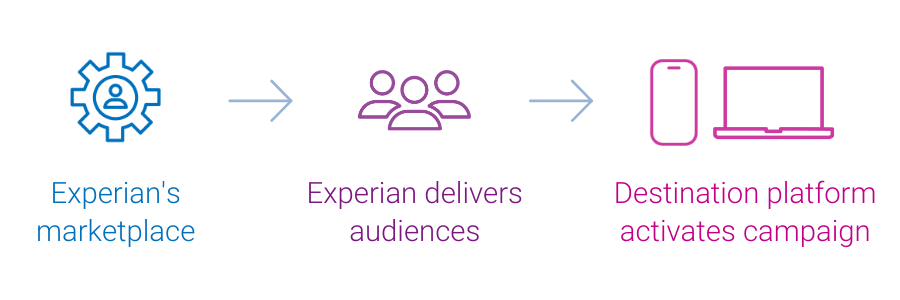
The evolution of addressability and why it matters more than ever
As the media ecosystem shifts, reaching people across browsers, apps, CTV, and streaming platforms has become more complex. Signals are fragmenting everywhere as expectations for relevant, personalized experiences continue to rise, while reliable identifiers become increasingly challenging to access.
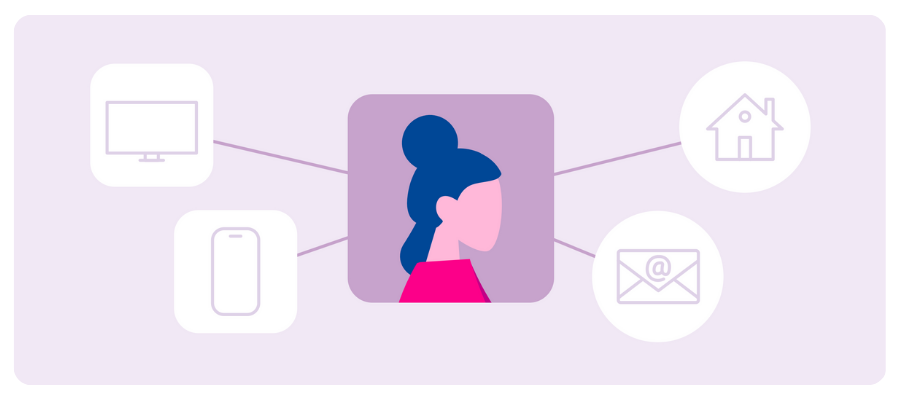
In response, addressability is shifting from a channel-specific tactic to an identity-driven approach to reach and measure defined audiences across screens.
That evolution puts new pressure on performance. Marketing budgets require accuracy and accountability, which means targeting must deliver measurable reach and outcomes you can trust.
At the same time, the growth of CTV and streaming is expanding addressable TV opportunities. As CTV inventory grows, so does the need for cross-channel, identity-based activation that works consistently and supports reach, frequency, and measurement in one connected view. That’s why identity has become the foundation for making addressable advertising work today.
When to apply addressable advertising
You don’t need addressable for everything, but it shines when you need your spend to go farther with accurate targeting and resonant messaging.
| Scenario | Why addressable helps |
| Product launches and seasonal pushes | Reach people who are more likely to care without flooding everyone else |
| High-consideration purchases (auto, travel, financial services) | Focus on likely intent and suppress audiences that don’t fit |
| Cross-channel campaigns (digital, TV, mobile) | Keep messaging consistent across screens |
| When using first-party data with AI | Use AI customer segmentation to scale responsibly and improve performance without sacrificing accuracy |
| Regulated categories | Rely on compliant data practices and clearer controls for regulated industries |
Addressable advertising is one way to put relevance and respect into practice — but it shouldn’t be the only time these principles apply. Marketers are expected to be thoughtful about who they reach, how often they show up, and how data is used across every channel. Addressable simply makes it easier to live up to that standard when accuracy, accountability, and scale matter most.
Addressable advertising and third-party data
There’s a common misconception that third-party data is no longer useful, but what’s really changed is the environment around it.
In the early days of digital advertising, third-party data often felt like the Wild West. Today, modern third-party data is more transparent, better governed, and held to far higher standards with:
- Clear data sourcing
- Documented consent practices
- Regular quality audits
- Strict limits on how data can be used
Used responsibly, third-party data plays a critical role in addressable advertising by complementing your first-party data and keeping audience strategies flexible as signals change.
Benefits of third-party data
When paired with identity resolution, high-quality third-party data helps you:
- Fill first-party gaps: Add demographic, behavioral, and interest-based insight when your own data is limited.
- Expand prospecting: Reach new audiences through modeling and lookalike expansion.
- Enrich segmentation: Combine household, behavioral, and interest signals to tailor creative, offers, and messaging to interests for more accurate and personalized activation.
- Support cross-channel addressability: Maintain consistent audience reach across devices and channels even as individual signals change.
Why work with Experian for your data needs?
At Experian, we approach third-party data with the belief that trust comes first. Our data is privacy-compliant, ethically sourced, and governed by strict standards so you can use it confidently.
Accuracy matters just as much. Our identity and data-quality framework verifies that the data behind your audiences holds up in the real world — a key reason Experian is ranked #1 by Truthset for key demographic attributes.
And because addressable advertising only delivers value when audiences move seamlessly from planning to activation, our audiences are interoperable by design. You can activate them across digital, social, and CTV platforms without rebuilding or reformatting your strategy for each channel.
How AI is redefining customer segmentation
Addressable advertising depends on audiences that stay accurate as people move across devices, platforms, and moments. Traditional segmentation built on static rules and snapshots in time can’t keep up with that reality.
AI customer segmentation analyzes massive sets of household and individual data (such as intent, household demographics, purchase behavior, and content consumption) to identify patterns, predict intent, and group people into addressable audiences.
As the AI advertising ecosystem continues to mature, reflected in industry frameworks like the LUMA AI Lumascape, segmentation and identity have become foundational layers rather than standalone tools. Those audiences update as conditions change, so they stay relevant instead of aging out.
Here’s how AI-driven segmentation supports addressable advertising.
| What AI enables | Why it matters |
| Predictive, intent-based audiences | Analyze behavioral and transactional data to group people based on likely next actions |
| Broader audience availability | As more data signals are incorporated responsibly, AI makes it possible to support a wider range of addressable audience options without sacrificing accuracy |
| Deeper insights from data | Discover what people care about, how intent is forming, and which signals are most important with larger, more diverse data sets |
| Real-time audience updates | Keep segments aligned as behaviors change, not weeks later |
| Higher accuracy, less guesswork | Rely on data-driven patterns for decision-making instead of assumptions |
| Ongoing optimization | Refine audiences throughout the campaign lifecycle as performance signals come in |
We’ve used machine learning and analytics for decades to support responsible segmentation — balancing performance with privacy and transparency.
That foundation now supports addressable advertising that adapts in real time while staying grounded in trust.
Addressable TV: Targeting in the streaming era
TV has become an addressable channel powered by data and identity resolution. CTV and OTT streaming are booming, while linear TV continues to decline, reshaping how people watch and how advertising works alongside it. For the first time, CTV spending is expected to outpace traditional TV ad spending in 2028, reaching $46.89 billion and signaling that addressable TV is now central to the media mix.
With CTV and OTT platforms, advertising can now be delivered at the household level. That means two homes watching the same show can see different ads based on who lives there and what they like. This is what makes addressable TV possible.
Benefits of addressable TV
As streaming inventory continues to grow, addressable TV creates new ways to bring relevance and accountability to a channel once defined by broad exposure. Experian links identity data across streaming, linear, and digital platforms to help you manage frequency, attribution, and household-level insights in one connected view.

Addressable TV also raises the bar. To manage reach, frequency, and measurement across streaming and linear environments, addressable TV depends on identity resolution that connects households across screens.
Here’s how addressable TV helps you when identity is in place.
| What addressable TV enables | Why it matters |
| Household-level targeting | Deliver messages that reflect who’s watching, not just what’s on |
| Frequency control across screens | Reduce overexposure and improve viewer experience |
| Cross-channel measurement and attribution | Connect TV exposure to digital actions, site visits, and conversions |
| More efficient use of TV spend | Bring accuracy, accountability, and outcome-based insight to premium inventory and improve reach of streaming-first, harder-to-reach viewer segments |
Ultimately, addressable TV isn’t a replacement for linear TV, but it is an evolution. As streaming becomes the default viewing experience, the ability to engage TV audiences with the same care and clarity as digital is essential.
Use cases for addressable advertising
Addressable advertising works across industries because it adapts to how people make decisions. The examples below are illustrative scenarios that show how addressable audiences, identity resolution, and AI-driven segmentation can come together in practice using Experian solutions.
Retail: Seasonal promotions
A home décor retailer could use identity resolution and AI-driven segmentation to build addressable audiences, such as holiday decorators and recent movers, who are more likely to engage during peak seasonal periods.
Campaigns could then be activated across CTV, display, and social, helping the retailer stay visible across screens while tailoring creative to seasonal intent.
Automotive: In-market car buyers
An auto brand might identify consumers nearing lease expiration using automotive-specific data tied to household and individual attributes.
By suppressing current owners, the brand could avoid wasted impressions and activate addressable audiences across OTT and mobile to reach likely buyers during active consideration.
Financial services: Credit card launch
For a new credit card launch, a national bank could use modeled financial segments to reach credit-qualified prospects.
Addressable digital advertising campaigns could apply frequency controls and personalized messaging, balancing reach with relevance while seamlessly measuring response.
Streaming media: New subscriber growth
A streaming platform looking to grow subscriptions could use an identity graph to exclude current subscribers.
Likely viewers could then be targeted across CTV based on content preferences and viewing behavior, keeping spend focused on net-new growth.
Media and entertainment: Audience expansion for a new release
Ahead of a new release, a film studio could use behavioral and lifestyle data to identify likely moviegoers and fans of similar franchises.
Addressable campaigns across CTV and digital video could help drive awareness and opening weekend attendance.
Travel: High-value traveler acquisition
A travel brand could use travel propensity data and household-level demographics to identify frequent flyers and family vacation planners.
Personalized offers could then be activated across display, social, and programmatic channels to increase bookings while keeping spend focused on higher-value travelers.
How Experian enables more effective addressable campaigns
Addressable advertising is most effective when identity, data, and activation are connected from the start.
Experian brings trusted household and individual data, privacy-first identity resolution, and broad activation partnerships together so you can move from audience insights to activation with minimal friction. Here’s how that comes to life across our core offerings.
Identity resolution with Consumer Sync
Consumer Sync connects devices, emails, digital identifiers, and offline data into a single, privacy-safe identity foundation. This connection helps your audiences stay consistent across streaming, linear TV, mobile, and digital despite changing signals.
Audience insight and segmentation with Consumer View
Consumer View supports clear segmentation, prospecting, and enrichment across industries. It combines demographic, behavioral, and interest-based data to help you build accurate, intent-driven audiences that reflect real people, not assumptions. Data is continuously updated and governed for accuracy.
Omnichannel activation with Audience Engine
Audience Engine enables direct activation of Experian audiences across CTV, digital, social, and programmatic platforms. It supports suppression, frequency management, and cross-channel consistency to keep messaging aligned and exposure controlled.
More efficient media through curation and Curated Deals
Curation combines data, identity, and inventory through Experian Curated Deals. These deal IDs, available off-the-shelf or privately, make it easier to activate high-quality audiences and premium inventory in the platforms you already use without custom setup.
AI-enhanced segmentation and optimization
Our AI-enhanced models analyze large data sets to create and refresh addressable audiences in real time, supporting intent-based targeting and ongoing optimization throughout the campaign lifecycle. These models work seamlessly with demand-side platforms (DSPs), ad platforms, and data clean rooms, so audience insights flow directly into activation and measurement without added complexity.
Seamless integration with your ecosystem
As an advertiser, you want addressable advertising to fit naturally into how you already plan and buy media. That’s why integration matters as much as insight.
Experian integrates with leading DSPs, ad platforms, and data clean rooms, so you can activate addressable audiences in the environments you already use without reworking your strategy or adding complexity. This approach helps you:
- Build and activate addressable audiences: Reach the people you want with accuracy and respect.
- Activate across channels: Keep messaging consistent across digital, TV, and streaming.
- Optimize with data ranked #1 in accuracy by Truthset: Improve performance using the industry’s most reliable data.
When identity, data, AI, and activation come together, addressable advertising does what it’s supposed to do: deliver relevance naturally, measure impact clearly, and give you confidence in every decision along the way.
That’s the foundation for campaigns people want to engage with.
Start creating campaigns audiences want to see
Experian can help you apply addressable advertising in ways that respect consumers, perform across channels, and stand up to real-world measurement.
Connect with our experts today to explore how addressable audiences, AI-driven segmentation, and identity-powered activation can work together in support of your goals.
FAQs about addressable advertising
Addressable data-driven advertising involves delivering personalized ads to specific individuals or households using privacy-safe data and identity.
An addressable audience is a defined group of consumers you can identify and reach based on known household or individual attributes.
Advertising becomes addressable when it’s possible to identify the audience by linking devices and households to people through identity graphs. This allows you to measure ad performance at the audience level and provide more personalized advertising.
Addressable advertising isn’t just for TV; it also works across digital, mobile, streaming, and social channels.
AI improves addressable advertising by analyzing large data sets to predict intent, build more accurate audiences, boost performance over time, and improve your ability to find and build your audiences.
Yes — identity resolution and first-party data are key to cookieless addressability.
Experian supports addressable advertising by providing trusted consumer data, privacy-centric identity resolution, and curated audience segments that activate across CTV, digital, mobile, and streaming platforms.
Latest posts

Summer may be vacation season for consumers, but it's go time for marketers. Between holiday weekends, travel season, and changing shopping habits, the pressure is on to deliver campaigns that land and convert. If you're feeling behind, you're not alone. Many marketers face the same challenge every year: How do you actually use the customer data you have to fuel high-impact, seasonal marketing? And how do you ensure your brand shows up in front of the right people in the right place before the competition beats you to it? That’s where Experian comes in. With Experian’s advanced Audience solutions, you can get ahead of the trends, connect with vacation-ready shoppers, and optimize performance across digital, TV, and retail media using customer data for seasonal marketing. Capitalize on vacation excitement to drive sales and growth Summer travel often triggers a surge in pre-trip spending. Surveys show that 82% of consumers plan to travel this summer, and according to Fortune, today’s travelers spend thousands of dollars on things like luggage, apparel, and recreation gear before they even leave their homes! But while consumer demand is heating up, so are the challenges. Marketers are navigating a turbulent economic environment shaped by shifting demand curves, tighter budgets, the rising cost of goods, and supply chain disruptions caused by newly imposed tariffs. These pressures are forcing teams to rethink everything from product positioning to pricing strategies. In this climate, it’s more important than ever to maximize performance, reduce waste, and stay laser-focused on reaching high-intent audiences likely to convert. Using customer data for seasonal marketing helps brands predict and capture demand with precise, relevant targeting. Whether your customers are planning a trip to the beach or hiking the Rockies, timely messaging and audience alignment can drive engagement and conversion. Experian Audiences power effective audience strategies But even the most compelling campaigns can fall flat if you're working with incomplete data, outdated segments, or generic targeting. Consumer data providers like Experian can help you fix that. Our Audience solutions help you go beyond assumptions and truly understand who your shoppers are, what they’re planning, and how they behave, so you’re ready to get in front of their summer plans. Six steps to creating a successful seasonal marketing campaign When you’re ready to turn summer intent into strategy, Experian Audience solutions help you translate vacation-driven behaviors into high-performing campaigns. Each product in the Experian Audience suite supports a specific stage in seasonal marketing planning and execution. 1. Define your goals Before diving into channels and creatives, get clear on your customer database marketing goals. Are you trying to increase online purchases? Drive in-store traffic? Expand brand awareness? Use Syndicated Audiences to set fast, focused goals. If you’re short on time, Experian’s 2,400+ Syndicated Audiences give you a head start. These pre-built, behavior-based segments — from luxury travelers to seasonal sports enthusiasts — help you quickly identify who to target, where they spend time, and how to message to them. With segments ready to plug into 30+ activation platforms, you can ensure quick, confident activation. 2. Decide what data you need and which audiences to target Using customer data for seasonal marketing means mapping behavior to intent. This core tactic in customer database marketing can help you drive deeper engagement. Our data solutions simplify the process, whether you’re starting with limited data or already know your best customers. If you’re starting with a list, Enrichment can append lifestyle, income, and travel preference data to help you understand what motivates your existing customers. If you don’t have a list, Marketing Attributes gives you full control when building new audiences or lookalikes based on relevant seasonal traits like beach vacationers or frequent CTV watchers. 3. Identify key holidays and events Summer is full of shopping triggers: Memorial Day, Father’s Day, Fourth of July, Labor Day, and countless local and regional events. However, not every customer behaves the same way. Use Enrichment to understand when your customers are most likely to act. By comparing your first-party data to broader market segments, you can time promotions more strategically. For instance, enrichment might reveal that outdoor gear buyers convert in early June, while luxury travelers plan closer to July. 4. Activate across digital, TV, and retail media Summer shoppers don’t stick to one screen. They’re streaming TV, reading travel blogs, browsing retail apps, and catching up on email — often from a beach chair or airplane seat. That’s why omnichannel delivery is a must, and it’s where consumer data vendors like Experian can help you reach your audience across channels with targeted messaging for key holidays and events: Syndicated Audiences simplifies omnichannel activation with built-in integrations to 30+ leading activation platforms. These pre-mapped segments let you deliver consistent messaging across the places where your audience is most engaged. Looking for privacy-forward reach? Contextually-Indexed Audiences are segments built by linking real-world behavioral data to the types of content those audiences typically consume online, allowing you to activate based on content instead of identity while offering a more contextually relevant experience. Using customer data for seasonal marketing, Experian maps real audience segments across web and app environments — like national park guides and travel blogs — for ID-free precision targeting in a cookieless environment. 5. Track and evaluate performance Don’t wait until the end of the campaign to make changes. Experian’s measurement tools help you track performance in real time, so you can optimize early and often. Measure how well specific audiences — enriched, syndicated, or contextual — are performing across platforms and use those insights to shift spend toward top performers. 6. Optimize and refine your strategy After the season ends, it's time to take what you’ve learned and build smarter for the next push. Use Outcomes to analyze: Who converted Which segments underperformed How your customer base compares to the broader market How your audience evolved Which campaigns drove meaningful adoption These insights can then inform your next round of audience building, so whether it’s back-to-school or a holiday, you’re already ahead. Example 1: The beach vacation shopper To illustrate Experian’s Audience solutions at work, let’s say a high-end swimsuit brand wants to reach women over 30 planning beach vacations to Florida, Hawaii, or Mexico. However, their CRM only includes basic transaction and purchase details and offers little insight into who their customers are. Audience solution: Enrichment Using Experian’s Enrichment solution, the brand could layer on lifestyle, income, and travel preference data to turn shallow profiles into rich audience segments. With a deeper understanding of their shoppers, the brand could develop a targeted messaging strategy by destination, build high-performing lookalike audiences, and confidently activate across channels. Example 2: The European traveler As another example, suppose a footwear brand wants to reach millennial travelers heading to Europe between May and August. They specialize in stylish, comfortable walking shoes that are ideal for travel but lack the technical in-house resources to build custom segments. Audience solution: Syndicated Audiences Using our Syndicated Audiences, the brand could easily tap into pre-built segments tied to leisure travelers, international shoppers, and comfort-focused footwear buyers. With plug-and-play access to over 2,400 verified audience segments, the brand could quickly layer this targeting into their programmatic and paid social campaigns without requiring custom development. And with fast speed-to-market and improved message relevance, the brand could launch cross-channel campaigns just in time for peak summer travel planning. Example 3: The outdoorsman Consider a camping tent company that wants to reach families planning summer trips to national parks, campgrounds, or RV resorts. They don’t have much first-party data to work with, but they know their audience is online, researching their next adventure. Audience solution: Contextually-Indexed Audiences With Experian’s Contextually-Indexed Audiences, the brand could target people actively reading content about outdoor travel (like hiking tips, campground reviews, or road trip itineraries) without relying on cookies or IDs. They’d be able to activate contextually relevant audiences mapped to sites that outdoor enthusiasts frequent and drive site traffic with strong click-through rates. Example 4: Big-box retailer launching summer gear Imagine a national retailer preparing to promote summer essentials like patio furniture, grills, fitness gear, and travel accessories. Their goal is to build predictive models for their summer product demand and reach new customers most likely to buy before they even search. Audience solution: Marketing Attributes With Experian’s Marketing Attributes, the retailer could license over 5,000 lifestyle, demographic, and behavioral variables to enrich internal models and uncover high-indexing consumer groups, such as outdoor entertainers or health-conscious families. This data-powered insight would help them predict demand and identify audience segments worth testing across media channels. The team could find new, qualified segments ideal for email and CTV activation and get a head start on the season, eventually increasing ROI on their summer campaign spend. Talk to Experian about your summer campaigns today Using customer data for marketing doesn't have to be overwhelming, especially when you have access to a trusted consumer data provider and plug-and-play audience tools for every stage of the funnel. Whether you’re working with a robust CRM or starting fresh, consumer data vendors like Experian can help you reach the right audiences with speed, accuracy, and confidence. Our advanced tools are designed for both advanced marketers and teams just beginning to explore consumer database marketing. No matter your goals, Experian is here to help you build an audience strategy that performs. Contact us today Latest posts

Connected TV (CTV) continues to expand as a dominant force in digital advertising. Streaming adoption is climbing, yet advertising budgets aren’t keeping pace. With the Newfronts and Upfronts presentations completed, advertisers are being asked to make big decisions with lingering questions still in the mix. One of the biggest barriers? Persistent misconceptions about what CTV can and can’t do. That uncertainty can hold teams back from putting serious weight behind the most addressable screen in the house. Experian works with leading CTV partners to tackle those concerns head on – whether it’s improving measurement, reducing wasted impressions, or making audience data more actionable. To help marketers walk into Upfront conversations with clarity and confidence, we connected with industry experts from Ampersand, the Advertising Research Foundation (ARF), FreeWheel, and Madhive to separate fact from fiction. Here are four common CTV myths – and the reality behind them 1. CTV is not ready for performance marketing Why this misconception exists CTV was once seen as a branding tool—good for awareness, but hard to measure. Without clear attribution or precise targeting, it wasn’t built for the kind of performance marketing advertisers expect from digital media. What's actually happening In the not-so-distant past, marketers lacked a consistent way to connect CTV impressions to digital or in-store actions because of device fragmentation and limited signal sharing between platforms. Today, you can reach specific audiences on the biggest screen in the house—and know what happened after they saw your ad. Advancements in identity resolution and cross-device tracking now allow advertisers to measure everything from incremental reach to store visits and purchases. The growing use of universal identifiers like Unified ID 2.0 (UID2) makes it easier to connect ad exposure to real outcomes across screens. "With better visibility into who’s watching CTV and what they do afterward, it’s no longer just about getting a message in front of people—we can actually understand if it drove real-world results, like a store visit or a purchase. By tapping into high-quality audience data—from behavioral to demographic to transactional—we’re able to improve match rates and reach, which ultimately leads to more meaningful outcomes for advertisers."Murphy Vandemotter, Director of Data Operations, Madhive That shift—from impressions to impact—is what makes CTV a true performance channel, not just a way to build brand awareness. How Madhive works with Experian to provide data that drives better targeting and measurement – at scale Madhive is helping local advertisers achieve better CTV outcomes by integrating Experian’s syndicated audiences directly into the Madhive Data Marketplace. Advertisers are using Experian’s data to better understand local audiences, deliver more personalized messaging, and extend campaign reach – in some cases, achieving 10x the reach compared to other marketplaces. Combined with Madhive’s measurement tools and real-time optimization capabilities, advertisers can maximize their CTV investments by building lookalike audiences, quickly adjusting underperforming strategies, and personalizing engagement with viewers at the local level. 2. CTV advertising lacks brand safety and fraud protection Why this misconception exists CTV is sometimes lumped in with the broader digital ecosystem, where concerns around fraud, brand safety, and opaque buying paths are more common. Some advertisers worry they’re not getting what they paid for—or worse, that their ads could appear next to low-quality content. What's actually happening CTV has a much stronger foundation for brand safety and ad fraud than many marketers realize. The most effective way to minimize risk is to work directly with premium publishers and their primary technology platforms — not through long, complex chains of intermediaries that can open the door to fraud and low-quality placements. Platforms like FreeWheel provide direct access to premium CTV inventory across major broadcast and cable brands, helping marketers consolidate spend and significantly reduce exposure to risk. Working with primary supply partners ensures ads run alongside trusted, high-quality programming, not questionable or low-value content. By prioritizing direct paths to premium publishers, advertisers can take greater control over where their campaigns appear, achieving better transparency, higher quality, and stronger outcomes. "Advertisers can reach a broad collection of premium CTV inventory directly through FreeWheel. This not only greatly reduces a marketer’s risk, but it also provides certainty that they’re getting what they paid for in terms of quality content to appear alongside their brands.” Matt Clark, VP of Strategic Partnerships, FreeWheel In other words, cutting corners often increases risk—while consolidation and direct access to premium supply creates a cleaner, safer media buy. How Experian and FreeWheel match quality content with quality targeting Industry standards like OpenRTB 2.6 are evolving to give advertisers more control over where and how their ads appear. At the same time, Experian is helping advertisers maximize that control through our integration with FreeWheel. Advertisers can access Experian’s syndicated audiences directly within FreeWheel’s sell and buy-side programmatic advertising platforms. This gives advertisers the ability to create and activate campaigns across linear, digital, and advanced TV. Backed by a deep understanding of people in the offline and digital worlds, Experian’s data is ranked #1 in accuracy by Truthset, giving advertisers confidence that they are reaching the right people. Television audiences you can reach include cord-cutters and consumers who subscribe to free and paid ad-supported streaming TV services. 3. CTV audiences are too fragmented to manage effectively Why this misconception exists With so many streaming platforms and devices in play, US households subscribe to 4 paid video streaming services on average, it can feel nearly impossible to manage reach and frequency without overspending or annoying your audience. What's actually happening Advertisers don’t need to choose between scale and precision anymore. With the right audience and identity strategy, it’s possible to connect the dots across screens and unify fragmented viewing behaviors. “We activate first- and third-party data across CTV, linear, and video-on-demand in a consistent way—making sure campaigns reach real households, not just devices. We also track unduplicated reach and frequency across platforms, so advertisers can understand what’s actually working. Together with Experian, we can measure whether those impressions moved the needle and guide media planning with full-funnel attribution insights."Anastasia Dukes-Asuen, Sr. Director of Advanced TV Data & Insights, Ampersand Experian Audiences are built on our household-level identity graph, giving advertisers a powerful tool to manage reach and frequency across screens. How Ampersand works with Experian Ampersand utilizes Experian Marketing Data to enhance audience-based media planning, activation, and optimization across linear and addressable TV platforms. By combining Experian Audiences with a footprint of 64 million data-enabled homes, Ampersand helps advertisers find the most valuable networks and dayparts to reach their intended viewers. Through its Addressable Simulator tool, powered by Experian data, Ampersand models different budget scenarios to show how reallocating spend into addressable TV can extend reach and improve efficiency. Using Experian-powered targeting has delivered real-world results, like helping a national cruise brand achieve a 14% lift in incremental reach, a 3.1x increase in frequency, and a 24% lower effective CPM. 4. CTV is only for younger, tech-savvy audiences Why this misconception exists Streaming was originally associated with younger viewers, leading advertisers to believe CTV wasn’t an effective way to reach older demographics. That impression stuck, but it’s no longer true. What's actually happening Smart TVs are everywhere, and CTV has gone mainstream. Across generations, households are tuning in to ad-supported streaming services in record numbers—and they’re doing it on the biggest screens in their homes. What ARF data shows New research from the Advertising Research Foundation (ARF) backs this up. According to the 2024 DASH TV Universe Study: 77% of U.S. households own at least one Smart TV 82% receive at least one ad-supported streaming service 62% of households receive at least one ad-supported subscription streaming service (AVOD) like Netflix or Max with ads “The audience with the highest Smart TV and ad-supported CTV adoption? Millennials and Gen Xers—Americans in their prime parenting years. Even Boomers have embraced CTV: 73% own a Smart TV and 72% receive at least one ad-supported CTV service.” Jim Meyer, General Manager of the Advertising Research Foundation (ARF) DASH TV Universe Study ARF and Experian gives marketers the most accurate understanding of who is watching We partnered with the ARF and its DASH universe study to create 18 TV audiences. By combining the ARF’s DASH data set with Experian Marketing Data, we developed one-of-a-kind TV audiences that reflect how viewers interact with digital devices and e-commerce accounts. We created this resource so our customers can align their marketing campaigns with media usage. These audience segments also yield insights that help marketers reach their audiences with the right messages and content. Make CTV work for you this Upfront season CTV is evolving fast, and advertisers who rely on outdated assumptions risk missing out on its full impact. If you're weighing where to place your bets this Upfront season, don’t let old myths steer you off course. CTV delivers reach, performance, and accountability—especially when powered by high-quality data. Experian helps advertisers get more from their CTV investment with household-level insights that control ad frequency and unified audience activation to maintain consistent messaging across platforms. Let’s make your CTV campaigns work smarter. Learn how Experian can help you understand your customers, reach the right audience, and measure performance. Get in touch Latest posts

Back-to-school season remains one of the biggest retail moments of the year—and 2025 is expected to follow suit. Total spending is projected to reach $84.51 billion, with K–12 shoppers alone contributing nearly $50 billion—59% of the total. E-commerce will also play a major role, accounting for 37.4% of total back-to-school sales. However, 2025 shoppers may be facing even higher costs due to the incoming tariffs with everything from laptops and lunchboxes to kids' clothing and crayons becoming more expensive. In anticipation of these rising prices, shoppers might once again start early to score deals. Last year, 55% of back-to-school and college shoppers had already started buying items in July for the upcoming school year. This early start coincided with major July promotions like Amazon Prime Day, in which U.S. shoppers spent a record $14.2 billion online, where school-related purchases surged by over 200%. Whether you’re marketing school essentials or offering services to help students succeed, it’s easy to default to the same go-to audiences. This blog post highlights overlooked back-to-school segments to help you build personalized back-to-school strategies that resonate with students, parents, and educators. You can find the complete audience segment names in the appendix. School the competition: How Experian can help you connect with 2025 shoppers With summer just around the corner, back-to-school might not be top of mind, but there’s no better time to start planning. Whether you're reaching parents, students, or educators, Experian’s syndicated audiences can help ensure your marketing messages make the honor roll by landing with the right people at the right time. Experian’s 2,400+ syndicated audiences are available directly on over 30 leading television, social, programmatic advertising platforms, and directly within Audigent for activation within private marketplaces (PMPs). Reach consumers based on who they are, where they live, and their household makeup. Experian ranked #1 in accuracy by Truthset for key back-to-school attributes such as Presence of Children. Access to unique audiences through Experian’s Partner Audiences available on Experian’s data marketplace, within Audigent for activation in PMPs, and directly on platforms like DirectTV, Dish, Magnite, OpenAP, and The Trade Desk. Meet your overlooked back-to-school audiences Back-to-school shoppers aren’t one-size-fits-all. From parents prepping supply lists to students outfitting dorms, reaching the right audience is key to making the grade with your campaign. Let's go beyond the basics. Here are four back-to-school audience categories you can target with Experian: New year, new gear-ers Weeknight TV watchers Parenting personas School-season meal planners Let’s open our notebooks and break down the audience segments within each group. Whether your customers are buying backpacks, stocking the fridge, or searching for school essentials, these insights will help your campaign pass with flying colors. New year, new gear-er From teens picking out their first-day outfit to college students stocking up for dorm life, these audiences represent a wide range of priorities, needs, and spending behaviors. They’re also heavily influenced by trends, technology, and value-driven purchases. Don’t overlook these five high-potential audiences in your strategy: Big-Box Electronics Stores: High Spenders Amazon Frequent Spenders Department Store Deal Shoppers In Store Spenders Teen Apparel (Clothing): Online and In Store High Spenders Dell Computer and Apple Mac Purchaser Weeknight TV watchers Back-to-school season is also back-to-routine season. Families are gathering for more shared TV time in the evenings—especially in August and September. This makes co-viewing households a prime audience for messaging tied to school-year prep. Rethink your back-to-school approach with these five overlooked segments: Co-Watchers Co-Watchers with Children Cord Cutters: Recent Engagement Channel Preference: Streaming TV Digital Video Parenting personas Targeting by household structure helps tailor messaging to the right family dynamic—whether it’s parents with toddlers or households with college students. Four audiences you might be missing this back-to-school season: Digital Moms and Dads Sports Utility Families Colleges and Cafes Kids and Cabernet School-season meal planners Food and grocery shopping routines shift during the school season. These audiences are ideal for promotions tied to lunch prep, after-school snacks, and weeknight meals. Add these four under-the-radar audiences for back-to-school success: Online Grocery Delivery Services: High Spenders Grocery Stores: High Spenders Fast Food/QSR Frequent Spenders Fast Food/QSR Pizza Frequent Spenders Core back-to-school shoppers Of course, you’ll want to add traditional back-to-school audiences to your strategy. These audiences are highly engaged and often the decision-makers, making them ideal for marketers looking to drive purchase intent early and often. Here are four key back-to-school audiences you can target–all are available by life stage to reach PreK, elementary, middle, and high school households: Back to School Supplies Back to School Moderate Spend Back to School High Spend Back to School Apparel Make the grade with Experian this back-to-school season As marketers gear up for the back-to-school season, it’s the perfect time to sharpen your strategy and connect with back-to-school shoppers. Whether you’re building tried-and-true segments or exploring more unexpected, high-potential groups you might have not considered, Experian can help you reach the right audience. If you’re looking to create targeted segments for activation across digital and TV or gain insights to guide your campaign planning, Experian has you covered. Need a custom audience? Reach out to our audience team and we can help you build and activate an Experian audience on the platform of your choice. Additionally, work with Experian’s network of data providers to build audiences and send to an Audigent PMP for activation. Connect with our audience team You can activate our syndicated audiences on-the-shelf of most major platforms. For a full list of Experian’s syndicated audiences and activation destinations, download our syndicated audiences guide. Explore our other seasonal audiences that you can activate today. View now Activate back-to-school audiences today with Audigent Ready to ace your back-to-school campaigns? Audigent will build customized deals that combine premium Experian syndicated or Partner Audiences and inventory into a single, streamlined deal ID – tailored to your campaign needs. Plus, our powerful supply-side optimization ensures your campaigns deliver top marks in performance. Connect with the Audigent team today at AudigentAgency_Brands@experian.com to get a head-start on back-to-school success. Download our back-to-school audience guide now Contact us Latest posts Appendix New year, new gear-ers Retail Shoppers: Purchase Based > Shopping Behavior > Big-Box Electronics Stores: High Spenders Retail Shoppers: Purchase Based > Shopping Behavior > Big Box and Club Stores: Amazon Frequent Spenders Retail Shoppers: Purchase Based > Shopping Behavior > Department Store In Store Spenders Retail Shoppers: Purchase Based > Apparel > Teen Apparel (Clothing): Online High Spenders Retail Shoppers: Purchase Based > Apparel > Teen Apparel (Clothing): In Store High Spenders Lifestyle and Interests (Affinity) > Technology > Dell Computer Model Lifestyle and Interests (Affinity) > Technology > Apple Mac Purchaser Model Weeknight TV watchers Television (TV) > Household/Family Viewing > Co-Watchers Television (TV) > Household/Family Viewing > Co-Watchers with Children Experian > Retail Shoppers: Purchase Based > Entertainment > Streaming/Video/Audio/CTV/Cable TV: Cable/Broadcast TV: Cord Cutters: Recent TrueTouch: Communication Preference > Engagement Channel Preference > Streaming TV TrueTouch: Communication Preference > Engagement Channel Preference > Digital Video Parenting personas Lifestyle and Interests (Affinity) > Personas > Digital Moms Lifestyle and Interests (Affinity) > Personas > Digital Dads Mosaic – Personas – Lifestyle and Interests > Group D: Suburban Style > D15 – Sports Utility Families Mosaic – Personas – Lifestyle and Interests > Group O: Singles and Starters > O53 – Colleges and Cafes Mosaic – Personas – Lifestyle and Interests > Group A: Power Elite > A03 – Kids and Cabernet School-season meal planners Retail Shoppers: Purchase Based > Grocery > Online Grocery Delivery Services: High Spenders Retail Shoppers: Purchase Based > Grocery > Grocery Stores: High Spenders Retail Shoppers: Purchase Based > Food and Drink > Restaurants: Fast Food/QSR QSR Frequent Spenders Retail Shoppers: Purchase Based > Food and Drink > Restaurants > Fast Food/QSR Pizza Frequent Spenders Core back-to-school shoppers Retail Shoppers: Purchase Based > Seasonal > Back to School Moderate Spend – PreK (Early Ed – PreK) Retail Shoppers: Purchase Based > Seasonal > Back to School Moderate Spend – Elementary School Retail Shoppers: Purchase Based > Seasonal > Back to School Moderate Spend – Middle School Retail Shoppers: Purchase Based > Seasonal > Back to School Moderate Spend – High School Retail Shoppers: Purchase Based > Seasonal > Back to School High Spend – PreK (Early Ed – PreK) Retail Shoppers: Purchase Based > Seasonal > Back to School High Spend – Elementary School Retail Shoppers: Purchase Based > Seasonal > Back to School High Spend – Middle School Retail Shoppers: Purchase Based > Seasonal > Back to School High Spend – High School Retail Shoppers: Purchase Based > Seasonal > Back to School Apparel – PreK (Early Ed – PreK) Retail Shoppers: Purchase Based > Seasonal > Back to School Apparel – Elementary School Retail Shoppers: Purchase Based > Seasonal > Back to School Apparel – Middle School Retail Shoppers: Purchase Based > Seasonal > Back to School Apparel – High School Retail Shoppers: Purchase Based > Seasonal > Back to School Supplies – PreK (Early Ed – PreK) Retail Shoppers: Purchase Based > Seasonal > Back to School Supplies – Elementary School Retail Shoppers: Purchase Based > Seasonal > Back to School Supplies – Middle School Retail Shoppers: Purchase Based > Seasonal > Back to School Supplies – High School