Tag: new EVs

For years, most electric vehicle (EV) adoption has been concentrated in California, New York, and other traditional early-adopter markets. And while those markets still lead the nation in total registrations, as of last year, some of the fastest-growing EV markets are in regions that haven’t played a significant role in the past. According to Experian Automotive’s 2025 EV Year in Review Report, EV adoptions seem to be entering a new phase that is spreading well beyond coastal strongholds. In fact, the top designated market areas (DMAs) that saw the fastest year-over-year growth for new retail individual EV registrations in the last five years were Detroit, MI (34.5%), Naples, FL (32.6%), Atlanta, GA (20.6%), Buffalo, NY (18.7%), and Charlotte, NC (17.3%). However, despite the growing demand in these market areas over the last few years, Los Angeles, CA still holds a strong lead in new retail individual EV registrations, with over 164,000 new adopters in 2025. Rounding out the top five were San Francisco, CA (85,000+), New York, NY (78,000+), Miami, FL (45,000+), and Seattle, WA (35,000+). EV adoption expanding well beyond the early-adopter markets could be a result of charging infrastructure growth, vehicle availability improvement, and consumer interest reaching new levels across the country. What does this mean for dealers? The extension of EV adoption into emerging markets signals that these vehicles are becoming a mainstream consideration for more consumers. As dealers look for ways to grow their presence in this segment, adopting marketing strategies, service operations, and inventory planning will be beneficial to meet changing buyer expectations and capitalize on the growing demand. The biggest takeaway isn’t necessarily which markets are selling the most EVs, it’s seemingly where adoption is gaining momentum. As new regions start to embrace these vehicles, it’ll be important to monitor the next phase of growth and where future opportunities may emerge. To learn more about EV insights, visit Experian Automotive’s EV Resource Center.
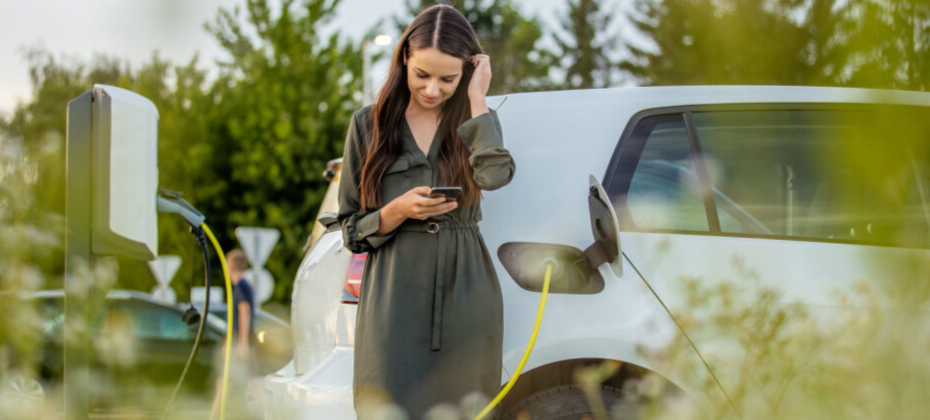
Electric vehicles (EVs) continue to gain traction in certain markets. In fact, at the end of 2024, 9.2% of all new retail registrations were electric, up from 8%+ in 2023 and 6%+ in 2022. Clearly, more and more in-market shoppers are leaning towards EVs, but what is actually a determining factor in their decision? A recent Experian survey [1] found 65% of respondents said they prioritize battery life, while 62% consider price, 58% are concerned with range on a full battery and 53% are focused on infrastructure and maintenance. It’s not just EVs, hybrids are getting into the mix While EVs certainly are the buzzword in the industry, it’s not the only alternative fuel type consumers are opting for. For instance, 55% of respondents said they’d consider a new hybrid and 50% said they’d consider a new EV for their next vehicle purchase. On the used side, 38% of respondents said they’d consider an EV and 42% would consider a hybrid. More granularly, the survey revealed 67% of Gen Z and 61% of Millennials are likely to buy a new EV, while 62% and 63% of these groups, respectively, expressed similar intentions for purchasing new hybrid. Gen Z and Millennials also showed a stronger-than-average interest on the used side, with 57% and 49% opting for EVs, and 57% and 52% choosing hybrids. With the younger generations gravitating towards these fuel types, it’s likely going to influence adoption rates down the road, a trend that should be watched closely as manufacturers roll out more models to meet the growing demand. However, when assessing the viewpoints of other generations, some are less likely to purchase an alternative fuel type. Two-in-five, albeit still a healthy percentage, of Gen X respondents said they’re likely to purchase a new EV and only 25% of Baby Boomers shared a similar sentiment. Meanwhile, 27% of Gen X and 12% of Baby Boomers say they’re likely to purchase a used EV. Furthermore, 46% of Gen X and 43% of Baby Boomers indicated they are likely to buy a new hybrid, while 33% and 21% of these groups, respectively, conveyed similar thoughts towards purchasing used hybrids. It’s crucial for professionals to stay attuned to shifting trends and concerns among consumers, as these factors play a role in consumer decision-making. By addressing potential setbacks and knowing where their target audience is, they can better align their strategies with consumer needs as these fuel types continue to move up on the list for everyday commuters. To learn more about EV insights, visit Experian Automotive’s EV Resource Center. [1] Experian commissioned Atomik Research to conduct an online survey of 2,005 adults throughout the United States. The sample consists of adults who estimate they will purchase or lease their next vehicle within the next 24 months or sooner. The margin of error is +/- 2 percentage points with a confidence level of 95 percent. Fieldwork took place between March 24 and March 27, 2025.