Every business makes decisions about people and transactions all day long. Should we approve this loan? Is this purchase fraud? Which customer should get this offer, and what should it be?
For a long time, those decisions were made in one of two ways: a person reviewed each case by hand, or the company wrote fixed rules, like "approve anyone with a credit score above 700." Both work. Both also leave value on the table. The manual review is slow and hard to scale. The fixed rule can turn away good applicants and is slow to adapt when the market shifts.
AI decisioning is a third way.
What makes AI decisioning work
Instead of relying on a single reviewer or a rigid rule, automated decisioning uses models that learn from data — studying how thousands of past cases turned out, finding the patterns that predict an outcome, and applying them to each new decision, often in real time. The result is faster, more consistent decisions.
But a model on its own isn't the whole story. Getting real value from AI decisioning takes good data to learn from, AI analytics to generate insights, the tools to act on it and the governance to keep it compliant.
What we've found is that the pieces only pay off when they work together, and that is where we're built differently.
A model is only as good as what it learns from, and we pair your data with one of the deepest views of consumer and commercial credit: decades of full-file history and vetted attributes. Then we give you the tools to act on it.
Use cases across your business
Whether you're trying to grow your customer base, reduce fraud, manage lending risk, or improve collections, automated decisioning brings all the pieces together to make more accurate, consistent and explainable decisions at scale.
Fraud and Identity
A fraudulent transaction that slips through costs money and erodes trust. Rules are static, and fraudsters move fast. They'll probe boundaries, find the blind spots and move to the next scheme. By the time the rules are updated, they're already three steps ahead.
How AI decisioning changes this:
AI fraud detection with real-time risk scoring and decisioning across transactions and customer interactions
Intelligence that continuously learns from results to help adapt fraud strategies as threats evolve
Reduced false positives and less friction for customers at account opening and checkout
Identity verification tools that confirm someone is who they say they are without slowing down the experience
Credit and Lending
Loan approval is where the relationship begins. Credit risk decisioning helps lenders find that delicate balance between approving enough people to grow, but carefully enough to manage risk. Missing that balance means turning away good customers or taking on losses that are difficult to absorb.
How AI decisioning changes this:
Increased approval opportunities for creditworthy applicants without increasing overall risk
Models you can update and deploy quickly as market conditions change, rather than waiting months
Ability to run "what-if" scenarios to test how a new strategy would have performed on your historical data before putting it live
Collections
Which customer should your team reach out to today? Through which channel? What kind of message? If you reach out too aggressively, you push someone who might have recovered into default. If you wait too long, you lose them. If you call someone at work, they resent you; if you text, they might ignore it. If you offer a payment plan, they might accept it, but only if the terms make sense to their financial situation.
How AI decisioning changes this:
Optimized next-best-action and contact-channel strategies for each individual customer
Improved recovery potential through better targeting
Less time spent on accounts with a lower propensity to pay, freeing your team for higher-impact cases
Ability to segment and test new strategies before rollout
Customer Acqusition
Finding the right customers is about reaching the right people with the right offer at the right time. To stay competitive, it’s now a requirement to balance growth with risk while creating a seamless experience converting prospects into customers.
How AI decisioning changes this:
More precise prospect targeting using credit, behavioral, and alternative data, where permitted, to identify consumers most likely to respond
Personalized offers delivered in real time
Dynamic decision strategies that can be updated quickly as market conditions and customer behavior change
Ongoing testing and optimization of acquisition strategies to improve campaign performance and support customer lifetime value
Driving results with AI decisioning
Every customer interaction is a decision. Businesses that can adapt quickly will be better positioned to grow, manage risk, and deliver the experiences customers expect. The technology will continue to evolve, but the goal remains the same: making informed decisions that balance business objectives, risk, and customer experience.
Learn more about our decisioning software
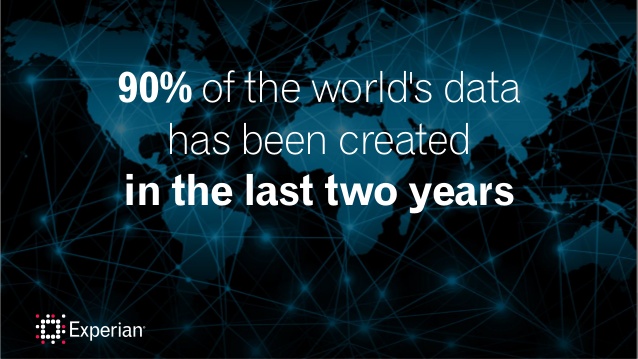 As Big Data becomes the norm in the credit industry and others, the seemingly non-stop efforts to accumulate more and more data leads me to ask the question – when is Big Data too much data? The answer doesn’t lie in the quantity of data itself, but rather in the application of it – Big Data is too much data when you can’t use it to make better decisions.