Small Businesses are showing fiscal discipline and resilience amid changing conditions.
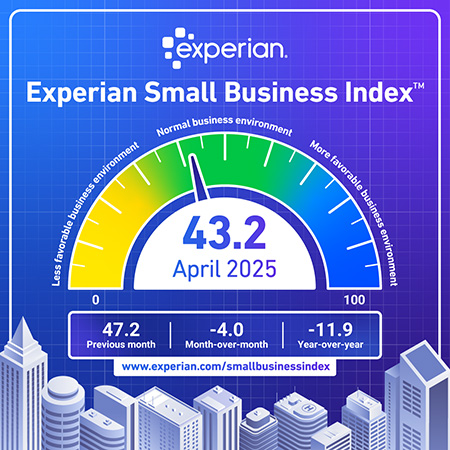
April 2025
- Index Value (Apr):43.2
- Previous Month:47.2
- MoM:-4.0
- YoY:-11.9(Apr 2024 = 55.1)
April marked the first month reflecting the impact of the broad tariffs announced on April 2nd. While the index experienced a decline, the decrease was modest due to the continued resilience of the U.S. economy. Unemployment remained nearly stable at 4.2%, average hourly wages continued to rise, and 30-year fixed-rate mortgages stayed below 7% for the 17th consecutive week. Additionally, the inflation rate increased by just 2.3% in April, the lowest rise since February 2021.
Some metrics showed signs of deterioration, contributing to the drop in the index. The ongoing shifts in tariff policy have created uncertainty among consumers and small business owners. Consumer sentiment fell to 52.2 in April, down from 57.0 in March and 32% lower than a year ago. Small business optimism declined to 95.8 in April, marking the second consecutive month below the 51-year average of 98. Despite these economic challenges, new businesses continued to form at high rates, with 449,508 new business applications filed in April, nearly matching March’s figures and still well above pre-pandemic levels. Additionally, tariff relief with China brought welcome news to many small businesses still reliant on those imports.
Related Posts
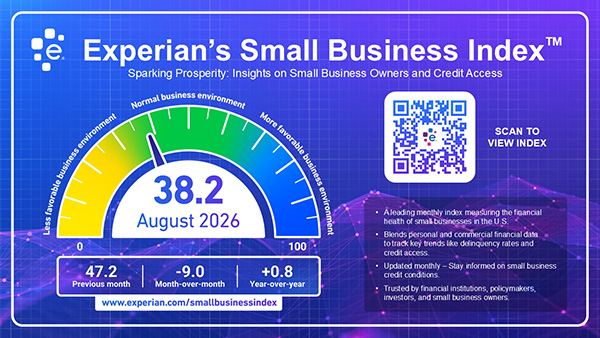
The Experian Small Business Index™ declined 9 points to 38.2 in August, which is nearly level with last year at this time.
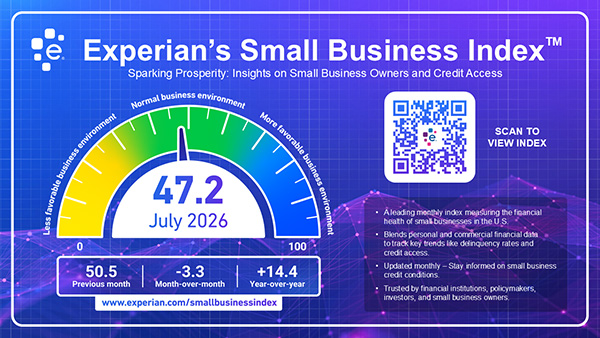
Experian Small Business Index saw rising utilization and 91+ day past-due rates, which contributed to the monthly decline.
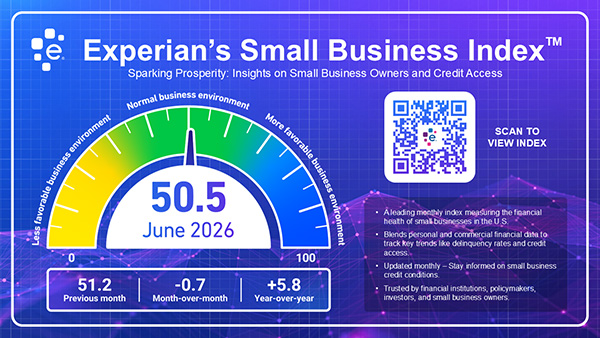
The Experian Small Business Index declined by 0.7 in June, but remains well above last years level on strong small business sentiment.