The Experian Small Business Index™ decline driven by relatively soft employment data
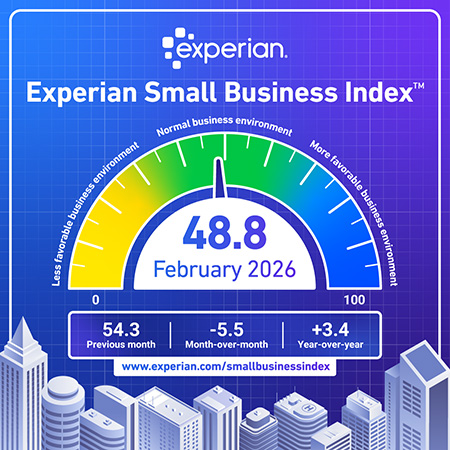
Feb 2026
- Index Value (Feb):48.8
- Previous Month:54.3
- MoM:-5.5
- YoY:3.4 (Feb 2025 = 45.4)
The Experian Small Business Index™ decreased by 5.5 points in February to 48.8. Despite the decline, the index remains 3.4 points higher than a year ago and within its historical average range. The decrease occurred during a month of relatively soft employment data. The unemployment rate rose slightly to 4.4%, and payrolls declined by 92,000 jobs in February, following a gain of 126,000 in January. Wage growth remained strong, partially offsetting these trends. Inflation indicators were mixed: core and rent inflation were flat, while food and energy prices, and the producer price index increased.
Small business formation continued to outperform the historical average, with approximately 496,000 new businesses launched in February, exceeding the seasonally adjusted average of 449,000 since July 2020. The NFIB Small Business Optimism Index edged down from 99.3 to 98.8. Credit conditions were generally stable. Commercial credit utilization and delinquencies declined, while consumer loan approvals increased. Factors contributing to the February index decrease included a decline in new consumer trades and a rise in consumer delinquencies among small business owners.
Related Posts
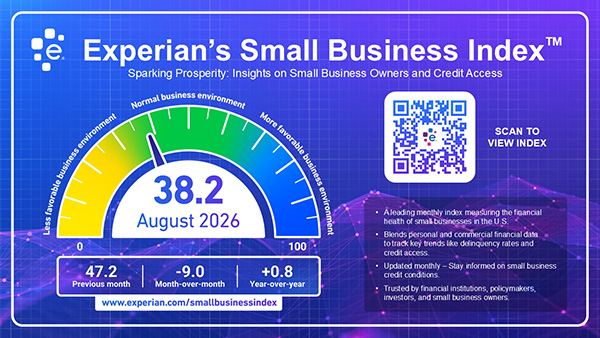
The Experian Small Business Index™ declined 9 points to 38.2 in August, which is nearly level with last year at this time.
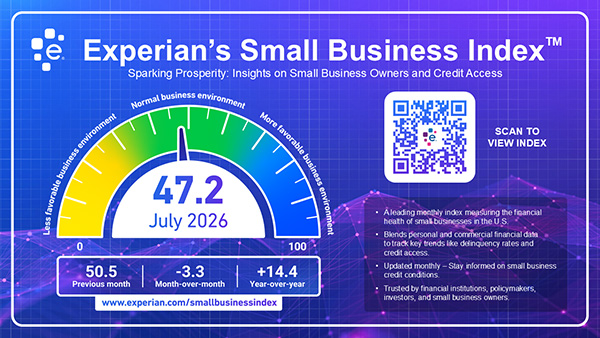
Experian Small Business Index saw rising utilization and 91+ day past-due rates, which contributed to the monthly decline.
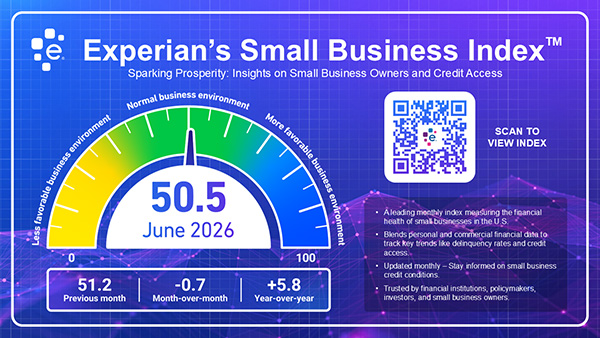
The Experian Small Business Index declined by 0.7 in June, but remains well above last years level on strong small business sentiment.