The Experian Small Business Index™ declined by 6.2 points month-over-month, remains up by 5.3 points Year-Over-Year
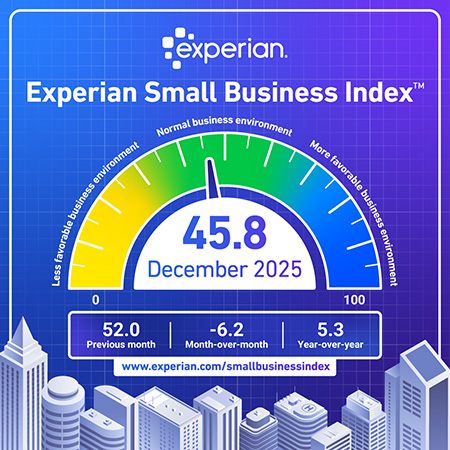
Dec 2025
- Index Value (Dec):45.8
- Previous Month:52.0
- MoM:-6.2
- YoY:5.3 (Dec 2024 = 40.5)
The Experian Small Business Index™ decreased 6.2 points to 45.8 in December, which was 5.3 points higher year-over-year. The monthly decrease coincided with increases in certain business risk indicators, including higher delinquency rates and rising balances, alongside a reduction in new credit activity, suggesting a tighter lending environment.
Broader economic conditions remained stable in December. The unemployment rate edged down to 4.4% from 4.5%, while inflation trends were mixed. Energy price inflation declined, the producer price index remained flat, and rent and food inflation increased. These conditions contributed to the Federal Reserve’s decision to maintain interest rates at its January meeting.
Small businesses and consumers both showed improved optimism with both the NFIB Small Business Optimism Index and the University of Michigan Consumer Sentiment Index recording increases in December.
Related Posts
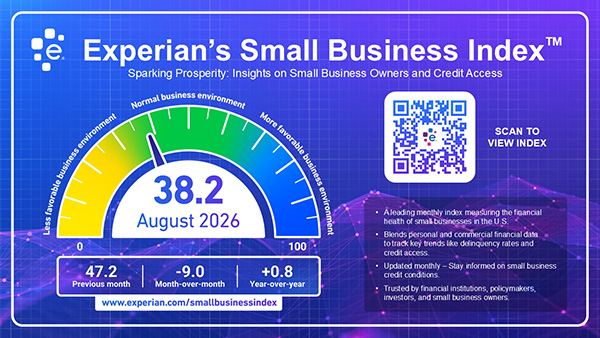
The Experian Small Business Index™ declined 9 points to 38.2 in August, which is nearly level with last year at this time.
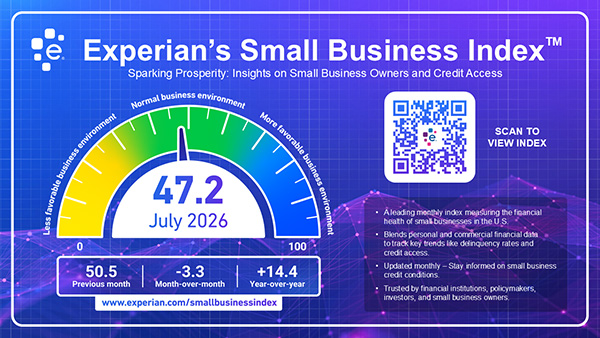
Experian Small Business Index saw rising utilization and 91+ day past-due rates, which contributed to the monthly decline.
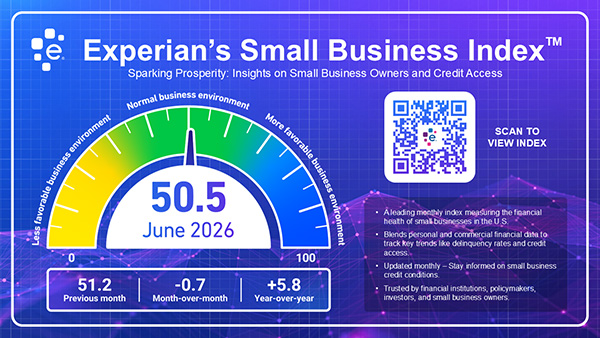
The Experian Small Business Index declined by 0.7 in June, but remains well above last years level on strong small business sentiment.