National Preparedness Month: Is Your Financial Plan Ready?
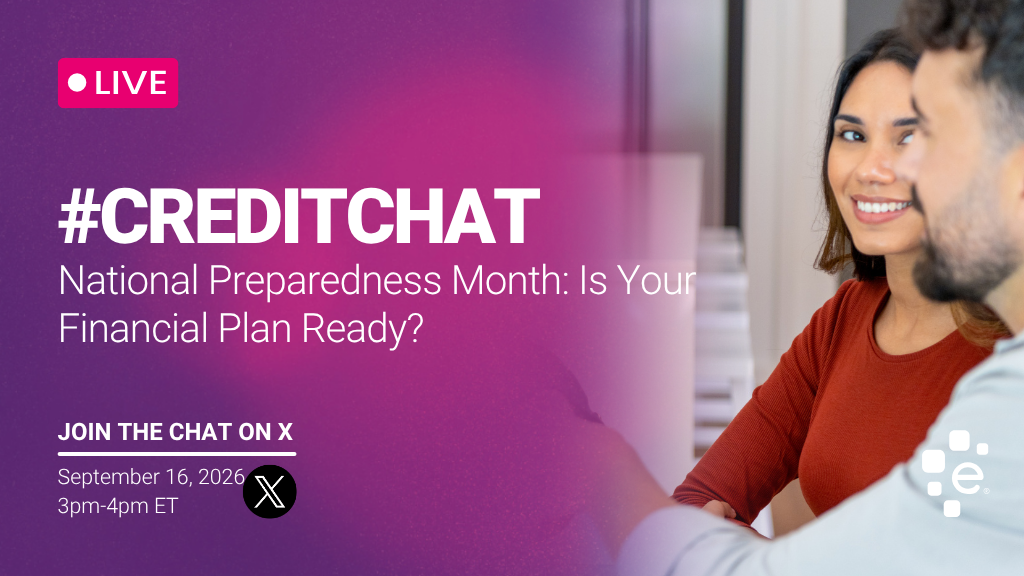
Join our weekly #CreditChat, launched in 2012 to help our community strengthen their understanding of credit and key personal finance topics such as saving, managing debt, and building healthier credit scores. Hosted by @Experian on X (formerly Twitter), the conversation is open to everyone—feel free to DM us with any questions.
This week’s #CreditChat focuses on financial preparedness for life’s unexpected events. We’ll discuss emergency savings, important financial documents, and steps you can take to strengthen your financial resilience. Join us to make sure your financial plan is ready for whatever comes your way.
Topic: National Preparedness Month: Is Your Financial Plan Ready?
When: Wednesday, September 16, 2026
Where: Join the live hashtag discussion
The panel will include: Felicity Watts: Author at American Consumer Credit Counseling; Todd Christensen: AFCPE®Accredited Financial Counselor®, Author of Everyday Money for Everyday People, and Education Manager at MoneyFit.org; Beverly Harzog: Host of Money & Retirement on YouTube, Consumer Credit Expert and Best-Selling Author; Jorrell Bland CFP®: Wealth Advisor at Mitlin Financial, Inc.; Robin Palmer: University of Arizona’s Take Charge Today Financial Literacy Program; Amy Miller: Director of America Saves; Ilyce Glink: Real Estate and Financial Wellness expert, author, speaker, entrepreneur and founder of ThinkGlink.com; Deacon Hayes: Founder of Well Kept Wallet; Jennifer White: Consumer Education and Advocacy Team, and Christina Roman: Sr. Consumer Education and Advocacy Manager at Experian.
Questions we will discuss:
1: What does “financial preparedness” mean to you personally? Where do you feel most financially prepared today, and where do you feel you could be more prepared?
2: What unexpected costs can catch people financially unprepared during an emergency or natural disaster?
3: How much emergency savings do you think a household should have, and what factors should determine the right emergency fund amount?
4: With a potentially strong El Niño bringing the possibility of severe weather, what weather-related expenses should households financially prepare for in advance?
5: Besides emergency savings, what financial resources or safeguards can help households manage an unexpected financial emergency?
6: Which financial documents should people be able to access quickly during a natural disaster or emergency, and how should those records be stored securely?
7: What are realistic ways to build an emergency fund when your budget is already tight?
8: Which life events or financial changes should prompt someone to review and update their emergency financial plan?
9: During an emergency or natural disaster, what steps can you take to protect your credit, identity and financial accounts from fraud or identity theft?
10: What’s ONE financial preparedness task you could realistically complete this week that your future self might thank you for?
Check out our complete list of upcoming personal finance Twitter chats here.