Key takeaways
- U.S. retail media ad spend is on track to reach $71.09 billion in 2026, creating more opportunities for CMNs to grow beyond the on-site inventory they own.
- Off-site social and connected TV (CTV) spend are outpacing on-site growth, proving the market is strong for CMNs that extend their first-party data across channels they don’t own.
- CMNs can extend the value of their shopper relationships beyond owned-and-operated (O&O) inventory by strengthening first-party data, building scalable audiences, expanding off-site activation, and connecting data with media through curation.
Amazon and Walmart command much of the market, but billions in retail media spend remain available to other networks. While the other 277 CMNs operating globally may not compete on scale, the playing field is level for using their data off-site.
The opportunity isn’t tied to any one capability. CMNs need infrastructure that connects first-party data and identity to activation and measurement, so they can extend the value of their shopper relationships beyond the data and inventory they own.

What CMNs need to know about moving off-site
O&O placements still offer stronger margins. On-site ad margins can reach 70-90%, compared with 20-40% off-site. But CMNs can sell only so much media across the properties they own. Moving off-site gives them another way to create media opportunities from their first-party shopper data.
Off-site commerce media uses a CMN’s first-party audience data to reach shoppers beyond the network’s O&O properties. That can include social, programmatic, CTV, and other media environments. Commerce media powered social ad spend is projected to reach $7.76 billion in the U.S. in 2026, with CTV close behind at $6.10 billion. For CMNs, that means the value of their shopper relationships doesn’t have to stop at the edge of their owned inventory.
Off-site media can bring those opportunities closer to the physical point of sale, too. Digital screens in places such as gas stations and convenience stores give CMNs another way to connect with shoppers near moments of purchase. Some of this inventory can be available programmatically, connecting these physical environments with a CMN’s broader off-site media strategy.
The infrastructure question: What off-site actually requires
When CMNs make their data available across the open web, CTV, or social media, their first-party signals need to connect with the identifiers used across those environments. Without that connection, less of a CMN’s audience may be available for off-site activation.
The financial stakes continue to grow. U.S. CTV ad spend is expected to reach roughly $38 billion in 2026, with most of it trading programmatically. A substantial share of open CTV programmatic spend currently goes to inaccurate identity data. Advertisers can improve the efficacy of their CTV campaigns by working with CMNs that have a strong identity infrastructure and relevant data.
Identity resolution helps connect a CMN’s first-party signals to additional addressable identifiers, making more of its audience reachable across environments. A consistent identity layer can then connect that audience to activation across channels and tie campaign exposure back to measurable outcomes.

CMNs don’t need to build that infrastructure themselves. Some may develop identity capabilities in-house, and others can work with a neutral infrastructure partner. A neutral infrastructure layer can connect first-party data, identity, activation, and measurement without competing for the CMN’s media or representing the buyers on the other side. That gives CMNs a consistent foundation across media environments without requiring separate data integrations for each partner.
How CMNs can take first-party data off-site
Early off-site activation has shown how CMNs can take their first-party data beyond O&O properties to help brands reach more shoppers across more media environments. To do that, CMNs need a way to connect their audiences to the platforms and media where brands want to reach them. The approach can vary based on how much technology, campaign execution, and media control the CMN wants to manage directly.
Four operating models have emerged:
The operating model may differ, but the underlying requirement is the same: CMNs need to connect first-party data with addressable identifiers so brands can reach those audiences beyond the CMN’s O&O properties. A segment that can’t match to addressable IDs may have limited off-site reach, and lower match rates can reduce the share of a CMN’s audience that a brand can reach across CTV or the open web.
Expanding beyond O&O: Onboarding and the addressability challenge
CMNs looking to extend the value of their data beyond O&O inventory should focus on two connected areas: strengthening their identity foundation, then onboarding and activating their audiences across more environments.
1. Strengthen your identity foundation
Before CMNs can activate audiences off-site, they need accurate, complete first-party data. Experian’s Offline Identity Resolution helps CMNs resolve first-party data to a consolidated consumer profile, reducing duplication and improving the accuracy of their audience data. Offline Identity Append adds additional information such as name, phone, and address to first-party data, helping CMNs build more complete audience profiles.
Together, these capabilities give CMNs a stronger data foundation for audience creation and activation.
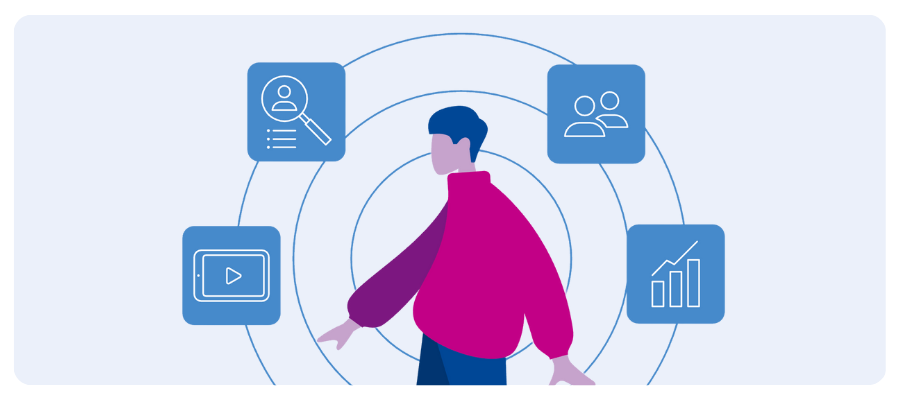
2. Onboard, model, and activate audiences
CMNs may have limited direct integrations with the platforms where brands want to activate their audiences, which can restrict where their first-party data can go off-site. Onboarding connects C
CMN audiences to more activation destinations so advertisers can use those audiences across the open web, connected TV (CTV), social media, and other channels. Experian Onboarding connects first-party data directly to more than 70 programmatic, social, and TV platforms instead of routing through intermediaries. It runs on our identity graph with 4.2 billion active digital IDs refreshed weekly.
For smaller CMNs, audience modeling can help address another challenge: audience size. Modeling can expand a CMN’s existing segments to reach more people with similar characteristics, giving advertisers more scale while staying grounded in the CMN’s first-party data.
For CMNs, stronger identity data and broader activation can make more of an onboarded audience reachable, creating more opportunities for advertisers to build awareness, drive sales, and achieve other desired outcomes.
CMNs can pair onboarding with curation to bring data and inventory together, giving them more control over inventory quality and campaign execution. Experian Curated Deals supports this support this approach by helping marketers, platforms, and publishers create media opportunities that combine data and inventory in one place.
This combination gives CMNs a path from stronger first-party data to larger, more addressable audiences and broader activation opportunities.
A playbook for CMNs still building off-site
Networks developing an off-site strategy should focus on four priorities:
Across each of these priorities, the goal is connection. Experian provides the neutral infrastructure layer that connects a CMN’s first-party data and identity with activation and measurement across the media environments where advertisers want to reach shoppers. This approach helps CMNs expand their options while keeping their data and business relationships at the center.
For CMNs that can’t compete on owned inventory alone, off-site activation creates another path to growth. Stronger first-party data, scalable audiences, broader activation, and curated media opportunities can help CMNs make more of the shopper relationships they already have.
Grow your commerce media network off-site with us
Click here to view Experian’s U.S. Consumer Data Privacy Notice.
This site is protected by reCAPTCHA and the Google Privacy Policy and Terms of Service apply.
About the author

Doug McLennan
Sr. Director, Product Management
Doug McLennan is the Sr. Director of Product Management at Experian Marketing Services where he oversees audience and activation products. His past work includes managing syndicated audiences at Oracle Data Cloud and building personalized video ad products at an agency. Doug lives in Colorado and skis as much as his family will allow.
FAQs
Off-site commerce media uses a CMN’s first-party audience data to reach shoppers beyond the network’s owned sites and apps. That can include CTV, social, and programmatic.
CMNs are investing in off-site advertising because O&O inventory has a natural limit. Off-site activation gives CMNs more opportunities to offer advertisers greater reach by extending their shopper data across channels, helping brands connect with audiences beyond the CMN’s owned properties.
Identity resolution gives CMNs a foundation for connecting first-party data to the addressable identifiers used across off-site media. Experian builds on that foundation as a neutral infrastructure layer, connecting first-party data and identity to activation and measurement without competing for the CMN’s media. This gives CMNs more flexibility in how and where they reach audiences across CTV, social, and programmatic channels.
Audience onboarding connects addressable audience segments to advertising platforms for activation. For CMNs with limited direct platform integrations, Experian Onboarding connects their first-party audiences to more programmatic, social, and TV platforms, giving brands more ways to reach those audiences through off-site campaigns.
A consistent identity foundation and regular audience refreshes can help CMNs maintain addressability as identifiers and household signals change. Experian is the neutral infrastructure layer that connects first-party data and identity to activation and measurement, helping CMNs extend their audiences across off-site channels while keeping their data and business relationships at the center.
CMNs can measure off-site campaigns by connecting media exposure across environments such as CTV and programmatic display to subsequent outcomes. Experian’s consistent identity foundation connects activation to measurement, helping CMNs tie ad exposure to actions such as online purchases, store visits, or other measurable actions and understand what’s driving campaign performance.
Latest posts

Marketers Using Centro’s DSP Basis Can Leverage Tapad’s Technology for Extended Cross-device Reach Chicago – May 15, 2018 – Centro, a provider of enterprise-class software for digital advertising, today announced that its Basis programmatic ad platform has licensed cross-device marketing technology from Tapad, a part of Experian, the company reinventing personalization for the modern marketer. Media professionals using Basis can now drive better performance by identifying a person across the different devices he or she uses, serving ads in the most optimum environment, then analyzing performance to see what ad worked best based on creative, device, location and time of day. Today’s digital media ecosystem is fragmented. People consume content on their multiple devices from multiple locations. According to digital analytics firm GlobalWebIndex, a typical consumer owns three digital devices and has seven digital ID’s active in the last 60 days. Advertising technology that treats every device as a single user would not be able to guide customers down the marketing funnel according to how users jump from one device to the next. Furthermore, they wouldn’t see when conversions occur on a device different from that in which the ad was first shown to the user. The Tapad Graph identifies the point of conversion across all screens – smartphones, tablets, home computers, and smart TVs – so that marketers can better gauge the efficiency and return on ad spend. Centro’s Basis enables advertisers to plan, buy and analyze real-time bidding (RTB), direct, search and social campaigns in a single platform. It is the only platform that combines all of these elements with cross-device conversion attribution and advanced reporting features in a DSP. With the Tapad Graph integrated into Basis, marketers can now identify consumers across all of their devices during any point of the consumer journey. This can help marketers determine ad spend effectiveness for optimizing campaigns in real-time or for the future. Other cross-device marketing capabilities for Basis users include: Frequency Capping: Apply frequency caps at a unique person-level rather than at a device-level to prevent saturating users with ads and showing them more impressions than desired. Audience extension: Expand the reach of a campaign by learning what other devices a single user may have, then deliver ads to single users’ other devices. Reporting insights: Learn how users interact with ads across their devices. Gain insight about how consumers respond on devices to improve targeting parameters. Conversion attribution: Record conversions on devices different from that in which the ad was displayed to learn the true effectiveness of advertising efforts. “Cross-device analytics and optimization aligns with our vision that converging the different parts of digital media to create a holistic view of campaigns will drive performance,” said Katie Risch, EVP of customer experience, Centro. “Having Tapad’s powerful capability of personalized marketing gives our advertisers high-quality data to cultivate relationships with customers, wherever they are in digital channels.” About Tapad Tapad Inc. is the marketing technology company reinventing personalization for the modern marketer through its identity-driven solutions. The company’s signature Tapad Graph connects millions of consumers across billions of devices. The world’s largest brands and most effective marketers entrust Tapad to provide an accurate, privacy-conscious and unified approach to connecting with consumers across screens. In 2018, Tapad introduced its Tapad Customer Data Platform (CDP), purpose-built to offer marketers a highly personalized and privacy-safe platform to convert first and third-party data into actionable, results-driven campaigns. Tapad is based in New York and has offices in Chicago, London, Oslo, Singapore and Tokyo. Tapad’s numerous awards include: Forbes’ Most Promising Companies, Deloitte’s Technology Fast 500, Crain’s Fast 50, TMCnet Tech Culture Award and Global Startup Award’s “Startup Founder of the Year.” Tapad was acquired by the Telenor Group in 2016. Telenor Group is one of the world’s largest mobile operators. About Centro Centro is a provider of enterprise-class software for digital advertising organizations. Its technology platform, Basis, is the first of its kind SaaS advertising solution unifying programmatic and direct media buying, along with workflow automation, cross-channel campaign planning, universal reporting and business intelligence. It boosts media, team and business performance by enabling advertisers to plan, buy and analyze real-time bidding (RTB), direct, search and social campaigns in a single platform. Contact us today

The concept of identity resolution has emerged over the years as a strategic imperative among marketers and technology vendors. A report by Forrester contends that accurately establishing and maintaining customer identity is one of the most perplexing challenges facing marketers today. Customers have footprints in the offline and online worlds and tend to seamlessly transition across various channels and devices – presenting a unique challenge to truly understand who they are. But the ability to stitch these disparate components of information together means marketers can make better decisions and have more meaningful interactions with their customers. And for customers, this means an experience with personalized advertising content more likely to resonate with them. Why should marketers prioritize identity? The ability to accurately identify customers is the most basic prerequisite for marketing analytics, orchestration and execution. As such, it is becoming increasingly important for brands and marketers planning to link together disparate systems of audience insights and engagement to foster a more seamless and personalized omnichannel customer experience. For example, if an advertiser can identify a customer’s interests, as well as how that person prefers to consume information, then the advertiser can create and deliver messaging that will resonate with the customer. However, like most competitive differentiators, the mission critical components to accurately determine an identity reside within the suite of identity management tools at the marketers’ disposal and the expertise required for proper execution – a struggle for most marketers. But when properly implemented, a comprehensive customer identity strategy can be among a brand or marketer’s most valuable and proprietary assets. Where to begin with identity resolution? With the convergence of CRM platform data, cross-channel online touchpoints, offline record linkage management, probabilistic cross-device graphs, and data onboarding—evolving from point solutions to unified platforms—marketers are faced with an increasingly complex set of challenges in addressing and solving for customer identity management. To properly implement from the get go, and to avoid having to bolt on disparate technologies down the road, emerging industry trends and success stories suggest marketers need a neutral technology service provider that can provide each of these solutions via a single, unified platform. A vendor that can build a solid identity management foundation comprised of omni-channel targeting and attribution, cross-device resolution, online-offline linkage management, and data onboarding form the nexus of a cohesive identity strategy, built to last. Experian helps connect consumer identity As a trusted name in data and information services for more than 40 years, we are committed to privacy by design and the responsible usage and security of data. Whether you’re a brand, agency, or publisher, Experian has the wide-ranging toolset to help you put people at the heart of your business and make better marketing decisions. By harnessing the power of the sum of these parts, fusing both offline and online identifiers and attributes, Experian has established a leadership position in identity management. If you’re ready to begin building your identity foundation, contact us and get started today! Learn more about why identity matters to marketers and consumers, here! Contact us today
Partnership Yields Increased Match and Connectivity Rate Through Tapad Graph, acquired by Experian March 27, 2018 — New York, N.Y. — Tapad, part of Experian, is reinventing personalization for the modern marketer and today announced the impactful results of its strategic partnership with Flashtalking, the leading global independent platform for ad delivery, unification and insights. Flashtalking is one of Tapad’s most engaged partners, using the Tapad Graph to unify cross-device engagement and identity-driven consumer behaviors for attribution modeling. The company leverages a unique identifier that, in conjunction with Tapad’s Graph, provides robust multi-touch attribution solution for its clients. This partnership has resulted in above-industry match and bridge rates for Flashtalking and its customers. Overall, the Tapad Graph yielded a 71 percent match rate with 41 percent of converters engaging on multiple devices, highlighting the importance of cross-device measurement. Tapad’s identity solutions provide Flashtalking with a more holistic view of global engagement. Flashtalking marries ad server log file data with the Tapad Graph to connect all interactions in the consumer journey. This enables Flashtalking to provide more accurate and impactful cross-device attribution, which ultimately enables better optimization. These achievements have led to recognition of Tapad and Flashtalking’s work by the I-COM Global Forum for Marketing, Data and Measurement. “Tapad allows us to understand user engagement across devices and platforms at both the household or individual user level, which is extremely beneficial when providing marketers with true path to conversion and attribution,” said Steve Latham, global head of analytics at Flashtalking. “Since our relationship began, we’ve successfully leveraged Tapad data to provide more accurate, actionable insights that have helped numerous brands achieve substantial gains in media effectiveness.” Flashtalking client Michael Lamontagne, SVP of analytics and CRM at 22squared says “We are big believers in using cross-device insights to improve our campaigns. Flashtalking has been a strategic partner in the pursuit of that goal. By incorporating the Tapad Graph, Flashtalking delivers powerful insights into user engagement and media attribution across browsers and devices. Of equal importance, their bundled solution makes it easy and efficient, saving our team countless hours of busy work.” Contact us today