Key takeaways
- U.S. retail media ad spend is on track to reach $71.09 billion in 2026, creating more opportunities for CMNs to grow beyond the on-site inventory they own.
- Off-site social and connected TV (CTV) spend are outpacing on-site growth, proving the market is strong for CMNs that extend their first-party data across channels they don’t own.
- CMNs can extend the value of their shopper relationships beyond owned-and-operated (O&O) inventory by strengthening first-party data, building scalable audiences, expanding off-site activation, and connecting data with media through curation.
Amazon and Walmart command much of the market, but billions in retail media spend remain available to other networks. While the other 277 CMNs operating globally may not compete on scale, the playing field is level for using their data off-site.
The opportunity isn’t tied to any one capability. CMNs need infrastructure that connects first-party data and identity to activation and measurement, so they can extend the value of their shopper relationships beyond the data and inventory they own.

What CMNs need to know about moving off-site
O&O placements still offer stronger margins. On-site ad margins can reach 70-90%, compared with 20-40% off-site. But CMNs can sell only so much media across the properties they own. Moving off-site gives them another way to create media opportunities from their first-party shopper data.
Off-site commerce media uses a CMN’s first-party audience data to reach shoppers beyond the network’s O&O properties. That can include social, programmatic, CTV, and other media environments. Commerce media powered social ad spend is projected to reach $7.76 billion in the U.S. in 2026, with CTV close behind at $6.10 billion. For CMNs, that means the value of their shopper relationships doesn’t have to stop at the edge of their owned inventory.
Off-site media can bring those opportunities closer to the physical point of sale, too. Digital screens in places such as gas stations and convenience stores give CMNs another way to connect with shoppers near moments of purchase. Some of this inventory can be available programmatically, connecting these physical environments with a CMN’s broader off-site media strategy.
The infrastructure question: What off-site actually requires
When CMNs make their data available across the open web, CTV, or social media, their first-party signals need to connect with the identifiers used across those environments. Without that connection, less of a CMN’s audience may be available for off-site activation.
The financial stakes continue to grow. U.S. CTV ad spend is expected to reach roughly $38 billion in 2026, with most of it trading programmatically. A substantial share of open CTV programmatic spend currently goes to inaccurate identity data. Advertisers can improve the efficacy of their CTV campaigns by working with CMNs that have a strong identity infrastructure and relevant data.
Identity resolution helps connect a CMN’s first-party signals to additional addressable identifiers, making more of its audience reachable across environments. A consistent identity layer can then connect that audience to activation across channels and tie campaign exposure back to measurable outcomes.

CMNs don’t need to build that infrastructure themselves. Some may develop identity capabilities in-house, and others can work with a neutral infrastructure partner. A neutral infrastructure layer can connect first-party data, identity, activation, and measurement without competing for the CMN’s media or representing the buyers on the other side. That gives CMNs a consistent foundation across media environments without requiring separate data integrations for each partner.
How CMNs can take first-party data off-site
Early off-site activation has shown how CMNs can take their first-party data beyond O&O properties to help brands reach more shoppers across more media environments. To do that, CMNs need a way to connect their audiences to the platforms and media where brands want to reach them. The approach can vary based on how much technology, campaign execution, and media control the CMN wants to manage directly.
Four operating models have emerged:
The operating model may differ, but the underlying requirement is the same: CMNs need to connect first-party data with addressable identifiers so brands can reach those audiences beyond the CMN’s O&O properties. A segment that can’t match to addressable IDs may have limited off-site reach, and lower match rates can reduce the share of a CMN’s audience that a brand can reach across CTV or the open web.
Expanding beyond O&O: Onboarding and the addressability challenge
CMNs looking to extend the value of their data beyond O&O inventory should focus on two connected areas: strengthening their identity foundation, then onboarding and activating their audiences across more environments.
1. Strengthen your identity foundation
Before CMNs can activate audiences off-site, they need accurate, complete first-party data. Experian’s Offline Identity Resolution helps CMNs resolve first-party data to a consolidated consumer profile, reducing duplication and improving the accuracy of their audience data. Offline Identity Append adds additional information such as name, phone, and address to first-party data, helping CMNs build more complete audience profiles.
Together, these capabilities give CMNs a stronger data foundation for audience creation and activation.
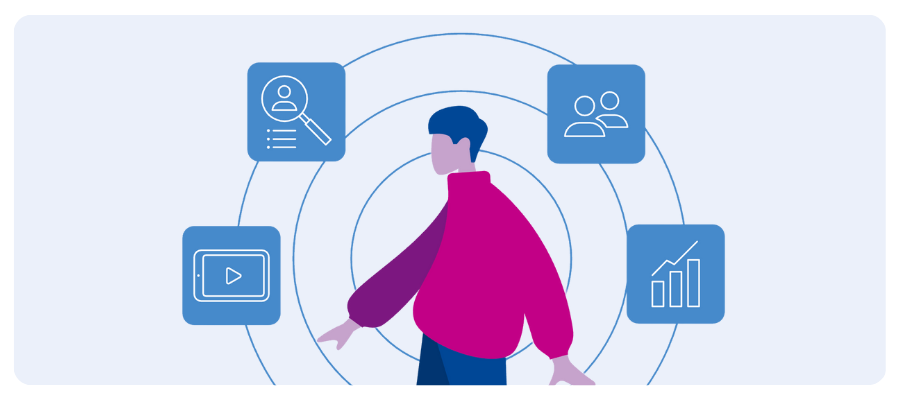
2. Onboard, model, and activate audiences
CMNs may have limited direct integrations with the platforms where brands want to activate their audiences, which can restrict where their first-party data can go off-site. Onboarding connects C
CMN audiences to more activation destinations so advertisers can use those audiences across the open web, connected TV (CTV), social media, and other channels. Experian Onboarding connects first-party data directly to more than 70 programmatic, social, and TV platforms instead of routing through intermediaries. It runs on our identity graph with 4.2 billion active digital IDs refreshed weekly.
For smaller CMNs, audience modeling can help address another challenge: audience size. Modeling can expand a CMN’s existing segments to reach more people with similar characteristics, giving advertisers more scale while staying grounded in the CMN’s first-party data.
For CMNs, stronger identity data and broader activation can make more of an onboarded audience reachable, creating more opportunities for advertisers to build awareness, drive sales, and achieve other desired outcomes.
CMNs can pair onboarding with curation to bring data and inventory together, giving them more control over inventory quality and campaign execution. Experian Curated Deals supports this support this approach by helping marketers, platforms, and publishers create media opportunities that combine data and inventory in one place.
This combination gives CMNs a path from stronger first-party data to larger, more addressable audiences and broader activation opportunities.
A playbook for CMNs still building off-site
Networks developing an off-site strategy should focus on four priorities:
Across each of these priorities, the goal is connection. Experian provides the neutral infrastructure layer that connects a CMN’s first-party data and identity with activation and measurement across the media environments where advertisers want to reach shoppers. This approach helps CMNs expand their options while keeping their data and business relationships at the center.
For CMNs that can’t compete on owned inventory alone, off-site activation creates another path to growth. Stronger first-party data, scalable audiences, broader activation, and curated media opportunities can help CMNs make more of the shopper relationships they already have.
Grow your commerce media network off-site with us
Click here to view Experian’s U.S. Consumer Data Privacy Notice.
This site is protected by reCAPTCHA and the Google Privacy Policy and Terms of Service apply.
About the author

Doug McLennan
Sr. Director, Product Management
Doug McLennan is the Sr. Director of Product Management at Experian Marketing Services where he oversees audience and activation products. His past work includes managing syndicated audiences at Oracle Data Cloud and building personalized video ad products at an agency. Doug lives in Colorado and skis as much as his family will allow.
FAQs
Off-site commerce media uses a CMN’s first-party audience data to reach shoppers beyond the network’s owned sites and apps. That can include CTV, social, and programmatic.
CMNs are investing in off-site advertising because O&O inventory has a natural limit. Off-site activation gives CMNs more opportunities to offer advertisers greater reach by extending their shopper data across channels, helping brands connect with audiences beyond the CMN’s owned properties.
Identity resolution gives CMNs a foundation for connecting first-party data to the addressable identifiers used across off-site media. Experian builds on that foundation as a neutral infrastructure layer, connecting first-party data and identity to activation and measurement without competing for the CMN’s media. This gives CMNs more flexibility in how and where they reach audiences across CTV, social, and programmatic channels.
Audience onboarding connects addressable audience segments to advertising platforms for activation. For CMNs with limited direct platform integrations, Experian Onboarding connects their first-party audiences to more programmatic, social, and TV platforms, giving brands more ways to reach those audiences through off-site campaigns.
A consistent identity foundation and regular audience refreshes can help CMNs maintain addressability as identifiers and household signals change. Experian is the neutral infrastructure layer that connects first-party data and identity to activation and measurement, helping CMNs extend their audiences across off-site channels while keeping their data and business relationships at the center.
CMNs can measure off-site campaigns by connecting media exposure across environments such as CTV and programmatic display to subsequent outcomes. Experian’s consistent identity foundation connects activation to measurement, helping CMNs tie ad exposure to actions such as online purchases, store visits, or other measurable actions and understand what’s driving campaign performance.
Latest posts
To our valued customers and partners, it’s been an exciting week here at Tapad! As announced in a press release this morning, Tapad is now a member of the Experian family. We’re thrilled to continue to grow as a leader in identity resolution under the umbrella of a global expert in data, analytics and technology. Tapad and Experian are deeply connected by our commitment to serving the needs of our customers; and with a focus on quality of the data we provide, we have a common goal for the future of identity in the advertising ecosystem. As part of this announcement, we wanted to assure you, our valued customer, that we remain deeply committed to serving you today just as we always have. Nothing will change in your daily operations with Tapad. Experian immediately recognized that the success and growth of Tapad was directly tied to the strength and depth of its team members. As such, the acquisition will not result in any changes to day-to-day contacts at Tapad, or processes with weekly graph deliveries and other product support. Experian’s faith and investment in Tapad’s future and the future of identity resolution underscores what we’ve always believed our products could achieve and that we will be able to continue serving brands, advertisers, publishers, and the advertising and marketing ecosystem for years to come. On a personal note, I am excited to be transitioning my role as Chief Operating Officer of Tapad to the General Manager position of a global business that’s achieved exponential growth over the past several years; culminating in this strategic acquisition that will no doubt bring even more value to our customers in the future. We remain committed to open communication and welcome any questions you may have. Thank you,Mark Connon | General Manager, Tapad Contact us today
Addressable TV has been through a transformation in the past year. Streaming content has become the most coveted space for creators and advertisers with the rise of new apps and platforms; but the influx of stay-at-home orders around the country have shifted television viewership as we know it, and streaming apps are popping up in droves to take advantage. So, how can you? With no shortage of opportunities to advertise on addressable TV and CTV, how does it fit into the media mix? And furthermore, how can you attribute this household-level device into your overall strategy? Tying it all together Layering addressable TV within digital ad campaigns couldn’t be easier today — but applying the right targeting and cadence between all of your digital efforts; and tying them together in attribution takes the right kind of data. Marketers can use CTV identifiers coupled with other device identifiers available in The Tapad Graph to not only target impressions but also map addressable TVs within the consumer journey; and unify strategies between household decision makers to better personalize messaging. 1 The Trade Desk Q2 2020 Earnings Call Transcript, August 2020; 2 iSpot Report, via Deadline, July 2020; 3 Flixed.io, January 2020 Contact us today
For the past several years ad-tech defined the value of identity at the individual level; made possible by the evolution of data, technology and machine-learning. But, earlier this year COVID-19 set in motion many shifts in consumer digital behavior. The more we’ve been working and learning from home, using devices that are shared amongst an entire household, the more apparent it is that marketers need to shift their strategies to align with these changes. Did you know the average household owns eleven or more connected devices? And the longer we’ve been at home, the more these devices are shared by multiple individuals. If you’re looking for a few simple ways to evolve from an individual focused strategy to a household strategy, here’s a good place to start: Audience segmentation Traditionally, audiences are built with a narrow focus on a single user, and what known attributes about that individual or their brand engagement can be leveraged for a targeting strategy. Now that screens are being shared between multiple users in a home, how can you be sure you’re identifying them correctly, and thus, segmenting them in the right buckets for targeting? The key lies in the ability to connect those points through identity resolution. Using ad exposure from household level devices, followed by a second engagement from an individual within that household can indicate a user is a better candidate for purchase or conversion than others. So before you build audiences for targeting, you can qualify them at the household level for segmentation with more confidence. Example: An auto advertiser uses audience segments from a third party provider such as ‘auto intenders’ to target individuals with new pricing offers. They would continue retargeting these users, unaware that some are connected in the same household, and thus are probably not all in the market to actually get a new car. By bucketing users that share a common household device within this third party segment, they can hone in on which individuals are actually in-market for a car and evolve their strategy to be more effective. Targeting Retargeting, frequency capping and sequential messaging have always been meant for an individual user — the more they’re exposed to your brand in a personalized way, the more likely they are to take the desired action. But, have you considered that multiple users could have a shared initial exposure to your brand? Today, you can target a household of potential consumers on a shared device like a CTV, and employ those retargeting strategies based on that common initial exposure. Starting at the household level, means you can compare movement through the funnel between different individuals in that household, and tailor your targeting accordingly. Perhaps you realize only one person in that household will convert and you tailor messaging to them more frequently, while confidently suppressing the other individuals. Example: a CPG brand uses OTT advertising, but doesn’t incorporate it within their sequential strategy, because they consider it just a ‘brand awareness’ opportunity. By using OTT more strategically as a household level engagement, it can reveal which individuals within a household are more favorable towards a brand further down the funnel. So, you can spend impressions targeting those users, rather than wasting impressions on multiple individuals within the household. Measurement Measurement and attribution are imperative to understanding the path to purchase and making strategies more efficient over time. Often that efficiency involves adding or removing devices and channels from a targeting strategy based on their contribution to an action or conversion by an individual. This year we’re seeing addressable TV devices explode in use, which are shared at the household level. Even desktop computers are being used by more people in the home due to COVID-19. So, assuming a linear path of attribution by an individual is missing the full picture. Identity resolution can help you understand where messaging was more effective for some users in the household than others, and leverage that insight to continue more effective strategies in the future. Example: Without a household view, a direct-to-consumer brand would assume all interactions from one device would be coming from a single individual, and that could create a higher cost-per analysis. By incorporating the household level devices into attribution models, they can find efficiencies between touch points of multiple users, and learn how those split off into individual paths to conversion. Not only can this DTC create a more effective model, but they can use that model to create cost efficiencies in the future. Contact us today