Loading...

What happens when first-party, third-party, contextual, and geographic data work together

Published: January 28, 2026 by Scott Kozub, VP, Product Management

At A Glance

Your audience strategy works like a story. First-party data sets the outline, but scale and relevance come from connecting additional signals such as contextual, geographic, and behavioral data. Experian helps CMOs unify these inputs through identity, enabling consistent activation, privacy-forward targeting, and measurable outcomes as marketing strategies evolve in 2026.

How should CMOs think about data as part of their audience strategy?

The best digital marketers possess excellent storytelling capabilities—and they fuel the plot with data.

When you think about it, your audience strategy is the whole story, and the type of data you use helps create each chapter. Just as any good book incorporates numerous literary devices, you must use more than one type of data to develop a dynamic, relevant, and timely narrative that captures your target users’ attention.

In 2026, marketers should prioritize and invest in data and targeting strategies beyond just first-party to drive growth, improve efficiency, and strengthen customer relationships.

Our 2026 Digital trends and predictions report is available now and reveals five trends that will define 2026. From curation becoming the standard in programmatic to AI moving from hype to implementation, each trend reflects a shift toward more connected, data-driven marketing. The interplay between them will define how marketers will lead in 2026.

Why is first-party data not sufficient on its own?

First-party data provides a strong foundation for targeting and measurement. It reflects information consumers have shared directly through brand interactions. That makes it reliable and central to audience strategy.

That foundation alone does not tell the full story. First-party data defines known customers, but limits reach and frequency. Growth depends on expanding beyond existing relationships.

Think of first-party data as a way to create an outline, not the whole story, about your target audiences—the main characters in your marketing. To flesh out the entire narrative about them, you must source, connect, and activate additional data.

The ability to unify different data sources with accuracy, scale, and privacy at the forefront sits at the core of Experian’s business. We unify household, individual, device, demographic, behavioral, and first-party signals, along with contextual and geographic data points, to build a reliable view of consumers, even when specific signals are missing. This clarity helps you personalize, target, activate, and measure with confidence.
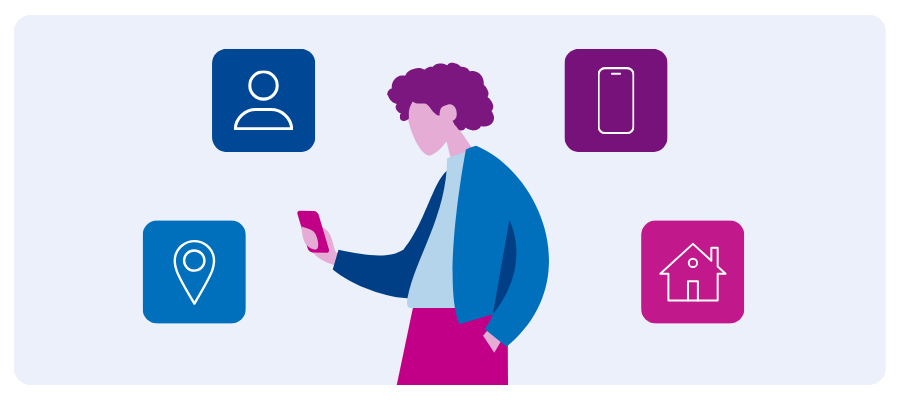
A person looking at their phone with icons for location, individual, phone, and house around them in a circle

By layering third-party data, contextual data, and geolocation data onto your first-party data foundation, your advertising strategies become stronger than if you used any of these sources as standalone solutions.

How do different types of third-party data add depth to audience profiles?

Third-party data expands understanding beyond known customers. If first-party data is the outline, third-party data helps with “character development”—a.k.a., addingdetailto your audience profiles. Good third-party marketing data complements first-party insights with demographic, behavioral, and transactional context, providing the missing puzzle pieces to complete the full customer profile. Filling in gaps in customer understanding helps youidentify, reach, and engage current and new customers more effectively. Third-party data allows brands to build loyalty with consumers by speaking to their interests and intent behind purchases.

Third-party data opens up new targeting tactics for advertisers, such as:

Behavioral

How people engage with brands or how they use social media

Demographic

Age, gender, education, income, and religion

Health

A combination of demographics, behaviors, and health needs

Interest

Delivering ads based on interests, hobbies, or online activities

Location

Where people live, work, or spend large amounts of time

Psychographics

Shared characteristics like attitudes, lifestyles, and interests

Purchases

Using previous purchase behavior to identify the right audiences

In addition to targeting, third-party data also remains critical to AI models, which must train on both structured and unstructured data. At Experian, our AI-powered technology interprets live bidstream data, device activity, content, and timing to optimize in the moment, ensuring campaigns deliver meaningful relevance, not just broader reach.

How are contextual and geographic approaches reshaping audience targeting?

Contextual and geographic approaches to targeting focus on environment and behavior rather than identifiers. Regulatory scrutiny, stricter and more fragmented compliance standards, and rising consumer expectations are transforming how marketers approach third-party data targeting. Evolving privacy laws and inconsistent identifiers across environments require new approaches that balance performance and privacy.

Contextual and geographic targeting help marketers reach relevant audiences while maintaining privacy.

What is data-informed contextual targeting?

Contextual targeting connects audience attributes to the content environments people choose. It helps determine the setting of your story—where your characters spend their time.

Solutions like Experian’s Contextually-Indexed Audiences harness advanced machine learning technology to combine contextual signals (a tried–and-true targeting tactic) with third-party targeting to ensure marketers reach their target audiences on the content they tend to consume, regardless of environment or location. What’s excellent about data-informed contextual targeting is that it moves beyond traditional keyword-based strategies to reach consumers on websites that over-index for visitors with the demographics, behaviors, or interests they are looking to target.

What is data-informed geotargeting?

Geotargeting uses shared location patterns to support relevance at scale. Geotargeting is another possibility for further developing the scene of your story.

People with similar behaviors and interests tend to live in similar areas, which is why so much effort goes into location planning for brick-and-mortar stores. Data-informed geotargeting combines geos with third-party data to make more informed media buys based on common behaviors within a geographic location.

We launched our Geo-Indexed audiences, which use advanced indexing technology to identify and reach consumers based on their geographic attributes. These audiences help marketers discover, segment, and craft messaging for consumers without relying on sensitive personal information, enabling them to reach target audiences while maintaining data privacy confidently.

What role does AI play in third-party data targeting?

AI acts like an automated editor of your book, refining and finding new ways to put valuable third-party audiences and data to work without relying on segments linked to known or disparate identifiers.

We’ve used AI and machine learning at Experian for decades to bring identity, insight, and generative intelligence together so brands and agencies can reach the right people, with relevance, respect, and simplicity.

Why does a balanced, integrated approach that combines first-party, third-party, contextual, and geo-targeting data matter?

The combined effects of integrating third-party, contextual, and geotargeting data (and the marketing tactics it underpins) with first-party data will drive your success.

Think of how any good author crafts a story. Regardless of whether it’s fiction or non-fiction, they draw on both first-person experience and external research and sources to develop their plot. No single data source tells the full story. Integration allows marketers to understand audiences more completely and act with confidence.

Pooling these inputs together moves you closer to your goal of understanding the whole story about your target customers. In fact, an almost even number of marketers plan to use contextual targeting (41%) and first-party data (40%) as their main targeting strategies, amid privacy laws and the loss of persistent advertisers.

Primary data strategyPercent of marketers that plan to use this data strategy
Contextual targeting41%
First-party data40%

A brand with strong first-party insights can extend reach by layering in additional signals. For example, a nutrition brand that knows who purchases protein supplements can expand prospecting by combining:

First-party signals

Customers who purchase protein supplements

Contextual signals

Engagement with fitness blogs, healthy recipe content, or workout apps

Geographic signals

Consumers located in the Greater Philadelphia area

By connecting these inputs, the brand can identify new health-conscious audiences with similar interests and behaviors. This approach supports privacy-safe targeting while improving engagement and performance.

How can marketers build an integrated data strategy in 2026?

An integrated data strategy reduces friction and supports scale. The right data partner offers a unified solution that helps unify data, activate audiences, and adapt as the ecosystem evolves. Here’s how:

Organize data

Create a clean, usable data foundation by eliminating fragmented silos. Experian’s solutions unify disparate data, enabling identity resolution and a single customer view.

Create a complete profile

Experian links a persistent offline core of personally identifiable information (PII) data with fresh digital signals, giving you a high-fidelity view of consumers to decorate with marketing data. This allows for improved customer understanding and personalized marketing that competitors struggle to replicate.

Build addressable audience segments

Create audiences using a mixture of signals, including first-party data, third-party behavioral, interest, and demographic data, as well as contextual signals. If you partner with Experian, you can use audiences built on our identity graph to guarantee accuracy, scale, and maximum addressability.

Drive innovation

Look for partners and platforms that prioritize innovation in finding new ways to reach target audiences across the ecosystem. You don’t want a vendor or a system that can’t keep pace and adapt with our rapidly evolving industry.

Marketers who want to create and activate campaigns more efficiently and effectively in 2026 need an integrated approach that combines first-party, third-party, contextual, and geotargeting data. Streamlining data integration and activation positions brands and agencies for sustainable growth and stronger consumer relationships in a privacy-conscious marketplace.

Build your next chapter on a connected data foundation

As audience strategies evolve, connection and interoperability matter more than ever. Connect with our team to learn how Experian helps marketers unify data, identity, and activation across channels.

This site is protected by reCAPTCHA and the Google Privacy Policy and Terms of Service apply.


About the author

Scott Kozub headshot, VP, Product, Experian

Scott Kozub

VP, Product Management, Experian

Scott Kozub is the Vice President of the Product Management team at Experian Marketing Services working across the entire product portfolio. He has over 20 years of product experience in the marketing and advertising space. He’s been with a few startups and spent many years at FICO and Oracle Data Cloud heavily focused on loyalty marketing and advertising technology.


FAQs

How should CMOs think about data as part of their 2026 audience strategy?

In 2026, CMOs should prioritize and invest in data and targeting strategies that combine first-party, third-party, contextual, and geographic data to drive growth, improve efficiency, and strengthen customer relationships. 

Why is first-party data not sufficient on its own? 

First-party data is not sufficient on its own because first-party data defines known customers but limits reach and frequency. Growth depends on expanding beyond existing relationships. The ability to unify different data sources with accuracy, scale, and privacy at the forefront sits at the core of Experian’s business. We unify household, individual, device, demographic, behavioral, and first-party signals, along with contextual and geographic data points, to build a reliable view of consumers, even when specific signals are missing. This clarity helps you personalize, target, activate, and measure with confidence.

How do different types of third-party data add depth to audience profiles?

Third-party data expands understanding beyond known customers. Third-party data opens up new targeting tactics for advertisers, such as:  
Location: Where people live, work, or spend large amounts of time
Health: A combination of demographics, behaviors, and health needs
Purchases: Using previous purchase behavior to identify the right audiences 
Behavioral: How people engage with brands or how they use social media 
– Interest: Delivering ads based on interests, hobbies, or online activities
Psychographics: Shared characteristics like attitudes, lifestyles, and interests
Demographic: Age, gender, education, income, and religion 
 
In addition to targeting, third-party data also remains critical to AI models, which must train on both structured and unstructured data. At Experian, our AI-powered technology interprets live bidstream data, device activity, content, and timing to optimize in the moment, ensuring campaigns deliver meaningful relevance, not just broader reach. 

What is data-informed contextual targeting?

Data-informed contextual targeting connects audience attributes to the content environments people choose. It helps determine the setting of your story—where your characters spend their time. Experian’s Contextually-Indexed Audiences harness advanced machine learning technology to combine contextual signals (a tried–and-true targeting tactic) with third-party targeting to ensure marketers reach their target audiences on the content they tend to consume, regardless of environment or location.

What is data-informed geotargeting?

Data-informed geotargeting uses shared location patterns to support relevance at scale. Experian launched our Geo-Indexed audiences, which use advanced indexing technology to identify and reach consumers based on their geographic attributes. These audiences help marketers discover, segment, and craft messaging for consumers without relying on sensitive personal information, enabling them to reach target audiences while maintaining data privacy confidently.

What role does AI play in third-party data targeting?

In third-party data targeting, AI refines and finds new ways to put valuable third-party audiences and data to work without relying on segments linked to known or disparate identifiers. We’ve used AI and machine learning at Experian for decades to bring identity, insight, and generative intelligence together so brands and agencies can reach the right people, with relevance, respect, and simplicity. 


Latest posts

Loading…
Four key themes from Cannes Lions 2023

It’s been one week since the highly anticipated Cannes Lions 2023 – the event of the year for advertising and creativity. We're thrilled to share our top four key takeaways from the event, showcasing what the industry will prioritize in the upcoming year. Signal loss At Cannes Lions 2023, experts underlined the detrimental effects of signal loss on advertising and emphasized the significance of having diverse channels. Discussions emphasized the importance of adapting paid media strategies to align with evolving consumer behaviors in order to remain relevant in the ever-changing landscape. Urgency in planning and avoiding being caught without a solid strategy was a common theme throughout the event. Alternative identifiers, like first-party data, were highlighted, as they prioritize privacy-centric approaches. Contextual advertising emerged as a key part of the solution, providing relevant ads that fit seamlessly into the user's experience. Collaboration Collaboration was a major theme at Cannes Lions 2023. Attendees explored topics such as maintaining privacy and identifying the right attributes for effective targeting. Clean rooms were discussed as a way to ensure privacy when sharing data, and highlighted partnerships as the key to unlocking interoperability within the advertising ecosystem. The discussions underscored the need for industry players to join forces and collaborate on solutions that benefit all stakeholders in the ecosystem. “What makes Cannes unique is that you have a lot of decision makers in the room at the same time. This leads to more efficiency in terms of coming up with goals and objectives and really getting to the heart of the key aspects for us to build partnerships.”alison omealia, vp, customer success, experian Personalization Personalization was a key topic of discussion at Cannes Lions 2023, with its growing significance in advertising taking center stage. The event emphasized the need to focus on serving up tailored content that resonates with individual consumers, cultivating brand affinity. The intersection of science and art was highlighted, emphasizing the role of data-driven insights and creativity in supporting frequency capping and delivering engaging content. Advertisers are adapting to cookie deprecation by shifting from cookie-based third-party targeting to first-party data solutions. This is due to the significant changes in the consumer privacy landscape, which have limited advertisers' access to signals emitted by consumers through their devices and browsers. As a result, alternative IDs like UID2, Ramp ID, and ID5 are emerging as viable options for advertisers to continue personalized targeting. Balancing AI and creativity at Cannes Lions 2023 Participants shared invaluable insights on how to strike the right balance between harnessing AI's capabilities and nurturing creativity to keep the human touch alive. The event emphasized the importance of understanding the boundaries of AI while utilizing tools that drive innovation and imagination. Attendees explored the dynamic roles that AI provides and discussed how it can help push the boundaries of their creativity while still keeping the human element intact. As technology continues to advance, so does the need for advertisers to adapt their approach and integrate AI in a way that enhances their creative output. Experian events at Cannes Lions 2023 We hosted a series of events that included a kick-off event and four panels. The activities were designed to provide attendees with valuable insights on various topics related to advertising and data privacy. Here's a recap of what we covered during the week. Experian’s Cannes Lions kick-off event We co-hosted a kick-off event on Sunday with Audigent. It was a successful event that brought people together to launch an important week in the AdTech industry and build connections with clients and prospects alike. Data on the sell-side Ongoing signal loss has marketers, agencies, and platforms tapping directly into the sell-side for high-quality audience and context. In this panel, industry experts from Truthset, Captify, Audigent, Newsweek, and PubMatic joined Experian to discuss the imminent disappearance of cookies and the need to adapt and future-proof data privacy strategies. The deprecation of third-party cookies presents an incredible opportunity to redefine data privacy practices and empower consumers. Our panelists emphasized the need to adapt and invest in alternative identifiers in order to thrive in a cookie-less future. Publishers were urged to create valuable content, engage in first-party activities, and consider the next generation of consumers who are growing up without traditional identifiers. The fragmented landscape calls for a variety of tactics and partnerships, while AI can provide opportunities to explore beyond deterministic identifiers, fostering creativity and innovation in advertising practices. Stacking the marketer's toolbox for success In partnership with Adweek Abroad in Cannes, industry leaders from FreeWheel, Tubi, and Instacart joined Experian to discuss opportunities for brands to unlock deeper, richer, and more scalable insights into current and potential customers. The panelists highlighted several key considerations, including building a robust first-party data strategy, ensuring accuracy in data quality partnerships, and establishing better-connected communications and relationships with consumers. Participants acknowledged the value of consumer data and urged advertisers to remain purpose-driven, always putting the viewer first. The freshness and recency of data were identified as critical factors for establishing quality connections with consumers and staying attuned to consumer trends. What does the future of identity hold? During this panel discussion, industry leaders from the IAB, MiQ, Cint, Direct Digital Holdings, and Tatari joined Experian to explore the future of identity. The panelists discussed the challenges cookie deprecation poses in programmatic advertising and the need for new identifiers and solutions. They also acknowledged the expanding media landscape and the importance of frequency capping and attribution measurement in a post-cookie era. Trends to watch for include the potential consolidation of identifiers and the movement of first-party data in-house by larger media companies. Panelists shared different views on cookie deprecation readiness and the overhype of AI in the industry. Streaming takes center stage OMG, Roku, AMC Networks, Paramount, and Disney joined Experian to discuss streaming TV as a fragmented and evolving landscape. The panelists debated whether it has become a performance channel and emphasized the need for client education, attribution, and optimizing performance metrics. They also discussed reaching audiences across different mediums with data interoperability, audience targeting, and reliable identity solutions. The panelists explored the emerging trend of AI, optimizing ad placement, refining targeting, streamlining creative approval, and enhancing ad breaks. “A lot of trends in AdTech are relevant to TV, but the most consistent trend has definitely been having a solid identity source throughout the whole lifecycle of a campaign within TV.”ali mack, sr. director, platforms, experian Watch our panels Let’s keep the conversation going The innovation and possibilities for signal loss, collaboration, personalization, and balancing AI and creativity are limitless, but understanding exactly how to get there is what can make all the difference. As we wrap up another successful week at Cannes Lions, let's use these conversations as an opportunity to advance together toward a more connected future — what trends are you most looking forward to? If you’d like to discuss any of these topics further, get in touch with us! Check out more Cannes content: Insights from a first-time attendee Four new marketing strategies for 2023 Exploring the opportunities in streaming TV advertising The future of identity in cookieless advertising Maximize ad targeting with supply-side advertising Follow us on LinkedIn or sign up for our email newsletter for more informative content on the latest industry insights and data-driven marketing. Get in touch Latest posts

Jun 28,2023 by Hayley Schneider, Sr. Manager, Content Marketing

Five audience categories to add to your summer travel advertising strategy

Based on the Q1 U.S. Travel Association Consumer Quarterly Tracker conducted by Ipsos, 52% of American adults are eagerly planning to embark on leisure travel within the next six months. With the pandemic limiting travel opportunities for so long, people are more willing than ever to prioritize travel and make up for lost time. With the summer vacation season upon us, it's crucial to identify consumers who are eager to travel and implement a targeted travel advertising strategy. To help you stand out in the competitive marketplace, we’ll share five audiences you should consider when building out your summer travel advertising activation plan. What separates Experian's syndicated audiences Experian’s 2,400+ syndicated audiences are available directly on over 30 leading television, social, programmatic advertising platforms, and directly within Audigent for activation within private marketplaces (PMPs).   Reach consumers based on who they are, where they live, and their household makeup. Experian ranked #1 in accuracy by Truthset for key demographic attributes.   Access to unique audiences through Experian’s Partner Audiences available on Experian’s data marketplace, within Audigent for activation in PMPs and directly on platforms like DirectTV, Dish, Magnite, OpenAP, and The Trade Desk. Five travel advertising audience categories With so many travel audiences out there, it can be overwhelming to figure out which ones to target. That's why we've compiled a list of the top five audience categories you should focus on: Seasonal spenders Frequent travelers Travel transportation methods Luxury travelers Vacation type Let's break down each category so you can better understand the travel behaviors and preferences of each group. Seasonal spenders These travelers are known for their willingness to spend during peak travel seasons. They're willing to spend more for travel experiences and have a high propensity to travel. Let's take a look at a few audience segments included in this category that you can activate as part of your summer travel advertising strategy. Retail Shoppers: Purchase Based > Travel > Vacation/Leisure Travelers: Summer Trips: Consumers in this segment are frequent, high spenders of summer travel. Mobile Location Models > Visits > Summer Break Travelers: Consumers in this segment are likely to travel during summer break. Retail Shoppers: Purchase Based With Experian's Retail Shoppers: Purchase Based audiences, you can reach consumers who have a high propensity to buy in specific categories like toys, furniture, apparel, and more. This audience is created by combining known credit and debit transactions with advanced modeling to ensure the highest likelihood of future purchases. You can use these audiences to find travelers interested in the outdoors that spend their money on related gear and activities, or travelers who use rental cars throughout their trip. Mobile Location Models Our Mobile Location Models are based on a statistical analysis of mobile location data from devices. The model is built from individual, household, and area-level Experian Marketing Data. You can use these audiences to find travelers that like to visit theme parks, travel during the July 4th holiday, and travel during summer break. Frequent travelers Consumers in this audience category prioritize travel as a lifestyle choice and they're always looking for their next adventure. They're willing to spend money to make their travel dreams come true and often participate in loyalty programs to earn rewards. Here are just a few examples of the audience segments you can activate to target frequent travelers as part of your travel advertising strategy: Lifestyle and Interests (Affinity) > Travel > Frequent Flyer Program Member: Consumers in this segment are likely to be members of frequent flyer programs. Retail Shoppers > Purchase Based > Travel > Hotels > Frequent Spend: Consumers in this segment frequently spend at hotels like Holiday Inn, Hyatt, Marriott, and Wyndham. Lifestyle and Interests Experian’s Lifestyle and Interests audience segments make it easy to identify and target consumers based on their lifestyle characteristics. These audiences cover a wide array of lifestyle categories, such as: Activities/Interests Purchasing Behavior Contributors/Memberships Lifestyle/General You can use these audiences to find travelers that enjoy boating, like to visit zoos, and are fishing enthusiasts. Travel transportation methods This audience category consists of the transportation methods travelers use to reach their destination or use throughout their travel experience. Here are just a few examples of the audience segments you can activate to target travelers based on their preferred mode of transportation as part of your travel advertising strategy: Autos, Cars, and Trucks > Vehicle Lifestyle Ownership > Recreational Vehicle (RV) Travelers: Consumers in this segment are likely to currently own an RV and use it for travel. Lifestyle and Interests (Affinity) > Travelers > Air Travel (FLA / Fair Lending Friendly): Consumers in this segment are interested in traveling by plane based on their internet activity in the last 90 days. Luxury travelers These high-end travelers seek exclusive, high-end experiences, from top-tier dining to luxurious accommodations. Here are just a few examples of the audience segments you can activate to target luxury travelers as part of your travel advertising strategy: Consumer Financial Insights > Discretionary Spend – Travel > $10,000+: Consumers in this segment are likely to spend more than $10,000 for travel. Retail Shoppers: Purchase Based > Travel > Hotels: Luxury: Consumers in this segment are frequent, high spenders at high-end hotels like Renaissance Hotels, Westin, and Hilton Hotels. Vacation type Unlike the previous categories, our vacation type category focuses on the type of trip a traveler is planning and the destination they're heading to. Whether it's a beach getaway or an adventure-filled trip, segments within this category can help you target consumers looking for those particular experiences. Here are just a few examples of the audience segments you can activate to target travelers by vacation type as part of your travel advertising strategy: Retail Shoppers: Purchase Based > Travel > National Park Travelers: Consumers in this segment are likely to travel to national parks. Travel Intent > Activities > Winery Distillery Brewery Tours: Consumers in this segment are likely to visit wineries, distilleries, and breweries while traveling. Family size and structure In addition to our five recommended summer travel advertising audience categories, it's important to add audiences related to family size and structure to your targeting strategy for the summer travel season. Families with children, for example, are a significant market for summer travel, as parents are looking to create memories with their kids before they go back to school. Families with children have distinct needs and preferences when it comes to travel. For instance, they may need larger accommodation options, kid-friendly activities, and safe environments. On the other hand, married couples with no children or single travelers may have different preferences for their travel experiences. These groups may be looking for more adventurous or adult-oriented experiences, such as camping, hiking in national parks, or winery tours. By segmenting your audience based on family size and structure, you can provide more relevant and personalized recommendations to your target audience, leading to higher engagement and conversion rates. Here are just a few examples of the audience segments you can activate to target travelers based on their family size and structure as part of your travel advertising strategy: Demographics > Marital Status > Single: Consumers in this segment are likely to be single. Lifestyle and Interests (Affinity) > Moms, Parents, Families > Married Mothers: Consumers in this segment are likely to be married females with at least one child under the age of 18 years old. Demographics > Presence of Children > Ages: 0-18: Consumers in this segment are likely to have children between the ages 0 to 18 years old in a household. Demographics > Presence of Children > Ages: 7-9: Consumers in this segment are likely to have children between the ages 7 to 9 years old in a household. We can help you reach summer travelers From seasonal spenders to luxury travelers, there are a host of audiences you should keep in mind as you build out your summer travel advertising strategy. Experian audiences can help you tap into the potential of your summer campaigns by enabling you to identify, reach, and engage with a variety of travelers in their preferred channels. Need a custom audience? Reach out to our audience team and we can help you build and activate an Experian audience on the platform of your choice. Additionally, work with Experian’s network of data providers to build audiences and send to an Audigent PMP for activation.  Contact us Latest posts

Jun 13,2023 by Hayley Schneider, Sr. Manager, Content Marketing

Sell-side targeting with OpenX

We’re excited to introduce the next segment in our Q&A series, Ask the Expert! Ask the Expert features a series of conversations with product experts where we dive into the areas you care most about like identity resolution, targeting, attribution, and more. Our next segment features a conversation about sell-side targeting. Mike Chowla, SVP of Product at OpenX joins us to chat with Experian’s SVP of Sales & Partnerships, Chris Feo. OpenX is the world's leading sell-side platform for audience, data, and identity targeting. In their conversation, Mike and Chris review: The shift to targeting on the sell-side How first- and third-party data are being used on the sell-side How OpenX is thinking about alternative IDs Watch the recording What is sell-side targeting? Sell-side targeting optimizes the way buyers and supply-side platforms (SSPs) work together. This approach moves the responsibility of inventory and audience targeting from the demand-side platform (DSP) into the SSP, providing advertisers with increased reach and better performance. With sell-side targeting, locating your target audience becomes easier as you have a more direct connection with publishers. This increases your ability to scale against a target audience. Specifically, the SSP directly matches the buyer's audience or data segment to the publisher inventory and audience and automatically sends the impression to the buyer's DSP of choice via a deal ID, providing advertisers with improved reach and performance metrics as well as control over their inventory. With more direct access, your budget can likely go further, and you can decrease your effective cost per mille (eCPM) and get more working media. "Supply-side targeting is the next phase of how supply path optimization (SPO) and buyers will need to work more closely with SSPs." – Mike Chowla, SVP, Product, OpenX Buying on the sell-side vs. open exchange When buying on the open exchange, you have access to a vast number of impressions. With sell-side targeting, you can apply your campaign targeting directly on the supply-side and activate those impressions through a deal ID. Sell-side targeting works across various formats including web display, mobile, in-app, and connected TV (CTV) for a seamless advertising experience. OpenX offers the unique capability to match users using their device graph within their SSP. This means you can target users from traditional data sources such as cookies or mobile ad IDs (MAIDs) and reach them in CTV or app environments. This gives you even more reach and precision in your advertising efforts. The role of first- and third-party data on the sell-side Buyers are showing a keen interest in bringing their own first-party data into the process of sell-side targeting. Meanwhile, certain agencies have been actively involved in working with identity and data. OpenX is currently collaborating with several agency ID solutions such as Choreograph, Merkel, and Horizon. Buyers are also purchasing third-party data and data segments from various providers through OpenX's platform for sell-side targeting purposes. By utilizing this data on the supply side, buyers are able to increase the match rate against their first- and third-party data segments in all environments. This ultimately maximizes scale against these audiences and drives a more efficient CPM due to eliminating waste. Measurement and attribution on the sell-side In the current state of SSP advertising, there is more of an emphasis on targeting capabilities than measurement and attribution. That said, SSPs can provide granular log level reports that can be utilized for multi-touch attribution (MTA) or mixed media models (MMM). These granular insights not only inform measurement and attribution models, but they also provide valuable optimization insights such as clearing price. Additionally, advertisers have all of the same reporting options that they’re used to getting through their DSP because their buys are activated via deal ID in the DSP of their choice. What to consider when transitioning to sell-side targeting There are two primary items you should consider when transitioning to sell-side targeting: Supply Reach Reach Collaborating with partners who have the right capabilities can greatly improve reach and audience extension across different devices. For instance, if you bring your first-party audience or a third-party audience and are identifying that consumer via a cookie or MAID, being able to extend that targeting segment to other devices and platforms can be highly beneficial. Supply It's crucial to collaborate with partners who have the right access to supply and direct connections with publishers. While targeting is essential, it's equally important to have high-quality supply to drive performance. Reaching consumers in a cookieless future Whether you're targeting on the demand or sell-side, it always starts with the consumer and who you're trying to reach. Significant changes in the consumer privacy landscape are impacting advertisers' ability to access various signals emitted by consumers through their devices and browsers. Recent developments from Apple and Google have further amplified this situation. Alternative IDs as a solution to signal loss In response, we're seeing the emergence of alternative IDs like UID2, Ramp ID, and ID5. OpenX supports these types of IDs and considers them crucial for audience buying in a privacy-centric cookie-less future. We are still in the early stages of this evolution. While some of the IDs have good coverage, cookies will continue to be the primary targeting method as long as they remain available. Nevertheless, we see alternative IDs as one of several solutions that will become increasingly important as third-party cookies disappear. Contextual buying will also emerge, and a set of solutions will come together to enable advertisers to keep finding their audience in a cookie-less world. Overcoming signal loss with identity resolution Looking ahead, as we continue to lose signals due to the evolving consumer privacy landscape, we will witness two things: Continued fragmentation A wide variety of identifiers Content will continue to be available on various devices. We're currently experiencing the emergence of connected TV, but who knows what other devices will surface over the next five to ten years. As cookies disappear, which have been the primary identifier, and alternative IDs are introduced, the wide variety of identifiers will create further fragmentation. This highlights the need for identity in the future. Identity resolution at Experian matches fragmented identifiers to a single profile to create a unified, cross-channel view of your consumers. Our identity resolution solutions can help future-proof your marketing strategies. How Experian and OpenX work together Experian is a key player in OpenX's OpenAudience solution and helps to power many of their data segments as well as their identity graph. While OpenX collaborates with a variety of providers and operates a fully interoperable platform, Experian remains valuable to the core technology within OpenX's SSP. "Experian powers a lot of the data segments and identity graph that OpenX has in our OpenAudience capabilities as part of our SSP." – Mike Chowla, SVP, Product, OpenX Watch the full Q&A Visit our Ask the Expert content hub to watch Mike and Chris's full conversation on sell-side targeting. In the Q&A, Mike and Chris also share their thoughts on the impact artificial intelligence (AI) will have on the AdTech industry and their go-to sources for staying up to date on all things AdTech. Watch now Get in touch About our experts Mike Chowla, SVP, Product, OpenX Mike Chowla is the SVP of Product at OpenX where he leads product development and innovation, from customer discovery and user research to the development, delivery, and support of a market-leading product suite. Chowla holds a BS in Engineering from the University of Southern California, and an MBA from The University of Pennsylvania. Chris Feo, Chief Business Officer, Experian As SVP of Sales & Partnerships, Chris has over a decade of experience across identity, data, and programmatic. Chris joined Experian during the Tapad acquisition in November 2020. He joined Tapad with less than 10 employees and has been part of the executive team through both the Telenor and Experian acquisitions. He’s an active advisor, board member, and investor within the AdTech ecosystem. Outside of work, he’s a die-hard golfer, frequent traveler, and husband to his wife, two dogs, and two goats! Latest posts

Jun 08,2023 by Experian Marketing Services

Subscribe to our newsletter

Enter your name and email for the latest updates

This site is protected by reCAPTCHA and the Google Privacy Policy and Terms of Service apply.

About Experian Marketing Services

At Experian Marketing Services, we use data and insights to help brands have more meaningful interactions with people. As leaders in the evolution of the advertising landscape, Experian Marketing Services can help you identify your customers and the right potential customers, uncover the most appropriate communication channels, develop messages that resonate, and measure the effectiveness of marketing activities and campaigns.

Visit our website

Subscribe to our newsletter

Stay up to date on the latest industry news and receive expert tips from our marketing experts.
Subscribe now!