At A Glance
Your audience strategy works like a story. First-party data sets the outline, but scale and relevance come from connecting additional signals such as contextual, geographic, and behavioral data. Experian helps CMOs unify these inputs through identity, enabling consistent activation, privacy-forward targeting, and measurable outcomes as marketing strategies evolve in 2026.How should CMOs think about data as part of their audience strategy?
The best digital marketers possess excellent storytelling capabilities—and they fuel the plot with data.
When you think about it, your audience strategy is the whole story, and the type of data you use helps create each chapter. Just as any good book incorporates numerous literary devices, you must use more than one type of data to develop a dynamic, relevant, and timely narrative that captures your target users’ attention.
In 2026, marketers should prioritize and invest in data and targeting strategies beyond just first-party to drive growth, improve efficiency, and strengthen customer relationships.

Our 2026 Digital trends and predictions report is available now and reveals five trends that will define 2026. From curation becoming the standard in programmatic to AI moving from hype to implementation, each trend reflects a shift toward more connected, data-driven marketing. The interplay between them will define how marketers will lead in 2026.
Why is first-party data not sufficient on its own?
First-party data provides a strong foundation for targeting and measurement. It reflects information consumers have shared directly through brand interactions. That makes it reliable and central to audience strategy.
That foundation alone does not tell the full story. First-party data defines known customers, but limits reach and frequency. Growth depends on expanding beyond existing relationships.
Think of first-party data as a way to create an outline, not the whole story, about your target audiences—the main characters in your marketing. To flesh out the entire narrative about them, you must source, connect, and activate additional data.
The ability to unify different data sources with accuracy, scale, and privacy at the forefront sits at the core of Experian’s business. We unify household, individual, device, demographic, behavioral, and first-party signals, along with contextual and geographic data points, to build a reliable view of consumers, even when specific signals are missing. This clarity helps you personalize, target, activate, and measure with confidence.
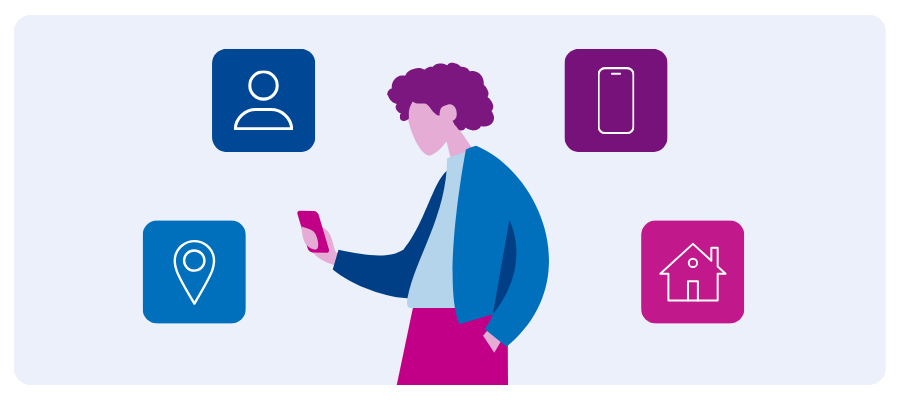
By layering third-party data, contextual data, and geolocation data onto your first-party data foundation, your advertising strategies become stronger than if you used any of these sources as standalone solutions.
How do different types of third-party data add depth to audience profiles?
Third-party data expands understanding beyond known customers. If first-party data is the outline, third-party data helps with “character development”—a.k.a., addingdetailto your audience profiles. Good third-party marketing data complements first-party insights with demographic, behavioral, and transactional context, providing the missing puzzle pieces to complete the full customer profile. Filling in gaps in customer understanding helps youidentify, reach, and engage current and new customers more effectively. Third-party data allows brands to build loyalty with consumers by speaking to their interests and intent behind purchases.
Third-party data opens up new targeting tactics for advertisers, such as:
In addition to targeting, third-party data also remains critical to AI models, which must train on both structured and unstructured data. At Experian, our AI-powered technology interprets live bidstream data, device activity, content, and timing to optimize in the moment, ensuring campaigns deliver meaningful relevance, not just broader reach.
How are contextual and geographic approaches reshaping audience targeting?
Contextual and geographic approaches to targeting focus on environment and behavior rather than identifiers. Regulatory scrutiny, stricter and more fragmented compliance standards, and rising consumer expectations are transforming how marketers approach third-party data targeting. Evolving privacy laws and inconsistent identifiers across environments require new approaches that balance performance and privacy.
Contextual and geographic targeting help marketers reach relevant audiences while maintaining privacy.
What is data-informed contextual targeting?
Contextual targeting connects audience attributes to the content environments people choose. It helps determine the setting of your story—where your characters spend their time.
Solutions like Experian’s Contextually-Indexed Audiences harness advanced machine learning technology to combine contextual signals (a tried–and-true targeting tactic) with third-party targeting to ensure marketers reach their target audiences on the content they tend to consume, regardless of environment or location. What’s excellent about data-informed contextual targeting is that it moves beyond traditional keyword-based strategies to reach consumers on websites that over-index for visitors with the demographics, behaviors, or interests they are looking to target.
What is data-informed geotargeting?
Geotargeting uses shared location patterns to support relevance at scale. Geotargeting is another possibility for further developing the scene of your story.
People with similar behaviors and interests tend to live in similar areas, which is why so much effort goes into location planning for brick-and-mortar stores. Data-informed geotargeting combines geos with third-party data to make more informed media buys based on common behaviors within a geographic location.
We launched our Geo-Indexed audiences, which use advanced indexing technology to identify and reach consumers based on their geographic attributes. These audiences help marketers discover, segment, and craft messaging for consumers without relying on sensitive personal information, enabling them to reach target audiences while maintaining data privacy confidently.
What role does AI play in third-party data targeting?
AI acts like an automated editor of your book, refining and finding new ways to put valuable third-party audiences and data to work without relying on segments linked to known or disparate identifiers.
We’ve used AI and machine learning at Experian for decades to bring identity, insight, and generative intelligence together so brands and agencies can reach the right people, with relevance, respect, and simplicity.
Why does a balanced, integrated approach that combines first-party, third-party, contextual, and geo-targeting data matter?
The combined effects of integrating third-party, contextual, and geotargeting data (and the marketing tactics it underpins) with first-party data will drive your success.
Think of how any good author crafts a story. Regardless of whether it’s fiction or non-fiction, they draw on both first-person experience and external research and sources to develop their plot. No single data source tells the full story. Integration allows marketers to understand audiences more completely and act with confidence.
Pooling these inputs together moves you closer to your goal of understanding the whole story about your target customers. In fact, an almost even number of marketers plan to use contextual targeting (41%) and first-party data (40%) as their main targeting strategies, amid privacy laws and the loss of persistent advertisers.
| Primary data strategy | Percent of marketers that plan to use this data strategy |
| Contextual targeting | 41% |
| First-party data | 40% |
A brand with strong first-party insights can extend reach by layering in additional signals. For example, a nutrition brand that knows who purchases protein supplements can expand prospecting by combining:
By connecting these inputs, the brand can identify new health-conscious audiences with similar interests and behaviors. This approach supports privacy-safe targeting while improving engagement and performance.
How can marketers build an integrated data strategy in 2026?
An integrated data strategy reduces friction and supports scale. The right data partner offers a unified solution that helps unify data, activate audiences, and adapt as the ecosystem evolves. Here’s how:
Marketers who want to create and activate campaigns more efficiently and effectively in 2026 need an integrated approach that combines first-party, third-party, contextual, and geotargeting data. Streamlining data integration and activation positions brands and agencies for sustainable growth and stronger consumer relationships in a privacy-conscious marketplace.
Build your next chapter on a connected data foundation
As audience strategies evolve, connection and interoperability matter more than ever. Connect with our team to learn how Experian helps marketers unify data, identity, and activation across channels.
About the author

Scott Kozub
VP, Product Management, Experian
Scott Kozub is the Vice President of the Product Management team at Experian Marketing Services working across the entire product portfolio. He has over 20 years of product experience in the marketing and advertising space. He’s been with a few startups and spent many years at FICO and Oracle Data Cloud heavily focused on loyalty marketing and advertising technology.
FAQs
In 2026, CMOs should prioritize and invest in data and targeting strategies that combine first-party, third-party, contextual, and geographic data to drive growth, improve efficiency, and strengthen customer relationships.
First-party data is not sufficient on its own because first-party data defines known customers but limits reach and frequency. Growth depends on expanding beyond existing relationships. The ability to unify different data sources with accuracy, scale, and privacy at the forefront sits at the core of Experian’s business. We unify household, individual, device, demographic, behavioral, and first-party signals, along with contextual and geographic data points, to build a reliable view of consumers, even when specific signals are missing. This clarity helps you personalize, target, activate, and measure with confidence.
Third-party data expands understanding beyond known customers. Third-party data opens up new targeting tactics for advertisers, such as:
– Location: Where people live, work, or spend large amounts of time
– Health: A combination of demographics, behaviors, and health needs
– Purchases: Using previous purchase behavior to identify the right audiences
– Behavioral: How people engage with brands or how they use social media
– Interest: Delivering ads based on interests, hobbies, or online activities
– Psychographics: Shared characteristics like attitudes, lifestyles, and interests
– Demographic: Age, gender, education, income, and religion
In addition to targeting, third-party data also remains critical to AI models, which must train on both structured and unstructured data. At Experian, our AI-powered technology interprets live bidstream data, device activity, content, and timing to optimize in the moment, ensuring campaigns deliver meaningful relevance, not just broader reach.
Data-informed contextual targeting connects audience attributes to the content environments people choose. It helps determine the setting of your story—where your characters spend their time. Experian’s Contextually-Indexed Audiences harness advanced machine learning technology to combine contextual signals (a tried–and-true targeting tactic) with third-party targeting to ensure marketers reach their target audiences on the content they tend to consume, regardless of environment or location.
Data-informed geotargeting uses shared location patterns to support relevance at scale. Experian launched our Geo-Indexed audiences, which use advanced indexing technology to identify and reach consumers based on their geographic attributes. These audiences help marketers discover, segment, and craft messaging for consumers without relying on sensitive personal information, enabling them to reach target audiences while maintaining data privacy confidently.
In third-party data targeting, AI refines and finds new ways to put valuable third-party audiences and data to work without relying on segments linked to known or disparate identifiers. We’ve used AI and machine learning at Experian for decades to bring identity, insight, and generative intelligence together so brands and agencies can reach the right people, with relevance, respect, and simplicity.
Latest posts
The digital advertising landscape has undergone a seismic shift in recent years. Privacy-conscious consumers, transformative regulations, and emerging technologies are converging to redefine how addressability — the ability to accurately reach a specific audience — functions in this new era. Addressability is a cornerstone of digital advertising, and its evolution presents both challenges and opportunities for publishers and advertisers alike. The need for enhancing addressability is driven by a complex set of factors. More consumers are opting out of data sharing or disabling cookie-tracking, leading to a drastic reduction in the reach of traditional programmatic advertising. Nearly 70 percent of consumers are now unreachable through these conventional methods, creating an 'addressability gap' that publishers and advertisers are eager to bridge. The landscape is further complicated by privacy regulations such as General Data Protection Regulation (GDPR) and California Consumer Privacy Act (CCPA), which mandate solutions that balance user privacy with advertisers' needs. Contributing to this intricate mix is the growing shift toward video and connected TV (CTV). These platforms have long operated in a cookie-less environment and are witnessing rising demand due to their engaging nature and broad reach. However, the attractiveness of these mediums to advertisers hinges on effective addressability, highlighting the urgent need for innovative audience identification and targeting methods. The emergence of data enablers and collaborative initiatives Data enablers like Experian are stepping up to meet this need. These companies are providing robust, privacy-compliant data resources to improve addressability. Experian's unique approach to identification, the Living Unit ID (LUID), is a key tool in bridging the current gap in reach. How Experian and Microsoft Advertising are redefining addressability We recently expanded our collaboration with Microsoft, to make our extensive data resources available through Microsoft Advertising’s data marketplace. This collaborative initiative represents a significant move, offering a compelling model of how data enablers and buy-side and sell-side platforms can work together to redefine addressability. The benefits of this arrangement extend to all stakeholders in the ecosystem. Advertisers using Microsoft Invest can now access Experian's audience data. This not only enhances the granularity of their audience targeting but also broadens the reach of their campaigns. Experian's identity spine also serves as a robust framework to extend the value and reach of advertisers' first-party data. For publishers, the accessibility of Experian data on Microsoft Advertising’s data marketplace opens the door to greater addressability in their inventory, enabling them to offer advertisers more addressable impressions. This then amplifies the value of their inventory, potentially increasing their overall yield. For advertisers, this integration facilitates access to highly relevant audiences while simplifying campaign setup and respecting user privacy. We can help you carve a new path toward addressability In the ever-evolving landscape of digital advertising, such collaborative efforts are becoming critical to ensure that advertising remains effective for brands, profitable for publishers, and respectful of consumer privacy. This model of cooperation and innovation is essential to navigate the challenges of a privacy-centric, cookie-less world and unlock the true potential of every media channel. With collaborative initiatives and innovative solutions, the industry is set to transform these challenges into opportunities, carving a new path toward addressability that respects privacy and delivers value for all stakeholders. Connect with us to learn more about how you can access our data in Microsoft Advertising’s data marketplace. To learn more about our partner Microsoft Advertising, visit their website. Contact us Latest posts

The cookieless future is here, and it's time to start thinking about how you will adapt your strategies to this new reality. In a cookieless world, you will need to find new ways to identify and track users across devices. This will require reliance on first-party data, contextual advertising, and alternative identifiers that respect user privacy. To shed light on this topic, we hosted a panel discussion at Cannes, featuring industry leaders from Cint, Direct Digital Holdings, the IAB, MiQ, Tatari, and Experian. In this blog post, we'll explore the future of identity in cookieless advertising. We'll discuss the challenges and opportunities that this new era presents, and we'll offer our tips for how to stay ahead of the curve. How cookieless advertising is evolving Programmatic advertising is experiencing multiple changes. Let's dive into three key things you should know. Cookie deprecation One significant change is cookie deprecation, which has implications for tracking and targeting. Additionally, understanding the concept of Return on Advertising Spend (ROAS) is becoming increasingly crucial. The demand and supply-side are coming closer together Demand-side platforms (DSPs) and supply-side platforms (SSPs) have traditionally been seen as two separate entities. DSPs are used by advertisers to buy ad space, while SSPs are used by publishers to sell ad space. However, in recent years, there has been a trend toward the two sides coming closer together. This is due to three key factors: The rise of header bidding Header bidding is a process where publishers sell their ad space to multiple buyers in a single auction. This allows publishers to get the best possible price for their ad space, and it also allows advertisers to target their ads more effectively. Cookie deprecation As third-party cookies are phased out, advertisers need to find new ways to track users, and they are turning to SSPs for help. SSPs can provide advertisers with data about users, such as their demographics and interests. This data can be used to target ads more effectively. The increasing importance of data Advertisers are increasingly looking for ways to target their ads more effectively, and they need data to do this. SSPs have access to a wealth of user data, and they're willing to share this data with advertisers. This is helping to bridge the gap between the two sides. The trend toward the demand-side and supply-side coming closer together is good news for advertisers and publishers. It means that they can work together to deliver more relevant ads to their users. Measuring and tracking diverse types of media The media measurement landscape is rapidly evolving to accommodate new types of media, such as digital out-of-home (DOOH). With ad inventory expanding comes the challenge of establishing identities and connecting them with what advertisers and agencies want to track. Measurement providers are now being asked to accurately capture instances when individuals are exposed to advertisements at a bus stop in New York City, for example, and tracking their journey and purchase decisions, such as buying a Pepsi. To navigate cookieless advertising and measurement, we must prioritize building a strong foundational identity framework. What you should focus on in a cookieless advertising era In a cookieless advertising era, you will need to focus on two key things: frequency capping and authentic identity. Frequency capping Frequency capping is a practice of limiting the number of times an ad is shown to a user. This is important in cookieless advertising because it helps to prevent users from being bombarded with ads. It also helps to ensure that ads are more effective, as users are less likely to ignore or click on ads that they have seen too many times. Frequency capping is often overhyped and yet overlooked. Instead of solely focusing on frequency, consider approaching it from an identity perspective. One solution could be to achieve a perfect balance between reaching a wider audience and avoiding excessive repetition. By increasing reach in every programmatic buy, you naturally mitigate frequency control concerns. Authentic identity The need for authentic identities in a digital and programmatic ecosystem is undeniable. While we explore ways to connect cookies, mobile ads, and other elements, it's crucial to remember who we are as real individuals. By using anonymized personal identifying information (PII) as a foundation, we can derive insights about households and individuals and set effective frequency caps across different channels. Don't solely focus on devices and behaviors in your cookieless advertising strategy and remember the true value of people and their identities. What’s next for cookieless advertising? The deprecation of third-party cookies is a major challenge for the digital advertising industry. Advertisers will need to find new ways to track users and target their ads. Here are three specific trends that we can expect to see in cookieless advertising. First-party data is moving in-house Many major media companies, equipped with valuable identifier and first-party data, are choosing to bring it in-house. They are focused on using their data internally rather than sharing it externally. "Many larger media companies are opting to bring their identifier and first-party data in-house, creating more walled gardens. It seems that companies are prioritizing data control within their own walls instead of sharing it externally."laura manning, svp, measurement, cint Fragmentation will continue The number of identifiers used to track people online is growing rapidly. In an average household, over a 60-day period, there are 22 different identifiers present. This number is only going to increase as we move away from cookies and toward other identifiers. This fragmentation makes it difficult to track people accurately and deliver targeted advertising. This means that we need new identity solutions that can help make sense of these new identifiers and provide a more accurate view of people. A portfolio of solutions will address signal loss Advertisers are taking a variety of approaches to cookieless advertising. A few of the solutions include: Working with alternative IDs. This refers to using alternative identifiers to cookies, such as mobile device IDs or email addresses. These identifiers can be used to track people across different websites and devices, even without cookies. Working with data index at a geo level. This refers to using data from a third-party provider to get a better understanding of people's location. This information can be used to target ads more effectively. Working with publisher first-party data that's been aggregated to a cohort level. This refers to using data that is collected directly from publishers, such as website traffic data or purchase history. This data can be used to create more personalized ads. Working with contextual solutions. This refers to using contextual data, such as the content of a website or the weather, to target ads. This can help to ensure that ads are relevant to the user's interests. "Cookie deprecation is often exaggerated, and alternate solutions are already emerging. As data moves closer to publishers and first-party data gains prominence, the industry will adapt to the changes."mark walker, ceo, direct digital holdings There is no one-size-fits-all solution for cookies, and you will need to be flexible and adopt a variety of different approaches. How will these solutions work together? You can take a waterfall approach to cookieless advertising. A waterfall approach is a process where advertisers bid on ad impressions in sequential order. The first advertiser to meet the minimum bid price wins the impression. In the context of cookieless advertising, a waterfall approach can be used to prioritize different targeting signals. For example, you might start by bidding on impressions that have a Ramp ID, then move on to impressions that have a geo-contextual signal, and finally bid on impressions that have no signal at all. This is a flexible approach that can be adapted to different needs and budgets. Watch our Cannes panel for more on cookieless advertising We hosted a panel in Cannes that covered the future of identity in cookieless advertising. Check out the full recording below to hear what leaders from Cint, Direct Digital Holdings, the IAB, MiQ, Tatari, and Experian had to say. Watch now Check out more Cannes content: Our key takeaways from Cannes Lions 2023 Insights from a first-time attendee Four new marketing strategies for 2023 Exploring the opportunities in streaming TV advertising Maximize ad targeting with supply-side advertising Follow us on LinkedIn or sign up for our email newsletter for more informative content on the latest industry insights and data-driven marketing. Get in touch Latest posts

The rise of streaming TV advertising is revolutionizing the marketing landscape, bringing together the best of traditional television's broad audience reach and digital's precise targeting capabilities. Marketers now have a new platform to explore, but it comes with its own set of challenges and opportunities. To shed light on this topic, we hosted a panel discussion at Cannes, featuring industry leaders from AMC Networks, Disney, OMG, Paramount, Roku, and Experian. In this blog post, we'll explore the effectiveness of TV as a performance channel and audience targeting. TV as a performance channel Television has come a long way over the years. The evolution of linear TV to connected TV (CTV) is opening new possibilities for targeting and performance measurement, like what we're accustomed to in search and display. However, there's still a way to go. What's preventing us from fully realizing the potential of CTV? Let's explore what's holding us back. Three challenges Advertisers are captivated by CTV, a media platform that combines the best features of TV and digital advertising. With its unparalleled data and identity capabilities, alongside the immersive TV experience, it has the potential to be a powerful performance channel. However, we still face three challenges as performance dollars take center stage. "CTV is a valuable household device that provides direct audience insights. However, to gain a comprehensive understanding of the household and the individuals in the household, we need different techniques. The implementation of such methodologies from user level profiles to algorithmic inferences are still evolving across different companies." Louqman parampath, vp, product, roku Client education Performance marketers and agencies are still primarily focused on social and search. It's important to reassure them that CTV aligns with their established standards. Optimize KPIs We need to address the challenges around attribution and incrementality. We should optimize for the KPIs that performance marketers desire, which are different from the metrics commonly used in social media and search marketing. Results-driven interactions You should invest in interactive ad formats and novel experiences to give users clickable options that deliver the instant impact of performance marketing. While conversions and purchases can happen after seeing an ad thanks to view-through attribution, your goal should be to make video ad experiences feel like performance-based engagements. This transition is crucial to building trust and familiarity among performance marketers and agencies. Strategies to effectively reach audiences across different mediums There are various mediums to connect with consumers — TV, digital, and mobile offer multiple avenues. Which strategies should you prioritize? Data interoperability When it comes to buying unified audiences, programmatically is the easiest route. By prioritizing data interoperability, you can ensure a seamless buying experience across all screens. "At Disney, we focus on data interoperability with industry solutions such as The Trade Desk/UID2, Google PAIR, and Experian and the LUID, making it effortless to buy unified audiences programmatically across all screens. With an identity graph as the foundation of our tech stack, we help our clients reach their target audience across linear, digital, and streaming properties."jamie power, SVP, addressable sales, disney Advanced targeting capabilities in linear TV Don't limit your perspective on television consumption to traditional streaming platforms alone. While streaming is popular, it's equally exciting to see advanced targeting capabilities integrated into linear television. Viewer habits are shifting, with appointment TV becoming a thing of the past. Today, viewers have more options to watch a variety of programming, regardless of its age. "Streaming has become another platform for viewers to consume programming, and it's exciting to see digital targeting capabilities being applied to linear TV. Viewer behavior has changed, with more opportunities to consume programs at different times, so it's important to use targeting capabilities like linear addressable to effectively reach the audience across multiple channels."evan adlman, Evp, commercial sales & revenue operations, amc networks While live premieres still attract a substantial audience, utilize linear addressable targeting to reach viewers across channels. By doing so, you can ensure your message reaches the right viewers at the right time. The viewership landscape has diversified – it's time to adjust our strategies. Make TV viewing patterns predictable To bring predictability to the unpredictable and fragmented landscape of TV, advertisers can create products that simplify and unify the viewing experience. This allows users to effortlessly transition between episodes, resulting in a cohesive and engaging viewing journey. Watch our Cannes panel for more on the future of streaming TV advertising We hosted a panel in Cannes that covered the future of streaming TV advertising. Check out the full recording below to hear what leaders from AMC Networks, Disney, OMG, Paramount, Roku, and Experian had to say. Watch now Check out more Cannes content: Our key takeaways from Cannes Lions 2023 Insights from a first-time attendee Four new marketing strategies for 2023 The future of identity in cookieless advertising Maximize ad targeting with supply-side advertising Follow us on LinkedIn or sign up for our email newsletter for more informative content on the latest industry insights and data-driven marketing. Get in touch Latest posts