Loading...

What happens when first-party, third-party, contextual, and geographic data work together

Published: January 28, 2026 by Scott Kozub, VP, Product Management

At A Glance

Your audience strategy works like a story. First-party data sets the outline, but scale and relevance come from connecting additional signals such as contextual, geographic, and behavioral data. Experian helps CMOs unify these inputs through identity, enabling consistent activation, privacy-forward targeting, and measurable outcomes as marketing strategies evolve in 2026.

How should CMOs think about data as part of their audience strategy?

The best digital marketers possess excellent storytelling capabilities—and they fuel the plot with data.

When you think about it, your audience strategy is the whole story, and the type of data you use helps create each chapter. Just as any good book incorporates numerous literary devices, you must use more than one type of data to develop a dynamic, relevant, and timely narrative that captures your target users’ attention.

In 2026, marketers should prioritize and invest in data and targeting strategies beyond just first-party to drive growth, improve efficiency, and strengthen customer relationships.

Our 2026 Digital trends and predictions report is available now and reveals five trends that will define 2026. From curation becoming the standard in programmatic to AI moving from hype to implementation, each trend reflects a shift toward more connected, data-driven marketing. The interplay between them will define how marketers will lead in 2026.

Why is first-party data not sufficient on its own?

First-party data provides a strong foundation for targeting and measurement. It reflects information consumers have shared directly through brand interactions. That makes it reliable and central to audience strategy.

That foundation alone does not tell the full story. First-party data defines known customers, but limits reach and frequency. Growth depends on expanding beyond existing relationships.

Think of first-party data as a way to create an outline, not the whole story, about your target audiences—the main characters in your marketing. To flesh out the entire narrative about them, you must source, connect, and activate additional data.

The ability to unify different data sources with accuracy, scale, and privacy at the forefront sits at the core of Experian’s business. We unify household, individual, device, demographic, behavioral, and first-party signals, along with contextual and geographic data points, to build a reliable view of consumers, even when specific signals are missing. This clarity helps you personalize, target, activate, and measure with confidence.
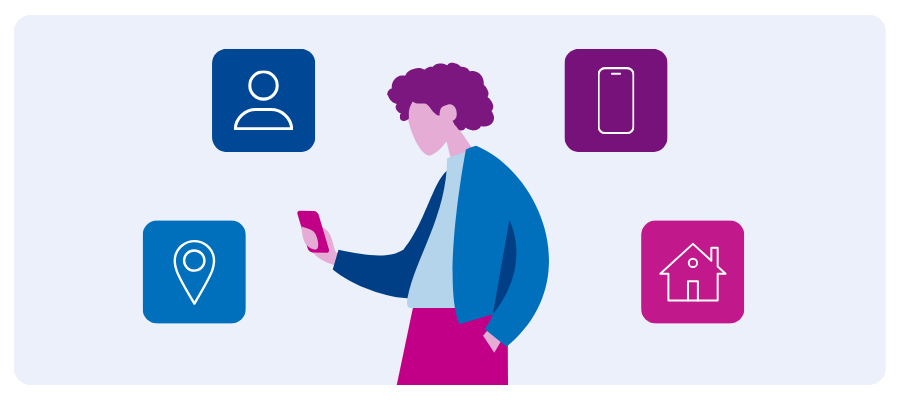
A person looking at their phone with icons for location, individual, phone, and house around them in a circle

By layering third-party data, contextual data, and geolocation data onto your first-party data foundation, your advertising strategies become stronger than if you used any of these sources as standalone solutions.

How do different types of third-party data add depth to audience profiles?

Third-party data expands understanding beyond known customers. If first-party data is the outline, third-party data helps with “character development”—a.k.a., addingdetailto your audience profiles. Good third-party marketing data complements first-party insights with demographic, behavioral, and transactional context, providing the missing puzzle pieces to complete the full customer profile. Filling in gaps in customer understanding helps youidentify, reach, and engage current and new customers more effectively. Third-party data allows brands to build loyalty with consumers by speaking to their interests and intent behind purchases.

Third-party data opens up new targeting tactics for advertisers, such as:

Behavioral

How people engage with brands or how they use social media

Demographic

Age, gender, education, income, and religion

Health

A combination of demographics, behaviors, and health needs

Interest

Delivering ads based on interests, hobbies, or online activities

Location

Where people live, work, or spend large amounts of time

Psychographics

Shared characteristics like attitudes, lifestyles, and interests

Purchases

Using previous purchase behavior to identify the right audiences

In addition to targeting, third-party data also remains critical to AI models, which must train on both structured and unstructured data. At Experian, our AI-powered technology interprets live bidstream data, device activity, content, and timing to optimize in the moment, ensuring campaigns deliver meaningful relevance, not just broader reach.

How are contextual and geographic approaches reshaping audience targeting?

Contextual and geographic approaches to targeting focus on environment and behavior rather than identifiers. Regulatory scrutiny, stricter and more fragmented compliance standards, and rising consumer expectations are transforming how marketers approach third-party data targeting. Evolving privacy laws and inconsistent identifiers across environments require new approaches that balance performance and privacy.

Contextual and geographic targeting help marketers reach relevant audiences while maintaining privacy.

What is data-informed contextual targeting?

Contextual targeting connects audience attributes to the content environments people choose. It helps determine the setting of your story—where your characters spend their time.

Solutions like Experian’s Contextually-Indexed Audiences harness advanced machine learning technology to combine contextual signals (a tried–and-true targeting tactic) with third-party targeting to ensure marketers reach their target audiences on the content they tend to consume, regardless of environment or location. What’s excellent about data-informed contextual targeting is that it moves beyond traditional keyword-based strategies to reach consumers on websites that over-index for visitors with the demographics, behaviors, or interests they are looking to target.

What is data-informed geotargeting?

Geotargeting uses shared location patterns to support relevance at scale. Geotargeting is another possibility for further developing the scene of your story.

People with similar behaviors and interests tend to live in similar areas, which is why so much effort goes into location planning for brick-and-mortar stores. Data-informed geotargeting combines geos with third-party data to make more informed media buys based on common behaviors within a geographic location.

We launched our Geo-Indexed audiences, which use advanced indexing technology to identify and reach consumers based on their geographic attributes. These audiences help marketers discover, segment, and craft messaging for consumers without relying on sensitive personal information, enabling them to reach target audiences while maintaining data privacy confidently.

What role does AI play in third-party data targeting?

AI acts like an automated editor of your book, refining and finding new ways to put valuable third-party audiences and data to work without relying on segments linked to known or disparate identifiers.

We’ve used AI and machine learning at Experian for decades to bring identity, insight, and generative intelligence together so brands and agencies can reach the right people, with relevance, respect, and simplicity.

Why does a balanced, integrated approach that combines first-party, third-party, contextual, and geo-targeting data matter?

The combined effects of integrating third-party, contextual, and geotargeting data (and the marketing tactics it underpins) with first-party data will drive your success.

Think of how any good author crafts a story. Regardless of whether it’s fiction or non-fiction, they draw on both first-person experience and external research and sources to develop their plot. No single data source tells the full story. Integration allows marketers to understand audiences more completely and act with confidence.

Pooling these inputs together moves you closer to your goal of understanding the whole story about your target customers. In fact, an almost even number of marketers plan to use contextual targeting (41%) and first-party data (40%) as their main targeting strategies, amid privacy laws and the loss of persistent advertisers.

Primary data strategyPercent of marketers that plan to use this data strategy
Contextual targeting41%
First-party data40%

A brand with strong first-party insights can extend reach by layering in additional signals. For example, a nutrition brand that knows who purchases protein supplements can expand prospecting by combining:

First-party signals

Customers who purchase protein supplements

Contextual signals

Engagement with fitness blogs, healthy recipe content, or workout apps

Geographic signals

Consumers located in the Greater Philadelphia area

By connecting these inputs, the brand can identify new health-conscious audiences with similar interests and behaviors. This approach supports privacy-safe targeting while improving engagement and performance.

How can marketers build an integrated data strategy in 2026?

An integrated data strategy reduces friction and supports scale. The right data partner offers a unified solution that helps unify data, activate audiences, and adapt as the ecosystem evolves. Here’s how:

Organize data

Create a clean, usable data foundation by eliminating fragmented silos. Experian’s solutions unify disparate data, enabling identity resolution and a single customer view.

Create a complete profile

Experian links a persistent offline core of personally identifiable information (PII) data with fresh digital signals, giving you a high-fidelity view of consumers to decorate with marketing data. This allows for improved customer understanding and personalized marketing that competitors struggle to replicate.

Build addressable audience segments

Create audiences using a mixture of signals, including first-party data, third-party behavioral, interest, and demographic data, as well as contextual signals. If you partner with Experian, you can use audiences built on our identity graph to guarantee accuracy, scale, and maximum addressability.

Drive innovation

Look for partners and platforms that prioritize innovation in finding new ways to reach target audiences across the ecosystem. You don’t want a vendor or a system that can’t keep pace and adapt with our rapidly evolving industry.

Marketers who want to create and activate campaigns more efficiently and effectively in 2026 need an integrated approach that combines first-party, third-party, contextual, and geotargeting data. Streamlining data integration and activation positions brands and agencies for sustainable growth and stronger consumer relationships in a privacy-conscious marketplace.

Build your next chapter on a connected data foundation

As audience strategies evolve, connection and interoperability matter more than ever. Connect with our team to learn how Experian helps marketers unify data, identity, and activation across channels.

This site is protected by reCAPTCHA and the Google Privacy Policy and Terms of Service apply.


About the author

Scott Kozub headshot, VP, Product, Experian

Scott Kozub

VP, Product Management, Experian

Scott Kozub is the Vice President of the Product Management team at Experian Marketing Services working across the entire product portfolio. He has over 20 years of product experience in the marketing and advertising space. He’s been with a few startups and spent many years at FICO and Oracle Data Cloud heavily focused on loyalty marketing and advertising technology.


FAQs

How should CMOs think about data as part of their 2026 audience strategy?

In 2026, CMOs should prioritize and invest in data and targeting strategies that combine first-party, third-party, contextual, and geographic data to drive growth, improve efficiency, and strengthen customer relationships. 

Why is first-party data not sufficient on its own? 

First-party data is not sufficient on its own because first-party data defines known customers but limits reach and frequency. Growth depends on expanding beyond existing relationships. The ability to unify different data sources with accuracy, scale, and privacy at the forefront sits at the core of Experian’s business. We unify household, individual, device, demographic, behavioral, and first-party signals, along with contextual and geographic data points, to build a reliable view of consumers, even when specific signals are missing. This clarity helps you personalize, target, activate, and measure with confidence.

How do different types of third-party data add depth to audience profiles?

Third-party data expands understanding beyond known customers. Third-party data opens up new targeting tactics for advertisers, such as:  
Location: Where people live, work, or spend large amounts of time
Health: A combination of demographics, behaviors, and health needs
Purchases: Using previous purchase behavior to identify the right audiences 
Behavioral: How people engage with brands or how they use social media 
– Interest: Delivering ads based on interests, hobbies, or online activities
Psychographics: Shared characteristics like attitudes, lifestyles, and interests
Demographic: Age, gender, education, income, and religion 
 
In addition to targeting, third-party data also remains critical to AI models, which must train on both structured and unstructured data. At Experian, our AI-powered technology interprets live bidstream data, device activity, content, and timing to optimize in the moment, ensuring campaigns deliver meaningful relevance, not just broader reach. 

What is data-informed contextual targeting?

Data-informed contextual targeting connects audience attributes to the content environments people choose. It helps determine the setting of your story—where your characters spend their time. Experian’s Contextually-Indexed Audiences harness advanced machine learning technology to combine contextual signals (a tried–and-true targeting tactic) with third-party targeting to ensure marketers reach their target audiences on the content they tend to consume, regardless of environment or location.

What is data-informed geotargeting?

Data-informed geotargeting uses shared location patterns to support relevance at scale. Experian launched our Geo-Indexed audiences, which use advanced indexing technology to identify and reach consumers based on their geographic attributes. These audiences help marketers discover, segment, and craft messaging for consumers without relying on sensitive personal information, enabling them to reach target audiences while maintaining data privacy confidently.

What role does AI play in third-party data targeting?

In third-party data targeting, AI refines and finds new ways to put valuable third-party audiences and data to work without relying on segments linked to known or disparate identifiers. We’ve used AI and machine learning at Experian for decades to bring identity, insight, and generative intelligence together so brands and agencies can reach the right people, with relevance, respect, and simplicity. 


Latest posts
Loading…
Retail media strategy: The three stages of retail media success

Retail media networks (RMNs) rank among the fastest-growing media channels. According to eMarketer, retail media spend is forecasted to account for more than a fifth of overall digital spending in 2025, and retail media spend will grow by 21.8%. For RMNs, the path to realizing this opportunity is marked by navigating through a series of critical stages, each with its own set of challenges and solutions. Retail media strategies Simply put, RMNs need to know who their customers are, where they are, and how to reach them to succeed. But we know nothing is that simple. This blog post reviews the three pivotal stages of RMN success, offering a roadmap for networks aiming to optimize their operations and claim their share of the rapidly growing category. Stage 1: Develop a data foundation In a world where traditional tracking methods are fading, first-party data has become essential for targeted advertising. Retailers have a wealth of this valuable data due to their direct consumer relationships. The initial step in establishing an RMN is to organize and utilize this data effectively. Steps to develop a data foundation: Organize data: Bring together fragmented shopper data, loyalty program information, and other customer data into a unified location. Clean and deduplicate this data to create consistent customer profiles. Enhance profiles: Gain insights into your customers and your brand’s customers so you can learn who your best, lapsed, and non-customers are. Append additional attributes to your shopper data, including media consumption habits, lifestyle preferences, demographic information, and more. Use identity graphs: Identity providers, like Experian, enable you to learn about the anonymous – and known – visitors on your platform and organize disparate customer data points into households. This will allow RMNs to connect addressable identifiers to the household, making it easier to reach customers across channels. Create audience segments: With a solid data foundation, RMNs can build audience segments beyond basic shopper data. These segments will make your data more attractive and actionable for media buyers. For example, consider a retailer that knows its shoppers are primarily young professionals, but a CPG brand wants to target not only these shoppers but also young professionals who are parents. By partnering with an identity solution provider like Experian, the retailer can append additional data to identify and target the young parents within their existing customer base, enabling the CPG brand to reach both audience segments effectively. “Retail media networks thrive on clean, accurate, and actionable data. Simply put, it's crucial to know who your customers are, when they're most engaged, and where to reach them to drive effective marketing strategies and maximize ROI.”anne passon, sr. director, sales, retail Stage 2: Become a publisher for optimal retail media growth The next step for RMNs is to transition from building a data foundation to helping marketers reach their target audience, essentially becoming a publisher. This involves two main processes: organizing advertising inventory and connecting it to demand. Steps to become a publisher: Audit and organize inventory: Conduct a thorough review of all existing ad spaces, including websites, apps, and in-store placements. Identify gaps and consider creating new advertising opportunities, such as website and app features, interactive digital experiences, or expanded in-store touchpoints. Connect inventory to demand: Integrate the organized inventory with platforms, allowing advertisers to access it easily. This often involves using supply-side platforms (SSPs) and demand-side platforms (DSPs). Continuing with our example, the CPG brand can work with its DSP or SSP partners and easily access your ad inventory, and effectively target the young professional and young parent audience segments. Stage 3: Scale inventory for retail media growth As RMNs progress to the final stage of their success journey, they may face the challenge of limited inventory within their owned and operated (O&O) channels. To meet marketers' expansive reach requirements and to continue to drive growth and profitability for their organizations, RMNs must expand their inventory beyond O&O. Steps to scale inventory: Utilize data collaboration tools: Clean rooms allow secure merging and enrichment of data from various sources, creating richer audience profiles while maintaining privacy. Resolve identity and enhance addressability: Identity graphs help resolve known customer identifiers (e.g. emails) into addressable IDs (e.g. mobile IDs and connected TV IDs), which can be used to reach customers across all the platforms they consume media. Expand audience reach: Onboarders, like Experian, help extend data and audiences to programmatic destinations beyond a retailer's O&O inventory. By mapping audiences to digital identifiers maintained by identity partners, RMNs can significantly widen their reach, meeting advertisers' needs for engaging with broader and more diverse audience segments. The CPG brand can now reach young professionals and young parents on the retailer’s platform and in all the other places where they consume media, like watching their favorite shows on connected TV (CTV) or browsing the web on their phones. Measurement across stages for retail media growth Measurement is crucial and must be conducted during and after a campaign to understand and validate performance. Here are two types of measurement to consider: Cross-device campaign measurement: Measure performance by connecting an ad exposure in one environment (e.g. CTV) to an action in another (e.g. mobile purchase). This holistic, cross-device approach requires a partner for identity resolution as it will ensure that the impact of a campaign is fully understood. Aggregate performance analysis: Understand performance in aggregate across several campaign studies. Receive independent third-party measurement validation that you can promote to advertisers to drive increased spend. For our CPG brand, these measurement reports ensure that they can track the performance of their campaigns from the initial exposure on a CTV to the final purchase made on a mobile device, providing comprehensive insights and validation of their advertising strategy. The retailer can aggregate these studies and promote their network’s effectiveness to prospective advertisers. Accelerate retail media growth with strategic partnerships The journey through the stages of RMN success is riddled with deep technical challenges that are often beyond the institutional capabilities of non-media businesses. The intricacies of data management, audience insights, identity resolution, precise cross-device targeting, and measurement require specialized expertise and technologies that may not be readily available in-house. RMNs stand to benefit from forging strategic partnerships with companies that possess not only the necessary technological tools but also a profound understanding of the media landscape. The steps outlined here will accelerate your growth and ensure you capitalize on the opportunity in front of you. Connect with a member of our team to learn how we can support your journey toward RMN success. Contact us to enhance your retail media strategies Latest posts

Jun 04,2024 by Anne Passon, Sr. Sales Director, Retail

Five themes to watch for at Cannes Lions 2024

Get ready for Cannes Lions 2024—the advertising industry is buzzing with excitement. This year's event promises to be a center of innovation, ideas, and networking. Here are five themes we expect will take center stage in conversations and how Experian can help marketers be prepared for what’s ahead. Cookie deprecation and signal loss At Cannes Lions 2024, the theme of transitioning to a cookieless advertising ecosystem is likely to dominate discussions. The saga of cookie deprecation continues to unfold, with Google recently pushing back the demise of third-party cookies once again. Experian remains fully committed to prioritizing continued testing of different industry solutions, including the Google Privacy Sandbox, to help customers prepare for a future without cookies. We've identified six viable alternatives to third-party cookies, how these alternatives fall short, and how Experian can help you navigate these alternatives. With Experian, the loss of cookies does not equate to a loss of coverage. With our strong roots in offline data and significant investments in our Graph, Experian ensures uninterrupted and effective marketing with robust signal coverage, with or without cookies. Based on early tests, we expect our Graph to maintain 97% of its household coverage. Read how MiQ, a leader in the cookieless era, strengthened its Identity Spine with the integration of Experian’s cross-device Graph here. Commerce The theme of commerce is poised to be a central topic of discussion at Cannes Lions 2024, reflecting the emergence and growth of retail media networks (RMNs). Evolving customer expectations are a key driver, with consumers demanding seamless and personalized experiences across all touchpoints of their shopping journey. The importance of bridging physical and digital experiences to create a cohesive customer journey will undoubtedly feature prominently in discussions at Cannes. Experian's Consumer Sync offerings facilitate seamless integration between online and in-person interactions, fostering a cohesive approach to engaging audiences across various platforms while measuring campaign effectiveness. As we heard at Shoptalk 2024, the evolution of retail media is propelling us into a new era of advertising and first-party data monetization. The integration of e-commerce with advertising presents an exciting opportunity for brands to drive direct sales through ads displayed within retail platforms, blurring the lines between marketing and commerce. Our Consumer View solutions provide access to over 5,000 demographic and behavioral data points, enriching your customer profiles for deeper insights. By combining first-party data with Experian's industry-leading data sets, you can create bespoke audience segments that drive increased return on investment (ROI), going beyond conventional category-based targeting strategies. Looking ahead, the future outlook for RMNs remains promising, with anticipated growth and expansion as brands increasingly recognize the value of reaching consumers precisely at the point of purchase. Connected TV At Cannes Lions 2024, we anticipate discussions to focus on how connected TV (CTV) can continue to live up to its promise. CTV is the most rapidly expanding advertising channel in the U.S and 95% of advertisers plan to increase their share of spend on programmatic CTV in 2024, according to The Trade Desk's latest CTV report. The growing adoption of CTV among viewers, driven by factors like quality content, reduced ad interruptions, and cost-saving alternatives to traditional cable, signals a shift in consumer behavior that marketers cannot afford to overlook. Experian supports the growth of advertising interest in CTV through our signal-agnostic Graph that connects CTV IDs, universal IDs like Unified I.D. 2.0 (UID2), IPs, and mobile ad IDs (MAIDs) for effective activation. Our digital identity resolution with Activity Feed provides insights into CTV viewership behavior, linking CTV exposure to e-commerce conversions. CTV also enables greater collaboration, and we've recently announced new partnerships with CTV industry leaders Microsoft, Samsung, Attain, Sonobi, and EDO. Consumer privacy Consumers are increasingly aware of privacy concerns surrounding their data and numerous laws are going into effect across the U.S. at the state level. Most recently, there has been momentum on a federal data privacy law. We expect consumer privacy to be a significant topic of discussion at Cannes Lions 2024, reflecting the growing importance of ethical data practices in advertising. In a recent Q&A with Datavant, Jeremy Meade, VP of Marketing Data & Product Operations at Experian, highlights the importance of balancing data privacy and utility, focusing on "data for good" practices while using de-identification techniques to support research without compromising consumer privacy. Our Geo-Indexed audiences are an example of how Experian can help you reach your audience while balancing data privacy and accuracy. Our Geo-Indexed audiences combine location data with audience insights to deliver targeted marketing solutions. These audiences are created without the use of sensitive personal information, so you can confidently reach your target audience without sacrificing data privacy. With deep roots in data protection and security, you can confidently partner with Experian as we proactively stay ahead of regulations and strictly follow all consumer privacy laws.​ Campaigns and competition The theme of campaigns and competition is poised to be an important discussion point, driven by the convergence of major global events like the U.S. presidential election and this summer’s games—both occurring once every four years. These landmark occasions present opportunities for marketers to craft targeted campaigns that resonate with specific audience segments. As we approach the 2024 election season, the advertising landscape is primed for growth, with political ad spending projected to exceed $10 billion. Effective audience targeting during this crucial period can sway voters, shape public opinion, and influence election outcomes. Experian's 240+ politically relevant syndicated audiences, including our 10 political personas, enable a nuanced understanding of voter viewpoints and empower tailored engagement strategies to connect more effectively with constituents. At the same time, this summer’s games in Paris offer a unique opportunity for sports marketing. With one billion viewers expected to tune in, the global spectacle presents a platform to engage with passionate sports audiences worldwide. Using Experian's syndicated audiences, marketers can precisely target sporting goods shoppers, avid fans, athletes, and spectators alike. The combination of these major events emphasizes the need for careful planning and data-driven strategies and marketers should take advantage of the excitement surrounding both events. Follow us on LinkedIn or sign up for our email newsletter for more informative content on the latest industry insights and data-driven marketing. Contact us Latest posts

May 21,2024 by Hayley Schneider, Sr. Manager, Content Marketing

2024 back-to-school marketing trends

With the back-to-school season approaching, marketers are preparing to engage both eager students and parents. Our Q&A video with Experian experts shares our predictions and tips for the 2024 back-to-school season so you can craft effective back-to-school marketing campaigns. From early campaign launches to the rise of online shopping and budget-conscious consumer behaviors, let’s explore what lies ahead and how brands and agencies can prepare. What separates Experian's syndicated audiences Experian’s 2,400+ syndicated audiences are available directly on over 30 leading television, social, programmatic advertising platforms, and directly within Audigent for activation within private marketplaces (PMPs).   Reach consumers based on who they are, where they live, and their household makeup. Experian ranked #1 in accuracy by Truthset for key demographic attributes such as Presence of Children.   Access to unique audiences through Experian’s Partner Audiences available on Experian’s data marketplace, within Audigent for activation in PMPs and directly on platforms like DirectTV, Dish, Magnite, OpenAP, and The Trade Desk.  Watch the highlights from our video below. Three trends for the 2024 back-to-school marketing season Campaigns will start earlier We expect back-to-school marketing efforts to kick off earlier than usual. Brands will launch campaigns with special promotions to secure mind and market share ahead of competitors. Additionally, the traditional back-to-school season is extending, urging marketers to prolong their campaigns to capture the attention of consumers who are taking more time to make purchasing decisions. Online shopping will continue to rise The surge in online shopping during the pandemic has become a lasting trend – and is especially appreciated by busy parents seeking convenience. Brands should focus on enhancing online and mobile shopping experiences, including options for in-store pickup and delivery. Marketers should prioritize their online presence and optimize e-commerce platforms, including experimenting with shoppable ads on connected TV (CTV), to meet the needs of families shopping for back-to-school supplies. Budget consciousness is top of mind With inflation on the rise and tighter budgets at home, households are becoming more selective in their back-to-school spending. Marketers should align their efforts with value-driven products and prioritize advertising that resonates with these financial priorities. Strategies for brands and agencies Next, let's explore strategies brands and agencies can use to prepare for the upcoming back-to-school season. Brands First, we'll highlight three recommended strategies for brands. Maintain an evergreen presence Launch your back-to-school campaigns early and maintain a steady presence throughout the season. Experian's TrueTouchTM audience insights can guide your channel selection for maximum impact, helping you decide on key channels such as email, digital video, or specific social media platforms. Build loyalty programs that deepen customer relationships Use your customer data to create loyalty programs that foster stronger connections with your audience. By using insights from Experian, you can gain a holistic understanding of customer profiles and identify potential back-to-school prospects within your existing customer base. On average, Experian has 250 behavioral and demographic marketing attributes per individual, which means we can decorate households and people with marketing data to get a full customer profile and fill in any gaps you have on your audience. Prioritize value and convenience Offer flexible shopping options like in-store, online, and buy online, pick up in-store (BOPIS) to cater to busy families. Partner with services like Shipt or Instacart to streamline shopping experiences. Agencies Now, we'll share two ways agencies can effectively prepare for the back-to-school season. Engage early and extend your campaigns Initiate conversations with brands earlier to ensure timely planning and execution. Extend campaign durations to capture late-decision makers. Adapt your channel strategies Shift focus to digital channels like CTV and social media, aligning with evolving consumer habits and preferences. Experian works with major platforms, marketers, and agencies, which means we have existing partnerships across the ecosystem for you to connect with and bring your consumer data to life to meet your needs. Watch the full Q&A The 2024 back-to-school season promises new challenges and opportunities for marketers. By starting campaigns earlier, optimizing online experiences, and aligning with budget-conscious consumers, brands and agencies can position themselves for success. Watch our full Q&A video where our experts cover: Tactics we predict marketers will employ to navigate signal loss Which channels will be the most successful Recommended audiences for targeting And more! Watch now Need a custom audience? Reach out to our audience team and we can help you build and activate an Experian audience on the platform of your choice. Additionally, work with Experian’s network of data providers to build audiences and send to an Audigent PMP for activation.  Contact us Latest posts

May 16,2024 by Hayley Schneider, Sr. Manager, Content Marketing

Subscribe to our newsletter

Enter your name and email for the latest updates

This site is protected by reCAPTCHA and the Google Privacy Policy and Terms of Service apply.

About Experian Marketing Services

At Experian Marketing Services, we use data and insights to help brands have more meaningful interactions with people. As leaders in the evolution of the advertising landscape, Experian Marketing Services can help you identify your customers and the right potential customers, uncover the most appropriate communication channels, develop messages that resonate, and measure the effectiveness of marketing activities and campaigns.

Visit our website

Subscribe to our newsletter

Stay up to date on the latest industry news and receive expert tips from our marketing experts.
Subscribe now!