At A Glance
CES 2026 showed that AdTech in 2026 will depend on strong data foundations, intentional media buying, and measurable outcomes. Agentic AI systems that can act, optimize, and transact on behalf of marketers emerged as a defining force, but only where data is accurate and privacy-first. Curation is becoming a standard buying approach as AI-powered systems prioritize quality and control. And activation and measurement are finally aligning through identity, allowing AI-driven decisions to be evaluated against real business results.Year after year, CES signals where marketing is headed next. In 2026, the message was clear. Progress comes from connecting data, intelligence, and outcomes with discipline, not spectacle. Across AI, programmatic media, and measurement, the same priorities surfaced again and again.
Under the bright lights of Las Vegas, three themes cutthrough,and each one pointed to a future where data, intelligence, and outcomes move in lockstep.
Here are the three themes that defined CES 2026.
1. Agentic AI proved that it’s only as good as its data inputs
AI was once again the star of the show. At CES 2026, marketers focused less on demos and more on proof that AI improves decisions, reduces friction, and drives outcomes. Every credible use case traced back to accurate, privacy-first data.
What changed at CES was how that intelligence is being applied. Agentic AI systems designed to act autonomously are moving beyond insights and into execution. From media buying to optimization, these agents are increasingly expected to make decisions at speed and scale. That shift raises the stakes for data quality. When AI is operating campaigns, not just informing them, accuracy and privacy are non-negotiable.

“This year’s CES made agency priorities crystal clear. Efficiency, differentiation, and outcomes. As agentic AI takes on more responsibility across planning, activation, and measurement, Experian gives agencies a robust data and identity foundation they can trust to own the outcome for every client.”
ExperianGreg Williams, Chief Operating Officer
Without accurate, privacy-compliant data, AI agents struggle to reflect real behavior or support responsible personalization. A reliable, privacy-first data foundation is what turns AI from an interesting experiment into an operational advantage.

That advantage gets even stronger when it’s anchored in an identity graph that understands people and households across channels. When identity and intelligence move together, AI becomes more accurate, accountable, and effective at driving outcomes.
In an AI first world, the strongest signal isn’t scale. It’s data quality.
2. Curation goes mainstream
Curation is no longer experimental. At CES, it showed up as a mandated capability for buyers and sellers navigating fragmented signals and complex supply paths. Marketers want intentional media buys they can explain, defend, and repeat.
AI is accelerating this shift. As AI systems take on more responsibility for planning, packaging, and optimization, curation provides the guardrails. It defines what “good” looks like (premium supply, trusted data, and clear performance goals), and allows AI to operate within those constraints driving the optimal outcomes for marketers.

“Our sell-side clients walked into CES asking how to stand out in a crowded landscape. The answer kept coming back to data-driven curation. With Experian Audiences and Curated Deals, SSPs and publishers can improve targeting within PMPs, package inventory more intelligently, and prove value with confidence. As we head into 2026, data is no longer a supporting input. It needs to be at the center of every conversation.”
ExperianChris Meredith, Head of Sell-Side
Rather than maximizing inventory access, curation prioritizes control, transparency, and performance. Buyers want premium supply aligned to specific goals. Sellers want clearer paths to demand. They can play the odds or own the outcome. When data leads, they own it. When curation is powered by high-fidelity audiences and a connected identity framework, it becomes even stronger. That’s what allows curated deals to deliver clarity, confidence, and repeatable performance.
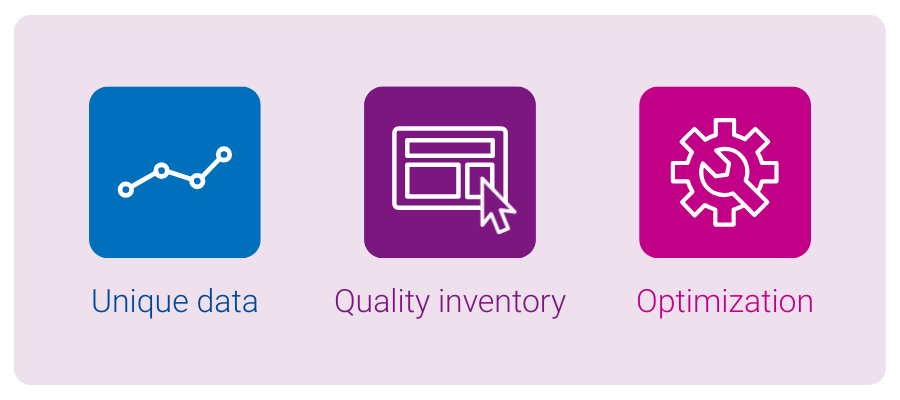
This shift reflects a broader move away from probability-based buying toward outcome ownership, where AI-driven systems are measured not on activity, but on results.
3. Activation and measurement finally shared the same stage
Activation and measurement are now coming together around shared data and identity. CES 2026 marked a turning point where closing the loop felt achievable, not aspirational. Both the buy-side and sell-side face pressure to show that media investment drives outcomes.
Agentic AI was a quiet driver of this optimism. As AI agents increasingly manage activation decisions in real time, marketers need measurement systems that can keep up. That requires a shared data and identity foundation. One that allows AI-driven actions to be evaluated against outcomes consistently, across channels and partners.

In healthcare, accuracy is everything. Our clients need to reach patients and healthcare professionals in ways that respect privacy while driving meaningful outcomes. CES underscored that privacy, identity, and measurement must work in harmony. That’s how health marketers reduce risk and increase the likelihood that every message leads to better care.
ExperianSheila Wirick, Sales Director, Health
Achieving that requires a consistent identity spine that connects planning, activation, and outcomes across channels. And that spine is strongest when it’s built on accurate, privacy-first data and audiences that understand people and households. That connection allows marketers to move beyond proxy metrics and evaluate performance based on tangible results. When campaigns and measurement rely on the same data foundation, AI-driven platforms can optimize toward outcomes such as new customers, account growth, or in-store activity, not just delivery metrics.
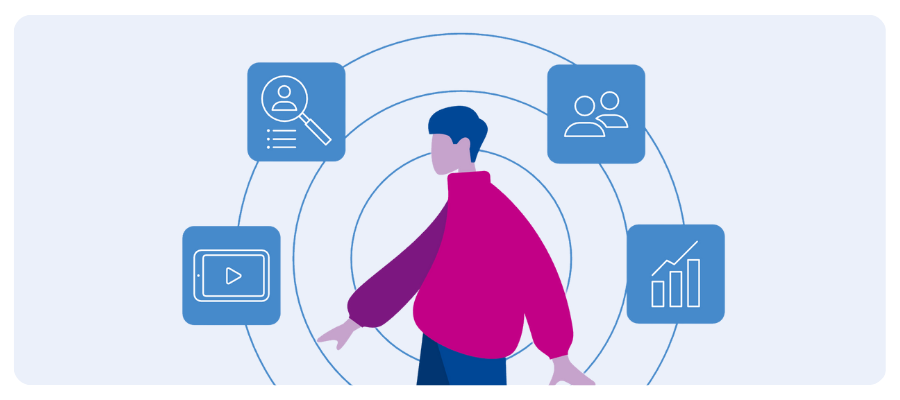
That’s the connective layer that turns disconnected touch points into a measurable, outcomes-based system.

2026 Digital trends and predictions report
Our 2026 Digital trends and predictions report is available now andreveals five trends that will define 2026. From curation becoming the standard in programmatic to AI moving from hype to implementation, each trend reflects a shift toward more connected, data-driven marketing. The interplay between them will define how marketers will lead in2026.
Three takeaways from CES 2026
- AI is maturing, but only for teams withaccurate, connected, privacy-first data that AI agents can act on responsibly.
- Curation is scaling, giving both humans and AI systems clearer paths to quality, control, and differentiation.
- Activation and measurement are aligning, allowing AI-driven decisions to be judged on outcomes, not assumptions.
We’re building for that world today. One where agentic AI operates on a trusted data and identity foundation, curation defines the rules, and outcomes determine success. With the right foundation and the deep data inputs, you can move faster, reduce risk, and let intelligence (human and artificial) work together to deliver results that last long after the neon lights fade.
Connect with us
FAQs
The biggest shift was the move from hype to accountability. Marketers focused on data quality, intentional media buying, and outcome-based measurement rather than experimental technology.
Privacy-first data supports accuracy, compliance, and trust. AI models built on unreliable or opaque data struggle to reflect real consumer behavior and create risk for brands. At Experian, privacy and compliance are built in. Every data signal, attribute, audience, and partner goes through our rigorous review process to meet federal, state, and local consumer privacy laws. With decades of experience in highly regulated industries, we’ve built processes that emphasize risk mitigation, transparency, and accountability.
Curation simplifies buying by pairing premium inventory with specific audience and performance goals. This approach reduces waste and creates clearer, more repeatable buying paths. With the acquisition of Audigent, Experian is now more than just a premier data provider. We’re also a full-service curation partner. Together, we deliver end-to-end programmatic curation across data, inventory, and optimization, helping brands and publishers unlock smarter, more scalable media strategies.
It means using the same identity and data foundation to plan campaigns and evaluate results. This alignment allows marketers to measure success based on business outcomes, not just delivery metrics. With Experian, marketers can plan, reach, and measure in a connected cycle. Every impression is measurable. Every audience is accurate. Every decision is powered by data ranked #1 in accuracy by Truthset.
Identity connects data across channels and stages of the customer journey. It enables accurate AI, effective curation, and consistent measurement within one system. Experian delivers identity resolution at the scale, accuracy, and compliance required by the world’s largest enterprises. Our solutions are:
– Built on trust: Backed by 40+ years as a regulated data steward and rated #1 in data accuracy by Truthset, so you can act with confidence.
– Powered by our proprietary AI-enhanced identity graph: Combining breadth, accuracy, and recency across four billion identifiers, continuously refined by machine learning for maximum accuracy.
– Seamlessly connected: Pre-built data integration with leading CDPs, DSPs, and MarTech platforms for faster time to value.
– Always up to date: Frequent enrichment and near-real-time identity resolution through Activity Feed for timely personalization and more responsive customer engagement.
– Privacy-first by design: Compliance with GLBA, FCRA, and emerging state regulations baked in at every step, supported by rigorous partner vetting.
Latest posts

Study reveals that brands with more mature identity programs were significantly more likely to be successful in achieving their key objectives Tapad, a part of Experian, a global leader in cross-device digital identity resolution and a part of Experian, has commissioned Forrester Consulting, part of a leading research and advisory firm, to conduct a new study that evaluates the current state of customer data-driven marketing and explores how marketers can use identity solutions to deliver privacy safe and engaging experiences, in an evolving data landscape. The study highlights the changing ground rules for digital marketing and the threat that poses to marketers’ ability to deliver against long standing KPIs and campaign goals. Nearly two-thirds (62%) of respondents said that the forces of data deprecation will have a significant (40%) or critical (21%) impact on their marketing strategies over the next two years. Among those surveyed, identity resolution strategies have surfaced as an opportunity to create more powerful customer experiences, with 66% aiming to have it help improve customer trust and implement more ethical data collection and use practices, while nearly 60% believe it will point the way to more effective personalization and data management practices. Although organizations are eager to implement identity resolution strategies, a complex web of solutions and partners makes execution a challenge. For example, respondents report using at least eight identity solutions on average, across nearly six vendor partners, and they expect that fragmentation to persist in the ‘cookieless’ future. Additionally, brands’ identity resolution technologies typically represent a patchwork of homegrown and commercial solutions. Eighty-one percent of respondents use both in-house and commercial identity resolution tools today, and 47% use a near-equal blend of the two. Despite the challenges, many brands have the foundation for a strong identity resolution strategy in place, and they are thriving as a result. Specifically, more mature brands were 79% more successful at improving privacy safeguards to reduce regulatory and compliance risk, 247% more successful at improving marketing ROI, and over four times more effective at improving customer trust compared to their low-maturity peers. Additional insights include: Marketers Are Increasingly Playing a Key Strategic Role Within the Organization, But There is a Mandate to Demonstrate Value. Nearly three-quarters of respondents in our study agree the marketing function is more strategically important to their organization than it used to be, while almost two-thirds agree there’s more pressure than ever to prove the ROI or business performance of their activities. Consumers Expect Brands to Deliver Engaging Experiences Across Highly Fragmented Journeys: Tapad, a part of Experian found that 72% of respondents agree that customers demand more relevant, personalized experiences at the time and place of their choosing. At the same time, 67% of respondents recognize that customer purchase journeys take place over more touchpoints and channels than ever, and 59% of respondents agree that those journeys are less predictable and linear than they once were. Marketing Runs on Data, But the Rules Governing Customer Data Usage are Ever-Evolving: According to the study, 70% of decision-makers agree that consumer data is the lifeblood of their marketing strategies – fueling the personalized, omnichannel experiences customers demand. At the same time, 69% of respondents recognize that customers are increasingly aware of how their data is being used. At least two-thirds agree that data deprecation, including tighter restrictions on data use (66%), as well as operating system and browser changes impacting third-party cookies (68%) means that legacy marketing strategies are unlikely to remain viable in the long-term.“ Our latest survey findings give us a better understanding of how our customers and other companies around the world are trying to master the relationship between people, their data and their devices,” said Mark Connon, General Manager at Tapad, a part of Experian. “This research shows why it's fundamental for the industry to continuously work to develop solutions that are agnostic. Tapad, a part of Experian has worked tirelessly to deliver on this with our Tapad Graph, and by introducing solutions like Switchboard to help the evolving ecosystem and in turn helping customers reap the benefits of better identity in both short and long-term.” The study is founded on an online survey of over 300 decision-makers at global brands and agencies, which was fielded from March to April, 2021. Data deprecation and identity are fast-developing, moving targets, so this study delivers targeted insights and recommendations for how to prepare for coming shifts in customer data strategies – whether they manifest tomorrow or a year from now. Get in touch

With the recent announcement of delaying third-party cookie deprecation to 2024, the industry has more time to rethink how to identify and communicate with consumers.
As today’s digital landscape gets more and more complicated there are more ways for brands to connect with users and drive purchases and more ways for ad tech to target and measure those touch points. As in-person shopping picks up steam due to the re-normalization of society post-COVID 19; the connection between digital ads and in-person purchases needs to be made once again. With the rise of Connected TV throughout the pandemic there are even more digital opportunities to target a user. But how do you make sure that those brand engagements are captured and correctly attributed to offline purchases and conversions? The answer lies in a holistic identity resolution strategy. Cross-device identity resolution with The Tapad Graph connects the identifiers and devices of individuals within a household to each other; enabling targeting, frequency capping, extension, segmentation and measurement or attribution between devices; including Connected TV and hashed (privacy-protected) email addresses along with Cookies, Mobile Ad Ids and IP Address. Brands can join their first-party data to The Tapad Graph to execute strategies that connect online and offline data for pre, mid and post-campaign efficiencies. Let’s imagine a scenario in which an outdoor retail brand is targeting users watching specific content on a Connected TV device. Powered by identity resolution, they start with a general ad on CTV and continue targeting down individual paths with each user. When one of them converts in store and makes a purchase; the outdoor retailer can connect that action through location and in-store traffic data with the cross-device identity resolution used to execute the digital campaign. Now the actions of the user online and offline are resolved for more accurate measurement and attribution after the campaign ends. But it doesn’t stop there– the brand's CRM data can be reactivated for the next digital campaign and leveraged to capitalize on the most effective media mix for the user who made the purchase previously. These combined insights can be invaluable in shaping up future campaign strategies with geo-contextual ads, recommended additional products and personalization to help drive more conversions and purchases in-store or online. As in-person shopping picks back up and marketers are tasked once again with balancing online and in-store KPIs, the right identity resolution strategy can unlock necessary efficiencies for retailers, ad tech vendors and agencies tasked with supporting these initiatives. Get in touch