Loading...

Three themes that defined CES 2026

Published: January 12, 2026 by Experian Marketing Services

At A Glance

CES 2026 showed that AdTech in 2026 will depend on strong data foundations, intentional media buying, and measurable outcomes. Agentic AI systems that can act, optimize, and transact on behalf of marketers emerged as a defining force, but only where data is accurate and privacy-first. Curation is becoming a standard buying approach as AI-powered systems prioritize quality and control. And activation and measurement are finally aligning through identity, allowing AI-driven decisions to be evaluated against real business results.

Year after year, CES signals where marketing is headed next. In 2026, the message was clear. Progress comes from connecting data, intelligence, and outcomes with discipline, not spectacle. Across AI, programmatic media, and measurement, the same priorities surfaced again and again.

Under the bright lights of Las Vegas, three themes cutthrough,and each one pointed to a future where data, intelligence, and outcomes move in lockstep.

Here are the three themes that defined CES 2026.

1. Agentic AI proved that it’s only as good as its data inputs

AI was once again the star of the show. At CES 2026, marketers focused less on demos and more on proof that AI improves decisions, reduces friction, and drives outcomes. Every credible use case traced back to accurate, privacy-first data.

What changed at CES was how that intelligence is being applied. Agentic AI systems designed to act autonomously are moving beyond insights and into execution. From media buying to optimization, these agents are increasingly expected to make decisions at speed and scale. That shift raises the stakes for data quality. When AI is operating campaigns, not just informing them, accuracy and privacy are non-negotiable.

“This year’s CES made agency priorities crystal clear. Efficiency, differentiation, and outcomes. As agentic AI takes on more responsibility across planning, activation, and measurement, Experian gives agencies a robust data and identity foundation they can trust to own the outcome for every client.”

ExperianGreg Williams, Chief Operating Officer

Without accurate, privacy-compliant data, AI agents struggle to reflect real behavior or support responsible personalization. A reliable, privacy-first data foundation is what turns AI from an interesting experiment into an operational advantage.

An icon of a woman with three icons next to her representing tennis, coupons, and electric vehicle.

That advantage gets even stronger when it’s anchored in an identity graph that understands people and households across channels. When identity and intelligence move together, AI becomes more accurate, accountable, and effective at driving outcomes.

In an AI first world, the strongest signal isn’t scale. It’s data quality.

2. Curation goes mainstream

Curation is no longer experimental. At CES, it showed up as a mandated capability for buyers and sellers navigating fragmented signals and complex supply paths. Marketers want intentional media buys they can explain, defend, and repeat.

AI is accelerating this shift. As AI systems take on more responsibility for planning, packaging, and optimization, curation provides the guardrails. It defines what “good” looks like (premium supply, trusted data, and clear performance goals), and allows AI to operate within those constraints driving the optimal outcomes for marketers.

“Our sell-side clients walked into CES asking how to stand out in a crowded landscape. The answer kept coming back to data-driven curation. With Experian Audiences and Curated Deals, SSPs and publishers can improve targeting within PMPs, package inventory more intelligently, and prove value with confidence. As we head into 2026, data is no longer a supporting input. It needs to be at the center of every conversation.”

ExperianChris Meredith, Head of Sell-Side

Rather than maximizing inventory access, curation prioritizes control, transparency, and performance. Buyers want premium supply aligned to specific goals. Sellers want clearer paths to demand. They can play the odds or own the outcome. When data leads, they own it. When curation is powered by high-fidelity audiences and a connected identity framework, it becomes even stronger. That’s what allows curated deals to deliver clarity, confidence, and repeatable performance.
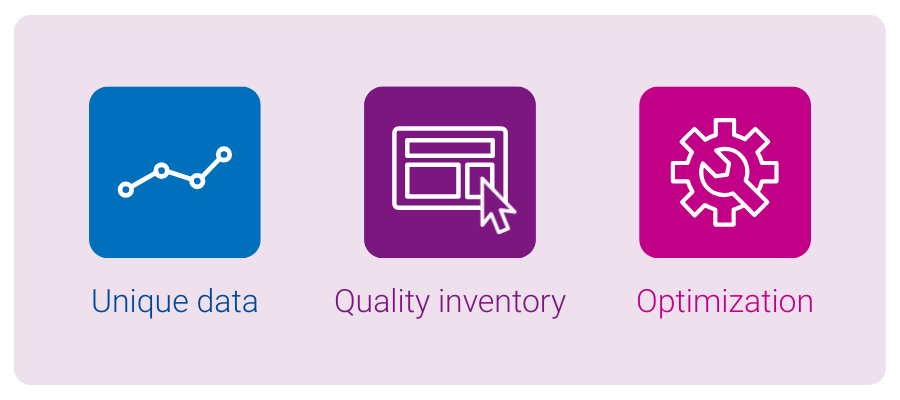
Unique data, quality inventory, and optimization.

This shift reflects a broader move away from probability-based buying toward outcome ownership, where AI-driven systems are measured not on activity, but on results.

3. Activation and measurement finally shared the same stage

Activation and measurement are now coming together around shared data and identity. CES 2026 marked a turning point where closing the loop felt achievable, not aspirational. Both the buy-side and sell-side face pressure to show that media investment drives outcomes.

Agentic AI was a quiet driver of this optimism. As AI agents increasingly manage activation decisions in real time, marketers need measurement systems that can keep up. That requires a shared data and identity foundation. One that allows AI-driven actions to be evaluated against outcomes consistently, across channels and partners.

In healthcare, accuracy is everything. Our clients need to reach patients and healthcare professionals in ways that respect privacy while driving meaningful outcomes. CES underscored that privacy, identity, and measurement must work in harmony. That’s how health marketers reduce risk and increase the likelihood that every message leads to better care.

ExperianSheila Wirick, Sales Director, Health

Achieving that requires a consistent identity spine that connects planning, activation, and outcomes across channels. And that spine is strongest when it’s built on accurate, privacy-first data and audiences that understand people and households. That connection allows marketers to move beyond proxy metrics and evaluate performance based on tangible results. When campaigns and measurement rely on the same data foundation, AI-driven platforms can optimize toward outcomes such as new customers, account growth, or in-store activity, not just delivery metrics.
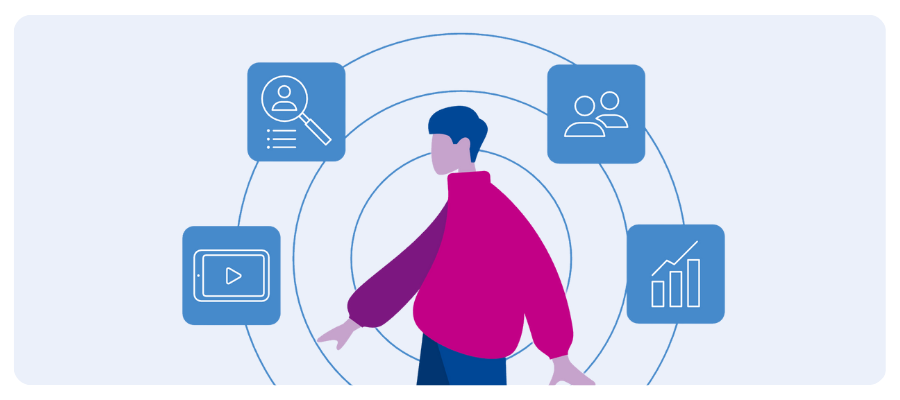
A man with four icons in a half circle around him that represent a tablet, magnifying glass, two people, and a chart.

That’s the connective layer that turns disconnected touch points into a measurable, outcomes-based system.

Three takeaways from CES 2026

  1. AI is maturing, but only for teams withaccurate, connected, privacy-first data that AI agents can act on responsibly.
  2. Curation is scaling, giving both humans and AI systems clearer paths to quality, control, and differentiation.
  3. Activation and measurement are aligning, allowing AI-driven decisions to be judged on outcomes, not assumptions.

We’re building for that world today. One where agentic AI operates on a trusted data and identity foundation, curation defines the rules, and outcomes determine success. With the right foundation and the deep data inputs, you can move faster, reduce risk, and let intelligence (human and artificial) work together to deliver results that last long after the neon lights fade.

Connect with us

This site is protected by reCAPTCHA and the Google Privacy Policy and Terms of Service apply.


FAQs

What was the biggest shift discussed at CES 2026 for marketers?

The biggest shift was the move from hype to accountability. Marketers focused on data quality, intentional media buying, and outcome-based measurement rather than experimental technology.

Why did AI discussions emphasize privacy-first data?

Privacy-first data supports accuracy, compliance, and trust. AI models built on unreliable or opaque data struggle to reflect real consumer behavior and create risk for brands. At Experian, privacy and compliance are built in. Every data signal, attribute, audience, and partner goes through our rigorous review process to meet federal, state, and local consumer privacy laws. With decades of experience in highly regulated industries, we’ve built processes that emphasize risk mitigation, transparency, and accountability.

How does curation help reduce programmatic complexity?

Curation simplifies buying by pairing premium inventory with specific audience and performance goals. This approach reduces waste and creates clearer, more repeatable buying paths. With the acquisition of Audigent, Experian is now more than just a premier data provider. We’re also a full-service curation partner. Together, we deliver end-to-end programmatic curation across data, inventory, and optimization, helping brands and publishers unlock smarter, more scalable media strategies.

What does it mean to align activation and measurement?

It means using the same identity and data foundation to plan campaigns and evaluate results. This alignment allows marketers to measure success based on business outcomes, not just delivery metrics. With Experian, marketers can plan, reach, and measure in a connected cycle. Every impression is measurable. Every audience is accurate. Every decision is powered by data ranked #1 in accuracy by Truthset.

Why is identity central to all three CES themes?

Identity connects data across channels and stages of the customer journey. It enables accurate AI, effective curation, and consistent measurement within one system. Experian delivers identity resolution at the scale, accuracy, and compliance required by the world’s largest enterprises. Our solutions are:
Built on trust: Backed by 40+ years as a regulated data steward and rated #1 in data accuracy by Truthset, so you can act with confidence.
Powered by our proprietary AI-enhanced identity graph: Combining breadth, accuracy, and recency across four billion identifiers, continuously refined by machine learning for maximum accuracy.
Seamlessly connected: Pre-built data integration with leading CDPs, DSPs, and MarTech platforms for faster time to value.
Always up to date: Frequent enrichment and near-real-time identity resolution through Activity Feed for timely personalization and more responsive customer engagement.
Privacy-first by design: Compliance with GLBA, FCRA, and emerging state regulations baked in at every step, supported by rigorous partner vetting.


Latest posts

Loading…
Exploring data ownership and its role in advertising with Merkle

Centralized data access is emerging as a key strategy for advertisers. In our next Ask the Expert segment, we explore this topic further and discuss the importance of data ownership and the concept of audience as an asset. We're joined by industry leaders, Andy Fisher, Head of Merkury Advanced TV at Merkle, and Chris Feo, Experian’s SVP of Sales & Partnerships who spotlight Merkle's commitment to centralized data access and how advertisers can use our combined solutions to navigate industry shifts while ensuring consumer privacy. Watch our Q&A to learn more about these topics and gain insights on how to stay ahead of industry changes. The concept of audience as an asset In order to gain actionable marketing insights about your audience, you need to identify consumers who are actively engaged with your brand and compare them against non-engaged consumers, or consumers engaged with rival brands. Audience ownership Audience ownership is a fundamental marketing concept where marketers build, define, create, and own their audience. This approach allows you to use your audiences as an asset and deliver a customized journey to the most promising prospects across multiple channels. With this strategy, you enhance marketing effectiveness and ensure ownership over your audience, no matter the platform or channel used. Merkle enables marketers to own and deploy said asset (audience) so that marketers can have direct control over their audience. With audience strategy, you can tie all elements together – amplify your marketing reach, while maintaining control of your audience. Merkle connects customer experiences with business results. Data ownership Data ownership refers to the control organizations have over data they generate, including marketing, sales, product, and customer data. This data is often scattered across multiple platforms, making it difficult to evaluate their effectiveness. Alternatively, owning this data, which is typically housed in a data warehouse, allows the creation of historical overviews, forecasting of customer trends, and cross-channel comparisons. With advertisers and publishers both claiming ownership over their respective data and wanting to control its access, there has been a growing interest in data clean rooms. Data clean rooms The growing interest in data clean rooms is largely due to marketers increasing preference to maintain ownership over their audience data. They provide a secure environment for controlled collaboration between advertisers and publishers while preserving the privacy of valuable data. Data clean rooms allow all parties to define their usage terms – who can access it, how it is used, and when it is used. The rise in the use of data clean rooms strengthens data privacy and creates opportunities for deeper customer insights, which leads to enhanced customer targeting. Data clean rooms unlock new data sets, aiding brands, publishers, and data providers in adapting to rapidly changing privacy requirements. Why is centralized data access important? Centralized data access is crucial for the effective organization and optimization of your advertising campaigns. It involves consolidating your data in one place, allowing for the identification of inconsistencies. Merkle’s Merkury platform The concept of centralized data is a key component of Merkle’s Merkury platform, an enterprise identity platform that empowers brands to own and control first-party identity at an individual level. A common use case involves marketers combining their first-party data with Merkury's data assets and marketplace data assets to build prospecting audiences. These are later published to various endpoints for activation. The Merkury platform covers three classes of data: Proprietary data set – Permissioned data set covering the entire United States, compiled from about 40 different vendors Marketplace data – Includes contributions from various vendors like Experian First-party data from marketers – Allows marketers to bring in their own data Merkury's identity platform empowers brands to own and control first-party identity at an individual level, unifying known and unknown customer and prospect records, site and app visits, and consumer data to a single, person ID. This makes Merkury the only enterprise identity platform that combines the accuracy and sustainability of client first-party data, quality personally identifiable information (PII) data, third-party data, cookie-less media, and technology platform connections in the market. End-to-end management of data Data ownership and management enables you to enhance the quality of your data, facilitate the exchange of information, and ensure privacy compliance. The Merkury platform provides a comprehensive, end-to-end solution for managing first-party data, all rooted in identity. Unlike data management platforms (DMPs) that are primarily built on cookies, the Merkury platform is constructed on a person ID, allowing it to operate effectively in a cookie-free environment. A broader perspective with people-based views The Merkury platform is unique because it contains data from almost every individual in the United States, providing a broader perspective compared to customer data platforms (CDPs) which only contain consumer data. The platform provides a view of the world in a people-based manner, but also offers the flexibility to toggle between person and household views. This enables you to turn data into actionable insights and makes it possible to target specific individuals within a household or consider the household as a whole. How Experian and Merkle work together Experian and Merkle have established a strong partnership that magnifies the capabilities of Merkle's Merkury platform. With Experian’s robust integration capabilities and extensive connectivity opportunities, customers can use this technology for seamless direct integrations, resulting in more effective onboarding to various channels, like digital and TV. "Experian's role in Merkury's data marketplace is essential as they are considered the gold standard for data. It significantly contributes to our connectivity through direct integrations and partnerships. Experian's presence in various platforms and technologies ensures easy connections and high match rates. Our partnership is very important to us."andy fisher, head of merkury advanced tv Through this partnership, Merkle can deliver unique, personalized digital customer experiences across multiple platforms and devices, highlighting their commitment to data-driven performance marketing. Watch the full Q&A  Visit our Ask the Expert content hub to watch Andy and Chris's full conversation about data ownership, innovative strategies to empower you to overcome identity challenges, and navigating industry shifts while protecting consumer privacy. Tune into the full recording to gain insights into the captivating topics of artificial intelligence (AI), understanding how retail networks can amplify the value of media, and the growing influence of connected TV (CTV). Dive into the Q&A to gain rich insights that could greatly influence your strategies. Contact us today About our experts Andy Fisher, Head of Merkury Advanced TV As the Head of Merkury Advanced TV, Andy's primary responsibility is driving person-based marketing and big data adoption in all areas of Television including Linear, Addressable, Connected, Programmatic, and X-channel planning and Measurement. Andy has held several positions at Merkle including Chief Analytics Officer and he ran the Merkle data business. Prior to joining Merkle, Andy was the EVP, Global Data & Analytics Director at Starcom MediaVest Group where he led the SMG global analytics practice. In this role, he built and managed a team of 150 analytics professionals across 17 countries servicing many of the world’s largest advertisers. Prior to that role, Andy was Vice President and National Lead, Analytics at Razorfish, where he led the digital analytics practice and managed a team of modeling, survey, media data, and business intelligence experts. He and his team were responsible for some of the first innovations in multi-touchpoint attribution and joining online/offline data for many of the Fortune 100. Andy has also held leadership positions at Personify and IRI.  Andy holds a BA in mathematics from UC Berkeley and an MA in statistics from Stanford. Chris Feo, SVP, Sales & Partnerships, Experian As SVP of Sales & Partnerships, Chris has over a decade of experience across identity, data, and programmatic. Chris joined Experian during the Tapad acquisition in November 2020. He joined Tapad with less than 10 employees and has been part of the executive team through both the Telenor and Experian acquisitions. He’s an active advisor, board member, and investor within the AdTech ecosystem. Outside of work, he’s a die-hard golfer, frequent traveler, and husband to his wife, two dogs, and two goats! Latest posts

Sep 28,2023 by Experian Marketing Services

Experian’s identity resolution solution now available in AWS Clean Rooms

Bridging disparate data in a fragmented world  In today's world, consumers engage with brands across multiple platforms, including social media, online marketplaces, in-store experiences, and customer service touchpoints. However, the main challenge for marketers and advertisers is the fragmentation of customer data across these different channels. Each platform generates its own set of data, which is stored in different databases and formats. Integrating these various data sources to create a unified view of the customer is a complex task involving technology and understanding customer behavior across different digital and physical channels.  Businesses must link these data fragments to avoid creating a disconnected customer experience. For example, a person may browse products on a mobile app, ask questions through a customer service chat, and eventually purchase in an online marketplace. Traditional data analysis methods often need to recognize these activities as those of a single customer, which can result in missed opportunities to deliver personalized customer experiences across the customer journey.  Identity resolution: The key to a unified customer experience  Connecting online interactions across various platforms is a challenge for brands. Identity resolution enables enterprises to overcome this challenge by stitching together disparate signals and records to orchestrate experiences and analyze outcomes more effectively. By pairing Experian's identity capabilities with AWS Clean Rooms, enterprises can securely collaborate with their partners to derive deeper insights without exposing sensitive underlying data sets.  This partnership between AWS and Experian enables effective matching between disparate data sets, bolstering privacy-enhanced media planning, insights, data enrichment, media activation, and measurement use cases. Depending on their distinct needs and existing identifiers, customers can use two specific offerings of Experian's identity resolution solutions paired with AWS Clean Rooms.  Experian's identity resolution products ensure a frictionless brand experience across various channels, enhancing the customer journey from start to finish. Brands can employ our adaptable identity resolution solutions to forge connections between contextual, behavioral, lifestyle, and purchase-based data sources, assembling comprehensive customer profiles. Use dependable digital data to make informed decisions and elevate consumer engagement. Advanced deterministic and probabilistic features, combined with data science and cutting-edge technology, work hand in hand to mitigate risk and uphold data privacy.  Such recognition enables a more comprehensive understanding of your clientele, fostering trust and amplifying campaign effectiveness by utilizing securely managed, standardized customer data. With this strategic approach, businesses can achieve their objectives regulatory-compliant.  The consumer perspective: Why consistency matters  Data fragmentation can lead to inconsistent experiences for consumers, which can be frustrating and erode brand trust. For instance, imagine receiving a promotional email for a product you already purchased through an app or being targeted for a product you decided against.   Consumers are increasingly tech-savvy and demand a seamless, integrated experience regardless of how they interact with a brand. They want to feel valued and recognized at every touchpoint and don't care about the complexities of data analytics. As a result, brands face significant pressure to get identity resolution right.  Data security and privacy: A Fort Knox for your data  AWS Clean Rooms empowers their customers to establish a secure data clean room within minutes, facilitating collaboration with any other entity within AWS. This fosters the generation of unique insights regarding advertising campaigns, investment decisions, clinical research, and more. With AWS Clean Rooms, the need to store or maintain a separate copy of data outside the AWS environment for subsequent dispatch to another party for consumer insight analysis, marketing measurement, forecasting, or risk assessment becomes obsolete.  AWS Clean Rooms provides an expansive set of privacy-enhancing controls for clean rooms. This includes query controls, query output restrictions, and query logging that allows customers to tailor restrictions on the queries executed by each clean room participant. Moreover, AWS Clean Rooms include advanced cryptographic computing tools that maintain data encryption—even during query processing—to adhere to stringent data-handling policies. This process employs a client-side encryption tool—an SDK or command line interface (CLI)—that utilizes a shared secret key with other participants in an AWS Clean Rooms collaboration.  With a wealth of expertise in data privacy management, Experian enhances campaign effectiveness and fosters trust by managing standardized customer data securely. By using the identity graph, you can preserve a unique identity for each customer. This strategy enables you to comprehensively understand your clientele and reach your business objectives in a regulatory-compliant manner.  The future of data-driven marketing starts here  AWS customers can use AWS Clean Rooms to establish their own clean rooms in mere minutes, initiating the analysis of their collective data sets without sharing their underlying data with each other. Customers can use the AWS Management Console to choose their collaboration partners, select data sets, and configure participant restrictions. With AWS Clean Rooms, customers can effortlessly collaborate with hundreds of thousands of companies already using AWS without needing to move data out of AWS or upload it to a different platform. When running queries, AWS Clean Rooms accesses data in its original location and applies built-in, adaptable analysis rules to assist customers in maintaining control over their data.  Coupled with Experian's trusted data privacy management and unique Experian ID, businesses can effectively manage customer data, secure partners' communication, and achieve regulatory-compliance objectives. This combination allows companies to use data-backed insights to supercharge their marketing initiatives, resulting in more meaningful customer interactions, improved match rates, and business success. Start collaborating About the authors Kalyani Koppisetti, Principal Partner Solution Architect, AWS Kalyani Koppisetti is a technology leader with over 25 years of experience in the Financial Services Industry. In her current role at AWS, Kalyani advises financial services partners on best-practice cloud architecture. Kalyani works closely with internal and external stakeholders to identify industry technical trends, develop strategies, and execute them to help Financial Services Industry partners build innovative solutions and services on AWS. Technical and Solution interests include Cloud Computing, Software-as-a-Service, Artificial Intelligence, Big Data, Storage Virtualization and Data Protection. Matt Miller, Business Development Principal, AWS In his role as Business Development Principal at AWS, Matt drives customer and partner adoption for the AWS Clean Rooms service specializing in advertising and marketing industry use cases. Matt believes in the primacy of privacy-enhanced data collaboration and interoperability underpinning data-driven marketing imperatives from customer experience to addressable advertising. Prior to AWS, Matt led strategy and go-to-market efforts for ad technologies, large agencies, and consumer data products purpose-built to inform smarter marketing and deliver better customer experiences.  Tyler Middleton, Sr. Partner Marketing Manager, Experian Marketing Services Tyler Middleton is the Partner Marketing Lead at Experian. With almost 20 years of strategic marketing experience, Tyler’s focus is on creating marketing strategies that effectively promote the unique value propositions of each of our partners’ brands. Tyler helps our strategic partners communicate their mutual value proposition and find opportunities to stand out in the AdTech industry. Tyler is an alumnus of the Seattle University MBA program and enjoys finding new marketing pathways for our growing partner portfolio. Latest posts

Sep 19,2023 by Tyler Middleton, Director, Partner Marketing

Three insights from our 2023 Holiday spending report

The holiday season is just around the corner, and retailers and marketers are gearing up for the busiest shopping period of the year. It's crucial to understand how consumer behavior is evolving and what emerging trends to expect. Experian's 2023 Holiday spending trends and insights report analyzes recent trends, consumer spending habits, and anticipates what's to come in 2023 to help you deliver a top-notch shopping experience this holiday season. In this blog post, we'll cover three key insights from our report. 1. Consumers are shopping earlier It's no secret that December has always been the go-to month for consumers when it comes to holiday spending. However, holiday shopping now starts earlier, particularly with online sales. This can be attributed to a surge in promotions and deals, enticing shoppers to open their wallets ahead of time, giving a significant boost to holiday sales. Notably, Cyber Week sales have proven to be an influential factor, accounting for 8% of total consumer holiday spending. Experian tip Reach the right shoppers with your promotions with sell-side targeting. This powerful approach gives you control over where your ads are placed while ensuring maximum visibility through direct connections with publishers. Whether on mobile, web, or CTV, this seamless ad experience will engage your audience effectively. 2. Online sales are on the rise The popularity of online holiday sales is continuously growing, surpassing in-store shopping. There has been a consistent 1% year-over-year increase in online sales, while in-store sales have seen a 1% decrease. "It’s easier for consumers to comparison shop for large ticket items online that they might find at a mass retailer or office supply store. Consumers prefer to have larger, bulkier items shipped directly to their home for minimal cost. By shopping online, consumers can save time since they don’t need to wait in checkout lines." Anna Liparoto, Sr. Account Executive, Retail & CPG Although online sales currently make up only one-third of all holiday shopping, there is immense potential for further expansion. Mass retailers and office, electronics, and games industries particularly excel in online holiday sales. While in-store purchases remain the primary choice for holiday shoppers, consumer online and offline activities intersect before the final purchase. Experian tip Take advantage of the surge in online shopping by diversifying your marketing channels. An agnostic identity graph can bring together device and media data, capturing valuable user insights. By gaining a holistic view of your target audience, you'll be able to optimize your ad spend and allocate resources effectively, ultimately boosting your return on investment. "Omnichannel targeting during the upcoming holiday season will continue to prove to be the best way to reach scale and maximize ROI across all marketing channels."Joe Ligé, Head of Enterprise Demand Partnerships 3. 2023 holiday spending will be on par with 2022 During the holiday season in 2022, consumer spending showed an anticipated increase, although the growth rate was slightly lower compared to previous years. October saw a surge in average consumer spending, indicating a swift response to early discounts and promotions offered by retailers. As the holiday season progressed, holiday spending gradually slowed down and reached a level similar to that of the previous year. Overall, there was a modest 2% growth. Looking into the future, if economic conditions remain stable in the second half of 2023, we can expect holiday spending to align with the figures from last year. Experian tip To truly maximize impact, consider data enrichment. By diving deeper into your target audience's preferences and behaviors, you can better tailor your strategies and seamlessly integrate the enriched data across various channels. This allows you to unlock the true potential of your ad inventory, creating more meaningful connections with your audience. Download our new 2025 report Get ready for the holiday shopping season with Experian's 2025 Holiday spending trends and insights report, in collaboration with GroundTruth. Inside you'll find: When shoppers plan to buy Why stores still drive results Where marketers are placing their bets How AI is shaping discovery To access to all of our predictions for this year's holiday shopping season, download our 2025 Holiday spending trends and insights report today. Download now Contact us today Latest posts

Sep 14,2023 by Hayley Schneider, Sr. Manager, Content Marketing

Subscribe to our newsletter

Enter your name and email for the latest updates

This site is protected by reCAPTCHA and the Google Privacy Policy and Terms of Service apply.

About Experian Marketing Services

At Experian Marketing Services, we use data and insights to help brands have more meaningful interactions with people. As leaders in the evolution of the advertising landscape, Experian Marketing Services can help you identify your customers and the right potential customers, uncover the most appropriate communication channels, develop messages that resonate, and measure the effectiveness of marketing activities and campaigns.

Visit our website

Subscribe to our newsletter

Stay up to date on the latest industry news and receive expert tips from our marketing experts.
Subscribe now!