At A Glance
CES 2026 showed that AdTech in 2026 will depend on strong data foundations, intentional media buying, and measurable outcomes. Agentic AI systems that can act, optimize, and transact on behalf of marketers emerged as a defining force, but only where data is accurate and privacy-first. Curation is becoming a standard buying approach as AI-powered systems prioritize quality and control. And activation and measurement are finally aligning through identity, allowing AI-driven decisions to be evaluated against real business results.Year after year, CES signals where marketing is headed next. In 2026, the message was clear. Progress comes from connecting data, intelligence, and outcomes with discipline, not spectacle. Across AI, programmatic media, and measurement, the same priorities surfaced again and again.
Under the bright lights of Las Vegas, three themes cutthrough,and each one pointed to a future where data, intelligence, and outcomes move in lockstep.
Here are the three themes that defined CES 2026.
1. Agentic AI proved that it’s only as good as its data inputs
AI was once again the star of the show. At CES 2026, marketers focused less on demos and more on proof that AI improves decisions, reduces friction, and drives outcomes. Every credible use case traced back to accurate, privacy-first data.
What changed at CES was how that intelligence is being applied. Agentic AI systems designed to act autonomously are moving beyond insights and into execution. From media buying to optimization, these agents are increasingly expected to make decisions at speed and scale. That shift raises the stakes for data quality. When AI is operating campaigns, not just informing them, accuracy and privacy are non-negotiable.

“This year’s CES made agency priorities crystal clear. Efficiency, differentiation, and outcomes. As agentic AI takes on more responsibility across planning, activation, and measurement, Experian gives agencies a robust data and identity foundation they can trust to own the outcome for every client.”
ExperianGreg Williams, Chief Operating Officer
Without accurate, privacy-compliant data, AI agents struggle to reflect real behavior or support responsible personalization. A reliable, privacy-first data foundation is what turns AI from an interesting experiment into an operational advantage.
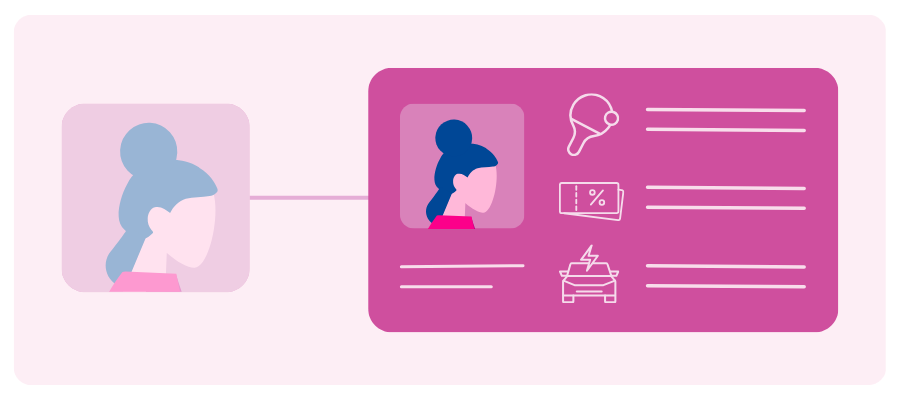
That advantage gets even stronger when it’s anchored in an identity graph that understands people and households across channels. When identity and intelligence move together, AI becomes more accurate, accountable, and effective at driving outcomes.
In an AI first world, the strongest signal isn’t scale. It’s data quality.
2. Curation goes mainstream
Curation is no longer experimental. At CES, it showed up as a mandated capability for buyers and sellers navigating fragmented signals and complex supply paths. Marketers want intentional media buys they can explain, defend, and repeat.
AI is accelerating this shift. As AI systems take on more responsibility for planning, packaging, and optimization, curation provides the guardrails. It defines what “good” looks like (premium supply, trusted data, and clear performance goals), and allows AI to operate within those constraints driving the optimal outcomes for marketers.

“Our sell-side clients walked into CES asking how to stand out in a crowded landscape. The answer kept coming back to data-driven curation. With Experian Audiences and Curated Deals, SSPs and publishers can improve targeting within PMPs, package inventory more intelligently, and prove value with confidence. As we head into 2026, data is no longer a supporting input. It needs to be at the center of every conversation.”
ExperianChris Meredith, Head of Sell-Side
Rather than maximizing inventory access, curation prioritizes control, transparency, and performance. Buyers want premium supply aligned to specific goals. Sellers want clearer paths to demand. They can play the odds or own the outcome. When data leads, they own it. When curation is powered by high-fidelity audiences and a connected identity framework, it becomes even stronger. That’s what allows curated deals to deliver clarity, confidence, and repeatable performance.
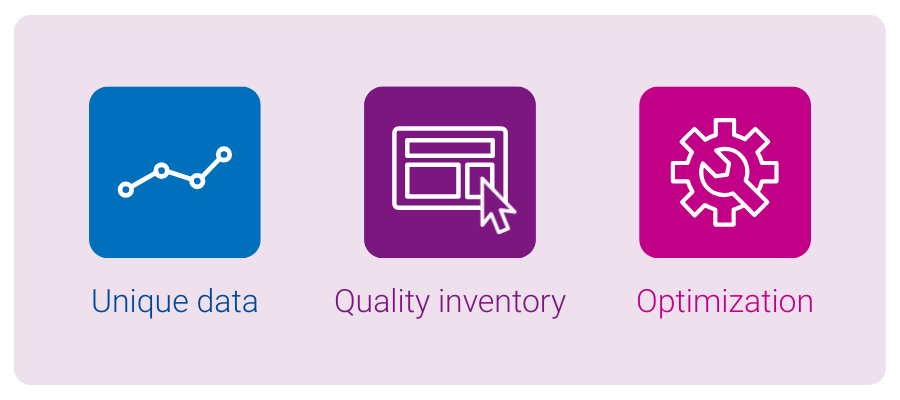
This shift reflects a broader move away from probability-based buying toward outcome ownership, where AI-driven systems are measured not on activity, but on results.
3. Activation and measurement finally shared the same stage
Activation and measurement are now coming together around shared data and identity. CES 2026 marked a turning point where closing the loop felt achievable, not aspirational. Both the buy-side and sell-side face pressure to show that media investment drives outcomes.
Agentic AI was a quiet driver of this optimism. As AI agents increasingly manage activation decisions in real time, marketers need measurement systems that can keep up. That requires a shared data and identity foundation. One that allows AI-driven actions to be evaluated against outcomes consistently, across channels and partners.

In healthcare, accuracy is everything. Our clients need to reach patients and healthcare professionals in ways that respect privacy while driving meaningful outcomes. CES underscored that privacy, identity, and measurement must work in harmony. That’s how health marketers reduce risk and increase the likelihood that every message leads to better care.
ExperianSheila Wirick, Sales Director, Health
Achieving that requires a consistent identity spine that connects planning, activation, and outcomes across channels. And that spine is strongest when it’s built on accurate, privacy-first data and audiences that understand people and households. That connection allows marketers to move beyond proxy metrics and evaluate performance based on tangible results. When campaigns and measurement rely on the same data foundation, AI-driven platforms can optimize toward outcomes such as new customers, account growth, or in-store activity, not just delivery metrics.
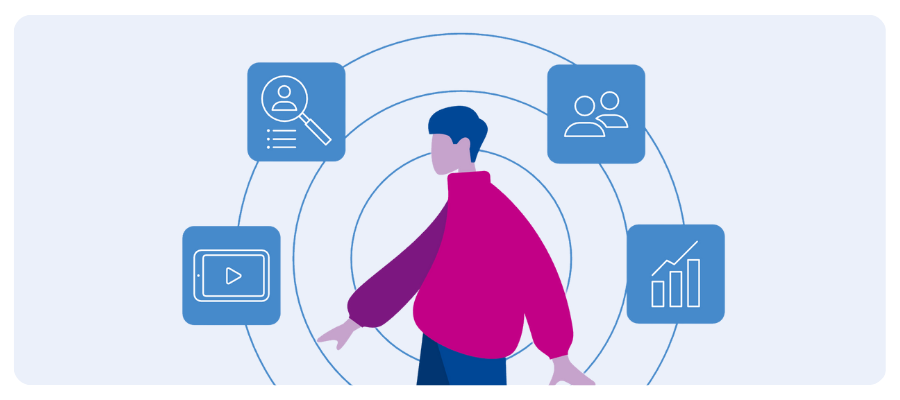
That’s the connective layer that turns disconnected touch points into a measurable, outcomes-based system.

Three takeaways from CES 2026
- AI is maturing, but only for teams withaccurate, connected, privacy-first data that AI agents can act on responsibly.
- Curation is scaling, giving both humans and AI systems clearer paths to quality, control, and differentiation.
- Activation and measurement are aligning, allowing AI-driven decisions to be judged on outcomes, not assumptions.
We’re building for that world today. One where agentic AI operates on a trusted data and identity foundation, curation defines the rules, and outcomes determine success. With the right foundation and the deep data inputs, you can move faster, reduce risk, and let intelligence (human and artificial) work together to deliver results that last long after the neon lights fade.
Connect with us
FAQs
The biggest shift was the move from hype to accountability. Marketers focused on data quality, intentional media buying, and outcome-based measurement rather than experimental technology.
Privacy-first data supports accuracy, compliance, and trust. AI models built on unreliable or opaque data struggle to reflect real consumer behavior and create risk for brands. At Experian, privacy and compliance are built in. Every data signal, attribute, audience, and partner goes through our rigorous review process to meet federal, state, and local consumer privacy laws. With decades of experience in highly regulated industries, we’ve built processes that emphasize risk mitigation, transparency, and accountability.
Curation simplifies buying by pairing premium inventory with specific audience and performance goals. This approach reduces waste and creates clearer, more repeatable buying paths. With the acquisition of Audigent, Experian is now more than just a premier data provider. We’re also a full-service curation partner. Together, we deliver end-to-end programmatic curation across data, inventory, and optimization, helping brands and publishers unlock smarter, more scalable media strategies.
It means using the same identity and data foundation to plan campaigns and evaluate results. This alignment allows marketers to measure success based on business outcomes, not just delivery metrics. With Experian, marketers can plan, reach, and measure in a connected cycle. Every impression is measurable. Every audience is accurate. Every decision is powered by data ranked #1 in accuracy by Truthset.
Identity connects data across channels and stages of the customer journey. It enables accurate AI, effective curation, and consistent measurement within one system. Experian delivers identity resolution at the scale, accuracy, and compliance required by the world’s largest enterprises. Our solutions are:
– Built on trust: Backed by 40+ years as a regulated data steward and rated #1 in data accuracy by Truthset, so you can act with confidence.
– Powered by our proprietary AI-enhanced identity graph: Combining breadth, accuracy, and recency across four billion identifiers, continuously refined by machine learning for maximum accuracy.
– Seamlessly connected: Pre-built data integration with leading CDPs, DSPs, and MarTech platforms for faster time to value.
– Always up to date: Frequent enrichment and near-real-time identity resolution through Activity Feed for timely personalization and more responsive customer engagement.
– Privacy-first by design: Compliance with GLBA, FCRA, and emerging state regulations baked in at every step, supported by rigorous partner vetting.
Latest posts

Marketing without segmentation is a lot like shouting into a crowded room and hoping the right person hears you. Without a clear way to communicate in a noisy marketing environment, your message gets lost in the mix. With segmentation, you can identify your target audience, speak to their needs, and deliver the right message at the right moment. Companies that use segmentation are 130% more likely to understand customer motivations, resulting in more effective campaigns and deeper audience relationships. In this article, we’ll break down four of the most effective customer segmentation methods, when to use each, and how Experian’s audience solutions can help. What is segmentation in marketing? Segmentation is the process of splitting a large audience into smaller groups that share similar traits, like demographics, location, behavior, or firmographic characteristics. As a marketer, these segments enable you to choose channels, messaging, and offers that resonate with each group. Whether you’re targeting new homeowners in Texas, loyalty shoppers in retail, or small business decision-makers in finance, segmentation helps you stand out to them and get results. Why should marketers segment their audiences? Effective audience segmentation fuels accuracy, performance, and personalization at scale. Here's why you should invest your time and marketing budget in honing your audience segments. Maximize your marketing ROI Nobody wants to waste money talking to the wrong crowd. Using various methods of segmentation, you can focus on those who want to hear from you — and the payoff can be huge. For marketing channels like email, segmentation can drive up to 760% more revenue than non-segmented campaigns. The more targeted your message, the better the return. Create a unified omnichannel strategy Segmentation helps ensure that every channel, from email and social media to display, SMS, and direct mail, operates from the same playbook. Once you define your target audience segments, you also need a trusted identity partner to sync them across platforms and environments. This ensures you can deliver consistent, personalized experiences at every touchpoint and your audience receives the same message in the proper context, regardless of where they engage. Strengthen customer loyalty Roughly 75% of consumers are loyal to brands that “get” them. When you strive to understand your customers, they’re more likely to stay. Segmentation enables you to personalize communications based on your target segment’s values, behaviors, or preferences, encouraging repeat business. Expand into new markets With segmentation, you can analyze existing customers to identify common traits and use that data to pinpoint similar groups in new regions or markets. For example, if your top customers are middle-class parents in suburban areas, you can target lookalike segments in other cities with tailored messaging. This makes it easier to expand with confidence, knowing you're reaching people who are more likely to convert. Lower customer acquisition costs Rather than forcing you to cast a wide net, segmentation enables you to focus your budget on high-potential audiences across channels, reduce acquisition costs, and minimize wasted spend on low-intent audiences. Four segmentation methods and examples Let’s look at four different methods of market segmentation. We’ll define each, share when to use them, and give real-world examples to help you apply them. 1. Demographic segmentation Demographic segmentation breaks your audience into groups based on gender, income, age, education, marital status, occupation, and household size. It’s one of the most foundational segmentation methods because it’s easy to implement and often tied directly to buying behavior. Demographic data makes it easier to get the tone, offer, and channel right from the start. And when you combine demographic segmentation with other segmentation methods, such as behavior or location, the impact multiplies. When to use it Use demographic segmentation when your product or service is clearly more relevant to people in a specific life stage, income bracket, or household type. Among all methods of market segmentation, demographic data is often the easiest starting point. It’s especially effective for industries such as financial services, healthcare, education, retail, and others, where consumer needs change based on demographics. Examples As a real-world example, a health supplement company used Experian data to segment its ambassador program audience into four demographic groups based on lifestyle and household makeup. These included younger singles, value-seeking families, high-income spenders, and older empty nesters. Applying these insights at registration allowed the brand to deliver personalized, channel-specific communications that boosted acquisition and retention. The approach led to stronger engagement and more meaningful customer connections. 2. Geographic segmentation This method of market segmentation categorizes people by location, including country, region, state, city, zip code, or even climate. It’s a simple yet effective way to tailor your marketing, as location often influences everything from lifestyle and language to shopping habits and product needs. It’s most often used among brands with physical locations or region-specific campaigns. Whether you're promoting snow boots in Colorado or sunscreen in California, geographic segmentation helps you stay relevant to the local context. When to use it Geographic segmentation is ideal when your offer or message changes depending on climate, culture, availability, or local regulations. It’s also helpful for planning market expansion or testing the performance of different methods of market segmentation across regions. Examples One home furnishings retailer partnered with Experian to understand how customer needs varied across store locations. Using a mix of client data and Experian demographics, we segmented stores based on their surrounding customer base, like urban, white-collar shoppers in metro centers versus lower-income households in more remote cities. These insights enabled the retailer to tailor inventory, marketing strategies, and ad copy for each store type, resulting in more relevant customer experiences. 3. Behavioral segmentation Behavioral segmentation centers on how people live their lives — their interests, habits, and decision-making patterns. It includes factors like past purchases, engagement frequency, brand loyalty, product usage, browsing patterns, and responsiveness to offers or promotions. Among all of the segmentation methods, this one provides insight into intent, helping you go beyond who your audience is to understand what they do. You can use behavioral insights to re-engage former customers with relevant offers, reward loyal buyers with personalized perks, or guide high-intent shoppers toward conversion with timely nudges. When to use it Behavioral segmentation is best when you want to personalize based on intent, habits, or engagement stage. It's particularly useful for retention, reactivation, or cross-selling strategies. Examples In practice, a national big-box retailer partnered with Experian to better understand customer behavior during grocery store visits. The goal was to identify distinct “trip missions” that could drive category trial and increase basket size. We analyzed everything from basket contents to customer composition and segmented visits into 11 unique missions. For example, the “All Aisles Online” segment represented large households (often homeowners with families) stocking up on household staples through online orders. In contrast, the “Marketable Mission” segment captured smaller, likely renter households making quick trips for non-essentials. These behavioral insights empowered the retailer to adjust promotions based on the intent behind each visit, strengthen customer relationships, and drive growth. 4. Firmographic segmentation (B2B) Firmographic segmentation is like demographic segmentation for businesses. It groups B2B audiences based on attributes such as annual revenue, location, company size, industry, and organizational structure. You can also segment by job title or decision-maker role to better target key stakeholders. This method is great for aligning your messaging, sales strategy, or product offerings with the unique needs of various business types. A startup in the tech sector will likely respond to a very different pitch than an enterprise manufacturer, and firmographic data helps you speak to both with precision. When to use it Use firmographic segmentation when marketing to other businesses, especially when your product or service has different benefits depending on business size or sector. Examples Recently, a B2B client partnered with Experian to gain a deeper understanding of the revenue potential of their existing business customers. Using firmographic data, we segmented the client’s customers into distinct groups based on the characteristics most strongly tied to spending behavior. For each segment, we calculated potential spend, defined as the 80th percentile of annual spend within that segment. This allowed the client to identify high-value accounts with untapped growth potential. For example, one customer, ABC Construction, had spent $4,750. But based on their segment’s profile, their annual potential was $9,000. That insight revealed a $4,250 opportunity to deepen the relationship through more targeted marketing and sales efforts. Best practices for market segmentation Regardless of the segmentation method you use, the following best practices will help you maximize the benefits of your efforts. Start with clean, reliable data Segments are only as good as the data behind them. If your data is outdated, inaccurate, or incomplete, your segments will result in ineffective targeting and a wasted budget. Utilize accurate, compliant, up-to-date sources like Experian Marketing Data, ranked #1 in accuracy by Truthset, to ensure your targeting is on point. Test and refine segments continuously Business goals, market conditions, and behaviors are constantly changing. What worked last month or even last week might not work today. By adjusting your segments over time, you make sure your marketing stays relevant, focused, and effective. Use A/B testing, performance metrics, and audience analytics to iterate on your segments and improve results over time. Align segments with personalized messaging and offers Each segment has distinct needs, preferences, and motivations, which means generic messaging won’t resonate effectively. Once you’ve built your segments, personalize your creative, copy, and offers to appeal to each group and increase the likelihood of engagement and conversions. Integrate segmentation across all platforms If someone sees one message in an email and a completely different one in an ad or on your website, it creates confusion and weakens trust. From CRMs and email platforms to ad tech and analytics tools, make sure your segmentation method is applied consistently across every channel to improve performance and build a cohesive brand experience. Segment your audiences with Experian Effective audience segmentation is at the heart of every successful marketing strategy, but in this fragmented, privacy-conscious landscape, grouping your audience into meaningful, actionable subgroups is more challenging than ever. That’s where we come in. With coverage of the entire U.S. population, Experian helps marketers define and categorize broad audiences into precise segments using rich data on demographics, behaviors, financial profiles, and lifestyle traits. These insights make it easier to personalize messaging, optimize media spend, and drive better outcomes. From ready-to-use syndicated audiences to custom segments and even Contextually-Indexed Audiences that align targeting with content, Experian offers flexible segmentation solutions that perform across digital, TV, programmatic, and social channels. In our most recent release, we introduced over 750 new and updated audience segments across key categories, including a brand-new category for Experian, giving marketers more accurate, behavior-based targeting options than ever before. 135+ new CPG audiences, a brand-new category for Experian, built from opt-in loyalty card and receipt scan data 240+ new automotive audiences covering ownership and in-market shoppers 100+ new high-spending behavior audiences focused on specific merchant categories 24 new wealth and income segments with refined household net worth tiers 13 new lifestyle-based housing audiences for family- and household-focused targeting 250+ refreshed financial segments with improved naming conventions for better discoverability and clarity Together, these segments give marketers more accuracy to reach high-intent consumers based on real-world behaviors, spending patterns, and financial capacity. Audience solutions powered by consumer insights Experian Marketing Data, one of the most comprehensive and accurate consumer databases in the U.S., is the core of our segmentation capabilities. Backed by over 5,000 demographic and behavioral attributes, it helps you understand not just who your customers are but how they live, shop, spend, and engage, too. Each audience segment is built with privacy and precision in mind, using a blend of demographic data, financial behaviors, lifestyle signals, and media habits. With these consumer insights, we’ll help you uncover meaningful patterns that lead to smarter strategy. Experian’s pre-built audiences Our syndicated audiences are pre-built, ready-to-activate segments based on shared characteristics from age and income to purchase behavior and lifestyle indicators. When speed and scale are a priority, these segments offer a fast, effective way to reach your target audience. Experian’s 2,400+ syndicated audiences are available directly on over 30 leading television, social, and programmatic advertising platforms, as well as within Audigent for activation within private marketplaces (PMPs). Here’s what’s new from our August 2025 release: CPG shoppers by category (e.g., Frozen Food Shoppers, Multi-Vitamin Shoppers) Luxury EV owners and auto brand shoppers (e.g., Rivian, Polestar, Cadillac) High spenders in specific categories (e.g., men's grooming and women's accessories) Ultra high-net-worth households (e.g., Net Worth $50M+) and likely home sellers Young Family Homeowners and Growing Family Apartment Renters Custom audiences for specialized targeting Need a custom audience? Reach out to our audience team, and we can help you build and activate an Experian audience on your preferred platform. Additionally, work with Experian’s network of data providers to build audiences and send to an Audigent PMP for activation. Contextually-Indexed Audiences Experian’s Contextually-Indexed Audiences offer a privacy-safe way to reach relevant consumers in the moments that matter without relying on identity signals or third-party cookies. These segments combine Experian’s consumer insights with page-level content signals, enabling you to align targeting with intent and mindset, even in cookieless or ID-constrained environments. Want to take your segmentation strategy to the next level? Let’s talk. We’ll help you define your audience in ways that drive real results. Talk to our team about your segmentation methods today Latest posts

Healthcare and Life Sciences teams map the patient journey to spot care gaps and guide interventions. However, clinical records cover only what happens inside clinics, not the forces driving patient decisions. Enriching these records with lifestyle, socioeconomic, and consumer-behavior insights reveals the “why” behind health outcomes. That’s where non-clinical insights step in – revealing the real-world forces that shape patient results. To address these blind spots, Experian and Komodo Health have teamed to integrate de-identified insights from millions of patient journeys with Experian’s socioeconomic and lifestyle data. This enriched view lets enterprises see each journey in full, identify care disparities, and craft smarter strategies – while rigorously protecting privacy. Driving tangible outcomes and better patient care This collaboration focuses on turning insights into action. With Experian and Komodo's integrated clinical, socioeconomic, and lifestyle data, Healthcare and Life Sciences teams can move from insight to accuracy, building adherence programs, finding hard-to-reach patients, and demonstrating treatment success. They can: Layer Komodo’s de-identified patient-level medical and pharmacy insights and analytics with Experian lifestyle and socioeconomic attributes Segment patient populations by condition, treatment history, and socioeconomic status Prioritize outreach – reducing waste and focusing resources where care is needed most For instance: Neighborhood-level gaps Identify opportunities to capture untreated patients and improve clinical trial inclusion. Income-related support Flag populations most likely to benefit from cost-saving programs, ensuring communications highlight co-pay assistance or financial relief options. Inside the data stack At the core of Komodo Health's AI-enabled healthcare analytics platform is its Healthcare Map®. This innovative tool integrates de-identified patient-level medical and pharmacy claims data from the patient journeys of over 330 million unique individuals – providing insights on diagnoses, treatments, outcomes, and care patterns across the United States. Experian enhances this data by adding socioeconomic and lifestyle characteristics that influence up to 80% of health outcomes. Together, this combined data effectively addresses essential questions such as: Which neighborhoods face the highest diabetes risk? Where is therapy abandonment spiking? When should co-pay assistance messages drop? How can we accelerate HCP outreach or clinical-trial recruitment? Experian's socioeconomic and lifestyle insights: Fueling data-driven care decisions In this context, Experian provides valuable insights into socioeconomic factors and lifestyle patterns, covering everything from household composition and income ranges to psychographics and other attributes that help build a broader understanding of an individual's circumstances. Where deep patient understanding, health engagement, and real-world evidence converge As healthcare marketing, patient engagement, and real-world data converge, the Experian and Komodo collaboration is empowering Healthcare and Life Sciences teams with fast, actionable insights. Fusing de-identified patient-level clinical data with socioeconomic and lifestyle attributes helps teams engage the right patients, and fuels research from product launches to community programs. It elevates experiences while proving impact with real-world evidence. Ready to utilize these insights? Latest posts

Brand and tech leaders share insights to guide marketers forward Cannes Lions 2025 brought its usual charm, rosé, and lively discussions, but what stood out was a shift in tone: brand and tech leaders aren’t talking in theories anymore – they’re rebuilding how advertising works. From identity to outcomes, the consensus was clear: marketers need bold, structural changes to thrive. At Experian, we spoke with leaders from Ampersand, Butler/Till, Comcast Advertising, Fox, OpenX, Optable, Snowflake, VideoAmp, and Yieldmo. Their message? Foundational change, not incremental tweaks, is the way forward. Here are five moves marketers and CMOs should be making right now. 1. Make identity the foundation, not an add-on Identity must be the core of your marketing strategy, not an afterthought. Building a strong identity framework from the outset ensures that your data and tech stack work seamlessly across channels. This means investing in first-party data assets and identity resolution tools that inform every campaign and tactic. Identity isn’t just a feature; it’s the base layer of everything successful marketers do today. "There’s no AI strategy without a data and identity strategy. Marketers who want to stretch every media dollar and personalize each touchpoint need a unified, deeper view of the consumer – insight they can carry straight into downstream ad platforms.”David Wells, Snowflake Next step: Treat identity resolution as a prerequisite to every campaign, not a task to address later. Align your data management platform (DMP), customer data platform (CDP), and collaboration partners around a unified identity spine (Experian’s or your own) to ensure data flows uninterrupted from planning to reporting. 2. Curate, don't automate. Programmatic is getting personal Programmatic advertising remains relevant, but its purpose is evolving from mere automation to intelligent, data-driven curation. This shift requires moving beyond static site lists to dynamic, page-level contextual engines that determine, in real-time, which impressions to display. Today, it’s about carefully selecting and curating inventory to ensure transparency, quality, and relevance for your audience. Marketers are increasingly turning to private marketplaces (PMPs) that offer curated, brand safe inventory and clear supply paths to deliver meaningful results. Expect continued growth in curated PMPs, AI-assisted forecasting, and supply-side innovations that combine premium connected TV (CTV) inventory with deterministic data. The goal is to reach the right viewer and understand exactly how and why they got there. “What we’re talking about right now is almost like curation 2.0, which is bringing more of the capabilities that historically sat with the demand-side platform (DSP) into the hands of the supply-side platform (SSP) – that is, supply-side targeting, or what we call data-driven curation."Matt Sattel, OpenX Next step: Audit your supply chain. If you can’t clearly explain every step from bid request to delivery, explore curated deals or direct SSP partnerships that align with your quality and transparency standards. 3. Connect teams like you connect data Fragmented results often stem from fragmented teams. Persistent silos (like TV buys on one floor, digital on another, and data science somewhere else) slow down budgets and create inconsistent messaging. Forward thinking organizations are restructuring teams around unified KPIs and shared data. When planners, buyers, and analysts work together (or at least share dashboards), campaigns move faster and creative stays consistent. “We restructured our teams to focus on all forms of video – linear, streaming, and online. This allowed us to embrace partners who cross over these verticals and technical approaches.”Gina Whelehan, Butler/Till Next step: Map your current workflow end-to-end. Where does a brief stall or data stop flowing? Restructure teams or create shared success metrics to eliminate bottlenecks. 4. Turn disconnected data into unified insights Marketers have spent years gathering massive amounts of data, but hoarding data isn’t a winning strategy. The future belongs to those who can collaborate with partners to connect and utilize data effectively, all while respecting privacy and security. Rather than chasing the next data source, leading marketers are finding ways to safely connect data already available in-house or via partners. This might involve data clean rooms, secure data sharing agreements, or joint analytics initiatives – but the common thread is working together on data, not operating in isolation. “We've been encouraging marketers to tie in first-party data and to really utilize that data and to work with trusted sources and deterministic sources in order to overcome a lot of the challenges around signal loss with cookies, in particular. The other way is also clean rooms. Clean rooms really enable the opportunity to collaborate in a private, safe way, and connecting to those more deterministic sources in order to deliver the results that advertisers are looking for.”Carmela Fournier, Comcast Advertising Next step: Identify gaps in your first-party data. Then, collaborate with a provider like Experian to safely match data sets and unlock insights without exposing sensitive info. 5. Focus on outcomes, not clicks Impressions, clicks, and other output metrics have been the currency of marketing for decades. But the consensus at Cannes is that those proxies aren’t enough – business outcomes are what matter now. Marketers must shift their focus to measuring real results, such as sales lift, new customer acquisition, lifetime value, or brand impact, rather than getting bogged down in intermediate metrics. This move to outcome-based measurement changes how campaigns are planned and judged: success is defined by the value created, not just the volume delivered. Unified, identity-based analytics are finally making it possible to see who saw an ad and what they did next, across TV, CTV, and digital. That intel drives smarter budget shifts and tighter creative feedback loops. “Outcome-based measurement is table stakes in today’s media ecosystem, and Ampersand has woven it into almost everything we do. Thanks to Experian’s strength in identity, audience insights, and outcome measurement, we can give advertisers the attribution they need at every stage of the funnel.”Justin Rosen, Ampersand Next step: Identify metrics that matter to your bottom line, then find a partner who can measure them accurately. If measurement stacks don’t talk to each other, they’re holding you back. Preparing for the challenges ahead The common thread across these five moves is connection – connecting data, teams, and outcomes. Marketers who act on these imperatives will be ready for whatever new screen, format, or privacy rule comes next. Experian can help you: Establish an identity spine Enable secure data collaboration in or out of clean room environments Curate premium CTV inventory with deterministic audiences Measure business outcomes across every channel Ready to make your next bold move? Let's start a conversation Latest posts