At A Glance
Agentic AI is moving faster through media planning than most organizations can define what it means for their business. Vendors are pitching it, conferences are built around it, and marketing teams feel pressure to move now. Before automation reallocates budget or reshapes a customer journey, marketers need three things in place: a shared definition of agentic AI, an identity foundation the system can trust, and independent measurement that keeps buying and performance separate.Originally published in The Current
Agentic media planning has gone from emerging idea to assumed industry direction in a single cycle. The instinct to move fast on new technology makes sense. When a whole industry agrees on something quickly, though, the definitions, limits, and trade-offs that matter most tend to get skipped, and “agentic AI” still means very different things to different teams. Organizations building toward it without a shared definition, risk creating incompatible systems under the same label. There’s foundational work to do before automation takes the wheel.
What does agentic AI mean in media?
Much of the current enthusiasm around agentic AI conflates the technology with a specific tool. In many conversations, “agentic” has become shorthand for highly autonomous generative AI, as though large language models (LLMs) were the entire system rather than one component within it.
That framing understates what agentic systems are. Agentic systems are decision frameworks, not models. They coordinate predictive models, generative tools, and non-AI logic to move from signal to recommendation to action.
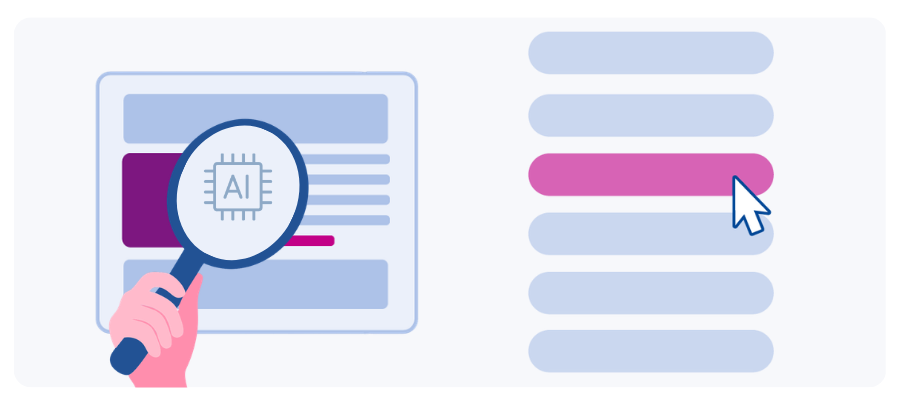
This pattern already exists outside media. Starbucks’ “Deep Brew” connects real-time purchase signals with personalized offers while informing what products stores stock and promote. The system coordinates customer demand with operational decisions across the business. Layering prompt engineering onto an LLM is a different thing entirely.
Without a shared definition of what “agentic” means for your organization, teams risk optimizing different visions of the same idea:
All may qualify as agentic, but without a shared definition, you can’t build toward the same goal. That’s why defining the problem statement comes first, not last.
Why do acting systems raise the stakes?
Here’s what sets agentic systems apart from earlier waves of automation: they don’t just inform decisions; they execute them. Programmatic has always operated within guardrails, executing and optimizing based on defined parameters. Agentic systems work more like navigation. They determine direction and weigh trade-offs against a wider set of context. When an agent reallocates budget mid-flight, suppresses an audience segment, or swaps creative, the quality of the identity and business logic behind that decision determines the outcome.
Here’s what sets agentic systems apart from earlier waves of automation: they don’t just inform decisions; they execute them.
Apply that framework to media. An agentic system operating on incomplete identity data or stale signals won’t slow down to account for the gap. It optimizes faster in the wrong direction. The coordination layer needs to weigh reach, incrementality, audience fatigue, and margin before it shifts spend, and that requires inputs that are accurate, current, and governed. Accountability and oversight aren’t optional anymore; they need to be built into the design from the start.
Watch our Curated Couch session on agentic media planning
Why should measurement stay separate from buying logic?
As autonomy grows in media systems, a structural problem emerges: the system shouldn’t measure its own performance.
When buying logic and measurement logic live in the same loop, performance numbers can look strong simply because they’re optimized to the system’s own signals. Success stops being defined externally and starts being defined internally. Agentic models trained on this pattern learn from the signals they favor, optimizing toward the outcomes they’re best equipped to observe. Performance looks good inside the system, and reflects a narrower view of what’s actually happening.

Independent measurement gets framed as friction on automation more often than not. In reality, it’s what lets automation to scale responsibly. Incorporating independent measurement signals into agentic decision-making, while maintaining meaningful separation from buying logic, produces an objective view of performance, one that can be compared consistently across systems rather than optimized within a single one. That distinction matters when you need to explain results to a client, stakeholder, or regulator.
AI as coordination layer, not an infrastructure replacement
Nothing here slows down automation. Independent measurement doesn’t add friction to execution but builds confidence in the outcomes those decisions generate. The organizations that will benefit most from agentic media won’t necessarily be the ones that adopt it fastest, but those that take the time to define where trusted autonomy creates measurable value and where human judgment needs to stay in the loop.
Before automation reallocates dollars or reshapes customer journeys, the data model has to hold up under scrutiny.
Trust in data, systems, and decision-making processes becomes the real constraint as agentic systems move from insight to action. That trust doesn’t come from autonomy alone, but it comes from governed data and decisions that can be explained, audited, and defended. Every brand that has operationalized automation at scale has learned the same lesson: before automation reallocates dollars or reshapes customer journeys, the data model has to hold up under scrutiny.
How does Experian help you build a defensible foundation?
Experian’s approach to AI in marketing starts from the same principle: intelligence is only as reliable as the foundation it’s built on.
We have spent decades building and governing data in regulated industries. That experience is what makes our foundation AI-ready: not just technically capable but built to withstand the scrutiny that responsible automation requires.
2026 State of advertising report
Our 2026 State of advertising report brings together perspectives from 14 leaders operating across key parts of the advertising ecosystem to show how shifts in AI, commerce media, healthcare, and more, are taking shape in practice.
Download our 2026 State of advertising report and hear from Scott Bender, Head of Publisher & Platform Partnerships, Newton Research, on how AI in advertising is reshaping planning, activation, and measurement.
The data foundation comes first
Agentic AI will reshape how media is planned and bought. That shift is happening now, and the opportunity is significant. But the advantage belongs to organizations that build on a foundation their systems, partners, and stakeholders can trust. Before automation runs, the inputs must be defensible, identity must be accurate, measurement must be independent, and the problem statement must be clear. Get those things right, and automation becomes more powerful. Skip them, and you’re simply moving faster in the wrong direction.
About the author

Budi Tanzi
SVP, Product, Experian
Budi Tanzi is the Senior Vice President of Product at Experian Marketing Services, overseeing all identity products. Prior to joining Experian, Budi worked at various stakeholders of the ad-tech ecosystem, such as Tapad, Sizmek, and StrikeAd. During his career, he held leadership roles in both Product Management and Solution Engineering. Budi has been living in New York for almost 11 years and enjoys being outdoors as well as sailing around NYC whenever possible.
FAQs
Agentic AI refers to systems that move from signal to recommendation to action with a high degree of autonomy. In media, this means an agent can reallocate budget, adjust audience targeting, or swap creative mid-flight based on real-time signals. Unlike standard programmatic systems that execute within predefined guardrails, agentic systems function more like a navigation layer, coordinating across data inputs, predictive models, and business rules to make directional decisions.
Data quality matters more as media automation becomes more autonomous because autonomous systems don’t slow down to account for bad inputs. If an agentic media system operates on incomplete identity data or stale audience signals, it optimizes faster toward the wrong outcomes. The quality of the identity foundation, the accuracy of audience attributes, and the reliability of measurement inputs all become more consequential, not less, as human oversight is reduced.
Programmatic executes and optimizes within defined parameters whereas agentic systems function at a higher level of abstraction, weighing reach, incrementality, fatigue, and margin before determining where and how to shift spend. Programmatic is the engine. Agentic AI, when built correctly, is the navigation layer that determines direction based on wider context and business objectives.
Measurement should be kept separate from buying logic in agentic systems because when a system measures its own performance, it optimizes toward outcomes it’s best equipped to observe. The definition of success becomes internal rather than external, and performance numbers may look strong while reflecting a narrower view of what’s working. Independent measurement, kept meaningfully separate from buying logic, produces results that can be compared across systems and explained to stakeholders without ambiguity.
Experian’s Offline Graph and Digital Graph provide a privacy-first identity foundation covering more than 250 million U.S. consumers and 4.2 billion digital IDs. Experian’s Marketing Data adds more than 5,000 attributes per audience, and Experian’s outcomes measurement keeps performance signals independent from buying logic.
Latest posts

OpenAudience promises the targeting capabilities of a walled garden but without the restrictionsOpenX has lifted the lid on a targeting solution it claims will offer people-based advertising opportunities outside of the industry’s walled gardens such as Facebook and Google. Dubbed OpenAudience, the supply-side programmatic player claims the new offering is powered by proprietary data assets and is supplemented by data partnerships with partners such as LiveRamp and Tapad, a part of Experian. Initially available in the U.S., OpenAudience has a user graph of 240 million monthly users and is currently being tested with multiple marketers with a general rollout planned for the third quarter of 2019. Speaking with Adweek, OpenX CEO Tim Cadogan said the rollout would help differentiate it among its peers as for the most part ad exchanges have marketed themselves based on their impression count, not necessarily addressable audiences. Compare this with Google and Facebook, both of whom account for almost 60% of U.S. ad spend, although this is disproportionate to the amount of time spent with their properties, according to Cadogan. “The thing that has given Facebook and Google so much power is that they have people-based systems [for ad targeting] that are simple to use and operate with a massive scale that are effective, and programmatic hasn’t kept pace with that,” he said. Cadogan cited the findings of a further study by eMarketer, which indicated that marketers are increasingly reliant on such walled garden players for their online inventory supply with the latest launch geared towards capitalizing on that. The latest launch is the culmination of the California-based company’s recent strategic overhaul, namely its attempts to get to grips with an identity-based solution that provides options outside of the walled gardens. Also speaking with Adweek was Todd Parsons, OpenX’s chief product officer, who offered further insight into how OpenAudience operates including how it uses its recently sealed relationship with Google Cloud Platform and machine learning to ape the efficacy of walled garden advertising solutions. “We had to build a matching technology, which made it possible for us to talk about monthly active users instead of talking about cookies or devices,” he explained. “And it took several quarters of staffing up with the right people from the consumer data and identity space.” OpenAudience’s matching technology works by using the identity and cookie matching capabilities of cross-device specialist Tapad and data onboarder LiveRamp to formulate a persistent, deterministic ID which can then be used to match advertisers with audiences on its ad exchange. “So, the idea isn’t for us as a company to put our future into one provider,” added Parsons. “It is to provide a matching technology that uses the best of several.” OpenAudience will also include involve additional tie-ups to offering further demographic information on the 240 million monthly U.S. users such as location, etc., which is currently in testing. “We felt like we needed to be very different about enabling marketers and publishers to activate against that data,” added Parsons. He further added that OpenX wants to rival Facebook’s levels of service when it comes to helping publishers monetize audiences on the social network, except this time on the open web. “No one has actually pushed identity and consumer data into the hands of publishers in a way that you might unify the view of audiences across many websites.” OpenX’s Cadogan summed up the OpenAudience offering and how it may look to advertisers when he said, “Imagine the open web is one publisher, and this lets buyers look at it as a single entity and market to them accordingly.” Contact us today
Everyone knows that it’s important for businesses to have a clearly defined brand. In the modern world, the personal brand has become just as important, and many professionals are trying to build up their public reputation, expertise and industry authority. In the digital age, there are many different methods and channels you can use to build your personal brand, but some are more efficient than others. According to Forbes Agency Council, here are some of the most effective ways to develop an authentic personal brand.1. Give More Than You Receive Whatever you do, always aim at giving more than you receive. When you build your network, try to bring value to each new person that you meet. When you get featured in some media, see what you can do for them in return. This is the best strategy because actions speak louder than words. People will remember you for what you are, not what your website is. – Solomon Thimothy, OneIMS 2. Define What You Stand For, Then Align Your Actions Define your mission. What is your purpose? What do you want to accomplish, and what is your key message? Once you have answers to those questions, use that mission as a guiding North Star to consistently reinforce your personal brand every day. This will come across in how you lead, how you interact with employees and peers, how you communicate, and how you give back to the community. – Preethy Vaidyanathan, Tapad 3. Develop A Creative Positioning Statement It’s all about positioning your company. You need to have creative positioning statements about who you are and what your company is doing to benefit its clients. Clients want resolutions to their problems, and that’s where you come to the rescue. It’s either sold or ignored. – Cagan Sean Yuksel, GRAFX CO. 4. Speak At An Event Becoming a keynote speaker gives you access to the things you need to elevate your brand: influencer status, large audiences and media profile. But access doesn’t equal attention. While speaking gives you the platform, you need to have something compelling to say. You’ll need a differentiated message, unique presentation style and a great agent to make this strategy successful. – Andrew Au, Intercept Group 5. Focus On A Specific Audience The most effective way to build your personal brand is to create content specifically for a very specific group of people. Create relevant content that details solutions to the unique needs of this audience so that it spreads quickly due to its hyper-relevance. This creates authority and credibility for your personal brand and helps you stand out as being the most relevant expert in your field. – Adam Guild, Placepull 6. Be Ruthlessly Consistent Developing a personal brand requires ruthless consistency in your subject matter and how you present yourself to the world. I go back to the early days of marketing blogs. In those days, some bloggers were all over the map with content. The ones who were consistent with their audience and their goals are the ones who had staying power. They became the authors, speakers and consultants. – Scott Baradell, Idea Grove 7. Follow Through Just like a traditional brand, the quality of your offering helps to build your brand. If you are clear on what you can and cannot deliver and always follow through on your word, your personal brand reputation will precede you and will be lifted by the recommendations of others. – Kieley Taylor, GroupM 8. Build A Solid Reputation “Personal brand” is just a new-age name for reputation. Doing your job exceptionally well, going above and beyond, treating people with respect and kindness, having a point of view—essentially any action that builds a solid professional reputation does the very same for your personal brand. – Jess Cook, TMV Group 9. Define Your Voice Establish your unique voice and personal point of view and stick to it in all you do and all you say. Personal brands must be consistent and have consistency in messaging, attitude and behavior. Express your personal brand through comments on articles, at significant events and important platforms where it can best showcase and support your personal point of view and brand persona. – Pat Fiore, FIORE 10. Create And Share Video Content Video is hard for many people. That’s why it can be your competitive advantage if you do it. Video allows you to be seen, heard and felt emotionally in a way that no other medium can. You may say, “That’s not for me” and that’s fine, but good luck competing with those who embrace it. Barriers to video are so low that building a personal brand without it seems as if you are hiding something. – A. Lee Judge, Content Monsta 11. Share Your Point of View In Everything You Do There are a finite number of topics that make for interesting discussion in our industry, so having a point of view and sharing it through crafted content is vital for building your personal brand. You don’t have to be controversial, necessarily, but considering themes and topics and providing honest commentary that demonstrates experience is the quickest way to build your reputation. – David Harrison, EVINS 12. Stay True To You The most effective way to build your personal brand is to be true to who you are. If you are wildly creative and outgoing, show that in your branding! Don’t hold back in your content; post that crazy Instagram picture that shows the world how you think. If you are conservative, then own that. This passion for who you really are—and what your company really is—authentically shines through. – Katy Boos, Remix Marketing Inc. Contact us today
OpenAudience™ will provide marketers the ability to easily plan and buy advertising for every digitally addressable consumer across the open web LOS ANGELES, May 2, 2019 /PRNewswire/ — For the past decade, the most effective way to advertise in digital media has been on Facebook and Google. Marketers in the U.S. now spend two-thirds of all digital ad spend on the “walled gardens”, despite the fact that they receive less than 36 percent of total consumer time spent online. According to eMarketer, addressing this massive asymmetry in advertising – where tens of billions of dollars are over allocated to the walled gardens – is the top concern of marketers in 2019. While programmatic technology has become the primary monetization system for the open web, it has lacked the simplicity and efficacy of walled gardens. Today, OpenX is changing that paradigm by bringing true people-based marketing to the open web for the first time with the introduction of OpenAudience. OpenAudience will provide marketers and publishers with an unprecedented, unified level of knowledge about consumer audiences – through a platform built on privacy by design principles that brings the efficiency and efficacy of walled garden advertising to the open web. OpenAudience is powered by a comprehensive proprietary data asset and supplemented by integrated partnerships with recognized leaders in data and identity like LiveRamp, Tapad, a part of Experian, and more. For marketers, OpenAudience will provide the ability to plan and buy people-based marketing campaigns that combine the impact and ease of use of Facebook advertising with the scale of the open web. OpenAudience is currently in active partner testing with multiple marketers in the U.S., including Fortune 500 financial service and consumer personal care companies, along with one of America’s largest online entertainment outlets, and will be generally available to the broader market in Q3 of 2019. For publishers, OpenAudience will deliver user-based knowledge that empowers them to value and sell advertising with unparalleled precision. With the ability to automatically place consumers into high-value audience segments drawn from the more than 240M U.S. Monthly Active Users OpenX reaches across the open web, OpenAudience allows publishers to maximize revenue like never before. “OpenAudience is a natural evolution of programmatic advertising, combining the unified knowledge of people-based audiences with the transactional power of programmatic to create a planning, buying and advertising experience that is unlike anything else in the market today,” said Todd Parsons, chief product officer at OpenX. “No exchange in the market today has enabled a unified view of publisher audiences,” said Travis Clinger, vice president of strategic initiatives, LiveRamp. “Now, OpenX is democratizing identity across all publishers on the open web, helping marketers to plan and buy audiences the way they do inside walled gardens. We are thrilled to be a key component of OpenAudience.” For more information, or to request a place in the private testing phase of OpenAudience, visit: http://www.openx.com, or contact your OpenX account representative today. About OpenX Nobody understands the open web better than OpenX. As the world’s largest independent advertising exchange, OpenX makes the efficient people-based marketing buying experience of the walled gardens available to all marketers across the open web. OpenX works with more than 30,000 advertisers across every screen and device, reaching nearly one billion consumers – including a quarter billion unique consumers in the US – and processing more than one trillion transactions globally each day. To date, OpenX has helped deliver more than $3 billion in total monetization to publishers. That’s the Power of Open™. Contact us today