Originally appeared in AdExchanger
Navigating the world of data and identity partners feels like scrolling through a dating app: a sea of options, but only a select few worth swiping right. To find your perfect match, look for a partner who ticks all the right boxes. Here’s your guide to finding your perfect match.
1. Identity resolution: It all starts with a strong foundation

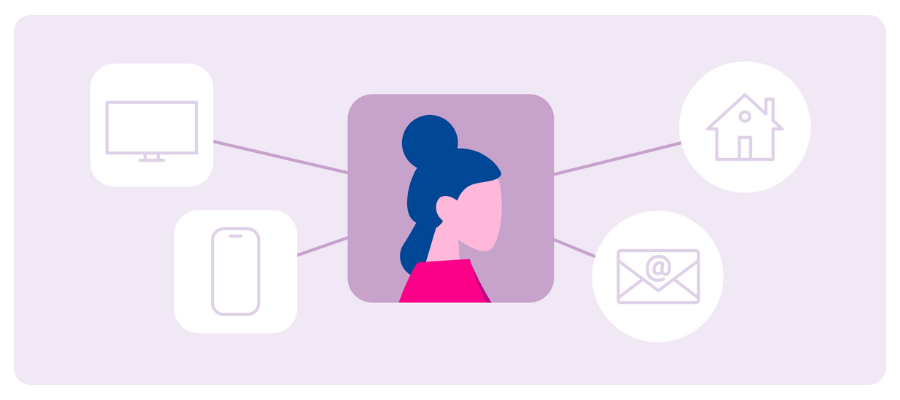
Great identity resolution depends on a rock-solid foundation. The best partners rely on offline data—like names, addresses, and emails—that rarely change, ensuring a consistent view of households, individuals, and their devices over time. You want someone who gives you the same understanding of your audience across every stage of a campaign.
2. In search of: A well-rounded, reliable identity partner
When evaluating identity graphs, it’s essential to distinguish between digital-only graphs, offline graphs, and those rare gems who combine both. Digital graphs rely on digital identifiers, while offline graphs are grounded in persistent identifiers like name, address, and phone number. A partner who offers both creates a more complete and reliable view of consumers across channels, resulting in more effective targeting and measurement.
3. Match rates are like dating profiles—don’t be fooled by the numbers

Match rates can look impressive, but they’re often misleading. They can also vary widely depending on the methodology and the IDs being tested. Some providers inflate match rates by limiting the scope of comparison or tweaking their standards. The real indicators of quality are the depth of the data, the quality of matches, and how often the graph is refreshed. Ideally, your partner updates their graph weekly or monthly. The inclusion of inactive IDs may inflate the perceived scale without reflecting the true addressable audience. It’s like having a profile photo from ten years ago–a major no-no.
4. Authentic origins: Is their data genuine or just a catfish?
Look into your partner’s data sources and place a premium on those with public records or direct to consumer relationships. Ask if they have the experience and expertise when it comes to all aspects of data processing from accuracy to privacy and security. Look for some clear third-party indicators for accuracy, like ratings from Truthset, but there is also a basic reality: either your partner is focused on privacy and accuracy, or they are just playing the scale game. Swipe left on those playing games.

5. The breadth to impress
Depth matters as much as quality. Seek a partner with wide-ranging attributes that span key audience categories like demographics, interests, and purchase behavior. They should offer the flexibility to deliver both granular data scores and broad audience segments, empowering you to reach the right consumers across channels effectively.
6. The total package: Does your partner really have it all?
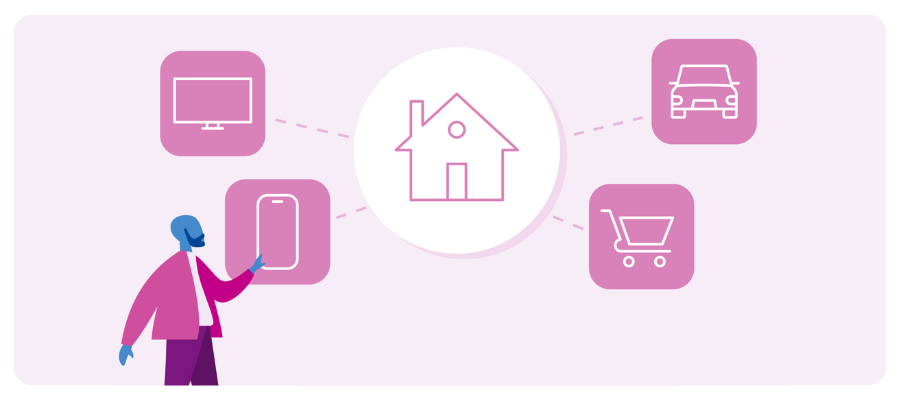
A true, lifelong partner connects the dots seamlessly, offering a blend of data and identity that link households to devices while layering in rich marketing insights. This approach helps advertisers better understand their customers, reach the right audiences across channels, and measure the impact of their campaigns. The right partner is well-connected and ensures that all the pieces—identity, data, and activation—work in harmony.
7. Future-proof charm: Will they ghost you when cookies crumble?

With the Identifier for Advertisers (IDFAs) gone, cookies on the wane, and IP addresses under scrutiny, a partner’s ability to adapt is critical. The most future-proofed solutions are based on offline identifiers like names and addresses, which are user provided and consented data points–making them more resistant to privacy changes. Additionally, look for partners who have made the necessary investments and are prepared to support the new wave of addressable IDs emerging as alternatives to traditional signals.
8. Privacy savvy: Do they respect boundaries?
As privacy laws evolve, you need a partner with a strong history in privacy compliance and proactive leadership in navigating new regulations. Strong and transparent privacy policies and participation in privacy organizations are a good indicator of trustworthiness, especially as new rules emerge across different states. Look for a partner who takes data privacy as seriously as you do and gives you peace of mind when handling sensitive information.

9. Seamless connectivity: Do they play well with others?
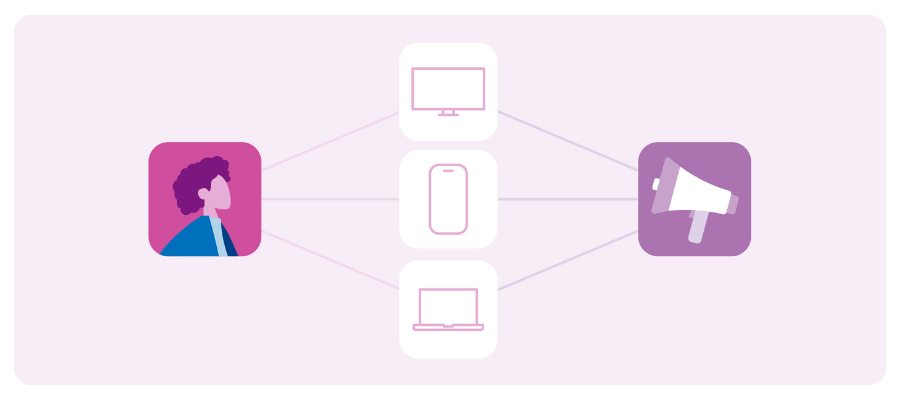
Data is only as useful as it is actionable. Connectivity across platforms is essential, so choose a partner with seamless integrations into the major platforms you rely on for advertising. This ensures your data quality and identity resolution remain intact throughout your campaigns, avoiding loss from multiple handoffs.
10. Killer customer service: Are they in it for the long haul?
A great partner collaborates to solve challenges, not just to sell or upsell. Long-standing partnerships and testimonials about strong customer service are key indicators of reliability. Choose a partner who educates and guides you through technical and strategic challenges, fostering an environment where problem-solving and innovation thrive.

Keep your standards high
Only a handful of companies can meet these rigorous criteria, and you should refuse to settle for a partner that lacks any of these key dimensions. Successfully navigating signal loss, privacy compliance, and seamless omnichannel integration requires extensive resources, robust infrastructure, and years of expertise.
So, swipe right on a partner who can handle the complexities of modern marketing and deliver consistent, scalable successful marketing outcomes. Could we be your perfect match?
Find out if it’s a match today
Latest posts

Tapad, part of Experian, integrates with AcuityAds' current offering will complement cross-channel capabilities for brands and agencies in the U.S. and Canada NEW YORK, Jan. 23, 2020 /PRNewswire/ — Tapad, a global leader in digital identity resolution, has partnered with AcuityAds, a technology leader that provides targeted digital media solutions for advertisers to connect intelligently with audiences. The partnership will enhance AcuityAds' existing cross-device solution, especially with respect to its cross-channel Connected TV offering. Tapad's global, privacy-safe digital cross-device solution, The Tapad Graph, will compliment AcuityAds' own cross-device data set for enhanced marketing capabilities across their Demand Side Platform (DSP). For AcuityAds, this provides customers with unduplicated reach across desktop, tablet, mobile and CTV devices – while augmenting their video offering. Tom Woods, Vice President of Products at AcuityAds commented, "With increasing marketing complexities, consumer device usage and new data regulations, our decision regarding the partnership was an important one. The Tapad Graph's privacy-safe identifiers for consumer notice and choice, as well as the ability to opt-out at any point, were critical factors in our decision who to partner with." To learn more about Tapad and our digital identity resolution capabilities, visit our identity page. About Tapad Tapad, Inc. is a global leader in digital identity resolution. The Tapad Graph and its related solutions provide a transparent, privacy-safe approach connecting brands to consumers through their devices globally. Tapad is recognized across the industry for its product innovation, workplace culture, and talent, and has earned numerous awards including One World Identity's 2019 Top 100 Influencers in Identity Award. Headquartered in New York, Tapad also has offices in Chicago, London, Oslo, Singapore, and Tokyo. About AcuityAds AcuityAds is a leading technology company that provides marketers a powerful and holistic solution for digital advertising across all ad formats and screens to amplify reach and Share of Attention® throughout the customer journey. Via its unique, data-driven insights, real-time analytics and industry-leading activation platform based on proprietary Artificial Intelligence technology, AcuityAds leverages an integrated ecosystem of partners for data, inventory, brand safety and fraud prevention, offering unparalleled, trusted solutions that the most demanding marketers require to be successful in the digital era. AcuityAds is headquartered in Toronto with offices throughout the U.S., Europe and Latin America. For more information, visit AcuityAds.com. Disclaimer in regards to Forward-looking Statements Certain statements included herein constitute "forward-looking statements" within the meaning of applicable securities laws. Forward-looking statements are necessarily based upon a number of estimates and assumptions that, while considered reasonable by management at this time, are inherently subject to significant business, economic and competitive uncertainties and contingencies. Investors are cautioned not to put undue reliance on forward-looking statements. Except as required by law, AcuityAds does not intend, and undertakes no obligation, to update any forward-looking statements to reflect, in particular, new information or future events. Contact us today
Tapad, a part of Experian and the future of cookies Earlier this week, Google announced plans to create “.. a path towards making third-party cookies obsolete”; which will result in the phasing out of support for third-party cookies in its Chrome browser within two years. While there has been much discussion and debate on the future of the third-party cookie, an announcement from Google has been anticipated for some time. As many have said this week, the use of cookies and other identifiers has and will continue to evolve. What will never change is the value exchange between publishers and consumers that is enabled by relevant advertising. Notably, the need for independent companies to develop solutions that enable this value exchange has never been greater to ensure that publishers, consumers, and advertisers derive the most value from their relationship. We are well-positioned for the future From the start, Tapad, a part of Experian has led with a consumer-first, privacy-centric approach to technology as the use and proliferation of devices and global privacy regulations continue to evolve. Over the past two years, Tapad, a part of Experian has gone through a technical overhaul. Calling on almost ten years of expertise in identity resolution, we have created a modern platform that is flexible in terms of identity input as well as output. Anticipated change in the identity landscape was the driver behind our architecture decisions and what enables us to be responsive to a dynamic market. Consumer behavior and device use continue to change, bringing additional digital IDs into the equation – namely across the mobile and CTV environments. Our technology, however, is not tied to any specific type of identifier, but rather is focused on associating disparate identifiers at the individual and household level. Where do we go from here? Google’s announcement has been characterized as a conversation starter, but we see it more as a call to action. With a timeline set, there is a need to converge on one or more solutions that can scale across the web. In a post cookie world, publishers and advertisers will continue to require ways to create fair marketplaces across platforms and devices. Further, the platforms that currently power the programmatic advertising ecosystem will need to be able to invest and differentiate to bring value to their customers. Scaled privacy-safe identity solutions will be needed not only for classic targeting, attribution, measurement, and frequency capping use cases but also to carry consumer preferences and consent. Tapad, a part of Experian will continue to play a leading role here. However, we are not going to do this alone. As solutions around Google’s Chrome browser evolve, we will continue to take a leadership position and will work with Google, key industry groups, partners and customers to meet current and future needs for an independent identity solution at scale. In the meantime, we will continue to support an independent ecosystem where consumers come first and privacy standards are a priority. It’s business as usual…for now. There will not be any changes to our graph products or services as a result of Google’s announcement in the near term. Any changes related to the Chrome third-party cookie will evolve and will no doubt be subject to significant industry participation and feed-back, indeed at the invitation of Google. We will proactively communicate any changes and product updates during this time period. We look forward to the opportunities resulting from these changes and ushering in a new era of identity resolution in digital advertising. Contact us today
Tapad's integration with Knorex's XPO™ platform will complement cross-channel optimization capabilities for brands and agencies in the U.S. and APAC markets NEW YORK and SINGAPORE, Dec. 10, 2019 /PRNewswire/ — Tapad, part of Experian and a global leader in digital identity resolution, has partnered with Knorex, a leading provider of digital performance marketing. Knorex's self-service online advertising platform, Knorex XPO™, enables marketers to advertise globally in real-time across different media channels, formats, platforms and devices. Tapad's global, privacy-safe digital cross-device solution, The Tapad Graph, will compliment Knorex XPO™'s own device data set for enhanced marketing capabilities. For Knorex, the integration enables their brand direct and agency customers to gain a more accurate understanding of consumers across devices to reduce campaign inefficiencies and duplication, and to effectively manage frequency capping and attribution. Abhishek Kumar, VP of Engineering at Knorex commented, "Today's digital consumer is raising the bar for marketers. With increasing marketing complexities and consumer device usage, this integration enables marketers to understand the consumer decision journey with heightened ease. Our combined offering will empower agencies in the APAC and US markets, providing an improved marketing solution that will help to streamline their efforts." Abhay Doshi, Head of APAC at Tapad added: "The Tapad Graph, when integrated with the Knorex XPO platform, should not only help U.S. and APAC marketers optimize campaign performance through cross device marketing – but also increase the opportunity for brands to reach out to their target customers within a desired time." To learn more about Tapad and our digital identity resolution capabilities, visit https://www.experian.com/marketing/consumer-sync. About TapadTapad, Inc. is a global leader in digital identity resolution. The Tapad Graph and its related solutions provide a transparent, privacy-safe approach connecting brands to consumers through their devices globally. Tapad is recognized across the industry for its product innovation, workplace culture, and talent, and has earned numerous awards including One World Identity's 2019 Top 100 Influencers in Identity Award. Headquartered in New York, Tapad also has offices in Chicago, London, Oslo, Singapore, and Tokyo. About KnorexKnorex provides programmatic advertising products and technologies to advertising buyers worldwide. With its cloud-based online advertising platform, Knorex XPO™ enables ad buyers to self-serve and advertise real-time across the globe regardless of the media channels (social, search, OTT/CTV, video, web/mobile etc.), ad formats (display, native, search, social, video etc) and devices (desktop, laptop, smartphones and tablets) to deliver personalized marketing messages to the target audience in an automated way, powered by machine learning/AI. Underpinned by a multi-layered data-driven approach, XPO simplifies the execution and optimization of marketing campaigns, while delivering measurable and attributable performance. Contact us today