Advertisers are always looking for ways to improve the targeting and effectiveness of their campaigns. One strategy that’s gaining popularity lately is using curated private marketplace (PMP) deals, allowing advertisers to buy premium ad inventory in a private auction environment. But how do data providers and PMPs work together to make PMP advertising more successful?
What is a private marketplace (PMP)?
Advertising PMPs, or private marketplace deals, are a type of programmatic advertising where advertisers and publishers negotiate and set up a direct deal between themselves to buy or sell advertising inventory in a private auction environment. In PMP deals, publishers can make their premium inventory available to a select group of advertisers, who can bid on it in a private auction using demand-side platforms (DSPs). These private auctions typically offer higher-quality inventory and a more targeted audience than open exchange auctions, which are accessible to all advertisers. However, traditional PMPs had their limitations, including often being limited to accessing inventory from a single publisher group.
Audigent takes PMP advertising to the next level with SmartPMPs
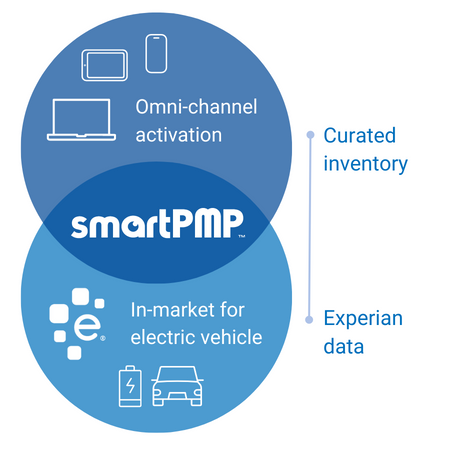
Audigent’s key differentiator is that instead of activating audience data from the DSP, which is the industry standard, they integrate directly with supply-side platforms (SSPs). By taking this route, audience data and inventory from hundreds or even thousands of publishers can now be packaged together into a single deal ID / SmartPMP. SmartPMPs empower media buyers with the ability to access and buy against unique, customizable data segments on premium curated publisher inventory in combinations that otherwise would not have been available.
Activating data via the supply-side also enables supply-side optimizations. This means that instead of simply being a data provider, Audigent plays an active role in the success of media buyers’ programmatic campaigns by optimizing toward performance goals in coordination with demand-side buyers. The result is the full alignment of demand- and supply-side technologies for the first time in programmatic.
SmartPMPs drive campaign performance
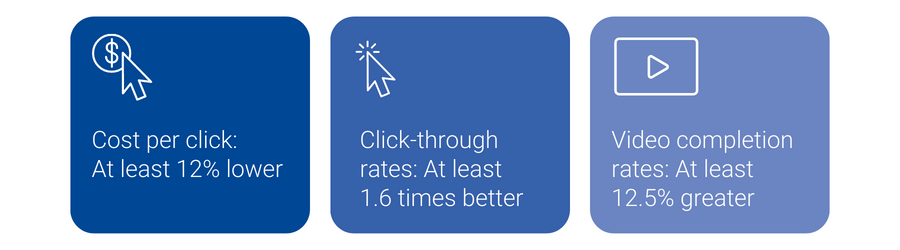
Audigent performance data compared to the programmatic open exchange:
How Experian and Audigent partner in PMP advertising
Experian and Audigent collaborate using Consumer View audience data. By supplying valuable insights into users’ interests, behaviors, and demographics, we help advertisers create more targeted and personalized ad campaigns with Audigent. This can lead to higher engagement rates, greater brand awareness, and increased conversions for Audigent and Experian clients.
By activating Experian data via Audigent SmartPMPs, advertisers unlock the ability to reach highly engaged users across premium, curated inventory sources on key channels like connected TV (CTV), display, video, and more.
Unlock the potential of programmatic advertising with us
Our strategic collaboration with Audigent is transforming the programmatic advertising space. Our partnership enables our customers to tailor their ads directly to their desired audience. This elevated personalization results in higher conversion rates and optimized campaigns for superior ROI performance.
Contact us for more information about our digital audience segments on the Audigent platform. To learn more about our partner Audigent, visit www.audigent.com.
Get in touch
Latest posts

Email hashing was originally intended to be used as an email security feature that has ended up being a very powerful marketing tool. A hashed email is a cryptographic function that changes an email address to a random code which can be used as an anonymous customer identifier. This code is privacy-safe and cannot be traced back to the customer’s email address. However, this hashed email can function like a digital passport that traces every behavior and action a customer takes when logged into an account that is authenticated with an email, making hashed emails a goldmine for customer data. Today emails are used across traditional publishers and within the CTV ecosystem; tying them to more consumer touch points than ever before. Why the emphasis now? Cookies are on their way out the door and have been the primary way that many marketers have tracked their existing and potential customers. In order to replace this granular level of data, marketers are likely going to need multiple solutions. With so many cookieless solutions and IDs appearing in the marketplace, the mapping of the customer journey is bound to be fragmented. Relying on first-party data, such as hashed email, is just one way to reduce that fragmentation; as it can serve as an authenticated starting point for cross-device identity resolution that can be leveraged for targeting, personalization and measurement. How can Tapad + Experian help? Tapad + Experian's Hashed Email Onboarding is a privacy-safe way to connect consumer email addresses to their related digital devices and other digital identifiers through high precision probabilistic identity. By onboarding hashed emails and incorporating them within your Tapad Graph file you can: Build a more holistic view of individuals and households and their relationship to email addresses in your first-party data set Leverage these relationships for increased cross-device scale for targeting Employ personalization tactics at the household or individual level across devices Create new audience segments and look-alike models for cross-channel activation Design more inclusive measurement and attribution for customer journey mapping Tapad, a part of Experian has built a hashed email onboarding product feature that works with the existing flexibility of The Tapad Graph to deliver the most holistic consumer view, combined with the attributes you need, in the structure that works best for your business objectives. Get in touch
The result of epic shifts from traditional cable to streaming television, the CTV ecosystem is experiencing compounded fragmentation, making it challenging for marketers to leverage in the most effective way for both activation and measurement. Heralded as the hot new household level device for highly engaged viewers, CTV brings massive opportunities for brands to move users down the funnel and incorporate CTV into their attribution modeling post-campaign. Leveraging CTV IDs within a cross-device identity resolution strategy can yield big benefits if you know how to do it right. Check out our breakdown of today’s CTV landscape to help you better understand how and what you can leverage for activation and measurement in the streaming-verse today. CTV Ecosystems as identifiers (for illustrative purposes only) This is just a small peak at the players and complexities of CTV IDs available for marketers today, but it illustrates the need to understand what IDs can benefit your strategies and where you can use them. Addressability and attribution Not all CTV devices and IDs are addressable; or have ad slots for biddable inventory for advertisers. For example, Apple TV devices and Apple TV + are not ad supported, but could still appear within an identity graph for measurement purposes; helping understand customer behavior and habits, which can inform marketing strategies. Having a household to individual view that's as inclusive as possible can provide valuable insights. CTV identity strategy Whether or not CTV devices or apps are addressable for advertisers, they can bring immense value when leveraged as part of a holistic identity resolution strategy. As a household level device with user authentication it can provide marketers a top-down view; unlocking household:individual targeting opportunities and unification of IDs at both levels for frequency management and customer journey mapping Get started with us Tapad, part of Experian, offers CTV ID onboarding and extension to our CTV ID Universe as a part of The Tapad Graph suite of products.

CPG companies often base marketing decisions on custom market positioning studies, surveys and generic consumer personas. There’s a better way…