Marketers aren’t thinking in channels anymore: they’re thinking in audiences.
As consumer media habits have scattered across devices, platforms and formats, brands have shifted their focus from managing one channel at a time to delivering a connected experience. That’s the core of omnichannel marketing: meeting people where they are and making each touchpoint feel like part of a larger narrative.
However, most brands still encounter the same roadblocks: siloed data, fragmented planning and tools that don’t integrate. And while the industry talks a great deal about omnichannel marketing, few are actually doing it well. The brands that figure it out won’t just reach more people; they’ll improve brand perception while improving the customer journey, achieving better outcomes, and optimizing their media spend more efficiently.
Learn more about this trend in our 2025 Digital trends and predictions report.
Why omnichannel is no longer optional
Omnichannel marketing has long been a goal, but recent shifts in media and technology now make it a necessity. According to Forrester, 21% of global B2C business and tech professionals identified enhancing omnichannel or cross-channel customer experiences as a top priority for their organization today.
Connected TV (CTV) and commerce media networks are emerging as dominant channels, necessitating the coordination of messaging across an expanding ecosystem of streaming, programmatic display, and commerce-driven environments in addition to the multitude of other addressable (and non-addressable) channels. Fortunately, identity solutions continue to evolve, enabling marketers to maintain audience addressability in digital channels even as traditional signals decline and privacy regulations intensify.
Consumers expect this kind of cohesion. They don’t see “channels” – they just see a brand. A member of your loyalty program might browse a product online, see the exact item later on their socials, and then receive an email offer. If those messages feel disconnected or out of sync, this will not be a good customer experience, and a brand risks wasting impressions and losing conversions.
Omnichannel isn’t about showing up in more places. It’s about showing up with a consistent message.
The opportunities inherent in true omnichannel execution
Despite the industry’s movement toward omnichannel marketing strategies, there are a few untapped opportunities brands would benefit from pursuing.
The opportunity? Shift toward integrated media planning and measurement. By aligning teams and KPIs across channels, marketers can optimize frequency, coordinate creative sequencing, and better attribute business outcomes. Breaking down internal silos improves the customer experience and drives more effective performance. With two-thirds of North American CMOs naming siloed data as their biggest obstacle, those who solve it stand to gain a clear advantage.
The opportunity? Invest in interoperable systems that give you control over your data and privacy-safe solutions like clean rooms or universal IDs that enable consistent audience activation across platforms.
The opportunity? Advocate for a centralized, privacy-conscious identity framework that bridges fragmented data sources. This would allow marketers to recognize consumers across platforms and deliver cohesive messaging.
Marketers need solutions that enable connected audience activation while respecting privacy requirements and platform-specific constraints. Without this, omnichannel remains an aspiration rather than a reality.
Data and identity: The tools you need in your toolkit to make omnichannel work
Implementing omnichannel right starts with establishing identity. Brands need a foundation that lets them connect the dots: across data, platforms and channels. Here’s how:
Build a unified identity foundation
“A single view of the customer is the foundation of a successful omnichannel program,” says Forrester in a December 2023 report on omnichannel. This begins by connecting disparate data sources, including persistent offline information, such as addresses, emails, names, and phone numbers, with digital signals, in a privacy compliant way. And this, in turn, creates a strong identity foundation. Solutions that integrate hashed email addresses (HEMs), mobile ad IDs (MAIDs), IP addresses, CTV IDs, and universal IDs enable brands to resolve customer identities across different platforms, ensuring that campaigns remain addressable as users transition between channels.

Activate audiences everywhere, without the hassle
Brands should be able to define an audience once and activate it across all addressable channels without unnecessary complexity. Interoperability between demand-side platforms (DSPs), supply-side platforms (SSPs), clean rooms, and private marketplaces (PMPs) ensures that high-quality audiences are matched with premium inventory in a targeted, transparent, and efficient manner. This connectivity helps maintain consistent audience targeting—even as consumers engage in different environments. By working with a partner that seamlessly integrates with major platforms, marketers ensure that data quality and identity resolution remain intact throughout campaigns, avoiding data loss that occurs when data is transferred between different, disparate platforms.
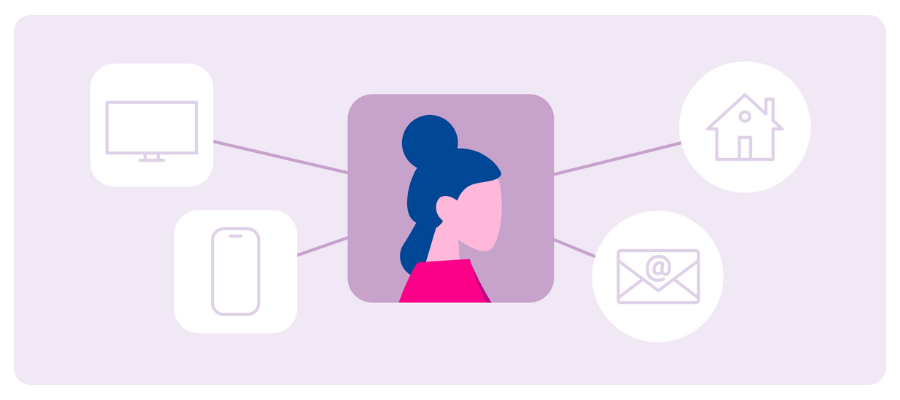
Measure across channels, and the customer journey
Effective omnichannel marketing isn’t just about reaching audiences—it’s about understanding how different touchpoints contribute to conversions. Advanced attribution models, incrementality testing, and cross-platform frequency management enable brands to use consistent identity across campaign planning, activation and measurement so they connect ad exposures to real-world outcomes. Achieving this requires a strong identity resolution partner—one that can unify audience data across environments and power accurate, privacy-compliant measurement at scale.
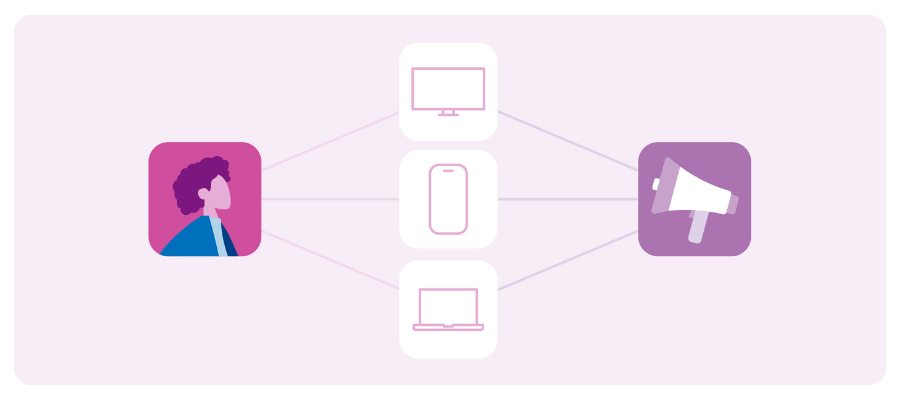
The future of omnichannel marketing
Omnichannel is becoming the baseline expectation for modern marketing. The brands that figure out how to connect the dots across the increasingly disparate media landscape will drive better performance and build stronger customer relationships.
By working with a partner that can offer you an end-to-end data and identity solution focused on consumers, not channels, you can better understand your best customers (and your next customers), reach them across channels, and measure cross-channel campaigns more effectively, making true omnichannel execution more achievable.
Get started today
About the author

Kimberley Klevstad
Account Director, Retail, Experian
Kimberley Klevstad is 25-year industry veteran with a wide range of experience driving strategic growth for global accounts across print, online, mobile, location-based and streaming audio platforms. Kimberley is currently a member of the Experian Marketing Services Retail team, advising top retail brands on data and identity strategies that will deepen loyalty and drive acquisition in an increasingly competitive landscape.
Latest posts

Tapad's, part of Experian, SVP of Identity shows us how marketers might communicate seamlessly through emerging channels like voice, the smart home, and, yes, podcasts.In his relatively new role as senior vice president of identity at Tapad, a part of Experian, Ajit Thupil keeps a close eye on the evolution of marketing as it becomes more intent on using data and identity technology to track ROI. Here he sits with Chris Wood at Tapad’s New York offices to discuss the future of identity. (To capture the inventive atmosphere at this location, the room they chatted in was named after Leonardo da Vinci.) For Thupil, it all comes back to the customer, whether it’s a brand client or a consumer. Brands want measurability and customers demand a seamless experience across the many devices they use in a day. While consumers are understandably reticent about giving up personally identifiable information (PII), current identity solutions use anonymous data profiles to connect the dots at the individual or household level. Given the frequency that users switch devices, along with their tendency to share bigger screens like TVs, there’s no dearth of challenges for this “head of problem solving” to solve. Contact us today

Joint solution will enhance accuracy and reach across North America, EMEA and APAC NEW YORK, April 17, 2019 /PRNewswire/ — Tapad, a global marketing technology company and leader in digital identity resolution solutions, today announced a new joint capability with Arm®Treasure DataTM , a leader in enterprise customer data management. The partnership combines The Tapad GraphTM technology with Arm Treasure Data's robust enterprise Customer Data Platform (CDP), enabling advertisers in the Arm Treasure Data marketplace to access Tapad's datasets. With the integration of Tapad's Graph and Arm Treasure Data's existing first party data, marketers will be able to deliver scalable, cross-device messaging with precision. In addition, marketers can benefit from anonymous customer journey analysis, audience expansion and online and offline attribution. Arm Treasure Data's APAC market customers will have access to expanded audience reach by leveraging Tapad's global, proprietary datasets. While Tapad will be able to extend its presence into the APAC region, tapping into Arm Treasure Data's existing footprint. "The Tapad GraphTM is a trusted and established platform with a history of innovation," said Stephen Lee, Senior Director, Business Development, Arm Treasure Data. "Integrating Tapad's technology into the Arm Treasure Data CDP will allow for streamlined experiences across markets, achieving global scalable reach." For more information about The Tapad GraphTM, or to request a demo, visit our identity page. About Tapad Tapad, Inc. is a global marketing technology company and leader in digital identity resolution solutions. The Tapad GraphTM, and related solutions, provide a privacy-safe approach to connecting device identifiers to brand and marketer data, thereby allowing for enhanced measurement, attribution, reach and ROI of marketing campaigns. The Tapad GraphTM enables marketers around the world to maximize campaign effectiveness and drive business results. Tapad is recognized across the industry for its innovation, growth and workplace culture, and has earned numerous awards, including the TMCnet Tech Culture Award. Based in New York, Tapad also has offices in Chicago, London, Oslo, Singapore and Tokyo, and is a wholly owned subsidiary of Telenor Group. About Treasure Data Arm Treasure Data enterprise Customer Data Platform (CDP) unifies data from multiple sources – online, offline, IoT and device generated data – and empowers enterprises to disrupt their markets with superior customer experiences. Our customers are creating transformational customer relationships by connecting the data dots with our CDP. Arm Treasure Data is fully owned by Arm Holdings and has a global customer base of over 300 enterprises including Fortune 500 and Global 2000 companies. Our clients manage over 130 trillion records, resulting in more predictable and profitable business results. Contact us today
Leading global marketing technology company, Tapad, a part of Experian, adopts The Trade Desk’s streamlined cookie ID into its identity resolution solutions to increase global cookie coverage across the internet April 03, 2019 09:00 AM Eastern Daylight Time LOS ANGELES & NEW YORK–(BUSINESS WIRE)–Global marketing technology company, Tapad, a part of Experian, has partnered with The Trade Desk to onboard The Trade Desk’s unified ID solution into its digital identity driven solutions. The Trade Desk’s unified ID solution is free for all parties spanning the digital advertising supply chain, including SSPs, DSPs, DMPs and data providers. With leading players onboarding the unified ID solution, such as Tapad, streamlined cookie syncs make ad viewing experiences better for consumers, increase match rates for all parties, and expand cookie coverage on a global-scale. Adoption of The Trade Desk’s global cookie footprint enables Tapad customers to benefit from greater precision and potentially higher performing digital marketing campaigns. “Identity is critical in the ecosystem and as a long-standing leader in the space, Tapad has shown a strong commitment to building digital identity resolution solutions that help marketers launch more effective campaigns on a global scale,” said Ed Chater, VP of Data Partnerships, The Trade Desk. “We are thrilled for their participation and look forward to solving the digital identity narrative across the industry through this partnership. The continued widespread adoption of the unified ID solution validates our collective mission to improve the effectiveness of digital advertising.” About Tapad Tapad, Inc. is a global marketing technology company and leader in digital identity resolution solutions. The Tapad Graph™, and related solutions, provide a privacy-safe approach to connecting device identifiers to brand and marketer data, thereby allowing for enhanced measurement, attribution, reach and ROI of marketing campaigns. The Tapad Graph™ enables marketers around the world to maximize campaign effectiveness and drive business results. Tapad is recognized across the industry for its innovation, growth and workplace culture, and has earned numerous awards, including the TMCnet Tech Culture Award. Based in New York, Tapad also has offices in Chicago, London, Oslo, Singapore and Tokyo, and is a wholly owned subsidiary of Telenor. About The Trade Desk, Inc. The Trade Desk™ is a technology company that empowers buyers of advertising. Through its self-service, cloud-based platform, ad buyers can create, manage, and optimize more expressive data-driven digital advertising campaigns across ad formats, including display, video, audio, native and, social, on a multitude of devices, such as computers, mobile devices, and connected TV. Integrations with major data, inventory, and publisher partners ensure maximum reach and decisioning capabilities, and enterprise APIs enable custom development on top of the platform. Headquartered in Ventura, CA, The Trade Desk has offices across North America, Europe, and Asia Pacific. To learn more, visit thetradedesk.com or follow us on Facebook, Twitter, and LinkedIn. Contact us today