Marketers aren’t thinking in channels anymore: they’re thinking in audiences.
As consumer media habits have scattered across devices, platforms and formats, brands have shifted their focus from managing one channel at a time to delivering a connected experience. That’s the core of omnichannel marketing: meeting people where they are and making each touchpoint feel like part of a larger narrative.
However, most brands still encounter the same roadblocks: siloed data, fragmented planning and tools that don’t integrate. And while the industry talks a great deal about omnichannel marketing, few are actually doing it well. The brands that figure it out won’t just reach more people; they’ll improve brand perception while improving the customer journey, achieving better outcomes, and optimizing their media spend more efficiently.
Learn more about this trend in our 2025 Digital trends and predictions report.
Why omnichannel is no longer optional
Omnichannel marketing has long been a goal, but recent shifts in media and technology now make it a necessity. According to Forrester, 21% of global B2C business and tech professionals identified enhancing omnichannel or cross-channel customer experiences as a top priority for their organization today.
Connected TV (CTV) and commerce media networks are emerging as dominant channels, necessitating the coordination of messaging across an expanding ecosystem of streaming, programmatic display, and commerce-driven environments in addition to the multitude of other addressable (and non-addressable) channels. Fortunately, identity solutions continue to evolve, enabling marketers to maintain audience addressability in digital channels even as traditional signals decline and privacy regulations intensify.
Consumers expect this kind of cohesion. They don’t see “channels” – they just see a brand. A member of your loyalty program might browse a product online, see the exact item later on their socials, and then receive an email offer. If those messages feel disconnected or out of sync, this will not be a good customer experience, and a brand risks wasting impressions and losing conversions.
Omnichannel isn’t about showing up in more places. It’s about showing up with a consistent message.
The opportunities inherent in true omnichannel execution
Despite the industry’s movement toward omnichannel marketing strategies, there are a few untapped opportunities brands would benefit from pursuing.
The opportunity? Shift toward integrated media planning and measurement. By aligning teams and KPIs across channels, marketers can optimize frequency, coordinate creative sequencing, and better attribute business outcomes. Breaking down internal silos improves the customer experience and drives more effective performance. With two-thirds of North American CMOs naming siloed data as their biggest obstacle, those who solve it stand to gain a clear advantage.
The opportunity? Invest in interoperable systems that give you control over your data and privacy-safe solutions like clean rooms or universal IDs that enable consistent audience activation across platforms.
The opportunity? Advocate for a centralized, privacy-conscious identity framework that bridges fragmented data sources. This would allow marketers to recognize consumers across platforms and deliver cohesive messaging.
Marketers need solutions that enable connected audience activation while respecting privacy requirements and platform-specific constraints. Without this, omnichannel remains an aspiration rather than a reality.
Data and identity: The tools you need in your toolkit to make omnichannel work
Implementing omnichannel right starts with establishing identity. Brands need a foundation that lets them connect the dots: across data, platforms and channels. Here’s how:
Build a unified identity foundation
“A single view of the customer is the foundation of a successful omnichannel program,” says Forrester in a December 2023 report on omnichannel. This begins by connecting disparate data sources, including persistent offline information, such as addresses, emails, names, and phone numbers, with digital signals, in a privacy compliant way. And this, in turn, creates a strong identity foundation. Solutions that integrate hashed email addresses (HEMs), mobile ad IDs (MAIDs), IP addresses, CTV IDs, and universal IDs enable brands to resolve customer identities across different platforms, ensuring that campaigns remain addressable as users transition between channels.

Activate audiences everywhere, without the hassle
Brands should be able to define an audience once and activate it across all addressable channels without unnecessary complexity. Interoperability between demand-side platforms (DSPs), supply-side platforms (SSPs), clean rooms, and private marketplaces (PMPs) ensures that high-quality audiences are matched with premium inventory in a targeted, transparent, and efficient manner. This connectivity helps maintain consistent audience targeting—even as consumers engage in different environments. By working with a partner that seamlessly integrates with major platforms, marketers ensure that data quality and identity resolution remain intact throughout campaigns, avoiding data loss that occurs when data is transferred between different, disparate platforms.
Measure across channels, and the customer journey
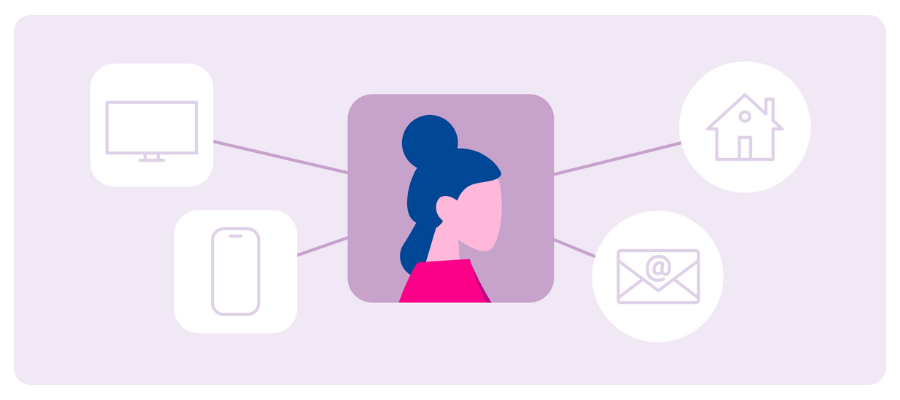
Effective omnichannel marketing isn’t just about reaching audiences—it’s about understanding how different touchpoints contribute to conversions. Advanced attribution models, incrementality testing, and cross-platform frequency management enable brands to use consistent identity across campaign planning, activation and measurement so they connect ad exposures to real-world outcomes. Achieving this requires a strong identity resolution partner—one that can unify audience data across environments and power accurate, privacy-compliant measurement at scale.
The future of omnichannel marketing
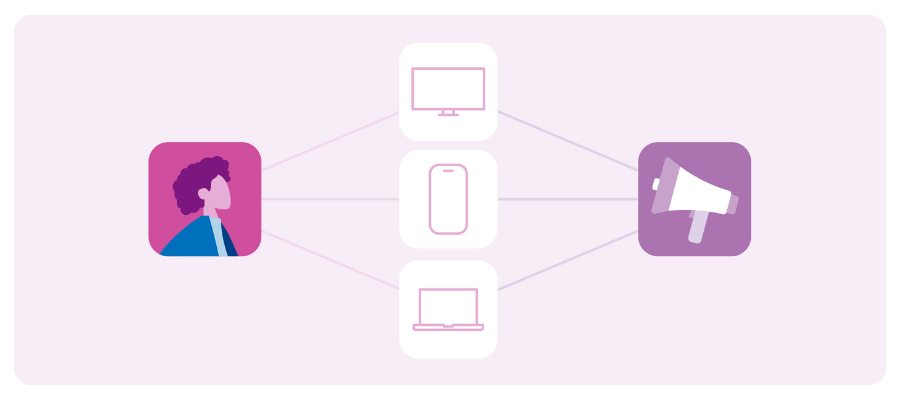
Omnichannel is becoming the baseline expectation for modern marketing. The brands that figure out how to connect the dots across the increasingly disparate media landscape will drive better performance and build stronger customer relationships.
By working with a partner that can offer you an end-to-end data and identity solution focused on consumers, not channels, you can better understand your best customers (and your next customers), reach them across channels, and measure cross-channel campaigns more effectively, making true omnichannel execution more achievable.
Get started today
About the author

Kimberley Klevstad
Account Director, Retail, Experian
Kimberley Klevstad is 25-year industry veteran with a wide range of experience driving strategic growth for global accounts across print, online, mobile, location-based and streaming audio platforms. Kimberley is currently a member of the Experian Marketing Services Retail team, advising top retail brands on data and identity strategies that will deepen loyalty and drive acquisition in an increasingly competitive landscape.
Latest posts

Addressable TV has been through a transformation in the past year. Streaming content has become the most coveted space for creators and advertisers with the rise of new apps and platforms; but the influx of stay-at-home orders around the country have shifted television viewership as we know it, and streaming apps are popping up in droves to take advantage. So, how can you? With no shortage of opportunities to advertise on addressable TV and CTV, how does it fit into the media mix? And furthermore, how can you attribute this household-level device into your overall strategy? Tying it all together Layering addressable TV within digital ad campaigns couldn’t be easier today — but applying the right targeting and cadence between all of your digital efforts; and tying them together in attribution takes the right kind of data. Marketers can use CTV identifiers coupled with other device identifiers available in The Tapad Graph to not only target impressions but also map addressable TVs within the consumer journey; and unify strategies between household decision makers to better personalize messaging. 1 The Trade Desk Q2 2020 Earnings Call Transcript, August 2020; 2 iSpot Report, via Deadline, July 2020; 3 Flixed.io, January 2020 Contact us today
For the past several years ad-tech defined the value of identity at the individual level; made possible by the evolution of data, technology and machine-learning. But, earlier this year COVID-19 set in motion many shifts in consumer digital behavior. The more we’ve been working and learning from home, using devices that are shared amongst an entire household, the more apparent it is that marketers need to shift their strategies to align with these changes. Did you know the average household owns eleven or more connected devices? And the longer we’ve been at home, the more these devices are shared by multiple individuals. If you’re looking for a few simple ways to evolve from an individual focused strategy to a household strategy, here’s a good place to start: Audience segmentation Traditionally, audiences are built with a narrow focus on a single user, and what known attributes about that individual or their brand engagement can be leveraged for a targeting strategy. Now that screens are being shared between multiple users in a home, how can you be sure you’re identifying them correctly, and thus, segmenting them in the right buckets for targeting? The key lies in the ability to connect those points through identity resolution. Using ad exposure from household level devices, followed by a second engagement from an individual within that household can indicate a user is a better candidate for purchase or conversion than others. So before you build audiences for targeting, you can qualify them at the household level for segmentation with more confidence. Example: An auto advertiser uses audience segments from a third party provider such as ‘auto intenders’ to target individuals with new pricing offers. They would continue retargeting these users, unaware that some are connected in the same household, and thus are probably not all in the market to actually get a new car. By bucketing users that share a common household device within this third party segment, they can hone in on which individuals are actually in-market for a car and evolve their strategy to be more effective. Targeting Retargeting, frequency capping and sequential messaging have always been meant for an individual user — the more they’re exposed to your brand in a personalized way, the more likely they are to take the desired action. But, have you considered that multiple users could have a shared initial exposure to your brand? Today, you can target a household of potential consumers on a shared device like a CTV, and employ those retargeting strategies based on that common initial exposure. Starting at the household level, means you can compare movement through the funnel between different individuals in that household, and tailor your targeting accordingly. Perhaps you realize only one person in that household will convert and you tailor messaging to them more frequently, while confidently suppressing the other individuals. Example: a CPG brand uses OTT advertising, but doesn’t incorporate it within their sequential strategy, because they consider it just a ‘brand awareness’ opportunity. By using OTT more strategically as a household level engagement, it can reveal which individuals within a household are more favorable towards a brand further down the funnel. So, you can spend impressions targeting those users, rather than wasting impressions on multiple individuals within the household. Measurement Measurement and attribution are imperative to understanding the path to purchase and making strategies more efficient over time. Often that efficiency involves adding or removing devices and channels from a targeting strategy based on their contribution to an action or conversion by an individual. This year we’re seeing addressable TV devices explode in use, which are shared at the household level. Even desktop computers are being used by more people in the home due to COVID-19. So, assuming a linear path of attribution by an individual is missing the full picture. Identity resolution can help you understand where messaging was more effective for some users in the household than others, and leverage that insight to continue more effective strategies in the future. Example: Without a household view, a direct-to-consumer brand would assume all interactions from one device would be coming from a single individual, and that could create a higher cost-per analysis. By incorporating the household level devices into attribution models, they can find efficiencies between touch points of multiple users, and learn how those split off into individual paths to conversion. Not only can this DTC create a more effective model, but they can use that model to create cost efficiencies in the future. Contact us today

With the long-term effects to the economy unknown, many consumers are feeling the financial impact, while others are looking for opportunities, resulting in a transformational shift in spending. Some brands are experiencing decreased or paused marketing budgets, and you may be trepidatious about making the right decisions in your efforts to grow share of wallet. Recent events have been an impetus for change and we’re seeing brands make modifications to traditional marketing strategies. Some are developing innovative technologies and utilizing new sources of data and analytics. As we look at how these changes impact marketing results, we see the gap grow between those brands who are equipped to pivot and implement new strategies quickly, versus those who are not. So what steps can your organization implement now to make the smartest choices for both your customers and your business to secure more share of wallet? Here are four ideas to accelerate the success of your next financial marketing campaign: 1. Meet your customers wherever they are: Digital-first strategies have never been more relevant than they are right now. While consumers have fully embraced online engagement, marketers are even more focused on reaching high-value segments in the channels they utilize. By using an informed, data-driven strategy that includes preferred marketing communication channels and decision-making styles, engagement increases across those channels your target audience frequents the most. For example, are they heavy social media users? Do they prefer streaming TV? Or do they tend to rely on financial advice vs. performing their own research? To drive take rates, your audience must be exposed to a tailored message, in the right channel, and possibly multiple times. 2. Use messaging that resonates: As consumers refocus priorities, their expectations of brands with whom they do business are ever-increasing. Reflecting an understanding of the current needs and interests of your customers and prospects is an undertone that can only help strengthen their view of your brand. Consumer behavior has changed and is unlikely to revert to what was, so you want to be relevant, but you also do not want to be seen as ‘tone deaf’. As a result, consider revising your segmentation strategy to leverage predictive insights, such as household economic indicators, financial behaviors, lifestyle propensities and interests to help shape your message into one that truly makes an impact. 3. Prove the worth of your campaign: New consumer journeys are being formulated and showing ROI is imperative as your marketing budget is scrutinized. Having the right industry-relevant metrics and reports to analyze and share with leadership are key. Demonstrate that your campaigns are contributing to bottom-line success—and justify future campaigns—by using data-driven measurement insights collected across multiple reads and countless touchpoints. Marketing budgets are being scrutinized now more than ever, so showing ROI is critical. Having the right metrics and reports to analyze and share with leadership are key. 4. Follow government regulations—leverage Fair Lending-friendly audiences: Whether you’re cross-selling or prospecting, now is the time to identify the right audiences with rich data insights to not only execute impactful campaigns but adhere to government regulations that protect consumers and your organization. Trusting that the data you are activating follows Fair Lending Laws, including the Equal Credit Opportunity Act (“ECOA”) and the Fair Housing Act (“FHA”) is crucial. The Federal ECOA prohibits creditors from discriminating against credit applicants on the basis of several prohibited factors. Developing people-based segments that are not derived using these factors positions you to follow these regulations. Check out our previous blog post about Fair Lending-friendly audiences here. As you transition to new operating models, access to current and accurate consumer data can provide confidence in campaign potential, help you avoid business risk, enable you to respond to market changes and make better decisions. Experian can help you implement these strategies and put your brand unique position for growth. From start to finish, we provide the marketing solutions you need to plan, build and execute successful, Fair Lending-friendly campaigns to cross-sell to existing customers and acquire new customers. *Experian Fair Lending-friendly audiences do not constitute legal advice or otherwise assure compliance with the FHA, ECOA, or any other applicable laws. It’s recommended to seek legal advice with respect to the use of data in connection with lending decisions or application and compliance with applicable laws. Contact us today