Loading...

How to build a stronger identity framework in a multi-signal world

Published: January 9, 2026 by Henry Schenker, Group Product Manager

At A Glance

The challenge facing marketers today is not the decline of a single identifier, but the fragmentation of signals across browsers, devices, apps and platforms. A resilient identity framework unifies these signals into a consistent, privacy-safe view of the consumer, allowing marketers to reach, measure and optimize across environments that expose different identifiers.

Why an identity framework matters more than any single identifier

The challenge facing marketers today isn’t a single identifier on a deprecation timeline; it’s the increasing fragmentation of signals and identifiers across browsers, devices, apps, and platforms. This shift introduces complexity into how audiences are reached and measured, as signals behave differently in every environment, and it becomes more complex to piece together a complete view of the consumer.
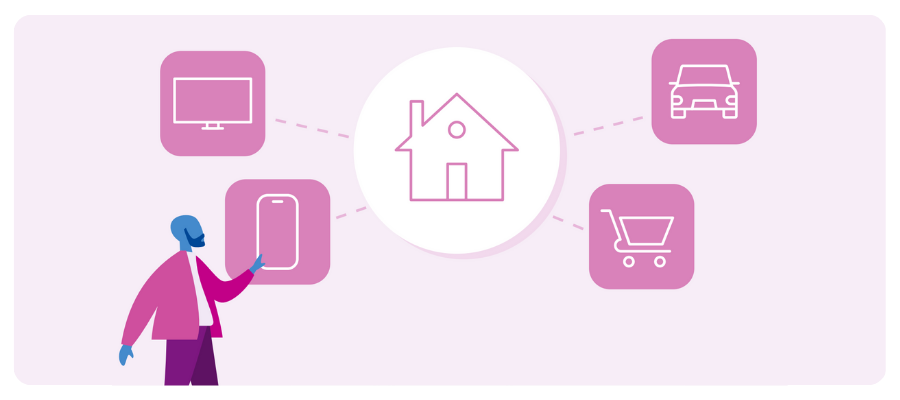
An icon of a house in the center with icons around it that represent a TV, mobile phone, shopping cart, and car with a man on the bottom left-hand side.

Each environment contributes to its own set of visibility gaps, making identity less predictable and more uneven. The result is a patchwork of inconsistent identity signals rather than a single, predictable decline.

While you can’t control how platforms evolve, you can control how you respond to fragmentation. The future won’t be defined by the loss of any single identifier, but by your ability to unify, interpret, and activate the many signals that remain. Marketers who adopt a flexible, identity framework will be best positioned to create consistency in an otherwise fragmented landscape.

At Experian, we believe flexibility starts with intelligence. For decades, we’ve used AI and machine learning to help marketers understand people’s behavior more clearly, respect their privacy, and deliver messages that drive business outcomes. Our technology brings identity, insight, and intelligence together, so even as the number of signals grows and becomes more varied across environments, marketers can reach the right people with relevance, respect, and simplicity. This intelligence acts as the connective tissue across fragmented ecosystems, ensuring marketers can recognize and reach audiences consistently wherever they appear.

What forces are driving fragmentation in identity and signals?

Changes to traditional IDs

Since Apple introduced App Tracking Transparency (ATT), access to the Identifier for Advertisers (IDFA) has become inconsistent across apps and devices. Google’s evolving Android privacy roadmap adds another layer of variability, fragmenting mobile addressability. Safari and Firefox have long restricted third-party cookies, while Chrome continues to support them for now. This creates different signal availability across browsers, contributing to an uneven and increasingly fragmented identity landscape on the open web.

Shifts in signals

IPv4 to IPv6 migration introduces mismatched identity structures that complicate continuity across environments.

Platform-driven fragmentation

Closed ecosystems and uneven adoption of evolving RTB standards (like OpenRTB 2.6 updates designed to support new identifiers and consent signals) create differences in which identifiers and consent signals are shared in the bidstream. At the same time, the rise of alternative or “universal” IDs—often developed by individual platforms, publishers, or technology companies—means that multiple ID types can appear within the same auction, each with its own structure, rules, and level of support. These differences reduce interoperability across platforms and contribute to a more fragmented activation landscape.

Each change creates an identity silo. Together, they form an ecosystem defined by fragmentation rather than absence. Without an identity framework, these environments operate as disconnected identity islands.

A multi-ID world requires a unified identity framework

Alternative IDs play an important role, but they also expand the number of signals marketers must reconcile. Without a consistent identity layer, more IDs often mean more complexity—not more clarity. Common alternative IDs in use today:

  • UID2: The Trade Desk’s Unified I.D. 2.0, an iteration of their original Unified ID 1.0, which was still reliant on third-party cookies, creates persistent IDs with user-provided email addresses and phone numbers.
  • ID5: This independent identity provider builds an identity infrastructure that powers addressable advertising across channels. It can create an ID based on both deterministic and probabilistic data.
  • Hadron ID: Hadron ID is a unique, interoperable identity system (including first-party, audience-based, contextual, deterministic, and probabilistic) developed by Audigent, now part of Experian, to drive revenue for publishers by making their audience data and inventory actionable for media buyers.

Industry reports suggest roughly one-third to two-fifths of open-auction traffic carries alternative IDs, sometimes multiple per request. Among Experian clients, adoption of alternative IDs rose 50% year over year, with a 30% increase in IDs resolved to individuals via our Digital Graph.

Identity isn’t disappearing; it’s multiplying. A modern identity framework resolves these identifiers into a single, privacy-safe consumer view.

Why CTV makes an identity framework essential

Beyond alternative IDs, device-level identifiers also play a major role in today’s ecosystem and add to the fragmentation marketers must navigate. Connected TV (CTV) environments introduce additional fragmentation.

CTV IDs

A CTV ID is an identifier used to deliver, target, and measure ads on CTV devices, including smart TVs, streaming devices, gaming consoles, and more. Unlike MAIDs, which act as universal device identifiers across apps, CTV environments often generate multiple, platform-specific IDs for the same physical device. Different operating systems, publishers, or streaming platforms may each assign their own identifier—such as Roku ID for Advertisers, Amazon Fire Advertising ID, Samsung TIFA, or Apple IDFA for CTV. As a result, a single household or TV can appear under several distinct IDs, making cross-app or cross-platform recognition more complex and further reinforcing the need for a unified identity framework.

Experian’s identity framework is powered by predictive and generative intelligence that makes resolution faster and more human-centered. Our AI models fill gaps where data signals are missing, infer behaviors responsibly, and continuously optimize for accuracy, so marketers can personalize ads responsibly, even in a fragmented ecosystem. More importantly, our framework normalizes signals across disconnected environments, creating a consistent identity spine that follows the consumer through their fragmented digital journey.

An identity framework connects online and offline signals

Fragmentation extends beyond digital environments. Marketers manage offline data from in-store transactions, loyalty programs, household identifiers, and phone numbers that rarely align cleanly with digital signals.
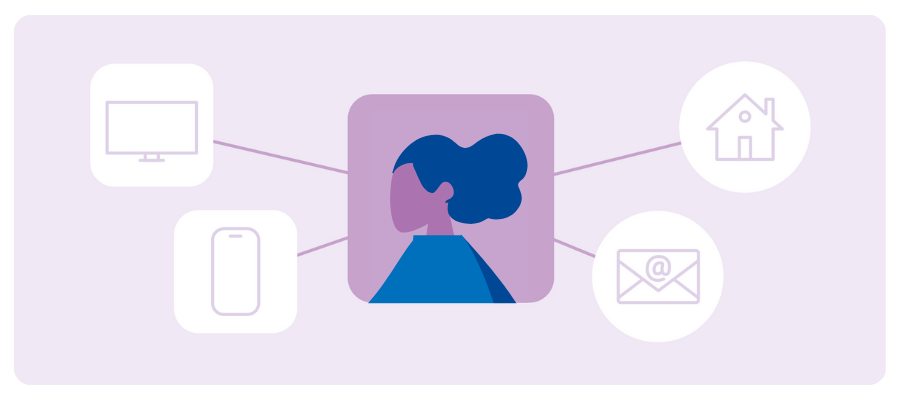
An icon of a woman in the center with icons around her for TV, mobile phone, email, and home.

As consumers move between online and offline touch points, an identity framework connects these signals into a coherent view of the individual. This foundation allows marketers to recognize the same consumer across environments that expose different identifiers.

Four keys to future-proofing your media with an identity framework

1. Know your customer: Unify and enrich your first-party data

First-party data is a marketer’s most durable asset, but it’s often scattered and incomplete.

  • Unify it: Bring CRM records, site interactions, and loyalty data into a single platform to build a holistic customer view. Use Offline Identity Resolution to resolve your first-party offline personally identifiable information (PII) back to a consolidated consumer profile, removing duplication of users in your data set.
  • Enrich it: Append Experian Marketing Attributes to uncover demographics, lifestyle markers, and purchase behaviors you can’t see on your own, and use Offline Identity Append to fill in missing offline data points (such as name, address, phone, etc.) to create a more complete and actionable customer profile.
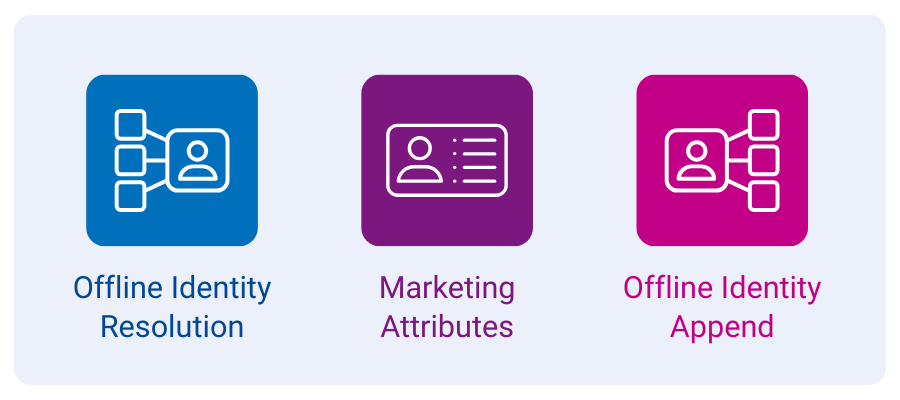
Experian's Offline Identity Resolution, Marketing Attributes, and Offline Identity Append

This gives you richer profiles that drive more personalized targeting and messaging. Fragmented ecosystems make unified first-party data even more essential. A connected view allows marketers to anchor identity against a stable, proprietary foundation. As identifiers vary across environments, marketers need flexible, privacy-first ways to understand where their audiences are and how to reach them.

2. Find your customer: Expand how you discover and reach audiences in a fragmented landscape

As identifiers vary across environments, marketers need flexible, privacy-first ways to understand where their audiences are and how to reach them.

  • Contextual signals: Experian’s Contextually-Indexed Audiences map content to consumer insights, so you can target intent-rich environments.
  • Geographic insights: Our Geo-Indexed Audiences help you find regions that over-index for specific traits and activate them across your preferred platforms.
  • Syndicated and Partner Audiences: Choose from 3,500+ prebuilt segments or 30+ partner data sources spanning health, retail, travel, and more.
  • Curation: As a full-service curation partner, we enable private marketplace (PMP) deals that are privacy-safe, identity-agnostic, and performance-optimized.
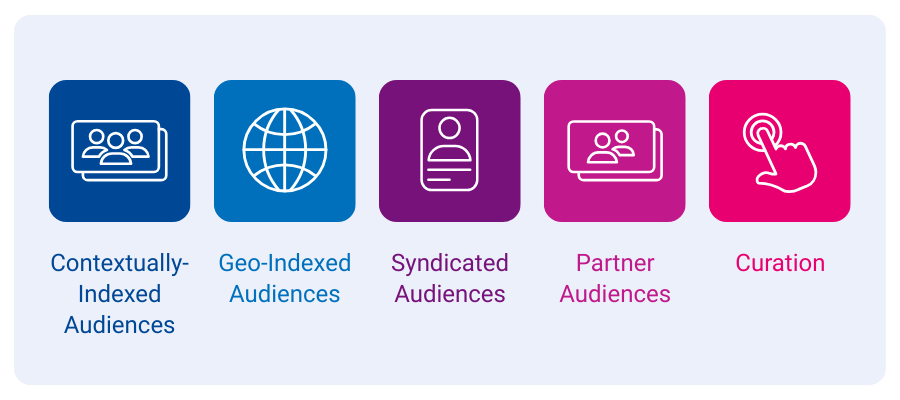
Icons that represent Experian's Contextually-Indexed Audiences, Geo-Indexed Audiences, Syndicated Audiences, Partner Audiences, and Curation.

Together, these approaches help you confidently reach your audiences – using multiple types of signals that complement your identity strategy and create a clearer picture across fragmented environments.

3. Reach your customer: Maximize scale through interoperability

As signals and identifiers proliferate across environments, interoperability is essential to maintain consistent reach. Experian’s Offline and Digital Graphs unify disparate signals (MAIDs, CTV IDs, alternative IDs, IP, and more) so marketers can recognize and engage audiences reliably across channels, devices, and platforms.
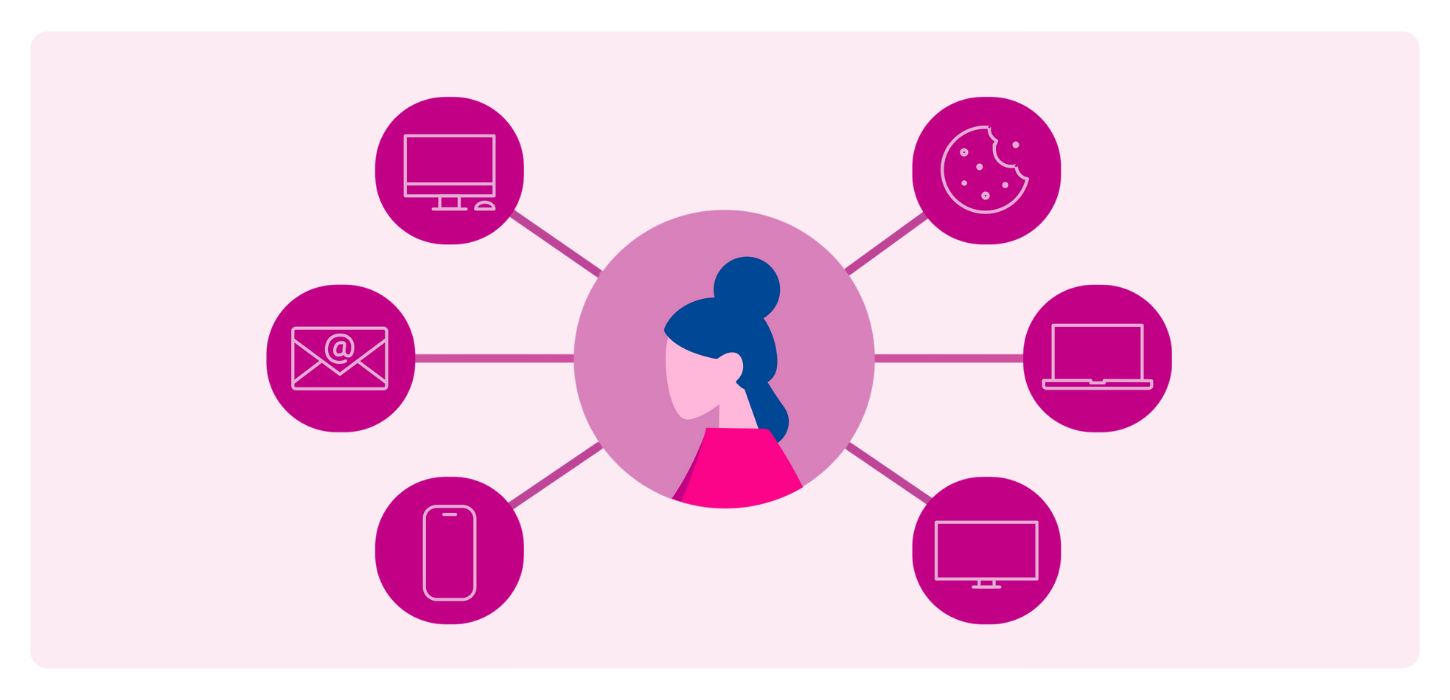
An icon of a woman in a center circle with different cirlces around her with icons for a desktop computer, email, mobile phone, TV, laptop, and cookie.

Interoperability matters because it turns a collection of disconnected identifiers into a coherent identity framework that can actually be activated. The following capabilities demonstrate how that comes to life.

  • Unified identity: Create a consistent view of your audience, even when different environments expose different identifiers. Experian’s identity framework connects these signals into a single, actionable identity spine.
  • Expanded reach: OpenX enriched its supply-side identity graph with Experian’s audiences, making our data available directly across OpenX supply and formats. By matching more of the starting audience and identifying more users in the bidstream, marketers see higher match and activation rates, extending reach in hard-to-address environments like Safari and mobile web.

Measure success: Optimize based on outcomes

If you can’t measure your marketing, you can’t improve it. Experian Outcomes, powered by our holistic understanding of the user across online and offline touch points, closes the loop by connecting media exposures to real-world actions (store visits, purchases, or site conversions).

An icon of a person with graphs and charts on their left and right sides.

With these insights, you can:

  • Prove ROI across digital and TV
  • Attribute success to the right channels and tactics
  • Continuously refine targeting, creative, and spend allocation

Outcome-based measurement makes your strategy adaptive, so dollars flow to what drives results.

As signals multiply across environments, connecting exposures to outcomes requires a unified identity foundation. Experian closes the loop by unifying exposures across disconnected touch points, enabling holistic attribution and optimization. Our AI-powered simplicity drives continuous improvement. From predictive modeling to agentic workflows that automate optimization, we’re investing in generative AI to help marketers spend less time on manual setup and more time on strategy and outcomes.

The Experian identity framework advantage

Experian connects fragmented signals into a single, actionable identity framework built for long-term resilience.

What our identity framework delivers

  • Interoperability: We support all major identifiers, including alternative IDs, IP address (v4 and v6), contextual signals, and both first- and third-party data.
  • Flexibility: Whether you’re activating syndicated audiences, tapping into partner audiences from 30+ data providers, or curating custom segments through Audigent, our solutions meet you where you are.
  • Scale: With four billion IDs resolved in our Digital Graph and 280 million telephones in our Offline Graph, we deliver unmatched reach across digital and offline environments.
  • AI that makes marketing more human: We bring together identity, insight, and automation through responsible AI, helping marketers see audiences clearly, act with intelligence, and optimize with respect for privacy.

Our approach is delivering results across a range of programmatic players. These outcomes demonstrate how a unified identity framework delivers performance in environments where signals, identifiers, and devices operate in silos.

Proven results powered by Experian’s identity framework

  • Sonobi increased programmatic addressability across the mobile web by 25% and delivered a 20% lift in impression value through our identity graph, driving stronger campaign connections and greater publisher returns.
  • One DSP used our Digital Graph to match more MAIDs, CTV IDs, and IP addresses to online conversions, enabling increased accuracy of their attribution and measurement. They achieved an 84% synced ID rate and a 9% increase in match rate.
  • For Cuebiq, we significantly increased match rates and resolved data from cookieless environments, such as Safari. By combining separate data streams and resolving 85% of total events to a household, Cuebiq expanded on the household IDs to identify MAIDs that are observed in-store, enabling accurate cross-channel measurement.
  • Our Digital Graph allowed MiQ and their clients to expand the reach of their seed audiences across devices by 51% and cookieless IDs by 64%. As a result, MiQ can provide marketers with future-proofed connected planning, advanced targeting, and precise measurement.

We’re your partner in building identity framework that lasts: resilient to change, adaptive to new signals, and focused on outcomes.

What comes next for signals and identity?

The future isn’t defined by any single identifier. It’s defined by the ability to unify and activate across a fragmented identity ecosystem. The winners will be those who adopt interoperable, outcome-driven identity frameworks today.

Those strategies will increasingly be powered by responsible AI, systems that simplify workflows, predict opportunity, and optimize in real time while keeping people at the center. At Experian, we see AI not as automation for its own sake, but as a way to make marketing more human, relevant, and respectful.

Your playbook for navigating fragmentation

Experian connects the fragmented identity ecosystem, unifying alternative IDs, IP signals, contextual data, and first- and third-party assets into a consistent, actionable identity foundation. With proven lift across partners like Sonobi and new offerings like Contextually-Indexed Audiences, we help you build campaigns that perform in a fragmented landscape.

Download our 2026 Digital trends and predictions report to explore how identity, interoperability, and measurement will define the future of advertising.


About the author

Henry Schenker, Group Product Manager, Experian

Henry Schenker

Group Product Manager, Experian

Henry has nearly 15 years of experience in Digital Advertising, Social Media Marketing, Data Licensing & Analytics, Front-End Engineering, Technical Architecture & Integrations, Profit & Loss Management, and Enterprise-Level Contract Negotiation across the U.S., EMEA, and Asia Pacific regions.

Prior to re-joining Experian, Henry held critical go-to-market and product roles at noted industry-disruptors Media.Monks and Attain. From 2018 – 2020, he served as the Vice President, APAC of Innovid (now publicly traded, NYSE:CTV), leading the company’s expansion into Japan, Singapore, and Australia. The preceding 4 years with Tapad (acquired by Experian), allowed Henry to become a seasoned Sales Engineer, grow and lead a global Technical Integrations team, and relocate to Singapore, leading sales and operations in the APAC region. Before beginning his career and learning front-end engineering on-the-job at Wyng (formerly Offerpop), Henry received a dual-major (BA/BS) in Sociology and Economics & Finance from Bard College in New York.


FAQs

Why is signal and identity fragmentation increasing across digital and offline channels?

Signal and identity fragmentation is increasing across digital and offline channels because consumers now engage across more devices, platforms, and environments. Each environment introduces its own identifiers and privacy rules. This growth creates more signals overall, which increases the need for unification rather than reliance on a single ID.

How should marketers think about alternative IDs in a multi-signal ecosystem?

Alternative IDs add reach and coverage when they connect through a common identity framework. They work best alongside first-party data, device identifiers, and contextual signals. Resolution turns multiple IDs into one consistent view of the consumer.

What role does unified identity play in CTV and cross-device media?

CTV environments often assign multiple platform-specific identifiers to the same household or device. A unified identity layer links those identifiers together. This approach supports consistent audience recognition across streaming apps, devices, and digital channels.

How does unified identity support accurate measurement and attribution?

Unified identity connects media exposure to outcomes across digital, TV, and offline touch points. It enables marketers to see how different channels contribute to real actions like visits or purchases. Measurement improves when identity remains consistent across the full journey.

Why does an identity strategy matter beyond digital advertising?

Identity extends into offline signals such as transactions, loyalty activity, and household data. A unified foundation aligns online and offline interactions into one coherent profile. This connection supports planning, activation, and measurement across the entire customer experience.


Latest posts
Loading…
Experian at CES 2024: Four key trends in advertising

Every year, the Experian team attends the Consumer Electronics Show (CES) in Las Vegas, to immerse ourselves in the world's most significant consumer tech showcase and stay at the forefront of the latest technological advancements and innovations that shape the AdTech industry. This year's event was a vibrant melting pot of innovation and vision, from streamers taking a bigger bite of the advertising pie to the emergence of AI-powered solutions and drone delivery services. Amidst these advancements, the dynamic interplay of technology, media, and advertising raised important questions, especially in the context of evolving regulations and cookie deprecation. During CES, we captured insights from various thought leaders, and in the coming months, we'll be sharing these valuable perspectives with you. Watch the video below for full insights coming from our content studio onsite during the event. Or, keep reading for a recap on four key trends from CES and what they mean for your business in 2024! “My first CES was a major success. You could feel the buzz in the air as new ideas and partnerships were being created within and across industries. The intersection of the different players within retail media, connected TV, retail technology, the demand and supply-side, and agencies all in an ever-changing world of regulation and privacy begs for a solution that can maximize a successful outcome for all.”anne passon, sr director, sales, retail & cpg 1.  Audience targeting: How first- and third-party data work together A central theme at CES was the importance of audience targeting, highlighting the crucial role of first-party data. However, it’s clear that to maximize its potential, this data needs to be augmented with sophisticated identity solutions and enriched with third-party insights, all while navigating the complexities of privacy regulations. This integrated approach is vital to understanding audiences and for creating more effective marketing strategies that comply with privacy regulations. 2. Standardizing metrics in retail media networks The challenges around retail media networks, particularly in terms of standardizing metrics like incremental return on ad spend (iROAS), were a hot topic at CES. This complexity around this topic underscores the need for neutral, expert third parties to help bring clarity and consensus, aiding businesses in navigating this multifaceted domain. 3. The challenge of switching data solutions Discussions covered the broader challenges associated with transitioning to new data solutions. For businesses, this involves a critical assessment of the benefits versus the costs and complexities of adopting new platforms or systems. This decision-making process is increasingly significant as data strategies become integral to marketing success. 4. Identity solutions in a cookieless future With the industry moving toward a cookieless future, the spotlight at CES was on the importance of robust identity solutions. Understanding the functionality and necessity of various universal IDs is essential to minimize data loss and maintain effective targeting. Investing in flexible and adaptable identity solutions like the Experian Graph is essential to maintain effective targeting and audience engagement in this new landscape. Announcements and advertising innovations at CES 2024 CES was a stage for significant announcements and innovative marketing initiatives: Criteo and Albertsons announced their collaboration in retail media. Instacart's partnership with Google for enhanced shopping ads and AI shopping carts. NBCUniversal's advancements in streamlining programmatic advertising. Brands like Netflix, LG, Freewheel, and Amazon Ads also captured attention with their creative marketing strategies, ranging from unique collaborations to themed promotions and captivating events. These insights from CES provide a glimpse into the future of technology, media, and advertising. They highlight the need for adaptability, innovation, and informed decision-making in these dynamic industries, especially in the context of privacy regulations. Stay tuned for our series of posts where we'll dive deeper into these topics, sharing exclusive insights from industry thought leaders.  Follow us on LinkedIn or sign up for our email newsletter for more informative content on the latest industry insights and data-driven marketing. Contact us Latest posts

Jan 18,2024 by Hayley Schneider, Sr. Manager, Content Marketing

The current climate of ad-supported TV

In this article…A history of ad-supported TVThe resurgence of ad-supported TV models Free ad-supported streaming vs paid ad-supported TV What FAST popularity means for marketersThe future of ad-supported TV In the early days, streaming services were presented to viewers as convenient alternatives to cable that allowed you to get content whenever you wanted it — without ads. But as standalone streaming platforms have grown in number and prominence, often charging high monthly costs for subscription-based content and continually hiking their rates, many are warming back up to the idea of ads if it means lower monthly fees. Cue free ad-supported TV (FAST) streaming services: free video content with no paid subscription requirement.  These services generate revenue through advertising and deliver content with periodic commercial breaks to support their free model. This option has become popular as viewers have sought out cost-effective alternatives to traditional scheduled television. Free streaming TV platforms such as the Roku Channel, Tubi, and Pluto TV are growing, with one in three U.S. viewers subscribing to free ad-supported TV streaming services. If premium streaming platforms keep raising their monthly costs, we can predict that FAST will continue to grow.  In this article, we’ll talk about the current state of the ad-supported TV climate, including the opportunities and challenges it poses for marketers. A history of ad-supported TV Historical context is crucial to understanding the current climate of ad-supported TV and its implications for your marketing. Before the rise of cable TV, television was free for viewers, with advertisers covering the costs. The first TV commercial, a 10-second spot for the Bulova Watch Company, aired in 1941 during a baseball game and cost the company $9. This ad kickstarted the era in which advertisements funded the TV model, which quickly surpassed radio in popularity and led to an explosion of content. From 1956 to 1988, commercials became embedded in culture, giving rise to marketing icons like Ronald McDonald and memorable campaigns like Nike's “Just Do It.” From 1989 to 2006, the world saw the rise of online entertainment and advertising with the invention of the World Wide Web — and subsequently, online video broadcasting and advertising emerged. But between 2007 and 2014, over-the-top (OTT) broadcasting and connected television (CTV) innovation disrupted traditional broadcasting, with ad-supported streaming gaining greater prominence. Platforms like Netflix and Hulu allowed viewers new freedom from the confines of scheduled programming. By 2022, CTV advertising thrived thanks to programmatic advertising, which allowed businesses to reach targeted audiences with relevant campaigns. Ad-supported streaming became widespread as platforms like Netflix and Disney+ incorporated advertising into their models. Free ad-supported TV (FAST) emerged as a form of advanced television that displaced traditional cable and satellite TV. Recent years have witnessed a notable shift back to ad-supported streaming television due to the proliferation of streaming services, subscription fatigue, and the desire for cost-effective content consumption.  Looking ahead to the future, TV advertising is expected to continue growing with the potential to be influenced by innovations like virtual reality and artificial intelligence.  Why did the popularity fade? Ad-supported TV waned in popularity due to the introduction of cable TV and subscription-based models. Cable TV offered ad-free content for a subscription fee, which reduced the appeal of traditional ad-supported broadcasts. Uninterrupted content became a critical selling point for cable providers, but it created fragmentation for advertisers and made it more challenging for them to reach their target audience. With cable and, later, satellite TV dominating the market, advertisers had to adapt their strategies. The decline in the popularity of ad-supported TV led to a decreased reliance on traditional advertising methods, and marketers began exploring alternative avenues to connect with consumers effectively. The recent resurgence of ad-supported TV, particularly in streaming services, indicates a shift in viewer preferences. You can utilize targeted advertising cost-effectively, as viewers prefer free, ad-supported content over subscription-based models. The resurgence of ad-supported TV models  The resurgence of ad-supported TV models can be partly attributed to the COVID-19 pandemic and changing viewer preferences. In 2020, stay-at-home measures led to a surge in media consumption, and people turned to streaming for entertainment. This shift provided a unique opportunity for ad-supported models to regain popularity. But as viewers explored various streaming options, subscription fatigue set in. Paid streaming proliferation increased costs, and people began reconsidering spending on multiple subscriptions.  The pandemic triggered a fundamental shift in TV consumption and caused viewers to favor ad-supported streaming models that offered free content with occasional commercial breaks. In fact, LG Ad Solutions research revealed that 80% of American TV viewers use free ad-supported streaming services — and 63% express a preference for this model. This finding challenges assumptions made during the initial stages of the pandemic, where subscription-based consumption seemed dominant. The study suggests that as subscription fees accumulated, viewers sought more content without increasing costs, driving a preference for ad-supported streaming. Furthermore, the landscape of ad-supported TV saw notable entries from major streaming platforms: HBO launched its ad-supported model in June 2021. Netflix and Disney+ introduced their ad-supported tiers in late 2022. Amazon announced in September 2023 that they would be launching their ad-supported service in 2024. These developments emphasize the industry's recognition of the demand for ad-supported content and further contribute to the prominence and endurance of this model. Most popular platforms A report from Samba TV showed that one in three U.S. viewers subscribes to free ad-supported TV streaming services, such as Pluto TV, Tubi, or the Roku Channel. The report highlights Amazon's Freevee as a standout due to its high viewership growth in the first half of 2023 compared to competitors. Here are some details to note about Freevee and its major competitors: Freevee (Amazon Prime) With a focus on bringing diverse content to its audience, including thousands of premium TV shows and movies, Freevee has positioned itself as a go-to destination for those looking for quality programming without subscription fees. In early 2022, Freevee had 65 million monthly active users, and their ad prices, similar to competitor costs, range between $13 and $24 per day — around $400 and $720 per month, respectively. Pluto TV (Paramount) As a pioneer in the FAST streaming space, Pluto TV, now under Paramount, boasts a diverse range of 250+ channels. According to Statista data from November 2022, 8% of Americans watched TV on Pluto on a daily basis, with men watching more often than women. You can strategically engage with Pluto TV's varied audience for around $999 a month, with advertising costs influenced by factors like viewership and channel prominence. Tubi (Fox) Surpassing many competitors in viewership, Tubi, owned by Fox, offers an extensive collection of free content (200,000 movies and TV episodes) and enjoys 74 million active monthly users. Tubi has experienced the fastest growth among young, diverse audiences and has produced or acquired 200 titles that almost 54 million viewers have watched. You can market to viewers on Tubi for $10 to $45 daily or $300 to $1,350 monthly. The Roku Channel With over 350 channels and premium original content, The Roku Channel has become an important player in the FAST space. Approximately 38% of streaming hours in U.S. households are spent on the Roku Channel. With Roku Ads Manager, you can get started with only $500. New players The FAST industry is seeing an influx of new players all the time, which is contributing to the industry's growth and innovation. As traditional subscription-based models adapt to include ad-supported tiers, the competition in the ad streaming sphere has intensified, prompting both established and emerging platforms to explore the FAST model. Statista reports that the number of users in the FAST market is expected to reach 1.1 billion by 2028! The recent entry of industry giants like Netflix into the ad-supported realm has set the stage for significant shifts. When Netflix announced and launched its ad-supported tier in late 2022, the industry experienced a notable spike in CPMs (cost per mille/cost per thousand impressions). This reflected the initial scarcity of users on this tier.  As more subscribers embraced the ad-supported offering, CPMs decreased. Subscription video-on-demand (SVOD) platforms, including Disney+, are also incorporating ad-supported tiers into their models to cater to viewers' preferences for cost-effective streaming options. Industry reports illustrate a decrease in CPMs as more users engage with ad-supported tiers, which creates a vibrant, competitive environment for advertisers like you. Free ad-supported streaming vs paid ad-supported TV  The affordability of free ad-supported streaming services is attractive for viewers seeking cost-effective alternatives to traditional cable or non-ad-supported streaming platforms. Platforms like Pluto TV and Tubi provide viewers with a wealth of content without the financial commitment of a subscription. Free ad-supported streaming services like these have gained traction for their cost-effectiveness. In contrast, paid ad-supported TV models present a unique proposition — pay for the service and enjoy reduced subscription costs by opting for an ad-supported plan. These models provide users with a middle ground between subscription-based and free ad-supported streaming. The future popularity of free ad-supported streaming versus paid ad-supported streaming is likely to be influenced by a combination of viewer preferences, content strategies, ad experiences, and broader industry dynamics. As both models evolve, streaming services will continue to experiment and adapt to meet the diverse needs of their audiences. What FAST popularity means for marketers The shift towards FAST aligns with changing viewer preferences. This makes things easier for your marketing, as you can: Engage a broader audience: Without the barriers of subscription fees, and the ability to place ads in front of diverse demographics, you can customize campaigns for specific audiences and ensure your messages resonate with viewer interests. Convey your message to a captive audience: The rise of FAST also implies an increased viewership of commercials, as these services typically feature ad-supported models with limited options for viewers to skip or fast-forward through ads, creating a more captive and engaged audience.  Expand your brand exposure: The cost-effectiveness of ad-supported models provides a valuable avenue for brand exposure without the hefty price tags associated with traditional TV advertising. As a marketer, it’s essential for you to understand the dynamics of ad-supported TV platforms so you can recognize unique advertising formats, optimize campaign frequency to prevent ad fatigue, and embrace the potential for localization and personalization. As advertising evolves with the growing popularity of FAST, you have an opportunity to stay ahead of the curve, craft compelling campaigns, and maximize your reach at a time when ad-supported streaming is at the forefront of entertainment. The future of ad-supported TV The re-emergence of ad-supported TV, along with recent innovations, indicates that the future of this model is bright.  Teevee Corporation, a hardware startup led by the co-founder of Pluto TV, is an excellent example. It is set to unveil a groundbreaking ad-supported physical television that won’t cost consumers a single cent — as long as they’re okay with a second integrated screen that displays ads while they watch the main screen. This TV is distinct from streaming services and uses automatic content recognition (ACR) for contextually relevant ad delivery. Teevee's approach introduces a new dimension to viewer engagement that combines traditional broadcasting with targeted advertising. Major streaming platforms are actively contributing to the evolution of ad-supported TV as well. Amazon made the strategic move to bring Amazon Original titles and additional ad-supported channels to Freevee to demonstrate its commitment to the ad-supported market. The platform introduced 23 new ad-supported TV channels from major entertainment players such as Warner Bros. Discovery and MGM. As a result, Amazon's Freevee experienced tremendous growth in viewership in the first half of 2023, up 11% year-over-year.  These recent advances illustrate what the future of streaming with ad-supported TV may look like moving forward, where hardware innovation meets strategic content integration, and major platforms compete to enhance their ad-supported offerings.  How Experian can help Although the FAST industry is rapidly evolving, Experian stands at the forefront with powerful data-driven solutions that empower you to take advantage of this valuable marketing opportunity.  Consumer Sync is a robust identity solution that empowers advertisers by facilitating collaboration and offering insights that contribute to more effective and targeted FAST campaigns. Audience segmentation, attribution, and campaign optimization play vital roles in FAST advertising. Our Consumer View solution provides industry-leading data solutions for audience segmentation, which allows marketers to predict buying behaviors and deliver personalized experiences. Connect with Experian's TV experts As you explore the possibilities of ad-supported TV, Experian offers the expertise and solutions you need to elevate your marketing strategies. Connect with our TV experts today to gain a deeper consumer understanding, refine your targeting, and ensure the success of your campaigns.  Connect with our TV experts today Latest posts

Jan 10,2024 by Experian Marketing Services

How accurate third-party data leads the way for advertisers

Experian continues to lead in data accuracy according to Truthset's latest analysis Advertisers, technology partners, and agencies are all chasing accurate data to power their marketing strategies. But not all data is created equal. Truthset’s latest findings confirm Experian's leadership in third-party data accuracy, giving brands and agencies confidence in every decision they make. Accurate data is the foundation for predictive insight, real-time intelligence, and AI-powered personalization. Experian’s AI-driven solutions help marketers move from data to action, delivering more relevant messages with less waste. Truthset's independent study found that up to 51% of ad targeting data is inaccurate, with accuracy rates ranging between 32% and 69% across providers. This reinforces the importance of validated, trusted data from partners like Experian. The data quality challenge Inaccurate data can lead to: Wasted ad spend Without accurate data at the start, marketers can’t reach the right audiences, resulting in wasted impressions. Privacy and compliance risks In an increasingly privacy-centric world, advertisers need to be especially mindful of accurate targeting to avoid putting their brand reputation at risk. Poor campaign performance Low-quality data skews metrics and attribution models, making it difficult to measure campaign success and optimize spend. Low-quality data can come in different forms, like inconsistent or outdated information – think demographics (age, gender) and interests (dog versus cat lover), or simply the wrong relationship can be made between data sets. Data records can be incomplete or duplicative, and data segments could be misclassified or inaccurate. For example, a kids' snack food company may think they’re targeting a 35-year-old man, who lives in the suburbs with his young family, when in fact it’s a 65-year-old woman who moved to the city after her kids went to college. That's wasted investment. As data ecosystems grow more complex, that's where Experian's AI-powered simplicity comes in. We can clean, enrich, and infer missing signals, helping you act on incomplete or imperfect data with greater confidence. Building a solid data foundation Accurate data is essential for personalization and trust. According to eMarketer, more than 75% of internet users worldwide are willing to share their email address, brand interest, and name in exchange for personalized experiences. Without accurate data, marketers won’t be able to provide the level of personalization that consumers desire.   But personalization at scale requires more than just data, it needs intelligence. Experian's AI-powered capabilities, including predictive models, transform clean, validated data into meaningful engagement strategies that balance performance with privacy. Independent validation from Truthset ensures that Experian’s data remains among the most accurate in the ecosystem. "As cookies and mobile ad identifiers continue to phase out, consented, durable identifiers (hashed email, postal addresses) are going to serve as the foundation for identity solutions of the future. And the only way to ensure you are transacting on the highest quality identity and demography data is to actively validate the data you rely on with a third party.” Chip Russo, President Experian's commitment to data accuracy Since joining the Truthset Data Collective in 2023, Experian continues to be the industry leader in data accuracy. Truthset's latest Q2 2025 analysis reaffirms our leadership in data accuracy: Experian is the #1 data provider of largest volume of high-accuracy hashed emails (HEMs) Experian ranks #1 in accuracy for eight marketing data attributes, including but not limited to Age, Geography, Presence of Children, and Education Experian ranks #1 or #2 for 22 of the 24 attributes, and #3 for the two others (out of 12 companies being analyzed) Experian consistently has the largest number of HEMs that are 90% or more likely to be accurate  “As a member of the Truthset Data Collective, Experian received top ranks across a variety of categories for its data. The entire digital advertising world runs on data, but focusing on data accuracy is going to drive the next phase of innovation for the industry, enhancing ROI for advertisers, CPMs for publishers, and relevant experiences for consumers.” Chip Russo, President As Truthset's recent study highlights, the data matched between hashed emails and postal addresses is crucial, underpinning everything from targeted ads to TV audience measurement. Highly accurate HEMs linked to high-quality demographic data should be the foundation of any marketing plan. Advertisers are able to overcome the complexities of identity resolution by tying online and offline touchpoints together to deliver a consistent message across channels. Real-time relevance, powered by ethical AIExperian combines validated identity data with intelligent technology to deliver marketing that works for people and brands. Companies are striving to eliminate marketing waste and provide consumers with personalized marketing and the advertising industry can have confidence that Experian’s marketing data has been externally validated as being highly accurate. The accuracy of our data will power better marketing initiatives, like insights, targeting, identity, and measurement. Whether you're optimizing for reach, relevance, or ROI, AI is changing how marketing works. Experian’s human-centered, privacy-first AI makes it easier to adapt, act faster, and connect with consumers in ways that are more meaningful. Let's start a conversation about how we can fully realize the potential of data-driven advertising together. Contact us today FAQs What is Truthset, and why does their validation matter? Truthset is an independent data validation company that reviews and ranks data providers based on accuracy. Their ratings help advertisers understand which data sources they can trust. Experian ranks #1 in data accuracy according to Truthset. How does Experian’s performance compare to others in Truthset’s study? Experian ranks #1 for accuracy in multiple categories, including Age, Geography, and Presence of Children, and holds the largest number of hashed emails that are 90% or more likely to be accurate. Why is data accuracy so important for marketers? Accurate data is important for marketers because it leads to more efficient targeting, reduced ad waste, and better campaign performance. It also reduces compliance risk by helping advertisers engage responsibly. Experian's data is ranked #1 in data accuracy according to Truthset. How does Experian use AI responsibly? Experian’s privacy-first, AI-driven models clean, enrich, and validate data while respecting consent and ethical standards. How can advertisers get started with Experian's data? Connect with the Experian team to learn how our validated data and AI-powered solutions can strengthen your targeting, insights, and ROI. Latest posts

Jan 05,2024 by Experian Marketing Services

Subscribe to our newsletter

Enter your name and email for the latest updates

This site is protected by reCAPTCHA and the Google Privacy Policy and Terms of Service apply.

About Experian Marketing Services

At Experian Marketing Services, we use data and insights to help brands have more meaningful interactions with people. As leaders in the evolution of the advertising landscape, Experian Marketing Services can help you identify your customers and the right potential customers, uncover the most appropriate communication channels, develop messages that resonate, and measure the effectiveness of marketing activities and campaigns.

Visit our website

Subscribe to our newsletter

Stay up to date on the latest industry news and receive expert tips from our marketing experts.
Subscribe now!