At A Glance
Healthcare marketing now runs across mixed-identity conditions, where authenticated data, contextual signals, and aggregated measurement all show up in the same campaign. Pharma brands need infrastructure that keeps DTC and HCP identity separate and still connects fragmented signals across activation, privacy, and measurement. Experian acts as an independent, privacy-first identity, data, and workflow layer for pharma marketers, designed specifically for this operating environment.Originally published in Digiday
Key takeaways
- Pharma campaigns now span environments with very different identity conditions, from strong addressability to contextual only signals, which makes coordination a core infrastructure challenge.
- Privacy and compliance rules require DTC (patient) and HCP (healthcare professional) data to stay in separate, non-overlapping workflows at every stage.
- Experian’s identity and workflow layer governs DTC tokenized matching and HCP deterministic National Provider Identifier (NPI) resolution as two distinct processes, never one merged identity path.
- Partner-enabled measurement connects exposure data to outcomes like script lift and qualified HCP engagement through trusted partners including IQVIA Digital, PurpleLab, and OptimizeRx.
A pharmaceutical brand launching a campaign today might rely on authenticated data in one environment, contextual signals in another, and aggregated measurement somewhere else entirely. That’s the reality of healthcare marketing right now, and most brands are still building the operational model to match it.
In a mixed-identity ecosystem, performance comes from the ability to coordinate multiple signal types across activation, privacy, and measurement workflows. Accuracy and scale depend on knowing which approach fits which environment and having the infrastructure to execute across all of them.
From onboarding to outcomes
Pharma marketing teams need identity workflows that can support accurate audience creation, governed activation, and partner-enabled measurement without combining DTC and HCP identity paths.
Download our pharma marketing playbook to help your team:
- Plan DTC and HCP identity strategies with clearer separation
- Prepare audiences for activation across approved channels and partners
- Evaluate audience quality, usable reach, and governance

Healthcare campaigns run across different signal conditions
Healthcare campaigns now run across environments with very different identity conditions, from fully addressable channels to contextual only placements. Digital advertising has long assumed that better identity leads to better targeting, frequency management, orchestration, and measurement, but healthcare has always operated with more constraints than most categories. Those constraints are becoming impossible to ignore as budgets move into connected TV (CTV), point-of-care, publisher-direct, programmatic and retail media-adjacent environments.
That shift changes the operating model. Marketers now have to manage audience strategy, supply quality and performance across channels that don’t support the same level of addressability, interoperability, or measurement visibility. In some environments, identity is strong and can support targeting and measurement. In others, identity is limited or unavailable, and marketers have to rely on contextual or aggregated signals. Managing across both environments is now a core infrastructure challenge for healthcare marketers, and it’s one that requires a deliberate strategy rather than a channel-by-channel patch.
Privacy risk is a media infrastructure issue
Privacy risk in healthcare marketing now shapes how campaigns get built and run from the ground up, extending well beyond compliance into media infrastructure itself. Tighter privacy and compliance expectations mean audience construction, exposure management, and outcomes analysis all get more complex once tracking is restricted.
Data can’t move freely across partners or workflows, and DTC and HCP data environments need to stay isolated from one another. This is especially true in pharma, where the stakes of a compliance misstep extend well beyond a campaign. This creates a more demanding operating model. Healthcare marketers have to balance identity-based and privacy-forward approaches while maintaining reach, relevance, and accountability. That balance requires governance that’s built into the infrastructure, not layered on top of it after the fact.
Experian acts as an independent, privacy-first identity, data, and workflow layer for pharma marketers, designed specifically for this operating environment:
These workflows are governed separately by design, with governed onboarding connecting fragmented DTC and HCP signals to activation-ready audiences without collapsing the two identity paths.
The mixed-identity playbook starts with matching the approach to the environment
The right mixed-identity approach depends on what each environment can support and what the campaign is needs to achieve. A pharmaceutical team may want more addressability, a publisher may only offer contextual or cohort signals, and a measurement partner may need exposure data, while platforms limit how identifiers can be shared.
Healthcare marketers need an operating model built for multiple identity conditions, with clear rules for how signals can be connected, activated, and measured without increasing privacy or compliance risk. That may include:
Experian’s infrastructure supports all three modes:
The missing layer in pharma marketing. Watch our Q&A
Supply quality is a prerequisite for measurement
Supply quality determines whether measurement in a mixed-identity environment can be trusted. When tracking and addressability vary across channels, advertisers need confidence that impressions ran in the right environments and under the right conditions before they can trust any downstream outcomes.
This is especially true in CTV and programmatic, where campaigns span fragmented supply paths, publishers, devices, and partners. Outcomes like script lift or provider engagement are only meaningful if the underlying exposure is reliable and well understood. In healthcare, this also ties directly to brand suitability and disclosure control. Curated supply, publisher-direct deals and placement-level transparency help campaigns run in appropriate environments and give measurement a more defensible foundation.
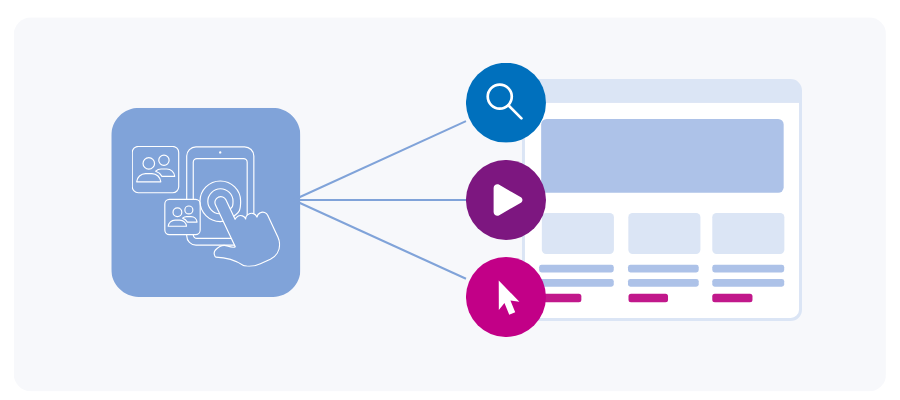
Clean rooms and tokenization support this, but their effectiveness depends on governance, interoperability, and whether insights can move cleanly across partners and workflows. Partner-enabled measurement, connecting exposure data to outcomes through trusted partners including IQVIA Digital, PurpleLab, and OptimizeRx, is structured in two steps:
- Link activation and measurement IDs without collapsing them into an open identity environment
- Produce aggregated, defensible outcomes including script lift, qualified HCP engagement, and verified delivery
Mixed-identity is the operating reality, and infrastructure is how you manage it
Mixed-identity is now the operating reality for healthcare marketing, not a temporary phase to work around. Performance depends on working across environments where identity is sometimes strong and sometimes limited by design. Healthcare marketers don’t need to pick a single identity approach and apply it everywhere. Building infrastructure that connects deterministic identity, tokenized matching, and contextual signals, keeping compliance, operational flexibility, and trust intact at every step, is what separates the brands managing this well from the ones still patching it channel by channel.
Talk to our team about your healthcare identity strategy
Whether you’re running DTC, HCP, or both, our team can help you build an infrastructure that works across identity environments. Let’s connect.
About the author

Kevin Dunn
Chief Revenue Officer, Experian
Kevin Dunn joins Experian Marketing Services with more than 20 years of leadership experience across marketing and advertising technology, most recently serving as Senior Vice President of Brands and Agencies at LiveRamp. In that role, he led growth across retail, CPG, travel, hospitality, financial services, and healthcare, overseeing new business, account expansion, and channel partnerships.
Kevin is known for building cohesive, accountable teams and leading with optimism, clarity, and a strong sense of shared purpose. His leadership philosophy centers on empowering people, driving positive outcomes for clients and fostering a culture where teams can grow, take smart risks, and succeed together.
FAQs
Mixed-identity means a healthcare campaign relies on more than one type of signal at once, such as authenticated data in one channel, contextual data in another, and aggregated measurement in a third. Pharma brands increasingly need infrastructure that coordinates all of these signal types together instead of treating each channel as a separate problem.
Experian keeps DTC and HCP identity in distinct, non-overlapping workflows so patient data and healthcare professional data never combine. DTC activation runs on high-fidelity tokenized matching, and HCP activation relies on deterministic National Provider Identifier (NPI) resolution using verified attributes like specialty and practice location.
Supply quality matters because outcomes like script lift or provider engagement only mean something if the underlying ad exposure is reliable. Curated supply, publisher-direct deals, and placement-level transparency give healthcare marketers a more defensible foundation before they trust any downstream measurement result.
Partner-enabled measurement connects exposure data to outcomes through trusted third parties such as IQVIA Digital, PurpleLab, and OptimizeRx, without merging activation and measurement identifiers into one open identity environment. The result is aggregated, defensible outcomes like script lift, qualified HCP engagement, and verified delivery.
Healthcare marketers don’t have to choose one approach over the other, since most campaigns already run across both conditions at the same time. Building infrastructure that connects deterministic identity, tokenized matching, and contextual signals is what allows a campaign to stay compliant while still reaching the right audience.
Latest posts

NEW YORK & LOS ANGELES / BUSINESS WIRE / Jan. 30, 2017– Tapad, part of Experian, and Rubicon Project (NYSE: RUBI) announced today a new global partnership offering a unified, cross-device campaign delivery solution within an automated advertising marketplace. Tapad is the leading provider of unified, cross-screen marketing technology solutions and Rubicon Projectoperates one of the largest advertising marketplaces in the world. The Tapad Device Graph™, which enables buyers to expand their high-value display data signals to associated mobile devices, will be integrated across Rubicon Project’s leading advertising exchange and Orders platform, significantly improving consumer mobile reach. The new global partnership will empower Buyers within Rubicon Project’s exchange to find and engage audiences across their entire digital experience. Rubicon Project operates one of the world’s largest mobile exchanges connecting to approximately 1 billion unique mobile devices globally. “We’re excited to partner with Tapad to continue to provide our customers the very best data for managing their advertising businesses,” said Harry Patz, Chief Revenue Officer, Rubicon Project. “Cross-device delivery is crucial for buyers today with more than 81% of internet users currently relying on more than one device for digital access[1]. Through our partnership, buyers will be able to extend their desktop private marketplace campaigns to mobile, allowing them to find and engage their audience across devices, anywhere in the world. The net result will also benefit sellers; the increase in mobile reach will better position publishers and app developers to strategically capitalize on their inventory, ultimately increasing bid rates and mobile revenue across the board.” “Our partnership with Rubicon Project marks the first time advertisers and publishers alike are able to use cross-device solutions at significant scale outside of Google and Facebook,” said Pierre Martensson, GM of Tapad’s Data Division and APAC. “Our Device Graph will help Rubicon Project’s advertisers make more informed buying decisions and find the audiences who matter most.” Barry Adams, VP of Commercial Development at Bidswitch, said, “As digital advertising moves away from desktop and increasingly toward a mobile-first model, cross device data becomes critical to finding consumers. The rich data buyers will now be able to leverage at scale through the Tapad and Rubicon Project integration will enable us to provide a state-of-the-art cross-screen solution for the 150+ buying platforms that use our service, and the tens of thousands of advertisers they represent.” For more information about Rubicon Project’s inventory, please visit www.rubiconproject.com. For more information about Tapad’s cross-platform advertising solutions, please visit https://www.experian.com/marketing/consumer-sync. Contact us today

Tapad expands linear TV analytics solution, enabling optimal reach and frequency across TV and digital platforms NEW YORK, Jan. 24, 2017 /PRNewswire/ — Tapad, now a part of Experian, has partnered with WideOrbit, the leading provider of advertising management software for media companies, to develop the industry’s first programmatic TV-buying platform powered by a device graph. Tapad is the leading provider of unified, cross-screen marketing technology solutions and was first to market with a device graph, the Tapad Device Graph™. WideOrbit’s robust supply platform and industry-leading footprint offers access to premium TV inventory on top networks, reaching more than 99 million households across local affiliates. The partnership pairs Tapad’s demand-side technology with WideOrbit’s supply-side inventory. As a result, marketers can leverage cross-device audiences in their TV buys for the first time. Additionally, integrating the Tapad Device Graph™ with digital feedback loops and audiences both accelerates optimization and enables precise audience discovery for TV marketers. “The integration of WideOrbit’s quality TV supply takes orchestrated cross-screen media buys to the next level,” said Marshall Wong, Tapad’s SVP of TV market development. “Marketers can now optimize TV campaigns within days instead of weeks. This also untethers them from buying against generic demographics like age and gender. By allowing brands to employ their own CRM or third-party data, we can move them much closer to audiences who will take action.” “Integrating Tapad’s device graph with WideOrbit’s programmatic marketplace delivers enormous value to marketers looking to add TV to cross-device campaigns,” said Ian Ferreira, EVP of programmatic at WideOrbit. “Television still delivers the most efficient reach of any medium, and Tapad’s platform now allows marketers to purchase premium broadcast inventory that extends the power of cross-screen campaigns to TV with a single, unified solution.” “Our clients build lasting relationships with consumers through thoughtful and pioneering marketing,” said Jeff Giacchetti, VP of digital at Mediavest Spark. “The strategic partnership of demand-side technology and supply-side inventory makes it easier for brands to find efficient, incremental reach and are critical in this endeavor.” For more information about Tapad’s cross-platform advertising solutions, please visit https://www.experian.com/marketing/consumer-sync. Contact us today
Global Engineering Team Staffing Up New Oslo Hub; Nordic Operational Team Also Slated for Q1’17 NEW YORK, Jan. 11, 2017 /PRNewswire/ — Tapad, now a part of Experian, the leader in cross-device marketing technology, is opening an office in downtown Oslo, Norway, effective January 16, 2017. This development reflects Tapad’s continued growth following its acquisition by the Telenor Group in early 2016. Tapad Oslo will be comprised of a globally-focused engineering team as well as an upcoming operational headquarters for the region. Jeff Olchovy, a senior Tapad developer and one of its earliest employees, will forge the company’s Nordic engineering presence by supporting the build-out of the team. The initial hiring plan of more than 20 open positions includes roles such as Head of Engineering, Senior Software Engineers and Solution Engineers. Plans for Tapad’s Nordic Region business line, including its leadership, will be announced within the first quarter of 2017. “Given the caliber of technical talent and our extensive network in the region, Oslowas the logical choice at this stage of our growth,” says Dag Liodden, Tapad CTO and co-founder. “This enables us to continue building out our innovative team on a global scale in a region that is close to our hearts and minds.” In collaboration with its New York-based developers, Tapad’s Oslo-based engineers will continue to advance the company’s renowned product portfolio, such as the Tapad Device Graph™. An early adopter of Scala and big data processing technologies, Tapad has long been an influencer in U.S. tech. “As the head of our platform group, which daily processes several petabytes of data and is the foundation for all of our real-time systems, Jeff is a highly respected engineer,” said Pål Høye, Tapad’s senior vice president of engineering. “Given his experience and skillset, he is ideally suited to find and lead an innovative team focused on building the industry-leading products we are known for.” About TapadTapad Inc. is a marketing technology firm renowned for its breakthrough, unified, cross-device solutions. With 91.2% data accuracy confirmed by Nielsen, the company offers the largest in-market opportunity for marketers and technologies to address the ever-evolving reality of media consumption on smartphones, tablets, home computers and smart TVs. Deployed by agency trading desks, publishers and numerous Fortune 500 brands, Tapad provides an accurate, unified approach to connecting with consumers across screens. In 2015, Tapad began aggressively licensing its identity management solution, the Tapad Device Graph™, and swiftly became the established gold-standard throughout the ad tech ecosystem. Tapad is based in New York and has offices in Atlanta, Boston, Chicago, Dallas, Detroit,Frankfurt, London, Los Angeles, Miami, Minneapolis, San Francisco and Toronto. Tapad’s numerous awards include: EY Entrepreneur of The Year (East Coast) 2014, among Forbes’ Most Promising Companies two year’s running, Deloitte’s Technology Fast 500, Crain’s Fast 50, Entrepreneur 360, Digiday Signal Award, iMedia ASPY Award and a MarCom Gold Award. Contact us today