At A Glance
Commerce media is blurring the line between first- and third-party data as retailers make their first-party audiences available to outside advertisers. This article explains how each data type is used and onboarded, when first-party onboarding becomes third-party onboarding, and how Experian supports both models.In this article…
Key takeaways:
- First-party data comes from direct audience relationships; third-party data comes from outside them.
- Data onboarding connects offline audience records to digital identifiers and platforms for activation and measurement.
- First-party onboarding activates a brand’s own data; third-party onboarding helps data providers distribute and monetize audiences for outside advertisers.
- The same data can be first-party to its provider and third-party to an advertiser. Ownership doesn’t change, but permissions, governance, and responsibilities expand.
- Experian supports First-Party Onboarding and activation through Audience Engine and audience distribution and monetization through Third-Party Onboarding, with identity resolution, platform integrations, and complementary measurement capabilities.
In the past, first-party onboarding focused on activating a brand’s own customer data, while third-party data helped advertisers reach external audiences. But the rise of commerce media networks (CMNs) — which now influence over 14% of all digital ad spend — has blurred those once-clear lines.
CMNs, retail media ecosystems, and brand partnerships are reshaping how data is shared, accessed, and activated. Today, the question isn’t just who owns the data but why it’s being used. Whether to strengthen customer relationships or create new revenue opportunities, intent now shapes how data must be governed, shared, and measured.
If you have strong first-party data, this shift creates opportunities to deliver more personalized, privacy-safe campaigns to their own audiences and to extend that data’s value by enabling partners to reach new segments.
In this connected ecosystem, data onboarding helps brands activate their own customer data and helps data providers scale, distribute, and monetize audiences responsibly. We provide the identity and activation capabilities that support both models across the advertising ecosystem.
What is data onboarding?
Data onboarding moves offline consumer data — like CRM records, loyalty details, or transaction histories — into digital environments for activation and measurement. It connects real-world insight with digital engagement across display, social, search, connected TV (CTV), and commerce media. Data onboarding can help you manage signal loss, disconnected data, and rising privacy expectations.
How the data is used — and the relationship between the data provider and the party activating it — determines which onboarding model applies:
- First-party onboarding: A brand activates its own customer data across digital platforms.
- Third-party onboarding: A data provider makes its audiences available to outside advertisers, often for monetization.
We help you succeed in both models. With AI-driven identity resolution, persistent identifiers, and privacy-first infrastructure, we make onboarding accurate, compliant, and scalable, regardless of who owns the data.
Why do marketers need data onboarding?
Even the most data-rich brands often have a limited view and reach when it comes to their audiences. They’re confined to the data they collect directly and to the owned channels they use to engage those people. Customer files may reveal who’s already in the ecosystem, but not always where those people spend time, how they behave across channels, or why they make certain decisions.
Onboarding bridges that gap. It transforms offline data into digital activation power, helping you connect insight with action. We make this possible at scale with trusted identity resolution, audience modeling expertise, and seamless data integration across platforms, helping you activate confidently and compliantly.
With our onboarding solutions, you can achieve:
- Unified customer identity across devices, channels, and touchpoints.
- Cross-channel personalization with consistent, relevant messaging wherever customers engage.
- Scaled, privacy-compliant reach beyond owned channels without sacrificing control or consent.
- Better insights and audience creation by blending first-party and Experian Marketing Data for a deeper understanding.
- Cross-channel activation with deep integrations into the advertising ecosystem.
What is first-party data?
To understand how onboarding creates these benefits, it helps to distinguish the types of data you prepare for activation. First-party data is the information you collect directly through your own interactions with customers, prospects, or website and app visitors. It can include purchase history, CRM records, email signups, loyalty-program activity, survey responses, and digital behavior across your owned channels.
Because first-party data comes from your direct relationship with your audience, you typically have visibility into how it was collected, what permissions apply, and how accurately it reflects your customers. This context helps you assess its quality, provenance, and consent status in line with your organization’s data practices. Although outside technology providers may help you collect, store, or activate the data, its first-party status comes from your audience relationships.
First-party data forms the foundation of personalization and first-party data marketing. It helps you tailor messages, strengthen existing customer relationships, and complement external audience strategies with insights from your direct interactions.
What is third-party data?
Third-party data comes from outside your direct customer relationships. It’s typically collected or aggregated from multiple sources and made available to you by an external provider. Depending on the provider, those sources may include permitted public records, transaction-based insights, surveys, research panels, and other verified datasets.
In commerce media, however, classification can also depend on how the data is used. A retailer’s shopper data is first-party data to the retailer, but it can function as third-party data when made available to you as an outside advertiser. This crossover makes data ownership, permitted use, and transparency especially important in CMNs.
Third-party data can extend your reach, provide insight into prospective customers, and fill gaps that your first-party data can’t cover alone. Its quality and value depend on responsible sourcing, clear data provenance, appropriate permissions, and transparent governance. Used alongside first-party data, it can support a more complete audience strategy.
Although their ownership, permissions, and use cases differ, first- and third-party data move through many of the same foundational onboarding steps. Knowing those steps makes it easier to see how identity resolution, governance, and activation come together.
Core steps in the onboarding process
While onboarding can vary across use cases, the foundational process is broadly consistent. Our AI-enhanced identity infrastructure streamlines every stage of data migration and activation, making each step safer and faster:
- Data ingestion: Securely transfer data into the onboarding environment using appropriate safeguards, with applicable permissions and intended uses documented from the start.
- Transformation: Cleanse, standardize, and format records to align with digital identifiers. This reduces inconsistencies and makes every record easier to recognize and activate later.
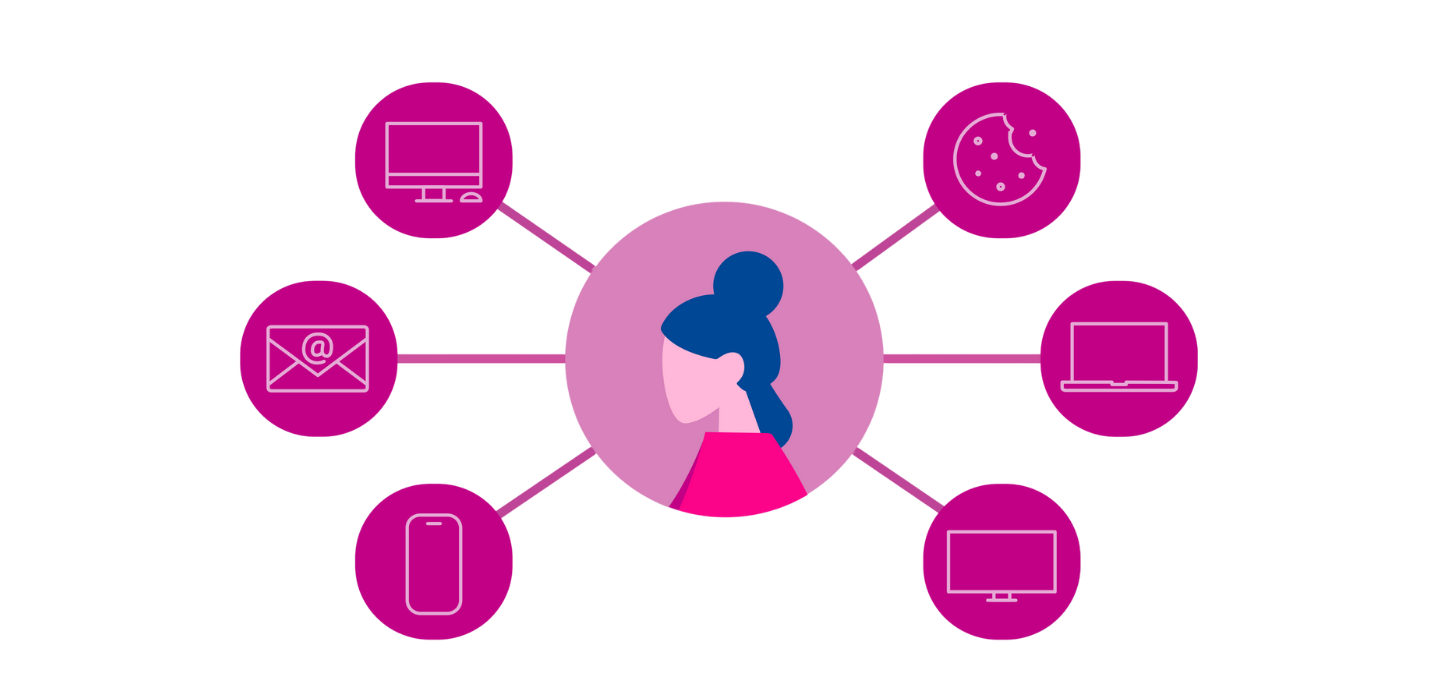
- Identity resolution: Connect offline identifiers (names, emails, addresses) with digital identifiers (hashed emails, mobile advertising IDs (MAIDs), CTV IDs, and universal IDs) through our Offline and Digital Graphs. This connects customer records with addressable digital identities while limiting the exposure of raw personal information.
- Audience matching: Translate the resolved audience into the identifiers supported by each selected activation partner to maintain consistent reach across demand-side platforms (DSPs), social, CTV, and other platforms.
- Activation: Deliver the resolved audience to selected DSPs, social, CTV, TV, or commerce media destinations. In first-party onboarding, a brand activates its own audience. In third-party onboarding, a data provider makes its audience available for outside advertisers to activate.
Behind this flow is our Digital Graph, which links 250 million U.S. individuals and 4.2 billion digital identifiers refreshed weekly. It’s the foundation that keeps onboarding accurate as the signal landscape shifts.
First-party vs. third-party data onboarding
Every digital marketing data point has a story, but whose story it tells depends on who’s using it. That relationship helps determine whether data is onboarded for the provider’s own activation or made available to outside advertisers. Both models support modern marketing, but they carry different expectations for control, consent, and accountability.
First-party onboarding: Activate your own data responsibly and strategically
First-party onboarding takes the customer data you already have and prepares it for identity resolution and activation across digital platforms. You’ll use that data to build and reach your own audiences instead of making it available for use by outside advertisers. This turns existing customer insight into an addressable marketing resource while preserving your control over how the data is activated.
How first-party onboarding works
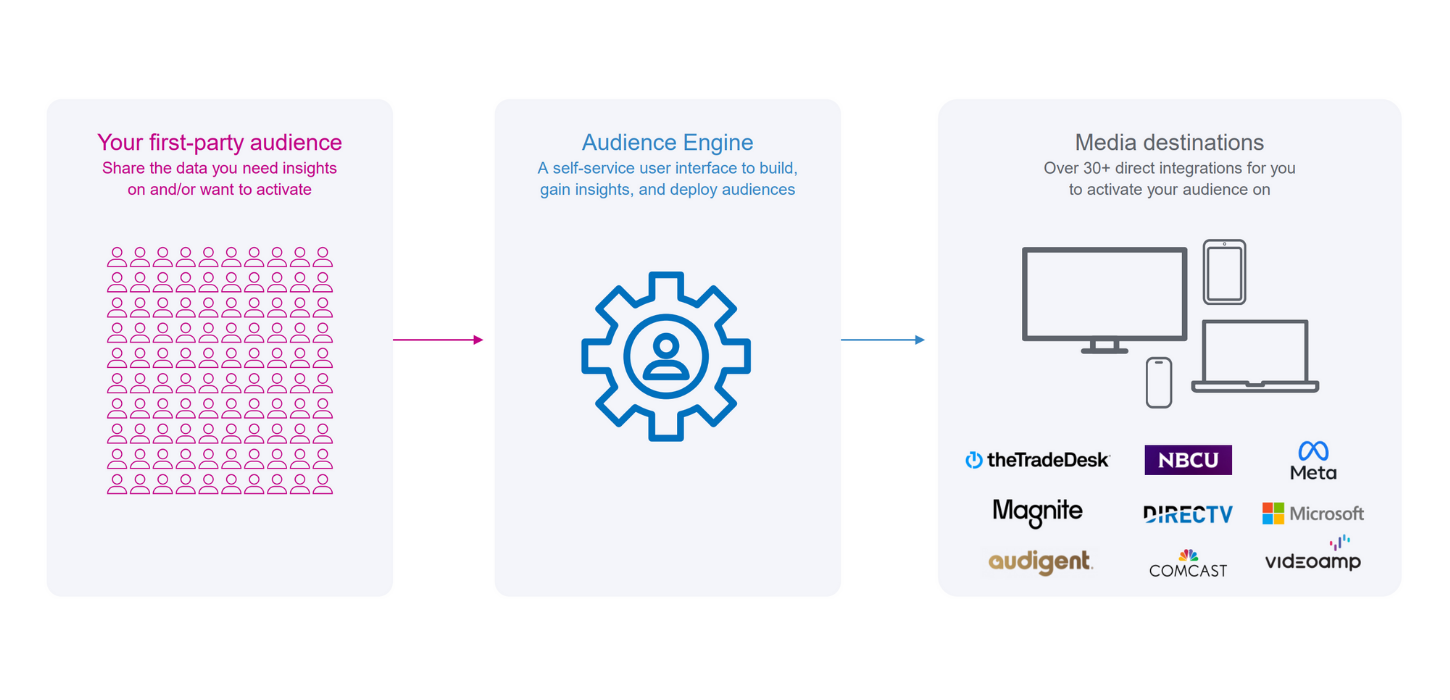
A credit card company, for example, might securely upload a CRM file containing hashed email addresses to Experian’s Audience Engine. Our identity graph connects those records with addressable digital identifiers, and the company can then activate the resulting audience across DSPs, CTV, social, and display without sending raw personally identifiable information (PII) to those platforms.
Why control and responsible use matter in first-party onboarding
First-party onboarding gives you control over how your customer data is prepared and activated. You decide which records to onboard, where the resulting audiences can be used, and how permissions are carried through the process. Because those permissions are tied to your direct customer relationships, they provide important context for assessing data provenance and permitted uses.
Responsible first-party data use still depends on thoughtful governance, especially when outside technology and activation partners are involved. First-party data should be managed according to applicable permissions, privacy requirements, and permitted uses.
When managed responsibly, first-party onboarding can help you:
- Personalize messages for known customers
- Re-engage lapsed buyers or loyalty members
- Suppress existing customers from prospecting campaigns
- Build more accurate audience segments and targeting strategies
- Measure performance using closed-loop attribution
Experian First-Party Onboarding puts these principles into practice by helping your brand securely prepare and activate data collected through direct customer relationships. We use privacy-focused identity resolution and controlled activation across selected destinations to keep data encrypted, help you maintain control, and support compliant use. This foundation can support more relevant campaigns, effective measurement, and stronger customer trust over time.
Third-party onboarding: Share and monetize data responsibly
Third-party onboarding begins when a data provider makes its audiences available for use by outside advertisers. It helps data providers, publishers, retailers, and CMNs turn audience insights into addressable, privacy-safe segments that advertisers can activate across digital channels.
How third-party onboarding works
With Experian Third-Party Onboarding, a data provider can securely send syndicated or custom audiences, connect them to our identity foundation, organize and price them, and choose where they’re available. Once those audiences are distributed to selected destinations, reporting shows usage by segment, advertiser, and destination.
Let’s say a retailer collects first-party shopper data like product purchases, loyalty card usage, and store visits. Then, they partner with us to make that audience available to outside advertisers, such as a consumer packaged goods (CPG) brand.
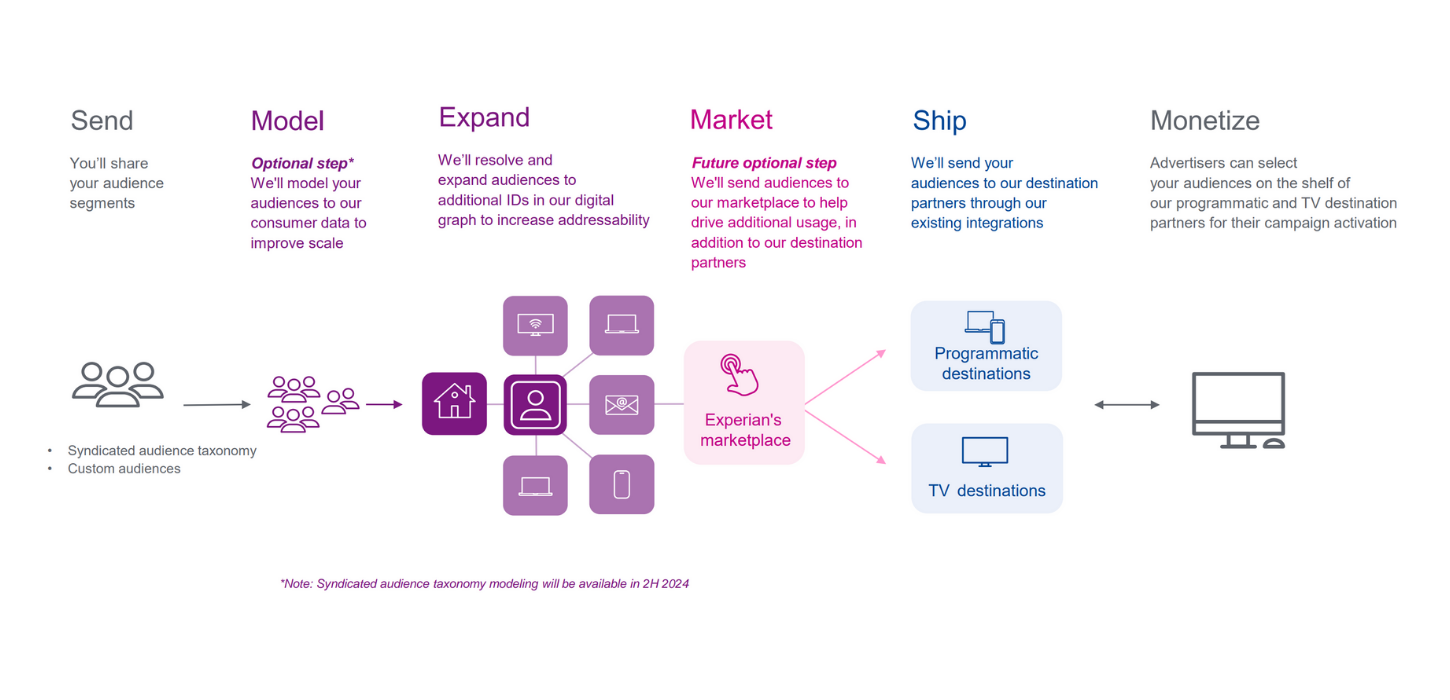
Through Experian Third-Party Onboarding, those audiences are resolved, privacy-protected, and distributed to integrated destinations such as The Trade Desk, Magnite, or NBCUniversal for activation.
- To the retailer, it’s their first-party data.
- To the CPG, it’s third-party data they can use for targeted campaigns.
- To us, it’s an opportunity to ensure the entire exchange is accurate and compliant.
Why scale and responsible data sharing matter in third-party onboarding
Scale is one of the primary benefits of third-party onboarding, but it creates value differently depending on your role:
- If you’re a data provider, third-party onboarding expands the addressability and distribution of syndicated audiences or custom audiences across more activation destinations, giving you new opportunities to monetize those insights.
- If you’re an advertiser, those audiences provide access to insight and reach beyond your own first-party data, helping you fill audience gaps, connect with segments underrepresented in your own first-party data, and enter new markets.
This exchange supports CMNs, commerce media, and the data-sharing economy overall.
Sustainable scale depends on responsible data sharing, including transparent data sourcing, appropriately documented permissions and permitted uses, and processes that support consumer choices. That responsibility is shared among data providers, onboarding providers, activation platforms, and advertisers.
Experian’s ethical enablement role in third-party onboarding
Our enablement role is both technical and ethical. Our deep expertise enables us to partner with brands and support their monetization efforts, helping them derive new value from their data while maintaining the highest standards of privacy and compliance. Meanwhile, our infrastructure ensures third-party data onboarding happens securely and transparently:
- Identity resolution expands reach without overexposing identifiers.
- Data verification and governance ensure partners meet strict privacy standards.
- Revenue-share structures maintain fairness without hidden costs.
- Cross-channel integrations enable you to onboard your data once and distribute it for activation across programmatic, CTV, and social through our 30+ direct and 200+ indirect destination partnerships.
When first-party onboarding turns into third-party onboarding
When data is made available beyond the provider’s direct use, privacy expectations change, and the rules of onboarding start to look a little different. This stage can feel complex, but with the right approach, the crossover becomes clear. It’s a natural evolution that helps you connect data more effectively and collaborate confidently.
Here’s what that can look like. A retailer uses first-party onboarding to connect its loyalty records with digital identifiers and reach its own customers across digital channels, while managing the data according to the applicable permissions. Then comes collaboration. The retailer makes that audience available to a brand, such as a CPG company, that wants to reach those shoppers across connected TV or the open web.
At that moment, the retailer’s first-party data becomes the CPG’s third-party data. Ownership doesn’t change, but responsibilities expand to additional participants, along with new privacy and compliance considerations.
This “crossover moment,” when first-party onboarding turns into third-party activation, is a small shift with big potential that can lead to new reach, deepen collaboration, and strengthen customer connections across the marketing ecosystem when managed responsibly.
Why clarity matters in the crossover between first- and third-party onboarding
When data starts flowing beyond owned channels, questions naturally come up. You may want to know:
- Who “owns” the audience once it’s shared with a partner or DSP?
- Whose privacy notice applies — the retailer’s, the brand’s, or both?
- How do we keep match accuracy without overexposing PII?
- Who’s responsible for opt-outs and suppression compliance downstream?
These are the right questions to be asking, and they’re signs of a mature, data-driven strategy. Asking them is what helps you strengthen governance, build trust, and get more value from collaboration. With the right framework in place, what could feel complicated becomes clear, opening the door to more confident growth across CMNs and other shared-data environments.
How Experian brings clarity and control to the first- and third-party onboarding crossover
As a neutral, privacy-first partner, we provide the infrastructure designed to support secure, compliant data handling. Given the blurring lines between data ownership and activation rights, our connected, AI-enhanced data and identity foundation helps retailers, brands, and platforms move from onboarding to activation responsibly. For CMNs, it supports deeper shopper insights, off-site addressability, contextually aware activation, and transparent measurement.
Our onboarding solutions help both retailers and advertisers maintain trust through:
- Clear data controls and consent management: We apply data-handling controls designed to respect each party’s permissions and use requirements.
- Accurate, privacy-safe identity resolution: Our Offline and Digital Graphs connect offline and digital identifiers across individuals, households, and devices, supporting accurate matching while protecting consumer information.
- Connected curation, activation, and measurement: We support activation across leading programmatic, social, and TV platforms. Experian Curation packages high-intent audiences with premium inventory into activation-ready Curated Deals, helping you simplify media buying and reach audiences across channels. Activity Feed connects event-level digital activity to identity, while Experian Outcomes connects media exposure with actions such as sales, visits, and website activity.
This is how we transform complex data challenges into seamless, scalable collaborations that give you the confidence to expand responsibly into commerce media and commerce ecosystems.
Why choose Experian’s onboarding solutions?
The value of data onboarding depends on accurate identity, responsible data handling, flexible activation, and the ability to apply what you learn. We connect these capabilities to help brands activate their own data and help data providers distribute their audiences across the advertising ecosystem.
1. Trusted data and identity foundation built on our Offline and Digital Graphs and enriched with Experian Marketing Attributes
When incomplete or siloed customer records limit reach and understanding, we connect data and identity to create a clearer, more consistent view of your audience.
Our Offline and Digital Graphs play distinct but complementary roles. Offline Graph connects offline identifiers such as names and addresses, while the Digital Graph unifies digital identifiers across individuals, households, and devices. Experian Marketing Attributes adds demographic, lifestyle, spending, and behavioral insights that can enrich audience understanding and inform segmentation.
These capabilities help you improve match rates, understand audiences more fully, and maintain consistent audience definitions from onboarding through activation and measurement.
2. Privacy-first and compliance-led onboarding
Given tightening regulations and growing consumer expectations, responsible data handling must be built into every stage of onboarding. We bring decades of experience as a data steward to the way data is sourced, resolved, shared, and activated.
Our approach is guided by the Experian Global Data Principles, which center on security, integrity, fairness, transparency, and inclusion. We evaluate data sources and permissions, apply privacy-focused controls, and help clients support their own privacy and consent obligations while protecting data integrity throughout the onboarding process.
3. Audience onboarding and activation with Audience Engine
Audience Engine brings audience onboarding, insight, creation, and activation into one connected self-service platform. You can upload your first-party data and match it to our identity graph, explore audience insights, build custom or lookalike audiences, and access third-party audiences through our data marketplace.
Once an audience is ready, you can distribute it across more than 200 programmatic, social, connected TV, and TV destinations. Building an audience once and activating it across multiple platforms helps reduce fragmented workflows while keeping audience definitions and configurations consistent.
4. Platform flexibility and contextual activation across the AdTech ecosystem
Different onboarding goals require distinct workflows. Brands can use Audience Engine to onboard and activate their own first-party data, while data providers, publishers, retailers, and commerce media networks can use Experian Third-Party Onboarding to distribute and monetize syndicated or custom audiences. Both solutions connect audiences with leading programmatic, social, and TV destinations.
We also support privacy-safe activation in signal-limited environments through Contextually-Indexed Audiences. Using real-time analysis and machine learning, this solution identifies websites and apps that over-index for specific audience segments, allowing you to reach relevant environments without relying on cookies or user identifiers.
This flexibility allows brands to choose where they activate and data providers to choose where their audiences are made available, supported by our identity foundation and onboarding expertise.
5. Connected audience insight and measurement
Onboarding creates more value when you can understand an audience before activation and evaluate its performance afterward. We connect onboarding with complementary data and analytics capabilities across the campaign lifecycle.
Marketing Attributes can enrich your understanding of customers and prospects with demographic, lifestyle, and behavioral insight. After activation, Experian Outcomes connects media exposure with actions such as sales, visits, and website activity to show what drove performance.
These capabilities help you move from audience understanding to activation and measurement, then apply what you learn to refine future audience and media strategies.
6. Human-centered innovation
Marketing should strengthen relationships and build trust. Our AI-driven identity systems are designed to protect privacy, respect individuals, and create real human value — helping you connect with people meaningfully. They aren’t built to collect more data but to make better use of the data you already have by connecting insights responsibly and ethically.
Every innovation at Experian is guided by the principle of balancing personalization with compliance.
Top use cases for Experian’s onboarding solutions
Our onboarding solutions are transforming how brands operate across industries every day. Whether you’re deepening loyalty, expanding reach, or proving performance, we help connect data responsibly to drive measurable results.
Here’s where we make the biggest impact:
- Automotive: Connect purchase intent data with digital identifiers for more efficient targeting.
- Commerce media: Use First-Party Onboarding to activate owned customer data and Third-Party Onboarding to distribute and monetize audiences for outside advertisers, all while supporting compliance and accurate attribution.
- CPG: Activate shopper data through retailer partnerships to drive off-site reach and stronger brand collaboration.
- Data providers: Monetize audience segments across our programmatic and TV integrations.
- Financial services: Deliver compliant, personalized cross-channel offers with unified identity.
- Healthcare: Use National Provider Identifier (NPI) onboarding to reach healthcare professionals compliantly.
- Retail: Power loyalty personalization, partner monetization, and CMN audience activation.
Across each use case, our privacy-first identity foundation turns data onboarding into a trusted driver of growth and stronger customer relationships.
Navigate the new data economy with Experian
Data onboarding has come a long way, mirroring the changes in marketing itself. We’ve moved from relying on third-party cookies to empowering first-party data, and now to building collaborative ecosystems like CMNs.
At Experian, we’re right in the middle of that evolution. With decades of data expertise, privacy leadership, and AI-driven activation, we help you connect more responsibly, measure what matters, and grow with confidence.
Want to see what that looks like for your brand? Let’s build safer connections together.
Start connecting responsibly
Data onboarding FAQs
First-party data is information you collect directly from your customers or audiences, such as CRM records, purchase history, loyalty activity, and website or app behavior. It doesn’t rely on third-party cookies, though external partners may help collect or activate it. First-party onboarding links these records to digital identifiers so you can activate known audiences across channels.
Third-party data is information sourced outside your direct customer relationships, typically collected or aggregated by an external provider. It helps extend reach and fill audience gaps not covered by your first-party data. In commerce media, a retailer’s first-party audience can also serve as third-party data for advertisers, with onboarding enabling responsible activation and distribution.
Data onboarding is the process of connecting offline customer and audience data, including first-party records, to digital identifiers for activation, personalization, and measurement. Experian supports onboarding through first-party and third-party solutions.
First-party onboarding through Audience Engine lets brands upload and match their customer data to our identity graph to build and activate audiences across digital channels. Third-Party Onboarding enables data providers, publishers, and commerce media networks to distribute and monetize audiences across programmatic, social, and TV channels.
Both approaches are powered by our data and identity foundation, which enables accurate, privacy-safe matching of offline and digital identifiers.
The difference between first- and third-party onboarding is the relationship between the data provider, the audience, and the party activating it. First-party onboarding means a brand is activating its own customer information, while third-party onboarding means a data provider is making audiences available for use by outside advertisers or partners.
First-party onboarding becomes third-party onboarding most often in CMNs or commerce media. When a retailer monetizes its first-party shopper data for use by CPGs or advertisers, the use case shifts to third-party onboarding.
First-party onboarding allows brands to activate their own customer data, while third-party onboarding helps data providers distribute and monetize audiences so outside advertisers can access them. Retailers and commerce media networks may use both models when they market to their own customers and make audiences available to partners.
Latest posts

The Tapad Device GraphTM Had Twice the Precision and Three Times the Scale as Next Competitor New York, September 14, 2016 – Just-released findings of a Hotels.com® study revealed that Tapad’s (part of Experian) cross-screen marketing technology achieved the highest levels of precision and scale among competitors. According to the leading online accommodation booking website, after a rigorous, three-and-a-half month vendor analysis, Tapad achieved twice the precision of the next highest-scoring cross-screen offering and three times greater scale. The two other companies evaluated were not named. Said Helene Cameron-Heslop, Senior Manager of Analytics of the Hotels.com brand, “Our team implemented an extremely rigorous vetting of open, cross-screen technology vendors. At the outset, we assumed we would have to compromise on either scale or accuracy – particularly given the importance to our brand of operating in a privacy-safe setting. We were surprised to find a complete package, but Tapad’s Device Graph won out on scale, accuracy and privacy; making our choice of partners very clear.” In another metric critical to the Hotels.com brand, The Tapad Device GraphTM was eight times more “unique” than the next closest offering, meaning Tapad’s graph was found to have a much greater number of connections not seen in any of the other graphs. In addition to precision, uniqueness and scale, the Tapad Device GraphTM was found to have: ● 100% higher recall● 47% more incremental matches● 53% higher North American market coverage● 101% higher F-Score* “A valuable cross-device solution should enable partners to get everything they’re looking for from a single vendor,” said Tapad Founder and CEO, Are Traasdahl. “We are deeply impressed with how thorough Hotels.com was in their vetting, and we confidently tackle the complex challenges of the martech industry thanks to our superior technology. Everyone loves a bake-off, and Tapad is no exception – delivering best-in-class results in areas that really count.” *F-score is a statistical measurement that takes precision and recall together. The calculation is 2*(precision*recall)/precision + recall). It gives you one number instead of two numbers to look at and judge performance. Contact us today

Five Norwegian startups selected to establish U.S. presence NEW YORK, Aug. 15, 2016 /PRNewswire/ — Tapad, the leader in cross-device marketing technology and now a part of Experian, has announced its new entrepreneurial mentorship initiative, the Propeller Program. Five early-stage startups from Norway have been chosen by Are Traasdahl, native of Norway and Tapad’s CEO and founder. The selected companies will share Tapad’s New York City workspace, receive C-level guidance and help establish a U.S. presence. The following companies have been selected to participate in the inaugural Propeller Program – a 12-month program beginning September 19, 2016: Bubbly – Developers of a platform that enables in-store customer feedback with dashboards and tools that facilitate real-time store response BylineMe – A marketplace for freelancers, publishers and brands to connect for content creation and distribution services Eventum – A property-sharing group that digitally assists in securing venues for meetings and corporate events Xeneta – A database that organizes the best contracted freight rates in real time and on demand “We are supporting startups that we feel represent the future of service offerings,” said Traasdahl. “It is with incredible pride that we invite these entrepreneurial teams from Norway to join us in New York Citythis year. Mentorship opportunities for early-stage companies are so important, particularly for those based outside the U.S. I look forward to giving the Propeller Program participants access to the expertise of my seasoned team and to our wide network of resources. Hopefully, it will be a game-changing year for many of them.” Contact us today
As partnership deals mount, aggressive hiring underway for unified cross-screen technology leaders NEW YORK, July 19, 2016 /PRNewswire/ — Tapad, the leader in cross-device marketing technology and now a part of Experian, has announced plans for aggressive expansion in the Asia Pacific (APAC) region. This move capitalizes on Tapad’s exceptional performance for brands and marketing technology companies in North America and Europe. With it’s proprietary Tapad Device Graph™, the company will enable global, regional and local clients and partners to understand, monetize and measure marketing to users across screens. The Tapad Device Graph is recognized as the most accurate, scalable cross-screen solution in the market today. The decision to expand into APAC was based on increased demand from global, as well as local, brands and clients, many of which have a strong market presence throughout the region. In addition to expanding its roster of world-class data partners, plans include building a world-class team in Singapore. Over the next few months, Tapad APAC will also establish local entities in additional markets. To accelerate its ramp-up, Tapad APAC is actively recruiting in many areas, ranging from skilled and experienced solutions engineers to seasoned sales and marketing professionals. “Tapad is thrilled to be answering the call for cross-device excellence in APAC,” said Pierre Martensson, GM of Tapad APAC. “Our Device Graph is adding millions of devices daily and achieves unmatched levels of scale and accuracy while protecting consumer privacy. This meets a critical need in the region.” Tapad appointed Martensson as General Manager of Tapad APAC in May, kicking off expansion in the region. Martensson comes to Tapad with nearly a decade of operations experience throughout APAC, having transformed, developed and grown global organizations. To learn more about partnership and employment opportunities available with Tapad in APAC, visit www.experian.com/careers. Contact us today