Loading...

Data onboarding for marketers: First-party vs. third-party in the era of CMNs

Published: November 19, 2025 by Experian Marketing Services

At A Glance

As commerce media reshapes digital advertising, the line between first- and third-party onboarding is blurring. Whether you’re activating data for your own campaigns or helping partners reach new audiences, how that data is used matters more than ever. This article explores what happens when first-party data becomes third-party, how the new environment changes activation, and how Experian helps brands navigate it all with privacy-led identity, efficient modeling, and seamless ecosystem connections.

In the past, first-party onboarding focused on activating a brand’s own customer data, while third-party onboarding allowed advertisers to tap into external audiences. But the rise of commerce media networks (CMNs) — which now influence over 14% of all digital ad spend — has blurred those once-clear lines.

CMNs, retail media ecosystems, and brand partnerships are reshaping how data is shared, accessed, and activated. Today, the question isn’t just who owns the data but why it’s being used. Whether to strengthen customer relationships or create new revenue opportunities, intent now shapes how data must be governed, shared, and measured.

​​For brands with strong first-party data, this shift creates opportunities to deliver more personalized, privacy-safe campaigns to their own audiences and to extend that data’s value by enabling partners to reach new segments.

In this connected ecosystem, data onboarding enables brands to activate, scale, and monetize their data responsibly, turning first-party insights into privacy-led growth opportunities. Trusted onboarding partners like Experian can help marketers activate first-party audiences with accuracy while scaling and connecting those audiences across the ecosystem for compliant, revenue-generating collaboration.

What is data onboarding?

Data onboarding moves offline consumer data — like CRM records, loyalty details, or transaction histories — into digital environments for activation and measurement. It connects real-world insight with digital engagement across display, social, search, connected TV (CTV), and commerce media. Data onboarding is now a strategic pillar for marketers managing signal loss, disconnected data, and rising privacy expectations.

The approach you take and who owns the data determine what kind of onboarding it is:

  • First-party onboarding: A brand activates its own customer data across digital platforms.
  • Third-party onboarding: A brand enables others to use its data, often monetizing it — common in CMNs or commerce media ecosystems.

Experian helps marketers succeed in both models. With AI-driven identity resolution, persistent identifiers, and privacy-first infrastructure, we make onboarding accurate, compliant, and scalable, regardless of who owns the data.

Why do marketers need data onboarding?

Even the most data-rich brands often have a limited view and reach when it comes to their audiences. They’re confined to the data they collect directly and to the owned channels they use to engage those people. Customer files may reveal who’s already in the ecosystem, but not always where those people spend time, how they behave across channels, or why they make certain decisions.

Onboarding bridges that gap. It transforms offline data into digital activation power, allowing marketers to connect insight with action. Experian makes this possible at scale with trusted identity resolution, data ranked #1 in accuracy by Truthset, audience modeling expertise, and seamless data integration across platforms, helping marketers activate confidently and compliantly.

With Experian’s onboarding solutions, marketers can achieve:

  • Unified customer identity across devices, channels, and touchpoints.
  • Cross-channel personalization with consistent, relevant messaging wherever customers engage.
  • Scaled, privacy-compliant reach beyond owned channels without sacrificing control or consent.
  • Better insights and audience creation by blending first-party and Experian Marketing Data for a deeper understanding.
  • Cross-channel activation with deep integrations into the advertising ecosystem.

Core steps in the onboarding process

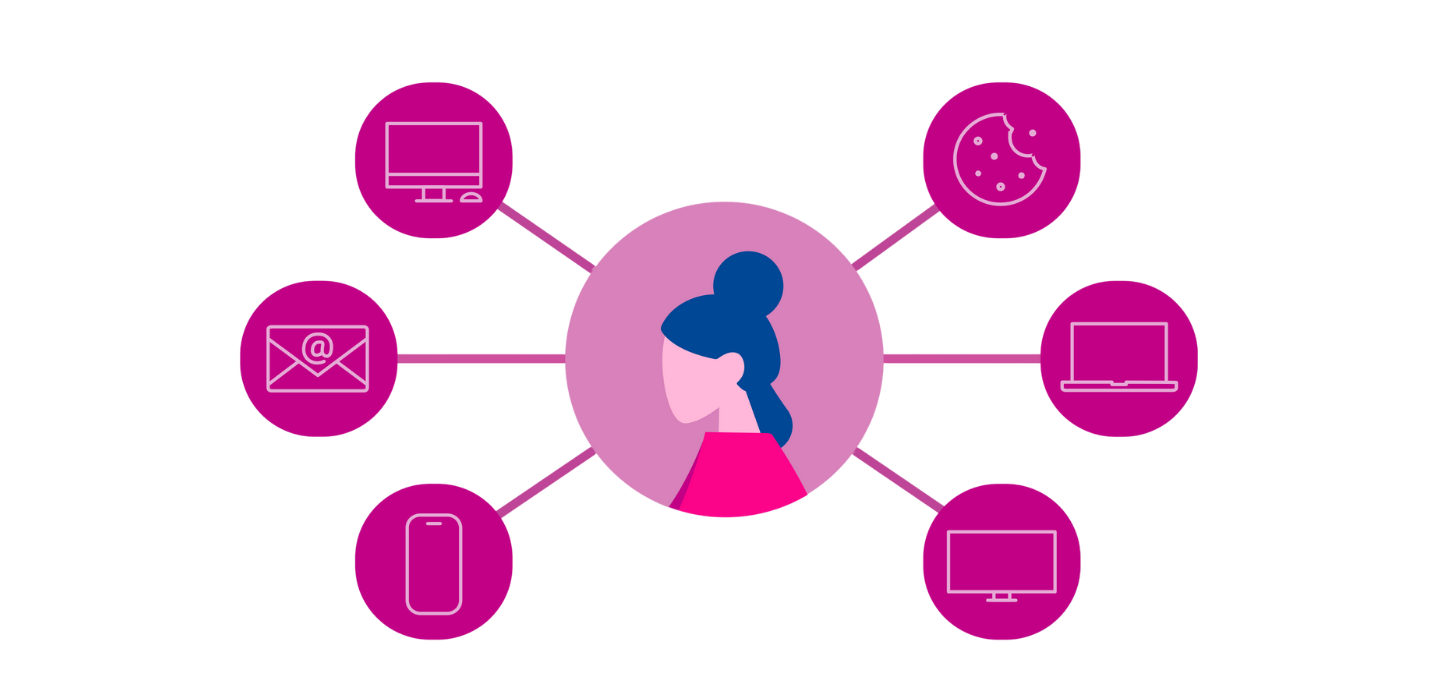
While onboarding can vary across use cases, the core process remains consistent. Experian’s AI-enhanced identity infrastructure streamlines every stage of data migration and activation, making each step safer and faster:

  1. Data ingestion: Transfer the data into the onboarding environment using privacy-safe encryption and consented parameters to protect sensitive information responsibly from the start.
  2. Transformation: Cleanse, standardize, and format records to align with digital identifiers. This eliminates inconsistencies and makes every record easier to recognize and activate later.
  3. Identity resolution: Link offline identifiers (names, emails, addresses) to hashed digital equivalents like mobile advertising IDs (MAIDs), CTV IDs, and universal IDs via Experian’s Offline and Digital Graphs. Identity resolution connects customers to their digital presence without exposing personal information.
  4. Identity matching: Match hashed emails, MAIDs, and device-graph identifiers to activation partners for each audience across demand-side platforms (DSPs), social, and CTV platforms. This expands your audience reach while maintaining accuracy and privacy.
  5. Activation: Deliver privacy-safe audiences to DSPs, social, search, or CMN shelves from third-party data providers (not the CMN’s own data) — or directly to an advertiser’s seat for immediate activation. You’ll turn insights into action and be able to reach the right people with relevant, compliant messaging.

Behind this flow is Experian’s identity graph, which links 250 million U.S. individuals, 900 million hashed emails, and 4.2 billion digital identifiers refreshed weekly. It’s the foundation that keeps onboarding accurate as the signal landscape shifts.
Core steps in the onboarding process

First-party vs. third-party onboarding

Every digital marketing data point has a story, but whose story it tells depends on who’s using it. That distinction defines the difference between first-party and third-party onboarding. Both are essential to modern marketing, but they carry different expectations for control, consent, and accountability.

First-party onboarding: Activate your own data safely and strategically

First-party onboarding starts with the data a brand earns directly from its own customers through trusted relationships. This data belongs to the brand, as customers have given consent, and the brand has the responsibility (and opportunity) to use it well.

That data might include:

  • CRM records
  • Loyalty-program data
  • Purchase or transaction histories
  • Website or app interactions
  • Email subscribers or reward members

How first-party onboarding works in practice

The onboarding process connects this offline data to digital identity so marketers can reach their existing customers across channels.

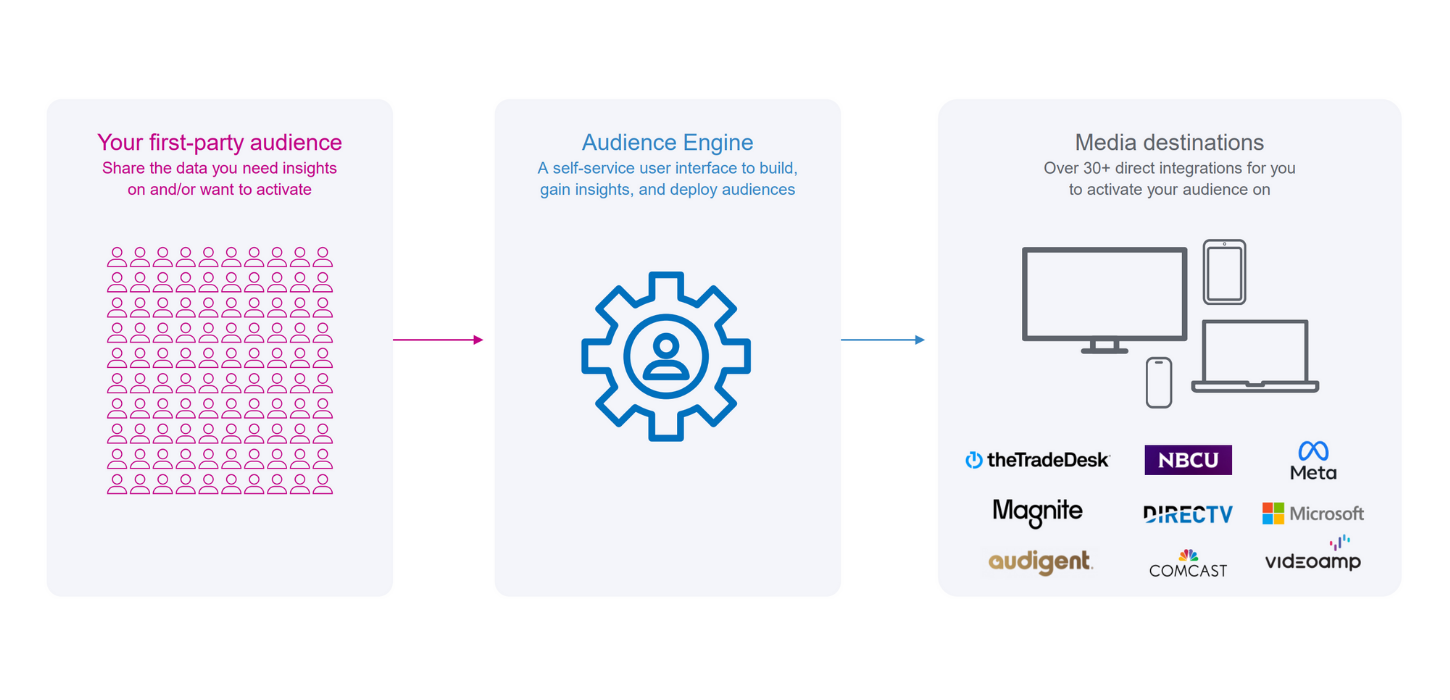
For example, a credit card company might take its CRM file of cardholders, hash the email addresses, and upload that file to a DSP via Experian’s Audience Engine. Experian’s identity graph resolves those emails to privacy-safe digital identifiers like MAIDs, CTV IDs, or universal IDs. The result is a ready-to-activate audience that can be reached on CTV, social, and display without exposing raw personally identifiable information (PII).
How it works in practice

Why control matters in first-party onboarding

The advantage of first-party onboarding is control; the brand decides what to share and how to use it. It’s a powerful way to:

  • Personalize messages for known customers
  • Re-engage lapsed buyers or loyalty members
  • Suppress existing customers from prospecting campaigns
  • Measure performance with closed-loop attribution

Doing first-party onboarding responsibly

That control comes with responsibility. Even consented customer data that has been consented to can pose risks if handled carelessly or shared with unverified partners. Experian’s First-Party Onboarding sits on a privacy-first identity foundation, governed by decades of compliance leadership under laws like the Gramm-Leach-Bliley Act (GLBA) and Fair Credit Reporting Act (FCRA).

We connect data and identity responsibly, so marketers can activate with confidence while protecting consumers.

Why first-party onboarding matters

First-party onboarding is the cornerstone of responsible marketing. It allows brands to deepen relationships they already have, using data that customers have freely shared. And with Experian’s secure First-Party Onboarding, that data stays encrypted, compliant, and under the brand’s control from start to finish.

Third-party onboarding: Share and monetize data responsibly

Third-party onboarding begins when a brand allows someone else to use its data. It’s how data providers, publishers, and especially CMNs monetize their audiences — turning first-party customer insights into addressable, privacy-safe segments that advertisers can buy and activate across digital channels.

How third-party onboarding works in practice

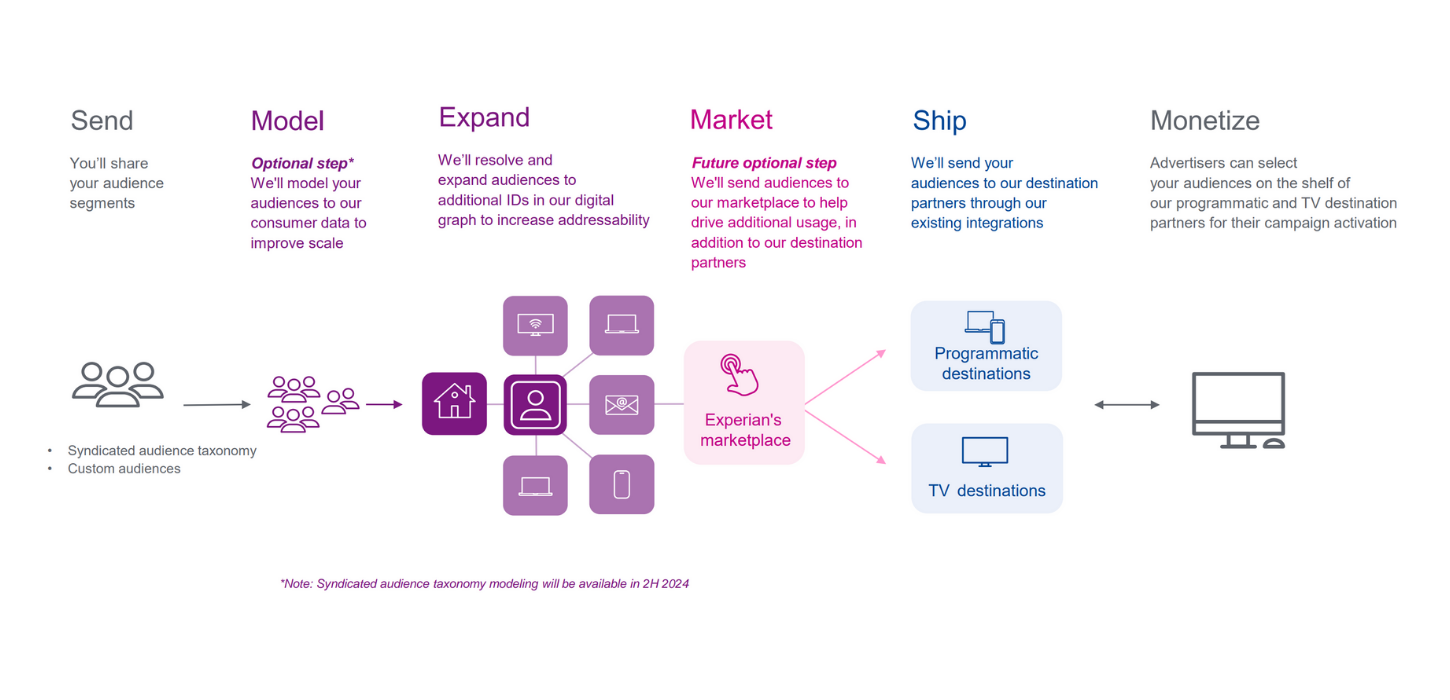
Think of it as data collaboration at scale. Let’s say a retailer collects first-party shopper data like product purchases, loyalty card usage, and store visits. Then, they partner with Experian to make that audience available to outside advertisers, such as a consumer packaged goods (CPG) brand.
How it works in practice

Through Experian Third-Party Onboarding, those audiences are resolved, privacy-protected, and distributed to integrated destinations such as The Trade Desk, Magnite, or NBCUniversal for activation.

  • To the retailer, it’s their first-party data.
  • To the CPG, it’s third-party data they can use for targeted campaigns.
  • To Experian, it’s an opportunity to ensure the entire exchange is accurate and compliant.

Why scale matters in third-party onboarding

The benefit of third-party onboarding is scale. It enables data owners to monetize their insights, while giving advertisers access to richer audiences they couldn’t build on their own. It’s the engine behind CMNs, commerce media, and the growing data-sharing economy.

With a partner like Experian, that scale becomes even more powerful. Our advanced modeling and identity solutions help brands expand their audiences responsibly using lookalike and predictive modeling to identify high-value segments, increase reach, and maximize performance across every activation channel.

The responsibilities of data sharing in third-party onboarding

As data ecosystems grow, so does the opportunity to collaborate responsibly. Once data leaves its original owner’s ecosystem:

  • Consent obligations become more complex.
  • Control over downstream usage can blur.
  • Regulatory oversight increases, especially around transparency and consumer rights.

With the right governance in place, these responsibilities can help strengthen partnerships, protect consumers, and create a foundation for sustainable growth.

Experian’s ethical enablement role in third-party onboarding

Experian’s enablement role is both technical and ethical. Our deep expertise enables us to partner with brands and support their monetization efforts, helping them derive new value from their data while maintaining the highest standards of privacy and compliance. Meanwhile, our infrastructure ensures third-party data onboarding happens securely and transparently:

  • Identity resolution expands reach without overexposing identifiers.
  • Data verification and governance ensure partners meet strict privacy standards.
  • Revenue-share structures maintain fairness without hidden costs.
  • Cross-channel integrations enable you to onboard your data once and activate it everywhere (programmatic, CTV, or social) through Experian’s 30+ direct and 200+ indirect destination partnerships.

Why third-party onboarding matters

Third-party onboarding is the foundation of modern data collaboration. When done through Experian, it becomes a trusted extension of your brand’s identity governed by the same privacy, consent, and accuracy standards that strengthen your first-party ecosystem. We help brands uncover new opportunities for growth, partnership, and responsible innovation.

When first-party onboarding turns into third-party onboarding

When data ownership shifts, privacy expectations change, and the rules of onboarding start to look a little different. This stage can feel complex, but with the right approach, the crossover becomes clear. It’s a natural evolution that helps brands connect data more effectively and collaborate confidently.

Here’s what that can look like in practice. A retailer uses its own first-party data to engage loyal shoppers through its website, app, or email program. The data is secure, consented, and fully under the retailer’s control. Then comes collaboration. The retailer decides to partner with a brand, like a CPG company, to reach those same shoppers across connected TV or the open web.

In that moment, the retailer’s first-party data becomes the CPG’s third-party data. Ownership doesn’t really change, but accountability does, along with new privacy and compliance considerations.

This “crossover moment,” when first-party onboarding turns into third-party activation, is a small shift with big potential that can lead to new reach, deepen collaboration, and strengthen customer connections across the marketing ecosystem when managed responsibly.

Why clarity matters in the crossover between first- and third-party onboarding

When data starts flowing beyond owned channels, questions naturally come up. Marketers want to know things like:

  • Who “owns” the audience once it’s shared with a partner or DSP?
  • Whose privacy notice applies — the retailer’s, the brand’s, or both?
  • How do we keep match accuracy without overexposing PII?
  • Who’s responsible for opt-outs and suppression compliance downstream?

These are the right questions to be asking, and they’re signs of a mature, data-driven strategy. Asking them is what helps brands strengthen governance, build trust, and get more value from collaboration. With the right framework in place, what could feel complicated becomes clear, opening the door to more confident growth across CMNs and other shared-data environments.

How Experian brings clarity and control to the first- and third-party onboarding crossover

As a neutral, privacy-first partner, we provide the infrastructure that keeps data secure, compliant, and meaningful wherever it flows. Our onboarding solutions help both sides of the partnership — retailers and advertisers — maintain trust through:

  • Clear ownership and consent management: Experian enforces data-handling rules that preserve each party’s control. Every record is matched and activated in accordance with strict consent parameters and Global Data Principles that exceed industry standards.
  • Accurate, privacy-safe identity resolution: Our Offline and Digital Graphs connect people to their devices, households, and behaviors using hashed identifiers, ensuring match precision while protecting individuals.
  • AI-powered contextual intelligence: Experian’s AI models analyze real-world behavior and contextual signals to enhance match quality and extend reach without reliance on cookies. For CMNs, that means better off-site activation, targeting the right shoppers in the right environments while maintaining compliance.
  • Trusted integrations and transparent reporting: With direct integrations into 30+ programmatic and TV destinations, Experian delivers consistent match rates and unified measurement through solutions like Activity Feed and Experian Outcomes.

This is how Experian transforms complex data challenges into seamless, scalable collaborations that give marketers the confidence to expand responsibly into commerce media and commerce ecosystems.

The new standard of responsible AI and commerce media

Commerce media represents the future of audience activation, but only if the transition is managed responsibly. As the lines blur between data ownership and activation rights, Experian’s AI-driven, privacy-first identity framework acts as the connective tissue between retailers, brands, and platforms.

We help CMNs:

In short, we ensure that when your first-party onboarding becomes third-party activation, trust and performance stay intact.

Why choose Experian’s onboarding solutions?

Many view onboarding as a data transfer, but we treat it as a trust process where accuracy, privacy, and performance align. Here’s why marketers choose us:

1. Unmatched data and identity foundation

When brands struggle with incomplete or siloed customer data, Experian’s unified foundation connects fragmented records into a single, accurate identity.

Our Offline and Digital Graphs link households, individuals, and devices with persistent accuracy. Updated weekly and built on decades of historical data, our graphs maintain 97% household coverage across the U.S., even through signal loss.

2. Privacy-first and compliance-led

Given tightening regulations and growing consumer expectations, privacy compliance is essential. With decades as a regulated data steward, we apply the same rigorous controls from our financial operations to marketing data.

Every data partner is verified for transparency and compliance with consent requirements, and all consumer data is governed by Experian’s Global Data Principles, which exceed industry standards. We help brands meet their privacy and consent obligations confidently while maintaining the data integrity that drives results.

3. Real-time, contextual activation

Experian’s industry-leading Offline and Digital Graphs are widely adopted across the advertising ecosystem, powering identity resolution and audience activation for the world’s top marketers. Our integrations span 30+ direct and 200+ indirect activation platforms, including leading DSPs, CTV networks, and commerce environments.

With real-time, AI-driven contextual intelligence, Experian enables privacy-safe targeting even in signal-limited environments through solutions like Contextually-Indexed Audiences that deliver reach without reliance on cookies or personal identifiers.

4. Platform flexibility

Modern marketing requires interoperability. Experian’s onboarding framework is technically integrated across multiple platforms, offering brands and data providers the freedom to activate where they choose.

Whether through self-service onboarding in Audience Engine for first-party data or managed onboarding for third-party monetization, Experian scales with your organization, providing transparent pricing, seamless delivery, and dedicated support teams to ensure every connection performs.

5. Human-centered innovation

Marketing should strengthen relationships and build trust. Our AI-driven identity systems are designed to protect privacy, respect individuals, and create real human value — helping brands connect with people meaningfully. They aren’t built to collect more data but to make better use of the data you already have by connecting insights responsibly and ethically.

Every innovation at Experian is guided by the principle of balancing personalization with compliance.

Top use cases for Experian’s onboarding solutions

Our onboarding solutions are transforming how brands operate across industries every day. Whether you’re deepening loyalty, expanding reach, or proving performance, Experian helps connect data responsibly to drive measurable results.

Here’s where we make the biggest impact:

  • Automotive: Connect purchase intent data with digital identifiers for more efficient targeting.
  • Commerce media: Use both first- and third-party onboarding — first-party for on-site activation and owned marketing, third-party for off-site activation and monetization —all while maintaining compliance and accurate attribution.
  • CPG: Activate shopper data through retailer partnerships to drive off-site reach and stronger brand collaboration.
  • Data providers: Monetize audience segments across Experian’s programmatic and TV integrations.
  • Financial services: Deliver compliant, personalized cross-channel offers with unified identity.
  • Healthcare: Use National Provider Identifier (NPI) onboarding to reach healthcare professionals compliantly.
  • Retail: Power loyalty personalization, partner monetization, and CMN audience activation.

Across each use case, Experian’s privacy-first identity foundation turns data onboarding into a trusted driver of growth and stronger customer relationships.

Navigate the new data economy with Experian

Data onboarding has come a long way, mirroring the changes in marketing itself. We’ve moved from relying on third-party cookies to empowering first-party data, and now to building collaborative ecosystems like CMNs.

At Experian, we’re right in the middle of that evolution. With decades of data expertise, privacy leadership, and AI-driven activation, we help marketers connect more responsibly, measure what matters, and grow with confidence.

Want to see what that looks like for your brand? Let’s build safer connections together.

Start connecting responsibly

This site is protected by reCAPTCHA and the Google Privacy Policy and Terms of Service apply.


Data onboarding FAQs

What is Experian First-Party Onboarding and Third-Party Onboarding?

Experian First-Party Onboarding helps brands take the customer data they already own, like CRM lists or loyalty files, and use it safely across digital channels for targeting, personalization, and measurement. Experian Third-Party Onboarding helps retailers, publishers, and data providers share or monetize their audiences responsibly with partners through secure, privacy-first activation.

Both are powered by Experian’s trusted identity foundation that keeps every connection accurate, compliant, and privacy-safe.

What’s the difference between first-party and third-party data onboarding?

The difference between first- and third-party onboarding is who’s using the data. First-party means a brand is activating its own customer information, while third-party means that data is being shared or used by another advertiser or partner.

When does first-party onboarding become third-party onboarding?

First-party onboarding becomes third-party onboarding most often in CMNs or commerce media. When a retailer monetizes its first-party shopper data for use by CPGs or advertisers, the use case shifts to third-party onboarding.

Why do marketers need both first- and third-party onboarding?

First-party onboarding helps brands reach and understand their existing customers, while third-party onboarding helps expand reach, enable partnerships, and monetize data responsibly.


Latest posts

Loading…
How the AI revolution is transforming the future of commerce

In this article…Understanding the AI revolution in commerceFour benefits of the AI revolution coming to commerceFuture trends and predictionsChart the future of commerce with Experian Technology is pushing the boundaries of commerce like never before. Artificial intelligence (AI) is one of the primary driving technologies at the forefront of the commerce evolution, using advanced algorithms to revolutionize marketing and personalize customer experiences. As of 2024, AI adoption in e-commerce is skyrocketing, with 84% of brands already using it or gearing up to do so.  This article explores the AI revolution coming to commerce, focusing on what makes AI a driving force for e-commerce in particular, and the ways it's reshaping how businesses engage with consumers. Understanding the AI revolution in commerce AI is quickly reshaping commerce as we know it by democratizing access to sophisticated tools once reserved for large corporations, breaking down functional silos within organizations, and integrating data from multiple sources to achieve deeper customer understanding. It’s paving the way for a future where every brand interaction is uniquely crafted for the individual, powered by AI systems that anticipate preferences proactively.  AI is a broad term that encompasses: Data mining: The gathering of current and historical data on which to base predictions Natural language processing (NLP): The interpretation of human language by computers   Machine learning: The use of algorithms to learn from past experiences or examples to enhance data understanding The capabilities of AI have significantly matured into powerful tools that can improve operational efficiency and boost sales, even for smaller businesses. They have also fundamentally changed how businesses interact with customers and handle operations. As AI continues to develop, it has the potential to provide even more seamless, personalized, and ethically informed commerce experiences and establish new benchmarks for engagement and efficiency in the marketplace. Four benefits of the AI revolution coming to commerce Major commerce players like Amazon have benefited from AI and related technologies for a while. Through machine learning, they’ve optimized logistics, curated their product selection, and improved the user experience. As this technology quickly expands, businesses have unlimited opportunities to see the same efficiency, growth, and customer satisfaction as Amazon. Here are four primary benefits of AI adoption in commerce. 1. Data-driven decision making AI gives businesses powerful tools to analyze large amounts of data more quickly and accurately than a person. Through advanced algorithms and machine learning, AI can sift through historical sales data, customer behavior patterns, and market trends to uncover insights and suggest actions that might not be immediately obvious to human analysts. By transforming raw data into actionable insights, AI empowers businesses to make more informed decisions, reduce risks, and capitalize on opportunities. As a real-world example, Foxconn, the largest electronics contract manufacturer worldwide, worked with Amazon Machine Learning Solutions Lab to implement AI-enhanced business analytics for more accurate forecasting. This move improved forecasting accuracy by 8%, saved $533,000 annually, reduced labor waste, and improved customer satisfaction through data-driven decisions. 2. A better customer experience AI is set to make customer interactions smoother, faster, and more personalized by recommending products based on preferences and behaviors, making it easier for customers to find what they need. When consumers visit an online store, AI also provides instantaneous help via a chatbot that knows their order history and preferences. These AI-powered assistants offer real-time help like a knowledgeable store clerk. They give the appearance of higher-touch support and can answer basic questions at any hour, provide personalized product recommendations, and even troubleshoot issues. Chatbots free up human customer service agents for more complicated matters, and these agents can then use AI to obtain relevant information and suggestions for the customer during an interaction. 3. Personalized marketing Data-driven personalization of the customer journey has been shown to generate up to eight times the ROI, as data shows 71% of consumers now expect personalized brand interactions. Until AI came around, personalization at scale was complex to achieve. Now, gathering and processing data about a customer’s shopping experience is easier than ever based on lookalike customers and past behavior. Many businesses have adopted AI to glean deeper insights into purchase history, web browsing, and social media interactions to drive better segmentation and targeting. With AI, advertisers can analyze behavioral and demographic data to suggest products someone is likely to love. Consumers can now browse many of their favorite online stores and see product recommendations that perfectly match their tastes and needs.  AI can also offer special discounts based on purchasing habits, and send personalized emails with products and content that interest customers to make their shopping experience more engaging and relevant. This personalization helps businesses forge stronger customer relationships. Personalization across digital storefronts Retail media involves placing advertisements within a retailer's website, app, or other digital platform to help brands target consumers based on their behavior and preferences within that environment. Retail media networks (RMNs) expand this capability across multiple retail platforms to create seamless advertising opportunities throughout the customer journey.  Integrating AI into RMNs can improve personalization across digital storefronts with personalized, relevant ads and custom offers in real time that improve the customer experience. 4. Operational efficiency AI can also be beneficial on the back end, enabling more efficient resource allocation, pricing optimization, efficiency, and productivity. Customers can be frustrated when they visit a store for a specific product only to find it out of stock or unavailable in a particular size. With AI, these situations can be prevented through algorithms that forecast demand for certain items. Retailers like Amazon and Walmart both use AI to predict demand, with Walmart even tracking inventory in real time so managers can restock items as soon as they run out.  AI can automate and streamline operational tasks to help businesses run smoother, faster, and more cost-effective operations. It can: Offload tedious data entry, scheduling, and order processing tasks for greater fulfillment accuracy.  Analyze historical data and market trends, predicting demand to help businesses optimize inventory, reduce waste, track online and in-store sales, and prevent shortages. Forecast demand levels, transit times, and shipment delays to make better predictions about logistics and supply chains. Improve data quality using machine learning algorithms that find and correct product information errors, duplicates, and inconsistencies. Adjust prices based on competitor pricing, seasonal fluctuations, and market conditions to maximize profits. Pinpoint bottlenecks, identify issues before they escalate, and provide improvements for suggestions. Future trends and predictions If you want to stay ahead in e-commerce, it’s just as important to know what’s coming as it is to understand where things are today. Here are some of the trends expected to shape the rest of 2024 and beyond. Conversational commerce Conversational commerce allows real-time, two-way communication through AI-based text and voice assistants, social messaging apps, and chatbots. Generative AI advancements may soon enable more seamless, personalized interactions between customers and online retailers. This technology can improve customer engagement and satisfaction while providing helpful insights into preferences and behaviors for better personalization and targeting. Delivery optimization AI-driven delivery optimization uses AI to predict ideal routes for each individual delivery, boosting efficiency, reducing costs, promoting sustainability, and improving customer satisfaction throughout the delivery process. Visual search AI-driven visual search is quickly improving in accuracy, speed, and contextual understanding. Future developments may integrate seamlessly with augmented reality (AR) so shoppers can search for products by pointing their devices at physical objects. Social media and e-commerce platforms may soon incorporate visual search more prominently, allowing users to find products directly from images. AI content creation AI is already automating and optimizing aspects of content production: Algorithms can generate product descriptions, blog posts, and social media captions personalized to specific customer segments.  AI tools also enable the creation of high-quality visuals and videos.  NLP advancements ensure content is compelling and grammatically correct.  AI-driven content strategies analyze consumer behavior and refine messaging to meet changing preferences and trends. This automation speeds up content creation while freeing resources for strategic planning and customer interaction. IoT integration Integrating AI with Internet of Things (IoT) devices could help make the ecosystem more interconnected in the future. AI algorithms can use data from IoT devices like smart appliances, wearables, and sensors to gather real-time insights into consumer behavior, preferences, and product usage patterns. This data enables personalized marketing strategies, predictive maintenance for products, and optimized inventory management. AI-driven IoT data analytics can also streamline supply chain operations to reduce costs and inefficiencies. Fraud detection and security There will likely be an increased focus on the ethical use of AI and data privacy regulations to strengthen consumer trust and transparency. AI-powered systems will get better at detecting and preventing fraud in e-commerce transactions, which will heighten security measures for both businesses and consumers. Chart the future of commerce with Experian AI has changed how marketers approach e-commerce in 2024. With AI-driven analytics and predictive capabilities, marketers can extract deeper insights from extensive data sets to gain a clearer understanding of consumer behavior. This enables refined segmentation, precise targeting, and real-time customization of messages and content to fit individual preferences. Beyond insights, AI automates routine tasks like ad placement, content creation, and customer service responses, freeing marketers to concentrate on strategic planning and creativity. Through machine learning, marketers can predict trends, optimize budgets, and fine-tune strategies faster and more accurately than ever. The time to embrace AI is now.  At Experian, we’re here to help you make more data-driven decisions, deliver more relevant content, and reach the right audience at the right time. Using AI in your commerce marketing strategy with our Consumer View and Consumer Sync solutions can help you stay competitive with effective, engaging campaigns.  Contact us to learn how we can empower your commerce advertising strategy today. Contact us Latest posts

Sep 10,2024 by Experian Marketing Services

An interview with Ampersand’s Rachel Herbstman and Anastasia Dukes-Asuen

In our Ask the Expert Series, we interview leaders from our partner organizations who are helping lead their brands to new heights in AdTech. Today’s interview is with Rachel Herbstman, VP of Data Innovation, and Anastasia Dukes-Asuen, Senior Director of Advanced TV Data & Insights at Ampersand. Could you introduce us to Ampersand and discuss your approach to TV advertising? Ampersand, a joint venture between Comcast, Charter, and Cox, is a media sales organization that offers a unified footprint, unlocking unparalleled scale and unique data/insights for local and national advertisers. Ampersand gives advertisers true audience first planning, scale in execution, and advanced measurement of their TV investments, representing 117 million multiscreen households and over 75% of addressable households in the U.S. (64 million households). We help clients reach their unique target audience and deliver their stories – anytime, anywhere, and on whatever device. How does adding streaming to a linear campaign, or vice versa, enhance overall campaign performance for marketers?  Herbstman: Marketers have recognized that multiscreen media strategies are the strongest as viewership continues to fragment. Unique audiences exist in traditional TV and streaming, and failure to include either media channel will reduce the total reach opportunity. These channels have proven to validate unduplicated audiences. In our local business, adding streaming to a historically traditional linear-only media strategy increased campaign reach by 33%. Conversely, adding linear TV to a historically streaming-only media strategy increased reach by 209%. These metrics are validated by matching media exposures to an authenticated households subscriber ID and represent mass opportunities to reach new audiences with a multiscreen media strategy. When considering reallocating media investments, how does Ampersand help clients determine the most effective channels for specific campaigns?  Herbstman: For a brand that historically invested in traditional TV, either national or local broadcast, we can provide insights to analyze the performance of any media campaign. The insights can include high-level metrics like reach and frequency and more granular metrics like unique reach per network. By seeing both the high-level results and more detailed granularity, we can provide optimization recommendations for funding other activation opportunities. Our database of past campaigns consistently demonstrates that gaining new eyeballs with a national TV campaign usually plateaus after a few weeks. In other words, if most of your intended audience is reached after about three or four weeks of national television, reaching any new viewers can be exponentially more expensive. We’ve built an Addressable Simulator tool for national advertisers that shows the potential impact of shifting a portion of the national media weight, specifically from the latter part of a flight, into addressable TV. Using our licensed Experian data set, we can measure any standard age/gender target or any advanced target to understand the complementary impact that addressable audience has on national media. This tool has dynamic inputs of CPMs and incidence rates, flight lengths, and budgets to simulate different scenarios and give marketers some intelligence on what holistic reach against that Experian segment they could expect with one given budget using brand-safe, traditional, and streaming inventory with an addressable activation. Additionally, we've developed an interactive eCPM calculator that helps national advertisers assess the cost efficiency of adding addressable TV to their traditional campaigns. By dynamically inputting CPMs, marketers can evaluate tradeoffs between media types for upcoming campaigns. Are there audience demographics that benefit from these combined media strategies, and what indicators or data points guide your recommendations to add cable to a local broadcast campaign versus other reallocations? Herbstman: By including cable or streaming in a local effort, a client can use a data-driven approach to find more intended viewers in other premium content. Utilizing the vast library of Experian audience segments paired with our robust sample of 64 million data-enabled homes enables Ampersand to provide insights into the most valuable networks and dayparts that the intended viewer will likely watch on either platform.  With identity and viewing insights at scale, we can understand how consumers watch TV, even for inventory we have yet to sell. Our goal is to help marketers understand what’s happening as a result of their investments at a holistic level. We can analyze a campaign running across hundreds of designated market areas to quickly and simply understand the holistic delivery of their broadcast and cable weight by pulling back set-top-box exposures on broadcast and Ampersand-purchased cable on our measurable footprint. Then, we can determine the share of measurable reach that each portion’s media weight contributes to. We recommend optimizing towards a more balanced approach, where the reach levels for broadcast and cable mirror each other, creating a more effective market media mix. Once we confirm cable's potential in a market, we analyze network and daypart metrics to adjust key areas to optimize the campaign. We invite marketers to use these insights to measure their local or national TV campaign performance and garner unique perspectives to re-balance investments to drive reach and optimal frequencies. Are there common missteps to avoid? Dukes-Asuen: Ampersand's decades of experience with media and data insights have allowed us to create an extensive database complete with targeting and measurement benchmarks. We use this database to curate best practices for brands and help set them up for success, keeping their goals and objectives for reach and frequency in mind.  Some clients spread their investment levels too thin, whether through short flight windows, low weekly frequencies, or targeting overly niche audiences that don't fully support KPI goals. One way to avoid these missteps is to set up a test-and-learn plan to validate a hypothesis and refine media strategies, ensuring campaigns are structured to garner meaningful insights. Ampersand can help ensure the test itself is constructed and supported to yield statistically relevant results, and the learnings can then be applied to the next campaign. How does Experian’s data enhance your campaigns at Ampersand?  Dukes-Asuen: Within our Experian license, we can map the Experian Consumer View databases against our multichannel video programming distributors subscriber base in a privacy-compliant way to plan and activate them seamlessly. Experian has a rich set of audience targets and segmentation that we utilize to identify households that can be used for audience-based media execution with Ampersand. By defining the right audience—whether consumers are likely to purchase a product, exhibit certain behaviors, or demonstrate specific values—we enhance campaign performance and improve media spending efficiency for our advertisers. Additionally, how do you believe AI and other new technologies will impact your media buying approaches in the future, and how might these innovations improve campaign effectiveness and provide value to your clients? Herbstman: We have a strong use case on the measurement and analytics end. Using AI, we can aggregate a massive amount of historical data—viewership and exposure data. AI helps us understand overarching market trends and media performance to analyze campaign results and inform future campaign optimizations. The value of AI is in its role as an additional technology layer, enriching our insights portfolio and providing faster intelligence that enhances campaign effectiveness and delivers greater value to our clients. Can you share an example of how precise audience targeting and segmentation, powered by Experian, have led to significantly better media spend reallocations and campaign performance for marketers? One great example is how a national cruise brand dramatically improved its media spend and campaign performance by utilizing precise audience targeting and segmentation through Experian. By combining Ampersand’s addressable TV with Experian’s data-driven insights, they achieved a 14% incremental reach, a 3.1x higher frequency, and a 24% lower effective CPM. This strategic approach allowed them to reallocate their media spending more effectively, ensuring every impression reached their custom target audience. Thanks for the interview. For those interested in learning more about Ampersand, reach out for a personalized consultation. Contact us Latest posts

Sep 05,2024 by Experian Marketing Services

The future of retail advertising: Embracing retail media standardization

In this article…How much standardization currently exists?Why is standardization important?Who is promoting standardization?The benefits of industry standardizationStrategies for implementing retail media standardizationFuture retail media standardization trendsJoin forces with a strategic RMN partner Retail media is quickly outpacing other areas of digital advertising and is projected to grow 29% by 2025. Despite this trajectory, retail media is still relatively new compared to traditional digital media and operates like a startup in terms of tech capabilities. Sustained growth will require retail media standardization — creating consistent ways to measure and compare ad performance across retail media networks (RMNs). This standardization will be key for RMNs wanting to understand what’s driving the most value and sales for their business. In an Interactive Advertising Bureau (IAB) study, 62% of ad buyers pointed to standardization as a top growth challenge. The current ecosystem’s inconsistent standards have prevented effective investment in measurement and limited ad buyer participation. Standardization will be necessary moving forward for effective adoption and trust in these new channels. This article explores the challenges marketers face without retail media standardization and the collaborative efforts needed to establish consistent measurement standards across the industry. How much standardization currently exists? Retail media standardization is limited industry-wide, with each RMN using its own metrics and definitions; what one network calls a "conversion" might be defined differently by another. Some retail companies also sell ad space within siloed, walled-garden shopping environments, which makes it difficult for advertisers to compare performance across platforms. As a result, the current landscape lends itself to inconsistency, campaign measurement complications, and an unclear view of return on investment (ROI) across RMNs. This fragmentation stems from how retailers have historically developed and managed customer data platforms and e-commerce websites independently, causing disparities in the types and quality of customer data available and the technologies used to manage it. Each retailer uses a unique technology stack and customer experience strategies, which means data is collected, utilized, and integrated into advertising platforms differently. Why is standardization important? A 2023 State of Retail Media Survey highlighted the industry's lack of standardization as a significant obstacle to growth. The Association of National Advertisers also found that advertisers can't fully take advantage of their retail media investments because of inconsistent measurement practices. Standardized retail media measurement practices are critical for growth. By setting consistent measurement standards across different platforms, it becomes easier for various players to: Assess how ads are performing See which strategies work across RMNs Optimize ad spending Make informed decisions Extract more value from advertising budgets Ultimately, standardized metrics are a must for improving transparency, strategic effectiveness, and ROI. Who is promoting standardization? We’re seeing a collective push for retail media standardization by several industry stakeholders wanting a more cohesive and effective advertising ecosystem. One of the most recent efforts came from the IAB and the Media Rating Council (MRC). These organizations collaborated with brands, agencies, and RMNs to develop new guidelines for standardized measurement practices and have given the ecosystem a proposed common language for retail media measurement. These guidelines were released in January 2024 to provide a consistent framework for the following across retail media platforms: Audience measurement Reporting Incrementality Transparency Viewability Ad delivery In-store advertising Microsoft Retail Media, an early adopter of the framework, has experienced greater data transparency, accuracy, privacy, and security, which has benefited advertisers and retailers and advanced Microsoft’s position as a retail media industry leader. Widespread adoption of these guidelines has the potential to drive innovation, attract more advertisers, strengthen collaboration, grow the industry, and improve the consumer experience. The benefits of industry standardization A standardized retail media framework for performance measurement can benefit advertisers, retailers, media agencies, and other stakeholders in the ecosystem. Here are some ways each entity stands to benefit. Benefits for retailers Standardization makes it easier for retailers to demonstrate their credibility and the value of their retail media program. With uniform measurement across channels and campaigns, they can provide clear, comparable data that reflects their impact, builds trust, and encourages advertiser investment. Better campaign management efficiency also reduces the operational burden, so retailers can focus on improving customer experiences and driving sales. Experian’s Activity Feed helps you measure performance — and understand how ads impact shopping behavior — by providing you with ad exposures in one environment (web or connected TV) that you can connect to an action in another (in-store purchase). Learn more about Activity Feed and see it in action here. Benefits for media agencies and marketers With standardized metrics, advertisers and media agencies have an easy, reliable way to compare metrics and assess the effectiveness of various campaigns across RMNs. This “apples to apples” comparison helps them determine which channels are truly driving better ROI so they can effectively optimize spending. Standardization also improves collaboration with retailers and leads to more effective campaigns. Consistent guidelines can help teams create, carry out, and optimize retail media strategies and easily compare platform effectiveness. Benefits for industry stakeholders Industry stakeholders like technology providers and regulatory bodies can greatly benefit from standardized retail media measurement practices. Consistent measurement provides a common framework that improves transparency and trust among parties. With reliable and comparable metrics, standardization helps everyone speak the same language when it comes to performance evaluation and decision-making. This uniformity facilitates smoother interactions and partnerships between the buy and sell sides, so it’s easier to negotiate and collaborate. Strategies for implementing retail media standardization Standardizing measurement will require industry-wide coordination around several strategies, as outlined in best practices frameworks from standardization proponents like IAB/MRC and the Albertson's Media Collective. Unify reporting and performance measurement To address the lack of standardization in performance metrics, RMNs must adopt uniform definitions and calculation methodologies for key metrics. Unified reporting in retail media requires successful stakeholder collaboration to: Agree on critical KPIs and reporting metrics like impressions and conversion rates Adopt standardized data formats and reporting tools Educate stakeholders Ensure data quality and compliance Continuously improve based on industry feedback The IAB/MRC framework provides a basis for standardizing metrics for media delivery and engagement, as well as sales and conversions. This consistency helps advertisers compare performance across platforms effectively, enhancing transparency and decision-making. Standardize product specifications It's important for advertisers to have consistent product specifications, as it makes it easier to create and deploy ads across multiple RMNs. To achieve this, RMNs should align ad formats, file sizes, animations, and video specifications with IAB guidelines. Following these standards will help RMNs eliminate compatibility issues, simplify adoption, and save time and resources. It's also vital for RMNs to maintain flexibility for unique ad formats in order to encourage innovation while still benefiting from standardized specifications. Introduce third-party verification and disclose capabilities Introducing third-party verification for ad placement, fraud detection, brand safety, and competitive separation can improve an RMN’s credibility and transparency. By disclosing the third-party providers used and the types of verification offered, RMNs build trust with advertisers and give them the confidence they need to invest. Additionally, RMNs should disclose their staffing, processes, technology, inventory management, targeting, creative management, and self-service offerings. Transparency in these areas helps advertisers make informed decisions, optimize ad buys, and increase efficiency. Using existing IAB verification and capability disclosure guidelines ensures reliability and a more trustworthy, efficient advertising environment. Future retail media standardization trends The future of retail media is poised for significant growth, especially as standardization guidelines are widely adopted and implemented. Here are some trends we expect to see as retail media ad spending grows. Widespread RMN adoption and spending Standardization could spur greater RMN spending and drive broad adoption by advertisers who hesitated before due to concerns about metrics and performance comparability. New partnerships and collaborations Standardization may lead to new partnerships that weren't possible before: Brands and retailers might team up to blend advertising and sales data for better-targeted campaigns. AdTech companies could also partner with multiple retailers to offer unified advertising solutions. Retail media networks and analytics firms could collaborate to provide deep insights into consumer behavior and campaign performance. Partnerships among retailers, including smaller ones seeking retail media measurement uniformity, may drive further standardization and create new advertising opportunities across product categories with audience overlap. Ad format innovation Agreeing on common standards simplifies how ads are measured and understood. Standardization may drive down costs and free up space for more imaginative, engaging ads in the future. For instance, the IAB/MRC’s common language is helping to promote consistency and clarity and fuel innovation across the board. Incrementality focus As standardization becomes more widespread, there may be a growing trend toward incrementality measurement, which measures the additional impact of advertising campaigns compared to what would have happened without them. Standardized metrics can help advertisers accurately gauge and optimize campaign effectiveness and maximize their marketing investments. Growth of cross-platform ad targeting Standardization may drive the growth of cross-platform ad targeting. With consistent metrics and measurement standards, advertisers will be able to track and compare their ad performance across platforms more accurately. This unified approach will improve ad targeting precision and ensure a consistent impact across RMNs. Commerce media Commerce media is changing retail advertising with its focus on verified data and real-time transaction insights, making campaigns more efficient. This shift could push for more uniform measurement standards across platforms and level the playing field. As commerce media gains traction, its emphasis on targeted advertising and ROI measurement might pave the way for universal metrics and clearer guidelines across retail networks. Where does this leave modern advertisers? Retail media is still at a crossroads. If standardization doesn’t occur soon, its growth may slow. For now, advertisers are resorting to custom strategies or relying on whichever network they feel is most effective for their products. They are likely to continue investing significantly in retail media, maintaining or increasing spending in the next year. Although RMNs continue to be challenging without formally recognized standardization guidelines, the proposed IAB/MRC guidelines provide an effective starting point. Join forces with a strategic RMN partner RMN success requires overcoming complicated technical hurdles that may exceed non-media business capacities. Managing data complexities, resolving identities, utilizing audience insights, and ensuring precise measurement requires specialized expertise and technologies. We recently announced a solution tailored for RMNs. This offering enhances RMNs’ strength in first-party shopper data by using Experian’s #1 ranked identity and audience services. Our solution helps RMNs unlock expanded customer insights, enriched audiences for activation, identity resolution for cross-channel audience targeting, and real-time measurement and attribution. This comprehensive solution is designed to help RMNs capture more advertising revenue. Read the full announcement If your organization could benefit from a partner with the requisite technological tools and insights into the retail media landscape, contact us to discover how we can help you achieve RMN success. Contact us Latest posts

Aug 20,2024 by Experian Marketing Services

Subscribe to our newsletter

Enter your name and email for the latest updates

This site is protected by reCAPTCHA and the Google Privacy Policy and Terms of Service apply.

About Experian Marketing Services

At Experian Marketing Services, we use data and insights to help brands have more meaningful interactions with people. As leaders in the evolution of the advertising landscape, Experian Marketing Services can help you identify your customers and the right potential customers, uncover the most appropriate communication channels, develop messages that resonate, and measure the effectiveness of marketing activities and campaigns.

Visit our website

Subscribe to our newsletter

Stay up to date on the latest industry news and receive expert tips from our marketing experts.
Subscribe now!