At A Glance
Microsoft is moving curation toward an operating system for premium media buys, bringing deal packaging, transparency, and audience intelligence into one workflow. In this Ask the Expert conversation, Microsoft Advertising’s Erik Zamkoff shares how curated packages help buyers assess supply, help publishers track where inventory appears, and support AI-assisted planning with Experian.A closer look at media curation
Media buying depends on dependable inventory, clear package details, and results that justify spend. In this Ask the Expert session, Erik Zamkoff, Global Packaging Lead at Microsoft Advertising, joins Matt Petiton, Director of Partnership Sales at Experian, to discuss how media curation is expanding from deal packaging into a more complete system for premium buying and how inventory and audience intelligence work together to drive stronger outcomes.
How does curation solve discovery and scale challenges?
Curation helps media buyers access reliable information faster, compare packages, and reduce manual work. What started as a way to organize deal discovery has become a system for structuring supply, managing updates, and responding to buyer needs at scale.
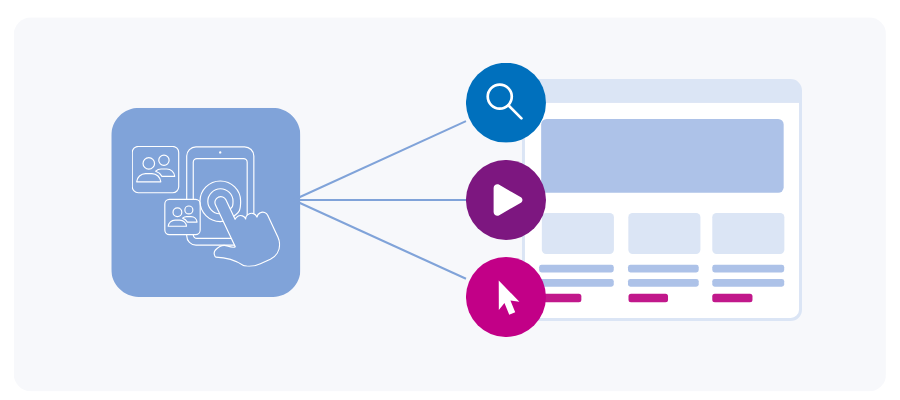
Curation helps teams:
- Consolidate deal information in one place, so buyers have the detail they need to evaluate a package
- Act as a decisioning layer, organizing supply in a way that makes comparison easier
- Automate real-time updates, so buyers are working from current options rather than static documents
- Respond faster to custom requests, turning repeat asks into repeatable packages
- Bring speed and structure to a process that has often been manual
How does total transparency set winning curators apart?
Total transparency is becoming a baseline expectation in premium media buying. For buyers, that means knowing what inventory is inside a deal, how it’s sourced, and it’s expected to perform. For publishers, transparency means seeing how inventory is packaged, where it appears in market, and how those packages are represented back to buyers.
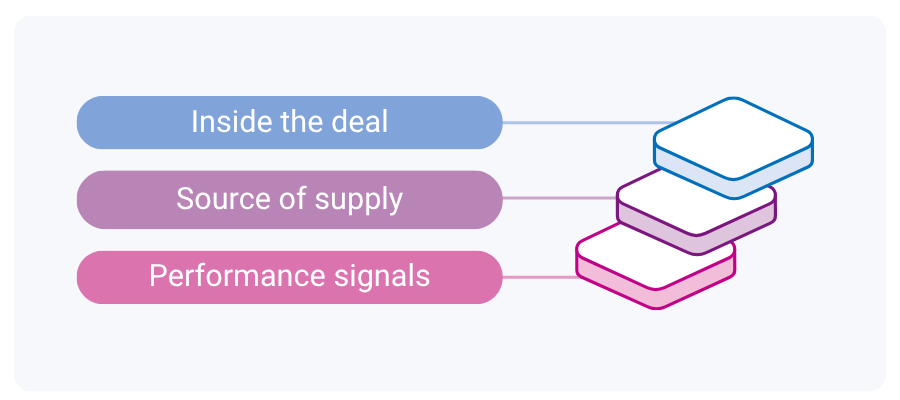
The strongest curation platforms build that visibility into the system itself. A source deal can be traced through its naming, packaging, and downstream use, giving publishers a clear view of where their inventory shows up and gives buyers more confidence in the information they use to make decisions.
That clarity strengthens working relationships on both sides. Publishers want partners who can show how supply is being used. Buyers want curators who stand behind the accuracy of their deal data. When that level of visibility is present, curated transactions feel more trustworthy, more organized, and easier to act on.

“The value proposition for publishers is straightforward: total transparency. I can sit down with a publisher and clearly identify which packages their specific deals appear in, ensuring clarity and trust.”
Microsoft AdvertisingErik Zamkoff, Global Packaging Lead
Why does curation clarity matter to publishers?
Publishers need a clear view of how their inventory is distributed, who has access to it, and where it appears across a fast-moving market. Gaps in that visibility make it harder to manage pricing, plan inventory strategy, and protect the value of supply.

A transparent curation system gives publishers a clearer view of how each source deal is merchandised across packages and campaigns. With that visibility, they can spot overlap, have more informed conversations with buy-side teams, and take a more active role in how their inventory is presented.
For publishers in premium marketplaces, that level of clarity matters. It supports stronger planning, control, and more confidence that supply is being used in a way that aligns with business goals.
How does audience intelligence make curation more effective?
Audience intelligence makes curated media more useful by connecting premium supply to the audiences marketers need to reach. Most campaign briefs require both quality inventory and relevant audiences to succeed, which is why curation works better when it’s connected to trusted data.
The next major shift in media buying is the move from standard inventory curation to a model that combines premium supply with audience intelligence. To bridge this gap, solutions like Experian’s act as a critical intelligence layer. Experian turns standard inventory into highly targeted, data-rich media packages. By pairing powerful data and identity with premium properties, advertisers can reach the exact people they want to connect with.

Experian Marketing Data plays an important role in this model. For example, if a marketplace offers an inventory package for professional sports, Experian audience data can augment that package by bringing in verified sports fans. This strategy adds richness and depth to campaigns, making the media buy more relevant to the audience. It allows clients to pick a category and extend it to reach a highly relevant audience. Bringing premium supply and audience intelligence together gives buyers a more complete solution for their advertising needs.
How is artificial intelligence changing the media curation interface?
Artificial intelligence (AI) is changing how buyers search, compare, and package curated media supply. It can turn natural-language campaign requirements into recommended opportunities, helping teams move faster without replacing human strategy.
AI is poised to change how buyers interact with curated media supply, serving as both a facilitator and connective tissue across the entire transaction process. Human expertise remains essential for interpreting campaign goals and making strategic decisions. AI supports that work by automating routine, data-heavy tasks, accelerating the planning process.

“From an artificial intelligence perspective, it has been an amazing journey. We are now exploring an agentic pivot on the front end, allowing natural language search applications to simplify how buyers find supply.”
Microsoft AdvertisingErik Zamkoff, Global Packaging Lead
Tasks that previously required hours of manual effort, such as sorting through multiple audience taxonomies, cross-referencing deal details, and compiling package comparisons, are now automated. Buyers use platform interfaces in a natural language. They quickly describe campaigning requirements. AI instantly proposes new opportunities that correspond to stated objectives. This simplifies planning and drives a more consistent delivery from campaign to campaign or client to client. Reduced manual oversight allows teams to spend less time on repetitive steps. Teams can focus on client relationships, campaign strategy, and overall performance.

At Experian, AI integration is powered by our high-quality data, ranked #1 by Truthset, that meets critical standards of accuracy, freshness, consent, and interoperability. Our data is accurate, continuously updated, and human-centered. Our commitment to data quality enables AI to deliver real-time package recommendations, optimize campaigns with predictive insights, and surface opportunities that reflect current consumer behavior. By combining automation with human expertise, AI helps buyers make faster, more confident decisions.
Learn what’s possible with curated media solutions
For marketers planning premium buys, curated media solutions can help connect quality supply, audience relevance, and clearer decision-making in one workflow. Experian and Microsoft Advertising can help you solve your advertising challenges and find the right media solutions for your goals.
About our experts

Erik Zamkoff
Global Packaging Lead, Microsoft
Erik Zamkoff is currently the Global Packaging Lead at Microsoft, where he drives strategy and innovation across the company’s programmatic advertising and media marketplace offerings. He brings over a decade of experience spanning digital marketing, marketplace development, and product management, with prior roles at Microsoft, Xandr, and other technology firms.

Matt Petiton
Director of Partnership Sales, Experian
Matt Petiton is a senior revenue and go-to-market leader with over a decade of experience scaling strategic partnerships and driving revenue growth within CTV, digital and programmatic channels. Currently, Matt operates within the Partnership Sales org where he leads revenue generation and manages the end-to-end go-to-market strategy for some of Experian’s most strategic, enterprise-level platform partners.
FAQs
Curation in media buying is the process of organizing premium supply into structured packages that buyers can evaluate, compare, and activate more easily. It helps reduce manual work, improve deal clarity and connect inventory to campaign goals.
Transparency matters in curated deals since buyers and publishers both need confidence in how inventory is packaged and represented. Buyers want accurate deal data, and publishers want visibility into where their supply appears and how it is used.
Experian’s data, ranked #1 in accuracy by Truthset, helps make curation more effective by connecting premium inventory with audience intelligence. Experian’s identity foundation and marketing data can help buyers move from broad inventory packages to media opportunities tied to more relevant audiences.
A marketer would use curation to find a media package that combines quality inventory with the audience needed for a campaign goal. For example, a professional sports package can become more relevant when paired with Experian audience data for verified sports fans.
Latest posts

As today’s digital landscape gets more and more complicated there are more ways for brands to connect with users and drive purchases and more ways for ad tech to target and measure those touch points. As in-person shopping picks up steam due to the re-normalization of society post-COVID 19; the connection between digital ads and in-person purchases needs to be made once again. With the rise of Connected TV throughout the pandemic there are even more digital opportunities to target a user. But how do you make sure that those brand engagements are captured and correctly attributed to offline purchases and conversions? The answer lies in a holistic identity resolution strategy. Cross-device identity resolution with The Tapad Graph connects the identifiers and devices of individuals within a household to each other; enabling targeting, frequency capping, extension, segmentation and measurement or attribution between devices; including Connected TV and hashed (privacy-protected) email addresses along with Cookies, Mobile Ad Ids and IP Address. Brands can join their first-party data to The Tapad Graph to execute strategies that connect online and offline data for pre, mid and post-campaign efficiencies. Let’s imagine a scenario in which an outdoor retail brand is targeting users watching specific content on a Connected TV device. Powered by identity resolution, they start with a general ad on CTV and continue targeting down individual paths with each user. When one of them converts in store and makes a purchase; the outdoor retailer can connect that action through location and in-store traffic data with the cross-device identity resolution used to execute the digital campaign. Now the actions of the user online and offline are resolved for more accurate measurement and attribution after the campaign ends. But it doesn’t stop there– the brand’s CRM data can be reactivated for the next digital campaign and leveraged to capitalize on the most effective media mix for the user who made the purchase previously. These combined insights can be invaluable in shaping up future campaign strategies with geo-contextual ads, recommended additional products and personalization to help drive more conversions and purchases in-store or online. As in-person shopping picks back up and marketers are tasked once again with balancing online and in-store KPIs, the right identity resolution strategy can unlock necessary efficiencies for retailers, ad tech vendors and agencies tasked with supporting these initiatives. Get in touch
Experian Marketing Services and Data Quality President Genevieve Juillard recently sat down with Zach Rodgers, host of the AdExchanger Talks podcast to discuss the future of identity, the importance of data transparency and privacy, and our recent acquisition of Tapad. Genevieve focused on the opportunity for our industry to reimagine an advertising ecosystem that is resilient and adaptable; one that takes advantage of emerging data and prioritizes data transparency and consumer privacy. She also discussed the importance of advertising strategies that put consumers at the heart of every decision and give them more control over their data. Genevieve shared with AdExchanger that Experian’s acquisition of Tapad, a global leader in digital identity resolution, was a natural fit for our company. Tapad’s approach and role in the ecosystem is very much aligned with Experian’s, which is to develop solutions that are resilient to industry and consumer changes. The combination of our capabilities supports interoperability across all types of identifiers, both online and offline, and will position us to help our clients navigate the post-third-party cookie world. To learn more about Experian’s plans to support an effective advertising ecosystem that will evolve with our dynamic industry, listen to the full podcast Embracing ‘Healthy Fragmentation’ In Ad Tech, With Genevieve Juillard. Get in touch
It’s been over a year since Google announced they’d be deprecating the third-party cookie and in that time there’s been a major focus on two types of cookieless identity solutions. Identity vendors and marketers are strategizing which of these two future solutions best fits their needs so they can achieve privacy-safe scale once third-party cookies are no longer available for use on Chrome. Let’s break down these solutions and the considerations marketers need to take into account when deciding what partners to move forward with in the future of identity resolution. Authenticated Traffic Solutions Authenticated traffic solutions (ATS) are a type of digital identification that asks the end-user to identify themselves via personal information, most commonly email address. Often, you’ll see self-authentication at the point of entry to a website that asks you to create an account or login immediately to access the content you are seeking. E-commerce sites use authentication to keep track of consumer purchases and inform advertising decisions for that customer; and publishers use it to tailor featured content, or, more importantly for this discussion, leverage it within the ad ecosystem for targeting. While authentication can provide very valuable user data for audience segmenting and targeting, it can be limited in scale for a single publisher to leverage and monetize on their own. That’s why some identity vendors have worked to integrate themselves within as many publisher authentication modules as possible, so that they can create an aggregate of scale for the ad ecosystem to tap into. But, even this isn’t going to deliver the reach marketers truly thirst for. Alternatively, Facebook has the scale for authenticated traffic, but they keep their data inside a walled garden, so the utility of those authenticated users is only valuable within the Facebook ecosystem. So how can authenticated traffic solutions increase scale to broaden the scope of identifiers they can collect and leverage? Hint: a few of the biggest players have already figured it out. It’s the single sign-on. Google is probably the largest purveyor of a single-sign on solution that can directly impact advertising capabilities. Can you think of a site you visit that doesn’t offer a sign-in with your existing Google account? It’s a short list. Google has integrated themselves into so many applications and publishers that “Login with Gmail” is just second nature (you pictured the Gmail logo when you read that, didn’t you?). Now, if you’re about to purchase something you found off an Instagram ad, or perhaps a retailer you buy from regularly, you’ve probably noticed options to proceed with your checkout via “Amazon pay” or “Apple pay”. These are also single-sign ons. You’re authenticating yourself through Amazon or Apple to that retailer in exchange for A- the safety and security that Amazon or Apple provide for your financial information and B- skipping the annoying process of manually entering personal information over and over again at point of sale. It’s starting to sound like there’s a lot of authenticated data out there isn’t it? Well, that’s true, but again, Amazon and Apple are walled gardens. Amazon is working diligently to build out their own ecosystem to leverage their content and retail channel data for a holistic offering. And Apple keeps user data very close to the chest, constantly limiting its utility for themselves and advertisers. So what is identity resolution doing about it? The Trade Desk announced their solution; Unified ID 2.0, which promises to leverage email authenticated identity for a truly scaled solution for publishers via Javascript through Prebid. By handing over UID2.0 to an independent unbiased organization like Prebid, The Trade Desk is creating instant scale and trust in their solution. Unauthenticated Traffic Solutions Unlike ATS, unauthenticated traffic solutions do not rely on a log-in to identify a user, but they also don’t rely on third-party cookies. Instead, unauthenticated solutions (UATS) leverage their existing streams of real-time data through Javascript on publisher sites or an SDK (software development kit used by apps). The type of information UATS solutions can collect via Javascript or SDK vary, but it can include IP address, user agent and device level info. But being able to read this information at the point of entry to a website does not make a quality identifier. The best unauthenticated solutions will have the ability to set or ingest this information into a unique ID through an infrastructure with incredibly fast speed that can process trillions of anonymous data signals across multiple channels and devices. And even more so, be able to interpret those signals into a profile using machine learning– all at the moment a user enters a domain. It sounds complicated because it is, but it also has a lot of potential. The identity space cannot rest solely on authenticated traffic solutions, because, as you can see, it could limit ownership and operability to just a few power players/walled gardens. This doesn’t help the larger ecosystem monetize and personalize ad inventory. The right unauthenticated solution, however, can unify cross-device individuals and households at scale, because they’re integrated on the broadest number of publishers/SDKs across platforms, have the best algorithms to build confident connections between identifiers, and are universally transactable across the most common sell and demand side platforms. Think of it as the perfect partner- speaking a common language that everyone in the ecosystem understands and acts on. Today more than twenty cookieless identifiers are available in market for the ad ecosystem, and Google hasn’t even announced a date of deprecation. It’s important to be on the lookout for differentiators like scale and precision. Most importantly, choosing a truly cross-device partner will be key, especially as more digital devices and IDs grow in adoption, like CTV has this past year. Taking advantage of both What we will come to find, once the third-party cookie is obsolete, is that choosing just one of these solution types, or partners, will be a disadvantage. The more the industry comes together to collaborate on solutions, the more apparent it is that both of them have value, and thus employing both solutions will give marketers the best opportunities. Tapad, now part of Experian, recently announced the launch of Switchboard; a module within our identity solution; The Tapad Graph, to create this agnostic interoperability for identifiers of all types, and choice and control for the ad tech vendors and marketers who want them. By instantly creating the ability to partner with multiple solutions, Tapad + Experian is ensuring that all use cases for the third-party cookie live on in our cookieless future. Get in touch