Loading...

The value of addressable advertising in the era of AI and privacy-safe identity

Published: January 13, 2026 by Experian Marketing Services

At A Glance

Addressable advertising helps you reach addressable audiences with relevant messages across digital, TV, and streaming. As signals fragment across browsers, apps, and platforms, AI customer segmentation and privacy-first identity separate guesswork from accuracy. Experian brings trusted data, identity resolution, and activation partnerships together so you can connect with people in ways that feel relevant, respectful, and measurable.

A decade ago, you could buy media by broad categories and call it a day. But today, your audience lives in a curated world. They watch what they want, skip what they don’t, and expect what they see to match their interests. Research shows that when ads are tailored to households, people pay more attention, stay engaged longer, and are more likely to remember your ads.

That shift in expectations is why addressable advertising continues to grow. It’s a practical response to how media works today, with audiences moving fluidly across platforms, streaming spread across services, and measurement spanning screens and environments. Under these conditions, reaching the right people depends on clarity, not approximation.

Artificial intelligence (AI) strengthens that clarity. When applied responsibly, AI helps connect signals, deepen audience understanding, and deliver relevant messages while protecting consumer data. The result is advertising that feels more human, not less.

What is addressable advertising?

Addressable advertising is the ability to deliver personalized ads to specific individuals or households and measure results using privacy-safe data and identity. It works across digital, connected TV (CTV), linear TV, and over-the-top (OTT) streaming and relies on strong identity resolution and accurate data inputs to ensure your audience definitions remain consistent across channels and over time.

Benefits of addressable advertising

Addressable advertising changes how advertising performs by delivering messages to defined audiences, reducing wasted impressions, and making results simpler to measure.

BenefitWhat it means for you
ClarityReach the right audience with the personalized messages they want, instead of hoping the right people are watching
EfficiencyAvoid wasted impressions by focusing spend where interest already exists
Higher ROIImprove conversion by delivering messages that feel relevant
Omnichannel consistencyCarry the same message across digital and TV without starting over
Measurable impactConnect exposure to actions so performance is clear
Privacy and complianceActivate audiences responsibly using privacy-safe data, clear governance, and compliant practices

These are some of the reasons that addressable advertising has moved from a niche tactic to a core strategy. When audiences are clear, identity is connected, and measurement is built in, advertising becomes relevant, accountable, and easy to improve over time.

Addressable advertising vs. traditional advertising

Unlike traditional advertising, addressable advertising doesn’t depend on broad exposure or assumptions. It’s personalized by design and measurable by default, making it possible to connect ad exposure to outcomes. Another distinction is in how addressable delivers advertising to audiences and how performance is measured.

Traditional media buysAddressable advertising buys
You pay for broad reachYou pay for relevant reach to defined audiences
Ads run by placement or programAds are delivered to known households or individuals
Personalization is limitedPersonalization is built into delivery
Measurement indicates trends, not who actually actedMeasurement connects exposure to actions by linking ads to defined audiences across channels

But before you can activate addressable advertising, you need to understand who you’re actually trying to reach.

What is an addressable audience?

An addressable audience is a group of people you can identify and reach using data-based targeting. In other words, they’re not anonymous “maybe” viewers. They’re a defined audience you can activate across channels.

Here’s what typically builds addressable audiences:

FactorWhat it isWhy it matters
First-party dataData from your own relationships (site activity, app activity, CRM, emails, purchases)It’s your most direct view of existing customers and prospects
Third-party household and individual dataDemographic, behavioral, lifestyle, interest, and intent attributes from trusted providersIt fills gaps so your audience definitions don’t collapse when your own data is limited
Identity resolutionA privacy-first way to match people across devices, households, and channelsIt improves accuracy so you don’t over-message the same people or miss them entirely
Contextual signalsPage-level, content, or viewing context where ads appearIt reinforces relevance in the moment and complements addressable targeting when identity signals are limited

How Experian helps with addressable audiences

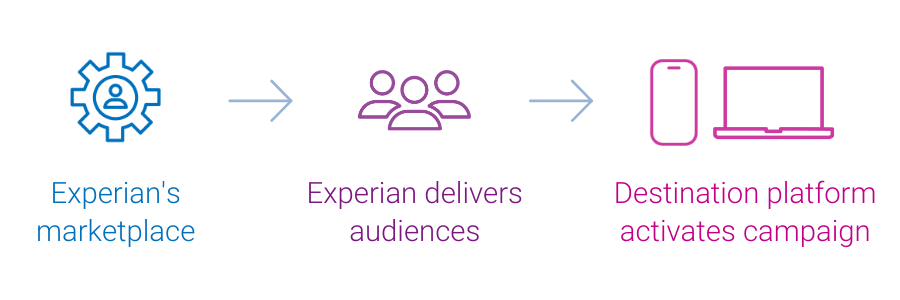
Experian helps you build and activate addressable audiences at scale without losing accuracy or trust. With more than 3,500 syndicated audiences available, you can activate consistently across 200+ destinations — including social platforms like Meta and Pinterest, TV and programmatic environments, and private marketplaces (PMPs) through Audigent.

That means reaching people based on who they are, where they live, and their household makeup, using data governed with care. Our approach is built on accuracy first, which is why Experian data is ranked #1 in accuracy by Truthset for key demographic attributes.

And when standard customer segments aren’t enough, Experian Partner Audiences expand what’s possible. These unique audiences are available through Experian’s data marketplace, within Audigent for PMP activation, and directly on platforms like DIRECTV, Dish, Magnite, OpenAP, and The Trade Desk.
Addressable Advertising

The evolution of addressability and why it matters more than ever

As the media ecosystem shifts, reaching people across browsers, apps, CTV, and streaming platforms has become more complex. Signals are fragmenting everywhere as expectations for relevant, personalized experiences continue to rise, while reliable identifiers become increasingly challenging to access.

Addressable Advertising

In response, addressability is shifting from a channel-specific tactic to an identity-driven approach to reach and measure defined audiences across screens.

That evolution puts new pressure on performance. Marketing budgets require accuracy and accountability, which means targeting must deliver measurable reach and outcomes you can trust.

At the same time, the growth of CTV and streaming is expanding addressable TV opportunities. As CTV inventory grows, so does the need for cross-channel, identity-based activation that works consistently and supports reach, frequency, and measurement in one connected view. That’s why identity has become the foundation for making addressable advertising work today.

When to apply addressable advertising

You don’t need addressable for everything, but it shines when you need your spend to go farther with accurate targeting and resonant messaging.

ScenarioWhy addressable helps
Product launches and seasonal pushesReach people who are more likely to care without flooding everyone else
High-consideration purchases (auto, travel, financial services)Focus on likely intent and suppress audiences that don’t fit
Cross-channel campaigns (digital, TV, mobile)Keep messaging consistent across screens
When using first-party data with AIUse AI customer segmentation to scale responsibly and improve performance without sacrificing accuracy
Regulated categoriesRely on compliant data practices and clearer controls for regulated industries

Addressable advertising is one way to put relevance and respect into practice — but it shouldn’t be the only time these principles apply. Marketers are expected to be thoughtful about who they reach, how often they show up, and how data is used across every channel. Addressable simply makes it easier to live up to that standard when accuracy, accountability, and scale matter most.

Addressable advertising and third-party data

There’s a common misconception that third-party data is no longer useful, but what’s really changed is the environment around it.

In the early days of digital advertising, third-party data often felt like the Wild West. Today, modern third-party data is more transparent, better governed, and held to far higher standards with:

  • Clear data sourcing
  • Documented consent practices
  • Regular quality audits
  • Strict limits on how data can be used

Used responsibly, third-party data plays a critical role in addressable advertising by complementing your first-party data and keeping audience strategies flexible as signals change.

Benefits of third-party data

When paired with identity resolution, high-quality third-party data helps you:

  • Fill first-party gaps: Add demographic, behavioral, and interest-based insight when your own data is limited.
  • Expand prospecting: Reach new audiences through modeling and lookalike expansion.
  • Enrich segmentation: Combine household, behavioral, and interest signals to tailor creative, offers, and messaging to interests for more accurate and personalized activation.
  • Support cross-channel addressability: Maintain consistent audience reach across devices and channels even as individual signals change.

Why work with Experian for your data needs?

At Experian, we approach third-party data with the belief that trust comes first. Our data is privacy-compliant, ethically sourced, and governed by strict standards so you can use it confidently.

Accuracy matters just as much. Our identity and data-quality framework verifies that the data behind your audiences holds up in the real world — a key reason Experian is ranked #1 by Truthset for key demographic attributes.

And because addressable advertising only delivers value when audiences move seamlessly from planning to activation, our audiences are interoperable by design. You can activate them across digital, social, and CTV platforms without rebuilding or reformatting your strategy for each channel.

How AI is redefining customer segmentation

Addressable advertising depends on audiences that stay accurate as people move across devices, platforms, and moments. Traditional segmentation built on static rules and snapshots in time can’t keep up with that reality.

AI customer segmentation analyzes massive sets of household and individual data (such as intent, household demographics, purchase behavior, and content consumption) to identify patterns, predict intent, and group people into addressable audiences.

As the AI advertising ecosystem continues to mature, reflected in industry frameworks like the LUMA AI Lumascape, segmentation and identity have become foundational layers rather than standalone tools. Those audiences update as conditions change, so they stay relevant instead of aging out.

Here’s how AI-driven segmentation supports addressable advertising.

What AI enablesWhy it matters
Predictive, intent-based audiencesAnalyze behavioral and transactional data to group people based on likely next actions
Broader audience availabilityAs more data signals are incorporated responsibly, AI makes it possible to support a wider range of addressable audience options without sacrificing accuracy
Deeper insights from dataDiscover what people care about, how intent is forming, and which signals are most important with larger, more diverse data sets
Real-time audience updatesKeep segments aligned as behaviors change, not weeks later
Higher accuracy, less guessworkRely on data-driven patterns for decision-making instead of assumptions
Ongoing optimizationRefine audiences throughout the campaign lifecycle as performance signals come in

We’ve used machine learning and analytics for decades to support responsible segmentation — balancing performance with privacy and transparency.

That foundation now supports addressable advertising that adapts in real time while staying grounded in trust.

Addressable TV: Targeting in the streaming era

TV has become an addressable channel powered by data and identity resolution. CTV and OTT streaming are booming, while linear TV continues to decline, reshaping how people watch and how advertising works alongside it. For the first time, CTV spending is expected to outpace traditional TV ad spending in 2028, reaching $46.89 billion and signaling that addressable TV is now central to the media mix.

With CTV and OTT platforms, advertising can now be delivered at the household level. That means two homes watching the same show can see different ads based on who lives there and what they like. This is what makes addressable TV possible.

Benefits of addressable TV

As streaming inventory continues to grow, addressable TV creates new ways to bring relevance and accountability to a channel once defined by broad exposure. Experian links identity data across streaming, linear, and digital platforms to help you manage frequency, attribution, and household-level insights in one connected view.

Addressable Advertising

Addressable TV also raises the bar. To manage reach, frequency, and measurement across streaming and linear environments, addressable TV depends on identity resolution that connects households across screens.

Here’s how addressable TV helps you when identity is in place.

What addressable TV enablesWhy it matters
Household-level targetingDeliver messages that reflect who’s watching, not just what’s on
Frequency control across screensReduce overexposure and improve viewer experience
Cross-channel measurement and attributionConnect TV exposure to digital actions, site visits, and conversions
More efficient use of TV spendBring accuracy, accountability, and outcome-based insight to premium inventory and improve reach of streaming-first, harder-to-reach viewer segments

Ultimately, addressable TV isn’t a replacement for linear TV, but it is an evolution. As streaming becomes the default viewing experience, the ability to engage TV audiences with the same care and clarity as digital is essential.

Use cases for addressable advertising

Addressable advertising works across industries because it adapts to how people make decisions. The examples below are illustrative scenarios that show how addressable audiences, identity resolution, and AI-driven segmentation can come together in practice using Experian solutions.

Retail: Seasonal promotions

A home décor retailer could use identity resolution and AI-driven segmentation to build addressable audiences, such as holiday decorators and recent movers, who are more likely to engage during peak seasonal periods.

Campaigns could then be activated across CTV, display, and social, helping the retailer stay visible across screens while tailoring creative to seasonal intent.

Automotive: In-market car buyers

An auto brand might identify consumers nearing lease expiration using automotive-specific data tied to household and individual attributes.

By suppressing current owners, the brand could avoid wasted impressions and activate addressable audiences across OTT and mobile to reach likely buyers during active consideration.

Financial services: Credit card launch

For a new credit card launch, a national bank could use modeled financial segments to reach credit-qualified prospects.

Addressable digital advertising campaigns could apply frequency controls and personalized messaging, balancing reach with relevance while seamlessly measuring response.

Streaming media: New subscriber growth

A streaming platform looking to grow subscriptions could use an identity graph to exclude current subscribers.

Likely viewers could then be targeted across CTV based on content preferences and viewing behavior, keeping spend focused on net-new growth.

Media and entertainment: Audience expansion for a new release

Ahead of a new release, a film studio could use behavioral and lifestyle data to identify likely moviegoers and fans of similar franchises.

Addressable campaigns across CTV and digital video could help drive awareness and opening weekend attendance.

Travel: High-value traveler acquisition

A travel brand could use travel propensity data and household-level demographics to identify frequent flyers and family vacation planners.

Personalized offers could then be activated across display, social, and programmatic channels to increase bookings while keeping spend focused on higher-value travelers.

How Experian enables more effective addressable campaigns

Addressable advertising is most effective when identity, data, and activation are connected from the start.

Experian brings trusted household and individual data, privacy-first identity resolution, and broad activation partnerships together so you can move from audience insights to activation with minimal friction. Here’s how that comes to life across our core offerings.

Identity resolution with Consumer Sync

Consumer Sync connects devices, emails, digital identifiers, and offline data into a single, privacy-safe identity foundation. This connection helps your audiences stay consistent across streaming, linear TV, mobile, and digital despite changing signals.

Audience insight and segmentation with Consumer View

Consumer View supports clear segmentation, prospecting, and enrichment across industries. It combines demographic, behavioral, and interest-based data to help you build accurate, intent-driven audiences that reflect real people, not assumptions. Data is continuously updated and governed for accuracy.

Omnichannel activation with Audience Engine

Audience Engine enables direct activation of Experian audiences across CTV, digital, social, and programmatic platforms. It supports suppression, frequency management, and cross-channel consistency to keep messaging aligned and exposure controlled.

More efficient media through curation and Curated Deals

Curation combines data, identity, and inventory through Experian Curated Deals. These deal IDs, available off-the-shelf or privately, make it easier to activate high-quality audiences and premium inventory in the platforms you already use without custom setup.

AI-enhanced segmentation and optimization

Our AI-enhanced models analyze large data sets to create and refresh addressable audiences in real time, supporting intent-based targeting and ongoing optimization throughout the campaign lifecycle. These models work seamlessly with demand-side platforms (DSPs), ad platforms, and data clean rooms, so audience insights flow directly into activation and measurement without added complexity.

Seamless integration with your ecosystem

As an advertiser, you want addressable advertising to fit naturally into how you already plan and buy media. That’s why integration matters as much as insight.

Experian integrates with leading DSPs, ad platforms, and data clean rooms, so you can activate addressable audiences in the environments you already use without reworking your strategy or adding complexity. This approach helps you:

  • Build and activate addressable audiences: Reach the people you want with accuracy and respect.
  • Activate across channels: Keep messaging consistent across digital, TV, and streaming.
  • Optimize with data ranked #1 in accuracy by Truthset: Improve performance using the industry’s most reliable data.

When identity, data, AI, and activation come together, addressable advertising does what it’s supposed to do: deliver relevance naturally, measure impact clearly, and give you confidence in every decision along the way.

That’s the foundation for campaigns people want to engage with.

Start creating campaigns audiences want to see

Experian can help you apply addressable advertising in ways that respect consumers, perform across channels, and stand up to real-world measurement.

Connect with our experts today to explore how addressable audiences, AI-driven segmentation, and identity-powered activation can work together in support of your goals.

This site is protected by reCAPTCHA and the Google Privacy Policy and Terms of Service apply.


FAQs about addressable advertising

What is addressable advertising?

Addressable data-driven advertising involves delivering personalized ads to specific individuals or households using privacy-safe data and identity.

What is an addressable audience?

An addressable audience is a defined group of consumers you can identify and reach based on known household or individual attributes.

What makes advertising addressable?

Advertising becomes addressable when it’s possible to identify the audience by linking devices and households to people through identity graphs. This allows you to measure ad performance at the audience level and provide more personalized advertising.

Is addressable advertising just for TV?

Addressable advertising isn’t just for TV; it also works across digital, mobile, streaming, and social channels.

How does AI help addressable advertising?

AI improves addressable advertising by analyzing large data sets to predict intent, build more accurate audiences, boost performance over time, and improve your ability to find and build your audiences.

Can addressable advertising work without cookies?

Yes — identity resolution and first-party data are key to cookieless addressability.

How does Experian support addressable advertising?

Experian supports addressable advertising by providing trusted consumer data, privacy-centric identity resolution, and curated audience segments that activate across CTV, digital, mobile, and streaming platforms.


Latest posts

Loading…
Four themes we saw at CES 2025

Every year, the Experian team attends the Consumer Electronics Show (CES) in Las Vegas to study the latest technological advancements and innovations that shape the AdTech industry. The energy at CES 2025 was palpable, with a whirlwind of conversations around artificial intelligence (AI), connected TV (CTV), privacy-first solutions, and sustainability in advertising. Here are four standout themes from this year’s event. 1. The AI evolution: More buzzwords, but growing potential AI dominated discussions this year, but the gap between hype and practical application was still evident. While some vendors showcased innovative tools for campaign optimization and audience creation, much of the buzz felt aspirational.  The use of AI to generate audiences based on new types of data is a promising sign of things to come. Data providers, including those collaborating with Experian, are beginning to test AI tools to enhance audience accuracy and scale. The AI space still feels frenetic, but the potential for transformative change is undeniable. "AI was a hot topic, with discussions ranging from campaign optimization tools to audience selection. While many leaned on buzzwords, there were glimpses of legitimate use cases."Brooke Logan, VP of Data Strategy and Partnerships 2. CTV: A race for quality and curation CTV remained a popular topic at CES, particularly around the challenges of fragmentation and scale. Sellers are grappling with an oversupply of inventory, leading to a renewed focus on curation. Conversations highlighted the importance of premium audiences, brand safety, and identity resolution. In the fragmented CTV landscape, advertisers want to be able to define an audience once, have that audience be highly addressable, and then activate everywhere. One standout theme was the shift in CTV monetization strategies. With linear TV revenues declining, major publishers are exploring ways to maximize yields on streaming platforms. Direct-sold premium inventory still reigns, but programmatic is gaining traction—a trend we’re seeing driven by publishers seeking scalable solutions. "CTV remains fragmented. While premium inventory is largely direct-sold, big publishers are exploring ways to boost yield on streaming as linear revenue declines."Lauren Portell, Sr. Account Executive, Advanced TV 3. Privacy-first solutions The regulatory landscape continues to evolve, and advertisers are responding with innovative, privacy-centric methodologies. For industries like healthcare, privacy-first solutions are being developed from the ground up to comply with current and future regulations. The emphasis on cookieless and contextual advertising remains strong, with data providers utilizing first-party data to enrich audience targeting strategies. "Providers across verticals that are typically more sensitive are developing methodologies from the ground up based on current and future potential privacy regulations."Adam Kobus, Director of Data Partnerships 4. Eco-conscious advertising: Building a sustainable future Sustainability emerged as a growing focus, as indicated by initiatives like Scope3 and Experian’s own carbon reduction goals. Companies are exploring ways to reduce the environmental impact of ad serving and data management. For example, platforms like AdGood are transforming unused CTV inventory into opportunities for non-profit initiatives. While not strictly eco-focused, these efforts signal a shift toward more conscientious advertising practices. "Sustainability is gaining attention, with efforts to reduce the carbon footprint through eco-conscious advertising, data management practices, and ad serving."Erin Wolf, Sr. Account Executive, Demand Partnerships The buzz around Experian The launch of the Experian marketplace and the Audigent acquisition were major talking points, underscoring Experian’s commitment to innovation in AdTech. Together, Experian and Audigent will be an end-to-end solution where publishers big and small can empower marketers to better understand their customers, create precise audience segments, and activate those audiences across the best inventory. Likewise, Experian’s new data marketplace connects TV operators, programmers, supply partners, and demand platforms with top-tier third-party audiences across retail, CPG, health, B2B, and location intelligence. All audiences delivered from our marketplace benefit from our best-in-class offline and digital identity graphs, which ensure addressability across all channels like display, mobile, and CTV.  An exciting year ahead CES 2025 underscored the rapid evolution of the advertising ecosystem. From AI to CTV and privacy-first solutions, the industry is adapting to new challenges and opportunities. As Experian continues to lean into these trends, our role in powering data-driven advertising through connectivity remains more focused than ever. We’re excited to see how these themes will evolve throughout the year and look forward to collaborating with our partners to shape the future of digital advertising. Follow us on LinkedIn or sign up for our email newsletter for more informative content on the latest industry insights and data-driven marketing. Contact us Latest posts

Jan 15,2025 by Experian Marketing Services

What is direct response TV (DRTV)?

Suppose you're watching your favorite TV show, and an ad suddenly catches your attention. It urges you to take immediate action, whether to call a number, visit a website, or text a keyword like ‘DETAILS’ to a specific number for more information. This is direct response television (DRTV), a powerful form of advertising available on all TV types — including live, cable, and streaming — that directly connects brands with consumers to drive immediate engagement and measurable results. The goal of DRTV marketing is simple: convert viewers into customers quickly and measurably by asking them to do something in real time. Every DRTV ad is carefully designed to drive quick conversions with a clear, direct path from interest to action. This makes it an essential tool for marketers who need to measure their return on investment (ROI) for TV and see instantaneous results. Key benefits of DRTV marketing Unlike traditional TV ads that build long-term brand awareness, DRTV campaigns are focused on driving instant results and are surprisingly effective at doing it. Here are a few benefits of DRTV and why it’s a powerful tool for marketers in a digitized world. Immediate customer engagement One of the biggest advantages of DRTV is its ability to engage customers right off the bat. DRTV grabs attention and motivates people to act now, whether with a phone number on the screen, a QR code to scan, or a limited-time offer, often with compelling incentives. Measurable ROI DRTV is designed to deliver precise, trackable results. Because the ads encourage specific actions — like visiting a website or calling a phone number — it’s easy to see what’s working and what’s not. Marketers can measure everything from sales to lead generation, which guides them in refining their strategies for even better results. Pairing DRTV with digital tools, like web analytics or CRM systems, can provide even deeper campaign performance insights. Broad reach Even in the streaming age, live TV and cable still attract millions of viewers, which makes DRTV excellent for brands needing to expand their reach. Marketers can even tailor DRTV ads to specific audiences by choosing the best time slots on the proper channels. Whether you’re targeting parents watching morning news or sports fans tuning into big games, you’ll know you’re connecting with the right people at optimal times. Types of DRTV ads DRTV advertising offers several formats, each suited to different audiences, budgets, and goals, whether you’re introducing a new product or driving traffic to your website. Infomercials Infomercials are the classic, long-form DRTV ads that most people associate with the term. These ads typically run for 15-30 minutes and go into detail on product benefits and features. They often include demonstrations and special offers to educate and engage viewers with urgent, limited-time deals. Think of the iconic “But wait, there’s more!” ads used to sell everyday items ranging from household cleaners to exercise equipment. Short-form ads Short-form DRTV ads are 30-second to 2-minute ads that get straight to the point with a single message or offer and a clear call-to-action (CTA) to encourage immediate engagement. Short-form ads are ideal for quick bursts of information, like promoting a flash sale or highlighting a new product. A 60-second ad showcasing a new mobile app might feature a quick walkthrough of its features, followed by a QR code or website URL to download it instantly. Product demos Some DRTV ads focus exclusively on demonstrating how a product works in real-life scenarios. These ads are great for showing off unique features or solving familiar pain points that make the product feel essential. A cookware brand might show how its nonstick pans make cooking and cleanup a breeze while including a CTA to “order now and get a free bonus spatula!” Testimonials Testimonials from real customers or experts are a great way to build trust and credibility.  Hearing someone’s success story or endorsement of a product or service can help viewers feel confident about their purchase decision. A skincare brand, for example, might air a two-minute ad of a dermatologist explaining the science behind the product, along with five-star reviews from satisfied users. Call-in contests or limited-time offers This type of DRTV ad creates urgency by promoting a special offer or giveaway. Viewers might have to call a number or visit a website within a specific timeframe to claim the deal. For example, travel agencies sometimes air ads offering free vacations or planning kits to the first 100 callers, which helps them generate immediate leads. Hybrid ads with digital integration Many modern DRTV campaigns blend traditional TV with digital tools, like QR codes, social media hashtags, or links to custom landing pages. These hybrid ads meet viewers wherever they are. A fitness program might air a short-form ad with a QR code linking to their free app trial, making it easy for viewers to instantly engage. Success tips for DRTV advertising Creating a successful direct response TV campaign centers on messaging that resonates with the right audience, inspires action, and delivers measurable results. Here are some essential tips for a winning DRTV strategy. Strong CTA Every DRTV ad should include a compelling, straightforward CTA that motivates viewers to act immediately. Whatever it is, your CTA should be easy to understand and time-sensitive to create urgency, such as, “Claim this limited-time offer in the next 30 minutes!” Multi-channel integration Direct response TV works best when part of a broad multi-channel strategy, so you should make sure your campaign integrates well with digital channels. This can reinforce your message, help consumers engage across platforms, and drive better results. Audience targeting Precise audience targeting is critical to DRTV campaign success. Experian’s advanced TV audiences, developed with the Advertising Research Foundation (ARF), help you connect with the right viewers to drive immediate action. These syndicated audiences are now available on FreeWheel, the TV advertising industry’s global tech platform. With over 2,400 ready-to-use audience segments, Experian enables you to target specific groups, such as: TV viewership audiences: Target households based on viewing habits and preferred devices. In-market car buyers: Reach consumers actively searching for their next vehicle, which is ideal for driving sales. Holiday shoppers: Engage gift-givers, deal-seekers, and travelers during peak shopping seasons. New TV audiences released in August 2024 In addition to these, our August 2024 release introduced several updates that further refine Experian’s targeting capabilities. Some of the audience updates in this release included: New retail transaction audiences: These segments offer insights into categories like children’s products, parenting, hobbies and crafts, science and nature, and sports and fitness. With high spending and frequent purchase behaviors, these audiences provide a deeper understanding of consumer preferences. Notable segments include: Sports and fitness high spenders Children’s product high spenders Science and nature high spenders Updated TV audiences: New and refreshed TV segments now reflect the viewing habits of today’s consumers for accurate insights and targeting. Examples of newly added segments include: Free and paid ad-supported streaming TV subscribers Satellite service subscribers Cable and streaming TV service subscribers With these advanced targeting capabilities, your DRTV campaigns can be more effective and resonant with viewers most likely to respond for maximum ROI and engagement. Effective planning A strong DRTV campaign starts with defining your objectives, budgeting effectively, and identifying the right media mix. Understanding where your audience spends their time — prime-time TV or niche cable channels — will get you the most value from your DRTV investment. Real-time tracking Tracking your DRTV campaign’s performance in real time is critical for success. Tools that provide immediate insights into viewer responses, website visits, or call volumes allow you to identify what’s working and pivot quickly if needed. Measuring success Measuring success against key performance indicators (KPIs) like conversion rates, ROI, or cost-per-acquisition (CPA) is an excellent way to know if your DRTV campaign is delivering results. Experian’s advanced data solutions make tracking and analyzing campaign performance easier, so you can make data-informed decisions and deliver precise results to stakeholders. Continuous optimization DRTV marketing is an ongoing effort. Use the insights from real-time tracking and performance measurement to refine your strategy. Optimization keeps your campaign relevant and effective, whether you need to tweak your CTA, adjust your audience targeting, or test new creative formats. How DRTV relates to advanced TV and connected TV While DRTV has historically focused on immediate viewer actions via traditional linear TV, it’s found new relevance within advanced TV and connected TV (CTV) ecosystems. These modern formats expand the measurable, action-driven qualities of DRTV while incorporating the precise targeting and personalized storytelling made possible by digital technologies. DRTV and advanced TV Advanced TV enhances DRTV by enabling addressable advertising, which helps marketers deliver ads to specific households based on behavioral or demographic data. For instance, using tools like Experian’s Graph, advertisers can integrate data sets across multiple sources to refine audience segmentation and tailor messages to individual households.  Advanced TV also supports cross-channel consistency to provide a unified customer experience whether the viewer engages with linear TV, streaming services, or other devices. Additionally, programmatic ad buying plays a role in automating the ad-buying process. This helps advertisers optimize their bids and placements and get DRTV campaigns in front of the right audience at the right time, which maximizes cost-efficiency across both traditional and digital channels. DRTV and CTV CTV has a high rate of logged-in, authenticated viewers and provides a lot of helpful first-party data. This allows for hyper-precise audience targeting, cross-device attribution, and an ability to link ad exposure to conversions — even when purchases occur on non-CTV devices. Universal IDs like UID2 further strengthen these capabilities by creating consistent and privacy-respecting user identities across platforms. Experian’s TV partnerships Through partnerships with leading CTV players like Madhive, Samsung, Disney/Hulu, and others, Experian’s identity solutions integrate seamlessly to support well-timed, personalized ads across major streaming platforms. These integrations, powered by our Digital and Offline Graphs, offer a complete view of audiences to enable more controlled, effective activation across mediums, including free ad-supported streaming television (FAST) channels. Using Experian’s advanced data and identity tools, advertisers can tap into the full potential of DRTV strategies within advanced TV and CTV to make campaigns more actionable, efficient, and impactful. The future of DRTV So, what is DRTV going to look like in the future? With the integration of digital and television platforms, DRTV is becoming more targeted, interactive, and personalized. This shift creates new opportunities for advertisers to drive conversions. Here are some key advancements that will continue to shape the future of DRTV: Addressable TV: Advertisers can deliver targeted ads to specific households based on demographic and behavioral data. It uses data from smart TVs, streaming devices, and third-party data providers to enable highly relevant ads based on the interests of individual viewers. Interactive TV ads: Interactive TV ads enable viewers to engage directly with the content through their remote control or mobile devices. Users can click on a product for more information or make purchases without leaving the TV screen and immediately convert. Authenticated audiences: With CTV and AI technology, advertisers can use first-party data from authenticated users to improve targeting, measurement, and campaign performance. Advertisers can create a more cohesive and personalized experience by linking viewers across multiple devices, which improves ad effectiveness and attribution. Branded apps with saved information: Branded apps that store payment and personal information streamline the direct response process. These apps reduce purchase journey friction and allow quicker conversions, as viewers can complete transactions with fewer steps. QR codes replacing URLs: QR codes are becoming a popular alternative to traditional URLs in DRTV ads. These codes provide a quick, convenient way for viewers to visit a website, access a product page, or act on a CTA simply by scanning the code with their phone. Better targeting algorithms: Advancements in targeting algorithms allow advertisers to serve more personalized and relevant ads. These algorithms help ads reach the right audience at the right time, which can increase engagement and conversion rates. These innovations offer advertisers more tools to connect with audiences in a personalized, interactive, and measurable way. Connect with Experian’s TV experts Experian can help you achieve the full potential of your direct response TV advertising efforts with our advanced tools, precise audience targeting, and strong industry partnerships. We help brands create impactful DRTV campaigns that drive real-time engagement, audience connection, and measurable results, whether for traditional, advanced, or CTV. Reach out today to work with us on your DRTV efforts and achieve better ROI, or explore how our expertise can transform your TV advertising campaigns. Connect with our TV experts Contact us Latest posts

Jan 09,2025 by Experian Marketing Services

Score a touchdown with Experian’s football audience playbook

The stakes are high when it comes to advertising during football’s biggest games as the cost of advertising continues to rise, with the average 30-second TV ad during the 2023-24 Sunday Night Football season priced at $882K. With record viewership at the College Football Playoff and the Super Bowl drawing in 123.7 million average viewers, the largest TV audience on record, it's no surprise that brands are willing to pay those prices since football games are prime time for reaching engaged audiences. In fact, an estimated 51% of viewers search for an ad they saw during the game, underscoring the potential of second-screen engagement to amplify campaign impact. Whether you advertise on TV during these games or not, brands are exploring how they can use football season to drive a deeper connection to their audience. To do this, brands need data driven strategies. In this blog post, we’ll reveal audience segments designed for you to craft tailored marketing strategies that resonate with football fans in the stands and on the couch. You can find the complete audience segment name in the appendix. Make a game-winning play with Experian Audiences With playoff season fast approaching, it’s the perfect time to go on the offensive and target football fans. Utilize Experian’s syndicated audiences to ensure your marketing messages resonate with fans when they're the most engaged. Experian’s 2,400+ syndicated audiences are available directly on over 30 leading television, social, programmatic advertising platforms, and directly within Audigent for activation within private marketplaces (PMPs).   Reach consumers based on who they are, where they live, and their household makeup. Experian ranked #1 in accuracy by Truthset for key demographic attributes. Access to unique audiences through Experian’s Partner Audiences available on Experian’s data marketplace, within Audigent for activation in PMPs and directly on platforms like DirectTV, Dish, Magnite, OpenAP, and The Trade Desk.  Four football audience categories to add to your advertising lineup Football fans come in all shapes, sizes, and viewing habits. From dedicated supporters to casual viewers, targeting the right audience can make or break your campaign. Here are four football audience categories you can target: Sports enthusiasts College football fans  21+ audiences TV viewers Let’s huddle up and break down the audience segments within each category. Whether it’s tailgating, tuning in, or cheering from the stands, these insights will get your campaign into the end zone. Sports enthusiasts Whether they’re following their favorite teams, attending games in person, or watching professional sports events on TV, football fans are deeply engaged, making them an ideal target for advertisers looking to score big. Here are five audiences to target: NFL Enthusiasts Football (FLA/Fair Lending Friendly)1 Sports Enthusiasts NFL Stadium Visitors Professionals Sports Event College football fans College football fans bring unmatched passion and loyalty, with bowl games during the 2023 season drawing on average of 4.6 million viewers across 40 total games—a 5% increase year-over-year. From students to alumni, these fans represent an invaluable opportunity for advertisers to connect with a deeply invested audience. Here are four audiences to target to connect with passionate college football fans: College Football Stadium Visitors College Football Bowls College Students College Sports Venues 21+ audiences With 84% of U.S adults reporting that they drink alcohol while watching football on TV, targeting 21+ audiences during game season is a winning play. Whether they’re cracking open a cold one at a tailgate, hosting a game-day party, or relaxing on the couch, these audiences represent a key audience for brands looking to tap into football culture. Here are four audiences that you can target this post season: Imported Light Beer Enthusiasts  Domestic/Imported Beer  High-end Spirit Drinkers Discretionary spend: Alcohol and wine $331 – $726 These audiences can help you serve up campaigns that pour directly into the heart of football fandom. TV viewers Football games attract some of the most engaged and diverse TV audiences, with 85% of sports fans preferring to watch live sports on TV rather than in-person. Notably, for the first time, viewers aged 18 to 49 spent the majority of their sports viewing time (54%) via streaming. This shift highlights the immense opportunity for advertisers to connect with highly attentive viewers tuned into every play. Here are seven audiences that you can use to create a game-winning strategy to reach engaged TV watching football fans:   Cable Satellite or Streaming Network Subscribers  Streaming Video: High Spenders Cord Cutters  Cable and Streaming TV Service Subscribers  Paid TV High Spenders  Screen Size – Large  Co-Watchers Whether they're catching the action on a large TV screen or streaming from their phone, these audiences will help you craft campaigns that deliver results with highly engaged viewers. Score big with Experian this postseason As some of football’s biggest games approach, it’s time to huddle up and connect with consumers who live for the thrill of the game. Whether they’re tuning in to cheer for their favorite teams, tailgating with friends, or enjoying the game-day experience from home, Experian Marketing Data provides the playbook to score big with targeting, enrichment, and activation. With Experian’s data-driven insights, you can turn every opportunity into a game-winning play! Need a custom audience? Reach out to our audience team and we can help you build and activate an Experian audience on the platform of your choice. Additionally, work with Experian’s network of data providers to build audiences and send to an Audigent PMP for activation.  Connect with our audience team Connect with us You can activate our syndicated audiences on-the-shelf of most major platforms. For a full list of Experian’s syndicated audiences and activation destinations, download our syndicated audiences guide. Explore our other seasonal audiences that you can activate today. View now 1 “Fair Lending Friendly” indicates data fields that Experian has made available without use of certain demographic attributes that may increase the likelihood of discriminatory practices prohibited by the Fair Housing Act (“FHA”) and Equal Credit Opportunity Act (“ECOA”). These excluded attributes include, but may not be limited to, race, color, religion, national origin, sex, marital status, age, disability, handicap, family status, ancestry, sexual orientation, unfavorable military discharge, and gender. Experian’s provision of Fair Lending Friendly indicators does not constitute legal advice or otherwise assures your compliance with the FHA, ECOA, or any other applicable laws. Clients should seek legal advice with respect to your use of data in connection with lending decisions or application and compliance with applicable laws. Appendix Sports enthusiasts Lifestyle and Interests (Affinity) > Activities and Entertainment > NFL Enthusiasts  Lifestyle and Interests (Affinity) > Sports and Recreation > Sports Enthusiast   Mobile Location Models > Visits > NFL Stadium Visitors   Lifestyle and Interests (Affinity) > Sports > Football (FLA / Fair Lending Friendly)2 Travel Intent > Activities > Professional Sports Event College sports fans Mobile Location Models > Visits > University Stadium College Football Visitor  Lifestyle and Interests (Affinity) > Sports > College Football Bowls  Mobile Location Models > Visits > College Students  Mobile Location Models > Visits > College Sport Venues   21+ audiences Lifestyle and Interests (Affinity) > Activities and Entertainment > Imported Light Beer Enthusiasts  Lifestyle and Interests (Affinity) > In-Market > Domestic/Imported Beer  Lifestyle and Interests (Affinity) > Retail > High-end Spirit Drinkers Financial – Analytics IQ > Discretionary Spend > Alcohol and Wine: $331-$726 TV viewers Television (TV) > Household/Family Viewing > Cable Satellite or Streaming Network Subscribers Retail Shoppers: Purchase Based > Entertainment > Streaming/Video/Audio/CTV/Cable TV: Streaming Video: High Spenders Television (TV) > Household/Family Viewing > Cord Cutters Television (TV) > Household/Family Viewing > Cable and Streaming Service Subscribers Television (TV) > TV Enthusiasts > Paid TV High Spenders  Television (TV) > Viewing Device Type > Screen Size – Large  Television (TV) > Household/Family Viewing > Co-Watchers Latest posts

Jan 07,2025 by Lucy Simmonds, Content Marketing Specialist

Subscribe to our newsletter

Enter your name and email for the latest updates

This site is protected by reCAPTCHA and the Google Privacy Policy and Terms of Service apply.

About Experian Marketing Services

At Experian Marketing Services, we use data and insights to help brands have more meaningful interactions with people. As leaders in the evolution of the advertising landscape, Experian Marketing Services can help you identify your customers and the right potential customers, uncover the most appropriate communication channels, develop messages that resonate, and measure the effectiveness of marketing activities and campaigns.

Visit our website

Subscribe to our newsletter

Stay up to date on the latest industry news and receive expert tips from our marketing experts.
Subscribe now!