At A Glance
-Experian’s 2026 State of advertising report shows that advertising trends in 2026 will be defined by how well organizations connect data, identity, and measurable outcomes. Leaders across the ecosystem point to five themes: AI that reshapes workflows, measurement that guides decisions earlier, identity and privacy as strategic inputs, channels aligning around outcomes, and identity connecting planning, activation, and measurement.What advertising trends does Experian’s 2026 State of advertising report highlight?
2026 State of advertising report
Experian’s 2026 State of advertising report shows that advertising trends in 2026 will be defined by how well organizations connect data, identity, and measurable outcomes. Our 2026 State of advertising report brings together perspectives from 14 leaders operating across key parts of the advertising ecosystem to show how these shifts are taking shape in practice.
Who’s featured in Experian’s 2026 State of advertising report?
Our 2026 State of advertising report includes perspectives from 14 leaders across the ecosystem covering a variety of topics including:
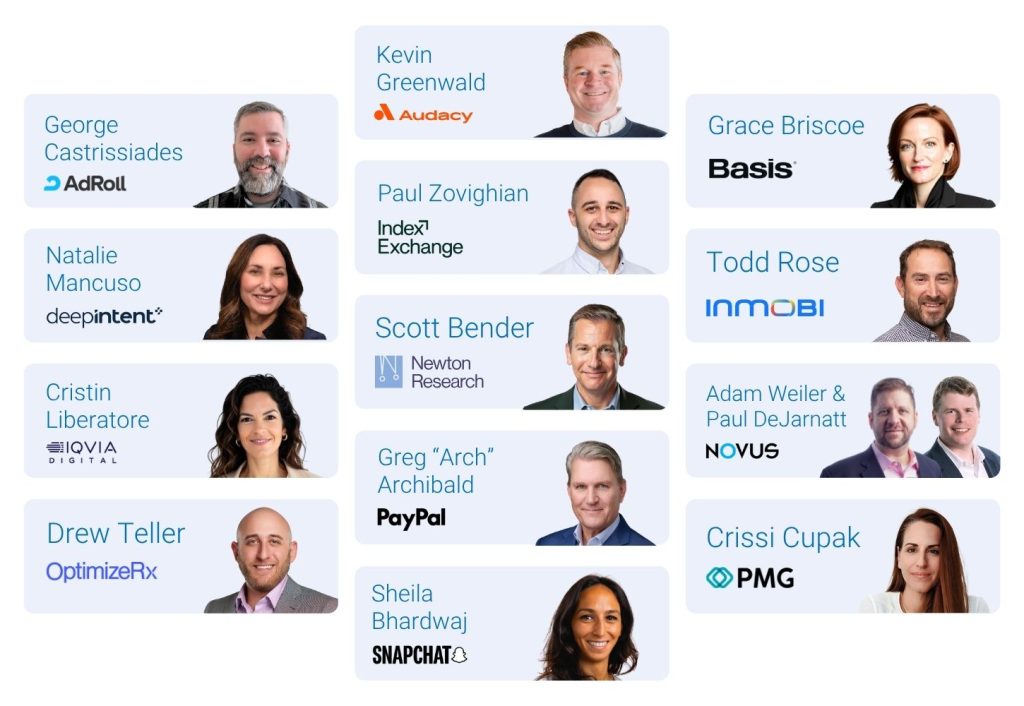
These perspectives reflect directional signals from leaders across the ecosystem. They are not exhaustive views of any one vertical. They are operational insights from teams navigating change in real time.
In addition to the written analysis, you can watch the full one-on-one Q&A conversations with each partner here.
What signals are shaping advertising trends in 2026?
Five signals are shaping advertising trends in 2026. Together, they explain why advertising trends in 2026 center on clarity, connection, and measurable outcomes. Across every conversation with our partners, five themes stand out:
Below, we spotlight three perspectives from our report.
Scott Bender’s perspective on AI-driven workflows
Scott Bender, Head of Publisher & Platform Partnerships at Newton Research, is a media and AdTech veteran who has led go to market and revenue teams across traditional media, retail media, consulting, andearly stagestartups, helping organizations translate data and product strategy into scalable commercial growth.
How is AI moving upstream into planning and measurement?
AI is changing how teams work before campaigns run. Teams apply AI to planning and measurement first, then scale into activation with clear rules and human oversight.
AI’s first impact is operational
Teams are applying AI to planning and measurement before activation. The early gains are showing up in analytics, forecasting, and workflow compression, especially in areas constrained by time and data science resources.
Automation works when humans define the rules
Repeatable, rules-based processes are where AI performs best today. Strategy, guardrails, and judgment remain human-led. AI scales execution without removing accountability.
The biggest barrier in AI is rethinking workflows
AI adoption slowswhen teams try tolayer automation onto legacy playbooks.Progress happens when workflows are redesigned for agentic execution,rather thanhuman-only processes.

“The workflows we’ve built for humans don’t always make sense for AI. Progress comes when teams redesign how work gets done, not when they simply add automation.”
Newton ResearchScott Bender, Head of Publisher & Platform Partnerships
If advertisers fix one thing in 2026
Focus on data context. Not perfect data, but a clear semantic layer that defines what data means and how it should beinterpreted andused.
Watch our agentic media panel at CES 2026
Greg “Arch” Archibald’s perspective on commerce media’s expansion
Greg “Arch” Archibald is VP, Global Ad Sales at PayPal. A sales leader fornearly 25years,Arch has worked at some of the largest AdTech companies in the world. Now with PayPal Ads, he is helping build the foundation upon which advertisers can use true intent-based signals to inform advertising campaigns.
How is commerce media expanding beyond retail?
Commerce media is extending into more ecosystems and more purchase moments. Commerce media is defined through transactions that show what people buy, not intent signals that imply what people might buy.
Commerce media is defined bytransactions,not intent
Commerce media is fundamentally powered by transactional data. Unlike retail media, which is often intent-led and vertically confined, commerce media spans horizontally across merchants, payment platforms, and ecosystems,providinga clearer view of the full consumer purchase journey.
Transactional data is the true differentiator
As basic targeting and inventory become commoditized, the ability to activate transactional signals at scale is what separates effective commerce media strategies. These signals help brands connect upper-funnel investment to conversion and prove measurable outcomes.
On-site validates performance,off-site drives reach
Effective commerce strategies balance both on-site and off-site, focusing less on where ads run and more on who is being reached based on real purchase behavior.

“Transactional data is a powerful signal that helps brands reach consumers more effectively and connect upper-funnel investment to measurable outcomes.”
PayPalGreg “Arch” Archibald, VP, Global Ad Sales
If advertisers fix one thing in 2026
Prioritize transactional signals over intent proxies to connect spend to outcomes.
Cristin Liberatore’s perspective on healthcare marketing
Cristin Liberatore, Sr. Director, Commercial Strategy for Pharma, IQVIA Digital, has over a decade of experience leading commercial and product strategy for data‑driven healthcare solutions, developing frameworks at IQVIA Digital that connect data, analytics, and omnichannel execution to drive meaningful business results.
How do identity and privacy work together in regulated markets like healthcare?
Healthcare marketing uses a dual approach that reflects distinct audiences and data environments. Teams succeed when they connect identity and privacy through governance that supports personalization and outcome measurement.
Healthcare requires two playbooks: HCP and consumer
On the healthcare professional (HCP) side, personalization benefits from deterministic identity and high-fidelity signals that enable “read, respond, act” marketing. On the consumer side, data is more disparate, making identity resolution and privacy-safe connection across data sets essential for relevant personalization.
Timeliness is the difference between insight and impact
Healthcare data varies widely in latency. The most effective marketing is powered bytimelysignals. Fresh signals influence whether brands respond in meaningful moments along diagnostic and treatment pathways.
Sustainable identity depends on governance
An identity spine paired with de-identification methodology and strong compliance frameworks allows exposure to connect to outcomes such as script lift, without compromising privacy.

“Across data, activation, and measurement, healthcare marketing works best when privacy and personalization are balanced, as that push pull is ubiquitous with consumer marketing in healthcare.”
IQVIA DigitalCristin Liberatore, Sr. Director, Commercial Strategy for Pharma
If advertisers fix one thing in 2026
Invest in a connected identity spine that balances timeliness, personalization, and privacy across the full care journey.
Watch our healthcare marketing panel at CES 2026
What do 2026 advertising trends mean for advertisers?
In 2026, success will be shaped by how well advertisers connect data, decisioning, and outcomes across an increasingly complex ecosystem. The leaders featured in this report consistently point to connection as the defining factor for progress.
The shifts advertisers must act on
- Audiences, not channels, define strategy. Planning anchored in identity and behavior scales more effectively across screens, platforms, and formats.
- Measurement moves upstream. Outcomes now inform optimization in real time, rather than serving a post-campaign validation.
- First-party data becomes infrastructure. Activation, data governance, and interoperability matter more than ownership alone.
- AI accelerates decisions, not accountability. Automation works best when paired with clear rules, transparency, and human oversight.
- Privacy is a growthlever.Consent-driven, privacy-first design enables durable performance at scale.
Advertisers that lead in 2026 will:
- Connect planning, activation, and measurement into a single operating framework
- Invest in data and identity foundations beforeexpanding intonew channels
- Work withpartners that reduce fragmentation, not add to it
To see how these signals play out across AI, commerce media, healthcare, and more, download our 2026 State of advertising report and watch the Q&A videos with our partners.
FAQs
A CMO should treat advertising trends in 2026 as a shift in how teams plan, activate, and measure, not a channel shift. Teams get stronger performance when they connect data, identity, and measurement into one decision loop that guides planning, activation, and optimization.
Measurement moves closer to the moment of decision when teams use outcomes to steer optimization in real time. That approach turns measurement into a planning input that shapes budget allocation, audience strategy, and creative decisions across the lifecycle of a campaign.
Experian helps marketers connect identity, data, and measurement so teams plan and activate with consistency across platforms. Experian’s data and identity foundation supports audience connection and privacy-forward activation, and Experian’s measurement approach links media exposure to outcomes for clearer decisioning.
Latest posts

While the weather outside is frightfully hot this summer, it’s never too soon to start thinking about the holidays – and consumers are more likely to start their holiday shopping early this year. To get you ready for the 2022 holiday shopping season, we looked back at consumer shopping trends from 2019-2021. What did we learn and what trends do we expect to see this year? Let’s look back. A look back Over the last three years, average consumer spending has increased. Record 2021 holiday sales came amidst a wave of COVID-19 cases, rising inflation, labor shortages, and supply chain problems. Despite these challenges, consumers continued to let it snow when it came to spending during the holiday season. 2022 has been a year with its own economic roadblocks – the war in Ukraine, rising gas prices, and recession concerns. Yet 2021 was a banner year for holiday sales despite its obstacles, and we predict similar trends in the 2022 holiday shopping season. What trends do we expect to see for the most wonderful time of the year? 2022 predictions While consumer spending remains strong, changing economic conditions continue to shape shopper behavior. To develop our predictions for 2022 holiday shopper behavior, we focused on four key areas: When consumers shop Where consumers shop What consumers purchase Consumer media preferences Now, let's make our holiday campaign planning checklist and check it twice. When consumers shop Chestnuts roasting on an open fire. Jack Frost nipping at your nose. Those aren’t the only ways to know when the holiday season has begun. Shoppers tend to spread out their holiday purchases across multiple months and were more likely to start shopping earlier. To understand holiday retail sales trends from 2019-2021, we identified four shopper segments: Early Shoppers Traditional Shoppers Late Shoppers Random Shoppers What differences did we see between our four shopper segments? Early shoppers made almost half of their holiday purchases in October Random shoppers spread out their holiday purchases evenly across multiple months Late shoppers made almost half of their holiday purchases in December Traditional shoppers made almost half of their holiday purchases in November While December continues to dominate holiday sales, October has started to gain traction over the last three years, and November remains a core shopping month. Everybody knows a turkey and a mistletoe help to make the season bright but knowing when your consumers are most likely to shop will help deck your campaign planning halls. Jingle bell rock your way to holiday sales that shine bright with our tips to prepare for earlier shoppers: Offer targeted promotions earlier in the shopping season Target your ads based on the shopping habits of your customers throughout the season Where consumers shop There’s no place like home for the holidays but most consumers aren’t shopping from home. Despite the rise in online shopping, brick and mortar locations continue to dominate holiday sales. October is the most popular month to take a one-horse open sleigh to a store, and consumers gather around the fire to online shop in November and December. With most shoppers preferring to shop in-store, and e-commerce popularity growing, it’s critical to think about bridging the gap between your online and offline presence for the consumer. Are you offering multiple paths to purchase with solutions such as BOPIS (Buy Online, Pickup In-Store)? Go down in history like Rudolph with our tips to prepare for more in-store shopping: Focus on in-store shopping experience technology (self-checkout, VR, QR codes, scan to pay, etc.) Offer multiple paths to purchase to connect your online and physical presence through methods such as BOPIS (Buy Online, Pickup In-Store), BORIS (Buy Online, Return In-Store), and ROPO (Research Online, Purchase Offline), etc. What consumers purchase When it comes to holiday gifts, for some, only a hippopotamus will do. Compared to pre-pandemic, shoppers are spending more at apparel stores and mass retailers. Spending at specialty retailers, warehouse clubs, and on office, electronic, and games is almost the same across holiday and non-holiday shopping months. Time for toys and time for cheer may be year-round, but are there any correlations between where consumers shop (online vs. in-store) and what they purchase? Our data found that shoppers who bought from mass retailers were more likely to shop online, while shopping for apparel and warehouse clubs was done at a physical store location. Put this insight to the test by thinking through how you can target your consumer based on where they shop in-store and online. You just might find that hippopotamus at a brick and mortar mass retailer location! Consumer media preferences Do you see what I see? While we are seeing a shift to digital media channel preference, consumers still engage with traditional media channels like direct mail and the traditional newspaper. Successfully connecting with your customers involves capturing their attention through the right channel. We found that our four shopping groups prefer a mix of traditional and digital media channels. What does your media channel mix look like? Hark! The herald angels sing of ways to adapt to the change in holiday spend and media preferences: Align your activation efforts to digital, but don't forget about traditional channels Expand your targeting and activation focus beyond in-store vs. online Download our new 2025 report For a deeper dive into our predictions and actionable insights you can use to take your holiday campaign planning home for the holidays, download our new 2025 report, in collaboration with GroundTruth. Experian data can help you refine your content and creative strategy to achieve maximum ROI for each campaign across all your channels. Download now Get in touch
Hashed Email is a privacy-safe digital identifier that can further enrich and expand the functionality and utility of The Tapad Graph with access to Tapad + Experian’s universe of email data. This provides maximum coverage for targeting and measurement when combined with household and individual IDs such as Cookies, MAIDs, CTV IDs, and IP Addresses. Gain back a clearer view Recent data from DMA shows that 51% of people have held the same email address for over 10 years. Email address data by its nature is authenticated and reliable due to its longevity. When leveraging Hashed Email as an extended functionality of The Tapad Graph, we are able to link on average 5 email addresses to each individual, reaching up to 90% of households across the US. Hashed Email expands the customer view by adding new email address identifiers into The Tapad Graph that associate with traditional digital IDs and cookie-less IDs emerging in the marketplace. Reduce fragmentation; and instead of viewing the emails as multiple customers, with Hashed Email they can be viewed as one user profile. When enabled, clients who wouldn’t traditionally have access to first-party customer emails are able to associate and link privacy-safe emails to individuals and their households. Brands and retailers can use Hashed Email to extend these linkages across offline purchases associated with each email; connecting traditional digital identifiers between walled gardens, activation in programmatic media buys, and addressable TV. With the holiday season quickly approaching, access to Hashed Emails will instantly increase scale, connectivity and improve measurement when efficiency, personalization and holistic attribution are pivotal to marketing strategies. Let’s visualize how quickly the customer journey can become fragmented when email addresses that belong to the same person are not associated. Mary has 3 email addresses that she frequently uses. One for social media accounts Email ID 1, one for shopping accounts Email ID 2, and another for work Email ID 3. Mary is a brand loyalist to a top national retailer and whenever there is a new season, there is a high likelihood that she will purchase the latest seasonal decor from that store. She recently did some holiday shopping in-store where she purchased nearly the whole holiday line. Email ID 2 was used to send her a receipt. However, Mary annoyingly receives the store's ads on Facebook for holiday decor that she had already purchased. This is because the retailer has not yet identified that Email ID 1 and Email ID 2 belong to the same consumer. If the retailer were to leverage Hashed Email, they would be able to identify that both email addresses used belong to Mary. This association connects her multiple email addresses together, enables her offline purchases to sync with her online activity, and helps to determine the most accurate ROAS. Hashed Email is a cookie-free added view into consumer behavior for control over messaging and for measurement. When leveraging it’s possible to report back across all channels and devices in a universal format to know when and how conversions are taking place. Don't leave valuable data on the table Hashed Email has use cases beyond reducing wasted media impressions. Hashed Email’s full capabilities extend to campaign measurement and attribution modeling. When utilizing The Tapad Graph combined with Hashed Email, know from the first touchpoint to the last where your customers are engaging. But more importantly, know where households and the individuals inside of those households are converting across all of their digital devices, by using traditional digital IDs, cookie-less IDs, and Hashed Email to associate, measure, and correlate online and offline purchases. Imagine what your campaigns could look like this holiday season if you expanded your graph with up to 5 additional IDs per household. This impact could be a game-changer to scale this holiday season. Hashed Email is a reliable cookie-less digital identifier that expands your customer universe that connects online and offline activity while improving the customer experience and reducing wasted media spend. Enabling Hashed Email for the holiday season is not an opportunity that should be passed on. Where do you sign up, you ask? Get in touch
Identified in The 2021 Digital Advertising Trends Report published by Postclick, marketers are striving to improve and enhance their segmentation and targeting strategies in their digital ad campaigns. Carlos Lopez, SVP of Brand Planning at Digitas Health predicted that in 2021, the challenge will be to overcome the death of third-party cookies and still deliver a personalized advertising experience. It’s fair to say that his prediction will still be impacting marketers past 2021 with the delay of cookie deprecation. These goals along with the constantly changing digital landscape paint a challenging picture for even the most advanced marketers. Marketers can be prepared for the next era of digital marketing by finding the right mix of partners that offer privacy-safe, cookie-free solutions. Smart marketers will employ these solutions and compare these results with data from cookies. The Tapad + Experian Take The Tapad Graph enables brands, agencies, and ad tech platforms to identify and target individuals and households across their digital touchpoints. With this data, they can personalize messages across devices, measure and optimize throughout the customer journey, and then report back on conversions at the individual and household levels. Tapad, now part of Experian, leverages a machine learning algorithm that determines these connections at scale by using probabilistic models with authenticated, privacy-safe, real-time data. There are a myriad of cookieless IDs emerging in the marketplace, and it’s not likely going to be a one size fits all situation. In order to be prepared for the next era of digital marketing, marketers should diversify ID partners and be proactive with testing while the cookie is still around to benchmark against. With Switchboard, a module within The Tapad Graph, we’ve been able to develop connections between traditional digital identifiers (IP Addresses, MAIDs, CTV IDs) and the new wave of cookieless IDs (UID2.0, Panorama ID, ID5 ID) that will be utilized in the future. Here’s an example of what The Tapad Graph and Switchboard looks like at the Household level with various traditional digital identifiers and cookieless IDs. Get in touch