
#ExperianVision 2019 – Day 2 Recap

by Stefani Wendel 5 min read May 7, 2019

Day 2 at this year’s Vision conference was fueled with new technology and inspiration.

The morning session opened with Robert Boxberger, Experian President, Decision Analytics, and also featured two live demos, one on Experian’s solution for the upcoming CECL compliance deadline and the second for mobile credit, including two use cases on instant issuance and lead generation, which has resulted in a 28% conversion rate of hot leads for one of Experian’s marquee clients.

Keynote Speaker: Aimée Mullins

“Get comfortable with the uncomfortable” was just one of the mantras shared on Tuesday morning by Aimée Mullins, an actor, Olympian, TEDTalk speaker, and one of the youngest honorees to be inducted into the National Women’s Hall of Fame, among many other accomplishments.

“It is our uniqueness that’s our greatest asset that we can leverage for our greatest strength,” said Mullins during her keynote centered on achieving the “impossible.”

As a bi-lateral amputee (or “double BK” also known as double below-the-knee amputee, as she referenced), Mullins had doctors and experts tell her and her parents what she would not be able to do. Instead, she encouraged Tuesday’s audience to never stop thinking like a child, to use their curiosity to find new ways where you want to go, and to practice curiosity like a sport to keep from getting comfortable, and therefore static.

“It made my not knowing what I can do so much more powerful than an expert’s presumption of what he thought I could do,” she said.

Session Highlights – Day 2

Consumer Trust

What engenders trust as consumers? And what does it take to build online trust? With 51% of new account fraud victims personally knowing the perpetrator and 3.4 billion total losses from fraudulent account openings (Javelin Feb 2019), there are five key components to building trust: digital adoption, transparency, fraud management, recognition and authentication. Today’s consumers want to use the digital channel, have both security and ease of access, be recognized, know how their personal information is being used, and engage and trust with biometrics.

Artificial Intelligence – Chat Bots and Beyond

According to Gartner, “’Conversational AI-first’ will supersede ‘cloud-first,’ ‘mobile first’ as the most important high-level imperative for the next 10 years.” As evidenced by Google Duplex’s realistic conversations with humans, including the use of “uh” and “um,” conversational AI is positioned to redefine the next generation of human interface, aimed at achieving better customer satisfaction and elevate the customer relationship.

Marketing Analytics

The marketing analytics landscape is changing. Today’s marketing problems – including the always limited budget and need to produce greater ROI – require tactical strategies to target the right consumers. Enter Experian’s AscendTM marketing platform. Leveraging this tool, including its neural networks that were demonstrated Monday morning, helps gain new insights into consumer behavior.

Fraud in the Digital Wild West

A panel discussion featuring representatives from Merchant Risk Council, USAA and Alliance Data compared fighting fraud to herding cats. Challenges discussed included the ongoing struggle to find balance between limiting friction during the authentication process, while also protecting customers, as well as fraudsters’ tendencies to tap into victims’ emotions and curiosity (think phishing schemes). As one of the panelists offered as a piece of advice, “Fraudsters share best practices, so should we.”

Visibility for the Invisibles

People are more than the sum of their parts. The traditional credit score may show a consumer’s reputation, but layering trended and alternative data sets adds their character. Not only can trended data and alternative credit data – including leveraging education attributes – make invisible consumers visible, they can also reveal that a consumer with a presumably superlative credit score is actually a “credit zombie.” These data sets enable the opportunity to create first chances, drive second chances and re-evaluate risk, while also driving a strong growth strategy.

CECL

After reviewing the basics of CECL and the upcoming deadlines (ranging from Q1 2020 to Q1 2022), a review of CECL compliance challenges and potential product changes preceded a modeling techniques case study and a list of key impacts to businesses. Those impacts include: product profitability, loss forecasting methodology, data management and processes and capital ratios. Experian’s CECL forecasting solution leverages Experian’s extensive historical data and Ascend Analytical Sandbox. Using a best practice modeling pipeline to improve efficiency and reduce operational risks, the solution combines advanced machine learning, traditional model techniques and modeling experience to improve performance and reduce risk of overfitting.

Keynote Speaker: Kobe Bryant
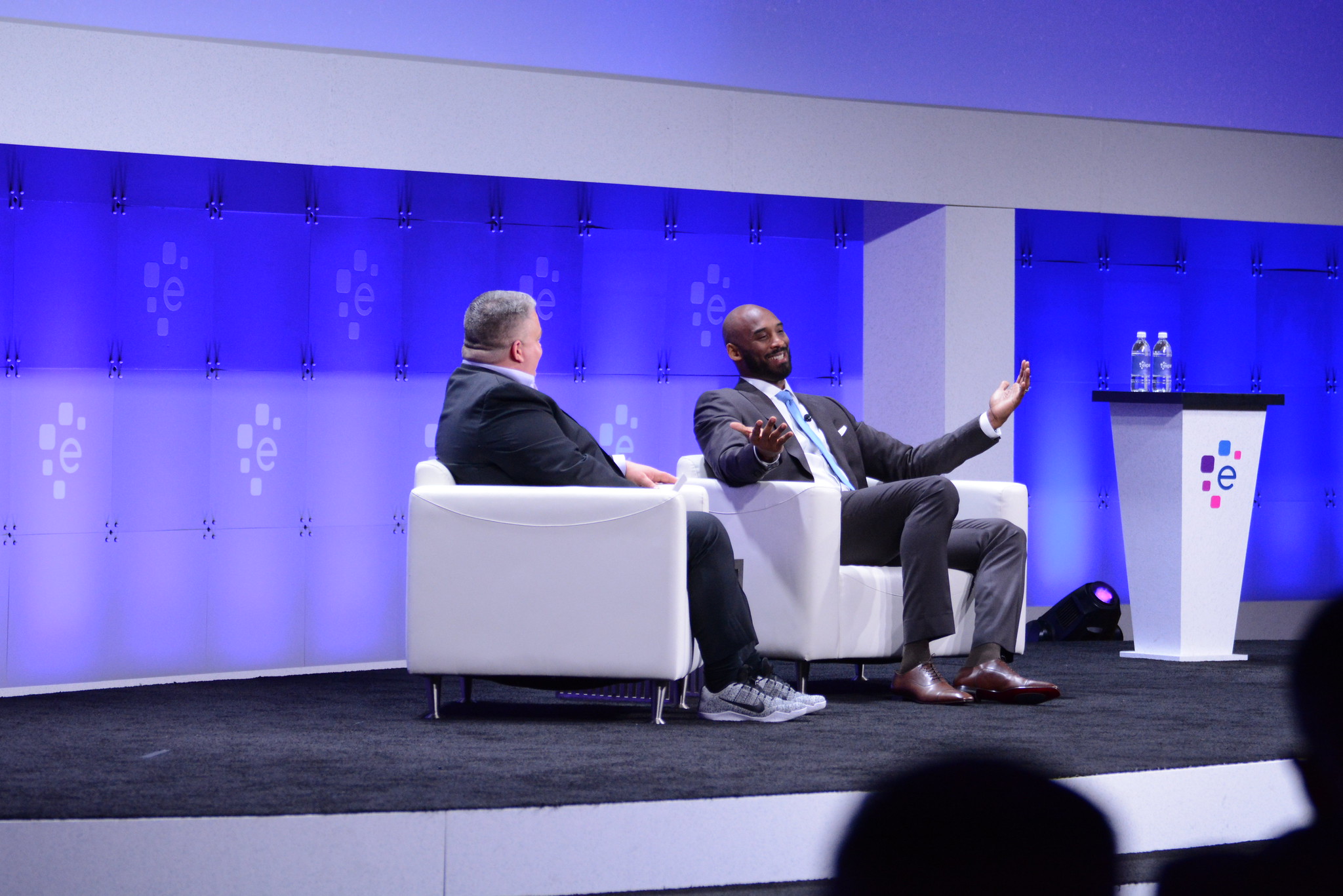
Kobe Bryant closed out the day with stories from his highly-decorated 20-year career with the Los Angeles Lakers, some tips on trash talk and lessons in leadership.

“I had to figure out how to be undeniable,” Bryant said, on competing for minutes at the start of his career.

In addition to his basketball legacy, including wining five NBA championships, being named an NBA MVP, a two-time NBA Finals MVP and winning two Olympic gold medals, Bryant also launched the Kobe and Vanessa Bryant Family Foundation, hosts the Kobe Academy and has formed Kobe Inc. He’s a storyteller, an Oscar winner, and his name has become synonymous with standing for uncompromising excellence.

How to be successful? “Make sure you have the right people on the team,” Bryant said. “Passionate. Borderline obsessive.”

One of his key takeaways from his basketball career that translates to his leadership on and off the court happened when his pre-game and game time thinking shifted from internal to external.

“You have to put yourself 2nd, 3rd, 4th…you have to put the team first,” Bryant said.

For more coverage, follow #ExperianVision on Twitter or check the Experian Insights LinkedIn page.


Related Posts

How Consumer Vehicle Choices Are Shaping Automotive Loan Trends

Conversations about rising auto loan balances and higher monthly payments has often centered around increasing vehicle prices and elevated interest rates; and while those factors have undoubtedly played a role, another important piece of the puzzle is the type of vehicles consumers are choosing to purchase. According to Experian’s Automotive Consumer Trends Report: Q1 2026, consumers are continuing to opt for SUVs over other vehicle types, a trend that may be contributing to higher average loan amounts and monthly payments. SUVs accounted for 63.5% of all new retail vehicle registrations over the last 12 months, up from 62.8% a year ago. Additionally, more than 117 million SUVs were in operation across the United States in the first quarter of 2026, making up 42.2% of the market share. At the same time, traditional passenger cars continue to fall in share, coming in at 16.5%, a decrease from 18.4% last year. As consumers increasingly gravitate towards the larger vehicle segment, it reflects the ongoing desire for versatility, cargo capacity, and family-friendly functionality. Electrification’s growing role in consumer purchasing behavior Interestingly, electrified SUVs continue to gain traction, representing 27.7% of all new SUV registrations, these vehicles include battery-electric, hybrids, plug-in hybrids, and other alternative fuel types. Diving a bit deeper, the Tesla Model Y was the market share leader for new, retail electrified SUV registrations in the last 12 months, coming in at 15.8%. Rounding out the top five were Honda CR-V (9.6%), Toyota RAV4 (7.2%), Chevrolet Trax (7.2%), and Toyota Grand Highlander (3.4%). As model availability and familiarity with the electrification segment grows, the broader adoption of these vehicles are playing an increasingly important role in vehicle pricing and overall consumer demand. While average loan amounts and monthly payments are being driven by a combination of factors such as financing costs and consumer purchasing behavior, data in Q1 2026 demonstrates the continued interest in SUVs. This suggests that the industry’s shift toward larger vehicles is likely playing a meaningful role in today’s financing environment. To learn more about SUV insights, view the full Automotive Consumer Trends Report: Q1 2026 presentation.

Published: June 17, 2026 by Kirsten Von Busch
When New Data Impacts MBS Pricing: Student Loan Debt

In our previous post, we described the Current Second Lien Balance field, which is one of over 2,000 fields in the new Experian Mortgage Loan Performance (MLP) dataset. We showed that the Current Second Lien Balance field meets our three-pronged materiality standard for new data delivery: New: Provides information not available in existing datasets (i.e., orthogonal to currently available data). Material: Impacts a sizeable portion of the MBS universe. Significant: Differentiates collateral performance by a large enough margin to influence trading and risk management decisions. In this article, we discuss another field that satisfies the above criteria: Student Loan Balance.  We evaluate this field in the context of these criteria. First, however, we provide a summary of the MLP dataset and how it compares to standard GSE loan-level data available today. Standard GSE Data vs. Experian Mortgage Loan Performance (MLP) Data The MLP dataset contains thousands of fields describing mortgage performance from each borrower, loan, and property perspective, all refreshed monthly (including, amongst other things, new credit scores and refinance inquiry activity, loan performance, filed junior liens, and AVM values).  MLP differs from loan-level data provided byFreddie Mac, Fannie Mae, and Ginnie Mae, which the vast majority of market participants solely rely on, in a number of ways: Standard data provided by the GSEs and GNMA does not contain all the information necessary for accurate forecasting of mortgage prepayment and credit performance. Basic, critical fields like borrower’s current credit score and current junior liens on the property are missing. The new Mortgage Loan Performance (MLP) dataset from Experian contains borrower, loan, and property data fields covering the entire mortgage universe, including Agency, Non-Agency, and Esoteric mortgage products (CES, HELOC, Reverse), both securitized and non-securitized. MLP enables full three-dimensional (borrower + loan + property) tracking with persistent keys for borrower (before and after refinancing), loan (in securities/deals even after exit due to payoffs or buyouts, including before and after MSR sales), and property.  This enables end-to-end analysis of each borrower’s (and property’s) mortgage experience throughout their credit lifecycle. New, Material and Significant Field:  Student Loan Debt MLP contains a number of fields describing each mortgage borrower’s student debt load, including amounts in repayment, forbearance and collections; estimated interest rate, time remaining until forbearance expiration, and more. In the interest of simplicity, for this article we’ll focus on a single student loan-related field within MLP: Student Loans Balance, which is defined as the total balance on open non-deferred student trades reported in the last 3 months. Is Information Regarding Student Loans New to Markets? Standard loan-level data disclosed by the GSEs and GNMA contain no student-loan-specific fields. Theoretically, fields related to DTI at origination might capture some aspect of student loan debt. So, in the best case scenario for an investor relying solely on standard disclosure, a DTI value as of origination is provided -- yet is never updated as the loan seasons and the borrower’s debt and income change (see more here).  But in the case of federal student loan debt attached to mortgages originated from early 2020 to late 2023, the level of detail provided by disclosure may be even more unknown due to COVID-era repayment and reporting moratoriums. The student loan repayment moratorium was a temporary federal policy that paused required payments, set interest rates to 0%, and suspended collections on most federally-held student loans. The moratorium began in March 2020, with payments resuming in October 2023, making it approximately 3.5 years in duration—the longest consumer credit payment pause in U.S. history. (Source: NCUA ) During the moratorium, student loan-related debt loads may have been understated as federal loans were in a temporary state of $0 repayment.  As an alternative to leaving student loan debt completely out of DTI calculations, an imputed payment equal to only 0.50% of the outstanding balance was often used as a placeholder for a borrower’s DTI calculation. As a result, mortgages originated during the moratorium may have artificially low reported DTIs for borrowers with student loan debt, materially understating true post-moratorium debt .  Accordingly, prepayment risk for these loans is likely overstated in mainstream market models. Standard data only reports information related to the primary mortgage and does not include any details on the borrower’s other debts with the exception of DTI at origination, which is never updated throughout the life of the loan. In contrast, MLP provides a comprehensive view of the borrower’s full credit profile, including other obligations such as credit cards, mortgages on other properties, student loan balances, and much more. Is Student Loan debt material to the residential mortgage market? Approximately $11 trillion of residential mortgage loans were originated during the student loan payment moratorium (Source: Experian MLP Dataset), a period marked by historically low mortgage rates during the COVID era.  As discussed above, DTI data contained in standard market disclosure may be particularly inaccurate for these loans. As the Wall Street Journal recently reported, a new report from the Federal Reserve of New York shows a rise in student loan default rates by age group.  Student l Of today’s $13 trillion in outstanding mortgage debt, more than 10% of that debt ($1.5 trillion) is associated with borrowers who carry student loan debt.  For these borrowers, the average amount of student loan debt outstanding is approximately $50,000, versus a mortgage balance of approximately ~$289,000. In other words, the average student loan debt balance is almost 20% of the mortgage balance for the average borrower who carries both. For this set of borrowers, the average monthly payment is approximately $400 for student loan vs. approximately $2,200 for 1st lien mortgage—so that monthly student loan payments are a significant debt load, approximately 20% of the monthly mortgage payment.  (Source:  Experian MLP Dataset) Is the effect of student loan debt a significant driver of performance? Figure 1 illustrates prepayments by student loan balance for a sample of loans drawn from MLP. The chart illustrates that borrowers with larger student loan balances prepay much more slowly, likely because some are effectively locked out of refinancing once student loan payments resume due to elevated DTI. The debt-to-income (DTI) ratio calculated using actual student loan payments may be significantly higher than the DTI calculated during the moratorium, in some cases exceeding GSE eligibility thresholds. As illustrated in Figure 1, for in-the-money (ITM) collateral, the differential between loans with material student loan balances (greater than $200,000) and loans with no student debt can reach up to 5 CPR. Notably, even for out-of-the-money (OTM) collateral, loans with student debt prepay 1 to 3 CPR slower, likely reflecting reduced mobility due to tighter financing constraints when purchasing a new home. Pools with otherwise similar prepayment characteristics may exhibit different prepayment behavior depending on the distribution of student loan exposure within their collateral. In addition, because loans with student debt tend to prepay more slowly, this effect increases over time due to burnout: loans without student debt prepay and exit the pools more quickly, leaving a higher concentration of slower-paying loans behind.  Given that 10% of the $13 trillion outstanding mortgage market is associated with borrowers who have student loans (Source:  Experian MLP dataset)—and that student loans have a meaningful impact on prepayments—many pools issued between March 2020 and October 2023 may be subject to this student loan debt CPR throttle, and therefore mispriced by investors relying exclusively on standard market data. Fig 1. Prepayment S-Curve: Student Loans Balance Source:  Experian MLP dataset hosted on IVolatility Data-Driven Platform   _____________________________________________________ Michael Pyatski advises MBS traders, portfolio managers, quants, risk managers, loan originators, and technology professionals on making informed, data-driven business decisions that drive revenue growth, enhance risk management, and reduce trading costs. With more than 15 years of experience as an Agency RMBS trader—including serving as Head of the Proprietary Trading Desk at BNP Paribas—Michael developed and successfully implemented relative-value, data-driven profitable trading strategies to capture market opportunities embedded in data but not fully priced by the market. His trading experience, combined with a Ph.D. in econometrics, led him to found the Data-Driven Portal (https://datadrivenportal.com/), a platform that provides advanced technology for MBS trading and risk management. The platform’s No-Model Data-Driven technology leverages big data, econometric analysis, and AI to help traders identify relative-value opportunities in RMBS markets and generate above-market, risk-adjusted returns. _____________________________________________________

Published: June 17, 2026 by Perry DeFelice
Empowering merchants to reduce first-party fraud and chargebacks

Reduce first-party fraud and chargebacks with data-driven strategies that help merchants prevent disputes, protect revenue and improve customer trust.

Published: June 15, 2026 by Charles Hunter