Loading...

Fintechs: Thinking of Partnering with Other FIs?

by Brittany Peterson 1 min read October 23, 2018

FinTechs ExperianThere’s no shortage of buzz around fintechs shifting from marketplace challengers to industry collaborators.

Regardless of fintech’s general reputation as market disruptors, a case can certainly be made for building partnerships with traditional financial institutions by leveraging the individual strengths of each organization.

According to the World FinTech Report 2018, 75.5% of fintechs surveyed selected “collaborate with traditional firms” as their main objective.

Whereas fintechs have agility, a singular focus on the customer, and an absence of legacy systems, traditional Financial Institutions have embedded infrastructure, scale, reach, and are well-versed with regulatory requirements.

By partnering together, fintechs and other Financial Institutions can combine strengths to generate real business results and impact the customer experience. New stories are emerging – stories that illustrate positive outcomes beyond efforts exerted by one side alone.

A recent report sponsored by Experian and conducted by the Filene Research Institute further explores the results of fintech and traditional FI partnerships by examining the experiences of six organizations:
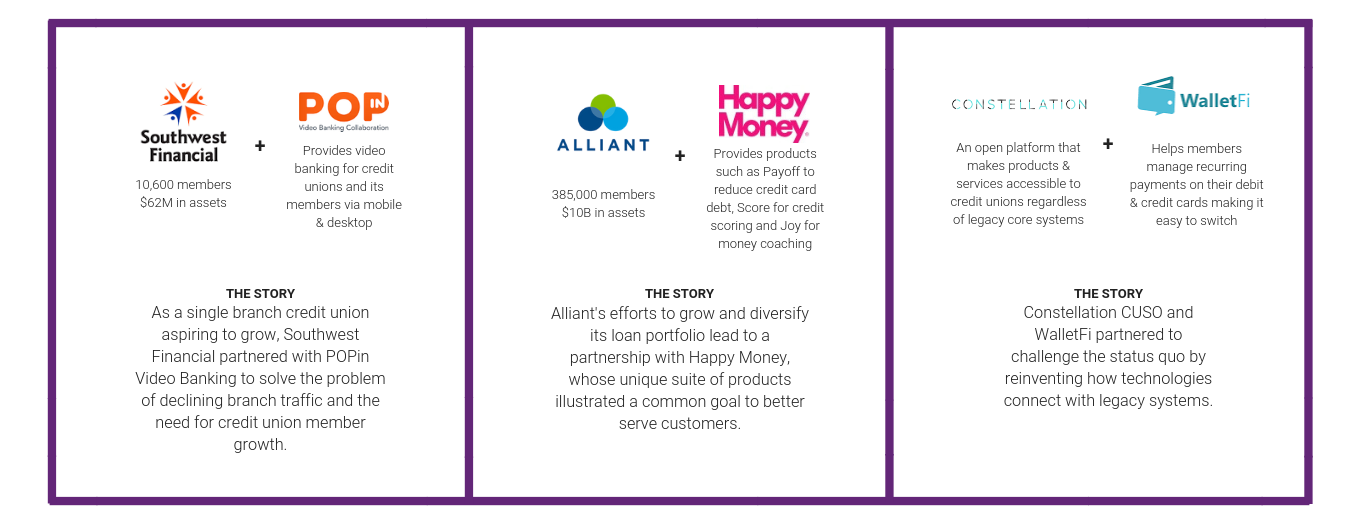
The outcomes of these relationships are sure to encourage more collaborative partnerships. And while leveraging each organization’s strength is a critical component, there’s much more to consider when developing a strategic approach.

In the fast-moving, disruptive world of fintech, just what are the key elements to building a successful collaboration with traditional Financial Institutions? Click here to learn more.


More Info on Marketplace Lending Read the Filene Report

Related Posts

The automotive market is entering a new phase defined not just by what consumers are buying, but by how they’re choosing to finance it. According to Experian Automotive’s State of the Automotive Finance Market Report: Q1 2026, nearly one-third (35.55%) of all new vehicle loans now stretch more than six years, up from 30.83% in Q1 2025. Similarly on the used side, 31.54% of loans extended more than six years, an increase from 28.60% last year. The shift highlights why affordability is reshaping how consumers are financing their vehicles, particularly in larger and higher-priced vehicles. Refinancing gains traction as interest rates stabilize In addition to longer-term loans, consumers are becoming increasingly deliberate with their financing decisions and managing monthly payments as refinancing activity has gained momentum. For instance, consumers who refinanced this quarter lowered their interest rate by 2.2% and saved an average of $81 on their monthly payment. Credit unions, in particular, continued to play a major role in helping consumers secure more affordable payment options. In Q1 2025, credit unions accounted for the lion’s share of automotive refinancing at 63.43%, from 62.31% a year ago. By comparison, banks went from 23.51% to 22.59% year-over-year. Furthermore, those who refinanced with a credit union saved an average of $101 this quarter, whereas those who refinanced with banks saved $60. Expanding credit access through flexible financing Another notable trend this quarter was the incessant growth in subprime financing as credit accessibility across the market continues to increase. In the first quarter of this year, subprime borrowers made up 15.75% of total vehicle financing, from 14.40% last year. For new vehicles in particular, the subprime market went from 5.61% to 6.88% year-over-year, while subprime in used vehicle financing grew to 20.60% this quarter, from 19.36% a year ago. Increased activity in the subprime segment highlights continued confidence in the automotive market and underscores the importance of expanded financing options. As consumers seek greater flexibility with financing decisions that fit their lifestyle, lenders and dealers have the opportunity to approach them with more personalized solutions. These trends are helping keep both new and used vehicle markets moving forward, while creating new opportunities for consumers to manage payments and purchase confidently. To learn more about automotive finance trends, view the full State of the Automotive Finance Market Report: Q1 2026 presentation on demand.

by Melinda Zabritski 1 min read June 2, 2026

Since 1996, The Internal Revenue Service (IRS) has issued more than 27 million individual taxpayer identification numbers (ITINs) –⁠ a 9-digit number used by individuals who are required to file or report taxes in the United States but are not eligible to obtain a Social Security number (SSN). Across the country, ITIN holders are actively contributing to their communities and the U.S. financial system. They pay bills, build businesses, contribute billions in taxes and manage their finances responsibly. Yet despite their clear engagement, many remain underrepresented within traditional lending models.  Lenders have a meaningful opportunity to bridge the gap between intention and impact. By rethinking how ITIN consumers are evaluated and supported, financial institutions can: Reduce barriers that have historically held capable borrowers back Build products that reflect real borrower needs Foster trust and strengthen community relationships Drive sustainable, responsible growth Our latest white paper takes a more holistic look at ITIN consumers, highlighting their credit behaviors, performance patterns and long-term growth potential. The findings reveal a population that is not only financially engaged, but also demonstrating signs of ongoing stability and mobility. A few takeaways include: ITIN holders maintain a lower debt-to-income ratio than SSN consumers. ITIN holders exhibit fewer derogatory accounts (180–⁠400 days past due). After 12 months, 76.9% of ITIN holders remained current on trades, a rate 15% higher than SSN consumers. With deeper insight into this segment, lenders can make more informed, inclusive decisions. Read the full white paper to uncover the trends and opportunities shaping the future of ITIN lending. Download white paper

by Theresa Nguyen 1 min read February 2, 2026

Unlock the future of fintech by exploring how alternative data is reshaping decision-making and growth strategies.

by Laura Burrows 1 min read January 12, 2026