Key takeaways
- U.S. retail media ad spend is on track to reach $71.09 billion in 2026, creating more opportunities for CMNs to grow beyond the on-site inventory they own.
- Off-site social and connected TV (CTV) spend are outpacing on-site growth, proving the market is strong for CMNs that extend their first-party data across channels they don’t own.
- CMNs can extend the value of their shopper relationships beyond owned-and-operated (O&O) inventory by strengthening first-party data, building scalable audiences, expanding off-site activation, and connecting data with media through curation.
Amazon and Walmart command much of the market, but billions in retail media spend remain available to other networks. While the other 277 CMNs operating globally may not compete on scale, the playing field is level for using their data off-site.
The opportunity isn’t tied to any one capability. CMNs need infrastructure that connects first-party data and identity to activation and measurement, so they can extend the value of their shopper relationships beyond the data and inventory they own.
What CMNs need to know about moving off-site
O&O placements still offer stronger margins. On-site ad margins can reach 70-90%, compared with 20-40% off-site. But CMNs can sell only so much media across the properties they own. Moving off-site gives them another way to create media opportunities from their first-party shopper data.
Off-site commerce media uses a CMN’s first-party audience data to reach shoppers beyond the network’s O&O properties. That can include social, programmatic, CTV, and other media environments. Commerce media powered social ad spend is projected to reach $7.76 billion in the U.S. in 2026, with CTV close behind at $6.10 billion. For CMNs, that means the value of their shopper relationships doesn’t have to stop at the edge of their owned inventory.
Off-site media can bring those opportunities closer to the physical point of sale, too. Digital screens in places such as gas stations and convenience stores give CMNs another way to connect with shoppers near moments of purchase. Some of this inventory can be available programmatically, connecting these physical environments with a CMN’s broader off-site media strategy.
The infrastructure question: What off-site actually requires
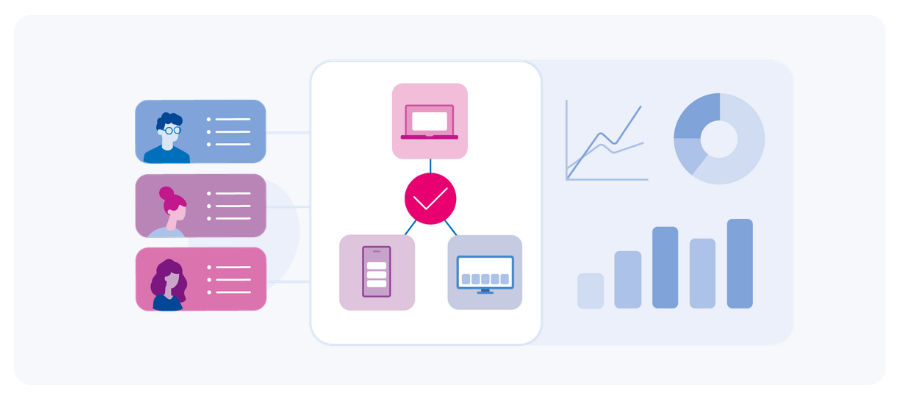
When CMNs make their data available across the open web, CTV, or social media, their first-party signals need to connect with the identifiers used across those environments. Without that connection, less of a CMN’s audience may be available for off-site activation.
The financial stakes continue to grow. U.S. CTV ad spend is expected to reach roughly $38 billion in 2026, with most of it trading programmatically. A substantial share of open CTV programmatic spend currently goes to inaccurate identity data. Advertisers can improve the efficacy of their CTV campaigns by working with CMNs that have a strong identity infrastructure and relevant data.
Identity resolution helps connect a CMN’s first-party signals to additional addressable identifiers, making more of its audience reachable across environments. A consistent identity layer can then connect that audience to activation across channels and tie campaign exposure back to measurable outcomes.

CMNs don’t need to build that infrastructure themselves. Some may develop identity capabilities in-house, and others can work with a neutral infrastructure partner. A neutral infrastructure layer can connect first-party data, identity, activation, and measurement without competing for the CMN’s media or representing the buyers on the other side. That gives CMNs a consistent foundation across media environments without requiring separate data integrations for each partner.
How CMNs can take first-party data off-site
Early off-site activation has shown how CMNs can take their first-party data beyond O&O properties to help brands reach more shoppers across more media environments. To do that, CMNs need a way to connect their audiences to the platforms and media where brands want to reach them. The approach can vary based on how much technology, campaign execution, and media control the CMN wants to manage directly.
Four operating models have emerged:
The operating model may differ, but the underlying requirement is the same: CMNs need to connect first-party data with addressable identifiers so brands can reach those audiences beyond the CMN’s O&O properties. A segment that can’t match to addressable IDs may have limited off-site reach, and lower match rates can reduce the share of a CMN’s audience that a brand can reach across CTV or the open web.
Expanding beyond O&O: Onboarding and the addressability challenge
CMNs looking to extend the value of their data beyond O&O inventory should focus on two connected areas: strengthening their identity foundation, then onboarding and activating their audiences across more environments.
1. Strengthen your identity foundation
Before CMNs can activate audiences off-site, they need accurate, complete first-party data. Experian’s Offline Identity Resolution helps CMNs resolve first-party data to a consolidated consumer profile, reducing duplication and improving the accuracy of their audience data. Offline Identity Append adds additional information such as name, phone, and address to first-party data, helping CMNs build more complete audience profiles.
Together, these capabilities give CMNs a stronger data foundation for audience creation and activation.
2. Onboard, model, and activate audiences
CMNs may have limited direct integrations with the platforms where brands want to activate their audiences, which can restrict where their first-party data can go off-site. Onboarding connects C
CMN audiences to more activation destinations so advertisers can use those audiences across the open web, connected TV (CTV), social media, and other channels. Experian Onboarding connects first-party data directly to more than 70 programmatic, social, and TV platforms instead of routing through intermediaries. It runs on our identity graph with 4.2 billion active digital IDs refreshed weekly.
For smaller CMNs, audience modeling can help address another challenge: audience size. Modeling can expand a CMN’s existing segments to reach more people with similar characteristics, giving advertisers more scale while staying grounded in the CMN’s first-party data.
For CMNs, stronger identity data and broader activation can make more of an onboarded audience reachable, creating more opportunities for advertisers to build awareness, drive sales, and achieve other desired outcomes.
CMNs can pair onboarding with curation to bring data and inventory together, giving them more control over inventory quality and campaign execution. Experian Curated Deals supports this support this approach by helping marketers, platforms, and publishers create media opportunities that combine data and inventory in one place.
This combination gives CMNs a path from stronger first-party data to larger, more addressable audiences and broader activation opportunities.
A playbook for CMNs still building off-site
Networks developing an off-site strategy should focus on four priorities:
Across each of these priorities, the goal is connection. Experian provides the neutral infrastructure layer that connects a CMN’s first-party data and identity with activation and measurement across the media environments where advertisers want to reach shoppers. This approach helps CMNs expand their options while keeping their data and business relationships at the center.
For CMNs that can’t compete on owned inventory alone, off-site activation creates another path to growth. Stronger first-party data, scalable audiences, broader activation, and curated media opportunities can help CMNs make more of the shopper relationships they already have.
Grow your commerce media network off-site with us
About the author

Doug McLennan
Sr. Director, Product Management
Doug McLennan is the Sr. Director of Product Management at Experian Marketing Services where he oversees audience and activation products. His past work includes managing syndicated audiences at Oracle Data Cloud and building personalized video ad products at an agency. Doug lives in Colorado and skis as much as his family will allow.
FAQs
Off-site commerce media uses a CMN’s first-party audience data to reach shoppers beyond the network’s owned sites and apps. That can include CTV, social, and programmatic.
CMNs are investing in off-site advertising because O&O inventory has a natural limit. Off-site activation gives CMNs more opportunities to offer advertisers greater reach by extending their shopper data across channels, helping brands connect with audiences beyond the CMN’s owned properties.
Identity resolution gives CMNs a foundation for connecting first-party data to the addressable identifiers used across off-site media. Experian builds on that foundation as a neutral infrastructure layer, connecting first-party data and identity to activation and measurement without competing for the CMN’s media. This gives CMNs more flexibility in how and where they reach audiences across CTV, social, and programmatic channels.
Audience onboarding connects addressable audience segments to advertising platforms for activation. For CMNs with limited direct platform integrations, Experian Onboarding connects their first-party audiences to more programmatic, social, and TV platforms, giving brands more ways to reach those audiences through off-site campaigns.
A consistent identity foundation and regular audience refreshes can help CMNs maintain addressability as identifiers and household signals change. Experian is the neutral infrastructure layer that connects first-party data and identity to activation and measurement, helping CMNs extend their audiences across off-site channels while keeping their data and business relationships at the center.
CMNs can measure off-site campaigns by connecting media exposure across environments such as CTV and programmatic display to subsequent outcomes. Experian’s consistent identity foundation connects activation to measurement, helping CMNs tie ad exposure to actions such as online purchases, store visits, or other measurable actions and understand what’s driving campaign performance.
Latest posts

by AdExchanger // Friday, March 15th, 2019 – 12:06 am “Data-Driven Thinking” is written by members of the media community and contains fresh ideas on the digital revolution in media. Today’s column is written by Preethy Vaidyanathan, chief product officer at Tapad, a part of Experian For years marketers asked, “How do we get more data?” Now that they’ve mastered data mining, marketers want to know what’s next. The time has come for organizations to make their abundance of digital data actionable, increase ROI and reach consumers with consistent, personalized experiences across all touchpoints. A seamless consumer experience can only be achieved by consolidating digital data. Organizations, however, are finding that consolidating data silos is more time-consuming and complicated than initially expected. The challenges One of the most pervasive obstacles companies face in when consolidating data is adopting inefficient and costly tactics that quickly become outdated. For instance, over the last couple of years, many companies turned to enterprise data warehouses to consolidate data silos, but some were too expensive or poorly suited for raw, unstructured and semi-structured data. This led companies to adopt data management initiatives, which bogged down many enterprises. Perception among senior level executives is another challenge. Many still question the need for digital transformation – achieving greater efficiencies through updating business and organizational processes with new technologies. Gartner found that more than half (54%) of senior executives say their digital business objective is transformational, while 46% say their objective is optimization. Digital transformation and data consolidation require time and effort. So, many large organizations work to overcome data silos as part of a multiyear digital transformation versus an immediate action item, delaying the benefits the company sees from taking on this project. All of these challenges make delaying progress in data consolidation easy, but companies should remember the impetus for doing so: creating a seamless customer experience that, in turn, drives business results. Brands with higher quality customer experience grow revenue faster than direct competitors with lower quality customer experience. The approach Many brands go into the digital transformation process assuming they have massive amounts of customer data, and that much of it is valuable or will be in the future. They might spend months aggregating that data in data stores or data lakes – at great expense. The trouble is that their data was scattered across multiple databases, which means it’s highly fragmented. As a result of this fragmentation, marketers can’t activate their data in ways that enhance the customer experience. To do so, companies must ensure their digital data is highly flexible so it can provide a holistic view of the consumer journey across every digital, in-store, in-venue and offline channel. I’d recommend that organizations taking on data centralization initiatives prioritize use cases that offer the company the greatest benefit. This is where organizations should establish a “crawl, walk, run” approach to data centralization to ensure key executives buy into the process. Starting with a subset of use cases, such as customer retention or upsell, or with a campaign, which is an even smaller starting point, allows executives to see the benefits of data consolidation projects relatively quickly. Once they validate these initial benefits, they can expand the range of use cases or campaigns, as well as the marketing ROI for their business. While data centralization is a long-term project that may take several years to complete, it doesn’t mean a business can’t get started now and see measurable results quickly. Break down data consolidation into stages so the organization can experience wins along the way. At the end of the day, data consolidation will help organizations deliver more effective marketing campaigns that drive business growth. Contact us today

Tapad’s technology enhances Bidtellect clients frequency capping and audience extension capabilities cross device. NEW YORK, Feb. 28, 2019 /PRNewswire/ — Tapad, part of Experian, is a global marketing technology company and leader in digital identity resolution solutions, today announced a new partnership with Bidtellect (now Simpli.fi), a leading native Demand-Side Platform (DSP). Bidtellect’s paid content distribution platform will leverage The Tapad Graph™ as its first cross-device partner. The integration will offer Bidtellect’s clients in the U.S. and Canada cross-device frequency capping and enhanced audience extension capabilities. The combination of Tapad’s leading cross-device technology, with Bidtellect’s unparalleled scale and optimization capabilities, will allow content marketers within brands and agencies to develop even more strategic, effective content marketing campaigns. The Tapad Graph™ will allow content marketers to gain greater reach and create more relevant, unified messaging with targeted delivery, when used in conjunction with Bidtellect’s technology. Marketers can expect to benefit from amplified reach, and enhanced, privacy-safe engagement with desired audiences as a result of this partnership. “Partnering with Tapad, the leaders in cross-device data, provides Bidtellect with a complete solution that leverages both probabilistic and deterministic mapping strategies,” said Mike Conway, Chief Technology Officer at Bidtellect. “The Tapad relationship expands our audience size by providing the opportunity to reach the same user across multiple devices and, when used in conjunction with our frequency capping functionality, ensures increased reach, reduced ad saturation, and elimination of wasted ad spend.” As the partnership progresses, Tapad will also work with Bidtellect to provide advanced attribution for conversions and engagement metrics including connectivity and amplification. These advanced insights will help brands and agencies develop a more holistic approach to content marketing, so they can build audiences and influence bidding algorithms that directly impact their business. Contact us today
The Tapad Graph Now Offered in Adobe Audience Manager, part of Adobe Analytics Cloud New York, NY — August 7, 2018 — Tapad, now part of Experian, is advancing personalization for the modern marketer, announced today that its proprietary Tapad Graph is now integrated with Adobe Audience Manager, part of Adobe Analytics Cloud, helping marketers expand their view of consumers and boost results through Tapad’s probabilistic solution. Tapad has been working closely with the Adobe Audience Manager team on this integration. With the Tapad Graph integration, customers based in the U.S. and Canada can use the Tapad Device Graph to expand the reach of audiences defined and activated in Adobe Audience Manager to extend first- and third-party data and deliver personalization across paid, earned and owned channels, publisher sites, programmatic, and more. Tapad worked closely with Adobe to develop the integration, allowing marketers to enable first-party data that has been previously tied to cookies and mobile. This offering has been beta-tested by leading organizations across retail, financial services, telecom providers, and more. Tapad has repeatedly proven its ability to provide marketers with a unified view of the customer across channels and screens. With the Tapad Graph, a global identity graph that currently supports more than 100 enterprise customers and 200 integration partners, marketers can extend their reach and customize messages based on user and household-level data. Contact us today